- Details
- Category: Celebrity Birthdays - July
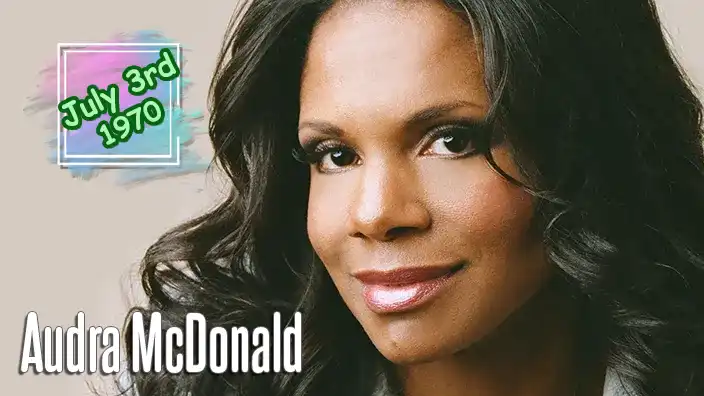
Some performers collect souvenirs while traveling. Audra McDonald has collected Tony Awards instead. At this point, Broadway might consider installing a revolving door between her dressing room and the awards stage just to save everyone time. Fortunately for theatre lovers, she has never treated success as a reason to slow down, continuing to raise the bar with every new performance.
 July 3, 1970, in West Berlin, Germany

Trivia
- Graduated from the Juilliard School in 1993.
- Holds the record for the most Tony Award wins by a performer.
- Is the only performer to have won Tony Awards in all four acting categories.
- Won Grammy Awards, an Emmy Award, and the National Medal of Arts.
- Starred in Carousel, Ragtime, Porgy and Bess, and Lady Day at Emerson's Bar and Grill.
- Appeared in the television series Private Practice, The Good Fight, and The Gilded Age.
- Co-founded Black Theatre United to promote diversity and opportunity in theatre.
- Is widely regarded as one of the greatest Broadway performers of her generation.
- Details
- Category: Celebrity Birthdays - July
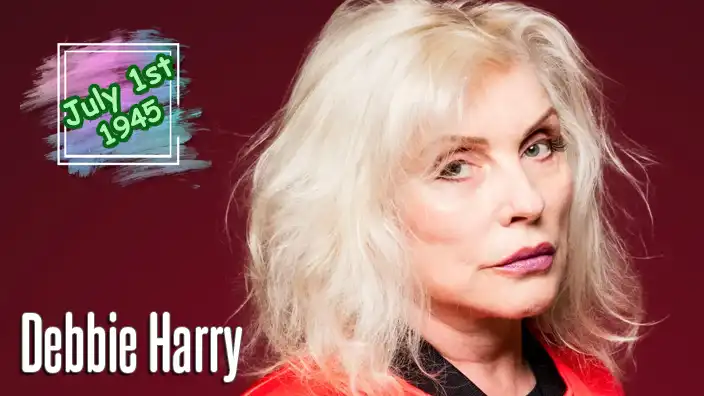
Some singers have a voice that fills a room. Debbie Harry has a voice that fills a room, steals the spotlight, borrows your sunglasses, and somehow makes platinum blonde look like a personality trait. While the rest of us struggle to remember where we left our keys, Debbie helped define an entire era of music and proved that cool never really goes out of style.
July 1, 1945, in Miami, Florida
Trivia
- Blondie was formed in New York City in 1974.
- Heart of Glass became Blondie's international breakthrough hit.
- Call Me was the best-selling U.S. single of 1980.
- Rapture was the first song with rap vocals to top the Billboard Hot 100.
- Debbie Harry has enjoyed successful careers as both a singer and actress.
- Blondie reunited in 1997 after a 15-year break.
- She was inducted into the Rock and Roll Hall of Fame as a member of Blondie in 2006.

- Details
- Category: Celebrity Birthdays - July
Some performers wear several hats during their careers. Jennifer Lopez appears to have rented an entire hat store. Singer, actress, dancer, producer, entrepreneur—if there's a stage with lights on it, chances are she's been there, worked there, and probably left with an award or two. If multitasking were an Olympic sport, she'd at least make the podium.
July 24, 1969, in the Bronx, New York City
Trivia
- Began her career as a Fly Girl dancer on In Living Color.
- Starred as Selena in the acclaimed 1997 biographical film.
- Released her debut album On the 6 in 1999.
- One of the world's most successful Latin crossover artists.
- Starred in The Wedding Planner, Maid in Manhattan, and Hustlers.
- Served as a judge on American Idol.
- Co-headlined the Super Bowl LIV Halftime Show with Shakira.
- Successful producer, entrepreneur, and businesswoman.
- Details
- Category: Celebrity Birthdays - July
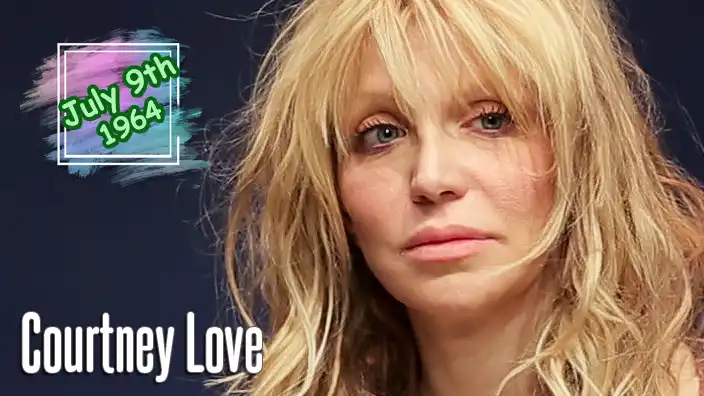
Some performers politely knock on the entertainment industry's front door. Courtney Love kicked it open with a guitar in one hand, a microphone in the other, and enough confidence to power a stadium. Whether people agreed with her or not, they almost always paid attention—and in the world of rock music, that's half the battle.
July 9, 1964, in San Francisco, California
Trivia
- Founded the alternative rock band Hole in 1989.
- Live Through This is considered one of the defining rock albums of the 1990s.
- Was married to Kurt Cobain.
- Mother of Frances Bean Cobain.
- Earned critical acclaim for The People vs. Larry Flynt.
- Has worked as a singer, songwriter, actress, and visual artist.
- Helped shape the sound of the grunge and alternative rock movement.
- Released solo music in addition to her work with Hole.
- Is known for her outspoken personality and candid interviews.
- Continues to influence generations of female rock musicians.
- Details
- Category: Celebrity Birthdays - July
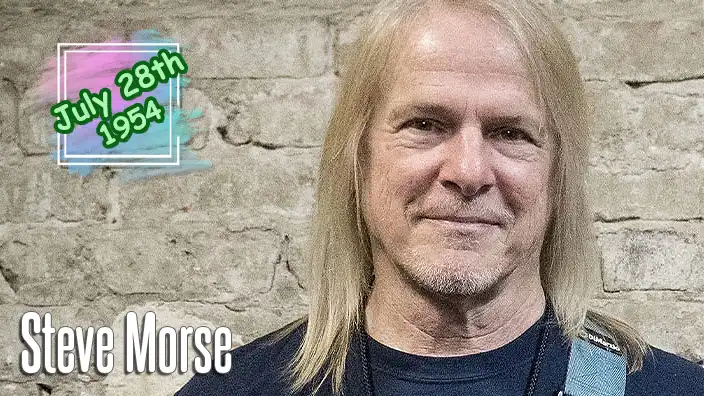
Some guitarists play so many notes that audiences wonder whether they accidentally leaned on the fast-forward button. Steve Morse, however, somehow makes lightning-speed playing sound as relaxed as someone chatting over a cup of coffee. While the rest of us might struggle to remember where we left the TV remote, Morse can effortlessly navigate fretboards that look more like obstacle courses than musical instruments. Watching him perform is a bit like watching a master chef prepare a gourmet meal with one hand tied behind his back—you know it's incredibly difficult, but he makes it look unfairly easy.
 July 28, 1954, in Hamilton, Ohio
Trivia
- Co-founded the Dixie Dregs
- Studied at the University of Miami School of Music
- Joined Kansas in the 1980s
- Became Deep Purple's guitarist in 1994
- Served with Deep Purple for 28 years
- Released numerous acclaimed solo albums
- Known for hybrid picking and exceptional versatility
- Has several signature guitar models
- Frequently ranked among the world's greatest guitarists
- Stepped away from Deep Purple in 2022 to care for his wife
- Details
- Category: Celebrity Birthdays - July
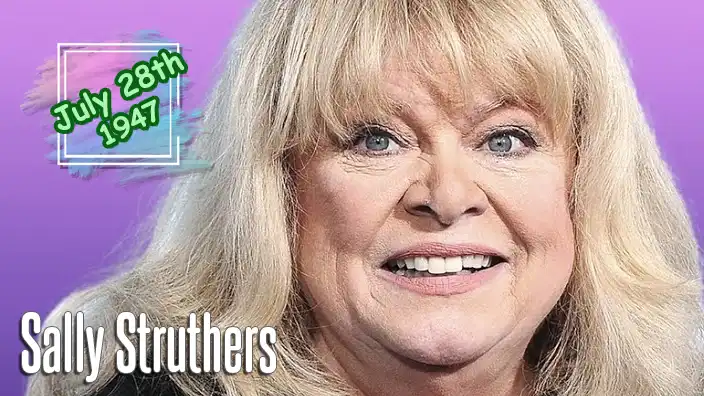
Gloria Stivic grew up in a Queens household where every family discussion became a debate, every debate became an argument, and every argument eventually required Edith Bunker to hurry in from the kitchen carrying something edible. Sally Struthers somehow made Gloria affectionate, exasperated, idealistic, stubborn, funny, and entirely believable while standing between Archie Bunker and Michael “Meathead” Stivic—two men who could turn the proper way to butter toast into a constitutional crisis. Surviving that living room for eight seasons should probably have qualified her for diplomatic service.
July 28, 1947, in Portland, Oregon
Trivia
- She studied acting at the Pasadena Playhouse College of Theatre Arts.
- Her early screen appearances included Five Easy Pieces and The Getaway.
- She played Gloria Stivic on All in the Family from 1971 until 1978.
- Struthers won two Primetime Emmy Awards for portraying Gloria.
- Gloria was the daughter of Archie and Edith Bunker.
- She later starred in the spin-off series Gloria.
- She voiced Pebbles Flintstone in several animated productions.
- She provided the voice of Rebecca Cunningham in Disney’s TaleSpin.
- She voiced Charlene Sinclair on the television series Dinosaurs.
- Younger audiences know her as Babette Dell from Gilmore Girls.
- Details
- Category: Celebrity Birthdays - July
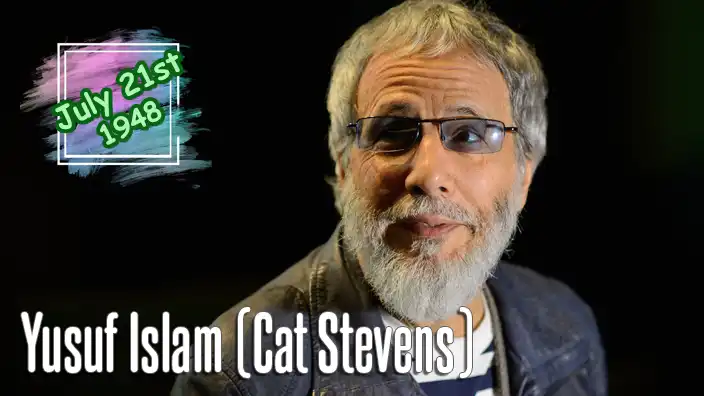
Some musicians write songs that become popular for a season. Yusuf Islam wrote songs that have been passed from one generation to the next, often discovered by listeners long after they were first recorded. Whether you know him as Cat Stevens, Yusuf, or Yusuf / Cat Stevens, chances are you've found yourself humming one of his melodies without even realizing who wrote it.
July 21, 1948, in London, England
Trivia
- Performed as Cat Stevens before adopting the name Yusuf Islam.
- Of Greek Cypriot and Swedish heritage.
- Released the classic album Tea for the Tillerman in 1970.
- Recorded timeless hits including "Wild World," "Father and Son," and "Peace Train."
- Converted to Islam in 1977.
- Returned to recording and touring after many years away from mainstream music.
- Inducted into the Rock and Roll Hall of Fame in 2014.
- Recipient of numerous humanitarian awards.
- Known for supporting educational and charitable causes worldwide.
- Details
- Category: Celebrity Birthdays - July
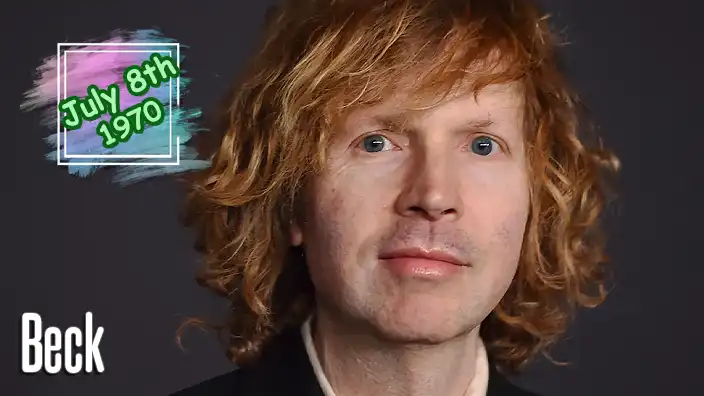
Some musicians find a formula and stick with it. Beck has spent his entire career doing exactly the opposite. Blending rock, folk, hip-hop, blues, electronic music, country, and funk into a style that's entirely his own, Beck has become one of alternative music's most creative and unpredictable artists. From the unlikely success of Loser in the 1990s to winning Album of the Year at the Grammy Awards for Morning Phase, he has continually reinvented himself while influencing generations of musicians.
July 8, 1970, in Los Angeles, California
Trivia
- His breakthrough hit "Loser" was released in 1994.
- Odelay is widely considered one of the greatest alternative rock albums of the 1990s.
- Morning Phase won the Grammy Award for Album of the Year in 2015.
- Beck has won multiple Grammy Awards during his career.
- His music blends rock, folk, hip-hop, funk, blues, electronic, and country influences.
- He has collaborated with artists from many different musical genres, constantly reinventing his sound.
- Details
- Category: Celebrity Birthdays - July
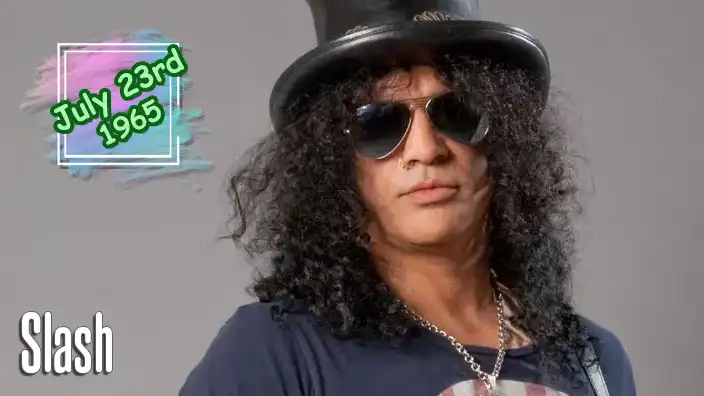
Most guitarists carry a spare set of strings. Slash seems to carry an entire rock concert wherever he goes. Give him a top hat, a Gibson Les Paul, and about three seconds, and someone nearby will start humming Sweet Child o' Mine. It's hard to become a walking silhouette, but somehow he managed it. If hats could be inducted into the Rock and Roll Hall of Fame, his would probably have its own display case.
July 23, 1965, in Hampstead, London
Trivia
- Became the lead guitarist of Guns N' Roses in 1985.
- Appetite for Destruction is one of the best-selling debut albums ever released.
- His Sweet Child o' Mine guitar solo is considered one of rock's greatest.
- He was inducted into the Rock and Roll Hall of Fame with Guns N' Roses in 2012.
- He later formed Velvet Revolver with former members of Guns N' Roses and Stone Temple Pilots vocalist Scott Weiland.
- His signature instrument is the Gibson Les Paul.
- He has released several successful solo albums featuring Myles Kennedy.
- He has supported wildlife and reptile conservation for many years.
- Details
- Category: Celebrity Birthdays - July
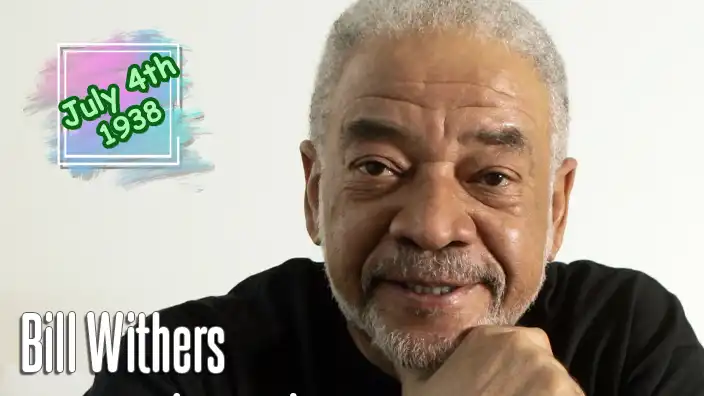
If you've ever confidently sung "Ain't No Sunshine" at karaoke, only to discover you can't hold a note longer than the microwave timer, you already owe Bill Withers an apology. He had a remarkable talent for making difficult singing sound effortless, while reminding the rest of us that humming in the shower is probably where our musical careers should begin.
July 4, 1938, in Slab Fork, West Virginia
 March 30, 2020, in Los Angeles, California
Trivia
- Served nine years in the United States Navy before pursuing music.
- Worked in an aircraft factory while recording his first album.
- Won three Grammy Awards from nine nominations.
- "Ain't No Sunshine" won a Grammy in 1971.
- "Lean on Me" reached No. 1 on the Billboard Hot 100.
- "Just the Two of Us" was recorded with Grover Washington Jr..
- "Lovely Day" is famous for its exceptionally long sustained vocal note.
- Inducted into the Songwriters Hall of Fame in 2005.
- Inducted into the Rock and Roll Hall of Fame in 2015.
- Preferred a quiet private life over celebrity.
- Details
- Category: Celebrity Birthdays - July
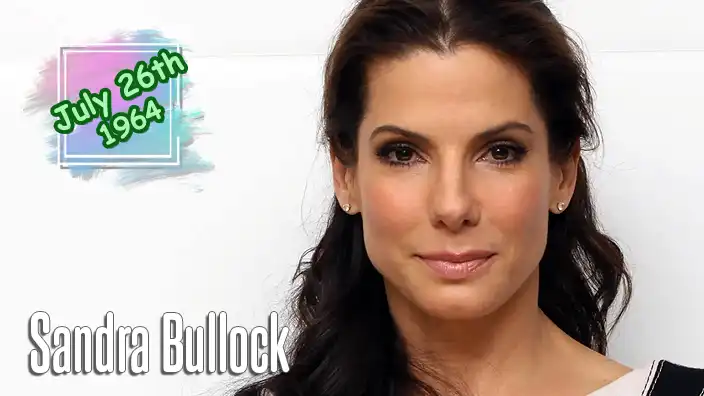
Some actors become famous for dramatic speeches. Sandra Bullock can earn a standing ovation with a raised eyebrow, a perfectly timed sigh, or a look that says, "Well...this day certainly took an unexpected turn." Whether she's escaping danger, making audiences laugh, or tugging at heartstrings, Bullock has spent decades proving that genuine charm never goes out of style. If Hollywood handed out awards for making difficult performances look effortless, she'd probably need another display case.
July 26, 1964, in Arlington, Virginia
Trivia
- Fluent in both English and German.
- Mother was a German opera singer.
- Made her blockbuster breakthrough in Speed (1994).
- Won the Academy Award for Best Actress for The Blind Side.
- Received an Oscar nomination for Gravity.
- Starred in Miss Congeniality, The Proposal, and While You Were Sleeping.
- Founded the production company Fortis Films.
- Has donated millions of dollars to disaster relief efforts.
- Mother of two adopted children.
- Frequently listed among Hollywood's highest-paid actresses.
- Details
- Category: Celebrity Birthdays - July
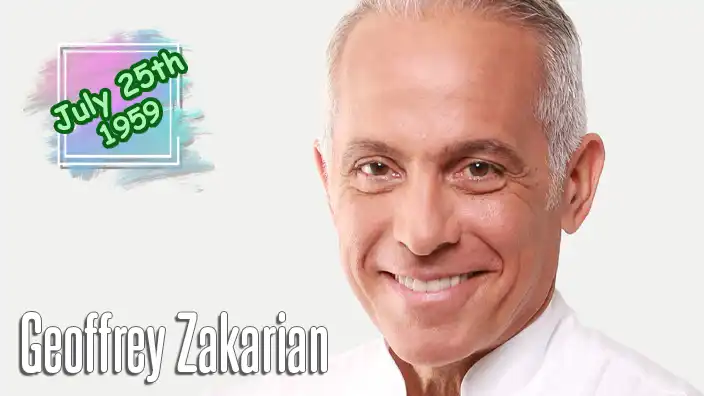
Some chefs make dinner. Geoffrey Zakarian makes dinner look as though it belongs on the cover of a magazine, served on a plate that probably costs more than most people's first apartment furniture. Yet beneath the crisp suits, polished presentation, and encyclopedic knowledge of fine cuisine is a chef who genuinely enjoys teaching others that great cooking doesn't always require a culinary degree—just good ingredients, a little confidence, and perhaps a sharp knife that isn't older than the refrigerator.
July 25, 1959, in Worcester, Massachusetts
Trivia
- Graduate of the Culinary Institute of America.
- Renowned chef, restaurateur, author, and television personality.
- Iron Chef on Iron Chef America.
- Longtime judge on Chopped.
- Has owned and operated several acclaimed restaurants.
- Author of multiple bestselling cookbooks.
- Known for blending classic French techniques with modern American cuisine.
- Frequently appears on Food Network cooking competitions and specials.
- Details
- Category: Celebrity Birthdays - July
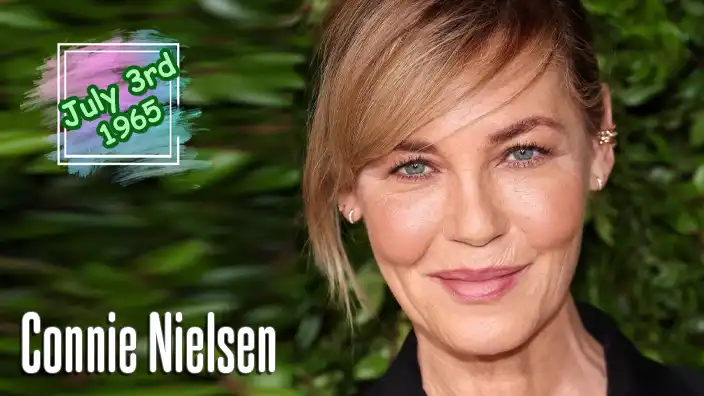
Some actors spend years trying to look regal, while others simply walk into a scene and make everyone else look underdressed. Connie Nielsen has mastered the art of portraying queens, noblewomen, and powerful leaders with such effortless confidence that you'd almost expect her to start giving orders between takes. If Hollywood ever runs short of royalty, senators, or formidable mothers, they already know exactly who to call.
July 3, 1965, in Frederikshavn, Denmark
Trivia
- Speaks multiple languages, including Danish, English, Italian, French, German, Norwegian, and Swedish.
- Made her English-language breakthrough in The Devil's Advocate (1997).
- Best known as Lucilla in Gladiator (2000) and Gladiator II (2024).
- Played Queen Hippolyta in several DC superhero films.
- Appeared alongside Robin Williams in One Hour Photo.
- Starred opposite Bob Odenkirk in Nobody (2021).
- Has enjoyed successful careers in both European and Hollywood productions.
- Known for portraying intelligent, strong, and dignified female characters.
- Details
- Category: Celebrity Birthdays - July
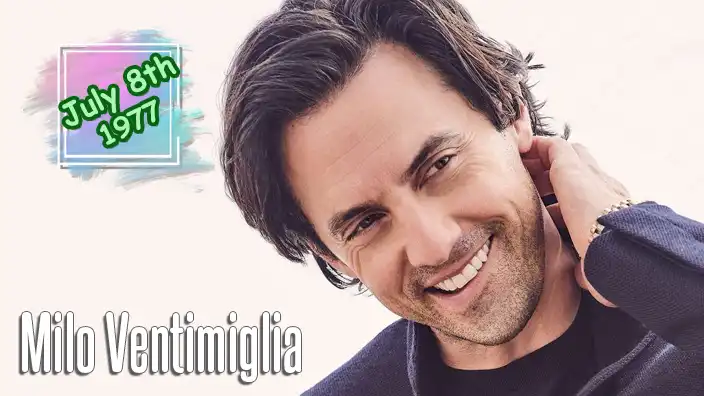
Some actors command attention with dramatic speeches and larger-than-life characters. Milo Ventimiglia built his career differently. With thoughtful performances, genuine warmth, and an ability to make audiences care deeply about his characters, he has become one of television's most respected leading men. Best known for his unforgettable portrayal of Jack Pearson in This Is Us, Ventimiglia has spent more than two decades creating memorable roles that resonate with viewers long after the credits roll.
July 8, 1977, in Anaheim, California
Trivia
- His last name, Ventimiglia, comes from a town in northwestern Italy.
- He became a fan favorite as Jess Mariano on Gilmore Girls.
- He starred as Peter Petrelli in the hit science-fiction series Heroes.
- His portrayal of Jack Pearson in This Is Us earned multiple Emmy Award nominations.
- He appeared as Rocky Balboa's son in the film Rocky Balboa.
- In addition to acting, he has worked as a producer on several television projects.
- He is known for keeping his personal life remarkably private despite his fame.
- Details
- Category: Celebrity Birthdays - July
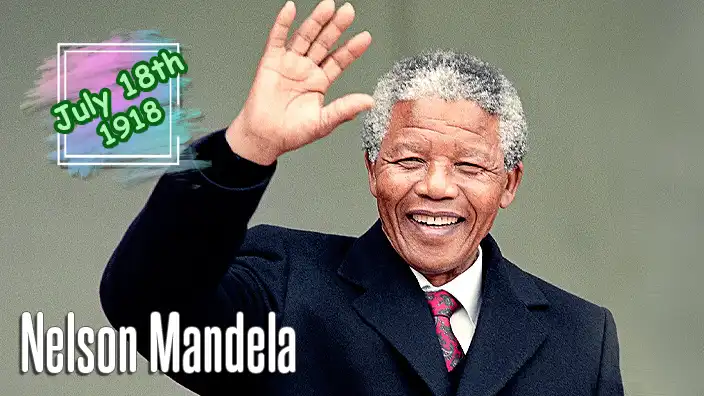
If there were an Olympic event for patience, forgiveness, and keeping your cool under pressure, Nelson Mandela would have walked away with the gold medal—then invited everyone else onto the podium for a group photo. He proved that true strength doesn't always come from raising your voice. Sometimes it comes from quietly refusing to give up, even when history seems determined to make life as difficult as possible.
July 18, 1918, in Mvezo, South Africa
December 5, 2013, in Johannesburg, South Africa
Trivia
- He helped establish South Africa's first Black-owned law firm.
- He spent 27 years in prison.
- Much of his imprisonment was on Robben Island.
- He received the Nobel Peace Prize in 1993.
- He became South Africa's first democratically elected Black president in 1994.
- He served only one presidential term by choice.
- His birthday is celebrated as Nelson Mandela International Day.
- People are encouraged to volunteer 67 minutes on Mandela Day.
- He was affectionately known by many South Africans as Madiba, his clan name.
- He received more than 250 awards and honors during his lifetime.
- Details
- Category: Celebrity Birthdays - July
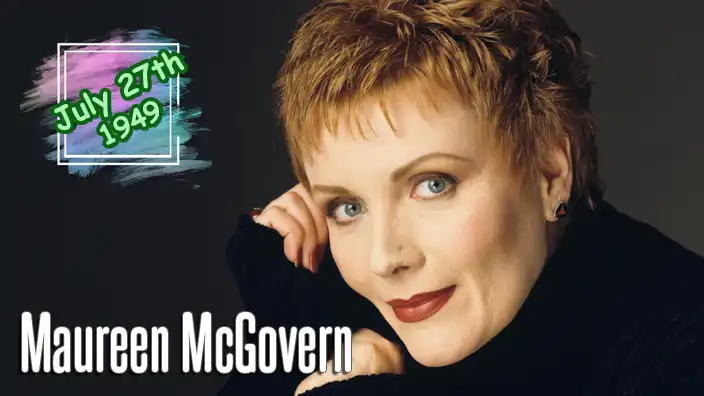
Some songs become hits. Others become part of history. Then there's "The Morning After," which managed to convince an entire generation that surviving a sinking ocean liner was only the beginning of a chart-topping career. Fortunately for Maureen McGovern, she proved she was much more than one unforgettable movie theme, building a career that carried her from the recording studio to Broadway, concert halls, and television stages with a voice that remained every bit as captivating as the day audiences first heard it.
July 27, 1949, in Youngstown, Ohio
Trivia
- Received a Grammy nomination for Best New Artist.
- Recorded two Academy Award-winning movie songs.
- Broadway debut was The Pirates of Penzance.
- Starred in Nine, Little Women, and The King and I.
- Released more than 25 albums.
- Performed with major symphony orchestras worldwide.
- Longtime supporter of the Muscular Dystrophy Association.
- Retired from concert touring in 2022.
- Details
- Category: Celebrity Birthdays - July
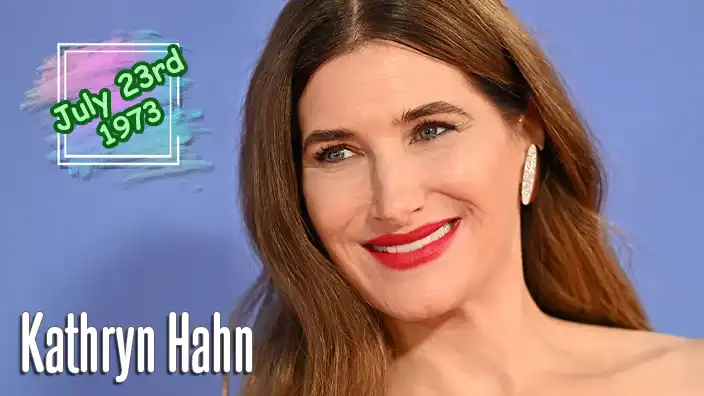
If Hollywood handed out awards for quietly stealing every scene without technically breaking any laws, Kathryn Hahn would need an extra room in the house for the trophies. She has perfected the art of showing up, delivering a few unforgettable lines, and leaving audiences wondering whether the movie should have been about her all along. Judging by her recent leading roles, someone in Hollywood finally had the same thought.
July 23, 1973, in Westchester, Illinois
Trivia
- She graduated from Northwestern University.
- She earned an MFA from the Yale School of Drama.
- Her first major television role was Crossing Jordan.
- She became a Marvel fan favorite as Agatha Harkness in WandaVision.
- The song "Agatha All Along" became an unexpected worldwide hit.
- She starred in the Marvel spin-off Agatha All Along.
- She appeared in Glass Onion: A Knives Out Mystery.
- She has enjoyed success in comedy, drama, animation, and superhero productions.
- Directors often praise her improvisational skills.
- Details
- Category: Celebrity Birthdays - July
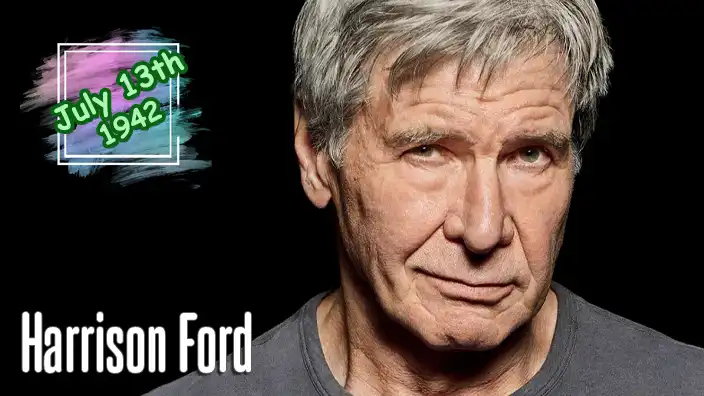
If there were an Olympic event for accidentally becoming one of Hollywood's biggest stars, Harrison Ford would probably win gold, shrug modestly, and then fly home in the Millennium Falcon. Whether he's outrunning giant boulders, piloting starships, or reminding villains that they picked the wrong archaeologist to annoy, Ford has spent decades proving that looking slightly grumpy can still make you one of the coolest people in cinema.
July 13, 1942, in Chicago, Illinois
Trivia
- Learned acting while trying to overcome shyness.
- Worked professionally as a carpenter before becoming famous.
- Played Han Solo in the Star Wars films.
- Created the iconic role of Indiana Jones.
- Portrayed Jack Ryan in two Tom Clancy films.
- Received an Academy Award nomination for Witness.
- Is a licensed pilot for both airplanes and helicopters.
- Has participated in real-life search-and-rescue missions.
- Serves as Vice Chair of Conservation International.
- Married actress Calista Flockhart in 2010.
- Returned as Han Solo in The Force Awakens (2015).
- Returned as Indiana Jones in Dial of Destiny (2023).
- Details
- Category: Celebrity Birthdays - July
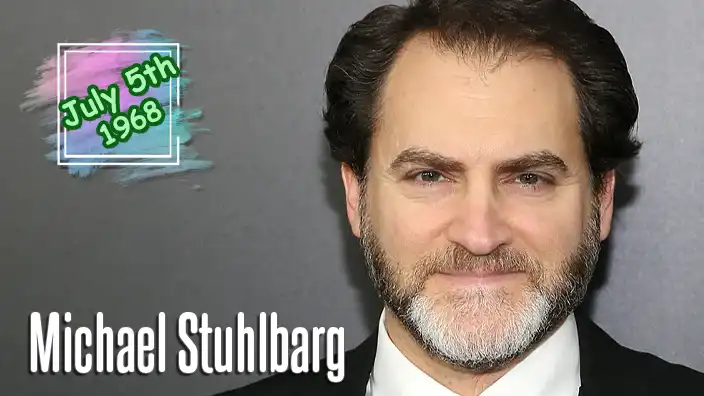
Hollywood has superheroes, action stars, and romantic leads—but every so often there's an actor who quietly appears in nearly every great film of the decade and somehow keeps surprising audiences. Michael Stuhlbarg is that actor. You may not immediately remember his name, but the moment someone says, "Oh, that guy," the light bulb comes on. He's the cinematic equivalent of finding an extra fry at the bottom of the bag—a welcome surprise that somehow makes everything even better.
July 5, 1968, in Long Beach, California
Trivia
- Graduate of the prestigious Juilliard School.
- Began his career primarily in theater.
- Earned a Tony Award nomination for The Pillowman.
- Received a Golden Globe nomination for A Serious Man.
- Played Professor Perlman in Call Me by Your Name.
- Appeared in Oscar winners The Shape of Water and Lincoln.
- Played Dr. Nicodemus West in Marvel's Doctor Strange films.
- Portrayed gangster Arnold Rothstein in Boardwalk Empire.
- Twice nominated for Primetime Emmy Awards.
- Details
- Category: Celebrity Birthdays - July
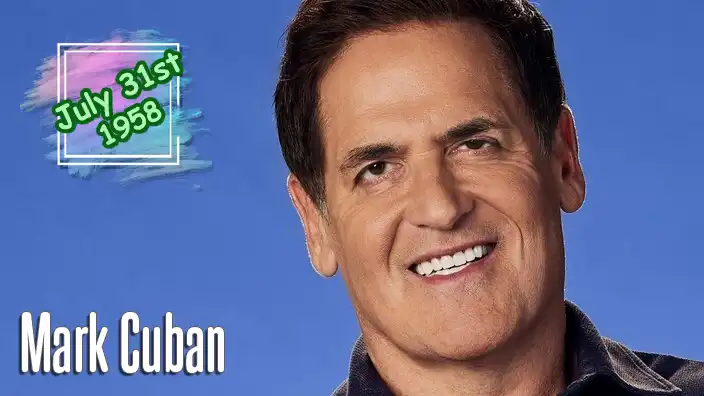
Some people buy a lottery ticket and dream of becoming billionaires. Mark Cuban bought struggling businesses, built technology companies, invested in bold ideas, owned an NBA franchise, and somehow still found time to argue with referees from courtside. If enthusiasm could be bottled and sold, he'd probably already own the company that makes the bottles.
July 31, 1958, in Pittsburgh, Pennsylvania
Trivia
- Became a billionaire following the Broadcast.com sale.
- Former majority owner of the Dallas Mavericks.
- Led the Mavericks to their first NBA Championship in 2011.
- Longtime investor on ABC's Shark Tank.
- Graduated from Indiana University with a business degree.
- Started selling products as a child, including garbage bags.
- Invests heavily in technology and healthcare startups.
- Has written books on business and entrepreneurship.
- Known for his energetic courtside presence during Mavericks games.
- Details
- Category: Celebrity Birthdays - July
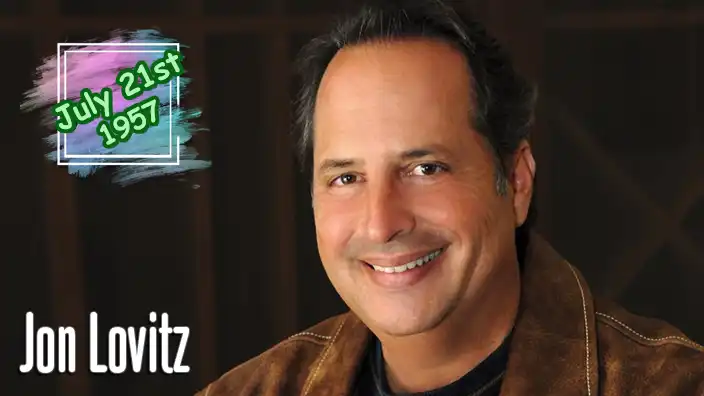
Some comedians walk into a room and tell jokes. Jon Lovitz walks into a room, becomes three different people, invents a ridiculous accent, delivers a completely outrageous line, and somehow convinces everyone he means every word. His secret has never been simply being funny—it's making the audience wonder whether he's serious for just long enough before the laughter begins.
July 21, 1957, in Los Angeles, California
Trivia
- Graduated from the University of California, Irvine.
- Trained with the famous Groundlings comedy troupe.
- Joined Saturday Night Live in 1985.
- Created the popular character Tommy Flanagan, the Pathological Liar.
- Famous for the catchphrase, "Yeah...that's the ticket!"
- Appeared in A League of Their Own and The Wedding Singer.
- Has voiced numerous characters on The Simpsons.
- Earned two Primetime Emmy Award nominations for Saturday Night Live.
From Our Marks Catelog
-

Pizza is the ultimate customizable dish. It caters to all, from the staunch meat-lover who wants...
-

Your toes don't ask for much. They spend their days squeezed into shoes, dodging coffee tables,...
-

You’re trying to relax after a long day, but your dog has decided that now is the perfect time to...
-
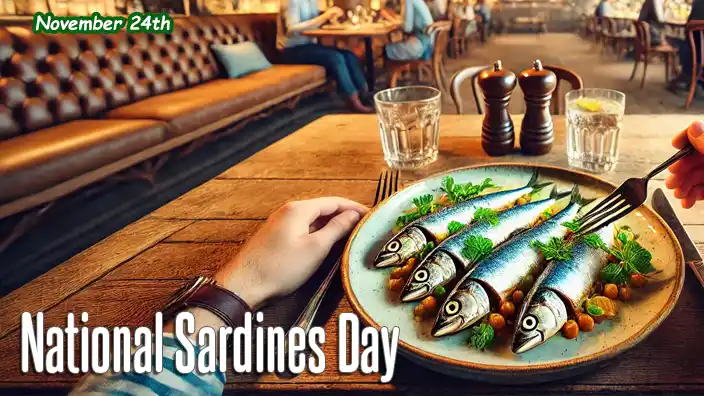
Tiny, shiny, and unapologetically bold, these little fish have a knack for stealing the show at...
-

Horses are the comedians of the animal world, even if they don’t realize it. From sneaky maneuvers...
-
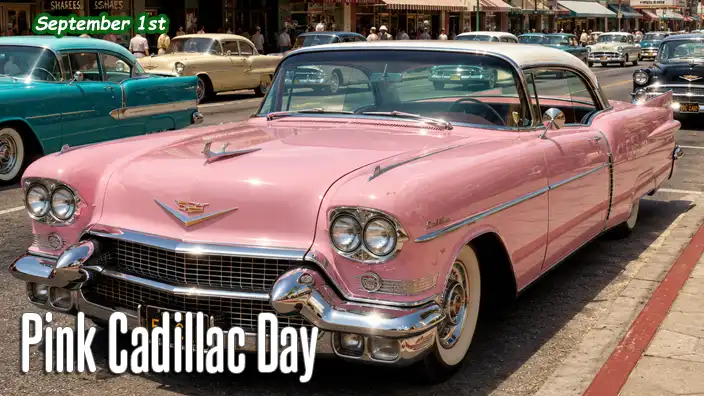
Some cars are built to get you from point A to point B. The Pink Cadillac was built to make sure...

