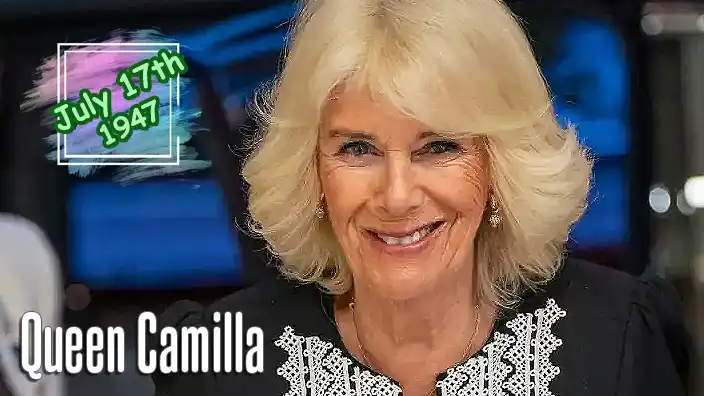
July 17, 1947, in London, England
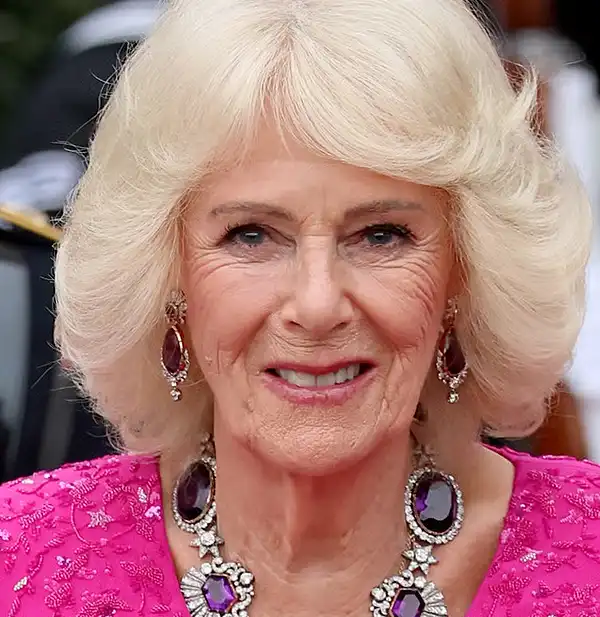
Queen Camilla, Queen Consort of the United Kingdom, has spent much of her life in the public eye, though few could have predicted the path that eventually led her to Buckingham Palace. As the wife of King Charles III, she performs a wide range of official duties while championing causes that include literacy, domestic violence awareness, osteoporosis research, and animal welfare.
Her story is one of patience, resilience, and adapting to extraordinary circumstances. Over the decades, public opinion evolved dramatically, and today she is widely recognized as a hardworking and dependable member of the British royal family.
Born Camilla Rosemary Shand on July 17, 1947, in London, England, she grew up in Sussex in a family with strong ties to British society. Her father, Major Bruce Shand, was a decorated British Army officer, while her mother, Rosalind Cubitt, came from a family with aristocratic connections.
Camilla enjoyed an active childhood filled with horseback riding, country life, and a love of animals that has remained with her throughout adulthood. She attended several schools in England before continuing her education in Switzerland and later in France, where she developed an appreciation for languages and European culture.
During the early 1970s, Camilla met Prince Charles, then heir to the British throne. Although the two formed a close relationship, circumstances and royal expectations led them down separate paths.
In 1973, Camilla married British Army officer Andrew Parker Bowles. The couple had two children, Tom Parker Bowles, a food writer and critic, and Laura Lopes, an art curator. Their marriage lasted more than twenty years before ending in divorce in 1995.
Meanwhile, Prince Charles married Lady Diana Spencer in 1981. The highly publicized marriage eventually encountered serious difficulties and ended in divorce in 1996. Diana's tragic death in 1997 placed intense public scrutiny on everyone connected with the royal family, including Camilla.
Over time, however, public attitudes gradually softened. Camilla maintained a relatively low profile while supporting Charles privately and participating in charitable activities. By the early 2000s, she had become increasingly accepted by both the public and the media.
On April 9, 2005, Camilla and Prince Charles were married in a civil ceremony at Windsor Guildhall, followed by a blessing at St. George's Chapel, Windsor Castle. Upon marriage, she became Her Royal Highness The Duchess of Cornwall, choosing not to use the title Princess of Wales out of respect for the late Diana, who remained closely associated with that title.
For nearly two decades, Camilla faithfully supported Charles through hundreds of official engagements across the United Kingdom and around the world. Whether meeting community volunteers, visiting hospitals, hosting state banquets, or representing the Crown overseas, she developed a reputation for being approachable and well-prepared.
One of her greatest passions has been promoting literacy. As Patron of numerous reading organizations, she has consistently encouraged people of all ages to discover the enjoyment of books. She launched The Queen's Reading Room, an initiative that recommends books, interviews authors, and encourages reading across the United Kingdom and beyond.
Camilla has also become a leading advocate for survivors of domestic abuse and sexual violence. She has worked closely with organizations that provide support services, helping raise awareness of issues that were once rarely discussed in public.
Another cause close to her heart is osteoporosis, a disease that affected both her mother and grandmother. Her advocacy has helped improve awareness, education, and research into bone health.
Animal welfare has long been another important interest. Dogs, horses, and rescue animals frequently appear alongside Camilla during official engagements, and she has adopted rescue dogs herself.
Everything changed on September 8, 2022, when Queen Elizabeth II passed away at Balmoral Castle. Charles immediately became King Charles III, and Camilla assumed the title of Queen Consort, reflecting her role as the spouse of the reigning monarch.
Earlier that year, Queen Elizabeth II had publicly expressed her wish that Camilla be known as Queen Consort when Charles became king. The statement carried enormous significance and reflected the confidence the late Queen had developed in Camilla's years of dedicated public service.
On May 6, 2023, Camilla was crowned alongside King Charles III during the Coronation Service at Westminster Abbey. It marked Britain's first coronation in seventy years and placed her firmly alongside the King as they began a new chapter in the history of the monarchy.
As Queen, Camilla continues to undertake hundreds of engagements every year. While many of the ceremonies attract international attention, much of her work focuses on visiting charities, supporting volunteers, recognizing community achievements, and encouraging education.
Observers often note her calm demeanor and understated style. Rather than attempting to dominate the spotlight, Camilla has generally preferred to let her work speak for itself. That steady approach has helped reshape public perceptions over many years.
Outside official duties, Camilla enjoys reading, gardening, spending time in the countryside, and relaxing with family. Friends frequently describe her as possessing a dry sense of humor and a practical outlook, qualities that have undoubtedly proven useful when living inside one of the world's oldest constitutional monarchies.
Today, Queen Camilla occupies a unique place in modern British history. Her journey from private citizen to Queen Consort has been unlike any before it, reflecting changing public attitudes and the evolving nature of the monarchy itself. Through decades of scrutiny, she has demonstrated resilience, dedication, and a commitment to public service that continues to define her role alongside King Charles III.