- Details
- Category: Celebrity Birthdays - July
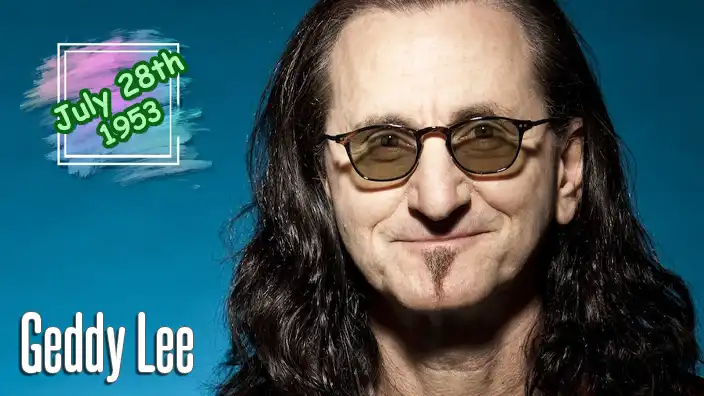
Geddy Lee has spent decades proving that apparently it is possible for one person to sing, play a bass guitar that sounds like a lead instrument, trigger keyboards with hands and feet, and somehow remember where he left his microphone. Most musicians are thrilled if they can successfully do one of those things at a time. Geddy simply treated it as another Tuesday night with Rush. Fans have spent years trying to figure out exactly how three musicians created a sound that often seemed to come from an orchestra—and Geddy was right at the heart of the mystery.
 July 29, 1953, in Toronto, Canada

Trivia
- Lead vocalist, bassist, and keyboardist for Rush.
- Rush has sold more than 40 million albums worldwide.
- Inducted into the Rock and Roll Hall of Fame in 2013.
- Released the solo album My Favourite Headache in 2000.
- Known for his distinctive high tenor singing voice.
- An avid collector of baseball memorabilia.
- Co-authored the memoir My Effin' Life.
- Details
- Category: Celebrity Birthdays - July
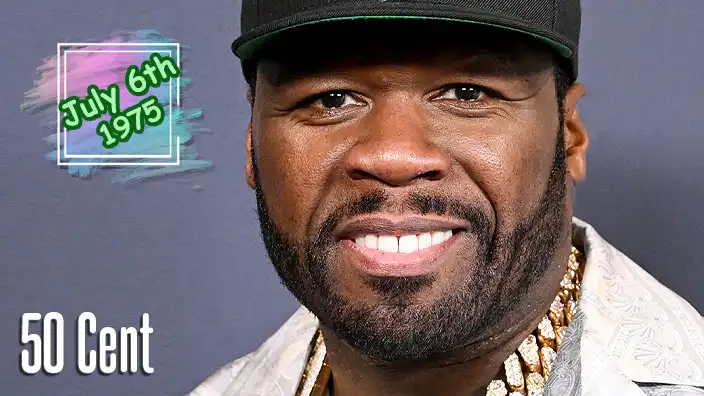
Some people reinvent themselves once in a lifetime. Curtis "50 Cent" Jackson seems to do it every few years. He has gone from rapper to entrepreneur, actor, author, producer, and television powerhouse—all while somehow finding time to keep the internet entertained. Whether he's releasing hit records or building successful businesses, 50 Cent has spent decades proving he's just as comfortable in the boardroom as he is behind a microphone.
July 6, 1975, in the Queens, New York
Trivia
- Released Get Rich or Die Tryin' in 2003.
- Discovered by Eminem and Dr. Dre.
- Won a Grammy Award during his music career.
- Was an early investor in Vitaminwater.
- Executive producer of the hit television series Power.
- Founded the G-Unit brand.
- Has written books and appeared in numerous films.
- Supports charitable causes through the G-Unity Foundation.
- Details
- Category: Celebrity Birthdays - July
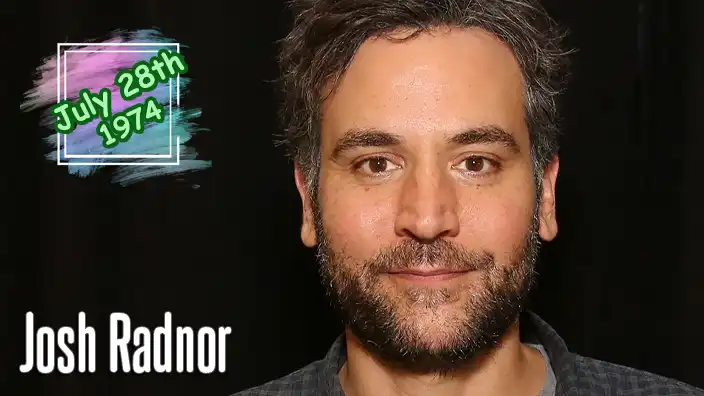
Josh Radnor has one of those faces that millions of television fans instantly recognize, even if they first think, "Wait... wasn't he telling a really long story?" For nine seasons, he managed to convince audiences that explaining how you met your children's mother could somehow require nearly two hundred episodes. Fortunately for viewers, his charm, wit, and relatable awkwardness made every detour worthwhile. If patience were an Olympic sport, Ted Mosby's kids deserved gold medals—and Josh Radnor deserved applause for making the journey so entertaining.
July 29, 1974, in Columbus, Ohio
Trivia
- Graduated from Kenyon College with a degree in drama.
- Earned an MFA from New York University's Tisch School of the Arts.
- Wrote, directed, and starred in Happythankyoumoreplease.
- Won the Audience Award at the Sundance Film Festival for his directorial debut.
- Directed and starred in Liberal Arts.
- Performs as part of the musical duo Radnor & Lee.
- Has appeared on Broadway and Off-Broadway.
- Details
- Category: Celebrity Birthdays - July
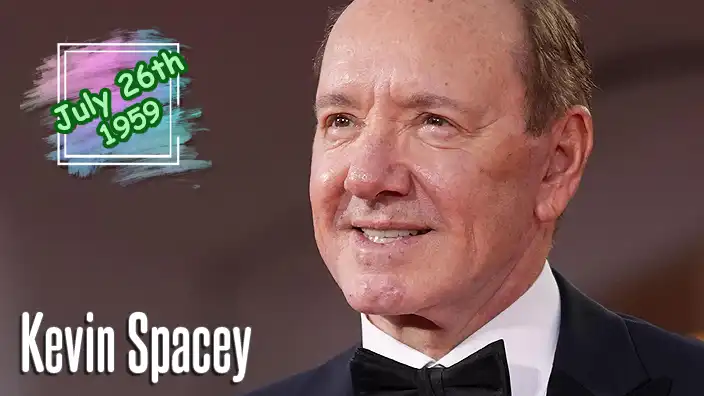
There are actors who disappear into a role, and then there are actors who make audiences forget they are watching someone pretend for two hours. Kevin Spacey has long belonged in that second category. Whether he was charming, mysterious, intimidating, sarcastic, or quietly unsettling, he often had viewers wondering if he had secretly borrowed the character's driver's license before filming began. If Hollywood ever handed out awards for making people nervously lean closer to the screen while saying, "Something isn't quite right here," he'd probably have needed another trophy cabinet.
July 26, 1959, in South Orange, New Jersey
Trivia
- Uses his paternal grandmother's surname as his stage name.
- Won two Academy Awards for acting.
- Won a Tony Award for Lost in Yonkers.
- Won a Golden Globe for House of Cards.
- Served as Artistic Director of London's Old Vic Theatre from 2004 to 2015.
- Voiced Hopper in Pixar's A Bug's Life.
- Received a star on the Hollywood Walk of Fame in 1999.
- Often portrayed highly intelligent, morally complex characters.
- Was known for keeping his private life out of the public spotlight for much of his career.
- Began his professional acting career in New York theater before moving into film.
- Details
- Category: Celebrity Birthdays - July
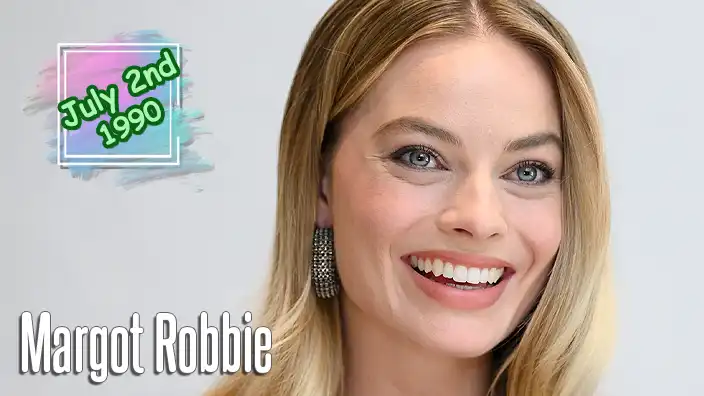
Some actors wait years for the perfect role. Margot Robbie seems to find one every time she opens a script. Whether she's portraying a mischievous comic book villain, a world-famous doll, or a historical figure, she has a remarkable habit of making audiences forget they're watching an actress. That's either exceptional talent or some very expensive Australian magic.
 July 2, 1990, in Dalby, Australia
Trivia
- Starred as Donna Freedman on Neighbours.
- Broke through internationally in The Wolf of Wall Street (2013).
- Played Harley Quinn in three DC films.
- Earned an Academy Award nomination for I, Tonya.
- Received another Oscar nomination for Bombshell.
- Co-founded LuckyChap Entertainment in 2014.
- Produced and starred in Barbie (2023).
- Barbie became the highest-grossing film of 2023.
- Married British producer Tom Ackerley in 2016.
- Details
- Category: Celebrity Birthdays - July
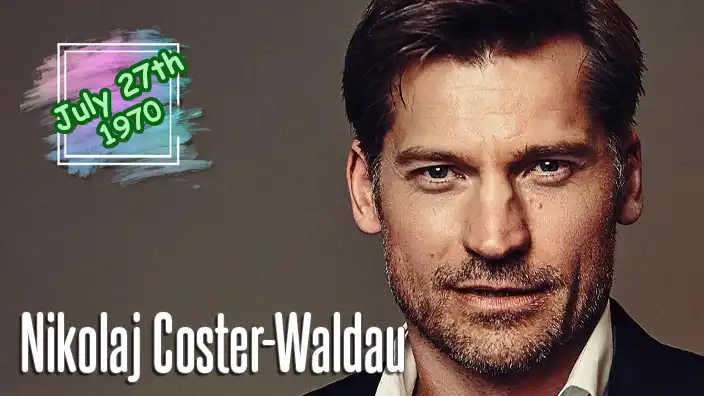
If television has taught us anything, it's never judge a character by the first season. Nikolaj Coster-Waldau spent years convincing audiences that Jaime Lannister might be the most arrogant man in Westeros—only to quietly transform him into one of fantasy television's most fascinating and surprisingly sympathetic characters. It takes a remarkable actor to make viewers cheer for someone they originally wanted to throw off the nearest castle wall.
July 27, 1970, in Rudkøbing, Denmark
Trivia
- Graduated from the Danish National School of Performing Arts.
- Broke through in the Danish thriller Nightwatch.
- Best known as Jaime Lannister in Game of Thrones.
- Received multiple Primetime Emmy Award nominations.
- Starred in Black Hawk Down and Kingdom of Heaven.
- Co-wrote and produced Against the Ice.
- Serves as a UNDP Goodwill Ambassador.
- Married actress and singer Nukâka Coster-Waldau since 1998.
- Details
- Category: Celebrity Birthdays - July
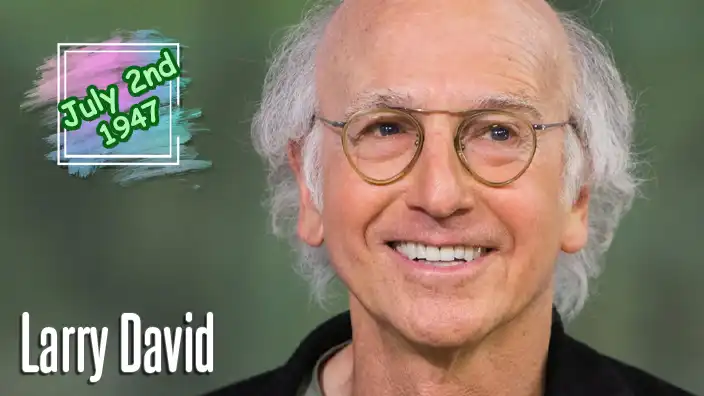
Some people spend their lives trying to avoid awkward situations. Larry David looked at those same moments and thought, "That would make a great television show." Whether he's arguing over restaurant etiquette, questioning everyday social customs, or turning the smallest inconvenience into a full-scale comedy crisis, Larry has built a career out of saying what most people only dare to think.
July 2, 1947, in the Brooklyn, New York
Trivia
- He co-created Seinfeld with Jerry Seinfeld.
- He was head writer on Seinfeld for seven seasons.
- He created and starred in Curb Your Enthusiasm.
- Much of Curb Your Enthusiasm is improvised.
- He served in the United States Army Reserve.
- His Broadway play Fish in the Dark opened in 2015.
- George Costanza was partly inspired by Larry David.
- He returned to write the Seinfeld series finale.
- He is known for observational and cringe comedy.
- He has won multiple Primetime Emmy Awards.

- Details
- Category: Celebrity Birthdays - July
Betty Gilpin has a remarkable talent for making every role look effortless, even when she's wrestling in a television ring, dodging danger in a satirical action film, or delivering razor-sharp dialogue with perfect timing. If acting were an Olympic event, she'd probably apologize for winning gold before quietly giving another unforgettable performance. Thankfully for audiences everywhere, she keeps saying "yes" to challenging roles instead of taking up competitive knitting.
July 21, 1986, in New York City, New York
Trivia
- Daughter of actors Jack Gilpin and Ann McDonough.
- Graduated from Fordham University.
- Earned three consecutive Primetime Emmy nominations for GLOW.
- Performed extensive wrestling training for GLOW.
- Starred opposite Edie Falco in Nurse Jackie.
- Played the lead role in the action satire The Hunt.
- Wrote the memoir All the Women in My Brain.
- Known for seamlessly moving between comedy, drama, and action.
- Has appeared in numerous Law & Order franchise episodes.
- Frequently praised for portraying strong but emotionally layered characters.
- Details
- Category: Celebrity Birthdays - July
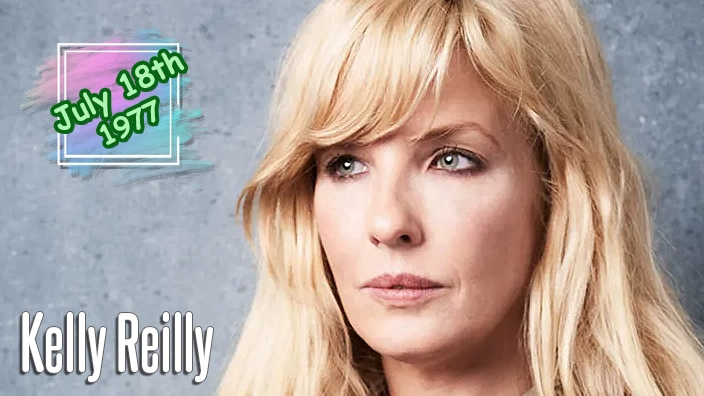
Some television characters politely ask you not to cross them. Beth Dutton simply lets you make that mistake on your own. Fortunately, Kelly Reilly is considerably friendlier than the fearless, sharp-tongued force of nature she portrays. Off-screen, she has quietly become one of Britain's most respected actresses, proving that sometimes the loudest career is built with remarkably little fuss.
July 18, 1977, in Chessington, England
Trivia
- Began acting professionally in the mid-1990s.
- Earned an Olivier Award nomination for After Miss Julie.
- Appeared in Pride & Prejudice (2005).
- Starred opposite Michael Fassbender in Eden Lake.
- Played Mary Morstan in Guy Ritchie's Sherlock Holmes films.
- Appeared alongside Denzel Washington in Flight.
- Rose to worldwide fame as Beth Dutton in Yellowstone.
- Married financier Kyle Baugher in 2012.
- Has worked extensively in film, television, and theater.
- Is known for keeping her personal life largely private.
- Details
- Category: Celebrity Birthdays - July
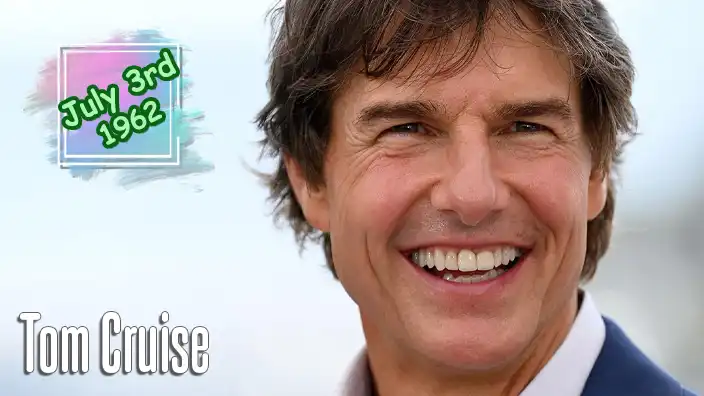
Most people celebrate birthdays by blowing out candles. Tom Cruise would probably prefer to leap over them from a moving motorcycle before parachuting into the party. While many action stars rely heavily on stunt doubles, Cruise has built a career by asking one simple question: "Can I do that myself?" The answer is usually yes—much to the delight of audiences and the mild concern of insurance companies.
July 3, 1962, in Syracuse, New York
Trivia
- Originally considered becoming a Catholic priest before pursuing acting.
- Became a global star after Top Gun (1986).
- Has portrayed Ethan Hunt in the Mission: Impossible series since 1996.
- Performs many of his own dangerous film stunts.
- Received Academy Award nominations for Born on the Fourth of July, Jerry Maguire, and Magnolia.
- Won three Golden Globe Awards.
- Produced many of the Mission: Impossible films.
- Is one of the highest-grossing leading actors in cinema history.
- Details
- Category: Celebrity Birthdays - July
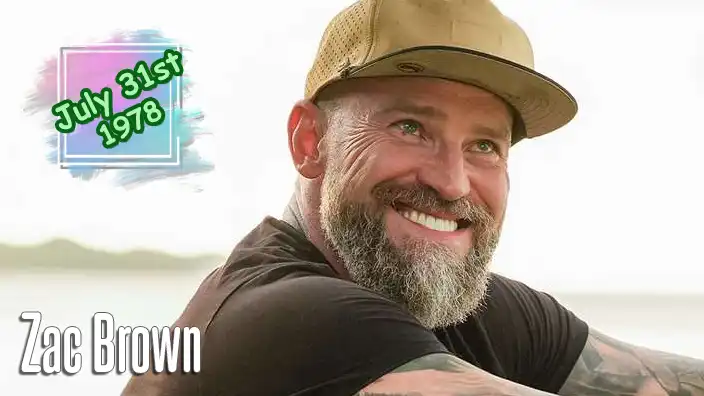
Zac Brown has spent years proving that country music doesn't have to stay in one lane. He's equally comfortable singing about fishing, front porches, family, beaches, hard work, and good food, often all before the first chorus is finished. If there were an Olympic event for making people want to buy a boat, fire up the grill, and invite the neighbors over, Zac Brown would already have several gold medals hanging in the garage.
July 31, 1978, in Atlanta, Georgia
Trivia
- Founder and lead singer of the Zac Brown Band.
- Won multiple Grammy Awards during his career.
- "Chicken Fried" became his signature breakthrough hit.
- Plays several musical instruments, including guitar and bass.
- Studied classical guitar as a young musician.
- Famous for blending country, rock, folk, bluegrass, and reggae.
- Founded Camp Southern Ground, an inclusive nonprofit summer camp.
- Known as an accomplished chef as well as a musician.
- Details
- Category: Celebrity Birthdays - July
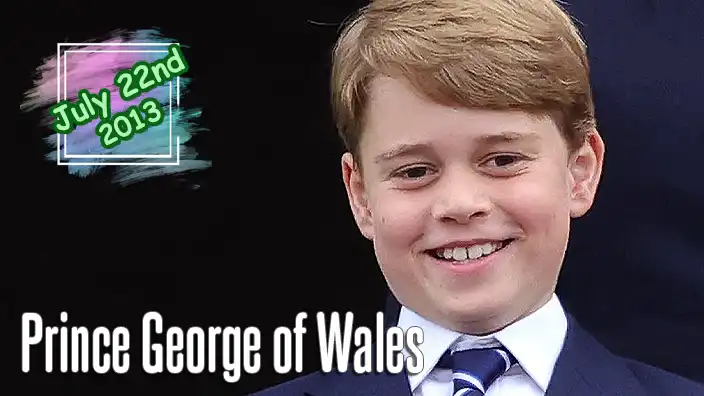
Some children inherit an old bicycle. Others inherit a box of family photographs. Prince George inherited a place in line for one of the world's oldest monarchies before he was old enough to tie his own shoes. That's a lot of pressure for someone whose biggest concern at the time was probably whether there would be dessert after dinner. Fortunately, he appears to be taking it all in stride, smiling through public appearances while reminding everyone that, beneath the royal titles, he's still a young boy growing up one step at a time.
July 22, 2013, in London, England
Trivia
- Second in line to the British throne.
- Grandson of King Charles III.
- Great-grandson of Queen Elizabeth II.
- Older brother of Princess Charlotte and Prince Louis.
- Attends Lambrook School in Berkshire.
- Supports Aston Villa Football Club.
- Served as a Page of Honor at King Charles III's coronation.
- Frequently appears on the Buckingham Palace balcony during major royal celebrations.
- Expected to become King George VII if he keeps his given name upon accession.
- Details
- Category: Celebrity Birthdays - July
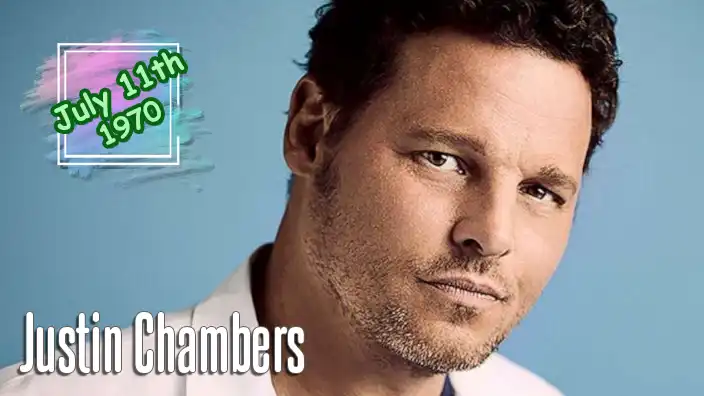
Doctors on television have an uncanny ability to solve impossible medical mysteries while finding time for dramatic conversations in hospital corridors. Real hospitals are usually more concerned with paperwork and finding a working pen. Fortunately for fans, Justin Chambers spent years making fictional medicine look exciting as one of television's most memorable surgeons, proving that compassion, determination, and the occasional sarcastic remark can make for great entertainment.
July, 11, 1970, in Springfield, Ohio
Trivia
- Began his career as an international fashion model.
- Was discovered while riding the Paris Metro.
- Studied acting at New York's HB Studio.
- Joined Grey's Anatomy in its first season.
- Played Dr. Alex Karev for 15 seasons.
- Alex Karev became a pediatric surgeon during the series.
- Appeared in The Wedding Planner alongside Jennifer Lopez.
- Married Keisha Chambers in 1993.
- Father of five children.
- Known for keeping his private life out of the spotlight.
- Details
- Category: Celebrity Birthdays - July
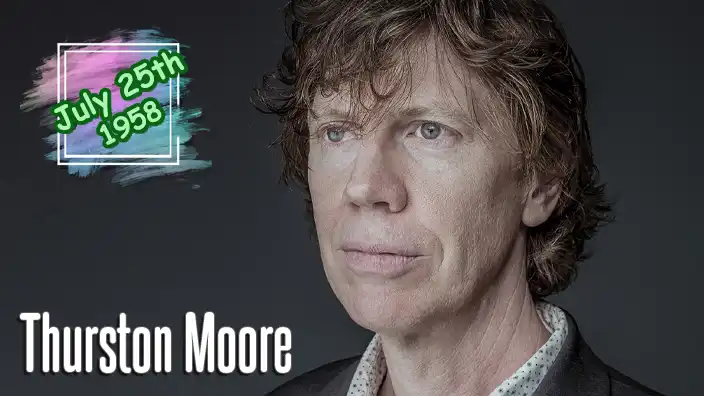
Many guitarists spend years trying to eliminate buzzing, distortion, and feedback. Thurston Moore heard all three and apparently thought, “Yes, but what happens if we turn them into an entire musical language?” The result helped reshape alternative rock and inspired generations of musicians to treat the electric guitar as something more adventurous than a machine for producing tidy solos. He proved that organized noise could be intelligent, expressive, and influential—although it probably still worried the neighbors.
July 25, 1958, in Coral Gables, Florida
Trivia
- He co-founded Sonic Youth in 1981.
- He served as a guitarist, vocalist, and songwriter for the band.
- He is known for using numerous alternate guitar tunings.
- He frequently used feedback as a deliberate musical element.
- Sonic Youth’s Daydream Nation entered the National Recording Registry.
- He founded the independent label Ecstatic Peace!
- His first widely recognized solo album was Psychic Hearts.
- He formed the band Chelsea Light Moving.
- Details
- Category: Celebrity Birthdays - July
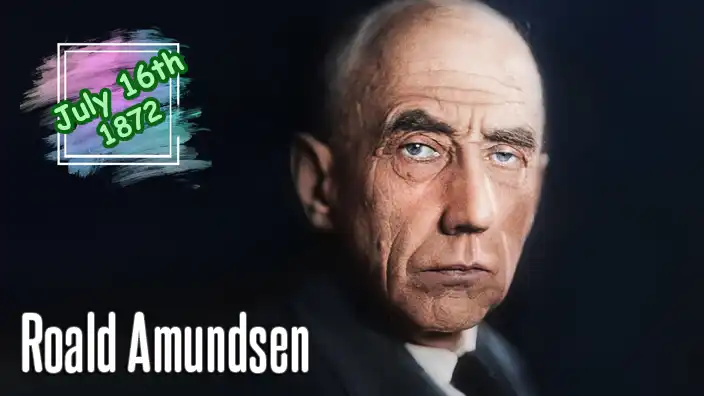
Most people think they're adventurous if they take the scenic route home. Roald Amundsen looked at frozen oceans, endless ice fields, and temperatures that could freeze a beard solid, then thought, "That seems worth exploring." While the rest of the world was inventing better ways to stay warm, he was figuring out how to spend months in places where warm was merely a rumor.
July 16, 1872, in Borge, Norway
 June 18, 1928, Barents Sea, Arctic
Trivia
- First explorer to reach the South Pole.
- Successfully arrived at the South Pole on December 14, 1911.
- First to navigate the Northwest Passage entirely by ship.
- Learned Arctic survival skills from the Inuit.
- Preferred dog sleds over motorized equipment.
- Led the expedition aboard the airship Norge across the Arctic.
- Crossed directly over the North Pole in 1926.
- Originally studied medicine before becoming an explorer.
- Known for extraordinary planning and organization.
- Disappeared during a rescue mission in the Arctic in 1928.
- Details
- Category: Celebrity Birthdays - July
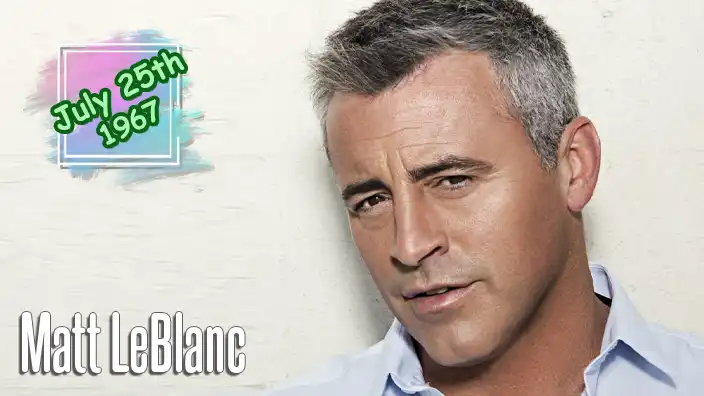
There are television characters who become famous, and then there's Joey Tribbiani. For ten seasons, millions of viewers welcomed him into their living rooms as the lovable actor whose confidence usually arrived several minutes before his common sense. Fortunately for Matt LeBlanc, audiences quickly realized that while Joey might occasionally struggle to locate the right word, the actor portraying him possessed impeccable comedic timing. Even today, all someone has to say is, "How you doin'?" and people know exactly who they're talking about.
July 25, 1967, in Newton, Massachusetts
Trivia
- Best known as Joey Tribbiani on Friends.
- Appeared in all 236 episodes of Friends.
- Starred in the spin-off series Joey.
- Won a Golden Globe Award for Episodes.
- Received multiple Primetime Emmy Award nominations.
- Hosted the BBC's Top Gear from 2016 to 2019.
- Enjoys collecting and driving classic and performance automobiles.
- Famous for Joey's catchphrase, "How you doin'?"
- Details
- Category: Celebrity Birthdays - July
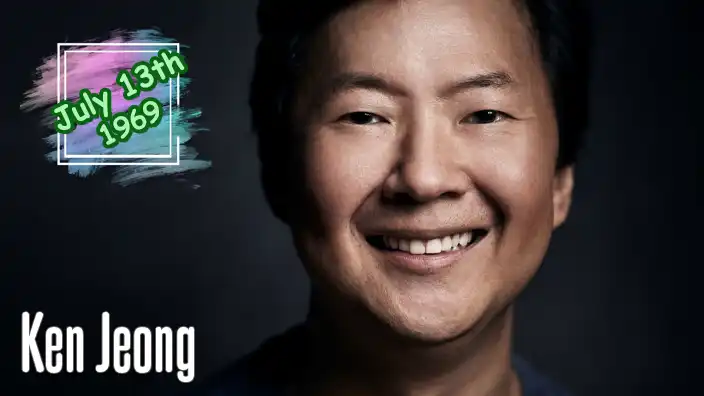
Most people change careers once or twice in their lifetime. Ken Jeong looked at medicine, conquered it, then casually wandered into Hollywood and decided making millions of people laugh sounded like a fun side project. Somewhere out there is a patient who can honestly say, "My doctor became a movie star."
July 13, 1969, in Detroit, Michigan
Trivia
- Earned his undergraduate degree from Duke University.
- Graduated from the University of North Carolina School of Medicine.
- Completed a residency in internal medicine.
- Is a licensed physician.
- Practiced medicine before becoming an actor.
- Broke through with The Hangover (2009).
- Played the unforgettable Leslie Chow.
- Starred as Ben Chang in Community.
- Created and starred in Dr. Ken.
- Has been a panelist on The Masked Singer since its debut.
- Details
- Category: Celebrity Birthdays - July
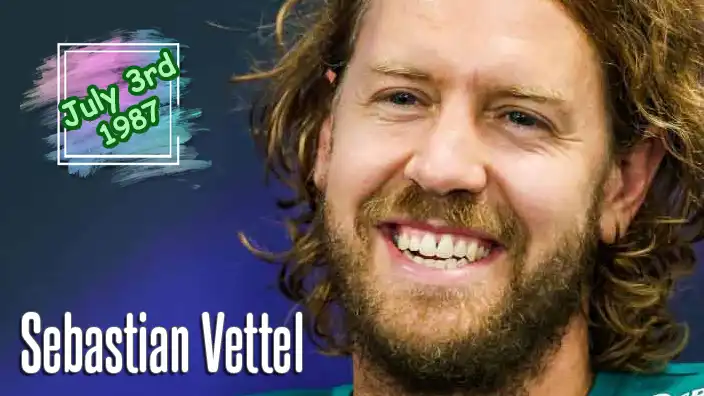
Most people are thrilled if they make it to work on time. Sebastian Vettel made a habit of arriving first at speeds exceeding 200 miles per hour. While the rest of us celebrate finding a parking space, Vettel collected Formula 1 victories, world championships, and enough trophies to make dusting the mantelpiece a full-time job. Somehow, despite all that success, he also earned a reputation as one of the sport's most thoughtful and respected competitors.
July 3, 1987, in Heppenheim, Germany
Trivia
- Began kart racing at just eight years old.
- Made his Formula 1 debut in 2007 with BMW Sauber.
- Won the 2008 Italian Grand Prix with Toro Rosso.
- Became the youngest Formula 1 World Champion in history in 2010.
- Won four consecutive World Drivers' Championships from 2010 to 2013.
- Recorded 53 Formula 1 Grand Prix victories.
- Drove for BMW Sauber, Toro Rosso, Red Bull Racing, Ferrari, and Aston Martin.
- Retired from Formula 1 after the 2022 season.
- Is an outspoken advocate for environmental sustainability and social causes.
- Details
- Category: Celebrity Birthdays - July
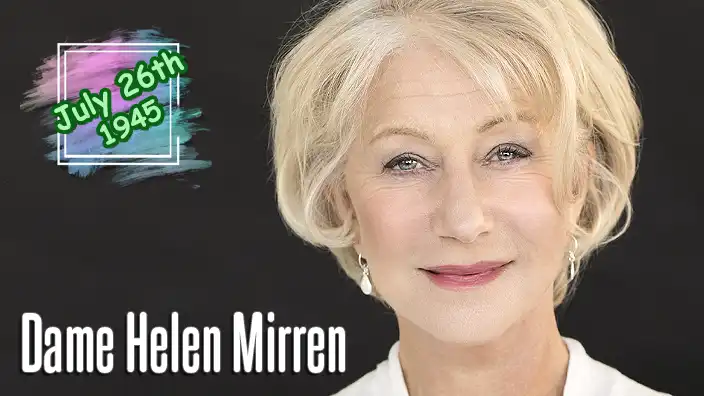
Some actors spend their careers trying to look regal. Helen Mirren solved that problem by actually playing queens—more than once—and making audiences wonder if Buckingham Palace had quietly loaned her the keys. Whether she's portraying royalty, detectives, military leaders, or delightfully sharp-tongued grandmothers, Mirren has mastered the rare ability to command every room she enters. If confidence could be bottled, the label would probably feature her smiling politely while collecting another award.
July 26, 1945, in London, England
Trivia
- Member of the Royal Shakespeare Company early in her career.
- Achieved the Triple Crown of Acting.
- Won the Academy Award for Best Actress for The Queen.
- Won multiple Primetime Emmy Awards.
- Won the Tony Award for The Audience.
- Appointed Dame Commander of the Order of the British Empire (DBE) in 2003.
- Starred as Jane Tennison in Prime Suspect.
- Has portrayed several British queens during her career.
- Appeared in both acclaimed dramas and blockbuster action films.
- Details
- Category: Celebrity Birthdays - July
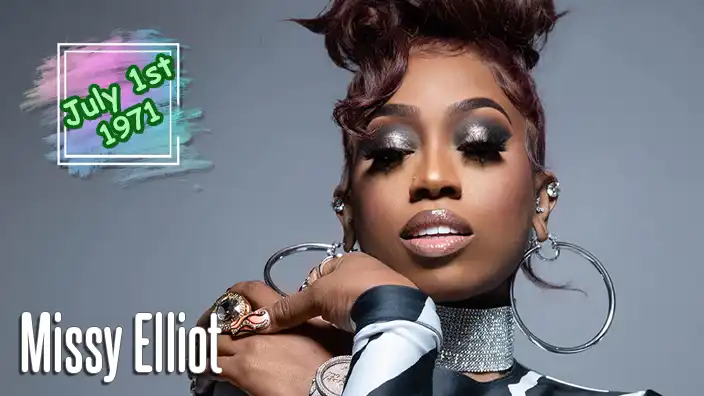
Some artists follow trends. Missy Elliott looked at the trends, gave them a puzzled expression, turned them upside down, and invented something entirely new. By the time everyone else figured out what she was doing, she had already moved on to the next groundbreaking idea—usually while wearing an outfit that seemed to come from fifty years in the future.
July 1, 1971, in Portsmouth, Virginia
Trivia
- She first gained attention with the R&B group Sista.
- Longtime collaborator Timbaland helped shape her signature sound.
- Supa Dupa Fly was her acclaimed debut solo album.
- She has won four Grammy Awards.
- She became the first female rapper inducted into the Songwriters Hall of Fame.
- She was the first female rapper inducted into the Rock and Roll Hall of Fame.
- Her music videos are considered some of the most innovative ever produced.
- She has written and produced hits for many of music's biggest stars.
- Details
- Category: Celebrity Birthdays - July
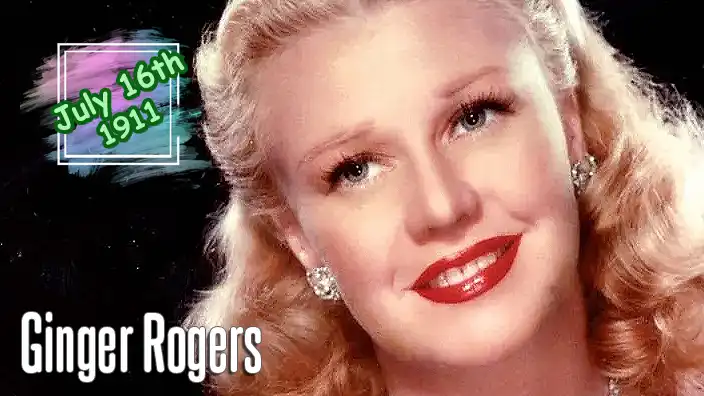
Dancing across a polished ballroom floor looks effortless—right up until someone asks you to do it backward in high heels while smiling for the cameras. Ginger Rogers made it seem easy, proving that grace, talent, and impeccable timing could leave audiences applauding for generations. She didn't simply keep up with Fred Astaire—she helped create some of the greatest dance sequences ever captured on film.
July 16, 1911, in Independence, Missouri
April 25, 1995, in Rancho Mirage, California
Trivia
- Won a Charleston dance contest at age 14.
- Starred with Fred Astaire in ten feature films.
- Won the Academy Award for Best Actress for Kitty Foyle (1940).
- Appeared in more than 70 films.
- Excelled as an actress, dancer, singer, and stage performer.
- Performed for American troops during World War II.
- Continued acting in theater and television later in life.
- Ranked among the American Film Institute's greatest female screen legends.
- Received the Kennedy Center Honors in 1992.
From Our Marks Catelog
-
Pizza is the ultimate customizable dish. It caters to all, from the staunch meat-lover who wants...
-

Your toes don't ask for much. They spend their days squeezed into shoes, dodging coffee tables,...
-

You’re trying to relax after a long day, but your dog has decided that now is the perfect time to...
-
Tiny, shiny, and unapologetically bold, these little fish have a knack for stealing the show at...
-

Horses are the comedians of the animal world, even if they don’t realize it. From sneaky maneuvers...
-
Some cars are built to get you from point A to point B. The Pink Cadillac was built to make sure...

