July 30, 1947, in Graz, Austria
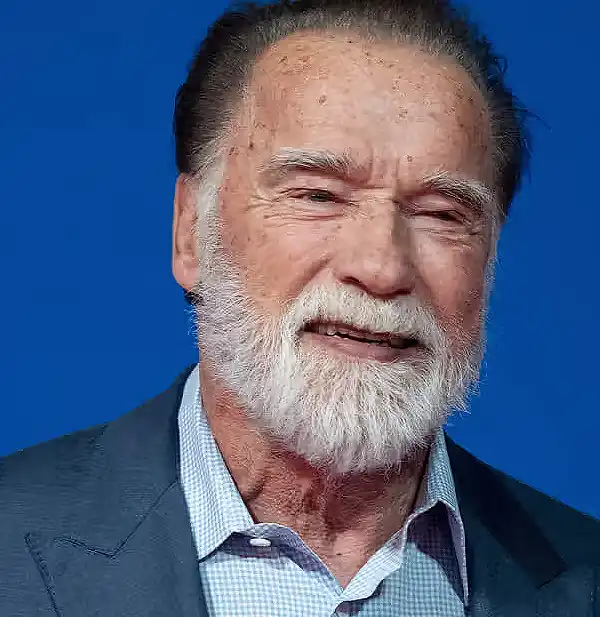
Arnold Alois Schwarzenegger was born in Thal, a small village near Graz, Austria. He grew up in a strict household with his parents, Gustav and Aurelia Schwarzenegger, and his older brother, Meinhard.
Postwar Austria offered limited opportunities, and Schwarzenegger later described his childhood home as disciplined and demanding. His father expected obedience, physical activity, and hard work, creating an environment in which weakness was rarely encouraged and ambition had to be backed by effort.
As a boy, Schwarzenegger participated in several sports, including soccer. His direction changed when a coach took the team to a local gym, where the sight of muscular athletes lifting weights immediately captured his imagination.
He began weight training during his teenage years and became fascinated by bodybuilding magazines featuring champions such as Reg Park. Park represented far more than physical strength to the young Austrian. He had used bodybuilding success to enter the movies, offering Schwarzenegger a model for the life he wanted to create.
At a time when international fame seemed nearly impossible for someone from his village, Schwarzenegger developed a remarkably specific plan. He would become the world’s greatest bodybuilder, move to the United States, enter the film industry, make a fortune, and achieve lasting influence.
It was a modest little plan, provided one ignores the sections involving world domination.
Schwarzenegger served in the Austrian Army in 1965, fulfilling the country’s compulsory military service requirement. His commitment to bodybuilding did not pause merely because the military had other ideas about his schedule.
He reportedly left his base without permission to compete in the Junior Mr. Europe contest, which he won. The victory earned him recognition, although the unauthorized absence also earned him time in military detention. Even at that early stage, Schwarzenegger was demonstrating a willingness to endure consequences when he believed the opportunity justified the risk.
In 1966, he moved to Munich, Germany, where he trained at a gym and continued entering bodybuilding competitions. He lived frugally, worked intensely, and concentrated almost entirely on developing the physique and stage presence required to become an international champion.
At age 20, Schwarzenegger won the amateur Mr. Universe title. His combination of muscular development, symmetry, confidence, and charisma distinguished him from many competitors.
Bodybuilding was not yet a mainstream sport, and its champions were known primarily within specialized fitness circles. Schwarzenegger understood that winning competitions would not be enough. He also needed to promote himself and the sport.
In 1968, he moved to the United States and began training in Southern California under influential bodybuilding promoter Joe Weider. Venice Beach and Gold’s Gym became the center of his new life, placing him among elite competitors and within reach of the entertainment industry.
His early years in America were not always easy. His English was limited, his accent was exceptionally strong, and his appearance made conventional employment difficult. Yet Schwarzenegger viewed those differences not as permanent disadvantages but as problems to be overcome—or, in the case of the accent, eventually turned into an international trademark.
He dominated professional bodybuilding during the 1970s. Schwarzenegger won seven Mr. Olympia titles, including six consecutive victories between 1970 and 1975 before briefly retiring. He returned to competition in 1980 and won the championship for a seventh time.
His physique helped redefine the standards of professional bodybuilding, but his personality was equally important. Schwarzenegger understood promotion, competition, psychology, and entertainment. He could charm audiences, unsettle rivals, generate publicity, and make a niche sport interesting to people who had never lifted anything heavier than a grocery bag.
The 1977 documentary Pumping Iron brought bodybuilding to a much wider audience. The film followed Schwarzenegger and several other competitors as they prepared for the 1975 Mr. Olympia contest.
Schwarzenegger emerged as the documentary’s magnetic central figure. He was confident, humorous, calculating, and clearly comfortable in front of a camera. His playful psychological campaign against fellow competitor Lou Ferrigno revealed a man who treated mental preparation as seriously as physical training.
Pumping Iron helped transform him from an admired athlete into a recognizable personality. It also introduced mainstream audiences to bodybuilding as a discipline requiring extraordinary commitment, strategy, nutrition, and endurance.
Schwarzenegger had already begun pursuing acting, although Hollywood executives were not immediately convinced. Industry professionals reportedly considered his body too large, his name too difficult, and his accent too heavy.
These were not small objections for an aspiring leading man, but Schwarzenegger had built his career by treating discouragement as additional resistance training.
His first starring role came in Hercules in New York, released in 1970. Credited as Arnold Strong, he played the mythological hero Hercules, while his dialogue was initially dubbed because producers believed audiences would struggle to understand him.
The film did not make him a star, but it gave him valuable screen experience. He later appeared in Stay Hungry, earning a Golden Globe as New Star of the Year for his performance.
The major breakthrough came with Conan the Barbarian in 1982. As the sword-wielding warrior Conan, Schwarzenegger possessed the physical presence required to make the fantasy hero believable.
The role demanded relatively limited dialogue, allowing the actor’s appearance, movement, and intensity to dominate the screen. The film became a commercial success and was followed by Conan the Destroyer in 1984.
That same year, director James Cameron cast Schwarzenegger in the role that would define his film career: a nearly indestructible cyborg assassin in The Terminator.
Schwarzenegger initially discussed playing Kyle Reese, the human hero sent back through time to protect Sarah Connor. During conversations with Cameron, however, his observations about how the machine should behave convinced the director that he was better suited to play the Terminator.
The character had limited dialogue, but Schwarzenegger turned physical stillness, precise movement, and an emotionless stare into something terrifying. His delivery of “I’ll be back” became one of cinema’s most famous lines.
The Terminator was produced on a relatively modest budget but became a critical and commercial success. It established Schwarzenegger as a major action star and began one of the most influential science-fiction franchises in movie history.
Throughout the 1980s, he built an extraordinary run of action films. In Commando, he played retired special forces soldier John Matrix, who responds to his daughter’s kidnapping with enough weaponry to make subtle negotiation unnecessary.
Predator placed him and an elite military team in a Central American jungle against an alien hunter. The film combined science fiction, horror, and military action while surrounding Schwarzenegger with an ensemble cast that appeared capable of bench-pressing most of the scenery.
In The Running Man, he played a wrongly convicted man forced to compete in a deadly television program. The film’s vision of violent reality entertainment later appeared increasingly uncomfortable as television programming moved in that general direction without requiring quite so many flamethrowers.
Other action roles included Raw Deal, Red Heat, Total Recall, Eraser, End of Days, and The 6th Day. Each allowed Schwarzenegger to develop the highly recognizable screen persona that made him one of the world’s biggest movie stars.
His characters were usually powerful, determined, and difficult to kill. They also delivered memorable one-liners at moments when most people would have been concentrating on survival.
The rivalry between Schwarzenegger and Sylvester Stallone became one of Hollywood’s great competitive relationships. During the 1980s and 1990s, the two actors competed over box-office results, physical condition, weapons, body counts, and perhaps the amount of structural damage one hero could cause before lunch.
Their rivalry eventually developed into friendship and collaboration. Both later became involved with the Planet Hollywood restaurant business and appeared together in The Expendables films and Escape Plan.
Schwarzenegger demonstrated his willingness to parody his tough-guy image in Twins in 1988. Cast opposite Danny DeVito as an unlikely pair of genetically engineered twin brothers, he proved that audiences would accept him in comedy without requiring him to destroy an enemy compound first.
The film became a major hit and opened a new chapter in his career. Kindergarten Cop followed in 1990, placing an undercover police detective in charge of a classroom filled with small children.
The central joke was simple but effective: a heavily armed action hero could defeat criminals but might be brought to the edge of collapse by a room full of five-year-olds asking questions.
Schwarzenegger continued exploring comedy in Junior, Jingle All the Way, and Last Action Hero. Although not every film received equal critical enthusiasm, they demonstrated his sense of humor and willingness to make fun of his public image.
In 1991, he returned as the Terminator in Terminator 2: Judgment Day. This time, the machine was reprogrammed to protect the young John Connor from a more advanced liquid-metal assassin.
The sequel transformed Schwarzenegger’s villain into a heroic guardian while preserving the character’s mechanical nature. His relationship with John gave the film unexpected emotional weight, particularly as the machine gradually learned more about human behavior.
Terminator 2 became one of the defining action films of its era. Its visual effects were groundbreaking, its chase sequences were enormous, and its combination of spectacle and character elevated the summer blockbuster.
Schwarzenegger reunited with James Cameron for True Lies in 1994. He played Harry Tasker, a secret agent whose wife believes he is an ordinary computer salesman.
The film combined espionage, domestic comedy, elaborate stunts, and massive action sequences. Schwarzenegger moved comfortably between humor and danger, confirming that his appeal extended beyond muscles and explosions—although the film wisely included generous quantities of both.
By the mid-1990s, he was among the highest-paid actors in Hollywood. His name alone could attract international audiences, and his movies were designed as major global events.
His success was not accidental. Schwarzenegger approached acting as he had bodybuilding: by identifying weaknesses, studying successful people, practicing relentlessly, and refusing to accept conventional limitations.
He also displayed considerable business skill. Long before receiving his largest movie salaries, he invested earnings from bodybuilding exhibitions and other work in real estate.
Those investments provided financial independence, allowing him to make career decisions without relying entirely on acting income. He later became involved in restaurants, production companies, fitness ventures, and other enterprises.
Schwarzenegger became a United States citizen in 1983 while retaining his Austrian citizenship. His pride in his adopted country became an important part of his public identity, and he often described America as a place where extraordinary ambition could be rewarded.
His involvement in public service began long before he ran for elected office. President George H. W. Bush appointed him chairman of the President’s Council on Physical Fitness and Sports in 1990.
In that role, Schwarzenegger traveled across the United States promoting exercise and healthy lifestyles. He brought enormous visibility to the position and encouraged children to become more physically active.
He also supported the Special Olympics, an organization founded by his then mother-in-law, Eunice Kennedy Shriver. His involvement with fitness, youth programs, and public service gradually expanded his interests beyond entertainment.
In 2003, Schwarzenegger entered California politics during the recall election involving Governor Gray Davis. He announced his candidacy on The Tonight Show with Jay Leno, instantly turning an already unusual election into an international media event.
Running as a Republican, Schwarzenegger presented himself as a political outsider capable of challenging established interests and reducing partisan gridlock. Opponents questioned his experience, but his name recognition, communication skills, and carefully organized campaign made him a formidable candidate.
California voters recalled Davis and selected Schwarzenegger as his replacement. On November 17, 2003, the Austrian-born bodybuilder and action star was sworn in as the 38th Governor of California.
Almost immediately, headline writers began calling him “the Governator,” proving that no political transition is complete until someone finds a way to turn it into a movie reference.
Governing California proved more complicated than defeating fictional villains. The state’s enormous economy, divided legislature, environmental challenges, budget problems, and competing regional interests required negotiation rather than one-liners.
Schwarzenegger experienced both victories and setbacks. An ambitious special election he promoted in 2005 ended with voters rejecting all four of his ballot initiatives.
Rather than abandoning the effort, he adjusted his approach and developed a more cooperative relationship with lawmakers. He worked with Democrats on several major issues, particularly environmental policy.
In 2006, Schwarzenegger signed the Global Warming Solutions Act, which established significant greenhouse-gas reduction goals for California. The legislation strengthened the state’s position as a leader in climate policy.
He also supported infrastructure investment, political reform, renewable energy, and measures intended to improve government efficiency. His political views often crossed traditional party lines, combining fiscal conservatism with more moderate positions on social and environmental questions.
California voters elected him to a full term in 2006. He served until January 2011, completing more than seven years as governor before leaving office because of term limits.
His administration faced severe challenges during the global financial crisis, when falling revenue and political disagreement worsened California’s budget difficulties. His record as governor has consequently been debated, with supporters emphasizing environmental leadership and bipartisanship while critics point to unresolved fiscal problems.
Regardless of political assessment, his election represented one of the most remarkable career transitions in modern public life. A man once told that his accent would prevent him from succeeding in movies had persuaded millions of voters to place him in charge of the most populous state in America.
After leaving office, Schwarzenegger returned to acting. He appeared in The Expendables series, The Last Stand, Escape Plan, Sabotage, and Terminator Genisys.
In Terminator: Dark Fate, he again played a version of the famous machine, demonstrating that the Terminator franchise was apparently no more capable of retiring than the Terminator himself.
He later moved into series television with the action-comedy FUBAR, playing a CIA operative who discovers that his daughter is also secretly working for the agency. The role allowed him to combine espionage, family conflict, humor, and the occasional explosion.
Schwarzenegger has also become a prominent advocate for environmental action. Through the Schwarzenegger Climate Initiative and other organizations, he has promoted renewable energy, cleaner air, and policies aimed at reducing pollution.
He frequently argues that environmental communication should focus on immediate health benefits rather than distant or abstract warnings. Clean air, he notes, is not merely a political position but something required by people whose lungs have refused to join a political party.
His annual Austrian World Summit brings political leaders, scientists, activists, and business representatives together to discuss climate solutions. He has used his international fame to make environmental policy more accessible to broader audiences.
Fitness remains central to his public life. The Arnold Sports Festival, which grew from the Arnold Classic bodybuilding competition, has become a major international celebration of strength, physique, and athletic performance.
The event features bodybuilding alongside numerous other sports and attracts athletes from around the world. It reflects Schwarzenegger’s lasting influence on the fitness industry decades after his competitive retirement.
He has written several books about bodybuilding, fitness, personal development, and his own life. His memoir, Total Recall: My Unbelievably True Life Story, recounts his journey through athletics, film, business, and politics.
In Be Useful: Seven Tools for Life, he presented lessons drawn from his experiences, emphasizing clear goals, hard work, communication, resilience, and service to others.
The title reflects a principle he has repeated frequently: personal achievement should eventually be used to help other people. For Schwarzenegger, success is not simply a matter of collecting titles, wealth, or recognition but of applying influence to something larger.
His personal life has received considerable public attention. Schwarzenegger married journalist and author Maria Shriver in 1986, connecting the Austrian-born Republican actor to one of America’s most famous Democratic political families.
The couple had four children: Katherine, Christina, Patrick, and Christopher. Schwarzenegger also has a son, Joseph Baena.
Schwarzenegger and Shriver separated in 2011, and their divorce was finalized in 2021. Despite painful public revelations surrounding the separation, Schwarzenegger has spoken openly about his mistakes and responsibility for the harm they caused.
He has remained close to his children and frequently expresses pride in their personal and professional accomplishments. Several have pursued careers in entertainment, business, writing, and public life.
His health has presented serious challenges. Born with a congenital heart condition involving the aortic valve, Schwarzenegger has undergone multiple heart procedures over the years.
He has discussed these experiences publicly, encouraging patients to remain active in their recovery while listening carefully to medical advice. His openness has shown that even a man associated with extraordinary physical strength can face vulnerability and uncertainty.
In 2024, Schwarzenegger revealed that he had received a pacemaker. Characteristically, he addressed the news directly and humorously while reassuring followers that he remained active.
His willingness to discuss medical challenges has helped remove some of the fear surrounding heart procedures, particularly among people who may assume that physical fitness alone makes someone invulnerable.
Schwarzenegger has also used his public platform to address antisemitism, authoritarianism, political extremism, and the consequences of hatred. Drawing on his childhood in postwar Austria, he has warned younger generations about the personal and social destruction created by extremist ideologies.
These messages have often been unusually personal. Rather than speaking only as a celebrity or former governor, he has described growing up around men emotionally and physically damaged by the Second World War.
His ability to communicate directly has become one of his most valuable skills. Schwarzenegger’s accent, once described as a career obstacle, is now immediately recognizable around the world.
His catchphrases have become permanent parts of popular culture. “I’ll be back,” “Hasta la vista, baby,” and numerous other lines have survived far beyond the films in which they appeared.
Yet reducing him to catchphrases overlooks the strategy behind his success. Schwarzenegger repeatedly entered fields in which he appeared poorly suited by conventional standards and then studied what was required to excel.
He lacked the traditional proportions favored by earlier bodybuilding judges, so he helped redefine the ideal physique. He lacked a conventional leading-man appearance and accent, so he became an entirely new type of movie star. He lacked political experience, so he built a campaign around being an outsider.
Not every decision succeeded, and his career contains failures, controversies, disappointments, and acknowledged personal mistakes. What distinguishes his story is not perfection but his repeated ability to adapt, accept responsibility, and begin again.
Arnold Schwarzenegger transformed bodybuilding, helped define modern action cinema, led one of the world’s largest economies, built successful businesses, and became an international advocate for fitness and environmental action.
He remains an instantly recognizable figure because each stage of his life would have been enough to define another person’s entire career. Schwarzenegger simply kept adding chapters.
From a small Austrian village to the Mr. Olympia stage, from Hollywood soundstages to the California governor’s office, his journey remains one of the most extraordinary stories in modern popular culture.
He promised that he would be back, and over the decades he has returned so many times that the safest assumption is that Arnold Schwarzenegger was never truly planning to leave.