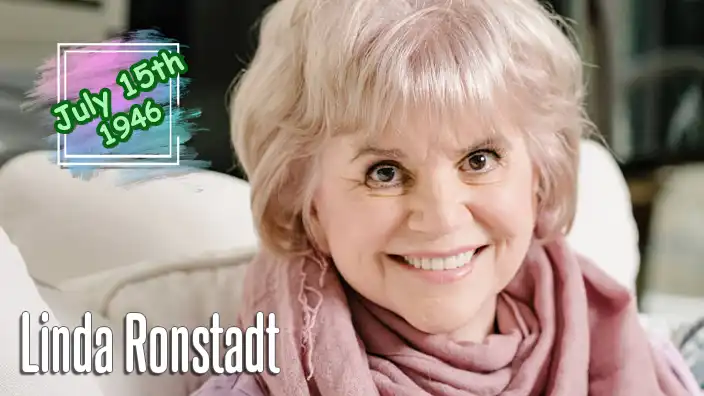
July 15, 1946, in Tucson, Arizona
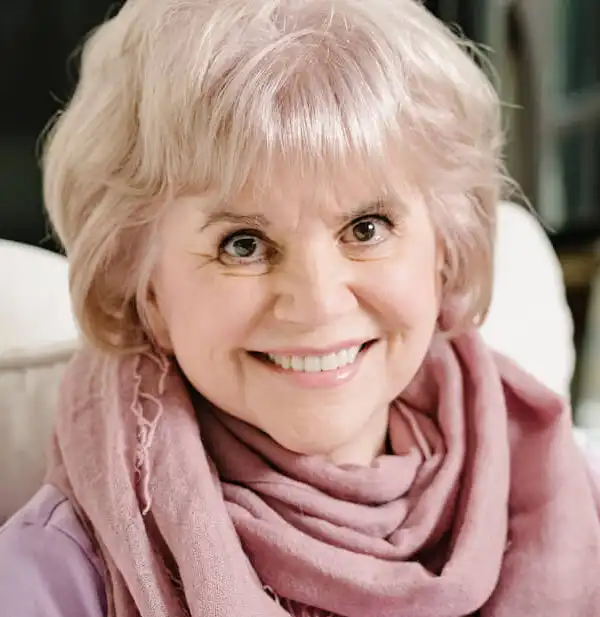
Linda Maria Ronstadt became one of the most influential and successful recording artists in modern music history. Blessed with an extraordinary voice and an adventurous spirit, she refused to be confined to a single musical style. Over a career spanning more than four decades, Ronstadt recorded everything from rock and country to traditional Mexican music, jazz standards, and classical works, earning widespread acclaim wherever her musical curiosity led.
With more than 100 million records sold worldwide, eleven Grammy Awards, numerous platinum albums, and induction into the Rock and Roll Hall of Fame, Linda Ronstadt remains one of the most respected female vocalists ever to step into a recording studio.
Ronstadt grew up in a musical family in Tucson, where Mexican, country, folk, and classical music filled the household. Her father introduced her to traditional Mexican songs, while other family members encouraged an appreciation for American folk and popular music. This rich musical upbringing would later influence her remarkable ability to move effortlessly between genres.
In the mid-1960s, Ronstadt moved to Los Angeles, where she formed the folk-rock trio The Stone Poneys. The group's biggest success came with the hit single Different Drum, written by Michael Nesmith. Although the song became closely associated with the band, it was Ronstadt's distinctive voice that audiences remembered.
Following the breakup of The Stone Poneys, Ronstadt launched a solo career that steadily gained momentum. Throughout the early 1970s she developed a loyal following with albums that blended country rock, folk, and pop influences. Her willingness to interpret songs written by others allowed her to showcase not only her remarkable vocal range but also her ability to make each performance feel deeply personal.
Her breakthrough arrived with the 1974 album Heart Like a Wheel, which topped the charts and established her as one of the biggest stars in American music. The album featured the hit single You're No Good, which became her first number-one song and introduced millions of listeners to her powerful voice.
The success of Heart Like a Wheel was only the beginning. Throughout the remainder of the decade, Ronstadt released an extraordinary series of bestselling albums, including Prisoner in Disguise, Hasten Down the Wind, Simple Dreams, Living in the U.S.A., and Mad Love. During this remarkable period, she became one of the highest-selling female recording artists in the world.
Her concerts routinely sold out, and her albums dominated the charts. At a time when the music industry was largely dominated by male performers, Ronstadt demonstrated that a female artist could enjoy enormous commercial success while maintaining complete artistic credibility.
One of Ronstadt's greatest strengths was her ability to interpret songs from a wide variety of songwriters. She recorded memorable versions of works by Warren Zevon, Roy Orbison, Buddy Holly, Dolly Parton, Neil Young, Elvis Costello, and many others. Rather than simply covering songs, Ronstadt often introduced them to entirely new audiences.
She also played an important role in launching or supporting the careers of several musicians who would later become legends themselves. Members of her touring band eventually formed the Eagles, making Ronstadt an important figure in the development of the Southern California rock scene of the 1970s.
Never content to repeat herself, Ronstadt continually explored new musical directions. In the early 1980s she surprised audiences by starring in Gilbert and Sullivan's The Pirates of Penzance on Broadway, earning a Tony Award nomination for her performance.
She later collaborated with legendary arranger Nelson Riddle on a trilogy of albums celebrating the Great American Songbook. Many critics initially questioned whether a rock singer could successfully perform traditional standards, but Ronstadt's elegant interpretations won widespread praise and introduced classic American songs to a new generation.
Ronstadt also embraced her Mexican heritage by recording Canciones de Mi Padre, an album of traditional Mexican music. The recording became one of the best-selling non-English-language albums in American history and reflected her lifelong pride in her family's cultural roots.
Throughout her career, Ronstadt collaborated with an astonishing range of artists, including Dolly Parton, Emmylou Harris, Aaron Neville, James Taylor, Frank Zappa, Neil Young, and countless others. Each collaboration demonstrated her remarkable versatility and willingness to experiment with new musical styles.
In 2013, Ronstadt publicly revealed that Parkinson's disease had ended her singing career. Doctors later determined that her condition was more accurately diagnosed as progressive supranuclear palsy (PSP), a rare neurological disorder affecting movement, balance, and speech. Although she could no longer perform, her influence on popular music remained undiminished.
Her autobiography, Simple Dreams: A Musical Memoir, offered readers an intimate look at her remarkable career, while the acclaimed documentary Linda Ronstadt: The Sound of My Voice introduced her story to new audiences.
In recognition of her extraordinary achievements, Ronstadt was inducted into the Rock and Roll Hall of Fame in 2014. Few artists have demonstrated such extraordinary versatility while maintaining consistently high artistic standards. Her willingness to take creative risks, embrace different cultures, and continually challenge herself has secured her place among the greatest recording artists in music history.