- Details
- Category: Celebrity Birthdays - July
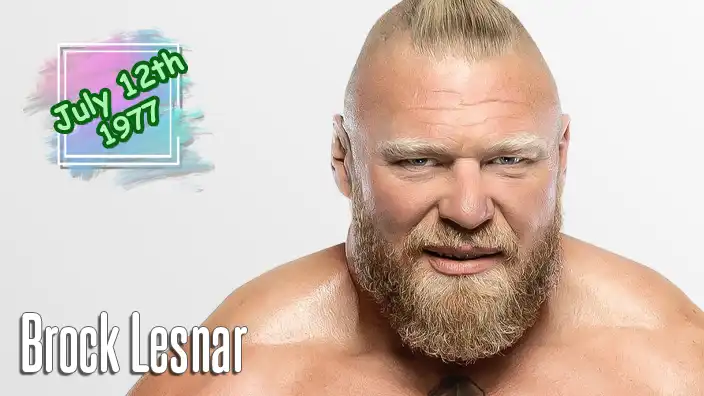
Most athletes spend their careers trying to avoid being called a "beast." Brock Lesnar made it his brand. Built like someone who could bench-press a pickup truck before breakfast, he has terrified opponents in wrestling, mixed martial arts, and even professional football tryouts. If there were an award for making competitors reconsider their career choices, Brock Lesnar would probably need a bigger trophy cabinet.
 July 12, 1977, in Webster, South Dakota

Trivia
- Won the 2000 NCAA Division I Heavyweight Wrestling Championship.
- Became one of WWE's youngest world champions.
- Captured the UFC Heavyweight Championship in 2008.
- Defeated Randy Couture to win the UFC title.
- Ended The Undertaker's WrestleMania undefeated streak.
- Briefly pursued a career with the NFL's Minnesota Vikings.
- Nicknamed "The Beast Incarnate."
- Lives a private life on a farm in Canada.
- Is one of the few athletes to become champions in both WWE and UFC.
- Details
- Category: Celebrity Birthdays - July
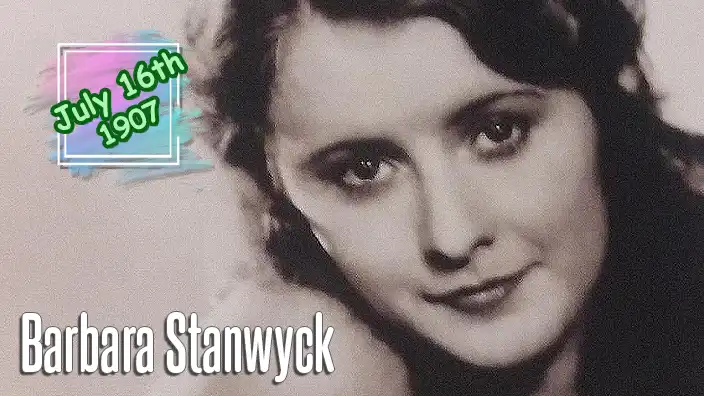
Some actors spend years trying to steal every scene they're in. Barbara Stanwyck seemed to do it without appearing to break a sweat. Whether she was playing a devoted wife, a fearless businesswoman, a cunning femme fatale, or a tough-as-nails ranch owner, she had a knack for making audiences forget everyone else was on the screen. If charisma could be bottled, Hollywood would still be trying to figure out her recipe.
 July 16, 1907, in Brooklyn, New York
 January 20, 1990, in Santa Monica, California
Trivia
- Appeared in more than 80 feature films.
- Received four Academy Award nominations.
- Won an Honorary Academy Award in 1982.
- Received the AFI Life Achievement Award in 1987.
- Starred in the classic film noir Double Indemnity.
- Won an Emmy Award for The Big Valley.
- Was married to actors Frank Fay and Robert Taylor.
- Began her career as a Broadway chorus girl.
- Ranked by the American Film Institute among the greatest female screen legends.
- Worked successfully in film, television, and theater for over 60 years.
- Details
- Category: Celebrity Birthdays - July
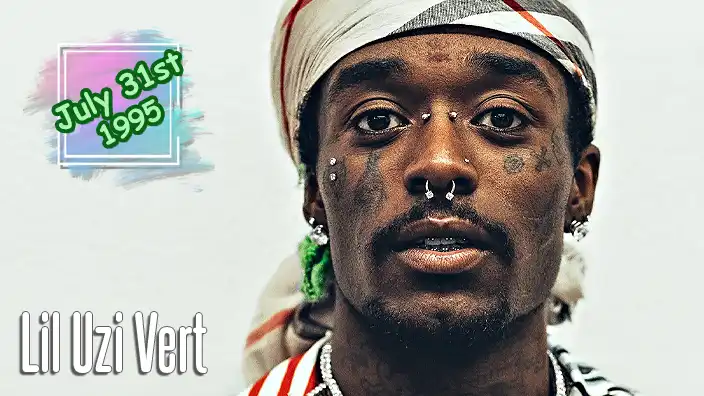
Some musicians ease into the spotlight with quiet ballads and polished suits. Lil Uzi Vert took the opposite route, arriving with colorful fashion, boundless energy, and enough confidence to convince an entire generation that music could ignore the rulebook. Whether fans love the style or spend half the song wondering what just happened, one thing is certain—Lil Uzi Vert has never been interested in being ordinary.
July 31, 1995, in Philadelphia, Pennsylvania
Trivia
- Broke into the mainstream with "Money Longer."
- "XO Tour Llif3" became one of the defining hip-hop songs of the 2010s.
- Luv Is Rage 2 debuted at No. 1 on the Billboard 200.
- Eternal Atake also reached No. 1 on the Billboard 200.
- Known for blending trap, emo rap, rock, and pop influences.
- Recognized for bold fashion and colorful personal style.
- Has collaborated with Future, Travis Scott, Playboi Carti, Migos, and Nicki Minaj.
- Has earned billions of streams across music platforms.
- Considered one of the leading influences on modern melodic rap.
- Details
- Category: Celebrity Birthdays - July
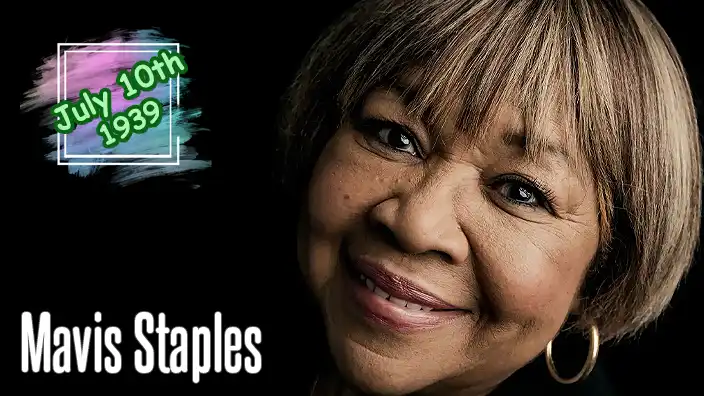
Some voices can hit the high notes. Others can move mountains. Mavis Staples has spent decades doing a little of both. Whether she's singing gospel in a church, soul on a concert stage, or standing beside civil rights leaders demanding change, her unmistakable voice has remained one of America's most powerful instruments—and unlike most vintage collectibles, it only seems to get better with age.
July 10, 1939, in Chicago, Illinois
Trivia
- Lead vocalist of the legendary Staple Singers.
- Daughter of guitarist and singer Pops Staples.
- Friends with Dr. Martin Luther King Jr. and active supporters of the Civil Rights Movement.
- Sang on the civil rights anthem "Freedom Highway."
- The Staple Singers scored a No. 1 hit with "I'll Take You There."
- Inducted into the Rock and Roll Hall of Fame in 1999 with The Staple Singers.
- Winner of multiple Grammy Awards and a Grammy Lifetime Achievement Award.
- Recipient of the National Medal of Arts.
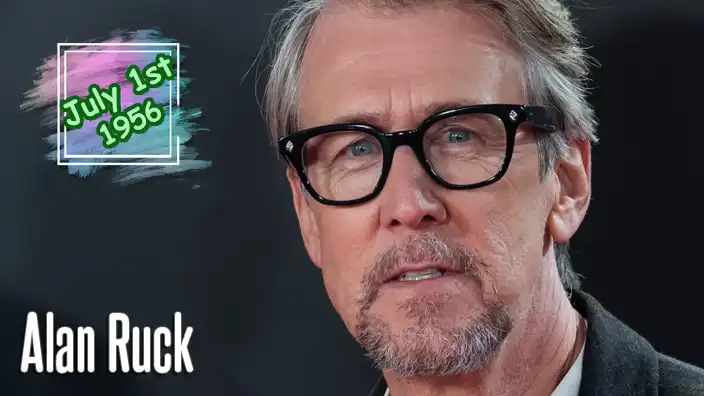
- Details
- Category: Celebrity Birthdays - July
Every high school had a Cameron Frye—the friend who was absolutely certain everything was going to end badly. Alan Ruck played him so convincingly that audiences have been cheering him on for decades. Thankfully, unlike Cameron, Alan never spent his career hiding under the covers. Instead, he quietly built one of Hollywood's most respected and enduring acting careers.
July 1, 1956, in Cleveland, Ohio
Trivia
- Was 29 years old when he played teenage Cameron Frye.
- Made his Broadway debut in Biloxi Blues.
- Starred as Stuart Bondek on Spin City.
- Played Captain John Harriman in Star Trek Generations.
- Appeared in Speed and Twister during the 1990s.
- Earned Emmy and Golden Globe nominations for Succession.
- Married actress Mireille Enos in 2008.
- Has appeared in well over 100 film, television, and stage productions.
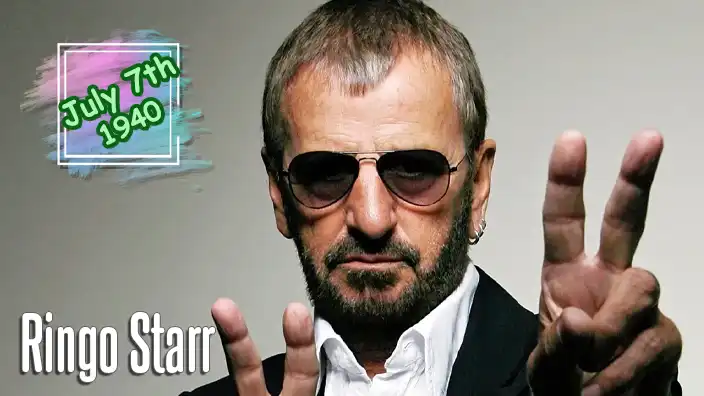
- Details
- Category: Celebrity Birthdays - July
Some people celebrate birthdays with cake and candles. Ringo Starr has spent much of his life celebrating with sold-out concerts, screaming fans, and enough drumsticks to build a respectable log cabin. While most drummers are told to "keep the beat," Ringo somehow kept pace with three other musicians who happened to become the biggest band in history. Not bad for a lad from Liverpool who once spent so much time in hospitals as a child that becoming a world-famous musician probably wasn't even on the nurses' betting pool.
July 7, 1940, in Liverpool, England
Trivia
- Beatles member since: August 1962.
- Natural handedness: Left-handed, but played a right-handed drum kit.
- Beatles songs he sang: "Yellow Submarine," "With a Little Help from My Friends," "Act Naturally," and others.
- Beatles song he wrote: "Octopus's Garden."
- Solo hits: "Photograph," "It Don't Come Easy," and "You're Sixteen."
- Founded the All Starr Band: 1989.
- Rock and Roll Hall of Fame: Inducted twice—once with The Beatles and once as a solo artist.
- Knighthood: Knighted in 2018 for services to music.
- Television: Narrated Thomas & Friends for several years.
- Birthday tradition: Encourages everyone to share "Peace and Love" at noon on July 7.

- Details
- Category: Celebrity Birthdays - July
Some footballers seem to have the ball glued to their feet. Defenders swear they saw it disappear, only to discover it had already gone past them along with Vinícius Júnior. If chasing shadows were an Olympic sport, opposing full-backs would have a medal collection thanks to him. Blessed with dazzling speed, fearless confidence, and a smile that often appears just before another defender is left wondering what happened, Vinícius has become one of the most exciting players in world football.
July 12, 2000, in São Gonçalo, Brazil
Trivia
- Joined Flamengo's youth academy at age 10.
- Signed by Real Madrid before his 17th birthday.
- Plays primarily as a left winger.
- Known for exceptional pace and dribbling ability.
- Scored the winning goal in the 2022 UEFA Champions League Final.
- Has won multiple La Liga titles.
- Represents Brazil at the senior international level.
- Frequently ranks among the world's fastest footballers.
- Has become an outspoken advocate against racism in football.
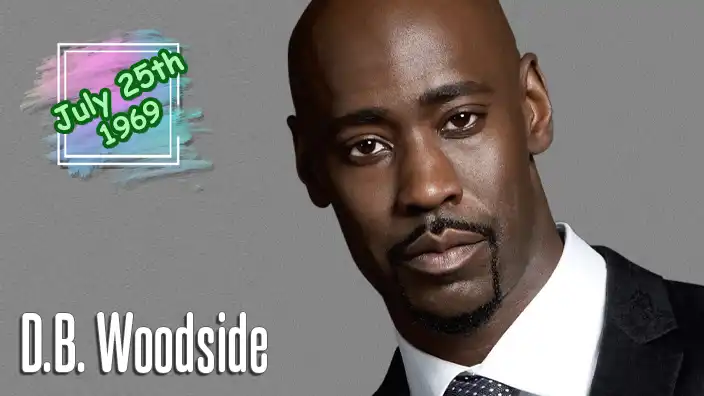
- Details
- Category: Celebrity Birthdays - July
Some actors walk into a scene and quietly steal it. D.B. Woodside strolls in with calm confidence, delivers a perfectly timed line, and somehow makes everyone else look like they're still waiting for their cue. Whether he's portraying an angel, a politician, a lawyer, or a military officer, he has a remarkable ability to project authority without raising his voice. If Hollywood ever needs someone to convince the audience that everything is under control, D.B. Woodside is probably already halfway through the script.
July 25, 1969, in, Queens, New York
Trivia
- Graduate of the prestigious Yale School of Drama.
- Best known for playing Amenadiel in Lucifer.
- Played President Wayne Palmer in 24.
- Portrayed attorney Jeff Malone in Suits.
- Directed an episode during the final season of Lucifer.
- Has worked steadily in television for more than 30 years.
- Frequently portrays leaders, authority figures, and professionals.
- Known for his calm screen presence and commanding voice.

- Details
- Category: Celebrity Birthdays - July
Imagine trying to introduce yourself at a networking event when half the room already knows your last name before you've even said hello. That's been Malia Obama's reality for most of her life. Fortunately, she chose filmmaking—a profession where people are encouraged to stay behind the camera, making it one of the few careers where avoiding the spotlight is actually considered a job requirement.
Born on July 4, 1998, in Chicago, Illinois
Trivia
- Eldest daughter of Barack and Michelle Obama.
- Lived in the White House from 2009 to 2017.
- Graduated from Harvard University in 2021.
- Worked as a writer on the TV series Swarm.
- Wrote and directed the short film The Heart.
- Premiered her film at the 2024 Sundance Film Festival.
- Uses "Malia Ann" professionally instead of her full surname.
- Has completed internships in television, film, and at the U.S. Embassy in Madrid.
- Prefers working behind the camera as a writer and director.
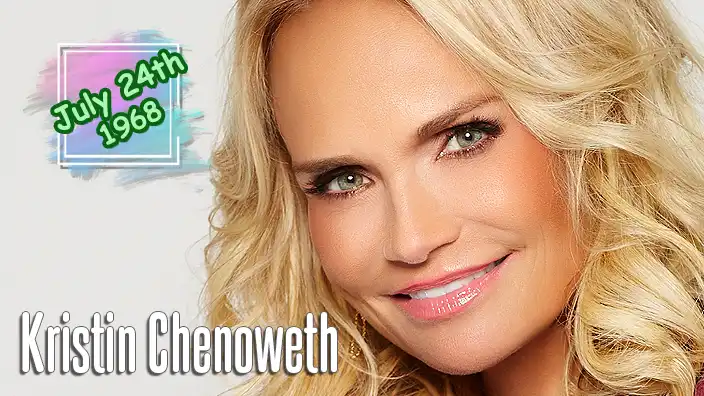
- Details
- Category: Celebrity Birthdays - July
Kristin Chenoweth has spent her career proving that talent isn't measured in feet and inches. She may be one of Broadway's smallest stars physically, but once she starts singing, audiences quickly discover the laws of physics have apparently taken the evening off. Somewhere, sound engineers are still trying to explain how that much voice fits into such a tiny package.
July 24, 1968, in Broken Arrow, Oklahoma,
Trivia
- Adopted as an infant by Junie and Jerry Chenoweth.
- Graduated from Oklahoma City University with a degree in musical theater.
- Won a Tony Award for You're a Good Man, Charlie Brown.
- Originated the role of Glinda the Good Witch in Broadway's Wicked.
- Won a Primetime Emmy Award for Pushing Daisies.
- Appeared in The West Wing, Glee, The Good Wife, and Trial & Error.
- Accomplished recording artist with multiple studio albums.
- Renowned for her classically trained coloratura soprano voice.
- Strong supporter of arts education and charitable organizations.
- Details
- Category: Celebrity Birthdays - July
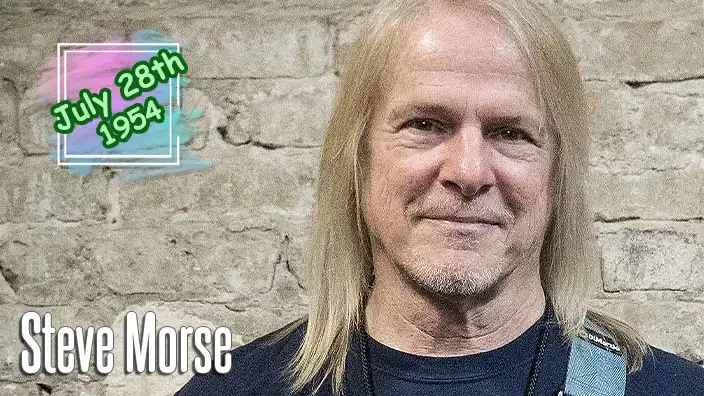
Some guitarists play so many notes that audiences wonder whether they accidentally leaned on the fast-forward button. Steve Morse, however, somehow makes lightning-speed playing sound as relaxed as someone chatting over a cup of coffee. While the rest of us might struggle to remember where we left the TV remote, Morse can effortlessly navigate fretboards that look more like obstacle courses than musical instruments. Watching him perform is a bit like watching a master chef prepare a gourmet meal with one hand tied behind his back—you know it's incredibly difficult, but he makes it look unfairly easy.
July 28, 1954, in Hamilton, Ohio
Trivia
- Co-founded the Dixie Dregs
- Studied at the University of Miami School of Music
- Joined Kansas in the 1980s
- Became Deep Purple's guitarist in 1994
- Served with Deep Purple for 28 years
- Released numerous acclaimed solo albums
- Known for hybrid picking and exceptional versatility
- Has several signature guitar models
- Frequently ranked among the world's greatest guitarists
- Stepped away from Deep Purple in 2022 to care for his wife
- Details
- Category: Celebrity Birthdays - July
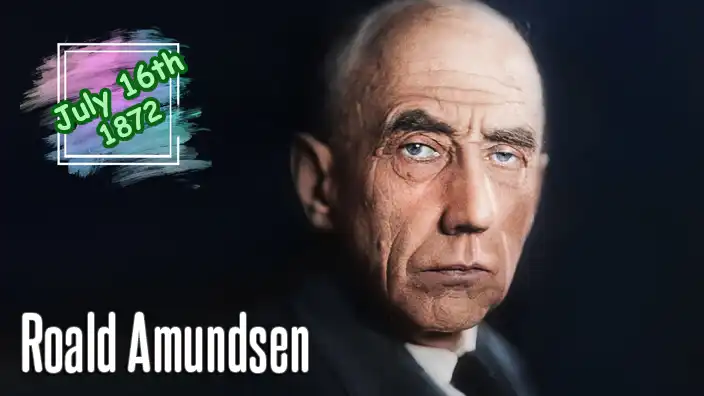
Most people think they're adventurous if they take the scenic route home. Roald Amundsen looked at frozen oceans, endless ice fields, and temperatures that could freeze a beard solid, then thought, "That seems worth exploring." While the rest of the world was inventing better ways to stay warm, he was figuring out how to spend months in places where warm was merely a rumor.
July 16, 1872, in Borge, Norway
June 18, 1928, Barents Sea, Arctic
Trivia
- First explorer to reach the South Pole.
- Successfully arrived at the South Pole on December 14, 1911.
- First to navigate the Northwest Passage entirely by ship.
- Learned Arctic survival skills from the Inuit.
- Preferred dog sleds over motorized equipment.
- Led the expedition aboard the airship Norge across the Arctic.
- Crossed directly over the North Pole in 1926.
- Originally studied medicine before becoming an explorer.
- Known for extraordinary planning and organization.
- Disappeared during a rescue mission in the Arctic in 1928.
- Details
- Category: Celebrity Birthdays - July
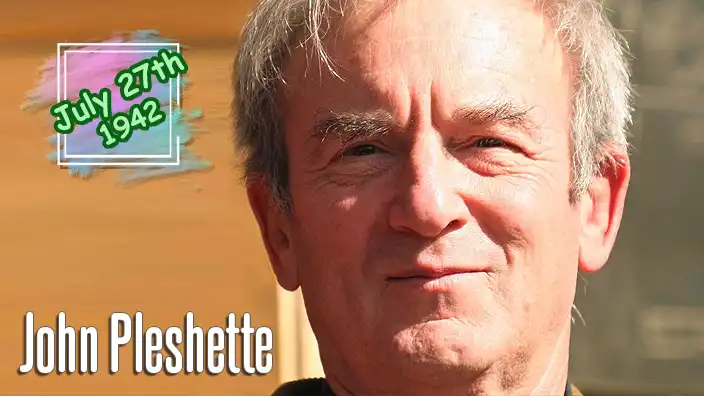
Television has always needed characters you love, characters you love to hate, and a few who can make you question every decision they've ever made. John Pleshette mastered that last category with such skill that audiences often forgot he was acting. Fortunately, when the director yelled "Cut!", he returned to being one of television's most respected actors and writers—proof that playing a scoundrel convincingly is actually a compliment.
July 27, 1942, in New York City, New York
Trivia
- Graduated from Brown University.
- Best known as Richard Avery on Knots Landing.
- Wrote eight episodes of Knots Landing.
- Directed five episodes of the series.
- Portrayed Lee Harvey Oswald in The Trial of Lee Harvey Oswald.
- Appeared in Rocky II and The Truman Show.
- Guest-starred on The Sopranos, ER, and MacGyver.
- Married literary agent Lynn Pleshette since 1975.
- Cousin of actress Suzanne Pleshette.
- Details
- Category: Celebrity Birthdays - July
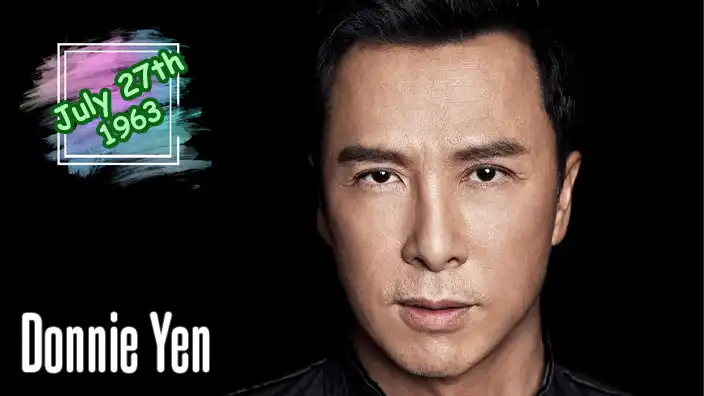
Movie heroes usually have one special skill. Donnie Yen apparently missed that memo. He can outfight an army, outrun explosions, wield almost anything as a weapon, choreograph the entire battle, and somehow still make it look effortless. If Hollywood ever runs out of action stars, the solution may simply be to let Donnie Yen play all of them.
July 27, 1963, in Guangzhou, China
Trivia
- Raised in Hong Kong and Boston, Massachusetts.
- Son of martial arts grandmaster Bow-sim Mark.
- Trained with the prestigious Beijing Wushu Team.
- Best known for portraying Ip Man.
- Accomplished actor, producer, director, and action choreographer.
- Starred in Hero, Rogue One, and John Wick: Chapter 4.
- Known for blending traditional martial arts with modern combat techniques.
- Skilled pianist and lifelong martial artist.
- Details
- Category: Celebrity Birthdays - July
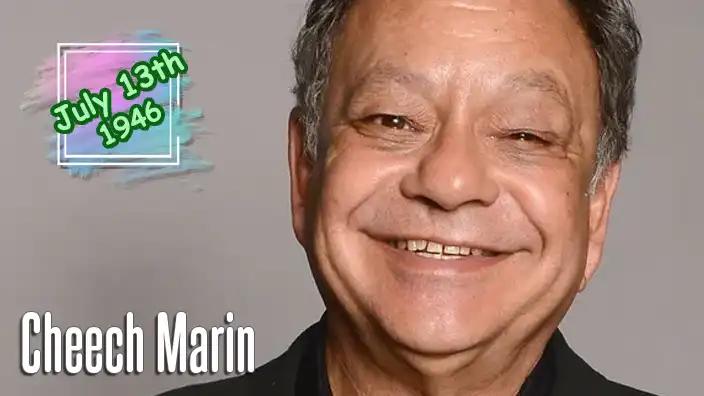
Cheech Marin has spent decades proving that comedy can be clever, culture can be celebrated, and a perfectly timed one-liner never goes out of style. He also managed to become a respected art collector along the way, proving that you really can appreciate fine paintings after making generations laugh until they cried.
July 13, 1946, in Los Angeles, California
Trivia
- Earned the nickname "Cheech" as an infant.
- Met Tommy Chong while living in Canada.
- Formed the legendary comedy duo Cheech & Chong.
- Won a Grammy Award for Los Cochinos in 1973.
- Co-wrote and starred in Up in Smoke.
- Wrote, directed, and starred in Born in East L.A.
- Played Uncle Felix in the Spy Kids films.
- Voiced Ramone in Pixar's Cars franchise.
- Appeared in Disney and Pixar's Coco.
- Owns one of the world's largest private collections of Chicano art.
- Helped establish The Cheech Marin Center for Chicano Art & Culture.
- Details
- Category: Celebrity Birthdays - July
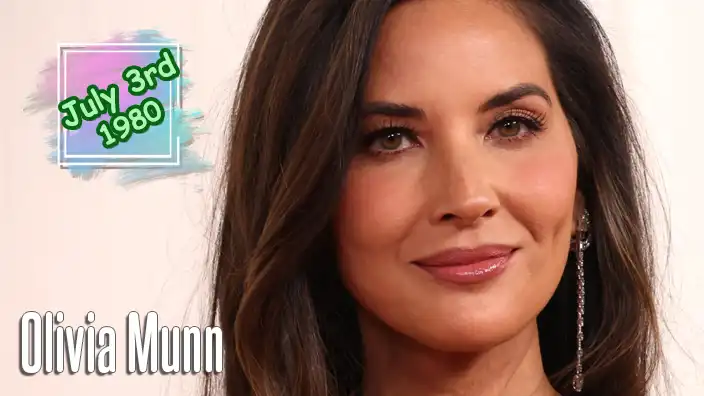
Some people begin their careers behind a desk reading the news. Olivia Munn began hers talking about video games, then somehow ended up battling superheroes, starring in acclaimed dramas, and occasionally saving the world from villains. It's a career path that proves you never know where saying "yes" to an opportunity might lead—although fighting mutants probably wasn't in the original job description.
July 3, 1980, in Oklahoma City, Oklahoma
Trivia
- Spent much of her childhood living in Tokyo, Japan.
- Graduated from the University of Oklahoma.
- Began her career as co-host of G4's Attack of the Show!.
- Was a correspondent on The Daily Show.
- Played Sloan Sabbith in HBO's The Newsroom.
- Portrayed Psylocke in X-Men: Apocalypse.
- Holds a black belt in taekwondo.
- Was named one of Time magazine's Women of the Year in 2025.
- Has used her platform to promote breast cancer awareness and early detection.
- Details
- Category: Celebrity Birthdays - July
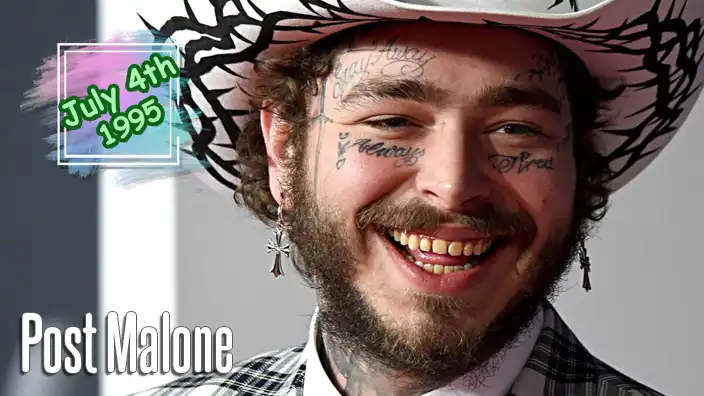
Some musicians spend years trying to fit neatly into one genre. Post Malone looked at that idea, shrugged, and invited hip-hop, pop, rock, country, and a little bit of everything else to the same party. The result? Millions of albums sold, billions of streams, and countless listeners trying to figure out exactly what kind of music they're enjoying. His answer seems to be, "Yes."
July 4, 1995, in Syracuse, New York
Trivia
- Raised primarily in Grapevine, Texas.
- Learned to play guitar as a teenager.
- Broke through with "White Iverson" in 2015.
- Debut album: Stoney (2016).
- Released Beerbongs & Bentleys in 2018.
- "Sunflower" features Swae Lee.
- "Circles" became one of his longest-running Billboard hits.
- Has earned numerous Diamond-certified singles from the RIAA.
- Has collaborated with artists across hip-hop, pop, rock, and country.
- Released the country-inspired album F-1 Trillion in 2024.
- Details
- Category: Celebrity Birthdays - July
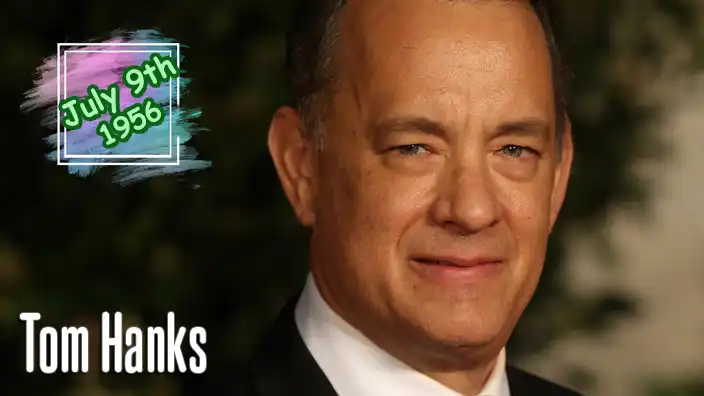
If Hollywood ever handed out awards for "Most Likely to Make You Laugh, Cry, and Then Call Your Mother," Tom Hanks would probably need a bigger trophy shelf. He has survived pirates, astronauts, wars, deserted islands, toy boxes, airports, and even a volleyball with remarkable emotional dignity. Somehow, he makes ordinary people seem extraordinary, proving that sometimes the greatest superpower is simply being believable.
July 9, 1956, in Concord, California
Trivia
- Won back-to-back Academy Awards for Philadelphia and Forrest Gump.
- Voices Sheriff Woody in the Toy Story films.
- Directed the 1996 musical comedy That Thing You Do!
- Produced the acclaimed miniseries Band of Brothers.
- Received the Presidential Medal of Freedom in 2016.
- Is married to actress Rita Wilson.
- Is a passionate collector of vintage typewriters.
- Played astronaut Jim Lovell in Apollo 13.
- Famously shared the screen with the volleyball "Wilson" in Cast Away.
- Has earned numerous Emmy Awards as both actor and producer.
- Frequently appears on lists of Hollywood's most trusted celebrities.

- Details
- Category: Celebrity Birthdays - July
Most teenagers are still deciding what to wear to school. Sky Brown was deciding which international sporting event to conquer next. Somewhere between learning homework, perfecting skateboard tricks, and catching waves, she managed to become an Olympic medalist. If there were an event for making adults wonder, "What was I doing at that age?" she'd probably win that too.
July 7, 2008, in Miyazaki, Japan
Trivia
- Represents: Great Britain in international competition.
- Olympic debut: 2020 Summer Olympics.
- Olympic medal: Bronze in women's park skateboarding.
- Young achievement: One of Great Britain's youngest Olympic medalists.
- Professional status: Turned professional while still a child.
- Major setback: Recovered from a serious training accident in 2020.
- Known for: Fearless skating and positive attitude.
- Inspiration: Encourages young people to stay active and never give up.
- Additional sport: Competitive surfing.
- Global following: Millions of fans across social media.
- Role model: Helped inspire more girls to take up skateboarding.
- Details
- Category: Celebrity Birthdays - July
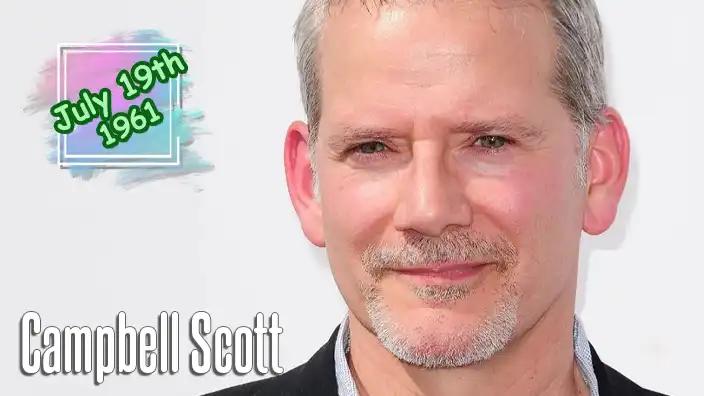
In Hollywood, some actors chase explosions, superheroes, and dramatic speeches. Campbell Scott has built a career proving that sometimes the quietest person in the room is the one everyone remembers afterward. He has mastered the rare art of making calm, intelligent performances look effortless—which is considerably harder than it appears.
July 19, 1961, in New York City, New York
Trivia
- Graduated from Lawrence University.
- Starred in Longtime Companion (1990).
- Co-directed the acclaimed film Big Night with Stanley Tucci.
- Played Richard Parker in The Amazing Spider-Man films.
- Portrayed Mark Usher in House of Cards.
- Has enjoyed a successful career in film, television, and theater.
- Frequently works as a narrator for documentaries and audiobooks.
- Known for his thoughtful and understated acting style.

- Details
- Category: Celebrity Birthdays - July
Some actors quietly disappear into every role they play. Juno Temple seems to leap into them with both feet, whether she's portraying a fearless adventurer, a misunderstood dreamer, or someone so delightfully eccentric that you can't take your eyes off the screen. One thing is certain—if Juno Temple appears in the credits, chances are you're about to meet one of the most memorable characters in the story.
July 21, 1989, in London, England
Trivia
- Daughter of film director Julien Temple.
- Her mother, Amanda Pirie, is a film producer.
- Made her acting debut as a child.
- Appeared in Atonement and The Other Boleyn Girl.
- Starred as Keeley Jones in Ted Lasso.
- Received multiple Primetime Emmy Award nominations.
- Earned BAFTA Television Award recognition.
- Played Dorothy "Dot" Lyon in Fargo Season 5.
- Has appeared in both independent films and major Hollywood productions.
- Known for portraying emotionally complex and unconventional characters.
From Our Marks Catelog
-

Somewhere beneath the waves, a shark is calmly minding its own business while humans on the beach panic...
-

Zoos are like nature’s reality TV, where the animals are the stars, and the drama unfolds daily....
-

Donating blood is like hosting a party where you’re the guest of honor, except instead of bringing a...
-

Writing a business plan – it's like assembling IKEA furniture without the instruction manual, but...
-
Imagine a world where your backyard chickens suddenly develop razor-sharp claws, turbocharged...
-

The Afro—nature’s way of reminding us that gravity is optional when it comes to hair. It's the...

