August 21, 1956, in Liverpool, England
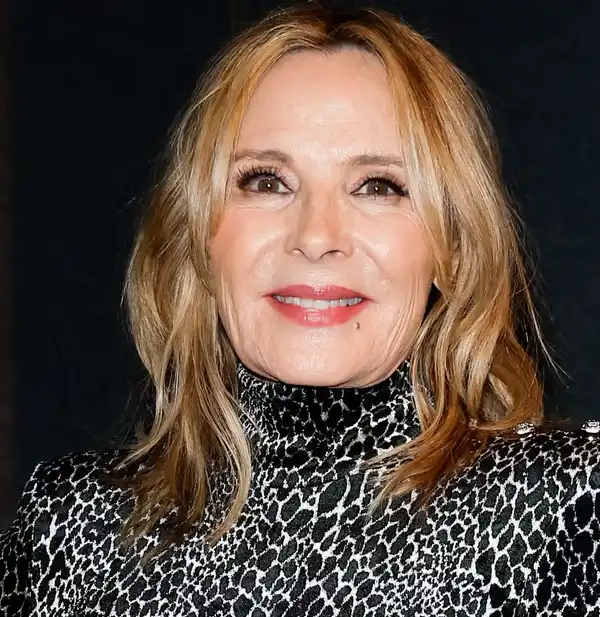
Kim Cattrall spent decades building a remarkably varied acting career before Samantha Jones marched into Sex and the City and permanently changed the conversation. Confident, successful, fiercely independent and equipped with absolutely no internal censor, Samantha made Cattrall internationally famous—and proved that sometimes the person having the most fun at the table also gets the best lines.
Kim Victoria Cattrall was born on August 21, 1956, in Liverpool, England. Her parents, Gladys and Dennis Cattrall, moved the family to Canada while Kim was still an infant, settling in British Columbia.
Her childhood therefore crossed the Atlantic almost before it had properly begun. When Cattrall was about 11, the family temporarily returned to England, where she attended school and studied at the London Academy of Music and Dramatic Art. She later returned to Canada, but the experience helped reinforce an interest in acting that was becoming increasingly serious.
At 16, Cattrall moved to New York City to study at the American Academy of Dramatic Arts. It was a considerable leap for a teenager, but professional acting soon followed.
After completing her studies, she signed a contract with director Otto Preminger and made her film debut in his 1975 drama Rosebud. The movie did not turn its young actress into an immediate superstar, but Cattrall had officially entered the business.
She spent the following years doing what successful working actors frequently do before everyone suddenly claims to have discovered them: she worked.
Cattrall accumulated numerous television appearances during the late 1970s and early 1980s, including roles in such series as Columbo, Starsky & Hutch, The Incredible Hulk, Charlie's Angels and Quincy, M.E. She was becoming a familiar face without yet being closely identified with a single character.
Film roles increasingly followed.
In 1981, she appeared in Porky's, the enormously successful Canadian-American comedy that became one of the decade's most notorious box-office hits. Cattrall played Miss Honeywell, a physical-education teacher whose memorable scene earned her character a nickname that followed the film into popular culture.
A few years later came Police Academy in 1984.
Cattrall played Cadet Karen Thompson in the first installment of what became an unexpectedly enormous comedy franchise. The film was a huge commercial success and gave Cattrall another prominent role in a movie that seemed permanently installed in video stores throughout the 1980s.
She then appeared opposite Kurt Russell in John Carpenter's 1986 cult adventure Big Trouble in Little China. Cattrall played lawyer Gracie Law, joining Russell's Jack Burton in an increasingly ridiculous adventure involving kidnappings, ancient magic, supernatural warriors and enough mayhem beneath San Francisco's Chinatown to make ordinary municipal problems seem refreshingly manageable.
The film was not a major box-office success when originally released, but its reputation grew dramatically over the years. It eventually became a cult favorite, providing Cattrall with another role that remained popular long after its theatrical run.
Then came a mannequin.
In 1987, Cattrall starred opposite Andrew McCarthy in the romantic comedy Mannequin. She played Emmy, an ancient Egyptian woman whose spirit somehow inhabits a department-store mannequin.
It is the sort of premise that requires everyone involved to commit fully and absolutely refuse to ask unnecessary questions.
The movie became a popular romantic comedy, particularly with younger audiences, and Cattrall's performance gave her another recognizable screen character years before Samantha Jones appeared.
She continued working steadily through the late 1980s and 1990s, appearing in movies including Masquerade, The Bonfire of the Vanities and Star Trek VI: The Undiscovered Country.
In Star Trek VI, released in 1991, Cattrall played Lieutenant Valeris, a Vulcan officer serving aboard the USS Enterprise. The film was the final movie to feature the entire original Star Trek television cast together and gave Cattrall entry into another enduring piece of popular culture.
By the late 1990s, she had already assembled more than two decades of film and television credits.
Then HBO called.
In 1998, Cattrall joined Sarah Jessica Parker, Kristin Davis and Cynthia Nixon in Sex and the City, based on Candace Bushnell's writings about relationships and life in New York.
Cattrall played Samantha Jones, a successful public-relations executive and one of Carrie Bradshaw's closest friends.
Samantha was unapologetically independent, professionally ambitious, loyal to her friends and spectacularly uninterested in allowing society to dictate how an adult woman was supposed to behave.
She also had absolutely no difficulty discussing subjects that most people would prefer not to introduce over brunch.
Cattrall's comic timing became essential to the character. Samantha could deliver lines that might have seemed outrageous from another performer and somehow make them sound perfectly reasonable. Much of the humor came from her complete confidence. Samantha rarely appeared embarrassed because Samantha generally believed embarrassment was somebody else's problem.
The character could easily have become a caricature, but Cattrall gradually revealed more beneath the bravado.
Samantha was intensely loyal to Carrie, Miranda and Charlotte. She valued her independence but was capable of meaningful relationships, and later storylines gave the character considerable emotional depth.
One of the most important involved Samantha's diagnosis with breast cancer. The storyline allowed Cattrall to balance humor, fear, vulnerability and determination without transforming Samantha into an entirely different person simply because she had become ill.
Sex and the City became an international phenomenon.
The series ran for six seasons from 1998 until 2004 and helped establish HBO as a major force in original television programming. Its influence extended beyond television into fashion, tourism, relationships and popular discussions about women, careers and friendship.
Cattrall's performance earned numerous award nominations. She received five Emmy nominations and four Golden Globe nominations for playing Samantha, winning the Golden Globe for Best Supporting Actress in a television series in 2003.
After the television series ended, Samantha wasn't quite finished.
Cattrall reunited with Parker, Nixon and Davis for Sex and the City, released theatrically in 2008. The movie was a major commercial success, and the four returned for Sex and the City 2 in 2010.
By then, Samantha Jones had become so closely associated with Cattrall that separating actress and character in the public imagination was nearly impossible.
Cattrall, however, continued seeking very different roles.
She appeared in Roman Polanski's political thriller The Ghost Writer in 2010 and increasingly returned to stage and television work. Her theater career included productions of Noël Coward's Private Lives and Shakespeare's Antony and Cleopatra, demonstrating a classical side of her acting career that audiences who knew only Samantha Jones might not have expected.
From 2014 to 2016, Cattrall starred in and served as an executive producer on the Canadian television series Sensitive Skin. She played Davina Jackson, a middle-aged woman confronting aging, marriage and questions about what she wanted from the next stage of her life.
It was an especially interesting role for an actress whose most famous character had been associated so strongly with confidence, glamour and refusing to worry about conventional expectations surrounding age.
Cattrall later appeared in the television series Tell Me a Story and starred as Margaret Monreaux in the drama Filthy Rich. She also narrated the sitcom How I Met Your Father as the future version of Hilary Duff's character Sophie.
In 2022, she appeared as makeup entrepreneur Brenda Beaumont in the comedy series Glamorous, released the following year.
Meanwhile, the Sex and the City universe had returned with the sequel series And Just Like That..., but Samantha Jones was conspicuously absent.
Cattrall had publicly made clear that she did not intend to return to the role on a continuing basis. The reasons surrounding her departure became the subject of years of entertainment reporting and speculation, particularly concerning her relationship with Sarah Jessica Parker.
Then came one rather spectacular exception.
Cattrall made a brief appearance as Samantha in the second-season finale of And Just Like That... in 2023. Samantha was shown speaking with Carrie by telephone from London.
Cattrall reportedly filmed the cameo separately and did not share the scene with the show's principal cast.
Even Samantha Jones managed to work remotely.
The brief appearance generated enormous attention, demonstrating just how strongly audiences continued to associate Cattrall with the character nearly 20 years after the original series ended.
Yet concentrating entirely on Samantha overlooks the unusual breadth of Cattrall's career.
She had already appeared in Porky's, Police Academy, Big Trouble in Little China, Mannequin and Star Trek VI before Sex and the City began. She had worked in television for decades, trained seriously as an actress and later moved between theater, drama and comedy.
Samantha Jones didn't create Kim Cattrall's career.
She transformed it.
Cattrall's performance arrived at precisely the right cultural moment. Samantha was a successful woman in her 40s who was neither apologetic about her age nor particularly interested in behaving according to somebody else's expectations. Television had certainly featured independent women before, but Samantha's combination of age, professional success, sexuality and complete lack of apology was unusual for mainstream American television in the late 1990s.
Cattrall also understood that Samantha's outrageousness worked best when played sincerely. She rarely appeared to be waiting for the audience to laugh. Samantha simply said what Samantha believed, while everybody else dealt with the consequences.
That confidence became the character's signature.
More than half a century after beginning her professional career, Kim Cattrall has moved through an extraordinary collection of popular entertainment: 1970s television, 1980s comedies, Star Trek, cult movies, prestige HBO television, Shakespeare, Canadian drama and modern streaming series.
But mention her name almost anywhere in the world and somebody will inevitably say:
“Samantha.”
There are considerably worse things for an actor than creating a character audiences refuse to forget.
And Samantha Jones would undoubtedly agree.