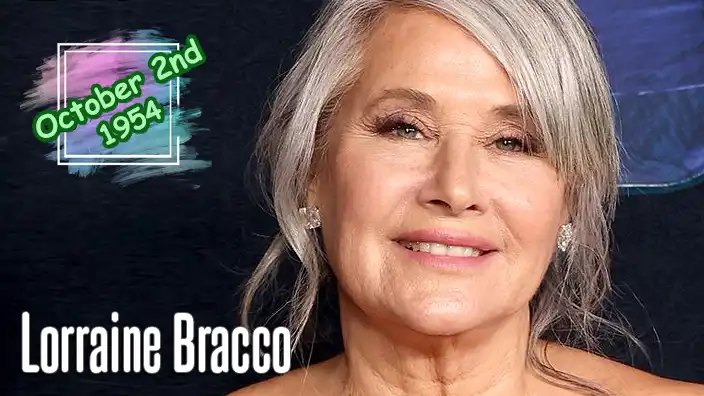
October 2, 1954, in Brooklyn, New York
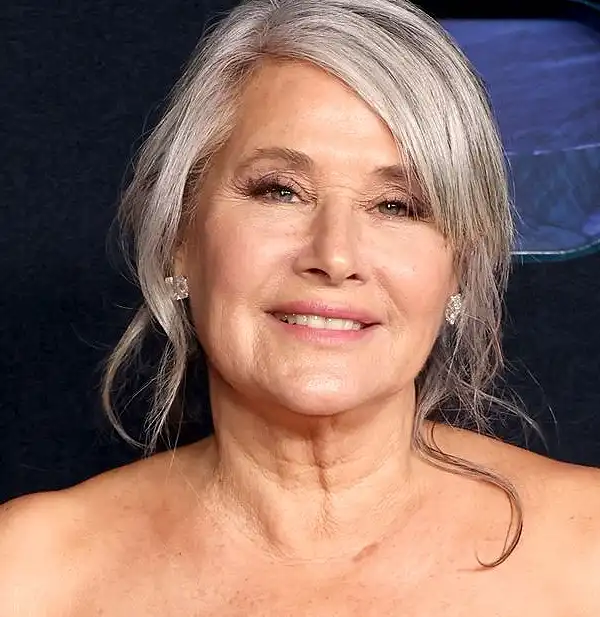
Lorraine Bracco was born on October 2, 1954, in Brooklyn, New York, and became one of American film and television’s most recognizable dramatic actresses through two very different encounters with organized crime. In Martin Scorsese’s Goodfellas, she played Karen Hill, the wife drawn into the dangerous world of mobster Henry Hill. In HBO’s The Sopranos, she crossed to the other side of the conversation as psychiatrist Dr. Jennifer Melfi, spending years listening to Tony Soprano explain the difficulties of being a husband, father and New Jersey crime boss. Between those landmark performances lies a career that began far from Hollywood and developed through modeling, European cinema and a willingness to play complicated women rather than convenient ones.
Bracco grew up in Hicksville, Long Island, in a family with Italian and French roots. After graduating from Hicksville High School, she left the United States for France during the 1970s. What was originally an adventure developed into a successful modeling career in Paris, where Bracco worked for fashion designer Jean-Paul Gaultier and other clients. She also appeared in commercials and gradually found herself being offered opportunities in film.
Her entry into acting was hardly the carefully mapped career plan one might expect from someone who would eventually receive an Academy Award nomination. Bracco has described herself as initially reluctant about acting, but opportunities continued appearing. She worked in French productions and appeared opposite established European stars, including Jean-Paul Belmondo. Living and working in France gave her years of experience in entertainment before American movie audiences became familiar with her unmistakable Brooklyn-inflected voice.
Among her European film appearances was Duos sur canapé, released in 1979, and she subsequently worked in additional French productions. Her years abroad also made her fluent in French. Eventually Bracco returned to the United States and began pursuing roles in American film and television, where the qualities that might once have seemed unconventional for a Hollywood leading lady — her voice, directness and strong screen presence — became some of her greatest assets.
Her American film career began gaining momentum during the 1980s. She appeared in Someone to Watch Over Me, Ridley Scott’s 1987 romantic thriller starring Tom Berenger and Mimi Rogers. Bracco played Ellie Keegan, the wife of Berenger’s police detective character. The role brought her greater attention in American cinema and helped establish her ability to play emotionally complicated characters rather than simply decorative supporting roles.
Then came Goodfellas.
Martin Scorsese’s 1990 crime film, based on Nicholas Pileggi’s nonfiction book Wiseguy, told the story of mob associate Henry Hill, played by Ray Liotta. Robert De Niro and Joe Pesci portrayed Jimmy Conway and Tommy DeVito, while Bracco played Karen Hill, Henry’s girlfriend and later wife. Rather than treating Karen as merely the woman waiting at home while the gangsters conducted the interesting business, the film allowed audiences to experience much of the criminal world through her perspective.
Karen is initially attracted to Henry’s confidence, money and access to a glamorous world operating outside ordinary rules. As their relationship develops, she becomes increasingly entangled in that world herself. Bracco’s performance moves through fascination, anger, fear, complicity and desperation as the lifestyle that once appeared exciting becomes progressively more dangerous. Her narration complements Henry’s, giving Goodfellas a perspective unusual in gangster films of the period.
The performance earned Bracco nominations for both the Academy Award and Golden Globe Award for Best Supporting Actress. Although Joe Pesci ultimately took home the film’s acting Oscar in the male supporting category, Bracco’s performance became one of Goodfellas’ defining elements. The film itself went on to be regarded as one of Martin Scorsese’s most celebrated works and one of the most influential crime films in American cinema.
Bracco continued working steadily after Goodfellas, appearing in films including Radio Flyer, Medicine Man, Traces of Red, Even Cowgirls Get the Blues, The Basketball Diaries and Hackers. Her performances moved across drama, thriller and comedy, although the enormous reputation of Goodfellas meant that Karen Hill remained the role against which much of her subsequent work was inevitably measured.
Television eventually provided Bracco with another character every bit as important to her career. When David Chase was developing The Sopranos for HBO, Bracco was initially considered for the role of Carmela Soprano, the wife of New Jersey mob boss Tony Soprano. Having already played a mob wife so memorably in Goodfellas, however, Bracco was not interested in repeating herself. She instead pursued the role of Tony’s psychiatrist, Dr. Jennifer Melfi.
It proved an inspired decision.
The Sopranos premiered in 1999 with James Gandolfini as Tony Soprano, a mob boss suffering panic attacks who reluctantly begins psychotherapy with Dr. Melfi. Their sessions became one of the series’ central devices, allowing Tony to discuss his family, childhood, anxieties, depression and relationships while carefully navigating how much he could reveal about the criminal activities occupying much of his working week.
Bracco’s performance required considerable restraint. Tony could explode with anger, charm, threaten, joke or attempt manipulation, while Melfi frequently had to respond by listening. The role depended on tiny shifts in expression, controlled reactions and the ability to make silence dramatically interesting. Sitting in a chair opposite James Gandolfini might sound considerably safer than appearing in a Scorsese gangster film, but Dr. Melfi spent much of six seasons attempting to maintain professional boundaries with a patient who could have somebody killed before lunch.
The relationship between Tony and Melfi became one of The Sopranos’ most fascinating elements. Tony was alternately dependent upon therapy and contemptuous of it, while Melfi struggled with the ethical implications of treating him. She was intellectually fascinated by her patient but increasingly forced to confront whether psychotherapy was actually helping Tony become healthier or merely providing him with better tools for understanding and manipulating other people.
One of Bracco’s most acclaimed episodes was the third-season installment “Employee of the Month,” in which Melfi is sexually assaulted. She later discovers that the justice system has failed to hold her attacker and realizes that she could tell Tony what happened, knowing he would almost certainly respond violently. The episode builds toward her decision not to use Tony as an instrument of revenge, culminating in an extraordinarily restrained final exchange between the two characters.
Bracco received multiple Emmy nominations for playing Dr. Melfi, as well as Golden Globe and Screen Actors Guild recognition. The series itself became a landmark in television history, helping establish HBO’s reputation for ambitious serialized drama and influencing generations of programs that followed. Bracco remained with The Sopranos through its conclusion in 2007.
Her association with two of the most influential mob stories in American screen history created an unusual distinction. In Goodfellas, Bracco played a woman increasingly absorbed into the criminal lifestyle. In The Sopranos, she played an educated professional attempting to examine the mind of a man already deeply embedded within it. The performances are connected by subject matter but dramatically opposite in perspective, which is precisely why Bracco’s decision not to play Carmela Soprano proved so significant.
Following The Sopranos, Bracco continued working in television and film. She joined the TNT police drama Rizzoli & Isles in 2010 as Angela Rizzoli, mother of Boston detective Jane Rizzoli, played by Angie Harmon. The character gave Bracco an opportunity to exercise her comic abilities in a warmer and considerably less threatening family environment. Angela was opinionated, loving, intrusive and frequently convinced that her adult children required more maternal involvement than they had actually requested.
Bracco remained a regular presence on Rizzoli & Isles throughout its seven-season run. The role introduced her to another television audience and provided a sharp contrast with Dr. Melfi’s carefully measured professionalism. Angela Rizzoli was considerably more likely to tell everyone exactly what she thought, whether they had asked or not.
Bracco has also appeared in numerous other television productions and films, with IMDb documenting credits stretching across several decades and multiple countries. She has performed voice work, made guest appearances and participated in projects connected with the enduring cultural influence of Goodfellas and The Sopranos. Her unmistakable voice has become nearly as recognizable as her face, an advantage in a profession where being instantly identifiable can be considerably more useful than sounding like everybody else.
Away from acting, Bracco entered the wine business with Bracco Wines, importing Italian wines into the United States. She also published the memoir and wellness book To the Fullest: The Clean Up Your Act Plan to Lose Weight, Rejuvenate, and Be the Best You Can Be. The projects reflected interests extending beyond acting while keeping her characteristically direct public persona firmly intact.
She later combined television with another personal interest through HGTV’s My Big Italian Adventure. The series followed Bracco as she purchased and renovated a centuries-old house in Sambuca di Sicilia, Italy, through the town’s highly publicized program offering abandoned properties for one euro. As anyone who has ever encountered an old house could probably predict, purchasing the property was the inexpensive part. Renovating it was another matter entirely.
The project returned Bracco to a European setting decades after her early years in France while also connecting with her Italian heritage. Cameras followed the extensive renovation as a severely neglected building was transformed into a functioning home. It was a different kind of drama from Goodfellas or The Sopranos, although discovering what is behind the wall of a centuries-old Sicilian house can presumably produce its own moments of suspense.
Bracco’s screen career is remarkable not simply because she appeared in two enormously influential productions, but because her characters occupied such different places within them. Karen Hill is emotionally engulfed by the world around her; Jennifer Melfi attempts to maintain a clinical distance from it. One becomes part of the mob lifestyle, while the other spends years analyzing a man who represents it.
That distinction helped prevent Lorraine Bracco from becoming trapped by the success of Goodfellas. When television offered another gangster wife, she chose the psychiatrist instead. The decision produced a second defining performance and ensured that audiences would remember her for considerably more than one celebrated film.
From Paris fashion shoots and French movies to Martin Scorsese, David Chase, Rizzoli & Isles and a one-euro house in Sicily, Bracco’s career has followed a wonderfully unpredictable route. She has been a mob wife, psychiatrist and determined television mother, and somehow managed to make all three equally convincing. Considering the first two involved Goodfellas and Tony Soprano, Angela Rizzoli may have been the safest assignment — although any mother with adult children will tell you there are no guarantees.