October 5, 1983, in Queens, New York City
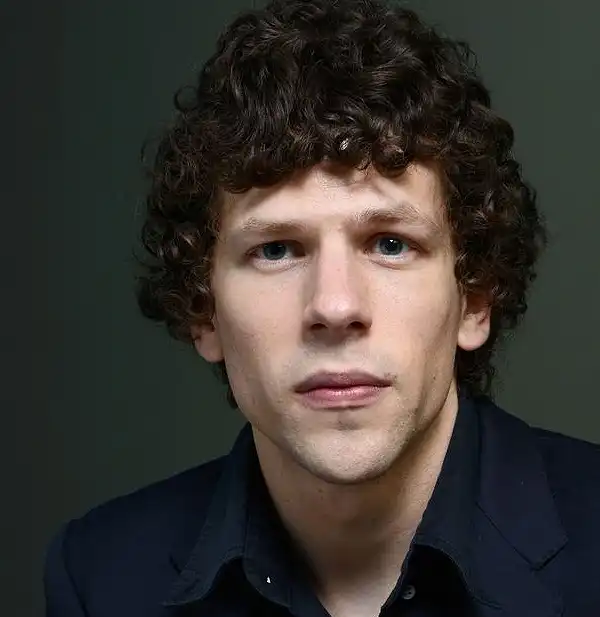
Jesse Adam Eisenberg was born on October 5, 1983, in Queens, New York City, and grew up in East Brunswick, New Jersey. His family provided an interesting environment for a future performer. His mother, Amy, worked as a professional clown entertaining children at birthday parties and also taught and directed, while his father, Barry, eventually became a college professor. Jesse's younger sister, Hallie Eisenberg, also became an actress and was particularly recognizable to American television audiences through her appearances as the "Pepsi Girl" in a series of commercials. There was clearly no shortage of performing going on in the Eisenberg household.
Eisenberg became involved in theater while young and began working professionally before making his screen breakthrough. His early television work included the Fox series Get Real, but his first leading movie role came in Roger Dodger in 2002. Playing an awkward teenager receiving decidedly questionable lessons about women from his cynical uncle, portrayed by Campbell Scott, Eisenberg displayed several qualities that would later become familiar to audiences: intelligence, unease, verbal dexterity and the appearance of someone conducting several private arguments inside his head simultaneously.
A particularly important early role followed in Noah Baumbach's The Squid and the Whale in 2005. Eisenberg played Walt Berkman, one of two brothers caught between their divorcing parents in 1980s Brooklyn. The independent film earned widespread critical recognition and helped establish Eisenberg as an actor particularly suited to intelligent, complicated characters whose confidence and insecurities frequently arrive together in the same sentence.
He continued building his career through films including The Education of Charlie Banks before 2009 brought two projects that significantly expanded his audience. In Greg Mottola's Adventureland, Eisenberg played James Brennan, a recent college graduate whose grand plans are derailed by financial reality and a summer job at an amusement park. Kristen Stewart co-starred in a film that combined comedy, romance and the peculiar misery of being young, broke and dressed for employment at a place containing carnival games.
Then came Zombieland. Eisenberg starred as Columbus, an anxious survivor of a zombie apocalypse whose continued existence depended partly upon an extensive collection of personal rules. Woody Harrelson's considerably more enthusiastic Tallahassee provided the perfect opposite number, while Emma Stone and Abigail Breslin completed the mismatched group of survivors. The horror comedy became a major success and proved that Eisenberg's anxious screen persona could work just as effectively while being pursued by the undead.
His career changed dramatically the following year when director David Fincher cast him as Facebook co-founder Mark Zuckerberg in The Social Network. Written by Aaron Sorkin, the film dramatized the creation of Facebook and the disputes that followed its extraordinary growth. Eisenberg's Zuckerberg was brilliant, cutting, competitive and frequently difficult, delivering Sorkin's densely packed dialogue at considerable speed while allowing the character's emotional isolation to emerge beneath the verbal confidence.
The performance transformed Eisenberg from a respected young actor into an internationally recognized leading man. He received an Academy Award nomination for Best Actor for The Social Network, while the film itself became one of the defining movies about the emergence of the social-media era. Eisenberg did not attempt a conventional impersonation of Zuckerberg so much as construct a dramatic character suited to Fincher and Sorkin's interpretation of the story. The result remains the performance most closely associated with his career.
Having conquered Facebook without actually having to answer anyone's friend request, Eisenberg moved into animation. He provided the voice of Blu, a domesticated Spix's macaw, in the 2011 animated film Rio. The character's anxious personality made the casting seem almost inevitable. Blu returned in Rio 2, giving Eisenberg the distinction of having played both a technology billionaire and a nervous blue parrot within a relatively short period. An actor should have range.
Another major franchise arrived with Now You See Me in 2013. Eisenberg played J. Daniel Atlas, an exceptionally confident illusionist and member of the Four Horsemen, a group of magicians who perform elaborate tricks while becoming involved in increasingly audacious crimes. The ensemble included Woody Harrelson, Isla Fisher, Dave Franco, Mark Ruffalo, Morgan Freeman and Michael Caine. Unlike many of Eisenberg's more uncertain characters, Atlas possesses enough confidence for several people and would probably sell the remainder if he could find a sufficiently impressed audience.
The film became a commercial success and produced Now You See Me 2 in 2016, with Eisenberg returning as Atlas. He subsequently returned again for Now You See Me: Now You Don't, continuing a franchise in which elaborate stage magic, enormous conspiracies and people explaining impossible things with impressive confidence have become normal working conditions.
Eisenberg has consistently alternated mainstream productions with smaller and more unusual films. Richard Ayoade's The Double, inspired by Fyodor Dostoevsky's novella, gave him dual roles as the timid Simon James and his confident double, James Simon. In The End of the Tour, he portrayed journalist David Lipsky opposite Jason Segel as author David Foster Wallace. Other projects have included Night Moves, American Ultra, Louder Than Bombs, Café Society, The Art of Self-Defense, Vivarium and Resistance.
Superhero cinema came calling when Eisenberg was cast as Lex Luthor in Batman v Superman: Dawn of Justice. His interpretation of Superman's famous adversary departed considerably from the polished corporate villain portrayed in some earlier versions, presenting Luthor instead as a younger, eccentric technology magnate. Eisenberg later appeared as the character in Zack Snyder's Justice League. Playing Mark Zuckerberg apparently qualified him for promotion to fictional billionaire supervillain, which is an unusual but reasonably understandable career progression.
In 2019, Eisenberg reunited with Woody Harrelson, Emma Stone and Abigail Breslin for Zombieland: Double Tap. A decade had passed since the original film, but Columbus still had rules, Tallahassee still had enthusiasm for destroying zombies, and civilization remained inconveniently unavailable. The sequel demonstrated the durability of the original quartet and returned Eisenberg to one of his most popular comedic roles.
Television provided another substantial part for Eisenberg with the limited series Fleishman Is in Trouble. Based on Taffy Brodesser-Akner's novel, the series cast him as Toby Fleishman, a recently divorced doctor attempting to navigate dating, parenthood, work and the sudden disappearance of his former wife. The role made effective use of Eisenberg's ability to play intelligent men who appear to have carefully organized certain portions of their lives while the remainder catches fire somewhere just outside the frame.
Acting, however, represents only one part of Eisenberg's work. He has long written fiction, humor and drama, contributing pieces to publications including The New Yorker and McSweeney's. His collection Bream Gives Me Hiccups: And Other Stories was published in 2015. He has also written plays including Asuncion, The Revisionist, The Spoils and Happy Talk, demonstrating that his fascination with uncomfortable conversations and complicated relationships extends well beyond the characters he portrays on screen.
That writing career eventually led Eisenberg behind the camera. He made his feature-film directing debut with When You Finish Saving the World, which he also wrote. Starring Julianne Moore and Finn Wolfhard, the film examines a mother and son who are both preoccupied with connecting to other people while having considerable difficulty connecting with each other. The project developed from an audio drama written by Eisenberg and marked his transition from actor who also writes to a filmmaker responsible for shaping an entire production.
His second feature as writer and director, A Real Pain, represented an even more significant step. Eisenberg starred alongside Kieran Culkin as cousins David and Benji Kaplan, who travel through Poland following the death of their grandmother. Their journey takes them into their family's Jewish history and the legacy of the Holocaust while also exposing the complicated relationship between two men who experience life, grief and personal pain very differently.
A Real Pain demonstrated that Eisenberg's abilities behind the camera were becoming as significant as his familiar work in front of it. The film premiered at the Sundance Film Festival, where Eisenberg received the Waldo Salt Screenwriting Award. His screenplay subsequently won the BAFTA Award for Best Original Screenplay and earned him an Academy Award nomination for Best Original Screenplay. Kieran Culkin's performance also received major awards recognition, including the Academy Award for Best Supporting Actor.
Eisenberg's progression from performer to playwright, author, screenwriter and director makes his career more difficult to summarize than simply listing his best-known movies. The Social Network may have established him internationally, and Now You See Me may have supplied him with a successful franchise, but much of his most interesting work has happened alongside those blockbusters in independent films, theater and his own writing.
There is also a pleasing consistency running through much of that work. Eisenberg repeatedly returns to intelligent but uncomfortable people, strained families, miscommunication, anxiety and the peculiar ways human beings manage to misunderstand one another even while talking incessantly. Sometimes there are zombies. Occasionally there are magicians. Once in a while Superman turns up. But underneath the larger machinery, Eisenberg appears most interested in what people say, what they cannot say and what happens when another person is forced to listen.
Jesse Eisenberg therefore occupies an unusual corner of modern Hollywood. He can headline a major studio franchise, disappear into an independent drama, write a stage play, publish short stories and direct an awards-season film without any of those pursuits seeming particularly out of character. He may forever encounter people who immediately think of Mark Zuckerberg when they see him, but his career has long since grown beyond The Social Network. Apparently there is life after Facebook after all.