October 24, 1960, in San Francisco, California

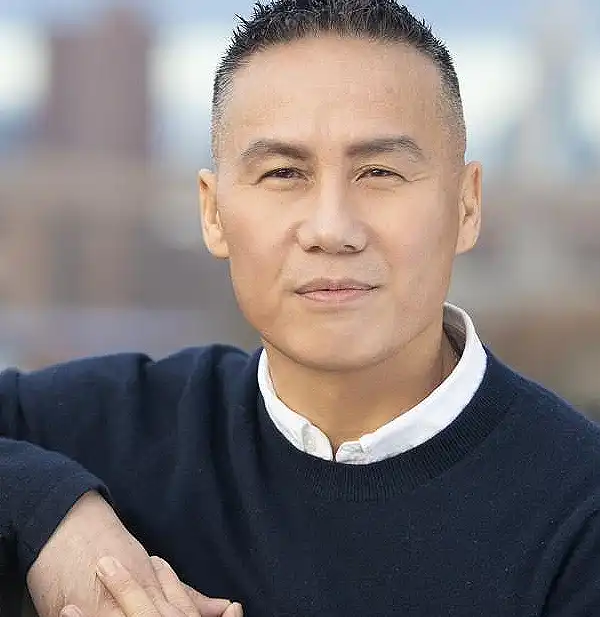
Born Bradley Darryl Wong on October 24, 1960, in San Francisco, California, BD Wong is an acclaimed American actor, director, and voice performer whose distinguished career encompasses Broadway theater, major Hollywood films, dramatic television, and animation. Raised in San Francisco's Sunset District, he grew up in a Chinese American family that valued education, cultural traditions, and hard work. His parents, Roberta Christine Leong and William D. Wong, encouraged his interests while providing a stable family environment. Wong developed an enthusiasm for performing arts during childhood, particularly musical theater, which offered an exciting alternative to more conventional professional ambitions. His early fascination with singing, dancing, and acting would eventually lead to a career involving Broadway honors, internationally successful motion pictures, and television characters whose occupations ranged from forensic psychiatry to the deeply questionable business of manufacturing dinosaurs.
Wong attended Abraham Lincoln High School in San Francisco, where he participated in theatrical productions and developed his performing abilities. His interest in acting continued at San Francisco State University, where he studied theater and gained experience in the techniques required for professional performance. The university environment provided opportunities to explore dramatic literature, stagecraft, and character development, while San Francisco's cultural diversity helped shape his understanding of storytelling and representation. Wong's enthusiasm for theater was particularly influenced by the immediacy of live performance, where actors must establish convincing relationships with audiences without relying on camera angles, editing, or elaborate special effects. His early training encouraged discipline and versatility, qualities that would become central to a career spanning musical comedy, psychological drama, science fiction, and animation.
After completing his studies, Wong began pursuing professional acting opportunities in regional theater, working to establish himself in an industry where Asian American performers frequently encountered limited casting opportunities. During the early stages of his career, many available roles relied upon familiar ethnic stereotypes rather than offering fully developed characters. Wong nevertheless continued auditioning and performing, gradually gaining recognition for his technical skill, expressive voice, and ability to communicate complicated emotions. His early theatrical experience included work with the American Conservatory Theater in San Francisco and other professional companies, providing a foundation for the more demanding productions that would follow. Establishing an acting career is difficult under ordinary circumstances, but doing so while challenging an industry's restrictive expectations requires an additional measure of determination.
His first screen appearances included a small role in the 1986 film The Karate Kid Part II, starring Ralph Macchio and Pat Morita. The sequel followed Daniel LaRusso and his martial arts mentor, Mr. Miyagi, as they traveled to Okinawa and encountered conflicts rooted in Miyagi's past. Wong's appearance was brief, but it represented an early step into the motion-picture industry and introduced him to the demands of professional filmmaking. Additional television and film opportunities followed, allowing him to build experience while continuing his theatrical work. Like many emerging performers, Wong discovered that early screen roles did not necessarily involve extensive dialogue, dramatic confrontations, or a particularly impressive place in the closing credits. Nevertheless, each appearance provided another opportunity to develop his craft and establish professional connections.
The defining breakthrough of Wong's early career arrived in 1988 when he was cast as Song Liling in the original Broadway production of David Henry Hwang's M. Butterfly. The play, inspired by a real espionage scandal, explored identity, cultural stereotypes, sexuality, deception, and the relationship between a French diplomat and a Chinese opera performer. Wong's character required extraordinary dramatic versatility, demanding the ability to communicate different identities while maintaining the emotional complexity of a story built around illusion and mistaken assumptions. The production challenged conventional theatrical representations of Asian characters and examined how Western fantasies about Eastern cultures could distort personal relationships. Wong's performance became the emotional and dramatic centerpiece of the production, attracting exceptional critical attention and establishing him as a major theatrical talent.
His portrayal of Song Liling in M. Butterfly produced one of the most remarkable award-winning achievements in Broadway history. In 1988, Wong received the Tony Award for Best Featured Actor in a Play, the Drama Desk Award, the Outer Critics Circle Award, the Theatre World Award, and the Clarence Derwent Award for the same performance. He became the only actor to receive all five honors for a single Broadway role, an extraordinary accomplishment that remains central to his theatrical reputation. His Tony victory also marked an important milestone for Asian American representation in professional theater, demonstrating that a performer of Asian descent could achieve the highest levels of recognition in a major Broadway production. Winning one prestigious theatrical award is impressive enough, but collecting five for the same performance suggests that the critics had reached an unusually unanimous decision.
The success of M. Butterfly transformed Wong's professional prospects and brought him international recognition. The production also established his association with playwright David Henry Hwang, whose work frequently explores Asian American identity, cultural misunderstanding, and the complicated relationship between personal experience and social expectations. Wong's performance was praised for its intelligence, emotional subtlety, and technical precision, particularly his ability to create a character whose apparent identity concealed layers of psychological and dramatic complexity. The role required an understanding of both the character's personal motivations and the broader cultural assumptions upon which the story depended. Wong's success demonstrated the importance of providing Asian American actors with substantial dramatic opportunities rather than limiting them to supporting characters defined primarily by ethnicity.
Following his Broadway breakthrough, Wong began receiving more substantial film opportunities. He appeared in the 1990 crime comedy The Freshman, starring Marlon Brando and Matthew Broderick, and subsequently portrayed Howard Weinstein in the 1991 romantic comedy Father of the Bride. Directed by Charles Shyer, the film starred Steve Martin and Diane Keaton as parents attempting to cope with the emotional and financial consequences of their daughter's wedding. Wong's character was an enthusiastic wedding coordinator working alongside Franck Eggelhoffer, played by Martin Short. The pair contributed to some of the film's most entertaining moments, particularly as the wedding arrangements became increasingly elaborate and expensive. Wong returned for Father of the Bride Part II in 1995, once again helping demonstrate that weddings can be wonderful occasions provided nobody looks too closely at the final bill.
One of Wong's most recognizable film roles arrived in 1993 when director Steven Spielberg cast him as Dr. Henry Wu in the science-fiction adventure Jurassic Park. Adapted from Michael Crichton's bestselling novel, the film followed a group of scientists and visitors invited to inspect a revolutionary theme park populated by genetically engineered dinosaurs. Wong portrayed the park's chief geneticist, whose scientific work contributed to the extraordinary achievement of recreating prehistoric animals from ancient DNA. The film featured an ensemble cast including Sam Neill, Laura Dern, Jeff Goldblum, Richard Attenborough, and Samuel L. Jackson. Although Wong's appearance in the original film was relatively brief, Dr. Wu played an important role in explaining the genetic engineering responsible for the park's remarkable attractions. Unfortunately, the scientific team had apparently devoted considerably more attention to making dinosaurs than to ensuring they wouldn't eat the customers.
Jurassic Park became a worldwide commercial and cultural phenomenon, transforming the use of computer-generated imagery and animatronic effects in major motion pictures. The film's groundbreaking visual effects made its dinosaurs appear extraordinarily convincing, while its story raised questions about scientific ambition, commercial exploitation, and the ethical responsibilities associated with technological innovation. Wong's portrayal of Dr. Henry Wu contributed to the scientific foundation of the narrative, establishing a character whose professional expertise would become increasingly important in later installments. The film's enormous success introduced Wong to international audiences and associated his name with one of cinema's most enduring franchises. Although Dr. Wu initially appeared to be a relatively sensible scientist, subsequent events would demonstrate that possessing exceptional intelligence does not necessarily guarantee sound judgment.
Wong continued developing his film career during the 1990s with appearances in several major productions. He portrayed Ngapoi Ngawang Jigme in the 1997 historical drama Seven Years in Tibet, starring Brad Pitt, and appeared in the 1996 action thriller Executive Decision, featuring Kurt Russell and Halle Berry. He also appeared in the 1993 television film And the Band Played On, adapted from Randy Shilts's book about the early years of the AIDS epidemic. The production featured a large ensemble cast and examined the medical, political, and social challenges surrounding the emerging public health crisis. Wong's participation reflected his willingness to work on projects addressing serious contemporary issues alongside mainstream entertainment. These roles expanded his professional range while demonstrating his ability to contribute convincingly to historical drama, action, and socially significant storytelling.
In 1998, Wong reached another enormous audience when he provided the speaking voice of Captain Li Shang in Disney's animated feature Mulan. Inspired by Chinese folklore, the film told the story of a young woman who disguises herself as a male soldier to protect her father and defend China. Li Shang served as a military commander responsible for training the recruits, initially approaching his responsibilities with considerable seriousness and skepticism. Wong's vocal performance gave the character authority, emotional restraint, and an increasingly sympathetic personality as the story developed. The character's singing voice was provided by Donny Osmond, creating a memorable combination of dramatic dialogue and musical performance. It was an unusual arrangement, but one that worked beautifully, allowing Wong to command the troops while Osmond handled the more demanding business of turning military training into a musical number.
Mulan became a major commercial success and remains one of Disney's most recognizable animated films. Its themes of family loyalty, personal courage, identity, and challenging social expectations resonated with audiences around the world. Wong's portrayal of Li Shang contributed to the film's emotional development, particularly through the character's changing relationship with Mulan and his growing respect for her abilities. He later returned to voice the character in the 2004 direct-to-video sequel Mulan II, continuing his association with the franchise. His work in animation demonstrated the versatility of his voice, which could communicate military authority, emotional uncertainty, and understated humor without the assistance of physical performance. It also introduced his talents to younger audiences who might not have been particularly interested in Broadway drama or forensic psychiatry.
Television became an increasingly important part of Wong's career when he joined the cast of HBO's prison drama Oz in 1997. Created by Tom Fontana, the series explored the violent and complicated lives of inmates and staff members within the fictional Oswald State Correctional Facility. Wong portrayed Father Ray Mukada, a Catholic priest serving as the prison chaplain and attempting to provide spiritual guidance in an environment characterized by violence, corruption, and despair. His character represented a moral presence within the institution, frequently confronting difficult questions about forgiveness, redemption, and the limitations of religious authority. Wong's performance brought emotional depth to a series known for its uncompromising examination of human behavior, demonstrating his ability to portray compassion and vulnerability amid extraordinary circumstances.
Wong remained associated with Oz throughout its six-season run, appearing regularly until the series concluded in 2003. His portrayal of Father Mukada required a different approach from his more authoritative film characters, emphasizing empathy, restraint, and the emotional difficulties of working with people whose circumstances often appeared hopeless. The series became an influential example of adult television drama, helping establish HBO's reputation for ambitious storytelling and complex characters. Wong's participation also provided valuable experience in long-form television, where characters could develop gradually across multiple episodes and seasons. For an actor whose earlier work had included relatively brief film appearances, the opportunity to explore a character's changing relationships and personal struggles over several years represented an important professional development.
His most enduring television role began in 2001 when he joined NBC's crime drama Law & Order: Special Victims Unit as Dr. George Huang. The character was an FBI forensic psychiatrist who assisted the Special Victims Unit in understanding the psychological motivations of suspects, victims, and witnesses. Working alongside characters portrayed by Mariska Hargitay, Christopher Meloni, Richard Belzer, and Ice-T, Wong became an important member of the show's ensemble. Dr. Huang's professional expertise frequently helped investigators interpret complicated behavior, identify patterns, and understand the emotional consequences of violent crimes. His calm demeanor and thoughtful explanations provided a contrast to the urgency and confrontation surrounding criminal investigations. Considering the number of disturbing cases encountered by the unit, his ability to remain composed suggested either extraordinary professional discipline or a truly remarkable supply of patience.
Dr. George Huang became a popular character among Law & Order: SVU audiences because of Wong's restrained and intelligent performance. Unlike detectives who relied upon interrogation techniques, physical evidence, or instinct, Huang approached investigations through psychological analysis and an understanding of human behavior. His contributions frequently involved explaining the motivations behind criminal acts or helping investigators communicate with traumatized victims. Wong portrayed the character as compassionate but professionally detached, recognizing the importance of maintaining emotional boundaries while dealing with deeply troubling circumstances. The role also helped introduce forensic psychiatry to a mainstream television audience, although the speed with which fictional investigators obtained psychological assessments occasionally exceeded what professionals might reasonably expect in real life.
Wong remained a regular cast member of Law & Order: SVU through 2011, subsequently returning for guest appearances. His association with the series extended across multiple decades, making Dr. Huang one of his most recognizable television characters. He returned in later episodes, including appearances during the 2020s, demonstrating the character's enduring popularity among viewers. His involvement in the series also contributed to broader recognition of Asian American performers in mainstream American television, particularly in substantial professional roles that were not defined exclusively by ethnicity. Dr. Huang's importance rested upon his expertise, judgment, and personal integrity, qualities that made him an essential part of the fictional investigative team.
During the early 2000s, Wong continued balancing television work with theater and film appearances. He returned to Broadway in the 1999 revival of You're a Good Man, Charlie Brown, portraying Linus van Pelt, the thoughtful, blanket-carrying member of Charles M. Schulz's famous comic-strip ensemble. The musical required singing, dancing, and comedy, providing an opportunity for Wong to demonstrate a lighter theatrical style than his celebrated performance in M. Butterfly. His portrayal of Linus combined gentle humor with the character's familiar philosophical observations, reminding audiences that even a child carrying a security blanket can occasionally possess more wisdom than the adults surrounding him. The production further demonstrated Wong's versatility, moving comfortably between serious drama and musical comedy.
Wong also appeared in the 2004 Broadway revival of Stephen Sondheim and John Weidman's musical Pacific Overtures, portraying the Reciter. The production examined Japan's nineteenth-century encounter with Western powers through an innovative combination of musical theater and historical storytelling. Wong's performance required vocal precision, dramatic authority, and an understanding of the production's complex theatrical structure. His involvement continued his association with major Broadway works exploring Asian history and cultural identity, while providing another opportunity to collaborate with respected theatrical artists. His stage career remained an essential part of his professional identity, even as television and film increasingly occupied his schedule.
His theatrical achievements also included the one-person play Herringbone, in which he portrayed multiple characters in a story combining comedy, music, and psychological drama. The demanding production required him to shift rapidly between personalities, voices, and emotional states, demonstrating an exceptional range of theatrical abilities. Wong also appeared in productions including The Orphan of Zhao, The Great Leap, and Big Data, maintaining a strong connection with regional theater and the American Conservatory Theater in San Francisco. These performances reflected his continued interest in challenging material and his commitment to live theater as a creative discipline. For Wong, returning to the stage offered opportunities to explore roles that might not fit the commercial expectations of mainstream television or Hollywood cinema.
In 2003, Wong published Following Foo: The Electronic Adventures of the Chestnut Man, a deeply personal book documenting the premature birth of his twin sons through surrogacy and the medical challenges that followed. One of the twins, Jackson Foo Wong, survived, while the other, Boaz Dov Wong, died shortly after birth. The book originated from electronic messages Wong shared with friends and family during the difficult period, eventually developing into a moving account of parenthood, grief, medical uncertainty, and emotional resilience. His writing combined personal reflection with observations about the extraordinary circumstances surrounding his family's experience. The publication revealed a more intimate side of an actor whose public reputation had been shaped primarily by fictional characters, demonstrating his willingness to discuss deeply personal experiences with honesty and compassion.
Wong's experiences as a parent also contributed to his involvement in charitable and advocacy activities, particularly those concerning children's health, family support, and LGBTQ+ equality. He has spoken publicly about his experiences as a gay Asian American actor and the challenges of navigating an entertainment industry that has historically offered limited opportunities for performers from underrepresented communities. His advocacy has emphasized the importance of authentic representation, equal opportunity, and the freedom to pursue family life without discrimination. He has also supported organizations involved in theater education and the development of opportunities for Asian American performers. These activities reflect his belief that professional recognition carries responsibilities extending beyond personal success.
In 2012, Wong appeared in the NBC drama series Awake, portraying Dr. John Lee, a psychiatrist working with a police detective whose reality becomes divided between two different versions of his life. The series starred Jason Isaacs as Detective Michael Britten, who experiences separate realities following a serious automobile accident. Wong's character attempted to help Britten understand his unusual psychological circumstances, providing a professional perspective on a story combining police investigation, family drama, and psychological mystery. The production offered another opportunity for Wong to portray a psychiatrist, although the extraordinary circumstances surrounding the character's patient made the assignment considerably more complicated than an ordinary consultation. Unfortunately, Awake lasted only one season, despite attracting attention for its imaginative premise and performances.
Wong returned to the Jurassic Park franchise in 2015 when he reprised the role of Dr. Henry Wu in Jurassic World, directed by Colin Trevorrow. The film introduced a fully operational dinosaur theme park on Isla Nublar, where genetic engineering had progressed to the creation of increasingly elaborate prehistoric attractions. Wong's character had become a leading scientific figure whose work involved manipulating dinosaur DNA to satisfy commercial demands for more spectacular creatures. His involvement in the creation of the Indominus rex placed him at the center of the film's exploration of scientific responsibility and corporate ambition. Once again, the experiment produced catastrophic consequences, suggesting that Dr. Wu had somehow managed to overlook the lessons provided by the previous park's rather memorable opening difficulties.
Jurassic World became an enormous international commercial success, revitalizing the franchise and introducing its prehistoric attractions to a new generation of audiences. Wong's return provided continuity with Spielberg's original film, connecting the modern sequel to the scientific ambitions that had initiated the entire series. His portrayal of Dr. Wu became increasingly morally ambiguous, reflecting the character's willingness to pursue scientific advancement despite the dangers associated with his experiments. Wong returned again in Jurassic World: Fallen Kingdom in 2018 and Jurassic World Dominion in 2022, expanding Dr. Wu's role across the trilogy. The character's development eventually involved confronting the consequences of his scientific decisions and attempting to address the damage caused by his work. It was a substantial professional journey for a fictional geneticist who might have saved everyone considerable trouble by choosing a career in botanical research.
Another major television achievement arrived in 2015 when Wong joined the cast of USA Network's psychological thriller Mr. Robot. Created by Sam Esmail, the series starred Rami Malek as Elliot Alderson, a cybersecurity engineer and hacker struggling with complicated psychological experiences while becoming involved in a revolutionary campaign against powerful corporate interests. Wong portrayed Whiterose, a mysterious and extraordinarily influential figure connected to the Chinese government and the clandestine Dark Army hacking organization. The character maintained multiple identities and operated within a world of political intrigue, technological manipulation, and elaborate secrecy. Wong's performance combined controlled authority with psychological complexity, creating one of the series' most memorable antagonists.
Whiterose became particularly significant because the character's identity, personal history, and motivations were gradually revealed across the series. Wong portrayed the character with remarkable precision, using subtle changes in expression, vocal delivery, and physical manner to communicate the distinctions between public authority and private identity. The performance explored themes of secrecy, gender identity, personal ambition, and the emotional consequences of living within restrictive social structures. His work earned a Primetime Emmy Award nomination for Outstanding Guest Actor in a Drama Series in 2017, confirming the critical recognition generated by the role. The character also demonstrated Wong's ability to create an intimidating presence without relying upon exaggerated physical aggression. Sometimes a carefully delivered sentence and a perfectly controlled expression can be considerably more unsettling than an entire room full of shouting villains.
Wong remained associated with Mr. Robot through the series' conclusion in 2019, contributing to a production widely praised for its complex storytelling, distinctive visual style, and exploration of technology's influence upon modern society. Whiterose's role expanded as the series developed, revealing increasingly elaborate ambitions and a complicated relationship with the central characters. Wong's performance helped establish the character as a formidable opponent whose intelligence, patience, and resources created extraordinary challenges for those attempting to oppose the Dark Army. The series also offered opportunities to explore subjects rarely addressed with such complexity in mainstream television, including identity, psychological trauma, corporate power, and technological surveillance. For Wong, the role represented another major achievement in a career already distinguished by unusually varied characters.
His television work continued with a recurring role in Fox's Batman-inspired crime drama Gotham, beginning in 2016. Wong portrayed Professor Hugo Strange, a brilliant but ethically compromised scientist involved in secret experiments at Arkham Asylum and the mysterious Indian Hill facility. The character, drawn from DC Comics mythology, conducted disturbing research involving human experimentation and the manipulation of life and death. Wong's performance combined intellectual arrogance, clinical detachment, and a deeply unsettling enthusiasm for scientific experimentation. The role shared certain characteristics with Dr. Henry Wu from Jurassic World, although Professor Strange's research subjects were generally human rather than prehistoric. Between these two characters, Wong had developed an impressive fictional résumé in scientific projects that responsible ethics committees would almost certainly have rejected.
Wong's additional screen appearances included the 2018 Netflix thriller Bird Box, starring Sandra Bullock, and the 2014 HBO television film The Normal Heart, adapted from Larry Kramer's play about the early years of the AIDS crisis in New York City. The Normal Heart featured an ensemble cast including Mark Ruffalo, Julia Roberts, Matt Bomer, and Jim Parsons, examining the emotional and political struggles surrounding the epidemic. Wong's participation reflected his continued interest in socially significant dramatic projects, particularly those addressing LGBTQ+ history and the experiences of communities confronting discrimination and public health challenges. His work across these productions demonstrated an ability to move between mainstream entertainment and stories rooted in difficult historical realities.
His voice-acting career continued expanding through animated television and films, including appearances in DuckTales, Kim Possible, and Gremlins: Secrets of the Mogwai. In the latter series, Wong voiced Hon Wing and additional characters, contributing to an animated adventure exploring the origins of the creatures made famous by the Gremlins film franchise. He also voiced Buddha in Netflix's 2023 animated film The Monkey King, inspired by the Chinese literary classic Journey to the West. These projects allowed Wong to draw upon his theatrical training and expressive vocal abilities while participating in stories influenced by Asian cultural traditions. His work in animation also introduced him to younger audiences who might recognize his voice without immediately associating it with a dinosaur geneticist or television psychiatrist.
In 2018, Wong married Richert Schnorr, his longtime partner, in a ceremony held in Brooklyn, New York. The marriage represented an important personal milestone for the actor, who had previously spoken openly about his experiences with relationships, parenthood, and LGBTQ+ identity. His son, Jackson, has remained an important part of his family life, and Wong has discussed the challenges and rewards of raising a child while maintaining a demanding entertainment career. His personal experiences have informed his public advocacy and his understanding of the importance of representation within popular culture. Although his professional schedule has included Broadway productions, international film franchises, and long-running television dramas, Wong has consistently emphasized the significance of family and personal relationships beyond the demands of the entertainment industry.
Wong's later television credits included an appearance in the 2024 Max political drama The Girls on the Bus, portraying Declan Morales. The series followed journalists covering a presidential campaign, exploring professional ambition, personal relationships, and the changing nature of political reporting. His participation added another contemporary television drama to a career already encompassing crime procedurals, science fiction, psychological thrillers, and comedy. Wong also continued his association with Law & Order: SVU, returning as Dr. George Huang in episodes broadcast during 2025 and 2026. These appearances demonstrated the enduring popularity of the character and Wong's willingness to revisit roles that had contributed significantly to his career. After years of portraying sinister scientists and mysterious conspirators, returning to a relatively sensible psychiatrist must have offered a welcome change of professional atmosphere.
In 2026, Wong also returned to Broadway in Face Value, portraying Randall Lee. The production added another chapter to his theatrical career, which had begun attracting major national attention with M. Butterfly nearly four decades earlier. His continuing involvement in Broadway and regional theater demonstrated a sustained commitment to live performance despite the demands of film and television. The stage remained an important artistic home for Wong, offering opportunities to explore challenging material and work directly with audiences. His professional longevity reflected both adaptability and dedication, qualities that allowed him to move between theatrical traditions and changing entertainment technologies without losing his distinctive performance style.
Beyond individual roles, Wong has become an influential figure in discussions about Asian American representation within the entertainment industry. His early success in M. Butterfly challenged assumptions about the kinds of characters Asian American performers could portray, while his later career demonstrated the importance of opportunities that extend beyond narrowly defined ethnic identities. Characters such as Dr. George Huang, Whiterose, and Dr. Henry Wu became memorable because of their intelligence, complexity, and dramatic importance rather than simply their cultural backgrounds. Wong has also supported initiatives encouraging greater diversity in theater and television, recognizing that meaningful progress requires opportunities for writers, directors, producers, and performers alike.
His career has been distinguished by an unusual ability to portray characters associated with intelligence and authority while revealing the emotional contradictions beneath their professional identities. Dr. Huang approached human behavior through compassion and psychological understanding, while Dr. Wu repeatedly allowed scientific ambition to overwhelm practical judgment. Whiterose employed intelligence and secrecy in pursuit of extraordinary personal objectives, while Hugo Strange pursued experiments that raised profound ethical questions. These characters shared certain qualities, but Wong gave each a distinct personality through careful attention to motivation, vocal delivery, and physical behavior. His performances demonstrated that a convincing portrayal of intelligence requires more than simply wearing glasses, speaking slowly, and looking disappointed in everyone else.
From his childhood in San Francisco to his historic Broadway success, major Hollywood films, and acclaimed television performances, BD Wong has built an exceptional career in American entertainment. His achievements include a Tony Award, numerous theatrical honors, an Emmy nomination, and memorable roles in some of the most recognizable film and television franchises of recent decades. His contributions to theater, animation, and television have demonstrated extraordinary versatility, while his advocacy has helped encourage broader representation and greater opportunities within the performing arts. Whether counseling detectives, commanding animated soldiers, manipulating global conspiracies, or explaining why genetically engineered dinosaurs have once again escaped their enclosures, Wong has consistently brought intelligence, precision, and personality to his performances. And if Hollywood ever decides to open another dinosaur theme park, perhaps somebody should finally consider hiring a geneticist who has absolutely no connection to Dr. Henry Wu.