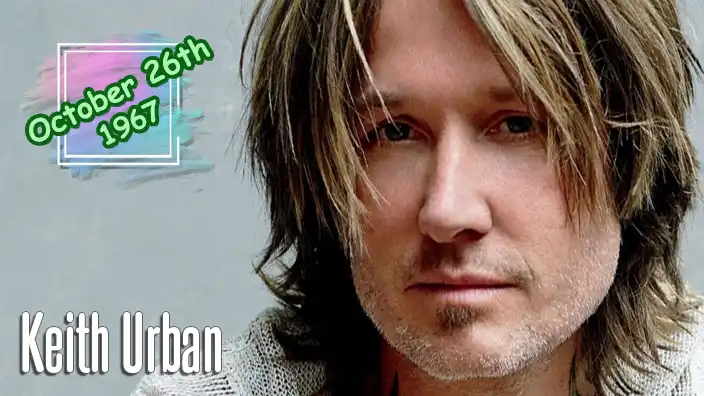
October 26, 1967, in Whangārei, New Zealand

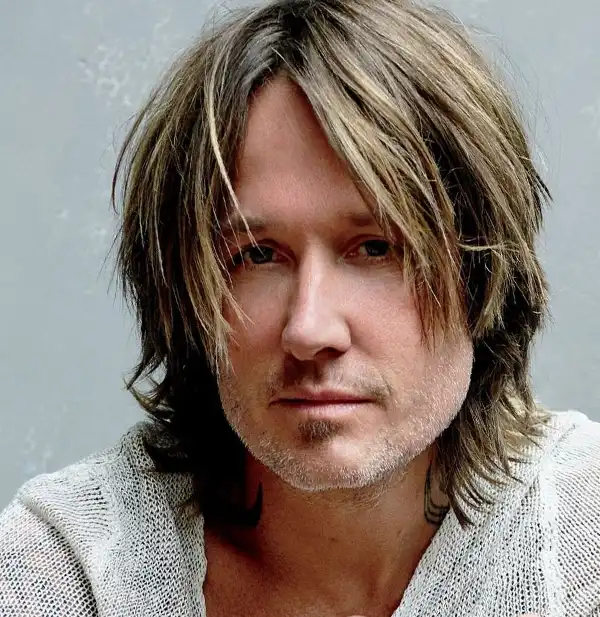
Keith Urban, born Keith Lionel Urban on October 26, 1967, in Whangārei, New Zealand, is a Grammy Award-winning country music singer, songwriter, guitarist, and television personality whose remarkable career has connected Australian country music traditions with the bright lights of Nashville. Known for chart-topping hits such as "Somebody Like You," "You'll Think of Me," "Blue Ain't Your Color," and "The Fighter," Urban has become one of the most successful international performers in modern country music. His distinctive combination of country storytelling, rock guitar, pop melodies, and energetic live performances has attracted audiences around the world. Although his music is unmistakably associated with Nashville, his journey began thousands of miles away, proving that a country music superstar does not necessarily have to grow up anywhere near Tennessee.
Urban's family moved from New Zealand to Queensland, Australia, when he was a small child, and he grew up in an environment where music played an important role in everyday life. His parents, particularly his father, Robert Urban, encouraged his interest in American country music, introducing him to performers whose recordings would help shape his musical identity. As a youngster, Urban became fascinated with the guitar, developing an enthusiasm for the instrument that eventually became one of his defining professional characteristics. He began taking guitar lessons during childhood and quickly demonstrated both musical ability and determination. While other children were discovering sports, television, and ways to avoid household chores, Urban was developing the skills that would eventually allow him to command enormous concert audiences with six strings and a remarkably confident smile.
His musical influences were unusually diverse for an aspiring country performer. Alongside traditional country artists such as Glen Campbell and Don Williams, Urban admired rock musicians whose guitar techniques emphasized speed, improvisation, and expressive playing. His fascination with guitarists such as Mark Knopfler and Lindsey Buckingham helped encourage a style that blended country melodies with rock instrumentation. This willingness to draw inspiration from different genres would later become central to his commercial success. Rather than treating country music as a collection of rigid musical rules, Urban approached it as a tradition capable of incorporating new sounds while preserving the emotional storytelling that made the genre appealing in the first place.
Urban began performing publicly while still young, appearing in local talent competitions, country music clubs, and Australian television programs. His early appearances included performances on Reg Lindsay's Country Homestead, a popular Australian country music television program. As his confidence and reputation developed, he became increasingly involved in the Australian country music scene, performing with bands and gaining valuable experience before live audiences. These early performances helped him develop the stage presence, technical ability, and audience awareness that would eventually distinguish his international concerts. Long before he could fill an American arena, he was learning how to entertain an audience that might be sitting close enough to offer unsolicited advice about his guitar playing.
During the late 1980s and early 1990s, Urban established himself as a promising performer in Australian country music. In 1990, he won the prestigious Toyota Star Maker competition at the Tamworth Country Music Festival, an important event that has helped launch numerous Australian country music careers. The recognition provided valuable industry exposure and strengthened his ambitions to pursue music professionally. In 1991, he released his Australian debut album, Keith Urban, which helped introduce his songwriting and guitar skills to a wider audience. Although Australia offered considerable opportunities, Urban remained fascinated by the American country music industry and the possibility of building a career in Nashville, the city most closely associated with the genre's commercial development.
In 1992, Urban moved to Nashville, Tennessee, determined to establish himself in the competitive American music industry. The transition was far from effortless. Nashville was filled with talented singers, songwriters, and instrumentalists, many of whom had spent years attempting to secure recording contracts and radio exposure. Urban initially worked as a guitarist and songwriter, gradually developing professional relationships while adjusting to the demands of the American music business. His Australian background and musical style made him distinctive, but standing out did not automatically guarantee success. Nashville had heard plenty of ambitious musicians announce that they intended to become stars, and the city was generally quite willing to let them prove it.
During the 1990s, Urban formed the country-rock band The Ranch with fellow musicians Jerry Flowers and Peter Clarke. The group signed with Capitol Nashville and released its self-titled album in 1997, introducing American audiences to Urban's guitar-driven approach to country music. Although The Ranch did not achieve the commercial success its members had hoped for, the experience proved valuable in developing Urban's musical identity and industry connections. The band's recordings demonstrated his enthusiasm for energetic arrangements, accomplished instrumental performances, and songs that combined country influences with contemporary rock sounds. The Ranch eventually disbanded, but Urban continued pursuing his ambitions as a solo artist, refusing to allow an early commercial disappointment to determine the remainder of his career.
His breakthrough arrived with the release of his American solo debut album, Keith Urban, in 1999. The album produced successful country singles including "It's a Love Thing," "Your Everything," and "But for the Grace of God." The latter became his first number-one hit on Billboard's Hot Country Songs chart, establishing him as a rising star in American country music. His distinctive voice, engaging personality, and accomplished guitar playing helped distinguish him from other emerging performers. More importantly, his songs connected with listeners through relatable subjects including love, gratitude, relationships, and personal reflection. After years of working toward recognition, Urban was finally enjoying the kind of commercial success that made the sacrifices of moving across the Pacific Ocean seem considerably more worthwhile.
Urban's career accelerated dramatically with the release of Golden Road in 2002. The album included "Somebody Like You," "Who Wouldn't Wanna Be Me," "You'll Think of Me," and "Raining on Sunday," songs that helped establish him among country music's leading performers. "Somebody Like You" became one of his signature recordings, spending six weeks at number one on Billboard's Hot Country Songs chart and later being recognized by Billboard as the leading country song of the 2000s decade. Its infectious rhythm, memorable guitar introduction, and optimistic lyrics demonstrated Urban's ability to combine country storytelling with an accessible contemporary sound. The album's success also revealed his growing appeal beyond traditional country audiences, attracting listeners who appreciated his energetic performances and melodic songwriting.
The release of Be Here in 2004 strengthened Urban's position as a major recording artist. The album featured successful singles including "Days Go By," "Making Memories of Us," "Better Life," and "Tonight I Wanna Cry." These recordings demonstrated his ability to move comfortably between upbeat celebrations of everyday life and emotionally expressive ballads. "Making Memories of Us," written by Rodney Crowell, became particularly popular for its romantic message, while "Tonight I Wanna Cry" highlighted Urban's ability to deliver a vulnerable performance without sacrificing his distinctive musical identity. The album achieved major commercial success and helped transform him from a promising country performer into an established international star.
Recognition from the music industry followed his growing popularity. Urban received his first Grammy Award for Best Male Country Vocal Performance for "You'll Think of Me" at the 2006 ceremony, an important milestone in his professional career. He subsequently earned additional Grammy Awards in the same category for "Stupid Boy," "Sweet Thing," and "'Til Summer Comes Around," bringing his total to four Grammy victories. He also received numerous honors from the Country Music Association and Academy of Country Music, including major recognition for his achievements as an entertainer and vocalist. These awards acknowledged not only his commercial success but also his contributions as a musician whose guitar playing, songwriting, and performances helped shape contemporary country music.
In 2006, Urban released Love, Pain & the Whole Crazy Thing, an album that reflected his willingness to explore different musical arrangements and emotional subjects. Its songs included "Once in a Lifetime," "Stupid Boy," and "I Told You So," combining energetic guitar performances with personal and reflective material. Around this period, Urban also publicly addressed his struggles with substance addiction, acknowledging the importance of treatment and recovery. His willingness to discuss these experiences brought additional attention to the pressures experienced by performers and the challenges of maintaining personal well-being while pursuing demanding professional careers. Rather than allowing those difficulties to end his musical ambitions, he continued recording, touring, and developing his artistry.
Urban's subsequent albums demonstrated his remarkable consistency as a recording artist. Defying Gravity, released in 2009, included "Sweet Thing," "Kiss a Girl," and "Only You Can Love Me This Way," while Get Closer in 2010 featured "Put You in a Song," "Without You," and "Long Hot Summer." These recordings reinforced his reputation for combining memorable melodies with sophisticated guitar arrangements and polished production. His music frequently explored romantic relationships, optimism, personal reflection, and the experiences that connect people across different backgrounds. Even when his recordings incorporated modern pop and rock influences, the emotional directness associated with country songwriting remained central to his appeal.
In 2012, Urban received one of country music's most prestigious honors when he was inducted into the Grand Ole Opry. His induction on April 21 followed a surprise invitation from fellow country performer Vince Gill, recognizing his accomplishments and contributions to the genre. Membership in the Grand Ole Opry carries particular significance because the institution has played an essential role in American country music history since its establishment in 1925. For a musician who had grown up in Australia listening to American country recordings, becoming part of this celebrated Nashville tradition represented an extraordinary personal and professional achievement. The young guitarist who once dreamed of reaching Music City had not merely arrived; he had been invited to join one of its most respected musical institutions.
Urban expanded his public profile through television when he became a judge on American Idol in 2013. Joining the show's judging panel for its twelfth season, he brought professional musical experience, constructive criticism, and an approachable personality to the popular singing competition. He continued as a judge through the program's fifteenth season in 2016, appearing alongside personalities including Jennifer Lopez, Harry Connick Jr., Mariah Carey, and Nicki Minaj during different seasons. His thoughtful approach to evaluating contestants often emphasized musical authenticity, performance confidence, and the importance of developing an individual artistic identity. Having experienced the challenges of establishing himself in the entertainment industry, Urban understood that talented singers needed considerably more than an impressive voice to build lasting careers.
His work on American Idol introduced him to audiences who might not otherwise have followed contemporary country music. Viewers appreciated his ability to offer practical musical advice while remaining encouraging toward inexperienced performers. He frequently demonstrated an understanding of vocal technique, songwriting, stage presentation, and the emotional connection between musicians and their audiences. Urban had also served as a coach on the Australian version of The Voice, further establishing his reputation as an experienced performer willing to help develop emerging talent. These television appearances revealed a different aspect of his personality, proving that he could be entertaining without necessarily holding a guitar, although it was probably never very far away.
Urban continued experimenting with musical styles through albums such as Fuse in 2013 and Ripcord in 2016. Fuse featured successful singles including "Little Bit of Everything," "We Were Us," recorded with Miranda Lambert, and "Cop Car." The album incorporated electronic elements, rock influences, and contemporary production techniques while retaining recognizable country characteristics. Ripcord extended this experimentation with songs including "John Cougar, John Deere, John 3:16," "Wasted Time," "Blue Ain't Your Color," and "The Fighter," a duet featuring Carrie Underwood. The album became another major commercial success and demonstrated Urban's ability to adapt to changing musical tastes without abandoning his established audience.
"Blue Ain't Your Color" became one of Urban's most celebrated recordings, combining soulful vocals with a distinctive waltz rhythm and emotionally expressive lyrics. The song received significant critical recognition and multiple award nominations, while its popularity demonstrated the continuing appeal of carefully crafted country ballads. "The Fighter," meanwhile, introduced an upbeat duet that combined country-pop production with a conversational exchange between Urban and Carrie Underwood. The contrasting recordings illustrated his musical versatility, moving from intimate emotional storytelling to energetic contemporary arrangements. His willingness to explore different sounds occasionally challenged traditional expectations of country music, but it also helped attract listeners from outside the genre.
In 2018, Urban released Graffiti U, an album that continued his exploration of modern production techniques and collaborations. Songs such as "Coming Home," featuring Julia Michaels, and "Never Comin Down" demonstrated his interest in blending country, pop, and electronic influences. His 2020 album The Speed of Now Part 1 included "One Too Many," a duet with pop superstar P!nk, further illustrating his enthusiasm for working with artists from different musical backgrounds. These collaborations complemented earlier performances alongside musicians including John Mayer, Alicia Keys, Eric Church, and The Rolling Stones. For Urban, musical boundaries have generally appeared more like suggestions than strict regulations, and his career has benefited from that adventurous approach.
In 2023, Urban was inducted into the Nashville Songwriters Hall of Fame, recognizing his contributions to the songwriting traditions of Music City. The honor acknowledged an important element of his career that can sometimes be overshadowed by his energetic stage performances and guitar virtuosity. Throughout his recording history, Urban has helped write numerous songs that explore love, personal growth, optimism, and the challenges of everyday relationships. His ability to communicate recognizable human experiences through accessible melodies has been essential to his commercial appeal. Although audiences often remember the guitar solos, the songs themselves provide the emotional foundation that encourages listeners to return to his recordings.
Urban released High in September 2024, continuing his commitment to contemporary country music while exploring themes of personal connection, celebration, and reflection. The album included songs such as "Messed Up as Me," "Straight Line," "Wildside," and "Go Home W U," a collaboration with Lainey Wilson. The project demonstrated his continuing interest in combining energetic guitar performances with strong melodic hooks and personal storytelling. In 2025, he supported the album with the High and Alive World Tour, performing for audiences across the United States, Canada, and Australia. His live performances remained an important part of his professional identity, combining polished musicianship with spontaneous audience interaction and the enthusiasm of someone who still genuinely enjoys playing guitar.
In 2026, Urban explored another musical direction with Flow State, an album inspired by the smooth soft-rock sounds often described as yacht rock. The project featured interpretations of classic songs associated with the 1970s and 1980s, including "Summer Breeze," "Baby Come Back," and "Steal Away," along with collaborations involving accomplished musicians. The album reflected his admiration for the sophisticated arrangements, melodic craftsmanship, and polished production of an earlier musical era. Rather than limiting himself to the country music formula that had brought him international success, Urban demonstrated a continuing curiosity about the music that influenced his development. Apparently, after mastering country, rock, and pop, he decided that a little smooth sailing would be an enjoyable addition to the itinerary.
Urban also expanded his television activities through The Road, a CBS music competition series that premiered in 2025. Developed with figures including Blake Shelton and Taylor Sheridan, the program followed emerging musicians competing for opportunities while performing as opening acts at live concert venues. The format emphasized the practical challenges of building a music career, including winning over unfamiliar audiences and delivering convincing performances under pressure. Urban's involvement reflected his experience as a touring musician who had spent years developing his skills before achieving commercial recognition. Unlike competitions conducted entirely within television studios, the program introduced aspiring performers to the unpredictable realities of live entertainment, where audiences are under no obligation to applaud simply because someone has arrived with a guitar.
Throughout his career, Urban has developed a reputation as an exceptional live guitarist and engaging concert performer. His shows frequently feature extended guitar solos, energetic movement across the stage, audience participation, and arrangements that combine musical precision with spontaneous improvisation. He has been particularly admired for his ability to blend country guitar techniques with rock-influenced playing, creating performances that appeal to listeners with widely different musical preferences. His skill as an instrumentalist has also made him a respected collaborator among fellow musicians. While his recordings have achieved considerable commercial success, his concerts demonstrate the musicianship that first inspired him to pursue a career in entertainment.
Urban's personal life has frequently attracted public attention, particularly his relationship with Academy Award-winning actress Nicole Kidman. The couple married in Sydney, Australia, in June 2006 and have two daughters, Sunday Rose and Faith Margaret. Their marriage brought together two internationally recognized Australian entertainment personalities whose careers frequently required extensive travel and demanding professional schedules. In 2025, their separation became public, followed by divorce proceedings. Although the relationship attracted considerable media interest, Urban's professional achievements remain independently significant, reflecting decades of musical development, recording success, and international touring.
Beyond entertainment, Urban has supported numerous charitable organizations and initiatives involving healthcare, music education, and community assistance. He has participated in fundraising activities for St. Jude Children's Research Hospital and supported organizations including the Mr. Holland's Opus Foundation, which helps provide musical instruments to students and schools. His All for the Hall benefit concerts have raised millions of dollars for the Country Music Hall of Fame and Museum, helping support the preservation and presentation of country music history. These activities reflect his appreciation for the institutions, musicians, and educational opportunities that contribute to the development of future generations of performers.
Keith Urban's remarkable career represents a successful meeting of musical traditions from several continents. Born in New Zealand, raised in Australia, and established professionally in Nashville, he has helped introduce country music to international audiences while incorporating influences from rock, pop, and other genres. His Grammy Awards, chart-topping recordings, songwriting recognition, and Grand Ole Opry membership reflect an extraordinary record of achievement, while his television appearances and charitable work have extended his influence beyond the concert stage. From a young guitarist performing at Australian country music clubs to an internationally celebrated entertainer, Urban has demonstrated the importance of persistence, musical curiosity, and a willingness to take creative risks. And after all those years of proving that country music knows no geographical boundaries, he has surely settled one important question: you do not have to be born in Nashville to become one of its biggest stars. You just need talent, determination, and preferably a guitar that can survive the journey.