October 20, 1958, in New York City

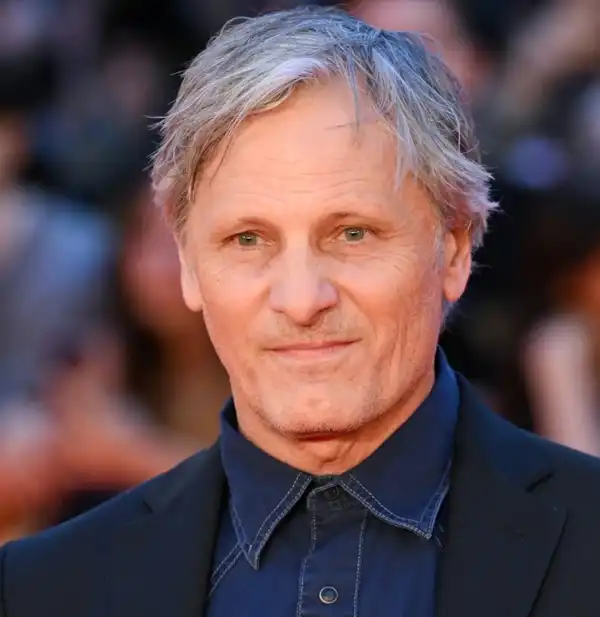
Born Viggo Peter Mortensen Jr. on October 20, 1958, in New York City, he grew up in an international family whose experiences would profoundly influence his personality and artistic interests. His father, Viggo Peter Mortensen Sr., was Danish, while his mother, Grace Gamble Atkinson, was American. His parents met in Norway before settling in the United States, and their family subsequently lived in several countries, including Venezuela, Denmark, and Argentina. These experiences exposed the young Mortensen to different languages, cultures, and traditions, giving him a remarkably international upbringing. His childhood travels also helped develop the curiosity and adaptability that would later become important characteristics of his acting career.
Mortensen spent a significant part of his childhood in Argentina, where he attended school and developed a lasting affection for the country, its culture, and its people. He became fluent in Spanish and developed an enduring interest in Argentine literature, football, and music. His attachment to Argentina remained strong throughout his life, particularly his support for the Buenos Aires football club San Lorenzo de Almagro. Even after becoming an internationally recognized actor, Mortensen continued following the team's fortunes with considerable enthusiasm. Considering the emotional demands of supporting a football club, one might reasonably conclude that facing an army of Orcs was occasionally the less stressful experience.
Following his parents' separation, Mortensen returned to the United States with his mother and two younger brothers, settling in Watertown, New York. He completed his secondary education at Watertown High School before attending St. Lawrence University in Canton, New York. In 1980, he graduated with a degree in Spanish Studies and Politics, reflecting the intellectual curiosity and international perspective that had developed during his childhood. Although his later career would be associated primarily with acting, his academic interests provided a foundation for his lifelong engagement with literature, language, history, and political and cultural questions.
After completing university, Mortensen traveled to Europe and spent time living in England, Spain, and Denmark. During this period, he supported himself through various jobs, including working as a truck driver and selling flowers. These experiences introduced him to people from different backgrounds and provided an understanding of everyday working life that would later contribute to his realistic portrayals of complicated characters. His early adulthood was hardly a conventional preparation for Hollywood stardom, but it offered something equally valuable: the opportunity to observe the world beyond the entertainment industry. Eventually, Mortensen returned to New York City, where he began studying acting and pursuing a professional career.
Mortensen trained at the Warren Robertson Theatre Workshop in New York, developing the technical skills and emotional discipline required for stage and screen performance. His early acting experiences included theatrical productions and auditions that gradually introduced him to the professional entertainment industry. Like many aspiring actors, he encountered rejection and uncertainty while attempting to establish himself. His determination eventually produced opportunities in film and television, although his early career progressed through relatively modest roles rather than immediate stardom. The experience helped shape his reputation as a serious performer more interested in developing his craft than cultivating a glamorous public image.
Viggo Mortensen made his credited feature film debut in the 1985 crime thriller Witness, directed by Peter Weir and starring Harrison Ford and Kelly McGillis. He portrayed Moses Hochleitner, a young member of the Amish community who becomes involved in the story surrounding a Philadelphia police detective protecting a young murder witness. Although Mortensen's role was relatively small, the film received widespread critical acclaim and became an important early credit in his career. Working alongside experienced performers and filmmakers provided valuable professional experience and introduced him to the demands of major motion picture production.
During the late 1980s, Mortensen continued appearing in films and television productions, gradually developing a reputation as a versatile character actor. His credits included Fresh Horses in 1988 and Prison in 1987, as well as other projects that allowed him to explore different dramatic styles. He also appeared in The Indian Runner, the 1991 directorial debut of Sean Penn, portraying Frank Roberts, a troubled Vietnam War veteran whose violent behavior places enormous strain on his relationship with his brother. The emotionally demanding role demonstrated Mortensen's ability to portray deeply flawed characters with psychological complexity, helping establish him as an actor capable of carrying challenging dramatic material.
Throughout the 1990s, Mortensen built an increasingly substantial filmography through a combination of independent productions and major studio films. He appeared in Carlito's Way in 1993, directed by Brian De Palma and starring Al Pacino, portraying a former criminal whose circumstances contribute to the film's atmosphere of betrayal and danger. He also appeared in Crimson Tide in 1995, a submarine thriller starring Denzel Washington and Gene Hackman. The film's tense military setting required Mortensen to contribute to a large ensemble cast operating within the confined environment of a nuclear submarine, demonstrating his ability to work effectively in productions driven by suspense and complex professional relationships.
In 1996, Mortensen appeared in The Portrait of a Lady, directed by Jane Campion and based on the novel by Henry James. The film starred Nicole Kidman and explored themes of independence, manipulation, and personal freedom within nineteenth-century society. Mortensen portrayed Caspar Goodwood, a determined American suitor whose relationship with the central character becomes an important part of the story. His performance reflected his ability to adapt to literary material and period settings, qualities that would become increasingly valuable as his career developed. The production also demonstrated his willingness to work with filmmakers whose interests extended beyond conventional Hollywood entertainment.
Another notable performance came in G.I. Jane in 1997, directed by Ridley Scott and starring Demi Moore. Mortensen portrayed Master Chief John James Urgayle, the demanding instructor responsible for training candidates attempting to qualify for an elite military program. His character was physically intimidating, disciplined, and frequently confrontational, requiring a very different performance from the sensitive or troubled figures he had portrayed in earlier films. The role helped introduce Mortensen to a broader mainstream audience and demonstrated his ability to combine physical authority with emotional complexity.
In 1998, Mortensen appeared in A Perfect Murder, a thriller starring Michael Douglas and Gwyneth Paltrow. He portrayed David Shaw, an artist involved in a dangerous romantic relationship that becomes central to a complicated murder plot. The film allowed Mortensen to explore themes of deception, ambition, and moral compromise while working alongside established Hollywood stars. His performance added another dimension to his growing reputation for portraying characters whose motivations were not always straightforward. By the end of the decade, he had developed an impressive collection of supporting roles, but the extraordinary opportunity that would transform his international career was still waiting in New Zealand.
That opportunity arrived when director Peter Jackson began assembling the cast for his ambitious adaptation of J. R. R. Tolkien's The Lord of the Rings. Mortensen was offered the role of Aragorn, the wandering ranger who eventually embraces his destiny as king, after the production had already begun. The role had initially been assigned to another actor, Stuart Townsend, but the filmmakers decided that a different performer was needed. Mortensen was initially hesitant to accept the demanding commitment, particularly because he had not read Tolkien's novel. His son, Henry, who was familiar with the story, encouraged him to take the role. Fortunately for Middle-earth, Mortensen listened to his son, packed his belongings, and traveled to New Zealand to begin what would become one of the defining performances of modern fantasy cinema.
Mortensen's portrayal of Aragorn began with The Lord of the Rings: The Fellowship of the Ring, released in 2001. The film introduced audiences to a mysterious ranger known as Strider, whose apparent reluctance to embrace his royal heritage gradually gives way to a growing sense of responsibility. Mortensen brought dignity, restraint, and emotional depth to the character, creating a heroic figure who appeared genuinely burdened by the expectations placed upon him. Rather than portraying Aragorn as an uncomplicated warrior, he emphasized the character's uncertainty, loyalty, and determination to protect those around him. His performance helped make the character believable within the extraordinary fantasy world created by Tolkien and brought to the screen by Peter Jackson.
The production of The Lord of the Rings trilogy required an exceptional commitment from its cast and crew. Filming took place primarily in New Zealand, where elaborate sets, extensive location work, complicated battle sequences, and demanding physical performances created one of the most ambitious filmmaking projects of its time. Mortensen embraced the challenges with remarkable enthusiasm, performing many of his own stunts and developing a close connection with the horses used during filming. He also became known for carrying his sword and practicing with it between scenes, demonstrating his determination to make Aragorn's movements appear natural and convincing. His dedication occasionally made it difficult to distinguish between the actor preparing for a role and a wandering medieval warrior who had somehow discovered the film industry.
Mortensen worked closely with sword master and fight choreographer Bob Anderson to develop Aragorn's distinctive fighting style. The demanding training required coordination, endurance, and an understanding of how a warrior might realistically move while carrying heavy equipment. His commitment to the physical aspects of the role helped establish the credibility of the trilogy's battle sequences, particularly those involving large numbers of performers and complex choreography. Mortensen also developed friendships with fellow cast members, contributing to the sense of camaraderie that became one of the films' defining qualities.
During the filming of The Lord of the Rings: The Two Towers, released in 2002, Mortensen experienced one of the production's most famous accidents. While filming a scene in which Aragorn believes that two young Hobbits have been killed, he kicked a metal helmet in frustration and broke two toes. His resulting cry of pain was genuine, and director Peter Jackson retained the take in the finished film. The moment became a favorite piece of behind-the-scenes trivia among fans, illustrating both the physical demands of the production and Mortensen's willingness to continue performing despite discomfort. It also provided a useful reminder that even the future King of Gondor should probably avoid kicking solid metal objects.
The trilogy continued with The Lord of the Rings: The Return of the King in 2003, bringing Aragorn's journey to its dramatic conclusion. Mortensen portrayed the character's transformation from reluctant ranger to confident leader, culminating in his acceptance of the throne of Gondor. His performance emphasized the importance of courage, loyalty, sacrifice, and personal responsibility, helping create one of fantasy cinema's most memorable heroic figures. The film achieved extraordinary commercial and critical success, winning all eleven Academy Awards for which it was nominated, including Best Picture. The achievement placed the trilogy among the most celebrated productions in motion picture history and confirmed Mortensen's international recognition as a leading actor.
The success of The Lord of the Rings transformed Mortensen's professional opportunities, but he remained selective about the projects he accepted. Rather than concentrating exclusively on large-budget action films or attempting to reproduce the success of Aragorn, he continued seeking roles that offered artistic challenges and opportunities to work with respected filmmakers. His interest in literature, history, and complex human relationships influenced his choices, resulting in a filmography that frequently explored moral ambiguity, personal identity, and the consequences of violence. This approach distinguished him from performers whose careers became permanently defined by a single successful franchise.
In 2004, Mortensen starred in Hidalgo, directed by Joe Johnston, portraying Frank Hopkins, an American horseman who enters a demanding endurance race across the Arabian Desert. The adventure film combined historical inspiration with fictionalized storytelling, allowing Mortensen to demonstrate his horsemanship and physical abilities in a different setting. His affection for horses became an important part of the production, and he purchased the horse that portrayed Hidalgo, whose real name was T. J., after filming concluded. His attachment to the animal reflected the genuine interest in horses that had developed during his work on The Lord of the Rings.
One of Mortensen's most critically acclaimed performances arrived in 2005 with A History of Violence, directed by David Cronenberg. He portrayed Tom Stall, a seemingly ordinary small-town restaurant owner whose life changes dramatically after he confronts violent criminals. As questions emerge about his past, the film explores identity, family relationships, and the enduring consequences of violence. Mortensen's performance was praised for its controlled intensity and psychological complexity, demonstrating his ability to communicate conflicting emotions through subtle expressions and restrained dialogue. The film marked the beginning of an important creative partnership with Cronenberg, whose unconventional storytelling approach proved well suited to Mortensen's interests.
Their collaboration continued with Eastern Promises in 2007, a crime thriller set within London's Russian criminal underworld. Mortensen portrayed Nikolai Luzhin, a mysterious driver and enforcer whose loyalties and motivations become central to the film's complicated narrative. Preparing for the role, he studied Russian language and culture, traveled to Russia, and developed a detailed understanding of the character's background. His performance required him to speak Russian and adopt a convincing accent while portraying a man whose outward composure concealed considerable danger. The film included a particularly demanding fight sequence in a public bathhouse, demonstrating Mortensen's willingness to undertake physically challenging scenes in pursuit of dramatic realism.
Mortensen's performance in Eastern Promises earned him his first Academy Award nomination for Best Actor, confirming his reputation as one of the most accomplished dramatic performers of his generation. He also received recognition from other major awards organizations, reflecting the critical admiration for his portrayal of Nikolai. The film demonstrated that his artistic achievements extended well beyond fantasy adventure, establishing him as an actor capable of delivering extraordinary performances in psychologically demanding contemporary dramas.
In 2008, Mortensen starred alongside Ed Harris in Appaloosa, a Western directed by Harris and based on the novel by Robert B. Parker. Mortensen portrayed Everett Hitch, a thoughtful and loyal lawman whose partnership with his colleague forms the emotional center of the story. The film explored friendship, professional duty, and the complicated moral choices associated with frontier justice. Mortensen's understated performance complemented Harris's more direct characterization, creating a convincing relationship between two experienced men whose mutual respect was communicated as much through silence as through dialogue. His performance also demonstrated his suitability for Westerns, a genre that depends heavily on physical presence, restraint, and the ability to look convincing beneath a wide-brimmed hat.
The following year, Mortensen starred in The Road, a 2009 adaptation of Cormac McCarthy's Pulitzer Prize-winning novel. Directed by John Hillcoat, the film followed a father and his young son traveling through a devastated post-apocalyptic landscape while struggling to survive. Mortensen's performance emphasized the emotional and physical exhaustion of a parent determined to protect his child under almost unimaginable circumstances. The role required considerable physical preparation and emotional intensity, resulting in one of his most demanding performances. Although the film presented a bleak vision of humanity's future, its central relationship explored love, responsibility, and the determination to preserve compassion in a world where ordinary civilization had collapsed.
Mortensen reunited with David Cronenberg for A Dangerous Method in 2011, portraying pioneering psychoanalyst Sigmund Freud opposite Michael Fassbender as Carl Jung and Keira Knightley as Sabina Spielrein. The historical drama explored the intellectual and personal relationships surrounding the early development of psychoanalysis. Mortensen's performance combined dry humor, intellectual authority, and emotional restraint, demonstrating his ability to portray a historical figure whose influence extended far beyond his own lifetime. The role also reflected Mortensen's longstanding interest in literature, psychology, and the complicated motivations underlying human behavior.
In 2012, Mortensen appeared in On the Road, directed by Walter Salles and adapted from Jack Kerouac's influential novel. He portrayed Old Bull Lee, a character inspired by writer William S. Burroughs. The film explored the restless spirit of the Beat Generation and its fascination with travel, artistic experimentation, and unconventional lifestyles. Mortensen's participation reflected his interest in literary adaptations and his willingness to contribute to ensemble productions centered on important cultural movements. His own experiences traveling internationally and exploring different artistic disciplines provided a natural connection to the material.
Another acclaimed performance came in The Two Faces of January in 2014, a psychological thriller based on Patricia Highsmith's novel. Mortensen starred alongside Kirsten Dunst and Oscar Isaac, portraying Chester MacFarland, an American businessman whose apparently comfortable life conceals dangerous secrets. Set against picturesque Mediterranean locations, the film explored deception, jealousy, and moral compromise. Mortensen's performance captured the growing desperation of a man attempting to maintain control as his circumstances deteriorated, demonstrating once again his ability to portray flawed characters without reducing them to simple villains.
In 2016, Mortensen starred in Captain Fantastic, directed by Matt Ross, portraying Ben Cash, a father raising his six children in the forests of the Pacific Northwest according to an unconventional philosophy emphasizing education, physical fitness, self-reliance, and independence from mainstream society. The family's isolated lifestyle becomes increasingly difficult to maintain following a personal tragedy, forcing Ben to reconsider his beliefs and responsibilities. Mortensen's performance combined humor, determination, tenderness, and emotional conflict, creating a character whose admirable qualities were inseparable from his serious shortcomings. The film explored the challenges of parenting, the meaning of education, and the tension between personal ideals and practical realities.
His performance in Captain Fantastic earned him a second Academy Award nomination for Best Actor, along with additional recognition from major film organizations. The role demonstrated his ability to carry a complex film centered on philosophical questions while maintaining emotional accessibility. Mortensen's portrayal avoided presenting Ben as either an unquestionable hero or a misguided eccentric, instead allowing audiences to consider the advantages and limitations of his unconventional approach to family life. The film became an important example of Mortensen's preference for stories that encourage viewers to examine difficult questions rather than accept simple conclusions.
In 2018, Mortensen starred opposite Mahershala Ali in Green Book, directed by Peter Farrelly. Inspired by the real-life relationship between pianist Don Shirley and driver Tony Vallelonga, the film followed their journey through the segregated American South during the early 1960s. Mortensen portrayed Vallelonga, an Italian American nightclub employee hired to drive Shirley during a concert tour. The role required a significant physical transformation, including weight gain, as well as careful attention to the character's accent, mannerisms, and cultural background. His performance explored the development of an unlikely friendship against a backdrop of racial discrimination and changing personal attitudes.
Green Book became a major awards contender and won the Academy Award for Best Picture, while Mortensen received his third Academy Award nomination for Best Actor. The film also generated debate about its treatment of race, historical accuracy, and the perspectives emphasized in its storytelling. Mortensen's performance nevertheless attracted considerable critical recognition for its humor, energy, and emotional range. The project demonstrated his ability to move between serious dramatic material and character-driven comedy while portraying a real historical figure.
Mortensen expanded his creative career by making his feature directorial debut with Falling, released in 2020. He wrote, directed, produced, composed music for, and starred in the film, portraying John Peterson, a man attempting to care for his difficult and increasingly vulnerable father, played by Lance Henriksen. The story explored family relationships, memory, emotional conflict, and the challenges associated with aging and dementia. Mortensen drew upon personal experiences while developing the project, creating an intimate drama that examined the complicated bonds between parents and children. The film marked an important achievement in his artistic development, allowing him to exercise creative control over nearly every major aspect of the production.
His work on Falling reflected the multidisciplinary interests that had accompanied him throughout his career. Writing the screenplay, composing the score, directing performers, and appearing in a leading role required him to combine skills that are usually distributed among several professionals. The project demonstrated his commitment to personal storytelling and his willingness to accept the considerable responsibilities associated with independent filmmaking. Although directing represented a new professional challenge, Mortensen approached it with the same careful preparation and artistic curiosity that had characterized his acting career.
In 2022, Mortensen reunited with David Cronenberg for Crimes of the Future, a science-fiction body horror film co-starring Léa Seydoux and Kristen Stewart. He portrayed Saul Tenser, a performance artist whose body develops unusual new organs in a society experiencing radical biological changes. The film explored themes of technology, human evolution, physical transformation, and the relationship between art and the body. Its unconventional subject matter demonstrated Mortensen's continued interest in challenging projects and his willingness to collaborate with filmmakers whose work often unsettles conventional expectations. It was certainly a considerable departure from playing a noble king, although both roles required him to endure some rather unpleasant physical experiences.
Mortensen returned to directing with The Dead Don't Hurt, a Western drama that premiered in 2023 and received a theatrical release in 2024. He wrote, directed, produced, composed music for, and starred in the film alongside Vicky Krieps. Set in the American West during the nineteenth century, the story explored the relationship between a Danish immigrant and a fiercely independent French Canadian woman against the backdrop of the Civil War. The film emphasized personal relationships, resilience, and the experiences of women in a genre traditionally dominated by male protagonists. Mortensen's approach reflected his interest in reconsidering familiar storytelling conventions and examining historical experiences from different perspectives.
Beyond his achievements as an actor and filmmaker, Viggo Mortensen has developed a substantial career in the visual arts and literature. He is an accomplished photographer, painter, and poet whose work has been exhibited and published internationally. His artistic interests frequently explore themes of memory, identity, travel, personal relationships, and the connections between language and visual expression. Rather than treating these activities as occasional hobbies, Mortensen has pursued them seriously, producing books and exhibitions that demonstrate a distinctive creative perspective. His multidisciplinary approach reflects a belief that artistic expression can take many forms and that different disciplines can enrich one another.
In 2002, Mortensen founded Perceval Press, an independent publishing company dedicated to presenting books of photography, poetry, painting, and other creative work. The company has published projects by Mortensen and numerous other artists, emphasizing artistic independence and the value of creative voices that might not receive attention through conventional commercial publishing. Perceval Press reflects Mortensen's commitment to supporting the arts beyond his own professional interests, providing a platform for work that prioritizes creativity and personal expression over mass-market expectations. It also demonstrates that his interests extend considerably beyond the demands of acting, directing, and occasionally saving fictional kingdoms.
Mortensen is also an accomplished musician who has released numerous recordings, including experimental compositions and collaborations with other artists. His musical projects frequently explore unconventional sounds, spoken-word performances, and atmospheric arrangements, reflecting the same curiosity that characterizes his visual art and writing. He has collaborated with guitarist Buckethead and other musicians, producing recordings that differ considerably from conventional popular music. His willingness to experiment across artistic disciplines has become an important part of his public identity, demonstrating that creative exploration remains central to his life regardless of his achievements in cinema.
Language has played an especially important role in Mortensen's artistic and professional development. In addition to English, he speaks fluent Danish and Spanish and has studied or used several other languages, including French and Italian. His international upbringing helped develop an appreciation for cultural differences and the subtleties of communication, while his language abilities have proved valuable in preparing for film roles. Mortensen has frequently emphasized the importance of understanding a character's cultural background, sometimes undertaking extensive research to develop convincing accents, mannerisms, and speech patterns. His preparation for Eastern Promises remains a particularly notable example of this commitment.
Mortensen's personal life has generally remained relatively private despite his international fame. He married singer and actress Exene Cervenka, a founding member of the punk rock band X, in 1987. The couple had a son, Henry Mortensen, before separating and eventually divorcing. Henry later became involved in creative work and played an important role in encouraging his father to accept the part of Aragorn. Mortensen has maintained a reputation for avoiding excessive publicity and concentrating instead on his professional projects and artistic interests. His relatively understated approach to celebrity has helped distinguish him from performers whose personal lives frequently dominate entertainment headlines.
Throughout his career, Mortensen has received numerous honors and nominations recognizing his achievements in film and the arts. His three Academy Award nominations for Best Actor, along with recognition from the British Academy Film Awards, Golden Globes, and other organizations, reflect the critical respect he has earned through decades of challenging performances. His involvement in internationally celebrated productions has introduced his work to audiences across the world, while his independent projects have demonstrated his willingness to explore less commercially predictable material. His career illustrates how artistic credibility and mainstream success can coexist when a performer remains committed to thoughtful project selection.
The cultural impact of Mortensen's portrayal of Aragorn remains particularly significant. The Lord of the Rings trilogy introduced Tolkien's extraordinary fictional world to an enormous international audience and helped establish a new standard for epic fantasy filmmaking. Mortensen's performance contributed substantially to the emotional credibility of the films, presenting a hero defined not merely by physical courage but also by humility, compassion, loyalty, and a willingness to accept responsibility. Aragorn became an enduring symbol of honorable leadership, and Mortensen's interpretation continues to influence how audiences imagine the character. His portrayal demonstrated that a convincing cinematic hero need not be arrogant, invulnerable, or constantly delivering dramatic speeches.
Mortensen's broader career, however, reveals an actor whose achievements cannot be reduced to a single celebrated character. His performances in A History of Violence, Eastern Promises, The Road, Captain Fantastic, and Green Book demonstrate extraordinary versatility, ranging from restrained psychological drama to physically demanding thrillers and emotionally complex family stories. His directing projects and artistic pursuits further illustrate a creative personality interested in exploring human experiences through different forms of expression. Rather than following a predictable Hollywood career path, Mortensen has consistently chosen work that challenges his abilities and reflects his personal interests.
Viggo Mortensen's contribution to cinema and the arts lies in his remarkable combination of discipline, curiosity, and creative independence. From his internationally influenced childhood to his acclaimed film performances, literary publications, visual art, music, and directing achievements, he has demonstrated that artistic success need not be confined to one profession or medium. His work continues to attract audiences who appreciate thoughtful storytelling, complex characters, and performers willing to take creative risks. For millions of fans, he will always be Aragorn, the reluctant king who helped save Middle-earth. But Mortensen's own journey has proved equally interesting, and unlike most fictional monarchs, he has managed to build an extraordinary legacy without needing a throne, a royal treasury, or an army of heavily armed Elves.