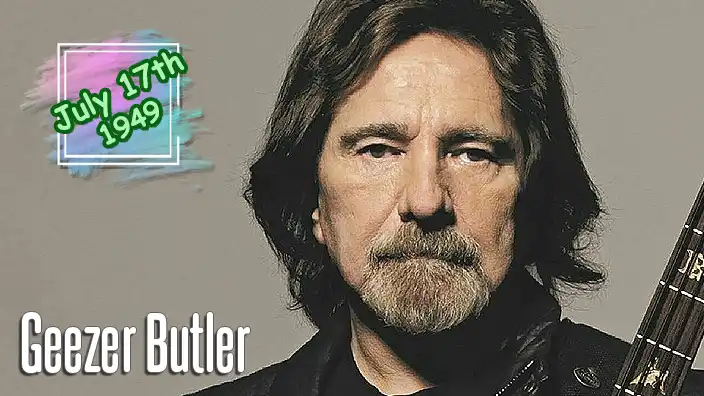
July 17, 1949, in Birmingham, England
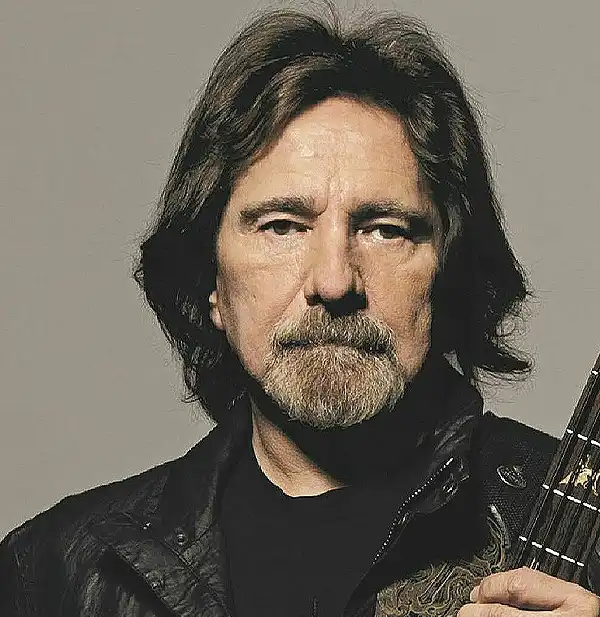
Geezer Butler is one of the most influential bass players and songwriters in the history of rock music. As a founding member of Black Sabbath, Butler helped create the sound, themes, and lyrical style that gave birth to heavy metal. His distinctive bass playing, thoughtful songwriting, and dark, imaginative lyrics became defining elements of the band's success and influenced countless musicians around the world.
Born Terence Michael Joseph Butler in Birmingham, England, he grew up in the industrial heart of Britain. Raised in a working-class Irish Catholic family, Butler experienced the sights and sounds of post-war Birmingham, a city filled with factories, steel mills, and constant industrial noise. Many music historians believe this environment helped inspire the heavier sound that Black Sabbath would later pioneer.
As a teenager, Butler initially dreamed of becoming a novelist rather than a musician. He was an enthusiastic reader who enjoyed literature, history, and science fiction. His fascination with fantasy, horror, and philosophy would later become an important influence on his songwriting.
Like many young people during the 1960s, Butler was inspired by the explosion of British rock music. He first learned to play guitar before switching to bass guitar, discovering that the instrument better suited his style and allowed him to create the powerful rhythms he envisioned.
It was during this period that he became friends with guitarist Tony Iommi, drummer Bill Ward, and vocalist Ozzy Osbourne. The four musicians would eventually form a band that would permanently change the direction of rock music.
Originally performing under the name Earth, the group experimented with blues rock before deciding to pursue a darker, heavier musical direction. Inspired in part by audiences' enthusiasm for horror films, Butler suggested writing music that created feelings of suspense, mystery, and fear rather than simply encouraging people to dance.
The band's name also came from Butler's fascination with horror. After seeing the 1963 Boris Karloff film Black Sabbath, he wondered why people happily paid money to be frightened. The idea inspired both the band's name and the title of its first song, laying the foundation for an entirely new musical style.
Released in 1970, Black Sabbath shocked audiences with its heavy guitar riffs, thunderous bass lines, haunting atmosphere, and lyrics that explored subjects rarely heard in popular music. Critics were initially divided, but fans embraced the album, and it is now widely regarded as one of the most important recordings in rock history.
Later that same year, the band released Paranoid, an album that firmly established Black Sabbath as one of the world's leading rock groups. Songs such as "Paranoid," "Iron Man," "War Pigs," and "Electric Funeral" became classics that continue to influence heavy metal bands more than fifty years later.
Although Ozzy Osbourne became the band's unmistakable voice and Tony Iommi its legendary guitarist, Butler contributed enormously behind the scenes. He wrote or co-wrote the lyrics for many of Black Sabbath's best-known songs, often drawing inspiration from war, social injustice, religion, environmental concerns, and the human condition.
His lyrics frequently contained thoughtful messages hidden beneath the band's dark imagery. Songs such as "War Pigs" criticized political leaders and the horrors of war, while others explored personal struggles, spirituality, and humanity's relationship with technology. Butler's writing gave Black Sabbath an intellectual depth that distinguished them from many other rock bands.
As a bassist, Butler developed a unique playing style that blended heavy riffs with melodic lines. Influenced by jazz bassist Jack Bruce of Cream, he often treated the bass as a lead instrument rather than simply following the guitar. His use of distortion and powerful amplification created a rich, aggressive sound that became a cornerstone of heavy metal.
Throughout the 1970s, Black Sabbath released a remarkable series of successful albums, including Master of Reality, Vol. 4, Sabbath Bloody Sabbath, and Sabotage. These recordings expanded the band's musical range while further establishing their reputation as pioneers of heavy music.
Like many successful rock bands, Black Sabbath experienced lineup changes over the decades. Butler left and rejoined the group several times but remained closely associated with its legacy. He also performed with Ozzy Osbourne's solo band during various periods, helping reunite two of heavy metal's most recognizable figures.
Outside Black Sabbath, Butler explored other musical projects, including Geezer, GZR, and collaborations with numerous rock and metal artists. While these projects never matched Black Sabbath's commercial success, they allowed him to experiment with different musical ideas and continue developing as a songwriter.
In 2006, Butler and his Black Sabbath bandmates were inducted into the Rock and Roll Hall of Fame, recognizing their enormous contribution to modern music. By then, bands from Metallica and Slayer to Iron Maiden and countless others had acknowledged Black Sabbath's influence on their own careers.
The band's farewell tour, appropriately titled The End, concluded in Birmingham in 2017, bringing Black Sabbath's remarkable journey full circle by ending where it had begun nearly five decades earlier.
Away from music, Butler is known for his lifelong commitment to animal welfare and vegetarianism. He has actively supported organizations that promote animal rights and environmental conservation, causes that reflect many of the themes found in his songwriting.
Despite helping create one of the loudest and heaviest musical genres ever heard, Butler has often been described by fellow musicians as thoughtful, intelligent, and remarkably soft-spoken. His quiet personality contrasts sharply with the thunderous music for which he became famous.
Today, Geezer Butler is recognized as one of the architects of heavy metal. His songwriting, bass playing, and creative vision helped transform four young musicians from Birmingham into one of the most influential bands in rock history. Decades after Black Sabbath first introduced audiences to a darker and heavier sound, Butler's influence continues to echo through generations of musicians around the world.