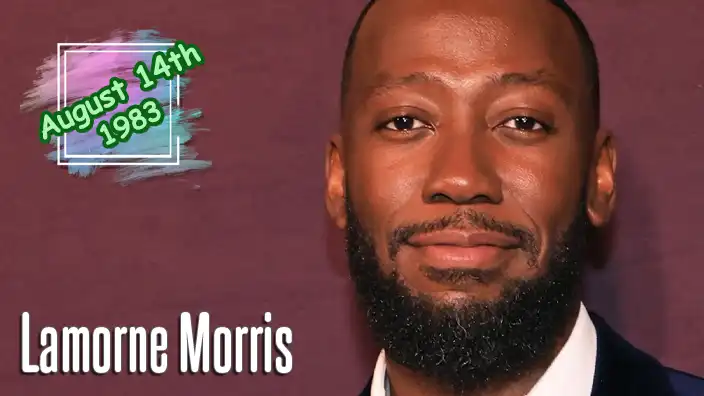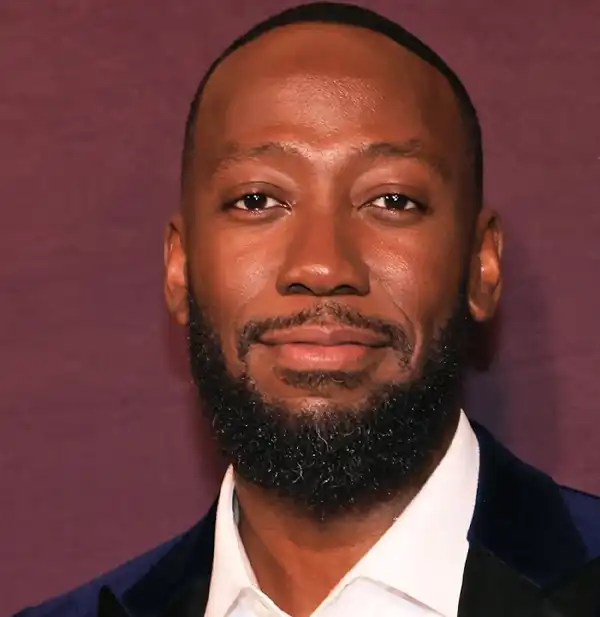
Lamorne Morris was born in Illinois and grew up in the Chicago area. Long before television audiences knew him as Winston Bishop, Morris imagined that his future might involve basketball rather than acting. IMDb notes that he originally wanted to become a basketball player, an ambition that would later become amusingly appropriate when New Girl introduced Winston as a former professional basketball player returning home after playing overseas. Sometimes life doesn't give you the NBA career you wanted; it gives you a sitcom character who had one instead.
Morris attended Glenbard South High School in Glen Ellyn, Illinois, where his tendency to make people laugh did not always receive the academic appreciation it deserved. He has recalled getting kicked out of class for telling too many jokes and consequently spending a fair amount of time in detention. Fortunately, some of the adults around him recognized that the problem might also contain the beginnings of a career. A math teacher and the woman supervising detention encouraged him to put his natural ability to entertain people to better use.
That advice proved unusually valuable.
Morris studied theater at the College of DuPage, where he received an acting scholarship and immersed himself in performance. He has described the college's theater program as the backbone of his career because it was there that he began to understand that acting could become something more than an interest. He participated in numerous theatrical productions, learned the practical disciplines of rehearsal and scene preparation and developed the professional habits that would remain useful long after he left the classroom.
Chicago also offered Morris access to one of America's most celebrated comedy institutions, The Second City. He studied and performed there while continuing to develop the improvisational abilities that would eventually become central to his screen persona. Improvisation suited him particularly well. Morris possessed the ability to react quickly, commit completely to absurd situations and make unexpected choices without appearing to be desperately searching for a joke.
Before Hollywood came calling, however, there was work to be done.
Morris moved through the less glamorous stages of building an entertainment career, appearing in commercials, independent productions and hosting jobs. He worked with BET and became one of the network's on-air personalities, appearing in entertainment programming and comedy segments. He also hosted BrainRush, a Cartoon Network game show with a wonderfully peculiar premise in which contestants answered questions while riding roller coasters.
There are easier ways to conduct a quiz show, but presumably none of them produce quite the same facial expressions.
Those hosting jobs allowed Morris to combine comedy with the ability to think quickly in front of a camera. He became increasingly comfortable working without the protection of a tightly scripted character, and commercial work helped him learn another valuable lesson: sometimes the best performance came when he stopped trying to perform and simply allowed his own personality to emerge.
Then came New Girl.
The Fox sitcom premiered in 2011 with Zooey Deschanel starring as Jessica “Jess” Day, a recently single teacher who moves into a Los Angeles loft occupied by several men. The original pilot included Damon Wayans Jr. as Coach, but when Wayans returned to his existing series Happy Endings, the producers created a different roommate rather than simply replacing the actor.
Enter Winston Bishop.
Morris did not stroll casually into the role. According to his College of DuPage profile, he auditioned for New Girl 15 times. That is either admirable persistence or the entertainment industry's elaborate way of asking whether somebody really wants a job.
Morris did.
He joined the series beginning with its second episode, and Winston was initially introduced as a former professional basketball player who had returned to the United States after playing in Latvia. At first, the writers seemed uncertain about exactly what kind of character Winston should become. He was comparatively grounded beside the more immediately defined personalities of Jess, Nick Miller and Schmidt.
That did not last.
As the series developed, Winston became increasingly eccentric, unpredictable and delightfully specific. His peculiarities accumulated until they became part of the pleasure of watching him. He was intensely competitive about things that did not remotely deserve intense competition. He could become emotionally invested in ridiculous schemes. His attempts at practical jokes were notoriously unreliable, generally landing somewhere between almost unnoticeable and wildly excessive.
The show even developed a name for them: “Winston pranks.”
And then there was Ferguson.
Winston's relationship with his tabby cat became one of the character's most beloved running jokes. What began with Winston acquiring the cat for questionable reasons developed into an extraordinarily sincere friendship between a grown man and an animal that, being a cat, presumably regarded the entire arrangement as adequate.
Ferguson became part of Winston's identity, and Morris played the relationship with exactly the commitment required to make absurd comedy work. The joke wasn't merely that Winston loved his cat. It was that Winston treated that love with complete emotional seriousness.
Winston's career also evolved considerably during the series. After struggling to find direction following his basketball career, he eventually became a police officer with the Los Angeles Police Department. His professional development was accompanied by a romantic relationship with fellow officer Aly Nelson, played by Nasim Pedrad. Their friendship gradually became romantic, eventually leading to marriage.
By the end of New Girl, Winston had traveled an enormous distance from the comparatively undefined roommate introduced in Season One. Morris had transformed him into one of the show's most distinctive personalities.
He played Winston throughout all seven seasons, appearing in 145 episodes according to IMDb. The series ran until 2018, giving Morris both the breakthrough he had spent years pursuing and the difficult question that eventually confronts every actor associated with a popular sitcom: what do you do after millions of viewers permanently associate you with one character?
Morris began answering that question while New Girl was still on television.
His film career expanded with roles in productions including Barbershop: The Next Cut, released in 2016. The movie placed him alongside an ensemble that included Ice Cube, Cedric the Entertainer and Common, allowing Morris to work within another established comedy franchise.
In 2018, he appeared in Game Night, the dark comedy starring Jason Bateman and Rachel McAdams. Morris played Kevin, whose marriage to Michelle, played by Kylie Bunbury, becomes increasingly uncomfortable when an old incident involving a celebrity enters the evening's conversation.
The role allowed Morris to do what he does particularly well: take a relatively ordinary situation, become increasingly obsessed with it and extract comedy from the escalating seriousness with which his character treats something ridiculous.
He also appeared as Officer Mikey Jameson in the Netflix holiday movie The Christmas Chronicles, starring Kurt Russell as Santa Claus. In 2019, Morris appeared in Yesterday, director Danny Boyle's musical romantic comedy built around the premise of a world in which almost everyone has mysteriously forgotten the Beatles.
That same year brought another major franchise appearance in Jumanji: The Next Level, while 2020 saw Morris enter superhero territory in Bloodshot, starring Vin Diesel. Morris played Wilfred Wigans, a computer programmer and hacker who assists the title character.
By then, Morris had established that his career would not simply consist of trying to recreate Winston Bishop under different names.
In 2020, he took the lead role in Hulu's Woke, playing Keef Knight, a cartoonist whose view of the world changes dramatically after an encounter with police. The series was inspired by the experiences and work of cartoonist Keith Knight and combined live-action storytelling with animated objects that suddenly spoke to Keef.
The premise gave Morris the opportunity to combine comedy with more serious material involving race, identity, activism and social responsibility. Keef begins as an artist primarily interested in protecting his career and avoiding controversy, only to find himself increasingly unable to ignore the inequalities around him.
Morris has spoken about recognizing elements of his own experience in the character, particularly the tension between building a successful career and deciding when circumstances require someone to speak publicly about difficult issues.
Woke ran for two seasons, further establishing Morris as an actor capable of carrying a television series rather than simply providing comic support.
Then came Fargo.
The fifth season of FX's acclaimed anthology series presented Morris with a role quite different from Winston Bishop. He played North Dakota State Trooper Witt Farr, a decent, conscientious law-enforcement officer drawn into the increasingly dangerous story surrounding Dorothy “Dot” Lyon, played by Juno Temple.
There was humor within Fargo, as there almost always is, but Witt Farr was not simply another variation on Morris's comic persona. The role depended upon restraint, empathy and sincerity. Morris played him as a fundamentally decent man attempting to do the right thing while surrounded by circumstances becoming increasingly violent and bizarre.
It proved to be a career-changing performance.
In 2024, Morris won the Primetime Emmy Award for Outstanding Supporting Actor in a Limited or Anthology Series or Movie for his performance as Witt Farr.
The victory represented far more than another trophy for the shelf. Morris had spent years being known primarily as a comedy performer, particularly for New Girl. Fargo demonstrated to a much larger audience that he could deliver dramatic work at an award-winning level.
The Emmy also produced a wonderfully human moment. Morris brought his mother, Gwennett, to the ceremony, and when his name was announced, his reaction was one of genuine astonishment. Years after being the schoolboy whose jokes kept sending him to detention, he was standing onstage accepting one of American television's highest honors.
His career took another interesting turn with Saturday Night, director Jason Reitman's 2024 film dramatizing the chaotic hours leading up to the first broadcast of Saturday Night Live in October 1975.
Morris played Garrett Morris, one of the original Saturday Night Live cast members.
Despite sharing a surname, Lamorne Morris and Garrett Morris are not father and son. The coincidence had apparently amused Lamorne long before the film existed; he had watched Garrett Morris on television and joked about the possibility of a family connection.
Playing a real performer presented a different challenge from creating a fictional character. Garrett Morris was an accomplished singer and actor who joined the original Saturday Night Live ensemble at a time when both the program and its performers were still discovering exactly what the show was going to become.
Lamorne Morris lost approximately 40 pounds for the role, according to IMDb, demonstrating a substantial physical commitment to portraying the veteran comedian.
The performance also carried an interesting historical symmetry. Lamorne had received the Chris Farley Memorial Acting Scholarship during his theater studies, trained at Second City and eventually portrayed one of the original performers from the television institution that would later make Farley famous.
Morris's career has continued expanding into acting, producing, writing and directing. IMDb credits him across all of those areas, reflecting a performer increasingly interested in controlling and creating material rather than waiting for somebody else to hand him a role.
He has also continued hosting. His early experience in that field came full circle when he guest-hosted Jimmy Kimmel Live! during the summer of 2024. Years earlier, Morris had wanted desperately to appear as a guest on a late-night talk show and struggled to receive an invitation. Eventually, instead of merely sitting in the guest chair, he got the desk.
That is one way of solving the problem.
His personal life has generally remained less public than his professional career. Morris is the father of a daughter, Lily, and has occasionally spoken about fatherhood while maintaining a relatively firm separation between his public work and family life.
He is also a devoted Chicago sports fan. His early dream of playing professional basketball may not have worked out as originally imagined, but sport has remained an important interest throughout his life. In a curious piece of casting destiny, Winston Bishop's backstory allowed Morris to spend years portraying somebody who had actually achieved that childhood basketball dream—albeit professionally in Latvia rather than Chicago.
The broader story of Lamorne Morris's career is one of persistence combined with gradual expansion.
He did not arrive in Hollywood as an overnight sensation. He studied theater, trained in improvisation, performed in college productions, worked commercials, hosted television programs and endured repeated auditions. Even after landing New Girl, it took time for Winston Bishop to become the character audiences eventually loved.
Morris stayed with it.
As Winston became stranger, Morris became funnier. As better film opportunities arrived, he demonstrated that his abilities traveled beyond the loft. Woke showed that he could lead a series dealing with substantial subjects without abandoning comedy. Fargo demonstrated dramatic depth. Saturday Night gave him an opportunity to portray a real figure from American comedy history.
The Emmy victory therefore feels less like a sudden change in direction than recognition of something Morris had been building toward for years.
There is also something wonderfully appropriate about his journey. The boy who was repeatedly sent to detention because he couldn't stop making jokes eventually received an acting scholarship. The aspiring basketball player became famous playing a former basketball player. The sitcom comedian became an Emmy-winning dramatic actor. The young performer who once wanted desperately to appear on a late-night talk show eventually guest-hosted one.
And the actor who had to audition 15 times to become Winston Bishop ended up playing him for seven seasons.
Persistence is often described as refusing to take no for an answer. In Hollywood, apparently, sometimes it means hearing “come back and audition again” fourteen times and still remembering where you parked.
Lamorne Morris is likely to remain associated with Winston Bishop for the rest of his career, and there are considerably worse fates than being remembered for creating a character millions of people loved. But his work since New Girl has made something equally clear.
Winston was the breakthrough. He was never the limit.