August 23, 1949, in Guildford, Australia
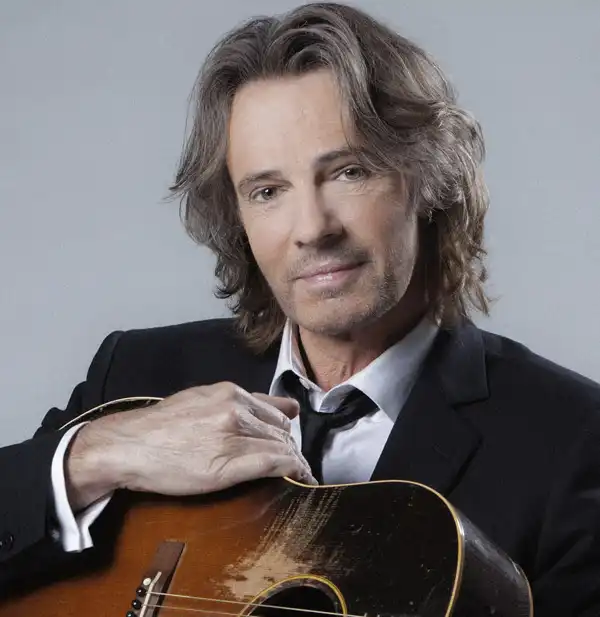
Rick Springfield was born Richard Lewis Springthorpe on August 23, 1949, in Guildford, New South Wales, Australia. His father, Norman Springthorpe, was an Australian Army officer, which meant the family moved frequently during Rick's childhood. He spent time living in Australia and England, an unsettled upbringing that nevertheless exposed him to different places and cultures before music became the central focus of his life.
Like countless young musicians of his generation, Springfield was profoundly affected by the arrival of The Beatles. He learned guitar, joined bands and began pursuing music seriously during his teenage years. Before long, performing was no longer simply something he enjoyed—it was becoming a career.
Springfield played in several Australian bands during the 1960s before joining Zoot, a group that became popular with Australian teenagers. Zoot initially cultivated a deliberately colorful image, even performing in pink outfits, but eventually developed a heavier rock sound. The group scored Australian hits including its hard-rocking version of The Beatles' “Eleanor Rigby.”
After Zoot broke up in 1971, Springfield launched a solo career. His first major Australian solo success came with “Speak to the Sky,” which also reached American audiences after Springfield moved to the United States. The song climbed into the U.S. Top 20 in 1972, suggesting that his transition from Australian pop musician to American recording artist might be relatively straightforward.
It wasn't.
The remainder of the 1970s brought recording contracts, albums, management difficulties and periods when Springfield's musical career seemed determined to move sideways rather than forward. He released records including Beginnings, Comic Book Heroes, Mission: Magic! and Wait for Night, but sustained American superstardom remained elusive.
So Springfield did something rather sensible for a handsome young performer living in Los Angeles: he started acting.
Television roles began appearing, including parts in The Rockford Files, The Six Million Dollar Man and The Incredible Hulk. He also starred in the short-lived science-fiction series High Tide—not to be confused with the later series of the same name—and steadily established himself as an actor while continuing to write and record music.
Then 1981 arrived and everything happened at once.
Springfield joined ABC's General Hospital as Dr. Noah Drake, a handsome young physician who quickly became enormously popular with the show's audience. ABC continues to identify Springfield among the notable actors associated with the long-running daytime drama, and he later returned to the role on several occasions.
At almost exactly the same time, Springfield released the album Working Class Dog.
The album's cover featured Springfield's bull terrier, Ronnie, wearing a shirt and tie. This was an admirably efficient arrangement: Rick supplied the music, and the dog handled the album cover.
Working Class Dog became Springfield's commercial breakthrough, reaching the Top 10 on the Billboard 200. It contained “I've Done Everything for You,” written by Sammy Hagar, and one particular song that would permanently attach itself to Springfield's name: “Jessie's Girl.”
“Jessie's Girl” tells the painfully familiar story of a man attracted to his friend's girlfriend. Springfield based the idea on a real situation involving a woman he admired while attending a stained-glass class with her boyfriend. The real boyfriend's name was Gary, but Springfield decided that “Gary's Girl” didn't work particularly well as a song title.
History should probably be grateful for that editorial decision.
The song slowly climbed the American charts before reaching No. 1 in 1981. Its success coincided beautifully with the launch of MTV, and Springfield's good looks, acting experience and photogenic rock-star image made him particularly well suited to the rapidly expanding music-video era.
Then “Jessie's Girl” delivered something even better than a hit record.
At the 24th Annual Grammy Awards, Springfield won Best Rock Vocal Performance, Male for “Jessie's Girl.” The competition included Bruce Springsteen, Rod Stewart, Rick James and Gary U.S. Bonds, making the victory particularly impressive. Springfield ultimately accumulated four Grammy nominations, with “Jessie's Girl” providing his Grammy win.
For Springfield, 1981 therefore became the year when his two careers collided spectacularly. During the daytime, television viewers knew him as Dr. Noah Drake. On radio and MTV, he was singing one of the biggest rock songs in America.
This occasionally created an unusual problem.
Some music listeners assumed Springfield was an actor who had decided to become a singer, when in reality he had already spent many years as a professional musician. He had been making records long before checking into General Hospital. The television role simply happened to become successful at almost exactly the same moment his music career exploded.
Springfield followed Working Class Dog with Success Hasn't Spoiled Me Yet in 1982. The album produced another major hit, “Don't Talk to Strangers,” which reached No. 2 on the Billboard Hot 100. Other songs included “What Kind of Fool Am I” and “I Get Excited.”
“I Get Excited” earned Springfield another Grammy nomination for Best Male Rock Vocal Performance, while “Don't Talk to Strangers” received a nomination for Male Pop Vocal Performance. The following year, “Affair of the Heart” brought him yet another Best Male Rock Vocal Performance nomination.
His 1983 album Living in Oz continued the run of success. “Affair of the Heart” became another major hit, while “Human Touch” demonstrated Springfield's knack for combining rock guitars with the synthesizers and polished production increasingly associated with 1980s pop.
By this point, Springfield was firmly established as one of the decade's recognizable rock performers. The screaming audiences, magazine covers and music videos sometimes encouraged critics to dismiss him as merely a teen idol, but his involvement in his own music was substantial. Springfield wrote songs, sang, played guitar and participated actively in the creation of his records.
His acting career continued alongside the music.
In 1984, Springfield starred in the musical drama Hard to Hold, playing rock musician Jamie Roberts. The movie itself received a mixed reception, but its soundtrack produced another substantial Springfield hit, “Love Somebody.” The song reached the Top 10 in the United States and became another durable part of his concert repertoire.
Throughout the 1980s, Springfield continued releasing albums including Tao and Rock of Life. Songs such as “Bop 'Til You Drop,” “Celebrate Youth” and “Rock of Life” demonstrated his efforts to move beyond the straightforward power-pop sound associated with his early breakthrough.
Eventually, the pace slowed. Springfield stepped away from recording for a period while concentrating on family and acting, but he never permanently abandoned music.
His acting résumé continued expanding through television series, guest appearances and films. He appeared in projects including High Tide, Suddenly Susan, Californication, Hawaii Five-0, Supernatural, True Detective and American Horror Story: Cult. He also played a decidedly unpleasant version of himself on Californication, demonstrating a willingness to make fun of the wholesome heartthrob image that had followed him since the early 1980s.
And Dr. Noah Drake wasn't finished either.
Springfield returned to General Hospital beginning in the 2000s, reprising the character who had helped make him a television star. The return connected Noah to his son, Dr. Patrick Drake, and allowed longtime viewers to revisit one of the show's memorable characters from the early 1980s.
Springfield subsequently made additional appearances connected with General Hospital. In 2013, he even performed “Jessie's Girl” at the fictional hospital's Nurses Ball, neatly combining his two most famous careers in one scene. ABC has also continued featuring Springfield at events celebrating the long-running series.
Music remained central to Springfield's life as he grew older. He returned to regular recording and touring, releasing albums such as Karma, Shock/Denial/Anger/Acceptance, Venus in Overdrive, Songs for the End of the World, Rocket Science and The Snake King.
Rather than simply touring behind the old hits, Springfield continued writing new material. His later work explored blues, rock, pop and more introspective songwriting while maintaining the guitar-driven style that had defined much of his career.
He also became an author.
Springfield published his memoir Late, Late at Night in 2010. The book offered a considerably more complicated portrait than the cheerful rock-star image familiar from MTV and television. He wrote openly about his personal struggles, relationships, career difficulties and experiences with depression.
The memoir became a New York Times bestseller and revealed that Springfield had little interest in presenting his life as a perfectly polished celebrity success story.
He later moved into fiction with the novel Magnificent Vibration, published in 2014, adding novelist to an already rather crowded résumé.
Springfield married Barbara Porter in 1984. The two had met years earlier when Porter worked at the recording studio where Springfield was making Working Class Dog. They have two sons, Liam and Joshua.
Meanwhile, “Jessie's Girl” has stubbornly refused to go away.
The song has appeared in movies, television programs, commercials, radio playlists and karaoke bars for decades. Its instantly recognizable guitar opening remains one of those musical signals capable of transporting listeners directly back to the early 1980s before Springfield has even started singing.
Its longevity is particularly amusing considering that the song is fundamentally about romantic frustration. Springfield turned failing to get somebody else's girlfriend into a No. 1 single and a Grammy Award.
There are worse ways to handle disappointment.
His influence and longevity extend well beyond that one recording, however. Springfield achieved 17 U.S. Top 40 hits, and his Grammy history includes one win from four nominations.
His dual career also remains unusual. Plenty of musicians have acted, and plenty of actors have released records, often with results everyone politely agrees never to discuss again. Springfield succeeded substantially in both fields.
For television viewers, he remains Dr. Noah Drake. For rock fans, he is the guitar-wielding Australian responsible for “Jessie's Girl,” “Don't Talk to Strangers,” “Affair of the Heart,” “Human Touch” and “Love Somebody.”
For audiences who grew up during the early 1980s, he was practically unavoidable.
Rick Springfield's career stretches from Australian pop groups in the 1960s through American chart success, Grammy recognition, daytime television, movies, books and decades of touring. The hairstyles have changed, MTV stopped actually playing much music a long time ago, and Dr. Noah Drake probably has an impressive collection of unused vacation days by now.
But play the opening notes of “Jessie's Girl,” and everybody still knows exactly who is about to start complaining about Jessie.