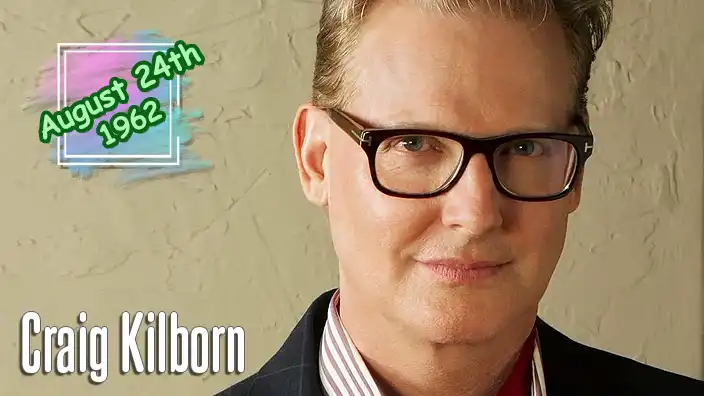
August 24, 1962, in Kansas City, Missouri
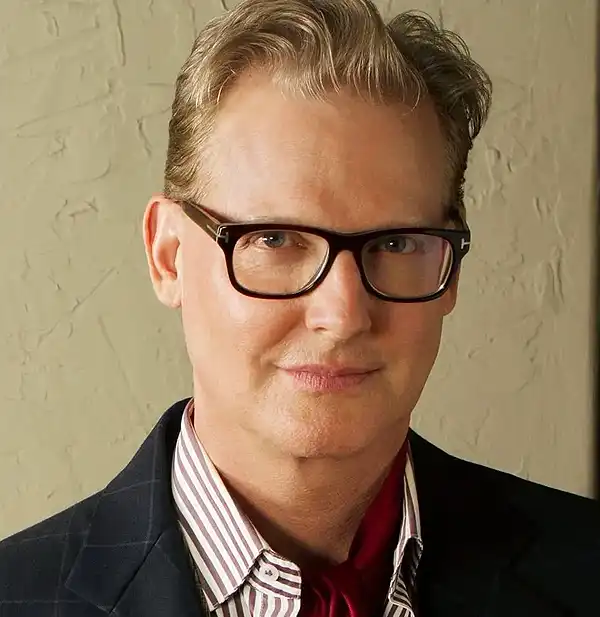
Craig Kilborn managed to turn sports highlights, fake news and celebrity interviews into one remarkably unusual television career, moving from SportsCenter to becoming the original host of The Daily Show and eventually taking over The Late Late Show. Then, while most television personalities spend years desperately trying to remain on television, Kilborn simply decided he'd had enough and wandered off—which may be the most confident career move of all.
Craig Lawrence Kilborn was born on August 24, 1962, in Kansas City, Missouri. His family later lived briefly in New Jersey before settling in Hastings, Minnesota, where Kilborn grew up from kindergarten through high school. At 6 feet 5 inches tall, he was well suited physically for basketball and became a successful high-school player before continuing the sport at Montana State University. He played college basketball for the Bobcats while studying theater and media, combining two interests that would eventually prove remarkably useful once somebody decided sports news could benefit from a little sarcasm.
After college, Kilborn entered broadcasting rather than attempting a professional basketball career. He worked in radio and eventually became a television sports anchor in Monterey, California. It was the sort of local broadcasting experience that required an anchor to become comfortable in front of a camera, deliver information quickly and continue looking composed when something behind the scenes had undoubtedly gone completely wrong. Kilborn's personality and dry humor distinguished him from more conventional sports broadcasters, and in 1993 he joined ESPN as an anchor on SportsCenter.
At ESPN, Kilborn became part of an era in which SportsCenter was developing a personality considerably different from traditional television sports news. Rather than merely reporting scores and showing highlights, its anchors incorporated catchphrases, jokes and irreverent observations into the broadcasts. Kilborn fit naturally into that environment. His deadpan delivery and deliberately self-assured persona helped make him one of the program's recognizable anchors, and he became known for expressions including “Jumanji” and “Release, Rotation, Splash” while presenting basketball highlights.
The combination of sports knowledge and comedy turned out to be excellent preparation for his next job, although the sports scores were about to disappear. In 1996, Kilborn became the original host of a new Comedy Central program called The Daily Show. The program was considerably different from the political institution it would later become under Jon Stewart. During Kilborn's tenure, it concentrated heavily on mocking television news, celebrity culture, entertainment stories and the general absurdity of contemporary media.
Kilborn brought his familiar detached, slightly smug comic persona to the anchor desk, presenting ridiculous stories with the confidence of a man delivering matters of enormous national importance. The contrast worked particularly well in a program deliberately parodying conventional news broadcasting. Recurring features included “5 Questions,” in which celebrity guests faced a collection of deliberately odd questions, and the wonderfully uncomplicated “Dance, Dance, Dance.” Kilborn was nominated for a CableACE Award for his hosting work, while the fledgling program gradually developed an identity of its own.
The Daily Show premiered on July 22, 1996, and Kilborn remained its host through 1998. His final episode aired on December 17 of that year. By then CBS had come calling with an opportunity to succeed Tom Snyder as host of The Late Late Show, the program following David Letterman's Late Show. Jon Stewart subsequently took over The Daily Show in January 1999 and gradually transformed it into a more politically focused satire program, eventually making it one of the most influential comedy shows on American television.
That later success sometimes causes Kilborn's place in the program's history to be overlooked. He didn't host the Jon Stewart version of The Daily Show before Jon Stewart arrived; he hosted an earlier incarnation with its own style and helped establish the basic structure of a comic host sitting behind a news desk and treating the day's nonsense with mock seriousness. Several performers who would later become major comedy figures, including Stephen Colbert, appeared as correspondents during Kilborn's tenure.
In March 1999, Kilborn officially took over The Late Late Show on CBS. The move placed him squarely within the long-established American late-night tradition, but his version of the program was noticeably different from the elaborate productions occupying earlier time slots. There was no house band, the writing staff was comparatively small, and much of the show's appeal rested upon Kilborn's personality, celebrity interviews and peculiar recurring comedy bits.
He also brought “5 Questions” with him from The Daily Show, adapting the segment for his new home. Other recurring features included “Yambo,” “Recreate a Press Photo,” “Talking to the Moon” and “To Blank with Love.” The humor was frequently absurd, deliberately self-important and difficult to confuse with anybody else's late-night program. Kilborn's television persona was that of a fellow who appeared entirely convinced that being Craig Kilborn was one of life's more enviable achievements. The joke, of course, was that he knew precisely how ridiculous that sounded.
His interview style also differed from the traditional late-night approach. Kilborn could be teasing, flirtatious and intentionally aloof with guests, while his comedy frequently relied upon the audience understanding that his arrogance was part of the performance. He became known as “The Natural Host,” and The Late Late Show with Craig Kilborn developed a loyal audience during his five-year tenure. IMDb credits him as both host and writer across the program's 1999–2004 run.
Then Kilborn did something genuinely unusual in the television business: he left voluntarily.
In August 2004, CBS announced that Kilborn was departing The Late Late Show. There was no dramatic firing and no enormous public scandal driving him from the network. Kilborn explained that he wanted to pursue other interests and later discussed having grown tired of the repetitive demands of producing a nightly talk show. His final episode aired on August 27, 2004, just a few days after his 42nd birthday. Craig Ferguson eventually succeeded him as the permanent host.
Walking away puzzled many observers because Kilborn appeared to possess precisely the career television hosts traditionally spend decades trying to obtain. He had gone from local television to ESPN, from ESPN to Comedy Central and from Comedy Central to a network late-night program following David Letterman. Instead of clinging to the desk until security removed it from beneath him, he decided five years was enough.
Kilborn had already accumulated some acting credits while hosting television, and he continued occasionally appearing in movies afterward. Perhaps his most memorable film role came in the 2003 comedy Old School, starring Will Ferrell, Vince Vaughn and Luke Wilson. Kilborn played Mark, the thoroughly unfaithful boyfriend of Ellen Pompeo's character, Nicole. His brief appearance produced the memorable dismissive line, “Good talk, see you out there,” which became one of those movie quotations that survived considerably longer than the character deserved.
He later appeared as Jerry in the 2006 baseball comedy The Benchwarmers, alongside Rob Schneider, David Spade and Jon Heder, and accumulated additional film and television appearances. Yet he never pursued acting with the relentless intensity that might have been expected from somebody who had surrendered a network television platform to explore other opportunities.
There were occasional attempts at returning to television. In 2010, Kilborn hosted The Kilborn File, a syndicated program that received a limited test run on selected Fox stations. The show incorporated celebrity interviews and Kilborn's familiar comic style but did not develop into a long-running national series. Afterward, he once again largely disappeared from mainstream television.
That absence became part of the fascination surrounding Kilborn. Television personalities usually don't vanish while audiences still remember them. They announce retirement tours, accept judging jobs on reality programs, launch comeback shows, appear in commercials or find increasingly elaborate ways of remaining within camera range. Kilborn appeared perfectly content not to do any of those things.
He eventually reemerged through podcasting with The Life Gorgeous, adopting the tongue-in-cheek title “Lord Kilby” and returning to the conversational humor and exaggerated self-confidence familiar to viewers of his television work. The format allowed him to discuss sports, entertainment and life without the relentless schedule of producing a nightly television program. He has remained particularly enthusiastic about Minnesota sports, including the Minnesota Timberwolves and Minnesota Vikings.
Basketball has remained a recurring thread throughout Kilborn's life. Long after his college playing days ended, his affection for the sport continued through his broadcasting work and personal interests. His combination of basketball background, sports knowledge and comedy had helped make him distinctive at ESPN in the first place, and it remains an important part of his public persona.
Looking back, Kilborn's career occupies an unusual place in American television history. He was present during an important period at ESPN when sports broadcasting was becoming more personality-driven. He became the first host of The Daily Show, helping launch a program that would eventually become far more politically significant than its creators could have predicted. He then spent five years hosting a CBS late-night program before deciding that nightly television wasn't how he wanted to spend the rest of his life.
Craig Kilborn may therefore be remembered almost as much for what he chose not to do as for what he accomplished. He didn't remain at The Daily Show long enough to become synonymous with it, and he didn't remain at The Late Late Show indefinitely simply because network television offered fame and a dependable paycheck. Instead, he had an impressive run, decided he'd had enough and left the nightly grind behind.
For a man whose comic persona suggested supreme confidence, perhaps that was entirely appropriate. Plenty of television hosts spend their careers worrying about whether the audience will keep watching. Craig Kilborn reached the point where millions were watching—and apparently decided he'd rather go do something else.