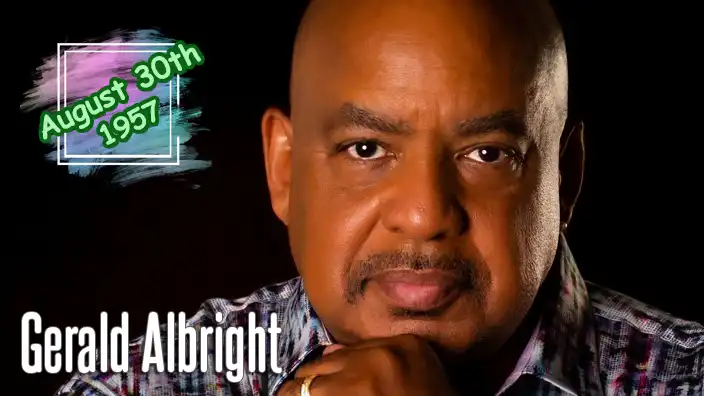
August 30, 1957, in Los Angeles, California
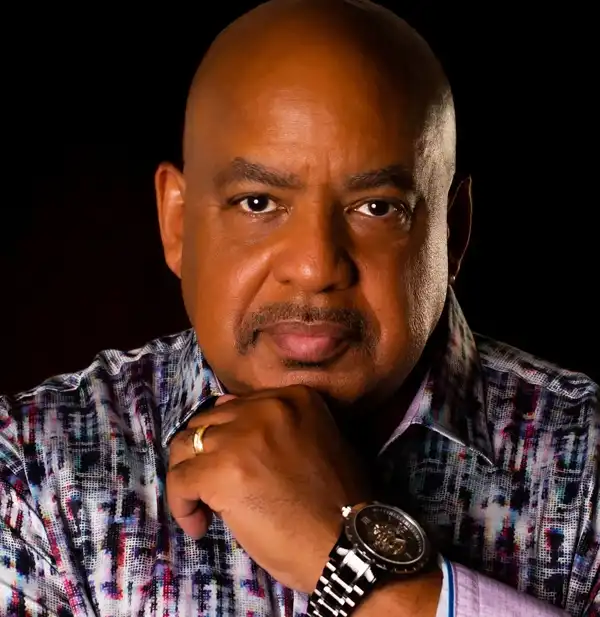
Gerald Albright was born on August 30, 1957, in Los Angeles, California, and grew up in South Central Los Angeles. Music entered his life early, although not necessarily in the form that would eventually make him famous. His parents enrolled him in piano lessons when he was seven, but young Gerald wasn't particularly enthusiastic about the arrangement. Fortunately, his teacher, George Turpeau, had an old alto saxophone available and suggested he try it. The saxophone proved considerably more persuasive than the piano, and Albright had found the instrument that would eventually carry him around the world.
His musical education continued at Locke High School in Los Angeles, a school with a notable musical tradition. Albright absorbed influences from jazz and R&B, particularly saxophonists Cannonball Adderley, John Coltrane, Eddie Harris and Maceo Parker. Those influences help explain why his eventual style would refuse to remain politely inside a single musical category. Jazz provided the vocabulary, but funk, soul, R&B and gospel supplied plenty of additional punctuation.
Albright attended the University of Redlands, where he earned a degree in business management while minoring in music. During college another instrument entered the picture. After seeing Louis Johnson of the Brothers Johnson perform, Albright became fascinated with electric bass and began teaching himself to play it. Most musicians spend years trying to become exceptionally good at one instrument. Albright apparently regarded that as an unnecessarily restrictive administrative policy.
Shortly after graduating, Albright joined the band of pianist and R&B singer Patrice Rushen. That association proved enormously important. When Rushen's bassist left during a tour, Albright stepped into the vacant position and completed the tour playing bass. He was now professionally useful at both ends of the band: put a saxophone in his hands and he could take a solo; hand him a bass and he could keep everybody else from wandering off rhythmically.
His work with Rushen also produced one of the most recognizable recordings of his early career. Albright played the memorable tenor saxophone solo on Rushen's 1982 hit "Forget Me Nots," a song whose distinctive bass line and infectious groove helped make it an R&B classic. His contributions to Rushen's recordings and touring band helped establish Albright as an extremely versatile musician who could move comfortably between jazz and contemporary R&B.
That versatility quickly made him a highly sought-after session and touring musician. Over the years, Albright worked with an extraordinary collection of performers, including Anita Baker, Ray Parker Jr., Barry White, Atlantic Starr, Maurice White, The Temptations, Teena Marie, Whitney Houston, Quincy Jones and many others. His saxophone and bass playing appeared across hundreds of recording sessions, giving him a career résumé that begins to look less like a list of credits and more like somebody accidentally printed several decades of the music industry.
One particularly notable collaboration came with Quincy Jones. Albright played alto saxophone on "Setembro," included on Jones' enormously successful 1989 album Back on the Block. He also toured with Jones, further cementing his reputation as a musician capable of stepping into exceptionally demanding musical situations and sounding entirely at home.
By the late 1980s, Albright was ready to move from celebrated sideman to recording artist in his own right. He signed with Atlantic Records and launched his solo career with Just Between Us. Released in 1987, the album introduced a broader audience to the mixture of jazz technique, R&B warmth and funk-driven energy that would become his musical signature. The record reached the Billboard 200 and spent 25 weeks on the charts, giving Albright an impressive beginning to what became a remarkably durable solo career.
He followed with Bermuda Nights, an album that earned him a Grammy nomination for Best R&B Instrumental Performance. Dream Come True arrived in 1990, followed by projects including Live at Birdland West, Smooth, Giving Myself to You and Live to Love. Rather than treating contemporary jazz as background music suitable only for elevators possessing unusually good taste, Albright brought muscular funk, expressive solos and strong R&B grooves into his recordings.
His abilities also attracted Phil Collins. In the late 1990s, Collins assembled a big band project that reimagined some of his music in jazz arrangements, and Albright was asked to front the band on saxophone. Albright toured with Collins' big band and contributed to the project associated with the live album A Hot Night in Paris. It was another example of his unusual ability to move between musical worlds without sounding like a visitor who had forgotten the local language.
In 1998, Albright collaborated with vocalist Will Downing on Pleasures of the Night. The partnership worked beautifully, combining Downing's rich baritone with Albright's expressive saxophone. The album reached number one on Billboard's contemporary jazz album chart and remained on the jazz charts for an impressive period.
The 2000s brought another succession of successful recordings. Groovology appeared in 2002, followed by Kickin' It Up in 2004 and New Beginnings in 2006. The latter reached the top of Billboard's Contemporary Jazz chart and earned Albright another Grammy nomination. By then there was little question about his place in contemporary jazz: he wasn't merely passing through the genre; he had become one of the musicians defining it.
In 2008, Albright turned his attention toward one of American music's great catalogs with Sax for Stax. The project celebrated the music associated with legendary Memphis soul label Stax Records, interpreting material connected with performers such as Johnnie Taylor, Eddie Floyd and Isaac Hayes. Albright didn't merely play lead saxophone. He constructed elaborate horn arrangements by overdubbing alto, tenor and baritone saxophones and flutes himself, while also playing bass guitar on several tracks. Apparently hiring Gerald Albright can occasionally result in acquiring most of the horn section and part of the rhythm section in one convenient package.
Sax for Stax earned another Grammy nomination, and Albright followed it with Pushing the Envelope in 2010. The latter demonstrated the harder funk edge that had always existed within his playing and received a Grammy nomination for Best Pop Instrumental Album. Albright produced the record and contributed saxophones, bass and electronic wind instrument, once again demonstrating that the phrase "multi-instrumentalist" wasn't being used decoratively.
Another major success came when Albright joined guitarist Norman Brown for the 2012 collaborative album 24/7. The pairing brought together two established stars of contemporary jazz and proved commercially successful, reaching number one on both jazz and contemporary jazz album charts. The album also earned Albright and Brown a Grammy nomination for Best Pop Instrumental Album.
Albright then joined saxophonists Dave Koz, Mindi Abair and Richard Elliot for Summer Horns. Released as Dave Koz and Friends, the project revisited horn-driven songs associated with pop, soul and jazz. The album reached number one on the jazz charts and earned another Grammy nomination, while the accompanying tour became a major success. If four prominent saxophonists on one stage sounds excessive, jazz musicians would presumably argue that the correct technical term is "a good start."
His 2014 album Slam Dunk continued his remarkable chart consistency, reaching number two on jazz charts and earning a Grammy nomination for Best Contemporary Instrumental Album. By that stage, Albright had spent nearly three decades as a solo recording artist while somehow continuing to sound as though he had only recently discovered how much fun could be extracted from a saxophone.
Albright later established his own Bright Music Records label, giving him greater control over his recordings. G, released in 2016, featured guests including Michael McDonald and Doug E. Fresh and pushed further into the funk and R&B elements that had always been central to his sound. His album 30 celebrated three decades as a recording artist and included a guest appearance by his daughter, singer Selina Albright. He followed with the holiday project Not So Silent Night, which, given Albright's approach to funk, was probably never in serious danger of becoming particularly silent.
Family has become part of Albright's musical story as well. Selina Albright developed her own career as a vocalist and has performed and recorded with her father. Their collaborations add another dimension to a career already distinguished by musical partnerships stretching across generations and genres.
Albright's accomplishments have produced repeated recognition from the Recording Academy. As of 2026, he has received nine Grammy nominations, spanning categories including R&B Instrumental Performance, Pop Instrumental Album, Contemporary Instrumental Album and Best Jazz Performance. His most recent listed nomination came at the 65th Grammy Awards for "Keep Holding On."
His career has also included an unusual presidential footnote. Albright was selected as one of ten saxophonists to perform during Bill Clinton's presidential inauguration festivities. It seems appropriate: if you're going to assemble ten saxophonists in Washington, you may as well invite somebody who knows what to do when the horn section gets crowded.
What has made Gerald Albright's career particularly enduring is his refusal to treat musical categories as fences. He can play straight-ahead jazz, contemporary jazz, R&B, gospel and funk while retaining an immediately recognizable sound. His tone can be polished and romantic one moment and ferocious the next, and his bass playing and arranging abilities have made him considerably more than simply a saxophone soloist.
That career is still moving. Albright returned with new music in 2024, including Full Throttle, and his official website currently promotes Hot Chocolate, described as his 24th career project, featuring a collaboration with vocalist Lalah Hathaway. His official site also lists touring activity in the United States and internationally.
On August 30, Gerald Albright celebrates a birthday and another year in a career that has taken him from childhood piano lessons he didn't particularly enjoy to becoming one of contemporary jazz's most recognizable saxophonists. Along the way he became a bassist, composer, arranger, producer, bandleader and prolific session musician, accumulated nine Grammy nominations, and played alongside an extraordinary cross-section of popular music.
Some musicians spend their careers searching for their voice. Gerald Albright found his—and then apparently decided to learn several other instruments just in case.