August 25, 1961, in Flatwoods, Kentucky
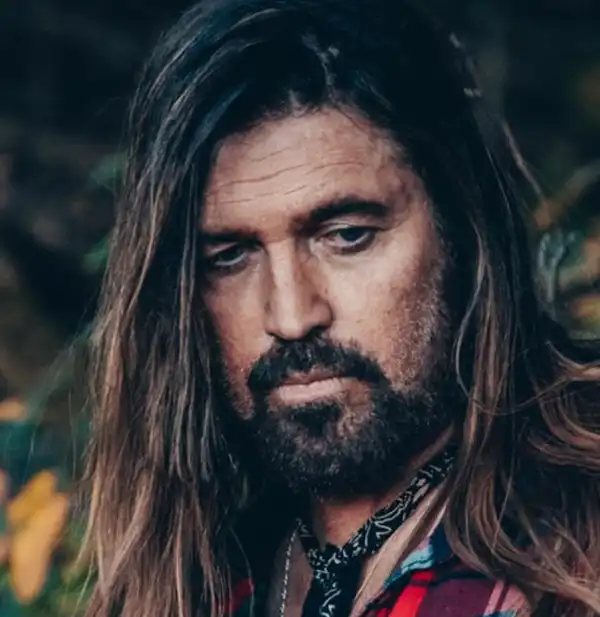
Billy Ray Cyrus was born William Ray Cyrus on August 25, 1961, in Kentucky. Music surrounded him early, particularly gospel and bluegrass, and his grandfather was a Pentecostal preacher. Cyrus initially appeared headed in a very different direction: he attended Georgetown College on a baseball scholarship. A growing interest in music eventually won that argument, however, and he abandoned the baseball path to pursue performing. After years of playing clubs and working toward a recording career, he signed with Mercury Records and prepared the album that would make him internationally famous almost overnight.
That album was Some Gave All, released in 1992, and its breakthrough single was “Achy Breaky Heart.” Written by Don Von Tress, the infectious country song became one of those records that escaped the normal boundaries of its genre. It topped the country chart, reached No. 4 on the Billboard Hot 100 and helped propel a widespread revival of line dancing. Suddenly people who couldn't have located Nashville without a map were standing in rows trying to remember which boot moved next. The song earned Cyrus Grammy nominations for Record of the Year and Best Male Country Vocal Performance, while Cyrus himself received a Best New Artist nomination.
The success of Some Gave All was enormous. The album reached No. 1 on the Billboard 200 and remained there for 17 consecutive weeks, establishing Cyrus as far more than the fellow with the unusually committed hairstyle. Other songs from the album included “Could've Been Me,” “She's Not Cryin' Anymore,” “Wher'm I Gonna Live?” and the moving title track “Some Gave All.” The latter reflected Cyrus's longstanding support for military personnel and veterans, a cause that would remain important throughout his career.
Following such an extraordinary debut was always going to be difficult. Cyrus released It Won't Be the Last in 1993, which also reached No. 1 on the country album chart and included songs such as “In the Heart of a Woman” and “Somebody New.” More albums followed as Cyrus continued recording through changing eras of country music. Like many performers who become enormously famous for one particular record, he could never entirely escape “Achy Breaky Heart,” but he also never disappeared when its initial frenzy subsided. Instead, he gradually expanded the definition of what a Billy Ray Cyrus career could contain.
Acting became a substantial second profession. Cyrus took the leading role of Dr. Clint Cassidy in the television drama Doc, which began in 2001 and ran for several seasons. He also appeared in David Lynch's Mulholland Drive, demonstrating that the fellow responsible for millions of synchronized line dancers could turn up in some decidedly unexpected places. His screen career eventually accumulated dozens of acting credits alongside work as a producer, writer and soundtrack performer.
Then came Hannah Montana. Beginning in 2006, Cyrus played Robby Ray Stewart, father and manager of Miley Stewart, the secretly famous teenage singer portrayed by his real-life daughter, Miley Cyrus. There was a certain cosmic efficiency to casting Billy Ray as the father of a young performer coping with sudden musical fame. If anybody on the set understood what it felt like when the world abruptly learned your name, he did. Cyrus continued in the role through the television series and appeared in Hannah Montana: The Movie in 2009.
The Disney phenomenon introduced Billy Ray Cyrus to an entirely new generation, many of whom knew him first as Miley's television father and only later discovered that Dad had once been quite capable of filling arenas himself. Father and daughter also recorded together. Their duet “Ready, Set, Don't Go” became a country hit, giving Cyrus another successful record while Miley's own career was beginning its remarkable ascent.
His acting career continued beyond Hannah Montana. Cyrus appeared in movies including The Spy Next Door and later starred in and executive-produced the television comedy Still the King. By then, his entertainment career had become unusually broad: country singer, songwriter, television leading man, movie actor, producer, reality television personality and Disney dad could all legitimately appear on the same résumé.
Then, nearly 27 years after “Achy Breaky Heart,” Billy Ray Cyrus pulled off one of the strangest and most successful second acts in modern popular music.
In 2019, rapper Lil Nas X's “Old Town Road” became a viral sensation while provoking considerable debate about the boundaries between country and hip-hop. Cyrus joined a remix of the song, adding his unmistakable country vocal to a recording that gleefully ignored traditional genre fences. The collaboration became an enormous worldwide success. “Old Town Road” spent a then-record 19 weeks at No. 1 on the Billboard Hot 100, and suddenly Billy Ray Cyrus was back near the center of popular culture with listeners who had not even been born when “Achy Breaky Heart” was released.
The record also brought Cyrus something his original breakthrough had not: Grammy victories. At the 2020 Grammy Awards, “Old Town Road” won Best Pop Duo/Group Performance, while its official video won Best Music Video. After receiving three Grammy nominations in 1993 without winning, Cyrus had finally become a Grammy winner—and did it alongside a young rapper on a country-rap crossover about horses. There probably wasn't a career adviser in 1992 who saw that one coming.
The collaboration was especially fitting because reinvention has been one of the constants of Cyrus's career. He entered the public consciousness as a country heartthrob, became associated with a dance craze, established himself as an actor, found another enormous audience through children's and family television, and then resurfaced as part of one of the defining pop-cultural records of 2019. Few performers whose careers began with such an overwhelming novelty-like phenomenon manage to remain recognizable public figures more than 30 years later.
Cyrus's family has also become unusually prominent in entertainment. His children include recording artists Miley Cyrus and Noah Cyrus, while other members of the Cyrus family have pursued careers in music and entertainment. For a man who once seemed destined to be permanently introduced as “the Achy Breaky Heart guy,” Billy Ray eventually became the patriarch of one of America's best-known musical families.
He has received recognition beyond record sales and chart positions. Cyrus was inducted into the Kentucky Music Hall of Fame in 2018, acknowledging both his Kentucky roots and his lengthy contribution to popular and country music. His career has included recognition from organizations spanning country, pop and hip-hop—a rather unusual collection for someone who began his national career line dancing across television screens in 1992.
Billy Ray Cyrus remains permanently associated with “Achy Breaky Heart,” and there is little reason to pretend otherwise. It was a colossal record that changed his life, helped popularize line dancing internationally and became one of the most recognizable country songs of its era. But reducing Cyrus to that single hit overlooks the more interesting story. He kept working after the phenomenon faded, built a substantial acting career, became part of another major television phenomenon and, decades after his debut, found himself participating in an entirely new musical phenomenon.
Plenty of singers would happily settle for one career-defining cultural moment.
Billy Ray Cyrus somehow managed to get two.