
Don't Try to Outrun the Sky!
Thunderstorms have an uncanny sense of timing. You can spend an entire week enjoying sunny skies, only for dark clouds to gather the moment you've forgotten your umbrella. While lightning can be breathtaking to watch from a safe place, it's also one of nature's most powerful and unpredictable forces. International Lightning Safety Day, observed each year on June 28, serves as a reminder that a little knowledge and a healthy respect for thunderstorms can go a long way toward keeping everyone safe. After all, it's much easier to admire lightning from indoors than to explain to your friends how your hair suddenly learned to stand on end.
What Is International Lightning Safety Day?
International Lightning Safety Day is an annual observance dedicated to raising awareness about the dangers of lightning and encouraging people to follow proven safety practices during thunderstorms. It serves as a reminder that while lightning can create spectacular displays across the sky, it's far more enjoyable when viewed through a window than while clutching a fishing rod, standing on a golf course, or wondering whether that distant rumble is "probably moving away."
The day encourages people of all ages to learn how lightning forms, recognize when severe weather is approaching, and understand the safest actions to take before, during, and after a thunderstorm. Weather agencies, emergency management organizations, schools, and science educators often use the occasion to share practical advice that can help reduce injuries and save lives.
One of the biggest challenges is that lightning doesn't always arrive with dramatic warning signs. The sky might still be blue overhead while a storm several miles away is quietly making plans for your afternoon picnic. That's why meteorologists often remind us, "When thunder roars, go indoors." It's short, memorable, and much easier to follow than trying to negotiate with a cumulonimbus cloud.
International Lightning Safety Day also highlights the remarkable science behind thunderstorms. Every flash of lightning is a powerful electrical discharge created by enormous differences in electrical charge within a storm cloud or between the cloud and the ground. While scientists continue to study exactly how lightning develops, one thing is beyond debate: standing outside to "get a better look" is not considered valuable scientific research.
Above all, the observance promotes a simple message. Thunderstorms are a normal part of nature, and lightning deserves respect rather than fear. By paying attention to weather forecasts, seeking shelter promptly, and avoiding unnecessary risks, everyone can safely enjoy nature's most dramatic light show without becoming part of it.
Why Celebrate On June 28?
International Lightning Safety Day is observed each year on June 28 following a decision made by delegates attending an international lightning safety symposium in Lusaka, Zambia, on August 13, 2015. Experts, researchers, meteorologists, and public safety officials unanimously agreed that a dedicated global awareness day could help reduce the number of lightning-related injuries and deaths by encouraging better education and preparedness around the world.
The observance was created with a particular focus on developing countries, where lightning poses a far greater threat than many people realize. In some regions, communities have limited access to weather forecasts, lightning detection systems, or safe buildings that provide adequate protection during severe storms. As a result, farmers working in open fields, children walking home from school, fishermen on lakes, and families living in vulnerable areas often face a much greater risk than those in countries with more advanced warning systems.
June 28 was chosen to serve as a worldwide reminder that lightning is a global hazard requiring global attention. While the exact timing of thunderstorm seasons differs from one hemisphere to another, the date provides an annual opportunity for governments, schools, emergency services, weather agencies, and community organizations to promote practical lightning safety advice and improve public awareness.
The day also encourages international cooperation in lightning research and forecasting. Advances in satellite technology, lightning detection networks, and weather modeling have dramatically improved scientists' ability to monitor storms, but education remains one of the most effective tools for preventing tragedy. Simply teaching people when to seek shelter, where to go, and what to avoid during a thunderstorm can save lives.
Perhaps the greatest message behind June 28 is that lightning safety doesn't require expensive equipment or complicated training. A little knowledge, good judgment, and a willingness to head indoors when thunder begins to rumble can make all the difference. After all, the best way to experience nature's spectacular fireworks is from somewhere that doesn't require a lightning rod on your hat.
The Incredible Power of Lightning
Lightning is one of the most powerful natural phenomena on Earth. In the blink of an eye, an enormous electrical discharge races between clouds or from a cloud to the ground, releasing an astonishing amount of energy. Although a flash lasts only a fraction of a second, it is powerful enough to split trees, damage buildings, ignite wildfires, and cause serious injury or death.
A single lightning bolt can heat the surrounding air to around 50,000°F (27,700°C)—roughly five times hotter than the surface of the Sun. This intense burst of heat causes the air to expand explosively, creating the shockwave we hear as thunder. Because light travels much faster than sound, you always see the flash before you hear the rumble, unless you're having an exceptionally bad day.
The average lightning bolt can carry tens of thousands of amps of electrical current and generate hundreds of millions of volts. Fortunately, that tremendous energy usually follows the easiest path to the ground, which is why tall objects such as trees, radio towers, wind turbines, and skyscrapers are struck more often than shorter structures. Of course, "more often" doesn't mean "always," so standing next to the tallest tree in an open field is still one of history's poorer life choices.
Lightning isn't limited to striking directly beneath a storm cloud. A bolt can travel up to 10 miles (16 kilometers) from the heart of a thunderstorm before reaching the ground. These are often called "bolts from the blue" because they can strike areas where the sky overhead still appears sunny. It's one of the reasons meteorologists constantly remind people that if they can hear thunder, they're already within striking distance.
Scientists estimate that lightning flashes somewhere on Earth about 100 times every second, adding up to more than 8 million strikes every day. Modern satellite networks and ground-based lightning detection systems now monitor these strikes in real time, helping forecasters issue warnings and giving people valuable time to seek shelter.
Despite its incredible power, lightning is simply part of Earth's natural weather system. It helps balance electrical charges within the atmosphere and even plays a small role in the natural nitrogen cycle by converting atmospheric nitrogen into compounds that plants can eventually use. Nature, as it turns out, has been running its own chemistry experiments long before humans ever built a laboratory.
Perhaps the most remarkable thing about lightning is how ordinary it can seem. A summer thunderstorm rolls in, a few flashes light up the sky, and life goes on. Yet every flash is a reminder that the atmosphere is capable of producing one of the most energetic events found anywhere on our planet. It's spectacular to watch, fascinating to study, and always deserving of respect—preferably from the comfort of somewhere dry, sturdy, and equipped with a roof.
Where Lightning Strikes Most Often
Lightning is a global phenomenon, occurring on every continent except Antarctica in any significant number. However, some parts of the world experience far more thunderstorms than others. Warm temperatures, abundant moisture, and unstable atmospheric conditions create the perfect recipe for towering thunderclouds, making tropical and subtropical regions the most active lightning hotspots on the planet.
Some of the highest lightning densities are found in Central Africa, particularly around Lake Maracaibo in Venezuela and parts of the Democratic Republic of the Congo, where thunderstorms can occur on hundreds of days each year. These regions combine warm, humid air with unique geographical features that encourage storm development. Lake Maracaibo is especially famous for the Catatumbo Lightning phenomenon, where spectacular lightning displays can illuminate the night sky for hours at a time, earning it the nickname "the everlasting storm."
In the United States, Florida has long been known as the nation's lightning capital, thanks to its warm climate and the frequent collision of sea breezes from the Atlantic Ocean and the Gulf of Mexico. During the summer months, afternoon thunderstorms are so common that Floridians often joke you can almost set your watch by them. Other states along the Gulf Coast and southeastern United States also experience frequent lightning, particularly during the hurricane and thunderstorm seasons.
Mountainous regions present their own unique dangers. As warm air rises along mountain slopes, thunderstorms can develop rapidly with very little warning. Hikers, climbers, campers, and anyone enjoying high elevations may suddenly find themselves exposed on ridges or peaks with few safe places to shelter. That's why experienced mountaineers often begin their climbs before sunrise, hoping to be safely back below the treeline before afternoon storms begin to build.
Open landscapes can also increase the risk of lightning injuries. Golf courses, beaches, lakes, farms, sports fields, and open water leave people exposed with little natural protection. Farmers operating machinery, anglers casting a line from a boat, or children playing soccer may not realize how quickly conditions can change until the first clap of thunder announces that it's time to leave.
The good news is that where lightning strikes most often doesn't necessarily determine who gets hurt. Countries with strong weather forecasting systems, public education campaigns, and readily available shelters often experience fewer fatalities despite frequent thunderstorms. In contrast, developing regions where people work outdoors, have limited access to forecasts, or lack substantial buildings can face much greater risks.
Wherever you happen to live, the message is the same. Lightning doesn't care about borders, vacation plans, tee times, or whether you've "only got five more minutes." If a thunderstorm is approaching, the safest place to be is indoors, leaving the storm to provide its spectacular light show for someone watching comfortably through a window.
Simple Ways to Stay Safe
The good news about lightning safety is that it doesn't require complicated equipment, years of training, or a degree in meteorology. In fact, most lightning injuries can be prevented by following a handful of simple rules and paying attention to the weather. The trick is making the smart decision before the storm is directly overhead—not after you've counted "one Mississippi" between the flash and the bang.
The safest place to be during a thunderstorm is inside a substantial building with wiring and plumbing or inside a fully enclosed metal-roofed vehicle with the windows closed. Contrary to popular belief, it's the vehicle's metal frame—not the rubber tires—that helps direct the electrical current safely around the occupants. Convertibles, golf carts, motorcycles, and tractors, unfortunately, do not qualify as safe shelters, no matter how optimistic you happen to be.
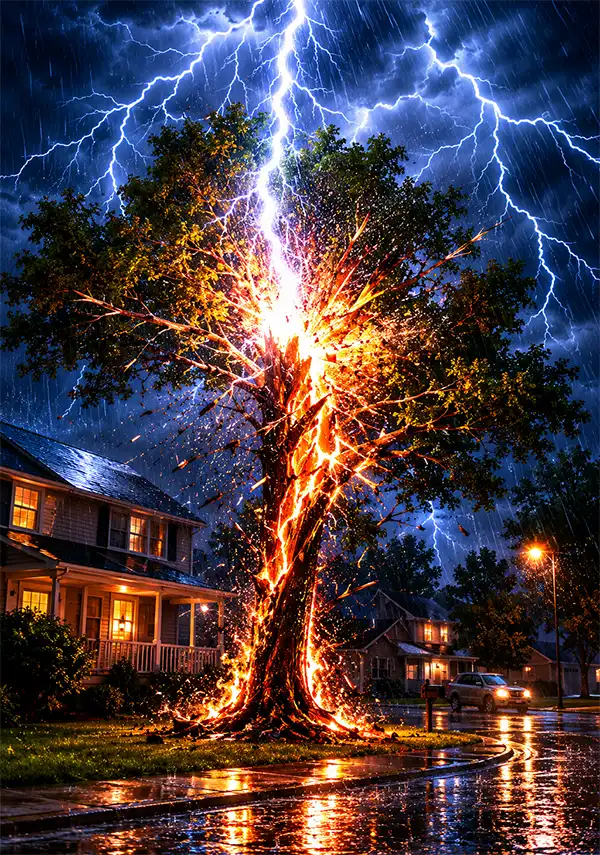
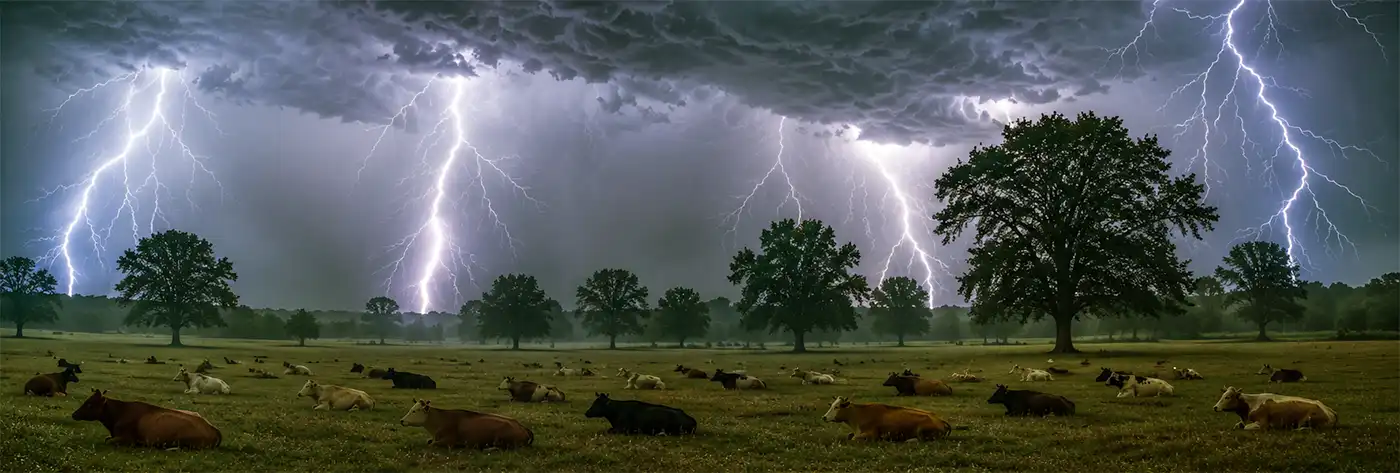
If you're outdoors, avoid open fields, hilltops, isolated trees, picnic shelters, beaches, golf courses, and bodies of water. Lightning naturally seeks the easiest path to the ground, and being the tallest object in the area is a distinction you don't want to earn. A lone tree might seem inviting when the rain starts falling, but sharing shelter with nature's favorite lightning rod is rather like hiding from a bear behind someone wearing bacon.
Water is another place to avoid during a thunderstorm. Whether you're swimming, fishing, kayaking, paddleboarding, or enjoying a leisurely afternoon in a canoe, it's time to head for shore as soon as thunder is heard. Lightning can strike lakes, rivers, and oceans, with electrical current spreading across the water's surface. Fish may not appreciate the interruption to your fishing trip, but they'll recover much faster than you would.
One of the easiest safety guidelines to remember is the 30-30 Rule. If the time between seeing lightning and hearing thunder is 30 seconds or less, immediately seek shelter. Once the storm appears to have passed, wait at least 30 minutes after the last clap of thunder before returning outside. Many lightning injuries occur because people assume the danger has ended the moment the rain lets up. Unfortunately, thunderstorms don't always read the same schedule we do.
If you're caught outside with no safe shelter available, avoid lying flat on the ground. Instead, move away from tall objects and isolated trees, keep your feet close together, and make yourself as small a target as possible while waiting for the storm to pass. This is a last resort, however—not a recommended way to spend an afternoon.
It's also wise to take precautions indoors. Avoid using corded telephones, taking showers, washing dishes by hand, or touching plumbing and wired electrical equipment while lightning is nearby. Modern buildings offer excellent protection, but electricity has an annoying habit of following pipes and wiring if given the opportunity.
Perhaps the simplest rule of all is the one meteorologists repeat every summer: "When thunder roars, go indoors." It's short, memorable, and has probably saved countless lives. Nature's fireworks are spectacular, but they're one show where buying a front-row ticket is strongly discouraged.
Lightning Myths That Refuse to Go Away
Lightning has inspired countless myths over the centuries.
One common misconception is that lightning never strikes the same place twice. In reality, tall structures such as communication towers, skyscrapers, and even individual trees may be struck dozens or even hundreds of times each year.
Another myth suggests that rubber-soled shoes or vehicle tires protect people from lightning. The real protection comes from the metal frame of an enclosed vehicle, which safely directs the electrical current around the occupants.
Some people also believe storms are harmless once the rain stops. Unfortunately, lightning can strike many miles away from the main storm cloud, making it important to wait until the storm has fully passed.
How Forecasting Has Improved
Not all that long ago, predicting a thunderstorm often involved little more than looking at the sky and hoping your uncle's aching knee wasn't acting as the neighborhood weather station. While experienced farmers and sailors became remarkably skilled at reading clouds and changing winds, they couldn't see what was happening beyond the horizon. Today, meteorologists have access to technology that would have seemed like science fiction just a few generations ago.
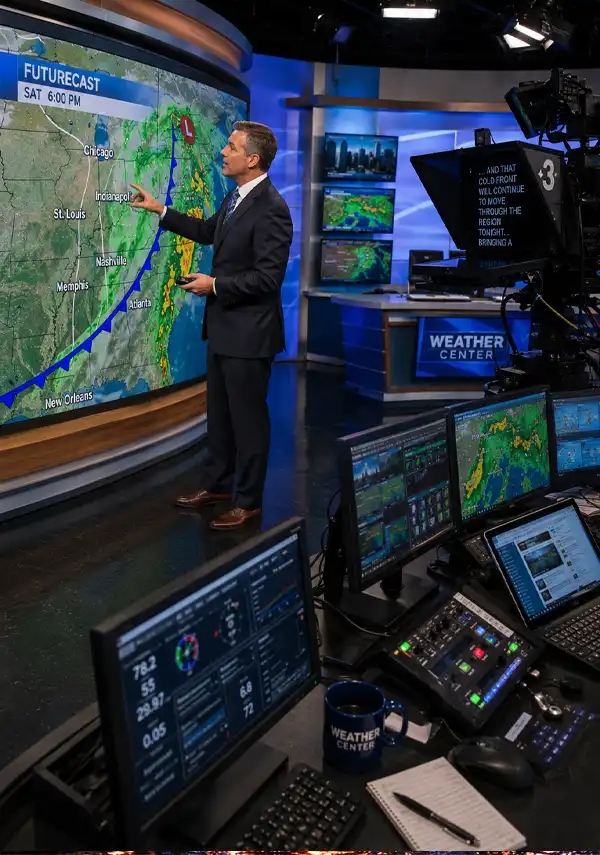
Modern weather forecasting relies on a combination of weather satellites, Doppler radar, lightning detection networks, weather balloons, computer models, and thousands of automated weather stations spread across the globe. Together, these tools allow forecasters to monitor developing storms in real time, estimate where they are heading, and warn communities before dangerous weather arrives.
Lightning detection has become especially impressive. Ground-based sensor networks can detect the radio waves produced by a lightning strike and pinpoint its location within seconds. Satellites orbiting thousands of miles above Earth can even monitor lightning activity from space, tracking storms across entire continents and oceans. This information helps meteorologists identify rapidly intensifying thunderstorms and issue warnings more quickly than ever before.
Computer forecasting has also advanced dramatically. Powerful weather models process enormous amounts of atmospheric data every day, including temperature, humidity, wind speed, air pressure, and moisture levels. These models simulate how the atmosphere is likely to behave over the coming hours and days, helping forecasters predict where thunderstorms are most likely to develop and how severe they may become.
These improvements have found their way into everyday life as well. Most smartphones now include weather apps capable of sending severe thunderstorm alerts based on your location. Some apps even provide real-time lightning maps that show exactly how close lightning strikes are to where you are standing. It's rather comforting to know your phone can warn you that a storm is approaching—although it's probably still wise to stop taking selfies with the dark cloud behind you.
Many schools, sports facilities, golf courses, amusement parks, and outdoor event organizers now use professional lightning monitoring systems that automatically suspend activities when dangerous storms move within a predetermined distance. While nobody enjoys hearing that the big game has been delayed, it's a far better outcome than trying to finish the ninth inning while Mother Nature is practicing precision electrical engineering.
Forecasting is not perfect, of course. Thunderstorms can still develop rapidly, especially on hot, humid days, and lightning occasionally strikes outside the heaviest rain. That's why weather experts encourage everyone to stay aware of changing conditions rather than relying solely on forecasts. Technology is an incredible tool, but common sense remains one of the best safety devices ever invented.
As forecasting technology continues to improve, scientists hope to provide even earlier warnings and more accurate predictions, reducing the number of lightning-related injuries around the world. Until then, the best combination is modern science, a little planning, and the willingness to head indoors when the forecast—and the first rumble of thunder—suggests it's time to call it a day.
Fun Facts About International Lightning Safety Day
Lightning may be serious business, but that doesn't mean it isn't fascinating. From astonishing temperatures and incredible speeds to surprising places where storms occur most often, lightning is packed with facts that sound almost too unbelievable to be true. Here are a few illuminating tidbits that might just spark your curiosity—without requiring you to stand outside holding a metal umbrella.
- Lightning strikes Earth around 100 times every second.
- Every thunderstorm produces lightning.
- Thunder is the sound created by rapidly expanding heated air.
- A lightning bolt can contain hundreds of millions of volts.
- Florida has long been known as one of America's lightning capitals.
- Lightning can strike up to 10 miles away from the rain.
- Most lightning-related injuries occur during outdoor recreation.
- Cars are generally safe during thunderstorms because of their metal frame, not the rubber tires.
- Benjamin Franklin's famous kite experiment demonstrated electricity but would be extremely dangerous to repeat today.
- Lightning detection networks now track millions of strikes every year.
How to Observe International Lightning Safety Day
You don't have to chase storms to participate.
Take a few minutes to review your family's severe weather plan and make sure everyone knows where to seek shelter during a thunderstorm. If you enjoy hiking, camping, golfing, fishing, or boating, familiarize yourself with local weather forecasts before heading outdoors.
Schools, community groups, and emergency services can also use the day to teach lightning safety through demonstrations, presentations, and educational materials.
And if a thunderstorm does appear while you're outside, remember that postponing an activity is always easier than arguing with the weather.
Frequently Asked Questions
Thunderstorms have a way of raising plenty of questions along with the occasional goosebumps. Whether you're wondering when International Lightning Safety Day is observed, how far lightning can travel, or where you should take shelter, these frequently asked questions provide clear, practical answers. Think of them as your quick guide to staying informed—without having to conduct your own field research during the next thunderstorm.
When is International Lightning Safety Day?
International Lightning Safety Day is observed annually on June 28.
Why is International Lightning Safety Day important?
The day promotes awareness about lightning hazards and encourages people to follow simple safety measures that can prevent injuries and save lives.
What is the safest place during a thunderstorm?
A substantial building with wiring and plumbing or a fully enclosed metal-roofed vehicle offers the best protection.
Can lightning strike if it isn't raining?
Yes. Lightning can travel several miles from the center of a thunderstorm and strike areas where the sky may still appear clear.
Is it safe to shelter under a tree?
No. Isolated trees are among the most dangerous places during a thunderstorm because they are frequent lightning targets.
How long should I wait after the storm?
Safety experts recommend waiting 30 minutes after the last sound of thunder before returning outdoors.
One More Flash Before You Go
Lightning may be one of nature's greatest spectacles, but it's also one of the easiest hazards to avoid with a little planning and common sense. International Lightning Safety Day reminds us that respecting the weather doesn't mean fearing it—it simply means making smart decisions when the clouds roll in. So admire the brilliant flashes from a safe place, keep one eye on the forecast, and remember: Mother Nature has impressive special effects, but she's not offering front-row seats.