Hooked on a Great Day Outdoors
Some holidays involve cake. Others involve fireworks. National Go Fishing Day, celebrated every year on June 18, simply asks you to grab a fishing rod and head for the nearest body of water.
Whether you're chasing bass on a quiet lake, casting into the surf, or teaching a youngster how to bait a hook for the first time, fishing offers something that's becoming increasingly rare: an excuse to slow down. It's a hobby that combines fresh air, patience, adventure, and just enough mystery to keep you coming back for one more cast.
Of course, catching a fish is nice. But ask most anglers what they remember years later and you'll hear stories about sunrises, family outings, campfires, and the legendary fish that somehow got away. National Go Fishing Day celebrates all of it—the fish, the friendships, and the simple pleasure of spending a day beside the water.
What Is National Go Fishing Day?
National Go Fishing Day is celebrated every year on June 18 and encourages people of all ages to spend time enjoying one of the world's oldest and most popular outdoor activities. Whether you're an experienced angler with a tackle box full of favorite lures or someone who has never held a fishing rod before, the day is all about getting outside, finding a body of water, and giving fishing a try.
Unlike many modern hobbies that revolve around screens and notifications, fishing offers a chance to slow down and enjoy the natural world. A quiet lake, a winding river, a fishing pier, or even a neighborhood pond can become the setting for a memorable day. Some people fish for food, some for sport, and others simply enjoy the peace and quiet that comes with waiting for a bite.
National Go Fishing Day also celebrates the traditions that have been passed from one generation to the next. Countless anglers can trace their love of fishing back to a parent, grandparent, or friend who first showed them how to bait a hook, cast a line, or tell a convincing story about "the one that got away."
Most importantly, the day reminds us that fishing is about more than catching fish. It's about fresh air, good company, patience, and those moments when the rest of the world seems to slow down for a while. Of course, if dinner happens to bite your hook along the way, that's a nice bonus.
The History of National Go Fishing Day
The exact origins of National Go Fishing Day are a bit murky, which is fitting for a celebration that spends most of its time near water. Nobody seems entirely certain who first decided that June 18 should be dedicated to fishing, though one can imagine the conversation.
Perhaps it began when an angler spent six hours by a lake, caught absolutely nothing, accidentally hooked his own shirt, stabbed himself in the thumb with a lure, and still returned home declaring it "the best day ever." At some point, someone probably looked at this behavior and thought, "You know what? These people deserve their own holiday."
While the holiday itself may be relatively modern, fishing has a history that stretches back thousands of years. Long before sporting goods stores, tackle boxes, and fishing television shows, our ancestors were catching fish with handmade hooks, nets, traps, and spears. For early civilizations, fishing wasn't a hobby—it was dinner. Missing a fish meant going hungry, which likely made them much more focused than today's angler checking their phone every five minutes.
Over time, as societies developed and food became easier to obtain, fishing gradually transformed from a necessity into a pastime. People discovered that spending a day beside the water was enjoyable even when the fish weren't cooperating. Somewhere along the way, the activity evolved into a sport, a family tradition, and a perfectly acceptable excuse to avoid mowing the lawn.
Today, millions of people around the world enjoy fishing in one form or another. From children catching bluegill from a dock to seasoned anglers battling giant marlin offshore, fishing remains one of the most popular outdoor activities on the planet. National Go Fishing Day celebrates that long tradition while providing the perfect excuse to sneak away from work, household chores, and any other responsibilities that can reasonably wait until tomorrow.
After all, fish have been keeping humans entertained for thousands of years. The least we can do is give them one day of appreciation in return—preferably while trying to catch them.

Different Ways to Go Fishing
One of the reasons fishing has remained popular for thousands of years is that there isn't just one way to do it. Whether you prefer a quiet pond, a rushing river, or the open ocean, there's a style of fishing that fits your personality, budget, and level of patience.
- Freshwater Fishing is often where many anglers begin. Lakes, rivers, streams, and ponds offer opportunities to catch species such as bass, trout, catfish, and bluegill. It's accessible, family-friendly, and doesn't usually require a boat the size of a small battleship.
- Saltwater Fishing takes the action to the coast, where anglers target everything from redfish and snook to tuna and marlin. The fish are often bigger, the waves are rougher, and the stories somehow become even larger than the fish themselves.
- Fly Fishing combines fishing with what looks suspiciously like an elegant dance routine. Using lightweight artificial flies and specialized casting techniques, fly anglers pursue trout, salmon, and other species while making the whole process appear far more graceful than it feels when you're tangled in a nearby tree.
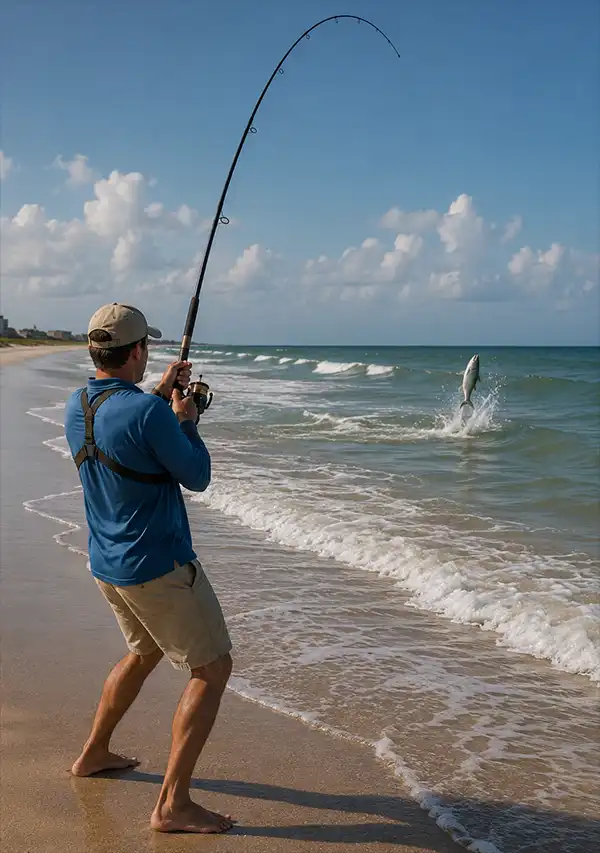
- Surf Fishing allows anglers to cast directly from the beach into the ocean. There's something special about standing in the sand with the waves rolling in while waiting to discover what might be swimming just beyond the breakers.
- Deep-Sea Fishing is fishing turned up to eleven. Anglers head miles offshore in pursuit of powerful fish that can test both equipment and patience. It can be an unforgettable experience—or an expensive way to discover that you get seasick.
- Ice Fishing proves that dedicated anglers are willing to fish under conditions that most sensible people would avoid. Participants drill holes through frozen lakes and patiently wait for fish beneath the ice, demonstrating a level of commitment that deserves recognition all by itself.
- Kayak Fishing has become increasingly popular in recent years. It combines the adventure of paddling with the excitement of fishing, allowing anglers to reach areas that larger boats simply can't access.
No matter which style you choose, the goal remains the same: enjoy the outdoors, spend some time by the water, and hopefully convince at least one fish to cooperate. If not, there's always next cast
The People You Meet by the Water
Fishing may be about catching fish, but it's often the people around you who make the day memorable. Spend enough time near a lake, river, pier, or boat ramp, and you'll discover that anglers come in a fascinating variety of types. In fact, after a while, you'll realize that every fishing spot seems to attract the same colorful cast of characters.
There's always The Gear Collector, whose tackle box contains enough lures, hooks, gadgets, and mysterious accessories to stock a small sporting goods store. This person can explain the subtle differences between seventeen nearly identical lures and owns a fishing rod specifically designed for conditions that occur roughly once every decade.
Then there's The Storyteller. This angler has caught fish of legendary size, usually sometime in the past. Every story begins with, "You won't believe this, but..." and ends with a fish that was apparently large enough to require its own zip code. Curiously, these fish always seem to grow larger with each retelling.
Every group also includes The Snack Captain. While others focus on bait and tackle, this person arrives with enough food to support a week-long expedition. Sandwiches, chips, cookies, drinks, and emergency snacks somehow appear from coolers and bags throughout the day. If the fish aren't biting, at least nobody is going hungry.
You'll often meet The Fishing Philosopher, who has spent enough hours beside the water to develop strong opinions about life. Ask a simple question about the weather, and you'll receive a thoughtful twenty-minute discussion about patience, happiness, and the importance of appreciating the little things.
Of course, every fishing spot has The Quiet Expert. This person rarely speaks, never boasts, and appears completely relaxed. While everyone else changes bait every ten minutes and debates strategy, the quiet expert casually catches fish after fish without appearing to make any effort at all.
Perhaps the best part of fishing is how quickly strangers become friends. A simple "Caught anything yet?" can lead to conversations about favorite fishing spots, family traditions, and memorable catches. Before long, you're swapping stories with people you've never met before and receiving advice that ranges from genuinely helpful to wildly suspicious.
In the end, the fish are only part of the experience. The laughs, stories, and friendships formed beside the water often become the memories that last the longest. And unlike fish stories, those memories don't get bigger every year—although the fish certainly do.
Fishing and Conservation
In many ways, fishing teaches a simple lesson: take care of the resource, and the resource will continue to take care of you. Treat the water with respect, leave the shoreline better than you found it, and there will be plenty of opportunities for future generations to enjoy a peaceful day by the water—with luck, a fish or two willing to cooperate.
Fun Fishing Facts
Think you know fishing? The sport is full of surprising facts, strange records, and enough unusual stories to fill a tackle box. Here are a few fun fishing facts to impress your friends while you're waiting for a bite.
- Humans have been fishing for at least 40,000 years, making it one of the oldest activities still enjoyed today.
- Archaeologists have discovered ancient fishing hooks made from bone, shells, and even animal horns.
- The largest fish ever caught on rod and reel was a great white shark weighing more than 2,600 pounds.
- Some fish can live for decades. Certain sturgeon species are known to survive for more than 100 years.
- Bass are among the most popular sport fish in North America and attract millions of anglers every year.
- Fly fishing dates back hundreds of years and was practiced long before modern fishing equipment existed.
- Catfish have taste buds covering much of their bodies, helping them find food in dark or muddy water.
- Many fish can see colors, which is one reason anglers spend so much money debating lure colors that often look identical to everyone else.
- Competitive fishing tournaments can award prize money worth hundreds of thousands of dollars.
- The world record for the largest blue marlin caught on rod and reel weighed an astonishing 1,402 pounds.
- Some anglers travel thousands of miles to pursue a single species of fish they've always wanted to catch.
- The phrase "the one that got away" may be the most frequently repeated sentence in fishing history.
- Fish stories tend to grow larger with age. Scientists have never officially confirmed this phenomenon, but fishing partners have observed it for generations.
- A successful fishing trip is often measured less by the fish caught and more by the memories made, the laughs shared, and the amount of sunscreen someone forgot to apply.
Perhaps the most remarkable fishing fact of all is this: millions of people willingly wake up before sunrise, sit quietly beside water for hours, and consider it a perfect day. That level of dedication deserves recognition all by itself.
How to Celebrate National Go Fishing Day
The best thing about National Go Fishing Day is that there are no complicated rules for celebrating it. You don't need expensive equipment, a fancy boat, or years of experience. Whether you're a lifelong angler or someone who has never baited a hook, there are plenty of ways to enjoy the day. Here are a few ideas to help you make the most of June 18—preferably with a fishing rod somewhere nearby.
- Go Fishing
This may seem obvious, but it's the entire point of the holiday. Grab a rod, some bait, and head to your favorite fishing spot. Whether you catch a trophy fish, a tiny sunfish, or absolutely nothing at all, spending a few hours beside the water is a great way to celebrate. - Take Someone Fishing for the First Time
Many anglers first learned to fish from a parent, grandparent, friend, or neighbor. National Go Fishing Day is the perfect opportunity to introduce someone new to the hobby and pass along a tradition that has been enjoyed for generations. - Explore a New Fishing Spot
Visit a lake, river, pier, beach, or pond you've never fished before. Half the fun of fishing is discovering new places and wondering what might be swimming beneath the surface. - Teach a Young Angler
Children often remember their first fishing trip for the rest of their lives. Help a youngster learn how to cast, bait a hook, or safely handle a fish. Just be prepared to untangle a few lines along the way. - Practice Catch and Release
Celebrate responsibly by helping protect fish populations. Catch-and-release fishing allows anglers to enjoy the sport while ensuring there will be fish available for future generations. - Clean Up a Fishing Area
Bring a small trash bag and pick up litter while you're fishing. It only takes a few minutes to leave a shoreline cleaner than you found it, and both anglers and wildlife will benefit. - Share Your Best Fishing Story
Every angler has at least one unforgettable tale. National Go Fishing Day is the perfect excuse to tell the story of your biggest catch, your funniest mistake, or that legendary fish that somehow escaped at the last second. - Enjoy a Fish Dinner
If local regulations allow and you've had a successful day on the water, celebrate by preparing a fresh fish dinner. Few meals are more satisfying than one you've caught yourself. - Support Local Bait and Tackle Shops
Stop by a local fishing shop, pick up a few supplies, and talk fishing with people who are just as enthusiastic about the sport as you are. - Put Away Your Phone for a While
Fishing offers a rare opportunity to disconnect from screens and reconnect with the outdoors. The fish don't care about your notifications, and for a few hours, neither should you.
National Go Fishing Day FAQ
Whether you're new to fishing or you've spent years chasing the perfect catch, a few questions always seem to come up. Here are some quick answers to some of the most common questions about National Go Fishing Day and the sport of fishing itself.
When is National Go Fishing Day?
National Go Fishing Day is celebrated every year on June 18. The day encourages people of all ages to enjoy fishing and spend time outdoors.
Who can participate in National Go Fishing Day?
Anyone can participate. Whether you're an experienced angler, a beginner, or simply curious about fishing, the day is open to everyone.
Do I need expensive equipment to go fishing?
No. Many people start with a simple rod, reel, hook, and bait. Fishing can be as affordable or as elaborate as you choose.
What kinds of fish can I catch?
The species you can catch depend on where you fish. Common targets include bass, trout, catfish, bluegill, redfish, snook, and many others.
Do I need a fishing license?
In many places, yes. Fishing license requirements vary by state, province, and country, so it's important to check local regulations before heading out.
What is catch-and-release fishing?
Catch-and-release fishing involves returning fish to the water after they are caught. This practice helps conserve fish populations and supports sustainable fishing.
What are the different types of fishing?
Popular styles include freshwater fishing, saltwater fishing, fly fishing, surf fishing, kayak fishing, deep-sea fishing, and ice fishing.
Why is fishing considered relaxing?
Fishing allows people to spend time outdoors, enjoy nature, disconnect from everyday distractions, and focus on the simple anticipation of the next bite.
Can children go fishing?
Absolutely. Fishing is a family-friendly activity that can help children learn patience, outdoor skills, and an appreciation for nature.
What is the best way to celebrate National Go Fishing Day?
The simplest way is to grab a rod and go fishing. Whether you catch a fish or not, spending time by the water is the perfect way to mark the occasion.
One More Cast Before You Go
National Go Fishing Day celebrates much more than fish. It's a day dedicated to quiet mornings by the water, stories shared between friends, lessons passed from one generation to the next, and those peaceful moments when the only thing on your schedule is waiting for the next bite.
Some anglers will spend the day chasing trophy fish. Others will be perfectly happy catching something small, or perhaps nothing at all. That's one of the secrets of fishing: success isn't always measured by what's on the end of the line. Sometimes it's measured by the memories you make, the laughs you share, and the chance to slow down and enjoy the world around you.
So on June 18, grab a rod, pack a few snacks, and head for the nearest lake, river, pond, or shoreline. Spend some time outdoors, leave your worries on the bank, and see what happens.
And if the fish aren't cooperating, don't worry. They'll still be there tomorrow—along with another opportunity to tell everyone about the enormous one that got away.