
When an Ally Became the Attacker
Most military memorials honor battles fought against an enemy. USS Liberty Remembrance Day remembers something far more difficult to understand. On June 8, 1967, during the Six-Day War, the United States Navy intelligence ship USS Liberty (AGTR-5) was attacked by Israeli aircraft and torpedo boats while operating in international waters in the eastern Mediterranean. Thirty-four Americans were killed, 174 were wounded, and one of the worst peacetime losses in modern U.S. naval history unfolded in little more than an hour.
Nearly sixty years later, the attack remains one of the most debated incidents in American naval history.
What Was the USS Liberty?
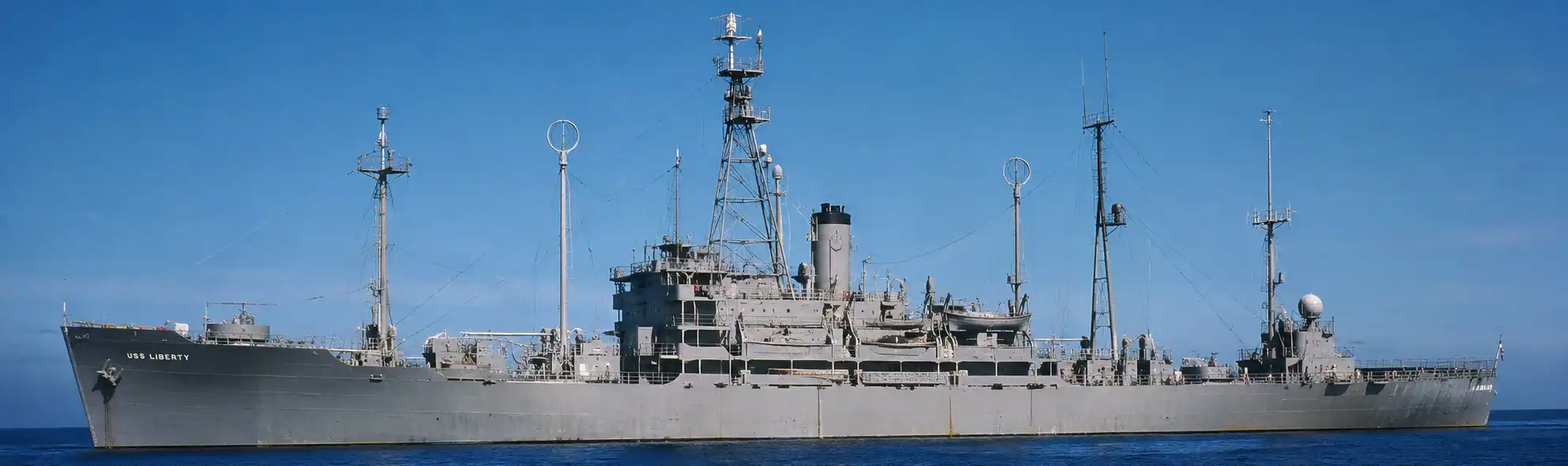
USS Liberty (AGTR-5) began life as a Victory Ship built during the closing months of World War II. Like hundreds of similar vessels, she was originally designed to transport cargo across the world's oceans in support of Allied operations. Rather than being retired after the war, the ship found a new purpose during the Cold War, when gathering information had become almost as important as military strength.
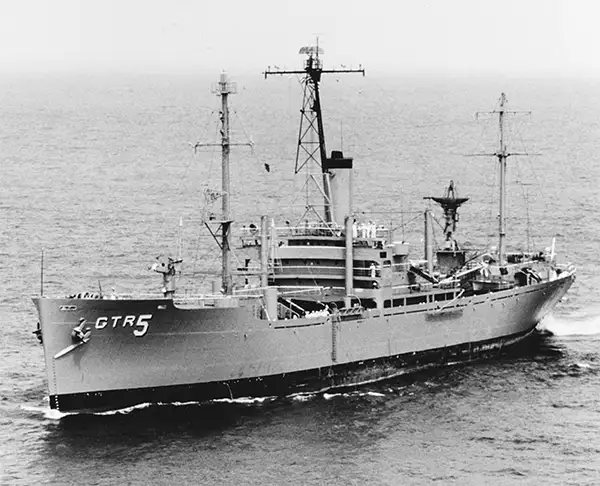
In the 1960s, the Navy converted the Liberty into a Technical Research Ship. Officially designated AGTR-5, she was fitted with an impressive array of antennas, radio receivers, and electronic monitoring equipment capable of intercepting military communications over great distances. Although she looked like an ordinary cargo ship from a distance, the Liberty was, in reality, one of the most sophisticated intelligence-gathering vessels in the U.S. Navy.
Unlike a destroyer or cruiser, the USS Liberty was not built for combat. She carried only a handful of defensive machine guns intended to discourage small craft rather than engage warships or aircraft. Her greatest value lay in the information she collected, allowing military analysts to monitor events unfolding around the world without becoming directly involved in the fighting.
During the Six-Day War in June 1967, the Liberty was assigned to operate in international waters off the Sinai Peninsula. Her mission was to monitor radio transmissions and other electronic signals from the rapidly changing conflict, providing American leaders with valuable intelligence while the United States remained officially neutral.
The ship sailed under the American flag and displayed her hull number, AGTR-5, prominently on both sides of the bow. Crew members later recalled that weather conditions were clear and visibility was excellent on the day of the attack. Few aboard expected that an intelligence-gathering mission would suddenly become one of the most tragic and controversial incidents in modern U.S. naval history.
The Attack
The morning of June 8, 1967, began quietly aboard USS Liberty. The ship was cruising in international waters approximately 13 nautical miles off the Sinai Peninsula while carrying out its intelligence-gathering mission. Visibility was excellent, the sea was calm, and crew members settled into what they expected would be another routine day at sea.
Throughout the morning, Israeli reconnaissance aircraft made repeated passes over the ship. Some flew low enough that crew members could clearly see the pilots, and several sailors later recalled waving to the aircraft. Because these flyovers occurred several times without incident, the crew assumed the ship had been positively identified as an American vessel and continued its mission without concern.
That sense of security vanished shortly after 2:00 p.m. local time.
Without warning, Israeli Mirage fighter jets roared toward the Liberty and opened fire. Rockets and 30-millimeter cannon shells ripped across the deck, smashing radar equipment, shredding antennas, and tearing into the lightly armed ship. Within moments, explosions echoed throughout the vessel as communication systems, bridge equipment, and exposed positions came under heavy attack.
The first attack runs caused extensive damage to the Liberty's communications equipment. Antennas mounted high above the deck were especially vulnerable to rockets and cannon fire, leaving the crew struggling to maintain contact with the outside world. Sailors worked frantically to rig emergency antennas and restore communications despite the continuing attack. Against extraordinary odds, radio operators eventually succeeded in transmitting a distress call that reached the U.S. Sixth Fleet in the Mediterranean.
As the air attack continued, additional Israeli aircraft joined the assault. Cannon fire swept the decks, rockets struck the ship repeatedly, and canisters of napalm ignited fires that spread across portions of the superstructure. Thick black smoke rose into the sky while crew members rushed through flames and twisted metal to rescue the wounded and fight the growing fires.
Just when the surviving crew believed the air attack had ended, another threat appeared on the horizon.
Three Israeli motor torpedo boats rapidly approached the damaged ship. After circling briefly, they launched a spread of torpedoes toward the Liberty. Four missed, but one struck the starboard side with tremendous force. The explosion blasted a hole measuring roughly 40 feet across below the waterline, flooding compartments that housed many of the ship's intelligence specialists. Twenty-five Americans were killed instantly in the blast, making it the single deadliest moment of the attack.
The torpedo explosion left the ship badly listing as seawater poured into damaged compartments. Despite the devastation, damage-control teams immediately began shoring up bulkheads, pumping water, and fighting to keep the vessel afloat. Medical personnel established makeshift treatment areas while sailors carried wounded shipmates across blood-slick decks under extremely dangerous conditions.
The attack lasted a little over an hour before the firing finally stopped. By then, the USS Liberty had been ravaged by rockets, cannon shells, machine-gun fire, napalm, and a torpedo strike. Thirty-four American sailors had lost their lives, and another 174 were wounded—well over half of the ship's crew. Against overwhelming odds, however, the crew's determination and professionalism kept the ship from sinking.
Although the attack had ended, the ordeal was far from over. The Liberty remained badly damaged, her communications severely compromised, and many of her sailors critically injured. Rescue efforts would eventually bring assistance, and the battered ship was later escorted to Malta, where temporary repairs allowed her to make the long voyage home.
Courage Under Fire
When the explosions finally subsided, the crew of USS Liberty faced a fight of a different kind. Fires burned across the damaged ship, seawater poured through the massive hole left by the torpedo, electrical systems had failed, and hundreds of feet of twisted metal blocked passageways below deck. Many of the ship's medical personnel were treating casualties while injured sailors continued working alongside those who had escaped without a scratch.
Despite their own wounds, crew members refused to abandon their posts. Damage-control teams battled flooding to keep the ship afloat, engineers struggled to restore essential systems, and medical corpsmen transformed cramped compartments into emergency treatment stations. Sailors carried injured shipmates across smoke-filled decks, administered first aid with limited supplies, and worked continuously to prevent the fires from spreading deeper into the vessel.
The radio operators faced one of the most critical challenges of the day. With much of the Liberty's communications equipment destroyed, they improvised under extraordinary pressure, assembling emergency radio circuits and finding a way to transmit a distress call. That message reached the U.S. Sixth Fleet and confirmed that an American naval vessel was under attack. It was a remarkable achievement considering the extensive damage to the ship and the conditions under which the operators were working.
Perhaps the greatest measure of the crew's courage was that no one gave up. Every sailor understood that if flooding could not be controlled or the fires spread beyond reach, USS Liberty would likely sink far from friendly ports. Yet officers and enlisted men alike continued working side by side for hours, placing the survival of the ship and the lives of their shipmates ahead of their own safety.
The heroism displayed that day did not go unnoticed. Members of the crew received numerous decorations for bravery, including the Medal of Honor, Navy Cross, Silver Star, and Bronze Star Medal. Although the attack remains controversial, there has never been any dispute about the courage of the men aboard the Liberty. Their determination under impossible circumstances saved the ship and ensured that many of their fellow sailors returned home alive.
Why Is the Attack Still Controversial?
Few events in modern American naval history have generated as much debate as the attack on USS Liberty. Although the fighting lasted little more than an hour, questions raised that day have continued for decades, making the incident the subject of books, documentaries, congressional inquiries, and countless discussions among historians, veterans, and military analysts.
Shortly after the attack ended, the Israeli government issued a formal apology, stating that its forces had mistakenly identified USS Liberty as an Egyptian vessel operating near the Sinai Peninsula. Israel later paid compensation to the United States government, the families of those who were killed, and the surviving crew members for the damage caused by the attack.
Official investigations conducted by both nations concluded that the attack resulted from mistaken identity. The U.S. Naval Court of Inquiry found no evidence that the attack had been deliberate, while Israeli investigations reached similar conclusions, citing confusion created by the rapidly changing conditions of the Six-Day War, communication failures, and errors in identifying the ship.
For many members of the Liberty's crew, however, those findings did not answer the questions they believed still remained. Survivors have consistently pointed to the clear weather, repeated reconnaissance flights earlier in the day, the large American flag flying from the ship, and the vessel's distinctive appearance as reasons they believe the ship should have been recognized as American before the attack began.
Additional questions have centered on decisions made after the attack had already started. Survivors have described the destruction of communications equipment, the length and intensity of the assault, and the recall of U.S. Navy aircraft that had been launched to assist the Liberty. These events have fueled continuing debate over whether every aspect of the incident has been fully explained.
Over the years, former military officers, intelligence officials, historians, journalists, and members of Congress have examined the evidence from different perspectives. Some support the official conclusion that the attack was a tragic mistake made during the confusion of war. Others argue that unanswered questions justify a new, independent review of the available evidence. Despite decades of research, no consensus has emerged that satisfies everyone involved.
For the surviving crew members and the families of those who died, the controversy has never been simply about assigning blame. Many have said their greatest wish is for the events of June 8, 1967, to be remembered accurately and for the sacrifices of the thirty-four Americans who lost their lives to receive the recognition they deserve. Whether one accepts the official findings or believes additional questions remain, there is broad agreement on one point: the courage of the crew and the tragedy of that day should never be forgotten.
Why USS Liberty Remembrance Day Matters
USS Liberty Remembrance Day is about far more than remembering a single military incident. It is a day to honor thirty-four American sailors who never returned home and the 174 others who survived wounds that would remain with many of them for the rest of their lives. Their sacrifice is part of the history of the United States Navy and deserves to be remembered alongside the service of all who have worn the nation's uniform.
The day also recognizes the extraordinary professionalism displayed by the crew. Faced with a devastating attack, they continued fighting fires, rescuing wounded shipmates, repairing damaged systems, and working to save their ship. Their courage prevented USS Liberty from sinking and demonstrated the discipline and determination expected of American sailors under the most difficult circumstances.
For many veterans, USS Liberty Remembrance Day carries an additional meaning. Military service often creates lifelong bonds between those who serve together, and the loss of even one shipmate is never forgotten. Memorial ceremonies held each year provide survivors, families, and fellow veterans with an opportunity to honor those who made the ultimate sacrifice and to remember a crew whose lives were forever changed in little more than an hour.
The observance also encourages people to study history with honesty and respect. While historians and governments may continue to debate aspects of the attack, remembering the human cost should never become secondary to political discussion. The stories of the men aboard the Liberty remind us that behind every historical event are individuals with families, friends, dreams, and futures that can be changed in an instant.
For younger generations, the day offers an opportunity to learn about a chapter of American history that is often overlooked. Many people have never heard of the USS Liberty or the events of June 8, 1967. Learning about the attack helps preserve the memory of those who served while encouraging thoughtful discussion about military service, international conflict, diplomacy, and the difficult decisions made during times of war.
Perhaps most importantly, USS Liberty Remembrance Day reminds us that honoring service members should never depend on how famous an event becomes. Some acts of courage occur in battles known around the world, while others happen far from public attention. The men of USS Liberty demonstrated remarkable bravery under impossible conditions, and remembering their service ensures that their sacrifice continues to hold its rightful place in American naval history.
Interesting Facts About USS Liberty
The story of USS Liberty extends far beyond the events of June 8, 1967. From her origins as a World War II cargo ship to her transformation into one of the U.S. Navy's most advanced intelligence-gathering vessels, the Liberty has a unique place in American naval history. These fascinating facts offer additional insight into the ship, her courageous crew, and the lasting legacy of one of the most discussed incidents of the Cold War.
- USS Liberty was originally built as a Victory Ship during World War II.
- The attack lasted a little over an hour.
- Thirty-four Americans were killed and 174 were wounded.
- The ship survived despite extensive structural damage.
- USS Liberty received numerous awards for the bravery displayed by her crew.
- Survivors continue holding reunions and memorial services decades after the attack.
How to Observe USS Liberty Remembrance Day
Observing USS Liberty Remembrance Day doesn't require a formal ceremony or military background. Whether you spend a few quiet moments reflecting, learn more about the events of June 8, 1967, or attend a local memorial service, the day offers an opportunity to honor the sailors who served aboard the Liberty. Even simple acts of remembrance help preserve their story and ensure that the courage and sacrifice of the crew continue to be remembered by future generations.
- Learn about the events of June 8, 1967.
- Read firsthand accounts from crew members.
- Visit a veterans' memorial if one is nearby.
- Take a moment to remember the 34 sailors who never returned home.
- Reflect on the sacrifices made by service members, even in the most unexpected circumstances.
USS Liberty Remembrance Day FAQ
The attack on USS Liberty has been remembered, studied, and debated for decades, leading many people to ask questions about the ship, her mission, and the events of June 8, 1967. Whether you're learning about the incident for the first time or looking to better understand its historical significance, these frequently asked questions provide a clear overview of USS Liberty Remembrance Day and the legacy of the courageous crew who served aboard her.
What is USS Liberty Remembrance Day?
USS Liberty Remembrance Day is observed each year on June 8 to honor the 34 American sailors who were killed and the 174 who were wounded during the attack on USS Liberty (AGTR-5) in 1967. The day also recognizes the courage of the crew and preserves the memory of one of the most debated incidents in U.S. naval history.
What was the USS Liberty?
USS Liberty was a United States Navy technical research ship equipped to gather electronic intelligence and monitor military communications. Originally built as a Victory Ship during World War II, she was converted for intelligence missions during the Cold War.
What happened to the USS Liberty?
On June 8, 1967, during the Six-Day War, USS Liberty was attacked by Israeli aircraft and torpedo boats while operating in international waters off the Sinai Peninsula. The attack lasted more than an hour, leaving 34 Americans dead, 174 wounded, and the ship heavily damaged.
Why is the attack still controversial?
Israel stated that the attack was the result of mistaken identity, and official investigations by both the United States and Israel reached the same conclusion. However, many survivors and some historians have questioned that explanation, arguing that important questions remain unanswered. As a result, the incident continues to be studied and debated.
Why is USS Liberty Remembrance Day important?
The observance honors the bravery, sacrifice, and professionalism of the crew while remembering those who lost their lives. It also encourages people to learn about an important chapter of American naval history that is often overlooked.
How do people observe USS Liberty Remembrance Day?
Many people attend memorial services, veterans' gatherings, or wreath-laying ceremonies. Others honor the day by reading about the attack, watching documentaries, sharing the crew's story, or taking a quiet moment to remember the sailors who served aboard the Liberty.
Did USS Liberty sink?
No. Although the ship suffered extensive damage from rockets, cannon fire, napalm, and a torpedo that tore a massive hole in her hull, the crew's determined damage-control efforts kept the vessel afloat. USS Liberty was later escorted to Malta for temporary repairs.
Is USS Liberty still in service?
No. After receiving temporary repairs, USS Liberty returned to the United States. She was officially decommissioned in 1968 and sold for scrap several years later. Although the ship no longer exists, her legacy lives on through memorials, veterans' organizations, and the annual remembrance of her crew.
Pipe Down
As the sun set on June 8, 1967, USS Liberty was still afloat, thanks to the determination, skill, and courage of her crew. The ship would never return to service, but the men who fought to save her left behind a story of extraordinary resilience in the face of overwhelming adversity. Their actions that day reflected the very best traditions of the United States Navy.
USS Liberty Remembrance Day is more than a look back at a tragic chapter in history. It is an opportunity to honor thirty-four Americans who made the ultimate sacrifice, recognize the bravery of those who survived, and remember that history is best preserved through honest reflection and respectful remembrance.
For sailors, "Pipe Down" marks the end of the day's work and a time to find rest. It seems a fitting way to close the story of USS Liberty. May we never forget the men who served aboard her, and may those who gave their lives on June 8, 1967, forever sail with fair winds and following seas.