Mark The Days - June

June doesn’t knock—it kicks the door open wearing sunglasses and dragging a cooler. School’s out, the days are long, and the air smells like SPF 50 and slightly burnt hot dogs. It’s when the grill gets promoted to full-time chef and the phrase “just one more s’more” starts ruining dinner plans. June’s holidays range from honoring dads to celebrating donuts, and frankly, both deserve equal praise. It’s the sweet spot between spring’s fussiness and summer’s chaos—sunny, breezy, and just a little too confident. Basically, June knows it's popular... and we let it be.

- Details
Rainforests are the Earth’s oldest living ecosystems—ancient, irreplaceable cathedrals of life that have stood for millions of years, quietly nurturing the planet. Beneath their dense canopies, countless species thrive in delicate balance, many of them still unknown to science. Every leaf, every drop of mist, every birdsong is part of a vast, intricate symphony of survival. And yet, these vital lungs of the Earth are vanishing at an alarming rate, sacrificed for short-term gain. To lose them isn’t just to lose beauty—it’s to lose knowledge, medicine, balance, and life itself. Protecting rainforests isn’t charity—it’s self-preservation.
Celebrated: Annually, on June 22nd
Discover the significance of World Rainforest Day, highlighting the vital role of rainforests in climate regulation, biodiversity, and human well-being.


- Details
New Mexico is like that cool aunt who burns sage, paints sunsets, and casually mentions she once saw a UFO while making tamales. It’s a place where ancient traditions and alien conspiracies live in peaceful harmony, and where the answer to “Red or green?” might determine if you get invited back to dinner. With landscapes that look hand-carved by the gods and a culture richer than a tres leches cake, New Mexico doesn't just enchant—it abducts your heart (no probing involved).
Celebrated: Annually, on June 14th
Celebrate National New Mexico Day! Discover the rich history, diverse landscapes, vibrant culture, and mouth-watering cuisine of the Land of Enchantment.

- Details
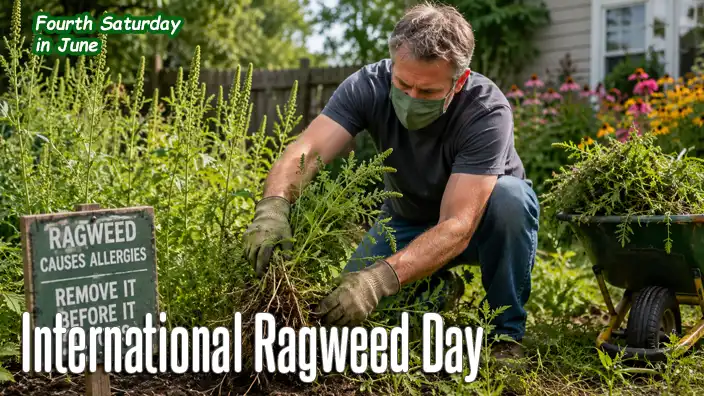
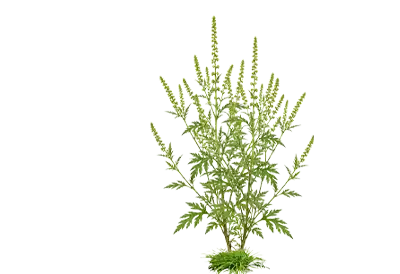
Most awareness days celebrate something people enjoy. International Ragweed Day takes a slightly different approach by focusing on a plant responsible for countless sneezes, watery eyes, and emergency tissue hunts. Whether you're an allergy sufferer, a gardener, or simply someone who enjoys breathing through both nostrils, this is the perfect day to learn more about the weed that has spent decades making itself everybody's problem.
Celebrated: Annually, on the Fourth Saturday in June
Discover the surprising story behind International Ragweed Day, from allergy-causing pollen and invasive weeds to fascinating facts and practical ways to participate

- Details
The chocolate macaroon is what happens when coconut decides it’s tired of being tropical and wants to be dark and mysterious. It’s the cookie equivalent of that friend who shows up to brunch in sunglasses and all black, even in July—edgy, indulgent, and just a little bit dramatic. It doesn’t just satisfy your sweet tooth; it seduces it, winks at your diet, and then goes back for seconds. One bite and you’re not just eating a cookie—you’re making questionable life choices in the best possible way.
Celebrated: Annually, on June 3rd
Celebrate National Chocolate Macaroon Day with a humorous dive into the sweet conspiracy of macaroons, from coconut classics to chocolatey delights.


- Details
There’s always that one guest at the party who shows up uninvited, makes a loud entrance, knocks over the lamp, and then spends the rest of the evening bouncing off the walls—literally. Add wings and a deep, inexplicable love for porch lights, and you’ve got summer’s most chaotic plus-one. They don’t mean to be disruptive; they’re just living fast, flying crooked, and making sure no peaceful evening goes unbugged.
Celebrated: Annually, on June 7th
Celebrate June Bug Day on June 7th, honouring the hilariously clumsy June bug. Discover their life, fascination with light, and their role in nature's cycle.


- Details
Today’s wilderness adventurer packs a GPS, bug spray, a filtered water bottle, and three backup chargers—and still manages to get lost in a well-marked state park. Daniel Boone? He wandered into uncharted forests with a rifle, a knife, and a strong sense of direction fueled by pure grit and whatever stew he had in his pack. No weather app, no Gore-Tex, no dehydrated snacks with names like “Campfire Chicken Fiesta.” If Boone met a modern hiker, he’d probably ask, “You crossed a river... in Crocs?”
Celebrated: Annually, on June 7th
Celebrate Daniel Boone Day on June 7th, honoring the iconic trailblazer who shaped America's wild frontier with courage, independence, and a legendary spirit.


- Details
Before your phone buzzes to tell you the time (again), National Watch Day reminds us that watches were doing the job long before glass screens ruled our pockets. A good watch doesn’t need charging, updating, or permission to interrupt dinner—it just sits there quietly, ticking away like it has somewhere important to be. From heirloom mechanical marvels to wrist gadgets that think they know you better than you do, watches remain one of humanity’s most elegant solutions to a universal problem: figuring out how late we are. Today, we tip our hats—and our wrists—to the small machines that have been keeping us punctual, fashionable, and occasionally smug for centuries.
Celebrated: Annually, on June 19th
Celebrate National Watch Day, honoring the artistry and history of watches. From classic timepieces to modern smartwatches, explore their enduring charm.


- Details
Some toys are played with for a few weeks and then quietly disappear into closets, attics, and mysterious places beneath beds. Dolls, however, have a habit of sticking around for generations. They become treasured keepsakes, cherished collectibles, family heirlooms, and occasionally the star of a childhood story involving tea parties, dramatic rescues, or an unfortunate encounter with a marker. World Doll Day celebrates these timeless companions and the memories, creativity, and imagination they have inspired for thousands of years.
Celebrated: Annually, on the Second Saturday in June
Celebrate World Doll Day with the history of dolls, fun facts, collecting traditions, and the inspiring story of founder Mildred Seeley


- Details
Logistics is like a high-stakes game of Tetris, but with trucks, ships, and planes instead of colorful blocks. Imagine coordinating a symphony where every instrument is a different mode of transportation, and the conductor is a caffeine-fueled genius who can juggle spreadsheets and navigate traffic jams without breaking a sweat. It’s all about making sure your package of rubber chickens arrives on time, because let’s face it, the world can’t wait for that kind of delivery!
Celebrated: Annually, on June 28th
Discover modern commerce on National Logistics Day, celebrating the intricate world of logistics that ensures the efficient movement of goods worldwide.


- Details
Cider is the socially acceptable way to say, “I’d like my apple juice to make bad decisions.” It’s the drink that lets you pretend you’re being healthy because, technically, it started as fruit. Cider walks the line between sweet and sassy, like a country fair that got a little too rowdy after sunset. Whether it’s crisp and dry or sugary enough to peel paint off a picnic table, cider doesn’t just quench your thirst—it slaps it on the back, buys it a round, and encourages it to dance on tables. Cheers to fermented apples and the questionable choices they inspire!
Celebrated: Annually, on June 3rd
Celebrate World Cider Day with apple enthusiasts worldwide. Explore the rich history, diverse styles, and quirky traditions of cider-making. Raise a glass and enjoy the apple-infused journey!


- Details
Cameras used to be the cool kids on the block, strutting their stuff with flashy lenses and impressive zooms. But along came smartphones, and now cameras are like those retro vinyl records—still loved by enthusiasts but mostly gathering dust. Today’s phones are like Swiss Army knives with Snapchat filters, turning everyone into a paparazzo with just a tap. Cameras might still take sharper photos, but when was the last time you made a phone call with a Nikon?
Celebrated: Annually, on June 29th
Celebrate National Camera Day by capturing the magic of life! Explore the evolution of cameras from daguerreotypes to smartphone photography. Unleash your creativity on this special day!


- Details
Windrush Day is Britain’s annual reminder that when the Empire asked for help rebuilding after World War II, the Caribbean sent its finest—nurses, builders, bus drivers, and enough cultural flair to make marmalade nervous. They arrived with suitcases full of hope, recipes that would eventually rescue British cuisine from boiled doom, and the quiet (and later, not-so-quiet) expectation of being treated decently. Spoiler: they were met with rain, racism, and landlords who liked dogs better than people. And yet—they stayed, they thrived, and they transformed Britain with every beat of a steel drum and every beautifully side-eyed glance. Windrush Day is not just a celebration—it’s a dignified mic drop from a generation that turned “You don’t belong here” into “You’re welcome.”
Celebrated: Annually, on June 22nd
Commemorate Windrush Day and the legacy of the Windrush Generation, their contributions to rebuilding post-WWII Britain, and their enduring impact on British culture.


- Details
The oceans are like the planet’s giant life-support system, quietly producing oxygen, regulating the climate, and feeding billions of people… all while looking like a relaxing vacation spot on a postcard. We swim in them, sail across them, and snack on their residents, often forgetting that this enormous body of water is doing most of the heavy lifting to keep Earth comfortable. It’s a bit like having a hardworking neighbor who fixes your fence, waters your plants, and cleans your driveway, and all you do in return is sit on the porch and wave. The least we can do is appreciate the view—and maybe not drop our trash into the world’s biggest fish tank. 🌊😄
Celebrated: Annually, on April 27th
Explore the vital role oceans play in our ecosystem. Learn about World Oceans Day, the challenges facing marine life, and how you can make a difference for our blue planet.


- Details
It’s the ninja of the office supply world—silent, reliable, and always vanishing when you need it most. The ballpoint pen may not come with Wi-Fi, but it’s written more history, sealed more deals, and doodled more bored meeting monsters than any high-tech gadget ever could. It never judges your handwriting, never needs charging, and doubles as a fidget toy, drumstick, or emergency hair bun holder in a pinch. Sure, it’s been chewed, clicked into oblivion, and occasionally found melted in a car cupholder, but it still shows up, ready to write... even if it takes a few aggressive scribbles on a napkin first.
Celebrated: Annually, on June 10th
Celebrate National Ballpoint Pen Day on June 10th by honoring the humble pen that has been a steadfast companion in writing history and everyday notes.


- Details
National Meteor Watch Day is the only holiday where lying flat on your back and staring into space is considered both productive and impressive. No one’s asking for reports, no one expects results—you just show up, look up, and hope the universe throws you a quick light show before you start wondering if that “shooting star” was actually just a satellite or your neighbor’s drone.
Celebrated: Annually, on June 30th
We are celebrating National Meteor Watch Day with a fun, factual guide to meteors, meteor showers, and how to enjoy the night sky.


- Details
West Virginia celebrations are a joyful blend of history, hospitality, and just enough chaos to keep things interesting. You’ll find folks in period costumes reenacting Civil War skirmishes next to teenagers trying to deep-fry a pepperoni roll—and somehow, it all works. There’s usually bluegrass music echoing from a nearby stage, a table full of homemade pies, and at least one uncle insisting he could’ve been a champion log roller if his knee hadn’t given out in ’84. It’s festive, it’s friendly, and it’s unmistakably West Virginian—where the mountains are high, the pride runs deep, and the fun doesn’t quit until the last banjo string is plucked.
Celebrated: Annually, on June 20th
Celebrate West Virginia Day on June 20th with stories, history, and festivities. Discover the unique charm and rugged beauty of the Mountain State.


- Details
On June 8, 1967, the USS Liberty—a lightly armed American intelligence ship—was attacked in international waters, leaving 34 U.S. sailors dead and 171 wounded. What was supposed to be a routine mission became one of the most controversial and heartbreaking incidents in U.S. naval history. For the crew who lived through it, and the families of those who didn’t, the scars remain deep. USS Liberty Remembrance Day honors their courage, their sacrifice, and the quiet dignity with which they bore the burden of being nearly forgotten. This day isn’t about politics—it’s about people who served their country and deserve to be remembered.
Celebrated: Annually, on June 8th
USS Liberty Remembrance Day on June 8th honors the lives lost in the 1967 attack and reflects on the quest for truth and justice surrounding this historical event.


- Details
Look, we corals have been doing our job quietly for millions of years—building reef cities, hosting fish parties, and holding the ocean floor together like the world’s soggiest Jenga tower. But lately? We're bleaching faster than a pair of jeans in the ’80s. Between the rising temps, plastic confetti, and sunscreen that burns like lava, we’re stressed out! We're the architects of the sea, the landlords of the lagoon, and frankly, we’d like a little less acid in our water and a lot more respect for the real estate we provide. Throw us a lifeline, not a plastic straw, will ya?
Celebrated: Annually, on June 9th
Discover the importance of Coral Triangle Day, celebrated on June 9th, to raise awareness and promote conservation of this vital marine ecosystem spanning six countries.

From Our Marks Catelog
-

Brussels sprouts: the tiny green orbs that have been sparking dinner table debates for...
-
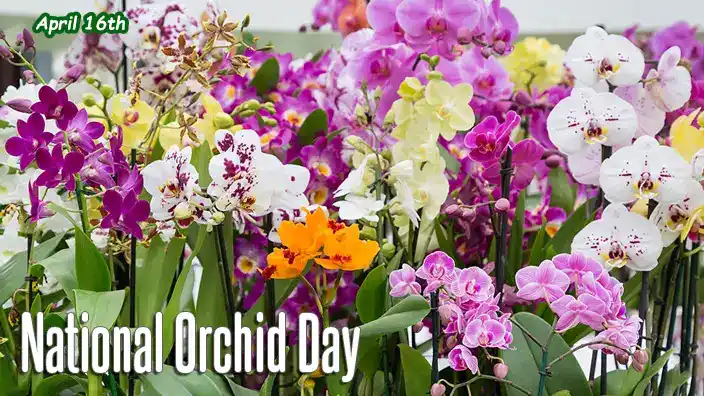
Elegance, mystery, and just the right amount of arrogance—some things demand admiration without lifting...
-

National Cake Day is the one day of the year when it's socially acceptable to have your cake and eat...
-

Forget glow-in-the-dark snack cakes and cheese that comes in a spray can—there’s something wildly...
-

If there were an Olympic event for clumsiness, someone would be rolling down the hill, missing their...
-
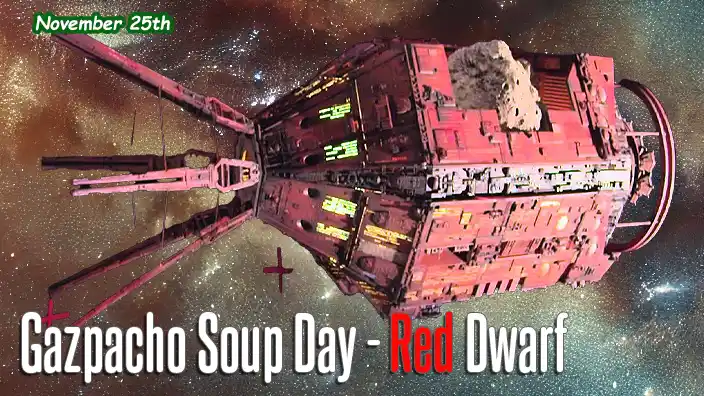
Gazpacho Soup Day isn’t just a day to honor cold tomato soup; it’s a day to revel in the absurdity of...

