Celebrity Birthdays - April

April birthdays get all the flowers — and sometimes all the showers, too. They’ll tell you it builds character. We think it just builds frizz.
Let’s look at the famous faces who bring a little color to this in-between month. They’re the sunshine peeking through the rainclouds, reminding us that summer is just around the corner… probably.

- Details
- Category: Celebrity Birthdays - April
Every generation has its own brand of soul music. In the 1960s it was Motown. In the 1990s it was smooth R&B slow jams played on late-night radio. Today, artists like Summer Walker carry the torch with a modern sound that mixes traditional R&B with contemporary beats and deeply personal lyrics. If heartbreak were an Olympic sport, Walker’s songs would probably qualify as the official soundtrack—complete with gold medals for emotional honesty and melodies that stick in your head long after the song ends.
 April 11, 1996, in Atlanta, Georgia

Trivia
- She learned to play guitar by watching online tutorials.
- Walker was discovered after posting performances on Instagram.
- Her mixtape Last Day of Summer (2018) introduced her to a wider audience.
- The song “Girls Need Love” gained major attention after a remix with Drake.
- Her debut album Over It (2019) debuted at No. 2 on the Billboard 200.
- Her second album Still Over It (2021) debuted at No. 1 on the Billboard 200.
- Walker has spoken publicly about living with social anxiety.
- She is considered one of the leading voices in modern R&B.
- Details
- Category: Celebrity Birthdays - April
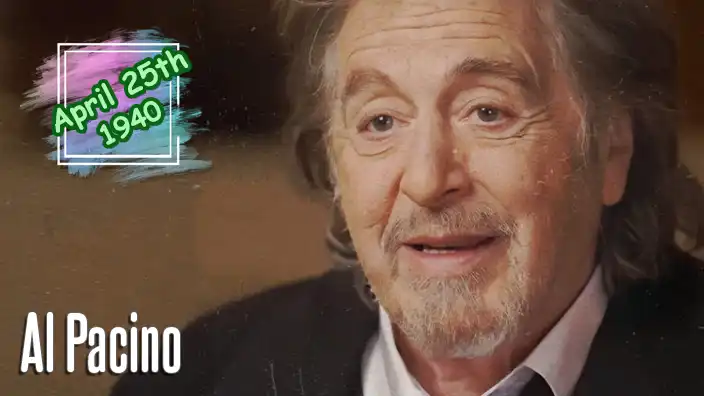
If intensity were a sport, Al Pacino would have more trophies than a bowling league in retirement season. The man doesn’t just deliver lines—he launches them like fireworks. Somewhere out there, a quiet whisper is still waiting for Pacino to try it… but don’t hold your breath.
 April 25, 1940, in New York City
Trivia
- He was almost fired from The Godfather early in production.
- His full name is Alfredo James Pacino.
- He won his only Oscar for Scent of a Woman after several previous nominations.
- Pacino studied method acting under Lee Strasberg.
- He has four children.
- His films have grossed over $3 billion worldwide.
- He made his directorial debut with Looking for Richard (1996).
- He’s known for his powerful, intense delivery style.
- Details
- Category: Celebrity Birthdays - April
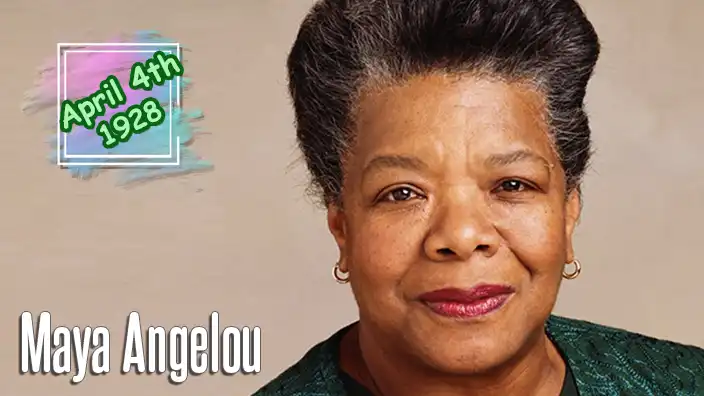
If wisdom had a voice, it might sound a lot like Maya Angelou. She could deliver a poem that made people cry, laugh, think, and stand up a little taller—all in the space of a few minutes. Writers dream of that kind of impact. Angelou simply called it telling the truth.
April 4, 1928, in St. Louis, Missouri
 May 28, 2014, in Winston-Salem, North Carolina
Trivia
- Worked as a streetcar conductor in San Francisco.
- Released the album Miss Calypso in 1957.
- Civil rights activist in the 1960s.
- Close to Martin Luther King Jr.
- Close to Malcolm X.
- Published I Know Why the Caged Bird Sings in 1969.
- Recited poetry at Bill Clinton’s 1993 inauguration.
- Received the Presidential Medal of Freedom in 2011.
- Taught at Wake Forest University.

- Details
- Category: Celebrity Birthdays - April
Hollywood has two types of actors: the ones who look like they might sell you insurance, and the ones who look like they could chase bad guys through a warehouse, crash through a window, and still have time to deliver a one-liner before the next commercial break. Johnny Messner firmly belongs in the second category. With a tough-guy screen presence and the kind of face that casting directors love to put in action movies, Messner has spent years portraying soldiers, detectives, and men who clearly skipped leg day only because they were too busy saving the day.
April 11, 1970, in Syracuse, New York
Trivia
- His father served in the U.S. Air Force, and Messner spent part of his childhood living in Europe.
- He attended San Diego State University.
- Messner starred in the Fox television series Killer Instinct as Detective Jack Hale.
- He appeared in the action film Anacondas: The Hunt for the Blood Orchid (2004).
- Messner also had roles in Tears of the Sun (2003) and Running Scared (2006).
- He has made guest appearances in numerous TV shows including CSI: Miami, NCIS: Los Angeles, and Criminal Minds.
- He is known for playing military and law-enforcement characters in action dramas.

- Details
- Category: Celebrity Birthdays - April
Kareem Abdul-Jabbar’s skyhook was so reliable that opposing defenders probably considered filing a formal complaint with the laws of physics. Imagine trying to block a shot released by a seven-foot-two basketball legend whose arm seems to extend halfway to the rafters. Opponents jumped, stretched, and occasionally prayed, but the result was usually the same: two points for Kareem and another defender wondering if he’d accidentally signed up for the wrong sport.
April 16, 1947, in New York City
Trivia
- Originally named Ferdinand Lewis Alcindor Jr.
- Played college basketball at UCLA under John Wooden.
- Won three NCAA championships with UCLA.
- Selected first overall in the 1969 NBA Draft by the Milwaukee Bucks.
- Helped lead the Bucks to an NBA championship in 1971.
- Won six NBA championships during his career.
- Famous for the nearly unstoppable “skyhook” shot.
- Played a memorable cameo role in the comedy Airplane!
- Known today as an author, historian, and cultural commentator.

- Details
- Category: Celebrity Birthdays - April
Robbie Amell has one of those careers where you look at his résumé and think, “Wait… he’s been in everything?” One minute he’s a charming love interest, the next he’s dealing with futuristic chaos, and somewhere in between he’s probably outrunning explosions without even messing up his hair. If Hollywood ever needs someone who can convincingly save the day and still make it to dinner on time, Robbie Amell is already halfway there.
April 21, 1988, in Toronto, Canada
Trivia
- Cousin of actor Stephen Amell
- Began acting in commercials as a teenager
- Appeared in The Flash as Firestorm
- Starred in The DUFF
- Co-starred with Stephen Amell in Code 8
- Plays Nathan Brown in Upload
- Married actress Italia Ricci in 2016
- Known for roles in both comedy and sci-fi genres

- Details
- Category: Celebrity Birthdays - April
Kimberly Elise has spent much of her career doing something that sounds simple but is surprisingly rare in Hollywood—delivering powerful performances that make audiences sit up, pay attention, and occasionally reach for the tissue box. Whether she’s portraying a determined mother, a resilient survivor, or a character navigating emotional storms, Elise has built a reputation for intensity and authenticity. She may not always play the loudest character in the room, but when Kimberly Elise is on screen, she has a way of making sure you remember it.
April 17, 1967, in Minneapolis, Minnesota
Trivia
- She studied communications at the University of Minnesota.
- Her film breakthrough came with the crime drama Set It Off (1996).
- She appeared in the historical drama Rosewood (1997).
- Elise starred opposite Denzel Washington in John Q (2002).
- She played Helen McCarter in Diary of a Mad Black Woman (2005).
- She appeared in the ensemble drama For Colored Girls (2010).
- Elise starred in the television drama Hit the Floor.
- She later appeared in the series Greenleaf.

- Details
- Category: Celebrity Birthdays - April
Some actors spend years trying to look confident on screen. Hayley Atwell seems to have been born with that ability. Whether she’s leading secret missions, delivering Shakespeare, or calmly stealing scenes from superheroes, she has the kind of presence that makes viewers believe she probably knows exactly what she’s doing—even if the rest of the cast is still trying to find their marks on the floor.
April 5, 1982, in London, England
Trivia
- Holds dual British and American citizenship.
- Studied acting at Guildhall School of Music and Drama.
- Breakout film role in The Duchess (2008).
- Best known as Peggy Carter in the Marvel universe.
- Starred in the series Agent Carter.
- Voiced Captain Carter in Marvel’s What If...?.
- Appeared in the Mission: Impossible film series.

- Details
- Category: Celebrity Birthdays - April
If you ever needed proof that someone can go from blockbuster movies to running a billion-dollar business without breaking a sweat, Jessica Alba is your case study. She started out dodging explosions and saving the day on screen, then turned around and said, “You know what? Let’s build a company too.” Most people struggle to assemble flat-pack furniture—she built a brand. Not bad for someone who once spent her days battling aliens and comic book villains.
April 28, 1981, in Pomona, California
Trivia
- Rose to fame in Dark Angel (2000–2002)
- Played Sue Storm in Fantastic Four films
- Starred in Sin City (2005)
- Co-founded The Honest Company in 2011
- Balanced acting career with business leadership
- Known for her dance skills showcased in Honey (2003)
- Returned to TV in L.A.’s Finest
- Advocate for environmentally friendly products
- One of the few actors to successfully transition into major entrepreneurship

- Details
- Category: Celebrity Birthdays - April
Every so often an actor lands a role so memorable that fans will forever associate them with it. For Tricia Helfer, that role came in the form of a mysterious, elegant, and slightly terrifying humanoid robot in Battlestar Galactica. Playing the character known simply as Number Six, Helfer managed to be charming, intimidating, and philosophical all at the same time—often while delivering dialogue about humanity’s future in a red dress that probably caused several starship crew members to forget their lines.
April 11, 1974, in Donalda, Canada
Trivia
- She grew up on a grain farm in rural Alberta.
- Helfer won the 1992 Ford Models Supermodel of the World competition.
- She is best known for playing Number Six in Battlestar Galactica.
- Her character appeared in multiple versions of Number Six throughout the series.
- She played Charlotte Richards in the television series Lucifer.
- Helfer has voiced characters in video games, including Mass Effect, StarCraft II, and Halo Wars.
- She has been active in animal rescue and animal welfare charities.

- Details
- Category: Celebrity Birthdays - April
If Hollywood had a “seen it all before turning 18” award, Kirsten Dunst would have it engraved, polished, and sitting on the mantel. She went from child vampire to superhero sweetheart to critically acclaimed actress without ever looking like she was trying too hard—which, in this business, is practically a superpower of its own. While others were figuring out algebra, she was working with legends and quietly building one of the most dependable careers in the industry.
April 30, 1982, in Point Pleasant, New Jersey
Trivia
- Earned a Golden Globe nomination at age 12 for Interview with the Vampire.
- Starred in Jumanji during its original 1990s run.
- Played Mary Jane Watson in the original Spider-Man trilogy.
- Won Best Actress at Cannes for Melancholia.
- Received an Academy Award nomination for The Power of the Dog.
- Frequent collaborator of director Sofia Coppola.
- Starred in Season 2 of Fargo, earning critical praise.
- Married actor Jesse Plemons, her co-star from Fargo.

- Details
- Category: Celebrity Birthdays - April
Some people spend their lives trying to decide what they want to be when they grow up. Victoria Beckham apparently decided to try several things just to keep life interesting. First she conquered the pop charts as “Posh Spice,” then she married one of the most famous footballers on the planet, and then—just to make sure she stayed busy—she reinvented herself as a respected fashion designer. It turns out that going from pop star to style icon is entirely possible if you have determination, sharp instincts, and the confidence to wear sunglasses indoors.
April 17, 1974, in Harlow, England
Trivia
- She attended Laine Theatre Arts school to study dance and performance.
- She became famous worldwide as “Posh Spice” in the Spice Girls.
- The Spice Girls’ debut single Wannabe topped charts in more than 30 countries.
- She married football star David Beckham in 1999.
- The couple have four children: Brooklyn, Romeo, Cruz, and Harper.
- Beckham released a solo album titled Victoria Beckham in 2001.
- She launched her fashion label in 2008.
- Her brand has been featured at major fashion weeks.
- She won Designer Brand of the Year at the British Fashion Awards.

- Details
- Category: Celebrity Birthdays - April
If laughter had a horsepower rating, Eddie Murphy’s career would probably require a commercial driver’s license. From explosive stand-up routines to blockbuster comedies and surprisingly heartfelt performances, Murphy has spent decades proving that a well-timed joke can carry an entire movie — and sometimes an entire generation of fans along with it. Whether he’s playing a street-smart detective, a fast-talking donkey, or half the population of a fictional family thanks to clever makeup, Eddie Murphy has made a career out of doing the impossible: making people laugh until they forget what they were laughing about in the first place.
April 3, 1961, in Brooklyn, New York
Trivia
- Joined Saturday Night Live at age 19.
- Starred in the hit film Beverly Hills Cop (1984).
- Played multiple characters in Coming to America.
- Famous stand-up specials: Delirious and Raw.
- Voiced Donkey in the Shrek film series.
- Received an Academy Award nomination for Dreamgirls.
- Recorded the hit song Party All the Time in 1985.

- Details
- Category: Celebrity Birthdays - April
If jazz had a laboratory, Herbie Hancock would be the guy in the corner wearing a lab coat, cheerfully mixing strange musical chemicals just to see what happens. Over the decades he has blended jazz, funk, electronic music, classical influences, and technology in ways that occasionally made purists scratch their heads—but always made listeners tap their feet. Whether playing piano like a traditional jazz master or pioneering futuristic sounds with synthesizers, Hancock has spent his career proving that music evolves best when someone brave enough is willing to experiment.
April 12, 1940, in Chicago, Illinois
Trivia
- Played a Mozart piano concerto with the Chicago Symphony Orchestra at age 11.
- Studied electrical engineering and music at Grinnell College.
- His song “Watermelon Man” became a jazz standard.
- Joined the Miles Davis Quintet in 1963.
- Released the influential jazz-fusion album Head Hunters in 1973.
- The song “Chameleon” became one of the most famous jazz-funk tracks.
- His 1983 hit “Rockit” featured early hip-hop scratching techniques.
- Won the Grammy Award for Album of the Year in 2008 for River: The Joni Letters.
- Has won more than a dozen Grammy Awards during his career.

- Details
- Category: Celebrity Birthdays - April
Some actors play characters. Heath Ledger seemed to become them entirely. Whether he was a rebellious teenager, a quiet rancher, or the most unsettling comic-book villain ever put on screen, Ledger approached every role with fearless dedication—and audiences are still talking about the results.
April 4, 1979, in Perth, Western Australia
January 22, 2008, SoHo, New York
Trivia
- Won a junior chess championship at age ten.
- Moved to Sydney to pursue acting.
- Breakthrough role in 10 Things I Hate About You.
- Starred in A Knight's Tale (2001).
- Oscar-nominated for Brokeback Mountain.
- Played the Joker in The Dark Knight.
- Won a posthumous Academy Award.
- Directed several music videos.

- Details
- Category: Celebrity Birthdays - April
Uma Thurman has the rare ability to look completely calm while doing things the rest of us would need a nap just thinking about. Whether she’s dancing, acting, or taking on an entire army with a sword, she carries herself with the kind of confidence that makes you wonder if she’s ever had a bad day—or if she simply defeated it before breakfast.
April 29, 1970, in Boston, Massachusetts
Trivia
- Uma Thurman’s middle name, “Karuna,” means compassion in Sanskrit.
- She made her film debut in Kiss Daddy Goodnight (1987).
- Her breakout role came with Pulp Fiction (1994).
- She received an Academy Award nomination for her role as Mia Wallace.
- She performed many of her own stunts in the Kill Bill films.
- Her collaboration with Quentin Tarantino is one of the most celebrated actor-director partnerships.
- She has worked in drama, action, comedy, and science fiction films.
- She starred in Gattaca alongside Ethan Hawke, whom she later married.
- Her role as The Bride is considered one of the most iconic action performances in film history.
- She has maintained a relatively private personal life despite her fame.

- Details
- Category: Celebrity Birthdays - April
Some people ease into a career. Gigi Hadid practically strutted into hers—literally—at a pace that would make most people trip over their own shoelaces. With the kind of confidence that says, “Yes, I woke up like this… and yes, it took a team,” Gigi has become one of the most recognizable faces in fashion. She’s walked runways, graced magazine covers, and built a brand that blends high fashion with a down-to-earth charm. Not bad for someone who started out as a toddler model—most of us were still figuring out how to tie our shoes.
April 23, 1995, in Los Angeles, California
Trivia
- Daughter of Mohamed Hadid and Yolanda Hadid.
- Began modeling at age 2 with Guess.
- Signed with IMG Models in 2013.
- Made New York Fashion Week debut in 2014.
- Walked for major brands like Chanel, Versace, and Balmain.
- Appeared on multiple international Vogue covers.
- Has Hashimoto’s disease, a thyroid condition.
- Welcomed her daughter in 2020.
- Details
- Category: Celebrity Birthdays - April
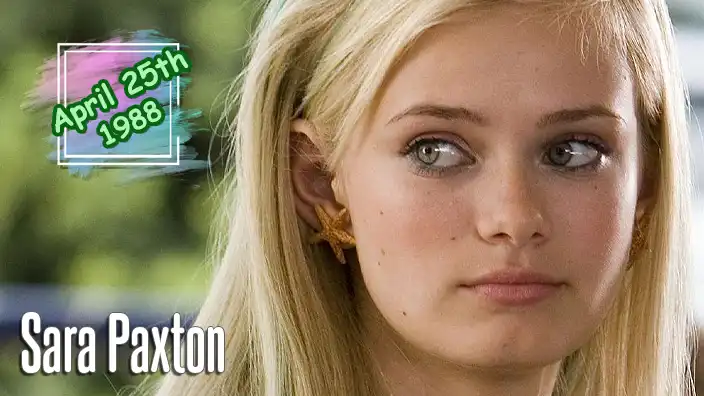
Some actors ease into Hollywood. Sara Paxton? She practically showed up, smiled, and said, “Alright, what are we doing today—singing, acting, or surviving a horror movie?” Spoiler alert: she’s done all three, and made it look a lot easier than it probably is.
April 25, 1988, in Woodland Hills, California
Trivia
- Sara Paxton began acting in commercials as a child.
- She starred in the teen film Aquamarine (2006).
- She appeared in both comedy (Superhero Movie) and horror (The Last House on the Left).
- She has released music and showcased her singing talent.
- She has worked steadily in both television and film.
- She was born and raised in California, close to Hollywood.
- She appeared in the horror film The Innkeepers (2011).
- She has guest-starred in several popular TV series early in her career.

- Details
- Category: Celebrity Birthdays - April
Some performers pick one lane—acting or singing—and stay there. Sofia Carson apparently looked at that idea and said, “Why not both?” One moment she’s belting out a pop anthem, the next she’s starring in a major film or television project, and somewhere in between she’s walking a red carpet looking like she just stepped out of a fashion magazine. If Hollywood handed out medals for multitasking, Carson would probably accept hers while performing a song and memorizing her next script at the same time.
April 10, 1993, in Fort Lauderdale, Florida
Trivia
- Of Colombian-American heritage.
- Studied communications at UCLA.
- First gained attention on Disney Channel’s Austin & Ally.
- Played Evie in the Descendants film trilogy.
- Signed to Hollywood Records as a recording artist.
- Starred in the Netflix hit film Purple Hearts (2022).
- Served as executive producer on Purple Hearts.
- Works as a global ambassador for UNICEF.

- Details
- Category: Celebrity Birthdays - April
Ashley Judd has spent her career playing characters who look like they’ve got everything under control—right up until the moment they absolutely don’t… and then somehow still come out on top. Whether she’s outrunning danger, uncovering secrets, or staring down someone who made a very bad life decision, she brings a calm intensity that says, “You picked the wrong woman today.”
April 19, 1968, in Granada Hills, California
Trivia
- Daughter of Naomi Judd and sister of Wynonna Judd.
- Breakout role in Ruby in Paradise (1993).
- Starred in Double Jeopardy (1999), one of her biggest hits.
- Frequently cast in thriller and suspense films.
- Appeared in Missing (2012) as a former CIA operative.
- Earned a Master’s degree from Harvard Kennedy School.
- Active in global humanitarian and advocacy work.
- Recovered from a serious leg injury sustained in 2021.

- Details
- Category: Celebrity Birthdays - April
Linda Hunt proves that commanding a room has absolutely nothing to do with height and everything to do with presence. She may be small in stature, but when she delivers a line, the room tends to straighten its posture and pay attention. Actors twice her size have shared the screen with her and somehow ended up looking like the supporting cast.
April 2, 1945, in Morristown, New Jersey
Trivia
- Height: about 4 ft 9 in
- Oscar winner: The Year of Living Dangerously
- Played Billy Kwan (male role)
- Longtime Hetty Lange on NCIS: Los Angeles
- Began career in theater
- Known for distinctive voice
- Narrated documentaries
From Our Marks Catelog
-

Cocktails are the grown-up version of playing with your food—except now you’re swirling liquid with...
-

Dreams are wonderful things. They let you imagine yourself living in a beach house, driving a...
-
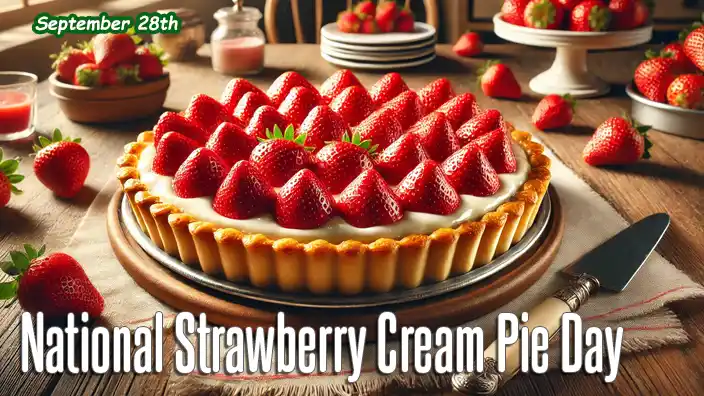
This is a dessert so irresistibly tempting that it causes forks to duel in midair and family...
-
A big forehead is like having a VIP pass to the brain party—front row seats to all the action...
-

World Refill Day exists because, at some point, humanity collectively decided that throwing things away...
-

International No Diet Day is the one day a year when your salad can take a seat and your stretchy...

