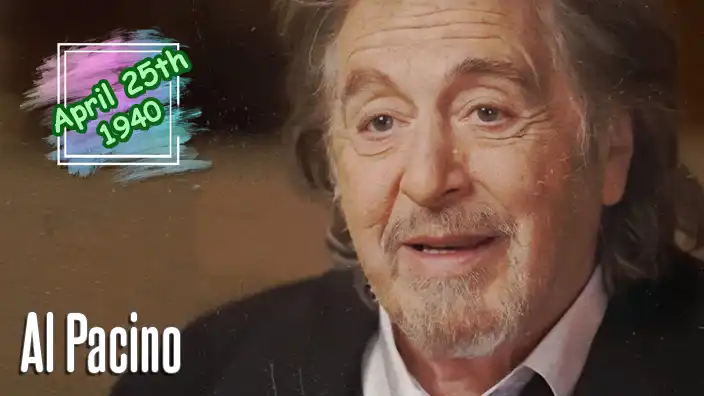
April 25, 1940, in New York City
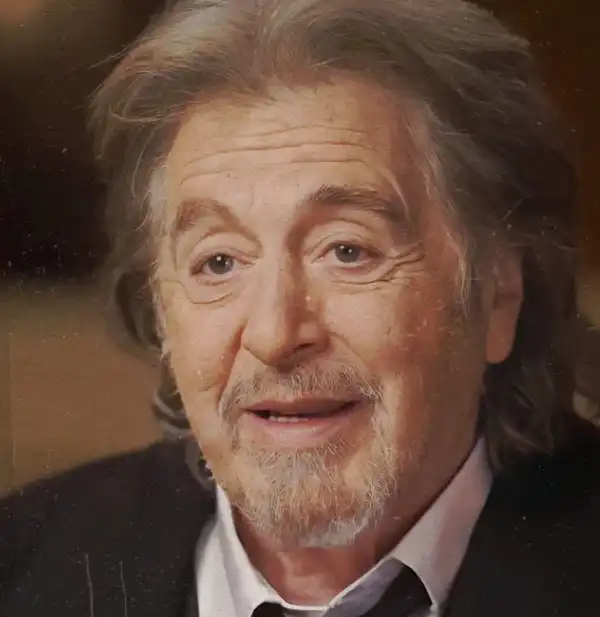
Few actors in the history of cinema command attention quite like Al Pacino. Born Alfredo James Pacino on April 25, 1940, in New York City, he grew up in the Bronx after his parents separated when he was young. Raised by his mother and grandparents, Pacino’s early life was far from glamorous. In fact, it was the kind of upbringing that builds either resilience or a lifelong appreciation for free coffee—and in his case, it built one of the greatest actors the world has ever seen.
Pacino didn’t exactly glide through school. He struggled academically and eventually found his footing not in textbooks, but on stage. Acting became his escape, his passion, and ultimately his calling. He trained seriously at the HB Studio and the legendary Actors Studio, studying under Lee Strasberg and embracing method acting—a technique that would define his career.
Before Hollywood came knocking, Pacino paid his dues in theater. We’re talking off-off-Broadway, off-Broadway, and anywhere else someone would let him stand under a spotlight. At one point, he was reportedly so broke he slept on friends’ couches and worked odd jobs just to survive. Not exactly the glamorous “actor life” you see in magazines—but it built grit, and Pacino has plenty of that.
Then came the role that changed everything: Michael Corleone in The Godfather (1972). It’s hard to imagine now, but studio executives initially doubted him and even considered replacing him early in filming. That decision would have gone down as one of Hollywood’s biggest blunders. Pacino’s quiet, simmering performance turned Michael Corleone into one of cinema’s most unforgettable characters, launching him into stardom practically overnight.
The 1970s were Pacino’s golden decade, and he didn’t waste a second of it. Films like Serpico (1973), Dog Day Afternoon (1975), and The Godfather Part II (1974) showcased his ability to portray complex, conflicted characters with raw authenticity. He wasn’t just acting—he was inhabiting these roles. By the time audiences saw him, they weren’t watching Al Pacino anymore; they were watching the character.
Then came the 1980s, and with it, one of his most iconic performances: Tony Montana in Scarface (1983). Loud, explosive, and unforgettable, the role became a cultural phenomenon. Whether people loved or feared Tony Montana, they definitely remembered him. And let’s be honest—if Pacino had delivered that performance any louder, it might have cracked televisions nationwide.
Despite multiple Oscar nominations throughout his career, Pacino didn’t win the Academy Award for Best Actor until 1992 for Scent of a Woman. His portrayal of the fiery, blind Colonel Frank Slade earned him the long-overdue recognition, complete with one of the most memorable speeches in film history. (You know the one. If you don’t, go fix that immediately.)
Pacino’s career didn’t slow down after that—if anything, it expanded. He continued to deliver standout performances in films like Heat (1995), The Devil’s Advocate (1997), and The Irishman (2019), proving that longevity in Hollywood isn’t just about staying relevant—it’s about staying good.
And let’s not forget his achievements beyond film. Pacino is one of the rare performers to achieve the “Triple Crown of Acting,” winning an Academy Award, two Tony Awards, and two Emmy Awards. That’s not just success—that’s dominance across every major acting platform.
Even after more than five decades in the industry, Pacino remains active, respected, and—perhaps most impressively—unpredictable. He’s never been the type to settle into a comfortable routine. Instead, he continues to take on roles that challenge him and keep audiences guessing.
What makes Al Pacino truly special isn’t just his talent—it’s his intensity, his dedication, and his refusal to do anything halfway. Whether he’s playing a mob boss, a detective, or a blind retired colonel, he brings a level of commitment that turns performances into legends.