Celebrity Birthdays - April

April birthdays get all the flowers — and sometimes all the showers, too. They’ll tell you it builds character. We think it just builds frizz.
Let’s look at the famous faces who bring a little color to this in-between month. They’re the sunshine peeking through the rainclouds, reminding us that summer is just around the corner… probably.

- Details
- Category: Celebrity Birthdays - April
If you ever wondered what would happen if a New York kid picked up a guitar, turned the volume knob to “absolutely unnecessary,” and then decided regular stage presence just wasn’t dramatic enough—enter Ace Frehley. The man didn’t just play guitar; he made it smoke, spark, and occasionally threaten workplace safety. Somewhere between a sci-fi convention and a rock concert, he carved out a career that said, “Why be normal when you can be a flaming, guitar-wielding spaceman?”
 April 27, 1951, in the Bronx, New York
 October 16, 2025, in Morristown, New Jersey

Trivia
- His nickname “Ace” came from his reputation for being good with the ladies.
- He was largely self-taught and never took formal guitar lessons.
- His guitar effects included smoke bombs and fireworks built right into the instrument.
- “New York Groove” became his biggest solo hit.
- He nearly got electrocuted on stage—then turned it into a hit song.
- He was inducted into the Rock and Roll Hall of Fame with KISS in 2014.

- Details
- Category: Celebrity Birthdays - April
Some actors quietly slip into a role and disappear into the character. Russell Crowe tends to kick the door down, plant a flag, and dare the audience not to pay attention. Whether he’s commanding Roman legions, solving complicated mathematical puzzles, or captaining a ship through cannon fire, Crowe has built a reputation for intense performances that dominate the screen. Add in a powerful voice, a no-nonsense attitude, and a willingness to take on challenging roles, and you get one of the most formidable actors of his generation.
April 7, 1964, in Wellington, New Zealand
Trivia
- Crowe won the Academy Award for Best Actor for Gladiator (2000).
- He received consecutive Oscar nominations for The Insider (1999), Gladiator (2000), and A Beautiful Mind (2001).
- His breakout Australian film was Romper Stomper (1992).
- Crowe played mathematician John Nash in A Beautiful Mind.
- He starred as Captain Jack Aubrey in Master and Commander: The Far Side of the World (2003).
- Crowe is also a musician and has performed with several rock bands.
- He directed the historical drama The Water Diviner (2014).

- Details
- Category: Celebrity Birthdays - April
If sarcasm were a sport, John Oliver would have a trophy case that requires its own zip code. Armed with a sharp wit, a British accent that somehow makes bad news sound slightly more polite, and a talent for turning complex issues into “wait, what?!” moments, Oliver has built a career out of making people laugh—and then immediately question everything they thought they understood. He’s the rare host who can spend 20 minutes explaining something you didn’t know you cared about and have you Googling it before the credits roll.
April 23, 1977, in Birmingham, England
Trivia
- Studied at Christ’s College, Cambridge.
- Member of the Cambridge Footlights comedy group.
- Joined The Daily Show in 2006.
- Guest-hosted The Daily Show in 2013.
- Launched Last Week Tonight with John Oliver in 2014.
- Won multiple Primetime Emmy Awards.
- Became a U.S. citizen in 2019.
- Voiced Zazu in The Lion King (2019).

- Details
- Category: Celebrity Birthdays - April
Jazz musicians are known for improvisation, creativity, and occasionally confusing people who were expecting something simple and predictable. Robert Glasper, however, manages to do something even more impressive—he blends jazz, hip-hop, R&B, and soul so smoothly that you start wondering why music wasn’t always made this way. One moment you’re listening to a piano that feels straight out of a classic jazz club, and the next moment there’s a groove that sounds like it belongs on a modern hip-hop record. In other words, Robert Glasper doesn’t just play music—he mixes styles like a chef who refuses to follow a single recipe.
April 6, 1978, in Houston, Texas
Trivia
- Raised in a musical church environment
- His mother was a professional singer
- Attended Houston’s High School for Performing Arts
- Studied jazz at The New School in New York
- Released debut album Mood in 2005
- Created the Robert Glasper Experiment
- Won Grammy for Black Radio in 2013
- Worked with Kendrick Lamar and Common
- Contributed to To Pimp a Butterfly
- Composed music for film and television
- Known for blending jazz, hip-hop, and R&B

- Details
- Category: Celebrity Birthdays - April
If you’ve ever watched a crime show and thought, “Now that guy looks like he knows exactly what’s going on,” there’s a good chance you were looking at Paul Guilfoyle. He’s not the loudest presence in the room, and he doesn’t need to be. With a steady voice, a sharp look, and the kind of calm authority that makes everyone else straighten up a little, Guilfoyle built a career out of being the person you trust when things get complicated—and on television, things are always complicated.
April 28, 1949, in Boston, Massachusetts
Trivia
- Began his career in theater before moving to film and television
- Appeared in Three Men and a Baby (1987)
- Featured in L.A. Confidential (1997)
- Best known as Captain Jim Brass on CSI: Crime Scene Investigation
- Appeared in over 300 episodes of CSI
- Known for portraying authoritative and grounded characters
- Has a background in both stage and screen acting
- Comes from a politically active family in Boston

- Details
- Category: Celebrity Birthdays - April
Country music has always had a knack for producing singers who sound like they were born with a guitar in their hands and a story ready to tell. Maren Morris fits that tradition perfectly—except she also tosses in pop hooks, soulful vocals, and the occasional chart-topping anthem just to keep everyone on their toes. Whether she’s singing about love, heartbreak, or the everyday chaos of life, Morris delivers it with a voice that can fill an arena… or at least make your car stereo feel like one.
 April 10, 1990, in Arlington, Texas
Trivia
- Received her first guitar at age 12.
- Moved to Nashville to pursue a songwriting career.
- Co-wrote songs recorded by Tim McGraw and Kelly Clarkson.
- Breakout single “My Church” won a Grammy Award.
- Released her debut major-label album Hero in 2016.
- Collaborated with Zedd on the global hit “The Middle.”
- Hit song “The Bones” topped country charts in 2020.
- Member of the country supergroup The Highwomen.
- Details
- Category: Celebrity Birthdays - April
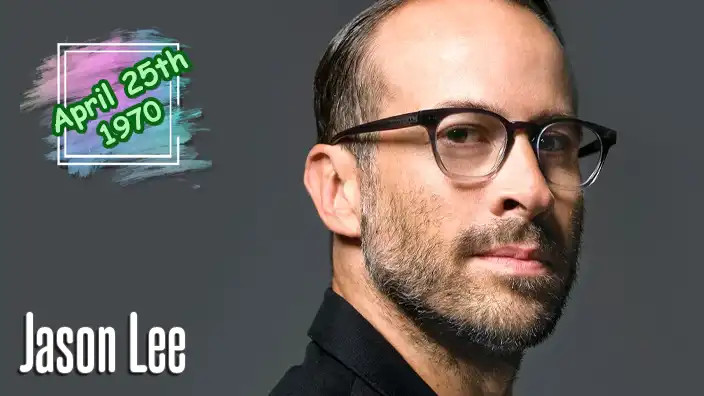
Jason Lee has one of those careers that makes you do a double take. “Wait… the guy from My Name Is Earl is also a former professional skateboarder?” Yes. Yes, he is. And somehow that’s not even the most interesting thing about him.
April 25, 1970, in Orange, California
Trivia
- Jason Lee was a professional skateboarder before becoming an actor.
- He co-founded Stereo Skateboards.
- He frequently collaborated with director Kevin Smith.
- He won an Independent Spirit Award for Chasing Amy.
- He starred in My Name Is Earl, earning a Golden Globe nomination.
- He voiced Alvin in the Alvin and the Chipmunks films.
- He later pursued photography as a serious interest.
- He appeared in Almost Famous as a rock band frontman.

- Details
- Category: Celebrity Birthdays - April
Every now and then Hollywood produces someone who can do just about everything—write, direct, produce, and occasionally make audiences laugh, cry, and think all within the same two hours. Barry Levinson is one of those rare individuals. Over the course of several decades, he has directed everything from heartfelt dramas to political satires, often bringing a sharp eye for human behavior along with a bit of wit. If a movie leaves you entertained but also makes you quietly reflect on life while the credits roll, there’s a decent chance Barry Levinson had something to do with it.
April 6, 1942, in Baltimore, Maryland
Trivia
- Originally studied journalism in college
- Started career writing television comedy
- Writing partner with Valerie Curtin
- Oscar-nominated for ...And Justice for All
- Directed his first film Diner in 1982
- Known for several films set in Baltimore
- Won Oscar for directing Rain Man
- Rain Man won four Academy Awards
- Directed baseball film The Natural
- Directed political satire Wag the Dog

- Details
- Category: Celebrity Birthdays - April
Hollywood has two types of actors: the ones who look like they might sell you insurance, and the ones who look like they could chase bad guys through a warehouse, crash through a window, and still have time to deliver a one-liner before the next commercial break. Johnny Messner firmly belongs in the second category. With a tough-guy screen presence and the kind of face that casting directors love to put in action movies, Messner has spent years portraying soldiers, detectives, and men who clearly skipped leg day only because they were too busy saving the day.
April 11, 1970, in Syracuse, New York
Trivia
- His father served in the U.S. Air Force, and Messner spent part of his childhood living in Europe.
- He attended San Diego State University.
- Messner starred in the Fox television series Killer Instinct as Detective Jack Hale.
- He appeared in the action film Anacondas: The Hunt for the Blood Orchid (2004).
- Messner also had roles in Tears of the Sun (2003) and Running Scared (2006).
- He has made guest appearances in numerous TV shows including CSI: Miami, NCIS: Los Angeles, and Criminal Minds.
- He is known for playing military and law-enforcement characters in action dramas.

- Details
- Category: Celebrity Birthdays - April
If the early 1960s had a soundtrack for first crushes, slow dances, and nervous teenagers trying to look cool, Bobby Vee was right there in the middle of it—probably with better hair than everyone else. He didn’t shout, he didn’t swagger, and he didn’t need to. He just sang the kind of songs that stuck in your head and, more importantly, stuck with you.
April 30, 1943, in Fargo, North Dakota
October 24, 2016, in Rogers, Minnesota
Trivia
- Got his start by filling in at a concert after the 1959 plane crash.
- First major hit was Devil or Angel (1960).
- Scored a number-one hit with Take Good Care of My Baby.
- Worked with songwriting legends Carole King and Gerry Goffin.
- Early band member included a young Bob Dylan.
- Had 38 songs chart on the Billboard Hot 100.
- Maintained a long touring career beyond his peak chart years.
- Known for his clean-cut image during the teen idol era.
- Inducted into the Rockabilly Hall of Fame.
- Details
- Category: Celebrity Birthdays - April
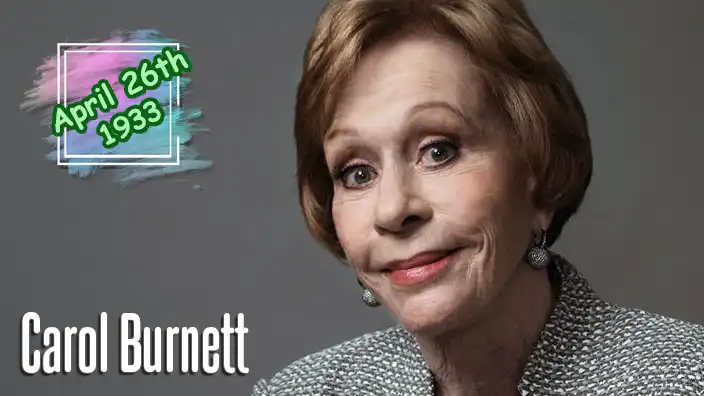
If laughter had a ringleader, it might just be Carol Burnett—armed with a smile, a perfectly timed pause, and the kind of comedic instinct you simply can’t teach. She didn’t just make people laugh; she made entire audiences fall apart, sometimes right along with her cast. And if you’ve ever seen someone try (and fail) to keep a straight face during one of her sketches, you know exactly how powerful that is. Carol Burnett didn’t just break character—she made it part of the show.
April 26, 1933, in San Antonio, Texas
Trivia
- She studied theater at UCLA before pursuing acting full-time.
- Her breakthrough role was in the Broadway show Once Upon a Mattress.
- She starred in The Carol Burnett Show for 11 seasons.
- She was known for breaking character during sketches, often making scenes funnier.
- Her ear tug at the end of each show was a message to her grandmother.
- She has won multiple Emmy Awards and a Golden Globe.
- She received the Presidential Medal of Freedom for her contributions to entertainment.

- Details
- Category: Celebrity Birthdays - April
Some performers start their careers in garages with a guitar and a dream. Jesse McCartney started his in front of television cameras before he was old enough to drive. Over the years he has worn several hats—pop singer, television actor, voice actor, and songwriter—and he’s managed to rack up hit songs, memorable TV roles, and even a few Disney connections along the way. If you grew up in the early 2000s, chances are there was a moment when one of his songs was stuck in your head… whether you planned it that way or not.
April 9, 1987, in Ardsley, New York
Trivia
- Began performing in community theater as a child.
- Early member of the boy band Dream Street.
- Played J.R. Chandler Jr. on All My Children.
- Starred in the TV drama Summerland.
- Debut album: Beautiful Soul (2004).
- Hit song: “Beautiful Soul.”
- Co-wrote the global hit “Bleeding Love” for Leona Lewis.
- Voice of Theodore in the Alvin and the Chipmunks films.
- Voices Roxas and Ventus in the Kingdom Hearts video games.

- Details
- Category: Celebrity Birthdays - April
Robbie Amell has one of those careers where you look at his résumé and think, “Wait… he’s been in everything?” One minute he’s a charming love interest, the next he’s dealing with futuristic chaos, and somewhere in between he’s probably outrunning explosions without even messing up his hair. If Hollywood ever needs someone who can convincingly save the day and still make it to dinner on time, Robbie Amell is already halfway there.
April 21, 1988, in Toronto, Canada
Trivia
- Cousin of actor Stephen Amell
- Began acting in commercials as a teenager
- Appeared in The Flash as Firestorm
- Starred in The DUFF
- Co-starred with Stephen Amell in Code 8
- Plays Nathan Brown in Upload
- Married actress Italia Ricci in 2016
- Known for roles in both comedy and sci-fi genres

- Details
- Category: Celebrity Birthdays - April
Some filmmakers make movies. Francis Ford Coppola builds entire cinematic empires. When he sits in the director’s chair, audiences know they’re about to witness something big—powerful stories, unforgettable characters, and the occasional scene that ends up studied in film schools for the next fifty years. Coppola has spent decades proving that movies can be art, spectacle, and storytelling brilliance all at once. And if there’s a family dinner in the Coppola household, chances are half the guests have won an Oscar.
April 7, 1939, in Detroit, Michigan
Trivia
- Coppola directed The Godfather (1972) and The Godfather Part II (1974).
- The Godfather Part II won six Academy Awards, including Best Director.
- He also directed the Vietnam War epic Apocalypse Now (1979).
- Coppola founded the film production company American Zoetrope.
- His daughter Sofia Coppola is an Oscar-winning filmmaker.
- Actor Nicolas Cage is Coppola’s nephew.
- Coppola has won five Academy Awards during his career.
- In addition to filmmaking, he owns several wineries in California and Italy.

- Details
- Category: Celebrity Birthdays - April
If history had a “no half-measures” award, Vladimir Lenin would have taken it, polished it, and reorganized the entire awards committee into a centralized authority. While most people argue politics over dinner, Lenin skipped straight to rewriting the system, toppling an empire, and accidentally inspiring a few decades of global tension along the way. Not exactly your average April birthday.
April 22, 1870, in Simbirsk, Russia
January 21, 1924, in Gorki Leninskie, Russia
Trivia
- Finished first in his class in school—clearly overachieving from the start.
- His brother’s execution pushed him toward revolutionary politics.
- Expelled from university for political activism.
- Spent years in exile in Siberia but kept organizing movements anyway.
- Led the Bolsheviks during the 1917 October Revolution.
- Became the first leader of the Soviet state.
- Helped develop Marxism-Leninism, a major 20th-century political ideology.
- Died at age 53 after multiple strokes.
- His embalmed body is still displayed in Moscow.
- Details
- Category: Celebrity Birthdays - April
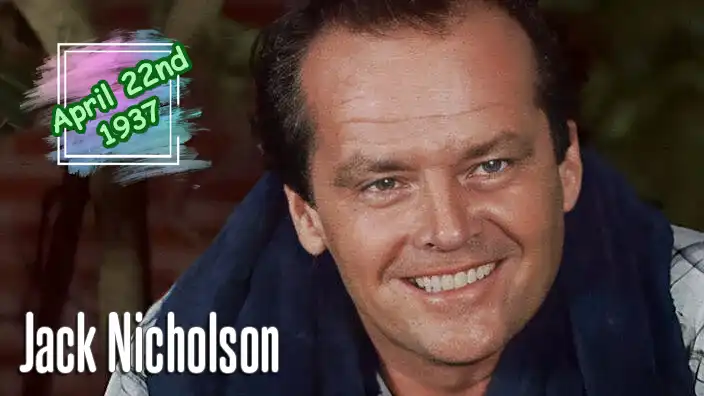
Some actors walk onto the screen. Jack Nicholson strolls in like he already owns the place—and frankly, you start to believe he might. That grin, those sunglasses, that voice that sounds like it knows more than it’s telling… Nicholson didn’t just play characters, he inhabited them with a kind of unpredictable electricity that kept audiences leaning forward. You never quite knew what he’d do next, and that was the whole point. Watching him is less like observing a performance and more like being let in on a secret you’re not entirely sure you should hear.
April 22, 1937, in Neptune City, New Jersey
Trivia
- Breakout role in Easy Rider (1969).
- Won three Academy Awards.
- Starred in The Shining and Chinatown.
- Played the Joker in Batman (1989).
- Known for portraying complex, rebellious characters.
- One of the most Oscar-nominated actors in history.
- Famous for his courtside seats at Los Angeles Lakers games.

- Details
- Category: Celebrity Birthdays - April
Michael Fassbender has the kind of intensity that suggests he could either deliver a Shakespeare monologue, dismantle a spaceship engine, or win a bar fight — and somehow make all three look like part of the same afternoon schedule. He doesn’t just enter a scene; he tightens it. You watch him the way you watch a storm rolling in — impressed, slightly nervous, and absolutely unable to look away.
April 2, 1977, in Heidelberg, West Germany
Trivia
- Raised in Killarney, Ireland
- Drama Centre London graduate
- Breakthrough film: Hunger (2008)
- Played Magneto in X-Men prequels
- Two-time Academy Award nominee
- Portrayed Steve Jobs (2015)
- Competed in 24 Hours of Le Mans

- Details
- Category: Celebrity Birthdays - April
Some actors play characters. Heath Ledger seemed to become them entirely. Whether he was a rebellious teenager, a quiet rancher, or the most unsettling comic-book villain ever put on screen, Ledger approached every role with fearless dedication—and audiences are still talking about the results.
April 4, 1979, in Perth, Western Australia
January 22, 2008, SoHo, New York
Trivia
- Won a junior chess championship at age ten.
- Moved to Sydney to pursue acting.
- Breakthrough role in 10 Things I Hate About You.
- Starred in A Knight's Tale (2001).
- Oscar-nominated for Brokeback Mountain.
- Played the Joker in The Dark Knight.
- Won a posthumous Academy Award.
- Directed several music videos.
- Details
- Category: Celebrity Birthdays - April
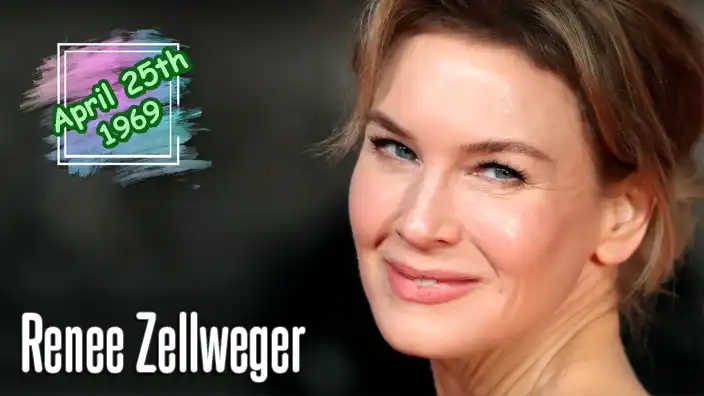
If awkward charm had a queen, Renée Zellweger would be sitting comfortably on the throne, probably holding a diary and wondering if she should have another glass of wine. She made being a lovable mess look so convincing that half the world started rooting for imperfection—and the other half started practicing a British accent in the mirror.
April 25, 1969, in Katy, Texas
Trivia
- Renée Zellweger learned a British accent for Bridget Jones’s Diary, fooling many viewers.
- She gained and later lost weight for the Bridget Jones role multiple times.
- She won an Oscar for Cold Mountain before winning Best Actress for Judy.
- She took a break from acting in the early 2010s before returning successfully.
- She worked undercover in a London publishing house to prepare for Bridget Jones.
- Her breakout role was in Jerry Maguire alongside Tom Cruise.
- She has Norwegian and Swiss heritage.
- She originally studied English literature before pursuing acting.

- Details
- Category: Celebrity Birthdays - April
James Garner had the rare talent of looking like he wasn’t trying very hard—while quietly stealing every scene he appeared in. With an easygoing charm, a dry sense of humor, and the kind of laid-back confidence that made audiences feel like they knew him personally, Garner became one of the most beloved actors in television and film. Whether he was outsmarting villains, charming co-stars, or delivering one of his famous understated one-liners, Garner made acting look effortless. Of course, behind that relaxed style was a professional who knew exactly what he was doing.
April 7, 1928, in Norman, Oklahoma
July 19, 2014, in Los Angeles, California
Trivia
- Garner served in the U.S. Army during the Korean War and received two Purple Hearts.
- He rose to fame playing Bret Maverick in the TV Western Maverick.
- Garner starred as Jim Rockford in The Rockford Files.
- He won an Emmy Award in 1977 for his role in The Rockford Files.
- Garner appeared in the classic war film The Great Escape (1963).
- He starred in the racing drama Grand Prix (1966).
- Garner played the older Noah in the romantic film The Notebook (2004).
- He received a Screen Actors Guild Lifetime Achievement Award in 2005.

- Details
- Category: Celebrity Birthdays - April
Hollywood spent decades perfecting dramatic entrances, dazzling wardrobes, and carefully engineered star personas — then Ali MacGraw arrived looking effortlessly natural and made everyone wonder why they’d been trying so hard. She didn’t just star in one of the most famous romance films ever made; she convinced an entire generation that true love required sincerity, good timing, and possibly a very stylish winter coat.
April 1, 1939, in Pound Ridge, New York
Trivia
- Rose to international fame starring in Love Story (1970).
- Received an Academy Award nomination for Love Story.
- Won a Golden Globe for Most Promising Newcomer.
- Previously worked as a fashion model and photo stylist.
- Worked at Harper’s Bazaar before becoming an actress.
- Starred opposite Steve McQueen in The Getaway (1972).
- Married Steve McQueen during the height of both careers.
- Became a 1970s fashion icon known for natural beauty and simple style.
From Our Marks Catelog
-
Sadie Hawkins Day is that rare annual event when the tables turn, and the thrill of the chase gets...
-

Pet Rocks are the ultimate low-maintenance pet—no feeding, no walking, no vet bills, and they...
-

The Merchant Navy is like the unsung hero of the high seas, quietly keeping the world...
-

Caribbean Americans bring a special kind of energy that’s hard to miss — the kind that says, “Yes, I work...
-

Logistics is like a high-stakes game of Tetris, but with trucks, ships, and planes instead of...
-
This is not just a 'weigh-in' for your New Year's resolutions, but a time when we collectively tip the...

