Celebrity Birthdays - April

April birthdays get all the flowers — and sometimes all the showers, too. They’ll tell you it builds character. We think it just builds frizz.
Let’s look at the famous faces who bring a little color to this in-between month. They’re the sunshine peeking through the rainclouds, reminding us that summer is just around the corner… probably.

- Details
- Category: Celebrity Birthdays - April
Some people ease into a career. Gigi Hadid practically strutted into hers—literally—at a pace that would make most people trip over their own shoelaces. With the kind of confidence that says, “Yes, I woke up like this… and yes, it took a team,” Gigi has become one of the most recognizable faces in fashion. She’s walked runways, graced magazine covers, and built a brand that blends high fashion with a down-to-earth charm. Not bad for someone who started out as a toddler model—most of us were still figuring out how to tie our shoes.
 April 23, 1995, in Los Angeles, California

Trivia
- Daughter of Mohamed Hadid and Yolanda Hadid.
- Began modeling at age 2 with Guess.
- Signed with IMG Models in 2013.
- Made New York Fashion Week debut in 2014.
- Walked for major brands like Chanel, Versace, and Balmain.
- Appeared on multiple international Vogue covers.
- Has Hashimoto’s disease, a thyroid condition.
- Welcomed her daughter in 2020.

- Details
- Category: Celebrity Birthdays - April
Jeffrey Dean Morgan looks like the kind of man who could either save your life, steal your motorcycle, or calmly lean against a doorway and make the whole scene better just by existing. He has one of those faces Hollywood loves: rugged, expressive, and just weathered enough to suggest he has seen things. Whether he is playing a grieving heart patient, a monster-fighting dad, a baseball-bat-wielding villain, or a man who seems suspiciously capable of surviving the apocalypse with a smirk, Morgan has built a career out of turning “supporting role” energy into “why is this guy stealing the whole show?” energy.
 April 22, 1966, in Seattle, Washington
Trivia
- Played John Winchester in Supernatural.
- Played Denny Duquette in Grey’s Anatomy.
- Played Negan in The Walking Dead.
- Starred as the Comedian in Watchmen.
- Appeared in P.S. I Love You.
- Voiced Conquest in Invincible.
- Hosted NBC’s Destination X.
- Married actress Hilarie Burton in 2019.

- Details
- Category: Celebrity Birthdays - April
Some actors become famous for playing superheroes, detectives, or action stars. Zach Braff became famous for playing a slightly confused doctor who spent a lot of time daydreaming and narrating his life like it was a quirky indie film. As it turns out, that was a perfect fit. Braff’s unique blend of humor, introspection, and awkward charm made him a standout in television and film. Whether he’s acting, directing, writing, or occasionally singing off-key for comedic effect, Zach Braff has built a career by doing things just a little differently than everyone else.
April 6, 1975, in South Orange, New Jersey
Trivia
- Studied theater at Northwestern University
- Attended Stagedoor Manor performing arts camp
- Played J.D. on the TV series Scrubs
- Emmy nominee for his role in Scrubs
- Wrote and directed the film Garden State
- Garden State soundtrack won a Grammy
- Directed multiple episodes of Scrubs
- Directed the film Wish I Was Here
- Co-hosts the podcast Fake Doctors, Real Friends

- Details
- Category: Celebrity Birthdays - April
Hollywood spent decades perfecting dramatic entrances, dazzling wardrobes, and carefully engineered star personas — then Ali MacGraw arrived looking effortlessly natural and made everyone wonder why they’d been trying so hard. She didn’t just star in one of the most famous romance films ever made; she convinced an entire generation that true love required sincerity, good timing, and possibly a very stylish winter coat.
April 1, 1939, in Pound Ridge, New York
Trivia
- Rose to international fame starring in Love Story (1970).
- Received an Academy Award nomination for Love Story.
- Won a Golden Globe for Most Promising Newcomer.
- Previously worked as a fashion model and photo stylist.
- Worked at Harper’s Bazaar before becoming an actress.
- Starred opposite Steve McQueen in The Getaway (1972).
- Married Steve McQueen during the height of both careers.
- Became a 1970s fashion icon known for natural beauty and simple style.

- Details
- Category: Celebrity Birthdays - April
Charlie Chaplin managed to build one of the most successful entertainment careers in history without saying much at all—something many modern comedians might consider a useful skill. Armed with nothing more than a cane, a funny walk, and the ability to look both hopeful and hopeless at the same time, Chaplin could make audiences laugh, cry, and occasionally wonder how someone could trip over the same pair of oversized shoes quite so gracefully.
April 16, 1889, in London, England
 December 25, 1977, Corsier-sur-Vevey, Switzerland
Trivia
- Created the iconic character known as “The Tramp.”
- Began his film career at Keystone Studios in 1914.
- Co-founded United Artists in 1919.
- Starred in classic films like The Kid, City Lights, and Modern Times.
- Directed and starred in the political satire The Great Dictator.
- Was also a composer who wrote music for many of his films.
- Received an honorary Academy Award in 1972.
- One of the most influential figures in film history.
- Known worldwide for silent film comedy.

- Details
- Category: Celebrity Birthdays - April
If Hollywood had a “cool without trying too hard” category, Perry King would’ve quietly won it sometime in the late ’70s and never bothered to mention it again. He’s the kind of actor who didn’t chase the spotlight—it just kept finding him anyway. Give him a leather jacket, a helicopter, or a serious drama, and he’d handle all three like it was just another Tuesday.
April 30, 1948, in Alliance, Ohio
Trivia
- Studied theater at Yale University.
- Early film role in Slaughterhouse-Five (1972).
- Starred as Cody Allen in Riptide during the 1980s.
- Appeared in the influential TV film The Day After.
- Worked extensively in both television and film.
- Known for a calm, understated acting style.
- Has experience as a director and producer.
- Maintained a long, steady career without major breaks.

- Details
- Category: Celebrity Birthdays - April
Roselyn Sánchez has the rare ability to walk into a scene and make it look effortless, which is the acting equivalent of someone casually juggling flaming torches while insisting it’s “no big deal.” She brings elegance, humor, and just enough confidence to suggest she probably knows how the story ends before the script does. And if the camera lingers a little longer than usual, well… nobody seems to complain.
April 2, 1973, in San Juan, Puerto Rico
Trivia
- Studied marketing at University of Puerto Rico
- Breakout role: Without a Trace
- Starred in Devious Maids
- Appeared in Rush Hour 2
- Singer and songwriter
- Producer of TV projects

- Details
- Category: Celebrity Birthdays - April
If there were a competition for “Most Likely to Turn a Reality Show Win into a Full-Blown Empire,” Kelly Clarkson wouldn’t just win—she’d host the show, perform the finale, and probably write the theme song on her lunch break. With a voice that can shake rafters and a personality that feels like your funniest, most honest friend, Clarkson has gone from small-town Texas to one of the most recognizable and respected entertainers in the business.
April 24, 1982, in Fort Worth, Texas
Trivia
- Won the first season of American Idol in 2002.
- Debut single A Moment Like This hit #1 on Billboard Hot 100.
- Album Breakaway sold millions worldwide.
- Known for hit Since U Been Gone.
- Served as a coach on The Voice.
- Hosts The Kelly Clarkson Show.
- Multiple Grammy Award winner.
- Known for her “Kellyoke” song covers.

- Details
- Category: Celebrity Birthdays - April
Glen Campbell didn’t just sing about Wichita linemen and Galveston dreams—he made you believe you were standing right there with him, probably holding a coffee you forgot to drink because you were too busy listening. He had that rare combination of technical brilliance and easy charm, the kind that makes people say, “Sure, he’s one of the greatest guitarists ever,” and then immediately forget the “ever” part because it somehow sounds too small. Whether he was behind the scenes as a session player or front and center with a hit song, Campbell made everything sound smoother than a freshly paved country road at sunset.
April 22, 1936, in Delight, Arkansas
August 8, 2017, in Nashville, Tennessee.
Trivia
- One of 12 children.
- Member of The Wrecking Crew session musicians.
- Played guitar on numerous 1960s hit records.
- Filled in for Brian Wilson, touring with The Beach Boys.
- Hits include “Wichita Lineman” and “Rhinestone Cowboy.”
- Hosted The Glen Campbell Goodtime Hour (1969–1972).
- Acted in True Grit with John Wayne.
- Won multiple Grammy Awards.
- Diagnosed with Alzheimer’s disease in 2011.

- Details
- Category: Celebrity Birthdays - April
Some actors glide into a role. Others wrestle it to the ground, shake its hand, and then invite it over for dinner. Jack Klugman was the latter. With a face that looked like it had seen a few things—and a voice that sounded like it had opinions about all of them—he made a career out of being the guy you trusted, argued with, and rooted for all at once. If Hollywood ever needed a believable human being, they called Jack.
April 27, 1922, in Philadelphia, Pennsylvania
December 24, 2012, in Los Angeles, California
Trivia
- He won two Primetime Emmy Awards for The Odd Couple.
- He played Juror #5 in the classic film 12 Angry Men (1957).
- He starred as Dr. Quincy in Quincy, M.E., helping pioneer socially conscious TV storytelling.
- He served in the U.S. Army during World War II.
- He battled throat cancer but continued acting afterward.
- He was known for portraying relatable, working-class characters.

- Details
- Category: Celebrity Birthdays - April
Some actors fade with time. Others age gracefully. And then there is Paul Rudd, who appears to have struck a secret bargain with the universe to remain perpetually thirty-nine. Whether he’s playing a sarcastic best friend, a lovable goofball, or a Marvel superhero who can shrink to the size of a Tic Tac, Rudd has spent decades charming audiences with his easy humor, quick wit, and uncanny ability to look exactly the same year after year. In a career filled with cult classics, blockbuster hits, and scene-stealing TV appearances, Paul Rudd has quietly become one of Hollywood’s most reliable—and likable—leading men.
April 6, 1969, in Passaic, NJ
Trivia
- Studied at University of Kansas
- Breakout film: Clueless
- Played Mike on Friends
- Marvel’s Ant-Man
- Co-wrote Ant-Man and the Wasp
- Named “Sexiest Man Alive” 2021
- Married Julie Yaeger

- Details
- Category: Celebrity Birthdays - April
Some actors chase the spotlight. Clint Howard just strolls into a scene, delivers something unforgettable, and leaves you thinking, “Wait… where do I know that guy from?” The answer, more often than not, is: everywhere. Clint Howard isn’t your typical leading man—and that’s exactly why he’s lasted as long as he has. In Hollywood, being memorable beats being conventional every single time.
April 20, 1959, in Burbank, California
Trivia
- Younger brother of director Ron Howard.
- Began acting as a child in Gentle Ben.
- Appeared in Star Trek as the character Balok.
- Has over 200 film and television credits.
- Frequently collaborates with his brother Ron Howard.
- Known for roles in Apollo 13 and numerous cult films.
- Often cast in quirky or offbeat character roles.
- Built a steady, decades-long acting career.
- Recognized as one of Hollywood’s most prolific character actors.

- Details
- Category: Celebrity Birthdays - April
Some actors play detectives. Kelli Giddish has spent so much time chasing criminals on television that you start to wonder if she secretly carries a badge when the cameras stop rolling. With a sharp Southern accent, a determined stare, and the kind of screen presence that says “you’re not getting away with this,” Giddish became one of the most recognizable faces on television’s longest-running crime dramas. Whether she’s interrogating suspects or standing shoulder-to-shoulder with the toughest detectives in New York, she has built a career proving that strong characters and strong performances make for great television.
April 13, 1980, in Cumming, Georgia
Trivia
- She studied theater at the University of Evansville.
- Her early television role was Diana “Di” Henry on All My Children.
- She starred in the 2010 crime drama Chase as U.S. Marshal Annie Frost.
- Giddish joined Law & Order: Special Victims Unit in 2011.
- Her character, Detective Amanda Rollins, became a fan favorite.
- She appeared in over a decade of SVU episodes.
- Giddish has also guest-starred in The Good Wife and Chicago Fire.
- She is originally from Georgia but built her career in New York television production.

- Details
- Category: Celebrity Birthdays - April
Some actors raise their voice to command a scene. Giancarlo Esposito lowers his—and suddenly everyone’s paying attention. With a calm stare that could make a room go silent and a delivery so controlled it feels almost surgical, he’s mastered the art of being quietly intimidating. Whether he’s running a fast-food empire or commanding a galaxy-spanning operation, one thing is certain: if Giancarlo Esposito is smiling, you might want to double-check your exit strategy.
April 26, 1958, in Copenhagen, Denmark
Trivia
- He began acting on Broadway at a young age.
- He worked with Spike Lee in Do the Right Thing.
- He is best known for playing Gus Fring in Breaking Bad.
- He also portrayed Moff Gideon in The Mandalorian.
- His acting style is known for its calm, controlled intensity.
- He has worked in film, television, theater, and voice acting.
- He received critical acclaim and award nominations for his role as Gus Fring.

- Details
- Category: Celebrity Birthdays - April
If there were a class called “How to accidentally become an international pop star,” Sheena Easton would be the professor. One minute she’s a student teacher in Scotland, the next she’s topping charts, winning Grammys, and singing a James Bond theme like she’s been doing it her whole life. Not bad for someone who probably just expected to grade homework and go home at a reasonable hour.
April 27, 1959, in Bellshill, Scotland
Trivia
- She won the Grammy Award for Best New Artist in 1981.
- She is the only Bond theme singer to appear in the film’s opening sequence.
- Her hit “Morning Train (Nine to Five)” reached No. 1 on the Billboard Hot 100.
- She collaborated with Prince on “U Got the Look.”
- She began her career as a student teacher before fame.
- Her career spans multiple genres, including pop, R&B, and dance.

- Details
- Category: Celebrity Birthdays - April
Some actors spend years climbing the Hollywood ladder. Maisie Williams started her climb by picking up a sword and declaring that she was not someone to be messed with. As Arya Stark in Game of Thrones, she went from a scrappy kid with a list of enemies to one of the most memorable characters in modern television. Somewhere along the way, she also proved that being young doesn’t mean you can’t dominate the screen, outsmart villains, and occasionally save the world—preferably while delivering a perfectly timed stare that says, “You really picked the wrong person to annoy.”
April 15, 1997, in Bristol, England
Trivia
- Trained in dance before becoming an actress
- Best known for playing Arya Stark in Game of Thrones
- Appeared in all eight seasons of the series (2011–2019)
- Received Emmy nominations for her role as Arya Stark
- Starred in the film The Falling (2014)
- Played Rahne Sinclair in the Marvel film The New Mutants (2020)
- Co-founded a digital platform supporting creative talent
- Known for performing many of her own action scenes in Game of Thrones

- Details
- Category: Celebrity Birthdays - April
Every movie and TV show needs that actor who walks on screen and instantly makes the world feel believable — the doctor who actually looks like they finished medical school or the lawyer who seems capable of winning the case before lunch. Amelia Brantley has built a career playing exactly those kinds of roles, proving that Hollywood doesn’t just run on stars; it runs on talented professionals quietly making everything work.
April 1, 1987, in Glenwood Springs, Colorado
Trivia
- Appeared in The Lincoln Lawyer.
- Guest roles in The Young and the Restless.
- Appeared on Animal Kingdom.
- Acted in horror film Krampus Unleashed.
- Holds a BFA in Acting.
- Trained in stage combat and dialects.
- Singer and pianist.
- Directed feature film Monkey Bread.
- Details
- Category: Celebrity Birthdays - April
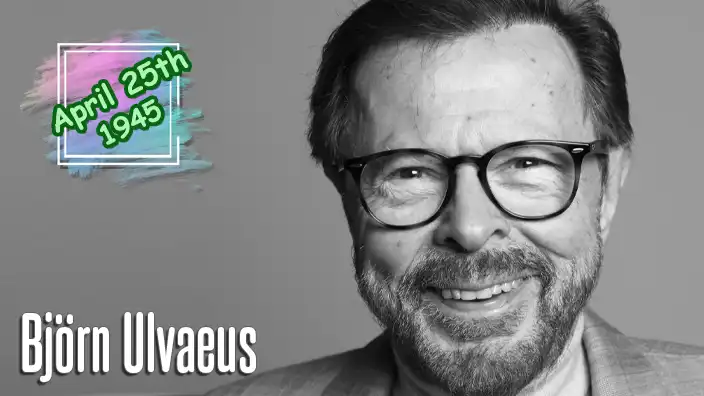
If catchy melodies were currency, Björn Ulvaeus would have bought a small country by the late 1970s. The man helped write songs so memorable that even people who claim they don’t like ABBA somehow know every word. Go ahead—deny it. I’ll wait while “Dancing Queen” mysteriously starts playing in your head.
April 25, 1945, in Gothenburg, Sweden
Trivia
- Björn Ulvaeus co-wrote nearly all of ABBA’s biggest hits.
- He was part of the Hootenanny Singers before ABBA.
- ABBA won the Eurovision Song Contest in 1974 with “Waterloo.”
- He later co-created the hit musical Mamma Mia!.
- He has been involved in innovative concert technology like ABBA Voyage.
- Ulvaeus has been a strong advocate for musicians’ rights in the digital age.
- He and Benny Andersson are considered one of the most successful songwriting duos in pop history.
- ABBA’s music has sold hundreds of millions of records worldwide.

- Details
- Category: Celebrity Birthdays - April
Kareem Abdul-Jabbar’s skyhook was so reliable that opposing defenders probably considered filing a formal complaint with the laws of physics. Imagine trying to block a shot released by a seven-foot-two basketball legend whose arm seems to extend halfway to the rafters. Opponents jumped, stretched, and occasionally prayed, but the result was usually the same: two points for Kareem and another defender wondering if he’d accidentally signed up for the wrong sport.
April 16, 1947, in New York City
Trivia
- Originally named Ferdinand Lewis Alcindor Jr.
- Played college basketball at UCLA under John Wooden.
- Won three NCAA championships with UCLA.
- Selected first overall in the 1969 NBA Draft by the Milwaukee Bucks.
- Helped lead the Bucks to an NBA championship in 1971.
- Won six NBA championships during his career.
- Famous for the nearly unstoppable “skyhook” shot.
- Played a memorable cameo role in the comedy Airplane!
- Known today as an author, historian, and cultural commentator.
- Details
- Category: Celebrity Birthdays - April
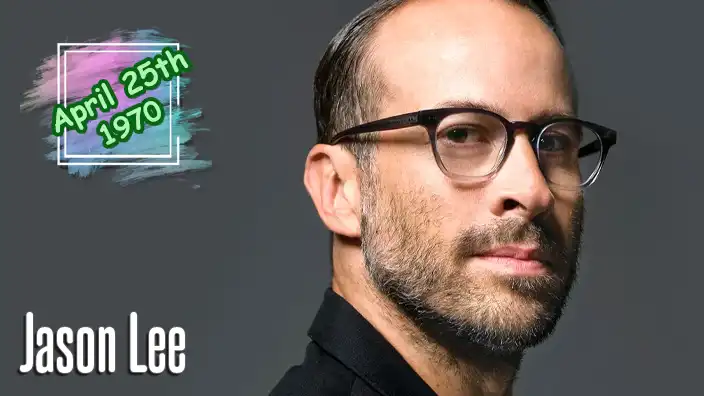
Jason Lee has one of those careers that makes you do a double take. “Wait… the guy from My Name Is Earl is also a former professional skateboarder?” Yes. Yes, he is. And somehow that’s not even the most interesting thing about him.
April 25, 1970, in Orange, California
Trivia
- Jason Lee was a professional skateboarder before becoming an actor.
- He co-founded Stereo Skateboards.
- He frequently collaborated with director Kevin Smith.
- He won an Independent Spirit Award for Chasing Amy.
- He starred in My Name Is Earl, earning a Golden Globe nomination.
- He voiced Alvin in the Alvin and the Chipmunks films.
- He later pursued photography as a serious interest.
- He appeared in Almost Famous as a rock band frontman.

- Details
- Category: Celebrity Birthdays - April
Phoebe Dynevor managed to accomplish something rather impressive: she became internationally famous while wearing elaborate Regency-era dresses, speaking in perfectly polite 19th-century dialogue, and navigating ballroom drama that could make modern reality television look tame. With the massive success of Bridgerton, Dynevor suddenly found herself recognized around the world. Fortunately, she handled the attention with the same calm grace one might expect from someone who just survived several seasons of high-society gossip and matchmaking.
April 17, 1995, in Manchester, England
Trivia
- She made her television debut in Waterloo Road at age fourteen.
- Dynevor starred in the BBC drama Prisoners’ Wives.
- She appeared in the historical series Dickensian.
- She played Daphne Bridgerton in the Netflix hit series Bridgerton.
- The first season of Bridgerton became one of Netflix’s most watched shows.
- She portrayed ceramic artist Clarice Cliff in the film The Colour Room.
- Dynevor has worked in both British and American television productions.
- Her breakout role in Bridgerton brought her worldwide recognition.
From Our Marks Catelog
-

Soft, sweet, and often mistaken for the "plain" choice, these little treats are like the...
-

Every December, this creamy champion laces up its metaphorical sneakers and embarks on a...
-

Debunking is the fine art of politely (or not-so-politely) telling someone, “Actually…” before dropping a truth...
-
Squirrels are like the stand-up comedians of the animal world—always performing acrobatic feats that...
-
Cinco de Mayo: the one day of the year when Americans celebrate a Mexican military victory by...
-

Stephen Foster’s legacy might seem like a serious matter, but let’s not forget the lighter side of his...

