Celebrity Birthdays - April

April birthdays get all the flowers — and sometimes all the showers, too. They’ll tell you it builds character. We think it just builds frizz.
Let’s look at the famous faces who bring a little color to this in-between month. They’re the sunshine peeking through the rainclouds, reminding us that summer is just around the corner… probably.

- Details
- Category: Celebrity Birthdays - April
If you ever watched a kids’ movie and thought, “That kid’s going places,” there’s a good chance Aleisha Allen was the one proving you right. She had that rare combination even back then—natural timing, expressive reactions, and the ability to hold her own alongside big personalities without getting lost in the shuffle. While some child actors fade into the background, Allen built a steady path forward, trading early fame for something far more valuable: a grounded, thoughtful career that grew up right along with her.
 April 28, 1991, in New York City

Trivia
- Started modeling in print and TV ads at age four
- Appeared on Out of the Box
- Did voice work on Blue’s Clues
- Played Alicia in School of Rock
- Played Lindsey in Are We There Yet?
- Returned as Lindsey in Are We Done Yet?
- Part of the School of Rock young ensemble
- Earned a Young Artist Award nomination with her castmates

- Details
- Category: Celebrity Birthdays - April
If laughter had a horsepower rating, Eddie Murphy’s career would probably require a commercial driver’s license. From explosive stand-up routines to blockbuster comedies and surprisingly heartfelt performances, Murphy has spent decades proving that a well-timed joke can carry an entire movie — and sometimes an entire generation of fans along with it. Whether he’s playing a street-smart detective, a fast-talking donkey, or half the population of a fictional family thanks to clever makeup, Eddie Murphy has made a career out of doing the impossible: making people laugh until they forget what they were laughing about in the first place.
 April 3, 1961, in Brooklyn, New York
Trivia
- Joined Saturday Night Live at age 19.
- Starred in the hit film Beverly Hills Cop (1984).
- Played multiple characters in Coming to America.
- Famous stand-up specials: Delirious and Raw.
- Voiced Donkey in the Shrek film series.
- Received an Academy Award nomination for Dreamgirls.
- Recorded the hit song Party All the Time in 1985.

- Details
- Category: Celebrity Birthdays - April
Jennifer Esposito has one of those careers where you keep saying, “Oh yeah, she was great in that!”—and then realize “that” includes about a dozen completely different shows and movies. From crime dramas to comedies to mob films, she’s been quietly building a résumé that says, “I can do anything you’ve got… and I’ll probably make it look easy.”
April 11, 1973, in Brooklyn, New York
Trivia
- Breakout film role in Summer of Sam (1999).
- Starred in Spin City early in her TV career.
- Played Detective Jackie Curatola on Blue Bloods.
- Appeared as Special Agent Alexandra Quinn on NCIS.
- Diagnosed with celiac disease in 2009.
- Authored the book Jennifer’s Way about living gluten-free.
- Opened a gluten-free bakery in New York City.
- Directed and wrote the film Fresh Kills (2023).
- Known for strong roles in crime and drama series.

- Details
- Category: Celebrity Birthdays - April
In Hollywood, where dramatic entrances are practically a job requirement, Mackenzie Davis somehow built a career by calmly walking into complex roles, delivering excellent performances, and letting everyone else realize halfway through the movie that she’s quietly stealing every scene. No gimmicks, no chaos — just talent doing its job while the rest of us try to keep up.
April 1, 1987, in Vancouver, Canada
Trivia
- Studied English literature at McGill University.
- Trained at New York’s Neighborhood Playhouse.
- Starred in TV’s Halt and Catch Fire.
- Appeared in The Martian (2015).
- Played Grace in Terminator: Dark Fate.
- Featured in Blade Runner 2049.
- Known for science-fiction roles.
- Also excels in romantic comedies.

- Details
- Category: Celebrity Birthdays - April
If Hollywood had a “fastest rise without breaking a sweat” category, Ana de Armas would already have two trophies and be politely asking where to put the third. She went from learning English on the fly to stealing scenes from seasoned actors in just a few short years—which is the cinematic equivalent of showing up late to the race and still winning by a mile. Not bad for someone who started her journey on an island better known for beaches than blockbuster films.
April 30, 1988, in Havana, Cuba
Trivia
- Studied acting at Cuba’s National Theater School.
- Gained early fame in Spain’s TV series El Internado.
- Learned English after moving to Hollywood in her mid-20s.
- Breakout role came in Knives Out (2019).
- Earned an Academy Award nomination for Blonde (2022).
- Appeared in the sci-fi sequel Blade Runner 2049.
- Played a memorable CIA agent in No Time to Die.
- Holds both Cuban and Spanish citizenship.
- Transitioned seamlessly between drama, comedy, and action roles.

- Details
- Category: Celebrity Birthdays - April
If you’ve ever wondered what would happen if a Harvard-educated history major grew up to become a 6-foot-4 human cartoon character powered entirely by awkwardness, wit, and gravity-defying hair—well, congratulations, you’ve discovered Conan O’Brien. A man who made self-deprecation an art form, turned failure into fuel, and somehow convinced America that a string-dancing puppet and a talking dog could be peak entertainment, Conan didn’t just host late-night—he practically redefined it with a grin that said, “I can’t believe they’re letting me do this either.”
April 18, 1963, in Brookline, Massachusetts
Trivia
- He was president of the Harvard Lampoon twice—because once clearly wasn’t enough.
- He wrote for both Saturday Night Live and The Simpsons before becoming a host.
- His Late Night run lasted 16 years—the longest in the show’s history.
- His departure from The Tonight Show became one of the most talked-about TV controversies ever.
- He turned that setback into a successful live comedy tour.
- He launched a hit podcast, Conan O’Brien Needs a Friend, in 2018.
- He was named one of Time magazine’s 100 most influential people in 2010.
- He received the Mark Twain Prize for American Humor in 2025.

- Details
- Category: Celebrity Birthdays - April
If you’ve ever watched a crime show and thought, “Now that guy looks like he knows exactly what’s going on,” there’s a good chance you were looking at Paul Guilfoyle. He’s not the loudest presence in the room, and he doesn’t need to be. With a steady voice, a sharp look, and the kind of calm authority that makes everyone else straighten up a little, Guilfoyle built a career out of being the person you trust when things get complicated—and on television, things are always complicated.
April 28, 1949, in Boston, Massachusetts
Trivia
- Began his career in theater before moving to film and television
- Appeared in Three Men and a Baby (1987)
- Featured in L.A. Confidential (1997)
- Best known as Captain Jim Brass on CSI: Crime Scene Investigation
- Appeared in over 300 episodes of CSI
- Known for portraying authoritative and grounded characters
- Has a background in both stage and screen acting
- Comes from a politically active family in Boston

- Details
- Category: Celebrity Birthdays - April
Some people spend their childhood worrying about homework and chores. Emma Watson spent hers battling dark wizards, attending magical classes, and becoming one of the most recognizable young actresses in the world. Best known as the brilliant Hermione Granger in the Harry Potter films, Watson grew up in front of millions of moviegoers while somehow managing to stay remarkably grounded. Along the way she added university graduate, activist, fashion icon, and United Nations advocate to her résumé—which is not bad for someone who started out waving a wand and correcting her classmates’ homework.
April 15, 1990, in Paris, France
Trivia
- Raised in Oxfordshire, England.
- Cast as Hermione Granger at age nine.
- Appeared in all eight Harry Potter films (2001–2011).
- Graduated from Brown University with a degree in English literature in 2014.
- Starred as Belle in Disney’s Beauty and the Beast (2017).
- Appointed UN Women Goodwill Ambassador in 2014.
- Launched the global HeForShe gender equality campaign.
- Appeared in Greta Gerwig’s film Little Women (2019).
- Known for her advocacy for education and gender equality.

- Details
- Category: Celebrity Birthdays - April
If country music were a small town, Loretta Lynn would be the mayor, the town historian, and the one reminding everyone to behave themselves at the church picnic. Armed with a guitar, a sharp wit, and a voice that could cut through heartbreak like a hot knife through butter, Loretta Lynn turned real life into unforgettable songs. She didn’t just sing about love and loss; she sang about real women, real problems, and real life. And she did it with the confidence of someone who had already lived enough stories to fill three lifetimes before she even stepped onto a stage.
April 14, 1932, in Butcher Hollow, Kentucky
 October 4, 2022, in Hurricane Mills, Tennessee
Trivia
- She married Oliver “Doolittle” Lynn at age 15.
- Her signature song is “Coal Miner’s Daughter.”
- Loretta was inducted into the Country Music Hall of Fame in 1988.
- She won multiple Grammy Awards during her career.
- Her autobiography inspired the 1980 film Coal Miner’s Daughter.
- The controversial song “The Pill” discussed birth control.
- She received the Presidential Medal of Freedom in 2013.
- Loretta was a longtime member of the Grand Ole Opry.
- Her album Van Lear Rose was produced by Jack White.

- Details
- Category: Celebrity Birthdays - April
Willie Nelson has been on the road so long, there’s a good chance the road sends him postcards. With a guitar in hand and a song ready to go, he’s spent decades proving that you don’t need fancy production or a perfect voice—just a good story, a steady rhythm, and the kind of authenticity you can’t fake even if you tried.
April 29, 1933, in Abbott, Texas
Trivia
- Willie Nelson wrote his first song at age seven.
- He co-wrote “Crazy,” one of Patsy Cline’s biggest hits.
- He is a central figure in the outlaw country movement.
- His album Red Headed Stranger was a major breakthrough success.
- He is known for his distinctive voice and guitar playing style.
- His guitar is famously named “Trigger.”
- He co-founded Farm Aid in 1985.
- He has appeared in numerous films and television shows.
- He has won multiple Grammy Awards during his career.
- He has continued to tour and record music well into his later years.

- Details
- Category: Celebrity Birthdays - April
If Hollywood handed out awards for “effortlessly commanding a scene without raising your voice,” Jessica Lange would need a second trophy shelf. She doesn’t chew the scenery—she quietly owns it, rearranges the furniture, and leaves everyone else wondering how she made it look so easy. With a career spanning decades, multiple Academy Awards, and performances that stick with you long after the credits roll, Lange is the kind of actress who reminds you why acting is considered an art form in the first place.
April 20, 1949, in Cloquet, Minnesota
Trivia
- Won two Academy Awards: Tootsie (1982) and Blue Sky (1994).
- Made her film debut in King Kong (1976).
- Earned multiple Emmy Awards for American Horror Story.
- Known for portraying complex, emotionally rich characters.
- Had a long-term relationship with playwright Sam Shepard.
- Is an accomplished photographer with published works.
- Received numerous Golden Globe Awards throughout her career.
- Starred in Frances, earning critical acclaim early in her career.
- One of the few actresses to achieve success across multiple decades.

- Details
- Category: Celebrity Birthdays - April
Rob Riggle is living proof that you can serve your country, then turn around and roast it on live television—and somehow everyone thanks you for it. One minute he’s a U.S. Marine officer, the next he’s delivering perfectly timed jokes with that unmistakable grin that says, “I’ve thought about this insult all day.” If there’s a man who can go from military briefings to comedy bits without missing a beat, it’s Riggle.
April 21, 1970, in Louisville, Kentucky
Trivia
- Served in the U.S. Marine Corps and reached the rank of lieutenant colonel
- Performed with Saturday Night Live in 2004–2005
- Became well-known on The Daily Show
- Appeared in The Hangover
- Had a role in Step Brothers
- Featured in 21 Jump Street
- Known for sports commentary on Fox NFL Sunday
- Hosted Holey Moley

- Details
- Category: Celebrity Birthdays - April
Every movie and TV show needs that actor who walks on screen and instantly makes the world feel believable — the doctor who actually looks like they finished medical school or the lawyer who seems capable of winning the case before lunch. Amelia Brantley has built a career playing exactly those kinds of roles, proving that Hollywood doesn’t just run on stars; it runs on talented professionals quietly making everything work.
April 1, 1987, in Glenwood Springs, Colorado
Trivia
- Appeared in The Lincoln Lawyer.
- Guest roles in The Young and the Restless.
- Appeared on Animal Kingdom.
- Acted in horror film Krampus Unleashed.
- Holds a BFA in Acting.
- Trained in stage combat and dialects.
- Singer and pianist.
- Directed feature film Monkey Bread.

- Details
- Category: Celebrity Birthdays - April
Wilbur Wright helped invent the airplane at a time when most people thought flying was something birds handled exclusively. Imagine explaining to your neighbors in 1903 that you and your brother planned to build a flying machine in the bicycle shop. Today you’d be called an entrepreneur; back then you were probably called “those odd fellows down the street.” Fortunately for the rest of us—and for modern vacation travel—Wilbur ignored the doubters and kept tinkering until humans finally joined the birds in the sky.
April 16, 1867, in Millville, Indiana
May 30, 1912, in Dayton, Ohio
Trivia
- Older brother of aviation pioneer Orville Wright.
- Worked as a printer and bicycle mechanic before aviation experiments.
- Co-inventor of the first successful powered airplane.
- The Wright Flyer made its historic first flight in 1903.
- The brothers conducted extensive wind tunnel testing during development.
- Demonstrated airplanes to large audiences in Europe.
- Known for pioneering methods of aircraft control.
- Considered one of the founding figures of modern aviation.
- Details
- Category: Celebrity Birthdays - April
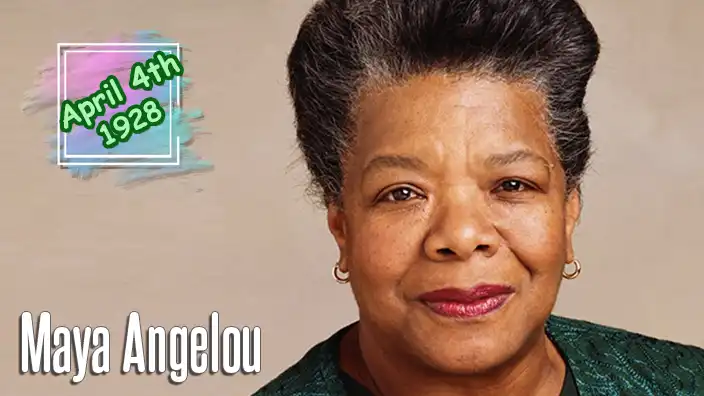
If wisdom had a voice, it might sound a lot like Maya Angelou. She could deliver a poem that made people cry, laugh, think, and stand up a little taller—all in the space of a few minutes. Writers dream of that kind of impact. Angelou simply called it telling the truth.
April 4, 1928, in St. Louis, Missouri
May 28, 2014, in Winston-Salem, North Carolina
Trivia
- Worked as a streetcar conductor in San Francisco.
- Released the album Miss Calypso in 1957.
- Civil rights activist in the 1960s.
- Close to Martin Luther King Jr.
- Close to Malcolm X.
- Published I Know Why the Caged Bird Sings in 1969.
- Recited poetry at Bill Clinton’s 1993 inauguration.
- Received the Presidential Medal of Freedom in 2011.
- Taught at Wake Forest University.
- Details
- Category: Celebrity Birthdays - April
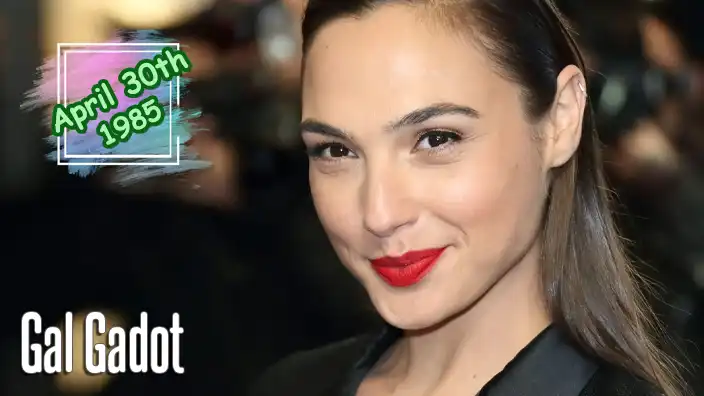
If superheroes had a “most likely to actually save the day” award, Gal Gadot would win it without breaking a sweat—and then politely offer to share the trophy. She’s the rare combination of grace, grit, and just enough quiet humor to make you think, “Yes, if the world’s in trouble, send her.” Of course, before Hollywood handed her a sword and a tiara, she’d already been a beauty queen, a soldier, and someone who clearly doesn’t skip leg day. Not bad for a résumé that started with, “Let’s just see where this acting thing goes.”
April 30, 1985, in Petah Tikva, Israel
Trivia
- Won Miss Israel in 2004 before entering acting.
- Served as a combat trainer in the Israel Defense Forces.
- Broke out internationally in the Fast & Furious franchise.
- First portrayed Wonder Woman in 2016.
- Named one of Time’s 100 most influential people in 2018.
- Ranked among the highest-paid actresses globally.
- Studied law and international relations before acting.Performed some of her own stunts in action films.
- Co-founded a production company with her husband.
- Became the first Israeli actor to receive a Hollywood Walk of Fame star (2025).

- Details
- Category: Celebrity Birthdays - April
Some people wake up and ease into their day. Sherri Shepherd wakes up like she’s already halfway through a conversation—and somehow you’re laughing before you even know what the topic is. Whether she’s hosting, acting, or telling it like it is (with zero filter and maximum charm), Sherri has built a career out of being exactly who she is… which turns out to be wildly entertaining.
April 22, 1967, in Chicago, Illinois
Trivia
- Started her career as a legal secretary before comedy.
- Gained early TV recognition on Less Than Perfect.
- Became a co-host on The View in 2007.
- Won a Daytime Emmy Award for her work on The View.
- Appeared in the film Precious.
- Starred in and hosted her own talk show, Sherri, starting in 2022.
- Known for her candid, relatable humor and storytelling style.
- Has spoken publicly about living with type 2 diabetes.
- Built a career blending comedy, acting, and television hosting.

- Details
- Category: Celebrity Birthdays - April
Selena Quintanilla had the rare ability to step onto a stage and instantly make it feel like a party that everyone was invited to. With dazzling outfits, infectious energy, and a smile that could probably power a small city, she made performing look effortless—even while singing, dancing, and keeping thousands of fans cheering along. If charisma were a musical instrument, Selena would have been playing it louder than the entire band.
April 16, 1971, in Lake Jackson, Texas
March 31, 1995, in Corpus Christi, Texas
Trivia
- Known as the “Queen of Tejano Music.”
- Performed in the family band Selena y Los Dinos.
- Won a Grammy Award in 1994 for Selena Live!.
- Her hit song “Como la Flor” became one of her signature tracks.
- Designed many of her own stage outfits.
- Opened boutique clothing stores in Texas.
- Her album Amor Prohibido became a major Latin music success.
- Her posthumous album Dreaming of You debuted at number one on Billboard.
- Her life inspired the 1997 biographical film, Selena.

- Details
- Category: Celebrity Birthdays - April
History has a habit of putting certain people in the spotlight while others—equally important—quietly hold the whole thing together behind the scenes. Coretta Scott King was not one of those people. She stood right in the spotlight, thank you very much, and made sure it stayed on long enough for the rest of the world to notice what needed fixing. Graceful, determined, and sharper than a tack, she proved that strength doesn’t always need to shout—but when it does speak, people listen.
April 27, 1927, in Heiberger, Alabama
January 30, 2006, in Rosarito, Mexico
Trivia
- She studied classical music at the New England Conservatory.
- She organized “Freedom Concerts” to support the civil rights movement.
- She founded The King Center in Atlanta.
- She played a key role in establishing Martin Luther King Jr. Day as a federal holiday.
- She was an advocate for peace, women’s rights, and LGBTQ+ equality.
- She continued leading civil rights efforts after her husband’s assassination.

- Details
- Category: Celebrity Birthdays - April
Some singers chase fame. Others accidentally trip over it while writing songs in their bedroom. Agnetha Fältskog falls into the second category. One moment she was a young Swedish musician writing tunes about love, and the next moment she was touring the world with ABBA while millions of fans attempted to sing along in Swedish accents. If pop music had a “golden voice” department, Agnetha would have been the manager, the employee of the month, and the person everyone else quietly tried to imitate.
April 5, 1950, in Jönköping, Sweden
Trivia
- Wrote her first song at age six.
- First hit single in Sweden: “Jag var så kär” (1968).
- Member of ABBA alongside Björn, Benny, and Frida.
- ABBA won Eurovision with “Waterloo” in 1974.
- Released solo album Wrap Your Arms Around Me in 1983.
- Known for a clear soprano voice.

- Details
- Category: Celebrity Birthdays - April
Tony Romo spent years dodging 300-pound defensive linemen, only to retire and start predicting their every move from a comfy chair. Somewhere out there, a linebacker is still trying to figure out how Romo knew exactly where he was going before he did. From undrafted long shot to Dallas Cowboys star to broadcasting wizard, Romo’s career proves that sometimes the best play is the one you call before anyone else even sees it coming.
April 21, 1980, in San Diego, California
Trivia
- Went undrafted in 2003 before becoming a franchise quarterback
- Played his entire NFL career with the Dallas Cowboys
- Selected to 4 Pro Bowls (2006, 2007, 2009, 2014)
- Led the NFL in passer rating and completion percentage in 2014
- Finished with 34,183 passing yards and 248 touchdowns
- Won the Walter Payton Award in college (2002)
- Known for extending plays and making off-script throws
- Retired in 2017 and immediately became a CBS analyst
- Famous for predicting plays live during broadcasts
- Has called multiple Super Bowls as a commentator
From Our Marks Catelog
-
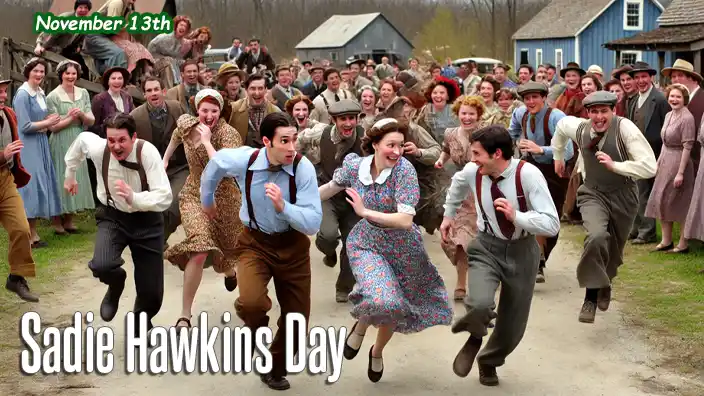
Sadie Hawkins Day is that rare annual event when the tables turn, and the thrill of the chase gets...
-

Pet Rocks are the ultimate low-maintenance pet—no feeding, no walking, no vet bills, and they...
-

The Merchant Navy is like the unsung hero of the high seas, quietly keeping the world...
-

Caribbean Americans bring a special kind of energy that’s hard to miss — the kind that says, “Yes, I work...
-

Logistics is like a high-stakes game of Tetris, but with trucks, ships, and planes instead of...
-
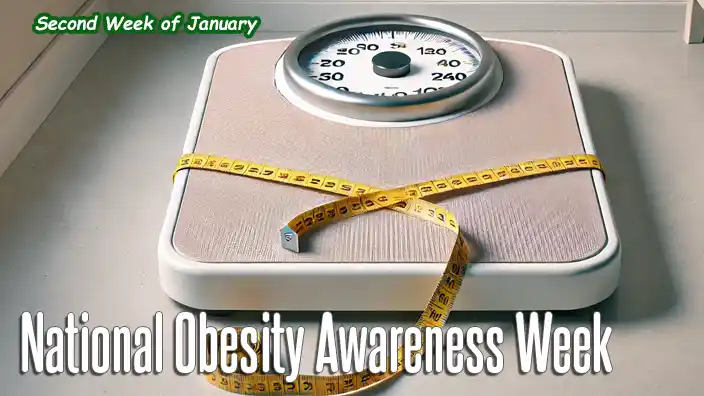
This is not just a 'weigh-in' for your New Year's resolutions, but a time when we collectively tip the...

