Celebrity Birthdays - April

April birthdays get all the flowers — and sometimes all the showers, too. They’ll tell you it builds character. We think it just builds frizz.
Let’s look at the famous faces who bring a little color to this in-between month. They’re the sunshine peeking through the rainclouds, reminding us that summer is just around the corner… probably.

- Details
- Category: Celebrity Birthdays - April
Tony Romo spent years dodging 300-pound defensive linemen, only to retire and start predicting their every move from a comfy chair. Somewhere out there, a linebacker is still trying to figure out how Romo knew exactly where he was going before he did. From undrafted long shot to Dallas Cowboys star to broadcasting wizard, Romo’s career proves that sometimes the best play is the one you call before anyone else even sees it coming.
 April 21, 1980, in San Diego, California

Trivia
- Went undrafted in 2003 before becoming a franchise quarterback
- Played his entire NFL career with the Dallas Cowboys
- Selected to 4 Pro Bowls (2006, 2007, 2009, 2014)
- Led the NFL in passer rating and completion percentage in 2014
- Finished with 34,183 passing yards and 248 touchdowns
- Won the Walter Payton Award in college (2002)
- Known for extending plays and making off-script throws
- Retired in 2017 and immediately became a CBS analyst
- Famous for predicting plays live during broadcasts
- Has called multiple Super Bowls as a commentator

- Details
- Category: Celebrity Birthdays - April
Some people ease into a career. Gigi Hadid practically strutted into hers—literally—at a pace that would make most people trip over their own shoelaces. With the kind of confidence that says, “Yes, I woke up like this… and yes, it took a team,” Gigi has become one of the most recognizable faces in fashion. She’s walked runways, graced magazine covers, and built a brand that blends high fashion with a down-to-earth charm. Not bad for someone who started out as a toddler model—most of us were still figuring out how to tie our shoes.
 April 23, 1995, in Los Angeles, California
Trivia
- Daughter of Mohamed Hadid and Yolanda Hadid.
- Began modeling at age 2 with Guess.
- Signed with IMG Models in 2013.
- Made New York Fashion Week debut in 2014.
- Walked for major brands like Chanel, Versace, and Balmain.
- Appeared on multiple international Vogue covers.
- Has Hashimoto’s disease, a thyroid condition.
- Welcomed her daughter in 2020.

- Details
- Category: Celebrity Birthdays - April
If Las Vegas had a mayor elected purely by applause, Wayne Newton might still be holding the office. Known affectionately as “Mr. Las Vegas,” Newton has spent decades dazzling audiences with a voice smooth enough to butter toast and a stage presence that suggests he might actually live behind the curtain between shows. While many performers come and go in the neon glow of the Strip, Wayne Newton turned performing there into a lifelong residence, proving that if you combine charm, stamina, and a few thousand performances, you can practically become part of the city’s skyline.
April 3, 1942, in Norfolk, Virginia
Trivia
- Famous hit song: “Danke Schoen.”
- Nicknamed “Mr. Las Vegas.”
- Began performing in Las Vegas as a teenager.
- Known for thousands of live performances on the Las Vegas Strip.
- Major hit: “Daddy, Don’t You Walk So Fast” (1972).
- Skilled pilot and aviation enthusiast.
- Former owner of the Casa de Shenandoah ranch.
- Famous for strong audience interaction during shows.

- Details
- Category: Celebrity Birthdays - April
If Hollywood had a “seen it all before turning 18” award, Kirsten Dunst would have it engraved, polished, and sitting on the mantel. She went from child vampire to superhero sweetheart to critically acclaimed actress without ever looking like she was trying too hard—which, in this business, is practically a superpower of its own. While others were figuring out algebra, she was working with legends and quietly building one of the most dependable careers in the industry.
April 30, 1982, in Point Pleasant, New Jersey
Trivia
- Earned a Golden Globe nomination at age 12 for Interview with the Vampire.
- Starred in Jumanji during its original 1990s run.
- Played Mary Jane Watson in the original Spider-Man trilogy.
- Won Best Actress at Cannes for Melancholia.
- Received an Academy Award nomination for The Power of the Dog.
- Frequent collaborator of director Sofia Coppola.
- Starred in Season 2 of Fargo, earning critical praise.
- Married actor Jesse Plemons, her co-star from Fargo.

- Details
- Category: Celebrity Birthdays - April
Uma Thurman has the rare ability to look completely calm while doing things the rest of us would need a nap just thinking about. Whether she’s dancing, acting, or taking on an entire army with a sword, she carries herself with the kind of confidence that makes you wonder if she’s ever had a bad day—or if she simply defeated it before breakfast.
April 29, 1970, in Boston, Massachusetts
Trivia
- Uma Thurman’s middle name, “Karuna,” means compassion in Sanskrit.
- She made her film debut in Kiss Daddy Goodnight (1987).
- Her breakout role came with Pulp Fiction (1994).
- She received an Academy Award nomination for her role as Mia Wallace.
- She performed many of her own stunts in the Kill Bill films.
- Her collaboration with Quentin Tarantino is one of the most celebrated actor-director partnerships.
- She has worked in drama, action, comedy, and science fiction films.
- She starred in Gattaca alongside Ethan Hawke, whom she later married.
- Her role as The Bride is considered one of the most iconic action performances in film history.
- She has maintained a relatively private personal life despite her fame.

- Details
- Category: Celebrity Birthdays - April
Some actors shout, some whisper, and some simply raise an eyebrow and somehow win an Emmy. Sterling K. Brown falls into that last category. Whether he’s delivering a heartfelt speech in This Is Us or portraying a conflicted character in a major film, he has the rare ability to make viewers forget they’re watching a scripted performance. Frankly, if emotional acting were an Olympic sport, Brown would already have several gold medals and a very crowded trophy shelf.
April 5, 1976, in St. Louis, Missouri
Trivia
- Graduated from Stanford University.
- Earned an MFA from NYU’s Tisch School of the Arts.
- Breakout role: Christopher Darden in American Crime Story.
- Emmy winner for The People v. O. J. Simpson.
- Starred as Randall Pearson in This Is Us.
- Won a Golden Globe for This Is Us.
- Appeared in Marvel’s Black Panther.

- Details
- Category: Celebrity Birthdays - April
If history had a “no half-measures” award, Vladimir Lenin would have taken it, polished it, and reorganized the entire awards committee into a centralized authority. While most people argue politics over dinner, Lenin skipped straight to rewriting the system, toppling an empire, and accidentally inspiring a few decades of global tension along the way. Not exactly your average April birthday.
April 22, 1870, in Simbirsk, Russia
 January 21, 1924, in Gorki Leninskie, Russia
Trivia
- Finished first in his class in school—clearly overachieving from the start.
- His brother’s execution pushed him toward revolutionary politics.
- Expelled from university for political activism.
- Spent years in exile in Siberia but kept organizing movements anyway.
- Led the Bolsheviks during the 1917 October Revolution.
- Became the first leader of the Soviet state.
- Helped develop Marxism-Leninism, a major 20th-century political ideology.
- Died at age 53 after multiple strokes.
- His embalmed body is still displayed in Moscow.
- Details
- Category: Celebrity Birthdays - April
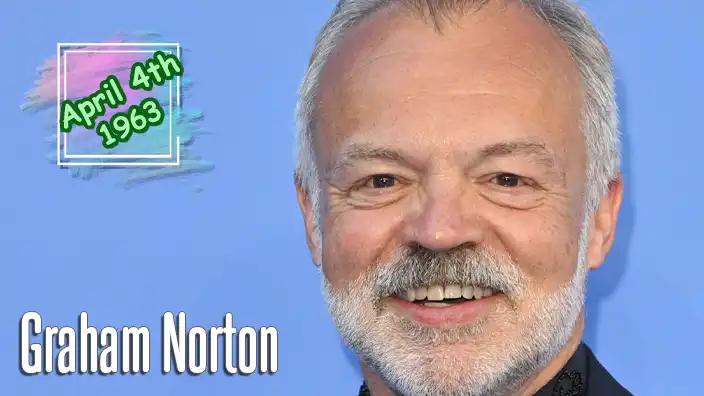
Some talk show hosts ask polite questions and nod thoughtfully. Graham Norton hands celebrities a glass of wine, invites them onto the red couch, and somehow gets them telling stories they probably didn’t plan to share. The result is television gold—and usually a few uncontrollable bursts of laughter.
April 4, 1963, in Clondalkin, Ireland
Trivia
- Studied at University College Cork.
- Trained at Central School of Speech and Drama.
- Hosted So Graham Norton.
- Hosts The Graham Norton Show.
- Presenter on BBC Radio 2.
- Eurovision Song Contest commentator.
- Author of the novel Holding.
- Multiple BAFTA Television Awards winner.

- Details
- Category: Celebrity Birthdays - April
Hollywood has plenty of actors who can shout dramatically while running away from explosions, but David Oyelowo built his reputation doing something far more difficult: standing still, speaking thoughtfully, and somehow making entire audiences lean forward and listen. When he shows up on screen, you don’t just watch — you pay attention, whether you planned to or not.
April 1, 1976, in Oxford, England
Trivia
- Trained at LAMDA in London.
- First Black actor to play an English king for the Royal Shakespeare Company.
- Starred as Martin Luther King Jr. in Selma (2014).
- Appeared in Lincoln (2012).
- Known for powerful speaking voice.
- Works as both actor and producer.
- Has performed extensively in Shakespeare plays.

- Details
- Category: Celebrity Birthdays - April
Some actors spend years trying to land a breakout role. Abigail Breslin managed to do it before she was old enough to drive a car. With her unforgettable performance as the determined, big-eyed Olive in Little Miss Sunshine, Breslin proved that sometimes the smallest person in the room delivers the biggest performance. Since then, she’s grown into a versatile actress who moves comfortably between comedy, drama, horror, and television—often bringing a mix of heart, humor, and just enough attitude to keep things interesting.
April 14, 1996, in New York City
Trivia
- She appeared in her first commercial at age three.
- Breslin starred in Signs (2002) with Mel Gibson.
- Her breakout role was Olive in Little Miss Sunshine.
- She received an Academy Award nomination at age ten.
- Breslin appeared in the horror-comedy Zombieland.
- She starred in the TV series Scream Queens.
- Breslin made her Broadway debut in Cat on a Hot Tin Roof.
- Her two brothers, Spencer and Ryan Breslin, are also actors.

- Details
- Category: Celebrity Birthdays - April
Some actors quietly build impressive careers over time, and then there’s Luke Evans, who seems perfectly comfortable leaping from action scenes to musical numbers without breaking a sweat—or even messing up his hair. Whether he’s playing a villain with dramatic flair, a heroic adventurer, or a Disney character who sings loudly enough to wake the village, Evans has built a career that proves one simple truth: a powerful voice and a commanding screen presence go a long way in Hollywood. And if the role requires swords, monsters, or a good dramatic cape, Evans usually looks like he brought his own.
April 15, 1979, in Pontypool, Wales
Trivia
- Raised in the village of Aberbargoed in South Wales.
- Studied musical theatre at the London Studio Centre.
- Began his career performing in London West End musicals.
- Played Bard the Bowman in The Hobbit film trilogy.
- Portrayed the villain Owen Shaw in Fast & Furious 6 (2013).
- Starred in the title role of Dracula Untold (2014).
- Played Gaston in Disney’s live-action Beauty and the Beast (2017).
- Released his debut music album At Last in 2019.
- Known for both his acting roles and his strong singing voice.

- Details
- Category: Celebrity Birthdays - April
Some actors build their careers by carefully choosing one type of role and sticking with it. Cobie Smulders apparently looked at that idea, smiled politely, and said, “Nah, let’s try everything.” She’s been a tough secret agent saving the world, a sarcastic news reporter navigating love and friendship, and a Marvel superhero who can hold her own in a room full of caped legends. In other words, she has managed to combine sharp comedic timing with action-movie credibility — a rare combination that makes audiences laugh one moment and believe she could probably commandeer a helicopter the next.
April 3, 1982, in Vancouver, Canada
Trivia
- Played Robin Scherbatsky on How I Met Your Mother.
- Portrayed Maria Hill in the Marvel Cinematic Universe.
- Appeared in The Avengers (2012).
- Initially wanted to become a marine biologist.
- Former international fashion model.
- Diagnosed with ovarian cancer at age 25 and later recovered.
- Married actor and comedian Taran Killam.
- Known for her distinctive dry comedic delivery.
From Our Marks Catelog
-

There's something magical about karaoke night. Maybe it's the way even the shyest person...
-
Most people spend their day trying to avoid falling out of things. Airborne soldiers spend weeks...
-

Hiking: it's like Mother Nature's version of a surprise workout. You start off thinking it's just a walk...
-
Some people think changing the world requires billions of dollars, a rocket ship, or at the very least a...
-
Money makes the world go round—or at least it gets the grocery shopping done. National Dollar Day...
-
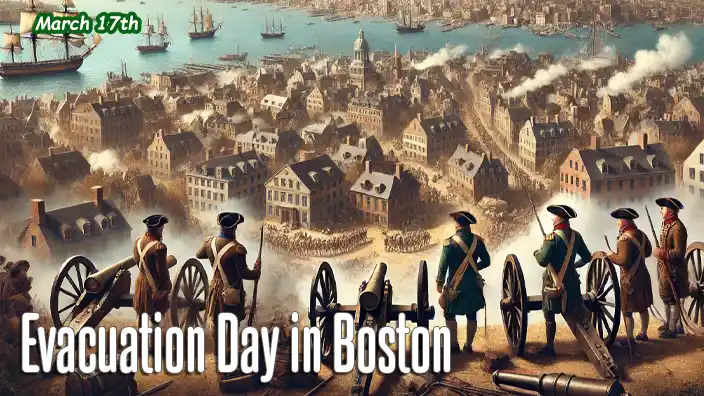
As the British fleet sailed out of Boston Harbor on March 17, 1776, the American revolutionaries...

