Celebrity Birthdays - April

April birthdays get all the flowers — and sometimes all the showers, too. They’ll tell you it builds character. We think it just builds frizz.
Let’s look at the famous faces who bring a little color to this in-between month. They’re the sunshine peeking through the rainclouds, reminding us that summer is just around the corner… probably.

- Details
- Category: Celebrity Birthdays - April
James Franco is the kind of guy who looks at a normal acting career and says, “Yes… but what if I also directed, wrote novels, taught classes, made experimental films, and casually collected degrees like they were coffee mugs?” One minute he’s a lovable slacker on a cult TV show, the next he’s hosting the Oscars or playing a trapped climber. Keeping up with him isn’t easy—but watching him try is half the fun.
 April 19, 1978, in Palo Alto, California

Trivia
- Breakout role in Freaks and Geeks (1999–2000).
- Won a Golden Globe for portraying James Dean (2001).
- Played Harry Osborn in the Spider-Man trilogy.
- Starred in 127 Hours (2010), earning an Oscar nomination.
- Frequent collaborator with Seth Rogen in comedy films.
- Directed and wrote multiple independent films.
- Attended several universities, including Columbia and NYU.
- Known for balancing mainstream and experimental projects.

- Details
- Category: Celebrity Birthdays - April
Some actors chase the spotlight. Clint Howard just strolls into a scene, delivers something unforgettable, and leaves you thinking, “Wait… where do I know that guy from?” The answer, more often than not, is: everywhere. Clint Howard isn’t your typical leading man—and that’s exactly why he’s lasted as long as he has. In Hollywood, being memorable beats being conventional every single time.
April 20, 1959, in Burbank, California
Trivia
- Younger brother of director Ron Howard.
- Began acting as a child in Gentle Ben.
- Appeared in Star Trek as the character Balok.
- Has over 200 film and television credits.
- Frequently collaborates with his brother Ron Howard.
- Known for roles in Apollo 13 and numerous cult films.
- Often cast in quirky or offbeat character roles.
- Built a steady, decades-long acting career.
- Recognized as one of Hollywood’s most prolific character actors.

- Details
- Category: Celebrity Birthdays - April
Jesse Plemons has mastered the rare art of looking completely harmless while quietly stealing an entire movie out from under everyone else. He walks into a scene like he’s just there to hold the door — and five minutes later you realize he’s holding the tension, the emotional weight, and possibly the audience’s pulse rate. If subtle intensity were a sport, he’d already have a trophy case.
April 2, 1988, in Dallas, Texas
Trivia
- Raised in Mart, Texas
- Breakout role: Friday Night Lights
- Played Todd in Breaking Bad
- Emmy nominee for Fargo
- Oscar nominee: The Power of the Dog
- Appeared in The Irishman
- Starred in Killers of the Flower Moon

- Details
- Category: Celebrity Birthdays - April
Some actors become famous for playing superheroes, detectives, or action stars. Zach Braff became famous for playing a slightly confused doctor who spent a lot of time daydreaming and narrating his life like it was a quirky indie film. As it turns out, that was a perfect fit. Braff’s unique blend of humor, introspection, and awkward charm made him a standout in television and film. Whether he’s acting, directing, writing, or occasionally singing off-key for comedic effect, Zach Braff has built a career by doing things just a little differently than everyone else.
April 6, 1975, in South Orange, New Jersey
Trivia
- Studied theater at Northwestern University
- Attended Stagedoor Manor performing arts camp
- Played J.D. on the TV series Scrubs
- Emmy nominee for his role in Scrubs
- Wrote and directed the film Garden State
- Garden State soundtrack won a Grammy
- Directed multiple episodes of Scrubs
- Directed the film Wish I Was Here
- Co-hosts the podcast Fake Doctors, Real Friends

- Details
- Category: Celebrity Birthdays - April
Every so often an actor lands a role so memorable that fans will forever associate them with it. For Tricia Helfer, that role came in the form of a mysterious, elegant, and slightly terrifying humanoid robot in Battlestar Galactica. Playing the character known simply as Number Six, Helfer managed to be charming, intimidating, and philosophical all at the same time—often while delivering dialogue about humanity’s future in a red dress that probably caused several starship crew members to forget their lines.
 April 11, 1974, in Donalda, Canada
Trivia
- She grew up on a grain farm in rural Alberta.
- Helfer won the 1992 Ford Models Supermodel of the World competition.
- She is best known for playing Number Six in Battlestar Galactica.
- Her character appeared in multiple versions of Number Six throughout the series.
- She played Charlotte Richards in the television series Lucifer.
- Helfer has voiced characters in video games, including Mass Effect, StarCraft II, and Halo Wars.
- She has been active in animal rescue and animal welfare charities.

- Details
- Category: Celebrity Birthdays - April
If Hollywood had a “fastest rise without breaking a sweat” category, Ana de Armas would already have two trophies and be politely asking where to put the third. She went from learning English on the fly to stealing scenes from seasoned actors in just a few short years—which is the cinematic equivalent of showing up late to the race and still winning by a mile. Not bad for someone who started her journey on an island better known for beaches than blockbuster films.
April 30, 1988, in Havana, Cuba
Trivia
- Studied acting at Cuba’s National Theater School.
- Gained early fame in Spain’s TV series El Internado.
- Learned English after moving to Hollywood in her mid-20s.
- Breakout role came in Knives Out (2019).
- Earned an Academy Award nomination for Blonde (2022).
- Appeared in the sci-fi sequel Blade Runner 2049.
- Played a memorable CIA agent in No Time to Die.
- Holds both Cuban and Spanish citizenship.
- Transitioned seamlessly between drama, comedy, and action roles.
- Details
- Category: Celebrity Birthdays - April
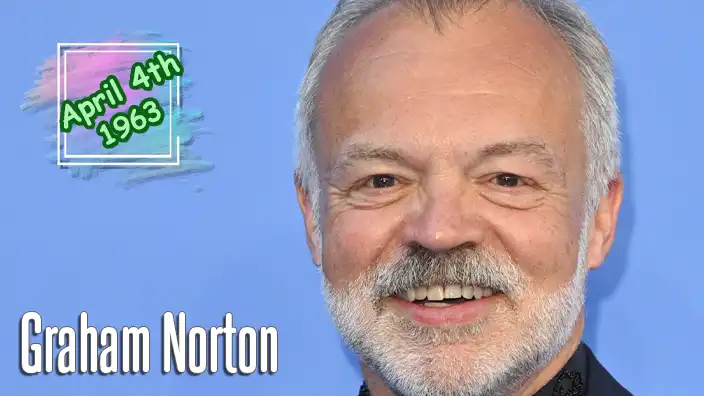
Some talk show hosts ask polite questions and nod thoughtfully. Graham Norton hands celebrities a glass of wine, invites them onto the red couch, and somehow gets them telling stories they probably didn’t plan to share. The result is television gold—and usually a few uncontrollable bursts of laughter.
April 4, 1963, in Clondalkin, Ireland
Trivia
- Studied at University College Cork.
- Trained at Central School of Speech and Drama.
- Hosted So Graham Norton.
- Hosts The Graham Norton Show.
- Presenter on BBC Radio 2.
- Eurovision Song Contest commentator.
- Author of the novel Holding.
- Multiple BAFTA Television Awards winner.

- Details
- Category: Celebrity Birthdays - April
Some actors make an impression. Samira Wiley makes a statement. Whether she’s delivering a witty remark, standing up for what’s right, or completely stealing the scene with a single glance, Wiley has built a reputation for performances that are both powerful and unforgettable. From prison dramas to dystopian television worlds, she has proven that a strong character, a sharp mind, and impeccable timing can turn any role into something audiences remember long after the credits roll.
April 15, 1987, in Washington, D.C.
Trivia
- Attended the prestigious Juilliard School in New York City
- Breakthrough role as Poussey Washington in Orange Is the New Black
- Played Moira in the Hulu series The Handmaid’s Tale
- Won a Primetime Emmy Award for Outstanding Guest Actress in a Drama Series
- Married television writer Lauren Morelli in 2017
- Active advocate for LGBTQ representation and equality
- Appeared in both television and theater productions
- Known for portraying emotionally powerful and socially relevant characters

- Details
- Category: Celebrity Birthdays - April
Some actors shout, some whisper, and some simply raise an eyebrow and somehow win an Emmy. Sterling K. Brown falls into that last category. Whether he’s delivering a heartfelt speech in This Is Us or portraying a conflicted character in a major film, he has the rare ability to make viewers forget they’re watching a scripted performance. Frankly, if emotional acting were an Olympic sport, Brown would already have several gold medals and a very crowded trophy shelf.
April 5, 1976, in St. Louis, Missouri
Trivia
- Graduated from Stanford University.
- Earned an MFA from NYU’s Tisch School of the Arts.
- Breakout role: Christopher Darden in American Crime Story.
- Emmy winner for The People v. O. J. Simpson.
- Starred as Randall Pearson in This Is Us.
- Won a Golden Globe for This Is Us.
- Appeared in Marvel’s Black Panther.

- Details
- Category: Celebrity Birthdays - April
Tony Danza has spent decades convincing audiences that being charming, slightly confused, and completely lovable is a full-time job—and frankly, he’s made it look easy. Whether he’s asking “Who’s the boss?” or just trying to keep things together with a grin and a shrug, Danza has that rare quality of making every role feel like you’ve known him for years. If charisma were currency, he’d have retired a long time ago.
April 21, 1951, in Brooklyn, New York
Trivia
- Former professional boxer before becoming an actor
- Starred in Taxi as Tony Banta
- Played Tony Micelli in Who’s the Boss?
- Hosted The Tony Danza Show
- Appeared in Broadway productions
- Taught high school English, featured in Teach: Tony Danza
- Known for his relatable, everyman charm
- Successfully transitioned between sports, acting, and teaching

- Details
- Category: Celebrity Birthdays - April
History has a habit of putting certain people in the spotlight while others—equally important—quietly hold the whole thing together behind the scenes. Coretta Scott King was not one of those people. She stood right in the spotlight, thank you very much, and made sure it stayed on long enough for the rest of the world to notice what needed fixing. Graceful, determined, and sharper than a tack, she proved that strength doesn’t always need to shout—but when it does speak, people listen.
April 27, 1927, in Heiberger, Alabama
 January 30, 2006, in Rosarito, Mexico
Trivia
- She studied classical music at the New England Conservatory.
- She organized “Freedom Concerts” to support the civil rights movement.
- She founded The King Center in Atlanta.
- She played a key role in establishing Martin Luther King Jr. Day as a federal holiday.
- She was an advocate for peace, women’s rights, and LGBTQ+ equality.
- She continued leading civil rights efforts after her husband’s assassination.

- Details
- Category: Celebrity Birthdays - April
Some actors take years to find their breakout role. Claire Danes decided to skip that step entirely and start with one. As a teenager in the 1990s, she made audiences everywhere feel the emotional turbulence of high school with the intensity of a Shakespearean tragedy. Since then, she’s gone from teenage drama queen to CIA agent saving the world on television, all while maintaining a reputation for serious acting chops and the kind of thoughtful performances that make viewers lean forward and say, “Wait… did she just out-act everyone in the room again?”
April 12, 1979, in New York City
Trivia
- Won a Golden Globe at age 15 for My So-Called Life.
- Starred as Juliet opposite Leonardo DiCaprio in Romeo + Juliet (1996).
- Played CIA officer Carrie Mathison on Homeland.
- Won multiple Emmy Awards for her role in Homeland.
- Appeared in The Rainmaker with Matt Damon.
- Starred in the fantasy film Stardust (2007).
- Married actor Hugh Dancy in 2009.
- Received a star on the Hollywood Walk of Fame in 2015.
- Attended the Professional Performing Arts School in New York.

- Details
- Category: Celebrity Birthdays - April
Every great movie needs a villain who looks like he just woke up, had coffee, and decided that today might be a good day to cause international trouble. That’s where Ben Mendelsohn comes in. With a voice that sounds like it’s been marinated in late-night detective films and a screen presence that quietly suggests he knows more than everyone else in the room, Mendelsohn has built a career playing characters who are complicated, unpredictable, and often just a little bit dangerous. Somehow, he makes being the bad guy look thoughtful, intelligent, and occasionally even charming — which is probably the most alarming part.
April 3, 1969, in Melbourne, Australia
Trivia
- Breakout Australian film: The Year My Voice Broke (1987).
- International breakthrough: Animal Kingdom (2010).
- Played Director Orson Krennic in Rogue One.
- Won an Emmy for Bloodline in 2016.
- Portrayed Talos in Captain Marvel.
- Appeared in The Dark Knight Rises (2012).
- Played King George VI in Darkest Hour.

- Details
- Category: Celebrity Birthdays - April
Some actors become famous. A few become legendary. Julie Christie somehow managed to become both while still looking like she wandered onto the movie set by accident and decided to stay. With striking screen presence, sharp intelligence, and a quiet confidence that could command any scene, Christie helped define an era of cinema in the 1960s and beyond. Whether she was starring in sweeping dramas or thoughtful independent films, Julie Christie proved that great acting doesn’t require fireworks—sometimes it just takes a glance, a line delivered perfectly, and the audience leaning forward in their seats.
April 14, 1940, in Chabua, Assam, British India
Trivia
- Her father managed a tea plantation.
- She won the Academy Award for Best Actress for Darling (1965).
- Christie starred as Lara in Doctor Zhivago.
- She played dual roles in Fahrenheit 451 (1966).
- Christie starred in Robert Altman’s McCabe & Mrs. Miller.
- She received an Oscar nomination for Away from Her (2006).
- Christie has been active in environmental causes.
- She trained at London’s Central School of Speech and Drama.

- Details
- Category: Celebrity Birthdays - April
Some actors play characters. Heath Ledger seemed to become them entirely. Whether he was a rebellious teenager, a quiet rancher, or the most unsettling comic-book villain ever put on screen, Ledger approached every role with fearless dedication—and audiences are still talking about the results.
April 4, 1979, in Perth, Western Australia
January 22, 2008, SoHo, New York
Trivia
- Won a junior chess championship at age ten.
- Moved to Sydney to pursue acting.
- Breakthrough role in 10 Things I Hate About You.
- Starred in A Knight's Tale (2001).
- Oscar-nominated for Brokeback Mountain.
- Played the Joker in The Dark Knight.
- Won a posthumous Academy Award.
- Directed several music videos.

- Details
- Category: Celebrity Birthdays - April
If the early 1960s had a soundtrack for first crushes, slow dances, and nervous teenagers trying to look cool, Bobby Vee was right there in the middle of it—probably with better hair than everyone else. He didn’t shout, he didn’t swagger, and he didn’t need to. He just sang the kind of songs that stuck in your head and, more importantly, stuck with you.
April 30, 1943, in Fargo, North Dakota
October 24, 2016, in Rogers, Minnesota
Trivia
- Got his start by filling in at a concert after the 1959 plane crash.
- First major hit was Devil or Angel (1960).
- Scored a number-one hit with Take Good Care of My Baby.
- Worked with songwriting legends Carole King and Gerry Goffin.
- Early band member included a young Bob Dylan.
- Had 38 songs chart on the Billboard Hot 100.
- Maintained a long touring career beyond his peak chart years.
- Known for his clean-cut image during the teen idol era.
- Inducted into the Rockabilly Hall of Fame.

- Details
- Category: Celebrity Birthdays - April
Selena Quintanilla had the rare ability to step onto a stage and instantly make it feel like a party that everyone was invited to. With dazzling outfits, infectious energy, and a smile that could probably power a small city, she made performing look effortless—even while singing, dancing, and keeping thousands of fans cheering along. If charisma were a musical instrument, Selena would have been playing it louder than the entire band.
April 16, 1971, in Lake Jackson, Texas
March 31, 1995, in Corpus Christi, Texas
Trivia
- Known as the “Queen of Tejano Music.”
- Performed in the family band Selena y Los Dinos.
- Won a Grammy Award in 1994 for Selena Live!.
- Her hit song “Como la Flor” became one of her signature tracks.
- Designed many of her own stage outfits.
- Opened boutique clothing stores in Texas.
- Her album Amor Prohibido became a major Latin music success.
- Her posthumous album Dreaming of You debuted at number one on Billboard.
- Her life inspired the 1997 biographical film, Selena.
- Details
- Category: Celebrity Birthdays - April
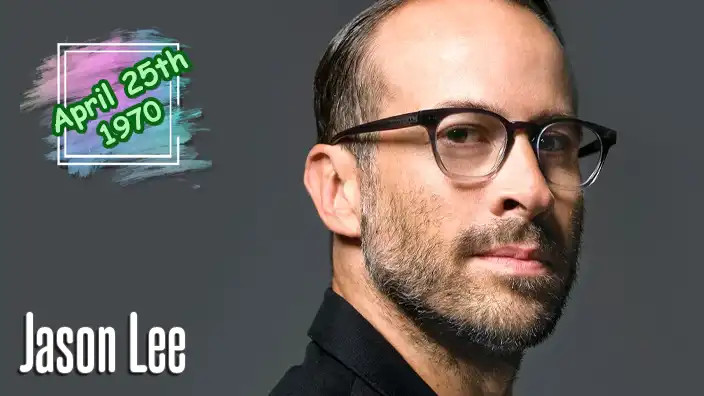
Jason Lee has one of those careers that makes you do a double take. “Wait… the guy from My Name Is Earl is also a former professional skateboarder?” Yes. Yes, he is. And somehow that’s not even the most interesting thing about him.
April 25, 1970, in Orange, California
Trivia
- Jason Lee was a professional skateboarder before becoming an actor.
- He co-founded Stereo Skateboards.
- He frequently collaborated with director Kevin Smith.
- He won an Independent Spirit Award for Chasing Amy.
- He starred in My Name Is Earl, earning a Golden Globe nomination.
- He voiced Alvin in the Alvin and the Chipmunks films.
- He later pursued photography as a serious interest.
- He appeared in Almost Famous as a rock band frontman.

- Details
- Category: Celebrity Birthdays - April
Some actors raise their voice to command a scene. Giancarlo Esposito lowers his—and suddenly everyone’s paying attention. With a calm stare that could make a room go silent and a delivery so controlled it feels almost surgical, he’s mastered the art of being quietly intimidating. Whether he’s running a fast-food empire or commanding a galaxy-spanning operation, one thing is certain: if Giancarlo Esposito is smiling, you might want to double-check your exit strategy.
April 26, 1958, in Copenhagen, Denmark
Trivia
- He began acting on Broadway at a young age.
- He worked with Spike Lee in Do the Right Thing.
- He is best known for playing Gus Fring in Breaking Bad.
- He also portrayed Moff Gideon in The Mandalorian.
- His acting style is known for its calm, controlled intensity.
- He has worked in film, television, theater, and voice acting.
- He received critical acclaim and award nominations for his role as Gus Fring.

- Details
- Category: Celebrity Birthdays - April
If there were an award for “Most Likely to Steal Every Scene While Also Making Perfect Hair Look Effortless,” Joe Keery would already have a shelf full of trophies—and probably a fan club dedicated solely to his conditioner routine. With a mix of charm, comedic timing, and just enough mystery to keep things interesting, Keery has gone from breakout TV star to bona fide fan favorite in what feels like the blink of an eye.
April 24, 1992, in Newburyport, Massachusetts
Trivia
- Studied acting at DePaul University’s Theatre School.
- Breakout role as Steve Harrington in Stranger Things.
- Character Steve was originally meant to be less likable.
- Appeared in Free Guy alongside Ryan Reynolds.
- Starred in thriller film Spree (2020).
- Performs music under the name Djo.
- Former member of band Post Animal.
- Known for his iconic hairstyle.
- Blends acting and music careers successfully.

- Details
- Category: Celebrity Birthdays - April
Some actors quietly slip into a role and disappear into the character. Russell Crowe tends to kick the door down, plant a flag, and dare the audience not to pay attention. Whether he’s commanding Roman legions, solving complicated mathematical puzzles, or captaining a ship through cannon fire, Crowe has built a reputation for intense performances that dominate the screen. Add in a powerful voice, a no-nonsense attitude, and a willingness to take on challenging roles, and you get one of the most formidable actors of his generation.
April 7, 1964, in Wellington, New Zealand
Trivia
- Crowe won the Academy Award for Best Actor for Gladiator (2000).
- He received consecutive Oscar nominations for The Insider (1999), Gladiator (2000), and A Beautiful Mind (2001).
- His breakout Australian film was Romper Stomper (1992).
- Crowe played mathematician John Nash in A Beautiful Mind.
- He starred as Captain Jack Aubrey in Master and Commander: The Far Side of the World (2003).
- Crowe is also a musician and has performed with several rock bands.
- He directed the historical drama The Water Diviner (2014).
From Our Marks Catelog
-

Pizza is the ultimate customizable dish. It caters to all, from the staunch meat-lover who wants...
-

Your toes don't ask for much. They spend their days squeezed into shoes, dodging coffee tables,...
-

You’re trying to relax after a long day, but your dog has decided that now is the perfect time to...
-
Tiny, shiny, and unapologetically bold, these little fish have a knack for stealing the show at...
-

Horses are the comedians of the animal world, even if they don’t realize it. From sneaky maneuvers...
-
Some cars are built to get you from point A to point B. The Pink Cadillac was built to make sure...

