Celebrity Birthdays - April

April birthdays get all the flowers — and sometimes all the showers, too. They’ll tell you it builds character. We think it just builds frizz.
Let’s look at the famous faces who bring a little color to this in-between month. They’re the sunshine peeking through the rainclouds, reminding us that summer is just around the corner… probably.

- Details
- Category: Celebrity Birthdays - April
Some actors quietly build impressive careers over time, and then there’s Luke Evans, who seems perfectly comfortable leaping from action scenes to musical numbers without breaking a sweat—or even messing up his hair. Whether he’s playing a villain with dramatic flair, a heroic adventurer, or a Disney character who sings loudly enough to wake the village, Evans has built a career that proves one simple truth: a powerful voice and a commanding screen presence go a long way in Hollywood. And if the role requires swords, monsters, or a good dramatic cape, Evans usually looks like he brought his own.
 April 15, 1979, in Pontypool, Wales

Trivia
- Raised in the village of Aberbargoed in South Wales.
- Studied musical theatre at the London Studio Centre.
- Began his career performing in London West End musicals.
- Played Bard the Bowman in The Hobbit film trilogy.
- Portrayed the villain Owen Shaw in Fast & Furious 6 (2013).
- Starred in the title role of Dracula Untold (2014).
- Played Gaston in Disney’s live-action Beauty and the Beast (2017).
- Released his debut music album At Last in 2019.
- Known for both his acting roles and his strong singing voice.

- Details
- Category: Celebrity Birthdays - April
Every generation seems to get at least one actor who perfectly captures the awkward, slightly confused, occasionally brilliant experience of growing up. For the 1980s, that guy was Anthony Michael Hall. With his lanky frame, nervous charm, and a talent for playing the smart kid who somehow ends up in ridiculous situations, Hall became the unofficial spokesperson for teenage embarrassment. Whether he was building questionable science projects, surviving detention, or dealing with teenage crushes, Anthony Michael Hall made being the nerdy kid look surprisingly heroic.
April 14, 1968, in Boston, Massachusetts
Trivia
- His mother was jazz singer Mercedes Hall.
- He starred in The Breakfast Club as Brian Johnson.
- Hall appeared in Sixteen Candles and Weird Science.
- At 17, he became one of the youngest cast members in Saturday Night Live history.
- He played Johnny Smith in the TV series The Dead Zone.
- Hall appeared in Tim Burton’s Edward Scissorhands.
- He had a role in The Dark Knight (2008).
- Hall began acting in commercials as a child.

- Details
- Category: Celebrity Birthdays - April
Hollywood has produced many talented actors, but Marley Shelton holds a special place in the “Hey, I know her from that movie!” hall of fame. Over the years she has appeared in comedies, horror films, thrillers, and television dramas, quietly building a career that has lasted decades. Whether she’s outrunning killers in a horror movie, playing a determined professional on television, or simply showing up to make a scene better, Shelton has perfected the art of being instantly recognizable—often right before something dramatic happens.
 April 12, 1974, in Los Angeles, California
Trivia
- Studied film and theater at UCLA.
- Appeared in the fantasy film Pleasantville (1998).
- Played a popular high school student in Never Been Kissed (1999).
- Starred in the comedy crime film Sugar & Spice (2001).
- Portrayed Deputy Judy Hicks in the Scream franchise.
- Married film producer Beau Flynn in 2001.
- Has two daughters.
- Has appeared in both film and television across multiple genres.
- Known for roles in comedy, thriller, and horror projects.

- Details
- Category: Celebrity Birthdays - April
Some actors ease into Hollywood. Channing Tatum? He danced his way in, flipped over the furniture, and somehow made it look like a perfectly reasonable career move. With a mix of athleticism, charm, and a willingness to laugh at himself, he’s carved out a spot where action hero, romantic lead, and comedy guy all live under the same roof. Not bad for someone who started out showing off dance moves instead of delivering monologues.
April 26, 1980, in Cullman, Alabama
Trivia
- His breakout role came in Step Up.
- He showed his comedic side in 21 Jump Street.
- Magic Mike was inspired by his real-life experiences as a dancer.
- He has starred in action films like G.I. Joe: The Rise of Cobra.
- He has done voice work, including roles in animated films.
- He has worked as a producer on several projects.
- He is known for blending physical performance with humor.

- Details
- Category: Celebrity Birthdays - April
History has a habit of putting certain people in the spotlight while others—equally important—quietly hold the whole thing together behind the scenes. Coretta Scott King was not one of those people. She stood right in the spotlight, thank you very much, and made sure it stayed on long enough for the rest of the world to notice what needed fixing. Graceful, determined, and sharper than a tack, she proved that strength doesn’t always need to shout—but when it does speak, people listen.
April 27, 1927, in Heiberger, Alabama
 January 30, 2006, in Rosarito, Mexico
Trivia
- She studied classical music at the New England Conservatory.
- She organized “Freedom Concerts” to support the civil rights movement.
- She founded The King Center in Atlanta.
- She played a key role in establishing Martin Luther King Jr. Day as a federal holiday.
- She was an advocate for peace, women’s rights, and LGBTQ+ equality.
- She continued leading civil rights efforts after her husband’s assassination.

- Details
- Category: Celebrity Birthdays - April
Hollywood spent decades perfecting dramatic entrances, dazzling wardrobes, and carefully engineered star personas — then Ali MacGraw arrived looking effortlessly natural and made everyone wonder why they’d been trying so hard. She didn’t just star in one of the most famous romance films ever made; she convinced an entire generation that true love required sincerity, good timing, and possibly a very stylish winter coat.
April 1, 1939, in Pound Ridge, New York
Trivia
- Rose to international fame starring in Love Story (1970).
- Received an Academy Award nomination for Love Story.
- Won a Golden Globe for Most Promising Newcomer.
- Previously worked as a fashion model and photo stylist.
- Worked at Harper’s Bazaar before becoming an actress.
- Starred opposite Steve McQueen in The Getaway (1972).
- Married Steve McQueen during the height of both careers.
- Became a 1970s fashion icon known for natural beauty and simple style.

- Details
- Category: Celebrity Birthdays - April
Andre Agassi showed up to tennis looking like he was headed to a rock concert and then proceeded to outplay everyone on the court. While others stuck to tradition, he rewrote the rules—sometimes with a racket, sometimes with a haircut, and occasionally with a wardrobe choice that probably raised a few eyebrows. Turns out, when you can return a serve like that, people are willing to overlook the denim.
April 29, 1970, in Las Vegas, Nevada
Trivia
- Andre Agassi turned professional at just 16 years old.
- He won eight Grand Slam singles titles during his career.
- He achieved a career Grand Slam by winning all four major tournaments.
- He was known for his powerful baseline play and exceptional return of serve.
- He reached the world No. 1 ranking multiple times.
- He made a remarkable comeback after his ranking fell outside the top 100.
- He won an Olympic gold medal in singles at the 1996 Atlanta Games.
- He was inducted into the International Tennis Hall of Fame in 2011.
- He married tennis legend Steffi Graf in 2001.
- He founded a charitable organization focused on education reform.

- Details
- Category: Celebrity Birthdays - April
Some guitarists politely play their solos. Mike McCready attacks them like they owe him money. Whether he’s bending notes, sliding across the fretboard, or unleashing a riff that rattles arena speakers, his playing has the kind of energy that makes rock fans grin and air-guitar along. If enthusiasm could be measured in decibels, McCready would probably need his own volume control.
April 5, 1966, in Pensacola, Florida
Trivia
- Raised in Seattle, Washington.
- Lead guitarist of Pearl Jam.
- Influenced by Jimi Hendrix and Stevie Ray Vaughan.
- Debut Pearl Jam album: Ten (1991).
- Known for powerful blues-style guitar solos.
- Member of the supergroup Mad Season.
- Played in the Seattle grunge movement.
- Public advocate for Crohn’s disease awareness.
- Details
- Category: Celebrity Birthdays - April
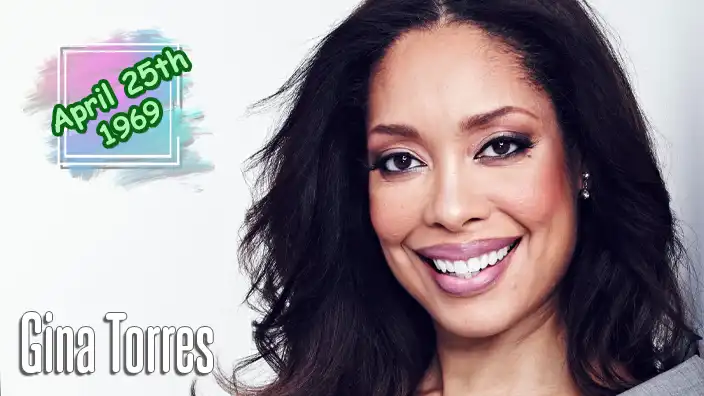
If confidence could walk into a room ahead of a person, Gina Torres would arrive about five minutes early. She has the kind of presence that makes you sit up a little straighter—even if you’re just watching from your couch with a bowl of snacks.
April 25, 1969, in New York City
Trivia
- Gina Torres studied opera and jazz before pursuing acting.
- She played Zoe Washburne in Firefly and the film Serenity.
- She appeared in The Matrix Reloaded and The Matrix Revolutions.
- She starred as Jessica Pearson in Suits and its spin-off Pearson.
- She has worked in science fiction, drama, and action genres.
- She has also done voice work for animated series and video games.
- She grew up in the Bronx, New York.
- She is known for her commanding screen presence.

- Details
- Category: Celebrity Birthdays - April
If Las Vegas had a mayor elected purely by applause, Wayne Newton might still be holding the office. Known affectionately as “Mr. Las Vegas,” Newton has spent decades dazzling audiences with a voice smooth enough to butter toast and a stage presence that suggests he might actually live behind the curtain between shows. While many performers come and go in the neon glow of the Strip, Wayne Newton turned performing there into a lifelong residence, proving that if you combine charm, stamina, and a few thousand performances, you can practically become part of the city’s skyline.
April 3, 1942, in Norfolk, Virginia
Trivia
- Famous hit song: “Danke Schoen.”
- Nicknamed “Mr. Las Vegas.”
- Began performing in Las Vegas as a teenager.
- Known for thousands of live performances on the Las Vegas Strip.
- Major hit: “Daddy, Don’t You Walk So Fast” (1972).
- Skilled pilot and aviation enthusiast.
- Former owner of the Casa de Shenandoah ranch.
- Famous for strong audience interaction during shows.

- Details
- Category: Celebrity Birthdays - April
Kareem Abdul-Jabbar’s skyhook was so reliable that opposing defenders probably considered filing a formal complaint with the laws of physics. Imagine trying to block a shot released by a seven-foot-two basketball legend whose arm seems to extend halfway to the rafters. Opponents jumped, stretched, and occasionally prayed, but the result was usually the same: two points for Kareem and another defender wondering if he’d accidentally signed up for the wrong sport.
April 16, 1947, in New York City
Trivia
- Originally named Ferdinand Lewis Alcindor Jr.
- Played college basketball at UCLA under John Wooden.
- Won three NCAA championships with UCLA.
- Selected first overall in the 1969 NBA Draft by the Milwaukee Bucks.
- Helped lead the Bucks to an NBA championship in 1971.
- Won six NBA championships during his career.
- Famous for the nearly unstoppable “skyhook” shot.
- Played a memorable cameo role in the comedy Airplane!
- Known today as an author, historian, and cultural commentator.

- Details
- Category: Celebrity Birthdays - April
Tony Danza has spent decades convincing audiences that being charming, slightly confused, and completely lovable is a full-time job—and frankly, he’s made it look easy. Whether he’s asking “Who’s the boss?” or just trying to keep things together with a grin and a shrug, Danza has that rare quality of making every role feel like you’ve known him for years. If charisma were currency, he’d have retired a long time ago.
April 21, 1951, in Brooklyn, New York
Trivia
- Former professional boxer before becoming an actor
- Starred in Taxi as Tony Banta
- Played Tony Micelli in Who’s the Boss?
- Hosted The Tony Danza Show
- Appeared in Broadway productions
- Taught high school English, featured in Teach: Tony Danza
- Known for his relatable, everyman charm
- Successfully transitioned between sports, acting, and teaching

- Details
- Category: Celebrity Birthdays - April
Hollywood has plenty of actors who can shout dramatically while running away from explosions, but David Oyelowo built his reputation doing something far more difficult: standing still, speaking thoughtfully, and somehow making entire audiences lean forward and listen. When he shows up on screen, you don’t just watch — you pay attention, whether you planned to or not.
April 1, 1976, in Oxford, England
Trivia
- Trained at LAMDA in London.
- First Black actor to play an English king for the Royal Shakespeare Company.
- Starred as Martin Luther King Jr. in Selma (2014).
- Appeared in Lincoln (2012).
- Known for powerful speaking voice.
- Works as both actor and producer.
- Has performed extensively in Shakespeare plays.

- Details
- Category: Celebrity Birthdays - April
If you ever needed proof that someone can go from blockbuster movies to running a billion-dollar business without breaking a sweat, Jessica Alba is your case study. She started out dodging explosions and saving the day on screen, then turned around and said, “You know what? Let’s build a company too.” Most people struggle to assemble flat-pack furniture—she built a brand. Not bad for someone who once spent her days battling aliens and comic book villains.
April 28, 1981, in Pomona, California
Trivia
- Rose to fame in Dark Angel (2000–2002)
- Played Sue Storm in Fantastic Four films
- Starred in Sin City (2005)
- Co-founded The Honest Company in 2011
- Balanced acting career with business leadership
- Known for her dance skills showcased in Honey (2003)
- Returned to TV in L.A.’s Finest
- Advocate for environmentally friendly products
- One of the few actors to successfully transition into major entrepreneurship
- Details
- Category: Celebrity Birthdays - April
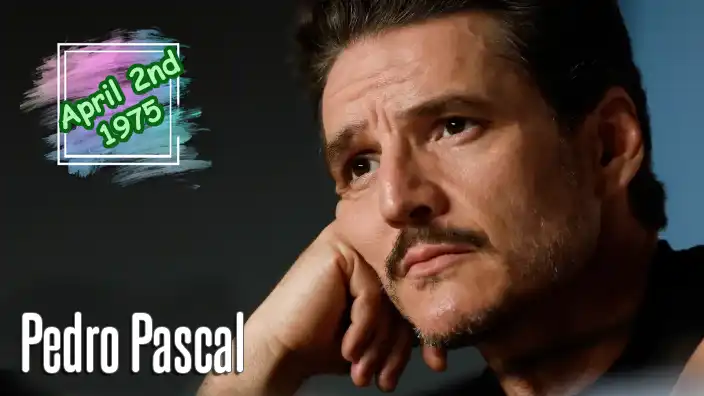
Pedro Pascal has one of those faces that can look like your best friend, your protective older brother, and the guy who absolutely will not let you make that dumb decision… all in the same two seconds. Hollywood tried for years to tuck him into “that reliable supporting guy” corners, and then the universe finally said, “Nope — put him in charge of the whole emotional weather system.” Now he shows up, says three lines, and suddenly the audience is dehydrated from feelings.
April 2, 1975, in Santiago, Chile
Trivia
- Breakout TV role: Oberyn Martell (Game of Thrones, 2014)
- Played Javier Peña in Narcos
- Stars as Din Djarin in The Mandalorian
- Stars as Joel in HBO’s The Last of Us
- Hosted Saturday Night Live in 2023
- Named a Time 100 honoree (2023)

- Details
- Category: Celebrity Birthdays - April
Charlie Chaplin managed to build one of the most successful entertainment careers in history without saying much at all—something many modern comedians might consider a useful skill. Armed with nothing more than a cane, a funny walk, and the ability to look both hopeful and hopeless at the same time, Chaplin could make audiences laugh, cry, and occasionally wonder how someone could trip over the same pair of oversized shoes quite so gracefully.
April 16, 1889, in London, England
December 25, 1977, Corsier-sur-Vevey, Switzerland
Trivia
- Created the iconic character known as “The Tramp.”
- Began his film career at Keystone Studios in 1914.
- Co-founded United Artists in 1919.
- Starred in classic films like The Kid, City Lights, and Modern Times.
- Directed and starred in the political satire The Great Dictator.
- Was also a composer who wrote music for many of his films.
- Received an honorary Academy Award in 1972.
- One of the most influential figures in film history.
- Known worldwide for silent film comedy.
- Details
- Category: Celebrity Birthdays - April
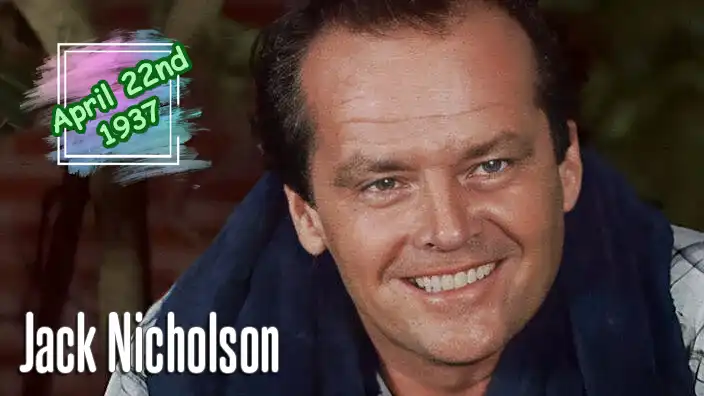
Some actors walk onto the screen. Jack Nicholson strolls in like he already owns the place—and frankly, you start to believe he might. That grin, those sunglasses, that voice that sounds like it knows more than it’s telling… Nicholson didn’t just play characters, he inhabited them with a kind of unpredictable electricity that kept audiences leaning forward. You never quite knew what he’d do next, and that was the whole point. Watching him is less like observing a performance and more like being let in on a secret you’re not entirely sure you should hear.
April 22, 1937, in Neptune City, New Jersey
Trivia
- Breakout role in Easy Rider (1969).
- Won three Academy Awards.
- Starred in The Shining and Chinatown.
- Played the Joker in Batman (1989).
- Known for portraying complex, rebellious characters.
- One of the most Oscar-nominated actors in history.
- Famous for his courtside seats at Los Angeles Lakers games.

- Details
- Category: Celebrity Birthdays - April
Willie Nelson has been on the road so long, there’s a good chance the road sends him postcards. With a guitar in hand and a song ready to go, he’s spent decades proving that you don’t need fancy production or a perfect voice—just a good story, a steady rhythm, and the kind of authenticity you can’t fake even if you tried.
April 29, 1933, in Abbott, Texas
Trivia
- Willie Nelson wrote his first song at age seven.
- He co-wrote “Crazy,” one of Patsy Cline’s biggest hits.
- He is a central figure in the outlaw country movement.
- His album Red Headed Stranger was a major breakthrough success.
- He is known for his distinctive voice and guitar playing style.
- His guitar is famously named “Trigger.”
- He co-founded Farm Aid in 1985.
- He has appeared in numerous films and television shows.
- He has won multiple Grammy Awards during his career.
- He has continued to tour and record music well into his later years.

- Details
- Category: Celebrity Birthdays - April
Every great action movie needs a villain who looks convincing enough to make audiences worry — and Adam Karst understands that job perfectly. After all, if the bad guy isn’t believable, the hero just looks like someone aggressively exercising. Karst brings the kind of serious energy that makes viewers think, “Okay… this might actually be a problem.”
April 1, 1979, in Southampton, Canada.
Trivia
- Known for playing antagonist roles.
- Works both on-screen and behind the camera.
- Active in independent and studio productions.
- Builds career through multi-role filmmaking.
- Collaborates across acting and production teams.
- Part of modern multi-hyphenate filmmakers.
- Known for grounded screen presence.

- Details
- Category: Celebrity Birthdays - April
Jesse Plemons has mastered the rare art of looking completely harmless while quietly stealing an entire movie out from under everyone else. He walks into a scene like he’s just there to hold the door — and five minutes later you realize he’s holding the tension, the emotional weight, and possibly the audience’s pulse rate. If subtle intensity were a sport, he’d already have a trophy case.
April 2, 1988, in Dallas, Texas
Trivia
- Raised in Mart, Texas
- Breakout role: Friday Night Lights
- Played Todd in Breaking Bad
- Emmy nominee for Fargo
- Oscar nominee: The Power of the Dog
- Appeared in The Irishman
- Starred in Killers of the Flower Moon

- Details
- Category: Celebrity Birthdays - April
If stand-up comedy had a voice that could roast you, relate to you, and then somehow make you feel better about both, it would sound a lot like George Lopez. With a style that blends sharp observation, cultural honesty, and the kind of storytelling that makes you say, “Yeah… that’s exactly how it is,” Lopez built a career out of telling it straight. No fluff, no filter—just real life, turned funny. And if you’ve ever watched him perform, you know he doesn’t tiptoe around topics… he stomps right through them with a grin.
April 23, 1961, in Los Angeles, California
Trivia
- Began stand-up comedy in the 1980s.
- Starred in and co-created George Lopez (2002–2007).
- The sitcom ran for six seasons.
- Hosted Lopez Tonight starting in 2009.
- Underwent a kidney transplant in 2005.
- Known for comedy focused on culture and family life.
- Voiced characters in animated films like Rio.
- Continues touring as a stand-up comedian.
From Our Marks Catelog
-
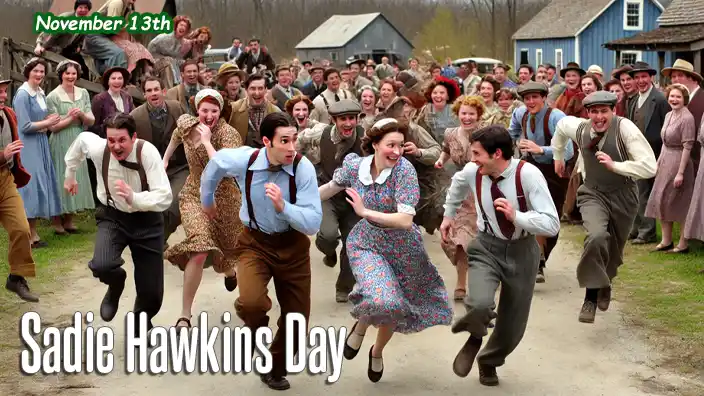
Sadie Hawkins Day is that rare annual event when the tables turn, and the thrill of the chase gets...
-
Pet Rocks are the ultimate low-maintenance pet—no feeding, no walking, no vet bills, and they...
-

The Merchant Navy is like the unsung hero of the high seas, quietly keeping the world...
-

Caribbean Americans bring a special kind of energy that’s hard to miss — the kind that says, “Yes, I work...
-

Logistics is like a high-stakes game of Tetris, but with trucks, ships, and planes instead of...
-
This is not just a 'weigh-in' for your New Year's resolutions, but a time when we collectively tip the...

