Celebrity Birthdays - May

May is basically the VIP lounge of months: warm, sunny, and not yet mosquito season. People born in May are annoyingly charming about it, too.
So let’s celebrate the folks who make us believe in backyard barbecues and fresh starts. They were born to bask in the glow of spring — and they want you to know it.
- Details
- Category: Celebrity Birthdays - May
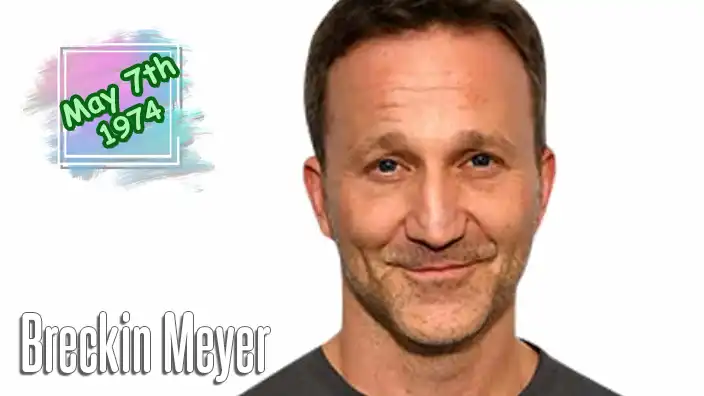
Some actors build careers on intensity. Others build them on charm. Breckin Meyer built his on the very specific skill of looking like the only normal guy in a completely ridiculous situation—and somehow still being part of the problem. Whether he’s navigating teenage chaos, animated mayhem, or courtroom comedy, he has a knack for making things feel just grounded enough… before everything goes off the rails again.
 May 7, 1974, in Minneapolis, Minnesota

Trivia
- Appeared in Clueless (1995) as Travis Birkenstock
- Starred in Road Trip (2000)
- Played a role in Rat Race (2001)
- Voice of Joseph Gribble on King of the Hill
- Worked on Robot Chicken as a voice actor, writer, and producer
- Starred in Franklin & Bash (2011–2014)
- Began acting in commercials and TV at a young age
- Known for his comedic timing and “everyman” roles

- Details
- Category: Celebrity Birthdays - May
There’s always that one person who walks into a chaotic situation, takes a quiet look around, and somehow restores order without raising their voice—Carol Potter perfected that energy. She’s got the kind of presence that says, “I’ve already thought this through, and yes, we’re doing it my way,” but in the nicest possible way. You don’t argue—you just nod, reconsider your life choices, and suddenly feel like things might actually turn out alright.
 May 21, 1948, in New York City
Trivia
- Best known as Cindy Walsh on Beverly Hills, 90210.
- Studied drama at Radcliffe College.
- Performed on Broadway early in her career.
- Worked as a television producer and coach later in life.
- Known for playing grounded, supportive characters.
- Details
- Category: Celebrity Birthdays - May
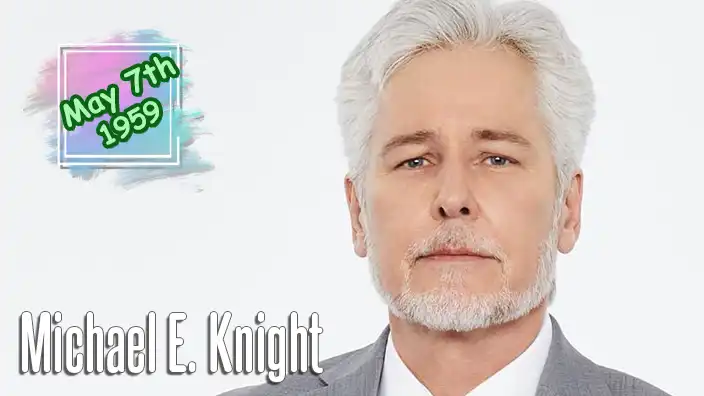
Some actors make a career out of explosions, car chases, or dramatic courtroom speeches. Michael E. Knight made his mark doing something far more dangerous—keeping a straight face in the middle of daytime television chaos. In a world where secrets spill faster than coffee in a soap opera hospital hallway, he stood steady, delivering calm, confident performances while everything around him practically begged for dramatic background music.
May 7, 1959, in Princeton, New Jersey
Trivia
- Joined All My Children in 1983
- Won Daytime Emmy Awards for his performances
- Known for both leading and supporting roles in daytime TV
- Appeared on shows like Murder, She Wrote and CSI
- Also had roles on The Young and the Restless
- Graduated from Wesleyan University
- Built a career spanning decades in television
- Recognized for his consistency and longevity in soap operas

- Details
- Category: Celebrity Birthdays - May
Some people inherit a famous last name and spend their careers explaining it. Grace Gummer took a different approach—she showed up, did the job well, and let everyone else connect the dots later. No grand announcements, no dramatic entrances—just solid performances that quietly say, “Yes, I belong here.” It’s the acting equivalent of walking into a room full of experts, rolling up your sleeves, and getting to work while everyone else is still checking name tags.
May 9, 1986, in New York City
Trivia
- Daughter of Meryl Streep and Don Gummer
- Studied theater at Vassar College
- Appeared in The Newsroom as Hallie Shea
- Played FBI agent Dominique DiPierro on Mr. Robot
- Featured in American Horror Story
- Married Mark Ronson in 2021
- Known for subtle, grounded performances

- Details
- Category: Celebrity Birthdays - May
Some comedians make you laugh. Michael Palin makes you laugh, think, and then wonder how you ended up learning geography along the way. From absurd sketches to crossing entire continents, he’s the rare entertainer who can deliver a joke and a passport stamp in the same breath.
Born May 5, 1943, in Sheffield, England
Trivia
- He studied history at Oxford University.
- He co-founded Monty Python with Terry Jones and others.
- He starred in Monty Python’s Flying Circus.
- He appeared in all major Monty Python films.
- He became a successful travel documentary presenter.
- His series Around the World in 80 Days was a major hit.
- He has written numerous books, including travel and diary works.

- Details
- Category: Celebrity Birthdays - May
Megan Fox has been turning heads since she burst onto the scene, bringing equal parts glam and grit to the big screen. She became a blockbuster icon with Transformers, proving she could hold her own next to giant robots, explosions, and Shia LaBeouf’s fast-talking antics. Over the years, Megan has mixed action roles with edgy comedies and cult favorites like Jennifer’s Body, which went from misunderstood to full-on fan favorite. With her sharp wit, unapologetic confidence, and style that turns every red carpet into a runway, Megan is as fascinating off-screen as she is on it. Her birthday should be celebrated with fireworks, fast cars, and maybe a wink toward those
May 16, 1986, in Oak Ridge, Tennessee
Trivia
- Megan Fox has several tattoos, each with personal significance. One of her most famous tattoos is a quote from Shakespeare's "King Lear": "We will all laugh at gilded butterflies."
- She made her film debut in the 2001 movie "Holiday in the Sun," starring opposite the Olsen twins.
- Megan is a dedicated mother to her three sons with actor Brian Austin Green, and she often emphasizes the importance of family in her life.
- She is also an advocate for mental health awareness, openly discussing her struggles with self-esteem and the pressures of Hollywood.

- Details
- Category: Celebrity Birthdays - May
Janet Jackson is pop royalty — a groundbreaking performer who turned every stage into a spectacle and every album into an era. With hits like Rhythm Nation, Escapade, and Together Again, she’s given the world music that makes you dance, think, and feel all at once. Her iconic choreography, daring fashion, and powerhouse performances have influenced generations of artists, proving that being a Jackson comes with serious star power. Whether she’s headlining a world tour or quietly reinventing herself, Janet always brings something fresh and fearless. Her birthday should be celebrated with a dance floor, a killer beat, and at least one perfectly synchronized dance break.
May 16, 1966, in Gary, Indiana
Trivia
- Janet Jackson is the first and only artist to produce seven top-five hits from one album, "Rhythm Nation 1814."
- She has sold over 100 million records worldwide, making her one of the best-selling music artists of all time.
- Janet was inducted into the Rock and Roll Hall of Fame in 2019, a recognition of her enduring impact on the music industry.

- Details
- Category: Celebrity Birthdays - May
If British acting had a secret ingredient, it might just be whatever Richard E. Grant has been sprinkling into his performances for the last four decades. Equal parts elegance, eccentricity, and “did he just say that?”, he’s the cinematic equivalent of a perfectly brewed cup of tea—comforting, refined, and occasionally strong enough to wake you right up.
May 5, 1957, in Mbabane, Swaziland (now Eswatini)
Trivia
- He cannot tolerate alcohol, despite his famous drunken role in Withnail and I.
- He received an Oscar nomination for Can You Ever Forgive Me?
- He has appeared in both Star Wars and the Marvel Cinematic Universe.
- He studied English and drama at the University of Cape Town.
- He’s a longtime fan of Barbra Streisand.
- He has worked as an actor, presenter, writer, and even a perfumer.

- Details
- Category: Celebrity Birthdays - May
If you grew up in the ‘90s, there’s a good chance Danielle Fishel helped teach you more about life than your actual homework did. Between heartfelt speeches and perfectly timed eye-rolls, she managed to turn a sitcom into a life guide—and somehow made it all look effortless.
May 5, 1981, in Mesa, Arizona
Trivia
- She began acting in community theater before moving to television.
- Her role as Topanga was originally intended to be temporary.
- She earned a degree in psychology from California State University, Fullerton.
- She reprised her role in Girl Meets World.
- She has worked as a television host and director.
- She directed episodes for several Disney Channel series.

- Details
- Category: Celebrity Birthdays - May
Tom Berenger is the kind of actor who can make you believe he’s a battle-hardened sergeant, a grizzled sniper, or the guy next door who grills the perfect steak—and you’d never question it. He’s got the rugged good looks of a man who’s wrestled a bear (and probably won), paired with the calm confidence of someone who could defuse a bomb while quoting Hemingway. If Hollywood ever needs someone to stare down danger without blinking, Berenger’s the guy… as long as it doesn’t cut into his fishing time.
May 31, 1949 in Chicago, Illinois
Trivia
- Real Name: Tom Berenger was born Thomas Michael Moore. He changed his last name to Berenger to avoid confusion with another actor named Tom Moore.
- Military Connection: Berenger’s portrayal of military characters, particularly in “Platoon” and the “Sniper” series, has earned him a special place in the hearts of many veterans and military enthusiasts.
- Producer and Writer: In addition to acting, Berenger has ventured into producing and writing. He co-wrote and produced the film “The Last of the Dogmen” (1995), showcasing his talents behind the camera.
- Details
- Category: Celebrity Birthdays - May
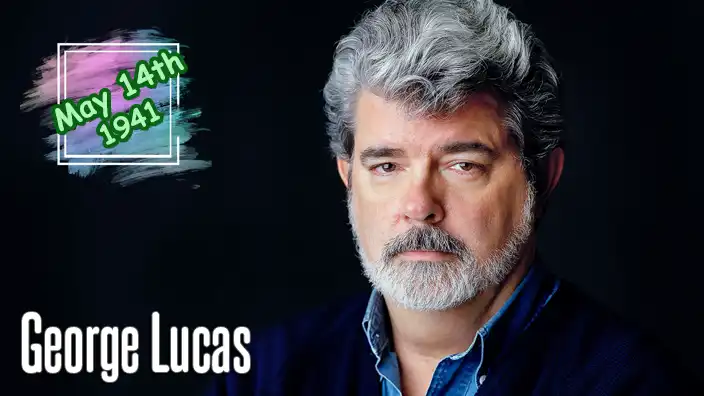
George Lucas is the man who gave us lightsabers and a reason to argue about whether Han shot first. The creator of Star Wars and Indiana Jones, Lucas turned space cowboys and whip-cracking archaeologists into global obsessions — and made “May the Fourth” an unofficial holiday. He also gave us Jar Jar Binks, but we’ll forgive him because he also gave us Yoda’s wisdom and Darth Vader’s entrance music. Basically, George Lucas didn’t just make movies — he built an entire galaxy far, far away and somehow got us all to live in it.
May 14, 1944, in Modesto, California
Trivia
- George Lucas originally wanted to direct Apocalypse Now, but the project went to Francis Ford Coppola.
- He based Yoda’s speech patterns on the way his own philosophy teachers spoke.
- Lucas made more money from Star Wars merchandise than from the films themselves.
- The name “Indiana” in Indiana Jones came from Lucas’s pet dog.
- He sold Lucasfilm to Disney in 2012 for about $4 billion, then donated much of his wealth to education.

- Details
- Category: Celebrity Birthdays - May
What’s up, Doc? Oh, just Mel Blanc’s birthday — the man whose vocal cords basically built Saturday morning. Known as “The Man of a Thousand Voices,” Blanc brought Bugs Bunny, Daffy Duck, Porky Pig, and a whole Looney Tunes roster to life.
Without Mel, the world would be suspiciously quiet (and a lot less funny). Today we celebrate the guy who made generations laugh, stutter “th-th-that’s all, folks,” and occasionally try to talk like a cartoon character when no one was looking.
May 30, 1908, in San Francisco, California
 July 10, 1989, in Los Angeles, California
Trivia
- Mel Blanc was the first voice actor to receive on-screen credit for his work. Prior to this, voice actors were typically uncredited in animated films.
- He was known for his ability to create unique and recognizable laughs for his characters, such as Woody Woodpecker's distinctive laugh.
- Blanc held the Guinness World Record for the most voices performed by a single actor.
- Despite voicing countless characters, Blanc's favorite character to voice was Bugs Bunny. He often said, "Bugs is who I want to be. Daffy is who I am."
- Blanc's epitaph reads "That's All Folks," a fitting tribute to his contributions to the world of animation and his role as the voice of Porky Pig.

- Details
- Category: Celebrity Birthdays - May
Allen Leech has a gift for playing characters you just want to have a pint with — which makes sense, since he’s best known as Tom Branson on Downton Abbey, the chauffeur-turned-son-in-law who won everyone’s hearts (and probably caused a few happy tears along the way). Allen brings a natural warmth and wit to his roles, whether he’s navigating aristocratic drama in Edwardian England or starring in big-screen thrillers and historical dramas. His birthday should be celebrated with a cozy gathering, a perfectly poured Guinness, and maybe a toast in honor of every underdog who made good.
May 18, 1981, in Killiney, Ireland
Trivia
- Allen initially pursued a degree in philosophy and sociology at Trinity College Dublin before deciding to follow his passion for acting.
- He is fluent in Gaelic and has often expressed his pride in his Irish heritage.

- Details
- Category: Celebrity Birthdays - May
Some actors chase the spotlight. Alley Mills seems to have politely nodded, poured a cup of coffee, and let the spotlight come to her. She’s the kind of on-screen presence who can calm a chaotic room with a single glance—the television equivalent of “everyone take a breath.” Whether she’s playing a mom, a confidante, or the one person who clearly sees what’s going on before anyone else does, she brings a steady hand to the scene. And let’s face it, in a world full of dramatic plot twists and over-the-top moments, every show could use a little Alley Mills energy to keep things from completely flying off the rails.
Born May 9, 1951, in Chicago, Illinois
Trivia
- Attended Yale University for drama
- Best known as Norma Arnold on The Wonder Years
- Played Marjorie Quinn on Dr. Quinn, Medicine Woman
- Starred as Pamela Douglas on The Bold and the Beautiful
- Married Orson Bean in 1993
- Comes from a family involved in writing and television
- Known for portraying strong, grounded maternal characters

- Details
- Category: Celebrity Birthdays - May
Let’s be honest—if most people put on sunglasses indoors, someone’s going to ask if they’re okay. Bono does it, and suddenly it feels like a statement about art, identity, and possibly world peace. He’s one of the few people who can walk into a room dressed like he’s about to headline a stadium and also negotiate global policy before lunch. Somewhere between writing a hit song and meeting world leaders, he’s managed to convince everyone that both are just part of a normal Tuesday.
May 10, 1960, in Dublin, Ireland
Trivia
- Attended Mount Temple Comprehensive School in Dublin.
- Known for hits like “With or Without You” and “One.”
- Has been active in global humanitarian efforts.
- Often performs wearing signature sunglasses.
- U2’s The Joshua Tree became a landmark album.
- Has received numerous awards for music and activism.
- Known for blending music with social and political themes.

- Details
- Category: Celebrity Birthdays - May
Bill Paxton was one of those rare actors who felt like a friend every time he showed up on screen. Whether he was battling aliens in Aliens, chasing twisters in Twister, or panicking in Titanic, Paxton brought humor, heart, and a touch of everyman charm to every role. He could make even the wildest situations feel believable — and fun — which is why fans loved him so much. His passing in 2017 was a huge loss to Hollywood, but his legacy lives on through an incredible filmography that still entertains and inspires. His birthday should be celebrated with popcorn, a double feature, and maybe a loud “Game over, man!” in his honor.
May 17, 1955, in Fort Worth, Texas
February 25, 2017, in Los Angeles, California
Trivia
- Bill Paxton appeared in the music video for "Fish Heads" by Barnes & Barnes, which he also directed.
- He was one of the few actors to be killed by an alien, a predator, and a terminator in the films "Aliens," "Predator 2," and "The Terminator," respectively.
- Paxton was a close friend of fellow actor and director James Cameron, with whom he collaborated on several projects, including "Aliens," "Titanic," and "True Lies."
- He received an Emmy nomination for his role in the mini-series "Hatfields & McCoys," which also starred Kevin Costner.

- Details
- Category: Celebrity Birthdays - May
Anna Baryshnikov brings a bright, quirky energy to every role she takes on, whether she’s charming audiences in Dickinson as the bubbly Lavinia or stealing scenes in indie comedies. With a gift for turning even the smallest moments into laugh-out-loud ones, she’s carved out a niche as the delightful, slightly unpredictable presence you can’t help but adore. Off-screen, she’s known for her quick wit and thoughtful interviews, proving she’s just as sharp as the characters she plays. Her birthday calls for a celebration full of humor, clever conversation, and maybe a little spontaneous dancing — because why not?
May 22, 1992, in New York City, New York
Trivia
- Anna Baryshnikov's life is filled with interesting trivia. Did you know she initially pursued dance before deciding to focus on acting? Her background in dance has given her a unique physicality and grace that she brings to her roles.
- Another fun fact is that Anna is fluent in Russian, thanks to her father's heritage. This skill has not only enriched her cultural understanding but also added depth to her performances.
- Anna's love for theater extends beyond just watching plays. She has also performed in stage productions, including off-Broadway shows, which have helped her hone her craft and connect with live audiences.

- Details
- Category: Celebrity Birthdays - May
Clear the dance floor and crank up the playlist — it’s Normani’s big day! The former Fifth Harmony powerhouse turned solo star has been dropping hits, choreography, and jaws ever since she stepped into the spotlight. Today, we celebrate a woman who can outdance gravity and still look camera-ready while doing it.
May 31, 1996, in Atlanta, Georgia
Trivia
- Early Start: Before her rise to fame, Normani competed in dance, gymnastics, and beauty pageants, showcasing her multifaceted talent from a young age.
- Philanthropy: Normani is an advocate for mental health awareness and has partnered with organizations like the American Cancer Society and the Ryan Seacrest Foundation to support various causes.
- Dancing Queen: Normani competed on "Dancing with the Stars" in 2017, finishing in third place. Her impressive routines and undeniable chemistry with her dance partner made her a fan favorite.

- Details
- Category: Celebrity Birthdays - May
Michael Kelly has mastered the art of playing characters who always seem to know a little more than they’re letting on. Best known for his role as Doug Stamper on House of Cards, Kelly brought a quiet intensity to the screen that made you both nervous and impressed every time he showed up. His filmography is stacked with thrillers, political dramas, and action flicks, and he has that rare ability to make even the stillest moment feel electric. Whether he’s the fixer, the insider, or the guy pulling the strings, Michael Kelly makes sure you can’t look away. His birthday deserves a toast in a smoky backroom — preferably with a deal being struck just out of earshot.
May 22, 1969, in Philadelphia, Pennsylvania
Trivia
- Did you know he studied law at Coastal Carolina University before deciding to pursue acting? This background has given him a unique perspective on the legal and political characters he often portrays.
- Another fun fact is that Michael is an avid supporter of various charitable causes. He frequently participates in events and campaigns to raise awareness and funds for organizations that focus on education, healthcare, and veterans' support.
- Michael's versatility extends to voice acting as well. He has lent his voice to video games and animated projects, showcasing his ability to adapt to different mediums and bring characters to life through his vocal talents.

- Details
- Category: Celebrity Birthdays - May
Jason Biggs made a career out of proving that awkward isn’t a phase—it’s a lifestyle, and frankly, a profitable one. While most actors try to look cool, calm, and collected, Biggs built an entire brand on being the guy who absolutely is not. And somehow, that’s exactly why it works. He leans into every uncomfortable moment like it’s a gold medal event, and by the time the scene’s over, you’re laughing, cringing, and thinking, “Well… at least my life isn’t that embarrassing.”
May 12, 1978, in Pompton Plains, New Jersey
Trivia
- Began acting in commercials as a child
- Appeared on As the World Turns and earned a Daytime Emmy nomination
- Starred as Jim in American Pie (1999)
- Reprised his role in multiple American Pie sequels
- Known for embracing awkward, comedic roles
- Voiced Leonardo in Teenage Mutant Ninja Turtles (2012 series)
- Appeared in Orange Is the New Black

- Details
- Category: Celebrity Birthdays - May
Some actors try very hard to be charming. John Corbett just shows up and accidentally wins the room. He’s the kind of guy who could walk into a complicated situation, lean against a wall, say something simple, and somehow fix everything without raising his voice. On screen, he’s often the sensible choice—the one viewers are quietly rooting for while wondering why the main character is making things harder than they need to be. If life had a “pick the right guy” button, it would probably look a lot like John Corbett… and yet, somehow, people still hesitate.
Born May 9, 1961, in Wheeling, West Virginia
Trivia
- Originally worked as a steelworker before becoming an actor
- Broke out as Chris Stevens on Northern Exposure
- Played Aidan Shaw on Sex and the City
- Starred in My Big Fat Greek Wedding
- Has released country music albums
- Married Bo Derek in 2020
- Known for his relaxed, approachable acting style
From Our Marks Catelog
-

Single parenthood is a crash course in multitasking—where making dinner, helping with homework, and dodging Lego...
-

Balloons are the life of any party, with their bright colors and whimsical shapes, but they also...
-

Letting things go is a skill we all think we have—until we’re in the shower five years later, replaying an...
-

Some holidays ask for deep reflection. Others demand fireworks, feasts, or elaborate decorations....
-
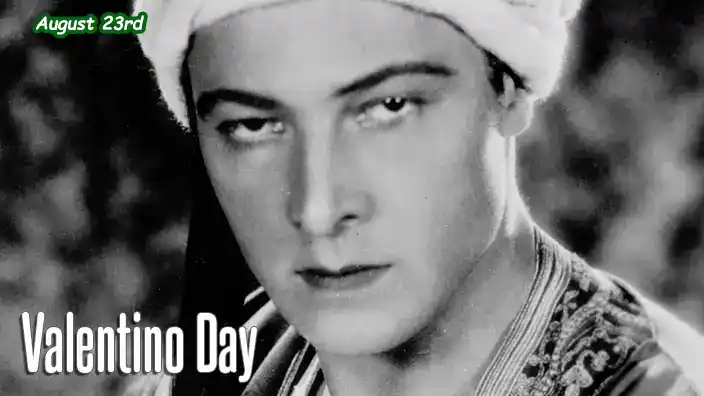
With a gaze that could melt ice and a mustache so perfectly groomed it might have had its own...
-

Imagine having the uncanny ability to make even the driest statistics sound like the punchline to a...

