Celebrity Birthdays - May

May is basically the VIP lounge of months: warm, sunny, and not yet mosquito season. People born in May are annoyingly charming about it, too.
So let’s celebrate the folks who make us believe in backyard barbecues and fresh starts. They were born to bask in the glow of spring — and they want you to know it.

- Details
- Category: Celebrity Birthdays - May
Jermaine Fowler is one of comedy’s fastest-rising stars, bringing sharp wit and big energy to everything he does. From his breakthrough stand-up to starring in shows like Superior Donuts and popping up in Coming 2 America, Jermaine has a knack for mixing clever humor with genuine heart. He’s the kind of performer who can make you laugh out loud one second and nod thoughtfully the next, which makes him one to watch as his career keeps climbing. His birthday should be celebrated with laughter, a packed crowd, and maybe a mic drop or two to keep things official.
 May 16, 1988, in Washington, D.C.,

Trivia
- Jermaine Fowler has a twin brother named Jerome, and they often collaborated on early comedy projects.
- He made history as the first African-American to be the announcer for the Primetime Emmy Awards in 2017.
- Fowler’s debut comedy special, "Give 'Em Hell, Kid," premiered on Showtime in 2017, receiving positive reviews for its humor and personal storytelling.
- In addition to his work in front of the camera, Fowler is also an accomplished writer, having penned scripts for various TV projects.

- Details
- Category: Celebrity Birthdays - May
If there’s something strange in your neighborhood, there’s a very good chance Ray Parker Jr. already wrote a song about it—and made it catchy enough that you’ll be humming it whether you like it or not. He didn’t just give the world a hit; he gave it a reflex. Hear a spooky noise, and suddenly your brain goes, “I know exactly who to call.” That’s not just songwriting—that’s cultural takeover.
Born May 1, 1954, in Detroit, Michigan
Trivia
- He started as a session guitarist before becoming a solo star.
- He played guitar for Stevie Wonder early in his career.
- He formed the band Raydio in the 1970s.
- His song Ghostbusters hit number one on the Billboard Hot 100.
- He won a Grammy Award for the Ghostbusters theme.
- He has worked as a producer and songwriter for other artists.
- He continues to perform and tour decades after his biggest hit.

- Details
- Category: Celebrity Birthdays - May
Some voices don’t just sing—they settle in, like an old chair on a front porch that’s seen a few seasons and isn’t going anywhere. Randy Travis has that kind of voice. Rich, steady, and unmistakable, it doesn’t chase attention—it earns it. And once you hear it, you don’t forget it… not tomorrow, not twenty years from now.
May 4, 1959, in Marshville, North Carolina
Trivia
- Breakthrough album was Storms of Life (1986)
- Known for “Forever and Ever, Amen”
- Helped revive traditional country music in the 1980s
- Won multiple Grammy Awards
- Inducted into the Country Music Hall of Fame in 2016
- Appeared in films and television
- Survived a major stroke in 2013
- Continued to inspire fans through recovery and new music technology

- Details
- Category: Celebrity Birthdays - May
Some people ease into fame. Miranda Cosgrove practically grew up with it—going from stealing scenes as a kid to carrying entire shows before most people have figured out how to pay their own phone bill. If there’s a masterclass in balancing childhood stardom with an actual adult career (and keeping your sanity intact), she could probably teach it… and still have time to record a song and host a show afterward.
 May 14, 1993, in Los Angeles, California
Trivia
- She starred in School of Rock with Jack Black.
- She played Megan Parker on Drake & Josh.
- She became famous worldwide for her role in iCarly.
- At one point, she was one of the highest-paid child actors in television.
- She released her debut album Sparks Fly in 2010.
- She voices Margo in the Despicable Me franchise.
- She attended the University of Southern California while continuing her career.

- Details
- Category: Celebrity Birthdays - May
Don’t look back in anger — just grab a pint and celebrate, because it’s Noel Gallagher’s birthday! The former Oasis guitarist and chief songwriter gave us some of the most singalong-worthy anthems of the ’90s, turned sibling rivalry into a Britpop spectator sport, and still manages to pack arenas with his High Flying Birds. Whether he’s writing music that fills stadiums or dropping quotes that fill tabloids, Gallagher remains rock ’n’ roll’s favorite straight-talking poet — and today, he gets the spotlight all to himself.
May 29, 1967, in Manchester, England
Trivia
- Noel Gallagher wrote “Live Forever,” one of Oasis’ biggest hits, as a response to the nihilistic attitude of grunge music, particularly Nirvana’s “I Hate Myself and Want to Die.”
- He played a significant role in the resurgence of interest in British rock music in the 1990s, often seen as a counter to the American grunge movement.
- Despite his tough exterior, Gallagher has a soft spot for his pets and is a dedicated dog owner.

- Details
- Category: Celebrity Birthdays - May
Stock the shelves and cue the awkward workplace banter — it’s Ben Feldman’s birthday! Best known for his charming, slightly neurotic turn as Jonah on Superstore (and for stealing scenes on Mad Men before that), Feldman has a knack for making everyday situations hilariously relatable. Whether he’s navigating retail chaos, corporate drama, or just trying to do the right thing, Feldman keeps us laughing — and today, the price tag says “celebrate.”
May 27, 1980, in Potomac, Maryland
Trivia
- Entrepreneurial Spirit: In addition to acting, Feldman has a stake in a winery, Angelica Cellars, showcasing his interest in the wine industry and entrepreneurial endeavors.
- Theater Roots: Before making it big on screen, Feldman had a successful run on Broadway, starring in "The Graduate" alongside Kathleen Turner and Alicia Silverstone.
- Voice Acting: Feldman has lent his voice to several animated projects, including the role of Chris in "Big Hero 6: The Series," further highlighting his diverse talents.

- Details
- Category: Celebrity Birthdays - May
In a family where global superstardom was basically the family business, you might expect everyone to be loud, flashy, and fighting for the spotlight. Jackie Jackson took a different route—smooth, steady, and just cool enough to make it look effortless. While others grabbed headlines, Jackie made sure the music stayed tight, the harmonies stayed sharp, and the show never missed a beat.
May 4, 1951, in Gary, Indiana
Trivia
- Second eldest of the Jackson siblings
- Founding member of The Jackson 5
- Originally performed lead vocals in early songs
- Transitioned with the group to The Jacksons in the 1970s
- Released solo music, including the hit “Stay”
- Worked as a songwriter and producer
- Known for his smooth vocals and steady stage presence
- Has helped maintain and manage the Jackson family legacy

- Details
- Category: Celebrity Birthdays - May
Somewhere along the way, Emilio Estevez figured out a secret that eludes a lot of Hollywood: you don’t have to grab the loudest role, the flashiest spotlight, or the biggest paycheck to leave a mark. While others were busy turning fame into a full-contact sport, Estevez played it more like chess—quiet moves, smart choices, and the occasional surprise checkmate. One minute, he’s part of the coolest group of young actors in the country; the next, he’s coaching a bunch of underdogs on ice like it’s the most natural career pivot in the world. Turns out, doing your own thing never goes out of style.
May 12, 1962, in New York City
Trivia
- Chose to keep his birth name instead of using “Sheen.”
- Member of the 1980s “Brat Pack” film group.
- Starred in The Breakfast Club and St. Elmo’s Fire.
- Played Coach Gordon Bombay in The Mighty Ducks films.
- Directed and starred in Wisdom at a young age.
- Directed acclaimed films like Bobby and The Way.
- Appeared in Bon Jovi’s “Blaze of Glory” music video.
- Has two children and values family life over celebrity status.

- Details
- Category: Celebrity Birthdays - May
Jewel went from living in her car to living on the charts, proving that a big voice and bigger determination can turn struggle into stardom. With heartfelt hits like Who Will Save Your Soul and You Were Meant for Me, she became the soundtrack of the ‘90s for anyone who ever stared out a rainy window feeling deep and poetic. Over the years, Jewel has explored pop, country, and folk, always staying true to her storytelling roots — and occasionally reminding us that she can yodel like nobody’s business. Her birthday deserves an acoustic guitar, a campfire, and a chorus of friends singing along under the stars.
May 23, 1974, in Payson, Utah
Trivia
- Jewel's initial passion was for opera, and she received formal training at the prestigious Interlochen Arts Academy in Michigan.
- She is a skilled yodeler, a talent she inherited from her father, Atz Kilcher, who is also a musician.
- Jewel made a guest appearance on the popular TV show "The Lyon's Den," showcasing her acting chops alongside Rob Lowe.
- An advocate for mental health, Jewel founded the Never Broken Foundation, which provides resources and tools for emotional well-being.
- In addition to her artistic talents, Jewel is also an entrepreneur, launching a line of jewelry that reflects her rustic, bohemian style.

- Details
- Category: Celebrity Birthdays - May
Matt Stone is the man who helped unleash South Park on the world — and we’ve been laughing, cringing, and occasionally gasping ever since. Along with creative partner Trey Parker, Stone turned a crude little animated short into one of the longest-running, sharpest-tongued comedies on television. Nothing is sacred in Matt’s world — politicians, celebrities, social trends — if it exists, he’s probably skewered it in construction-paper animation. Beyond South Park, he’s co-written Broadway hits like The Book of Mormon, proving he can be both wildly inappropriate and critically acclaimed at the same time (a rare talent). If you’re celebrating Matt’s birthday, be warned: the cake might sing, the candles might curse, and somewhere, Cartman is probably plotting to eat the whole thing.
May 26, 1971, in Houston, Texas
Trivia
- Educational Background: Stone attended the University of Colorado Boulder, where he met Trey Parker. The two began collaborating on various projects, including the short film "The Spirit of Christmas," which laid the groundwork for "South Park."
- Voice Talent: Stone voices several key characters in "South Park," including Kyle Broflovski and Butters Stotch.
- Philanthropy: Stone and Parker have donated millions to various causes, including education and the arts, reflecting their commitment to giving back to the community.

- Details
- Category: Celebrity Birthdays - May
Georgie Farmer is proof that you can be charming, spooky, and hilarious all at once — thanks to his breakout role as Ajax in Netflix’s Wednesday. As the Gorgon with a heart of gold (and occasionally a head of snakes), he made awkward teen crushes look downright petrifying — in the best way. Georgie brings a sweet, goofy energy to the screen that makes you root for him whether he’s dodging Medusa-level drama or just trying to survive another semester at Nevermore Academy. Off-screen, he’s as likable as his on-screen alter ego, sharing behind-the-scenes fun with fans and reminding everyone that being a little weird is exactly what makes you wonderful. If birthdays are for celebrating personality, Georgie’s day should come with confetti — and maybe a “snake-safe” party hat.
May 26, 2002, in Leytonstone, England
Trivia
- Artistic Talents: Besides acting, Farmer is an accomplished painter and often shares his artwork on social media, showcasing his creative talents beyond the screen.
- Musical Inclinations: Farmer plays the guitar and enjoys writing his own music, often using these skills as a form of personal expression.
- Social Media Presence: He actively engages with his fans on social media platforms, where he shares insights into his life, work, and hobbies.

- Details
- Category: Celebrity Birthdays - May
Hunter Parrish is proof that being the “good kid” can still get you noticed in Hollywood. Best known as Silas Botwin on Weeds, he somehow managed to be the voice of reason in a family that made its living selling, well… let’s just say “organic products.” He’s also tackled Broadway in Spring Awakening and Godspell, proving he can sing, dance, and probably charm the socks off the audience in the cheap seats. Basically, if you need a clean-cut guy with a mischievous grin, Hunter’s your man.
May 13, 1987, in Richmond, Virginia
Trivia
- Hunter Parrish was only 18 when he began playing Silas Botwin on Weeds.
- He made his Broadway debut as Melchior in the 2015 revival of Spring Awakening.
- Parrish appeared in the film It’s Complicated alongside Meryl Streep and Alec Baldwin.
- He has released original music, including several EPs and singles.
- Before his breakout role, he appeared in teen dramas like The O.C. and Summerland.

- Details
- Category: Celebrity Birthdays - May
David Eigenberg has perfected the art of playing “the guy you’d actually want around when things go sideways.” Need honest advice? He’s your man. Need someone to crack a joke at exactly the right moment? Also him. Need someone to run into a burning building while yelling something halfway between encouragement and mild annoyance? Definitely him. He’s the rare actor who makes you feel like everything’s under control—even when the script clearly says it isn’t.
May 17, 1964, in Manhasset, New York
Trivia
- He served in the U.S. Marine Corps Reserve.
- He is best known as Steve Brady on Sex and the City.
- He plays Christopher Herrmann on Chicago Fire.
- He reprised his Sex and the City role in films and the revival series.
- He grew up in Naperville, Illinois.
- He has appeared across multiple shows in the Chicago franchise.
- He has spoken publicly about living with hearing loss.

- Details
- Category: Celebrity Birthdays - May
Grab your weirdest prop and your most obscure punchline — it’s Chris Elliott’s birthday! The king of oddball comedy has been keeping us laughing (and sometimes scratching our heads) since Get a Life, and somehow manages to make awkwardness an art form.
From scene-stealing moments in Schitt’s Creek to playing characters you can’t forget no matter how hard you try, Elliott has built a career on making “too much” just right. Today, we celebrate a man who proves comedy is better when it’s a little bit unhinged.
May 31, 1960, in New York City
Trivia
- Family Legacy: Chris Elliott is the son of comedian Bob Elliott, half of the famous comedy duo Bob and Ray. This comedic lineage has greatly influenced his career and comedic style.
- Multi-Talented: In addition to acting and writing, Elliott is also a musician. He occasionally incorporates his musical talents into his comedic performances.
- Author Extraordinaire: Elliott's book "Daddy's Boy: A Son's Shocking Account of Life with a Famous Father" is a humorous memoir that explores his relationship with his father, blending real-life experiences with fictionalized accounts.

- Details
- Category: Celebrity Birthdays - May
Allen Leech has a gift for playing characters you just want to have a pint with — which makes sense, since he’s best known as Tom Branson on Downton Abbey, the chauffeur-turned-son-in-law who won everyone’s hearts (and probably caused a few happy tears along the way). Allen brings a natural warmth and wit to his roles, whether he’s navigating aristocratic drama in Edwardian England or starring in big-screen thrillers and historical dramas. His birthday should be celebrated with a cozy gathering, a perfectly poured Guinness, and maybe a toast in honor of every underdog who made good.
May 18, 1981, in Killiney, Ireland
Trivia
- Allen initially pursued a degree in philosophy and sociology at Trinity College Dublin before deciding to follow his passion for acting.
- He is fluent in Gaelic and has often expressed his pride in his Irish heritage.
- Details
- Category: Celebrity Birthdays - May
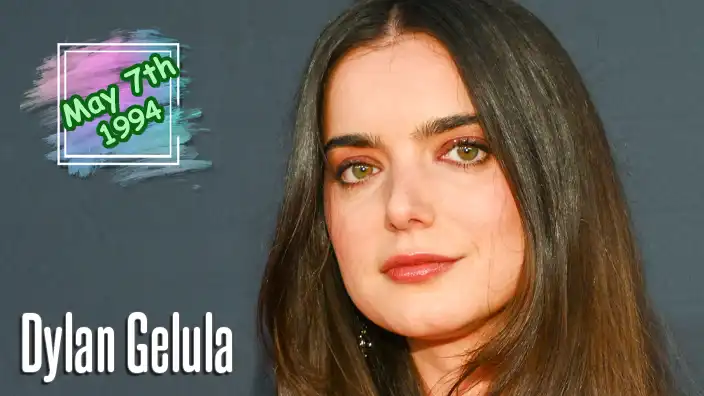
Every generation gets a handful of actors who feel less like performers and more like people you’d run into at a coffee shop—effortlessly cool, slightly mysterious, and somehow already three steps ahead of whatever conversation you’re having. Dylan Gelula fits that mold perfectly. She doesn’t shout for attention; she just shows up, delivers the moment, and leaves you wondering why everyone else is trying so hard.
May 7, 1994, in Philadelphia, Pennsylvania
Trivia
- Known for her role as Ford in Sweet/Vicious
- Appeared in Unbreakable Kimmy Schmidt as Jodi
- Starred in the indie film Flower (2017)
- Appeared in Dream Scenario (2023)
- Known for her understated and natural acting style
- Frequently works in indie and character-driven projects
- Has a reputation for choosing unconventional roles
- Maintains a relatively low public profile

- Details
- Category: Celebrity Birthdays - May
There are people who spend years knocking on Hollywood’s door… and then there’s Rachel Zegler, who more or less walked up, sang a song, and had the door flung wide open. Not kicked in—no need for that—just opened with a polite “Oh, you’re the one we’ve been looking for.” It’s the kind of debut story that sounds suspiciously like a movie plot, which is fitting, because that’s exactly where it led her.
May 3, 2001, in Hackensack, New Jersey
Trivia
- Was selected from over 30,000 applicants for the role of Maria
- Began performing in school and local theater productions
- Known for her powerful soprano voice
- Played Lucy Gray Baird in a Hunger Games prequel
- Cast as Snow White in Disney’s live-action remake
- Frequently shares musical performances on social media
- Has Colombian and Polish heritage
- Started her film career as a teenager
- One of the youngest actresses to win a Golden Globe in her category

- Details
- Category: Celebrity Birthdays - May
If you had told folks in the 1700s that the future of medicine involved borrowing a little help from cows, they might’ve politely suggested you lie down and rest for a while. Yet here we are, centuries later, tipping our hats to a man who looked at a milkmaid, a cow, and a deadly disease and somehow connected the dots. It’s proof that sometimes the biggest breakthroughs don’t come from fancy equipment—they come from paying attention, asking odd questions, and not being afraid to follow an idea… even if it starts in a barn.
May 17, 1749, Berkeley, England
 January 26, 1823, Berkeley, England
Trivia
- The first vaccinated patient was an eight-year-old boy named James Phipps.
- The term “vaccine” comes from vacca, the Latin word for cow.
- Jenner published his groundbreaking research in 1798.
- Smallpox was officially eradicated worldwide in 1980.
- Jenner was also a naturalist who studied cuckoo bird behavior.
- He served as physician to King George IV later in life.
- Jenner’s work is often credited with saving more lives than any other individual in history.

- Details
- Category: Celebrity Birthdays - May
Bill Paxton was one of those rare actors who felt like a friend every time he showed up on screen. Whether he was battling aliens in Aliens, chasing twisters in Twister, or panicking in Titanic, Paxton brought humor, heart, and a touch of everyman charm to every role. He could make even the wildest situations feel believable — and fun — which is why fans loved him so much. His passing in 2017 was a huge loss to Hollywood, but his legacy lives on through an incredible filmography that still entertains and inspires. His birthday should be celebrated with popcorn, a double feature, and maybe a loud “Game over, man!” in his honor.
May 17, 1955, in Fort Worth, Texas
February 25, 2017, in Los Angeles, California
Trivia
- Bill Paxton appeared in the music video for "Fish Heads" by Barnes & Barnes, which he also directed.
- He was one of the few actors to be killed by an alien, a predator, and a terminator in the films "Aliens," "Predator 2," and "The Terminator," respectively.
- Paxton was a close friend of fellow actor and director James Cameron, with whom he collaborated on several projects, including "Aliens," "Titanic," and "True Lies."
- He received an Emmy nomination for his role in the mini-series "Hatfields & McCoys," which also starred Kevin Costner.

- Details
- Category: Celebrity Birthdays - May
If there were an award for “Most Likely to Say the Wrong Thing at Exactly the Right Time,” Jason Gray-Stanford would have a shelf full of them. He’s mastered that fine line between confidence and confusion, delivering lines with the kind of earnest energy that makes you laugh before you even realize why. It’s not just comedy—it’s controlled chaos, and he plays it like a seasoned pro who knows exactly when to lean in and when to let the moment do the work.
Born on May 19, 1970, in Vancouver, Canada
Trivia
- Studied theatre at the University of British Columbia
- Voiced Raditz in the English dub of Dragon Ball Z
- Has appeared in numerous popular TV series, including The X-Files and NCIS
- Works as an actor, writer, and director
- Known for his strong comedic timing and character work

- Details
- Category: Celebrity Birthdays - May
Some people inherit a good set of dishes—Rebecca Hall inherited an entire theatrical legacy and still managed to make it look like she built everything from scratch. She’s the kind of actress who can deliver a quiet, devastating line in a drama and then casually stroll into a blockbuster like she owns the place. No fuss, no noise—just sharp instincts, steady performances, and the unmistakable sense that she’s always a step ahead of the script.
May 3, 1982, in London, England
Trivia
- Made her first on-screen appearance at age 10
- Daughter of renowned stage director Sir Peter Hall and opera singer Maria Ewing
- Received an Ian Charleson Award early in her stage career
- Earned a Golden Globe nomination for Vicky Cristina Barcelona
- Won a BAFTA TV Award for Red Riding: 1974
- Made her directorial debut with Passing in 2021
- Has appeared in both indie films and major blockbusters
From Our Marks Catelog
-

Single parenthood is a crash course in multitasking—where making dinner, helping with homework, and dodging Lego...
-

Balloons are the life of any party, with their bright colors and whimsical shapes, but they also...
-

Letting things go is a skill we all think we have—until we’re in the shower five years later, replaying an...
-

Some holidays ask for deep reflection. Others demand fireworks, feasts, or elaborate decorations....
-
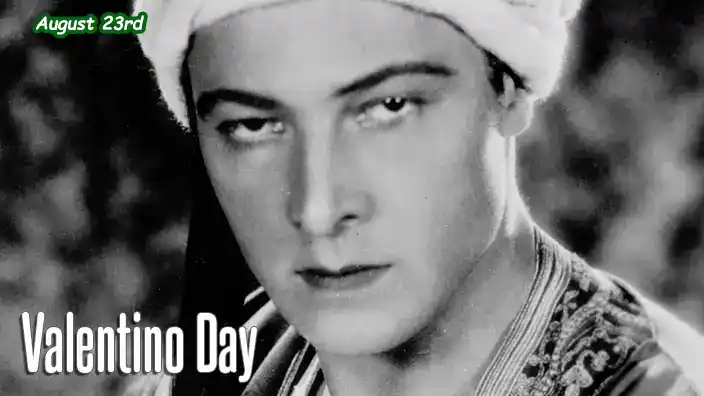
With a gaze that could melt ice and a mustache so perfectly groomed it might have had its own...
-

Imagine having the uncanny ability to make even the driest statistics sound like the punchline to a...

