Celebrity Birthdays - May

May is basically the VIP lounge of months: warm, sunny, and not yet mosquito season. People born in May are annoyingly charming about it, too.
So let’s celebrate the folks who make us believe in backyard barbecues and fresh starts. They were born to bask in the glow of spring — and they want you to know it.

- Details
- Category: Celebrity Birthdays - May
Tune up the guitar and dust off the blue suede shoes — it’s Riley Keough’s birthday! The actress, model, and granddaughter of Elvis Presley has built a career that proves talent runs in the family, starring in everything from indie dramas to the high-octane chaos of Mad Max: Fury Road. Whether she’s playing a rock star in Daisy Jones & The Six or stealing scenes on the big screen, Keough keeps finding ways to surprise audiences — and today she’s got one more reason to shine brighter than a Vegas marquee.
 May 29, 1989, in Los Angeles, California.

Trivia
- Riley Keough is an accomplished model and has worked with high-profile brands such as Dior and Dolce & Gabbana.
- She is married to stuntman Ben Smith-Petersen, whom she met while filming “Mad Max: Fury Road.”
- Keough has a tattoo in memory of her brother Benjamin Keough, who tragically passed away in 2020.

- Details
- Category: Celebrity Birthdays - May
Kelly Monaco’s career has included glamorous modeling, daytime drama, ballroom triumphs, and enough on-screen emotional chaos to make most people need a nap. With a talent for handling soap opera intrigue, reality television pressure, and public attention with equal determination, Monaco proved that staying power in entertainment requires more than beauty—it takes grit, adaptability, and the rare ability to look composed while fictional lives collapse spectacularly around you.
May 23, 1976, in Philadelphia, Pennsylvania
Trivia
- Playboy Playmate of the Month in April 1997
- Starred as Livvie Locke on Port Charles
- Best known as Sam McCall on General Hospital
- Won Season 1 of Dancing with the Stars
- Competed with professional dancer Alec Mazo
- Built a successful career across modeling, acting, and reality television

- Details
- Category: Celebrity Birthdays - May
Sasha Alexander has the kind of career that makes you do a double-take and say, “Wait… she was in that too?” One minute she’s chasing down suspects, the next she’s calmly explaining forensic details like it’s just another Tuesday, and somewhere in between she’s popping up in shows you’ve watched for years. She’s basically the human version of, “Oh hey, I know her!”—except she’s been quietly building a résumé that could keep most actors busy for three lifetimes.
May 17, 1973, in Los Angeles, California,
Trivia
- She appeared as Caitlin Todd on NCIS.
- She starred as Dr. Maura Isles on Rizzoli & Isles.
- She graduated from the University of Southern California.
- She appeared in Mission: Impossible III (2006).
- She has Serbian heritage.
- She is married to director Edoardo Ponti.
- She has also worked as a producer on select projects.
- Details
- Category: Celebrity Birthdays - May
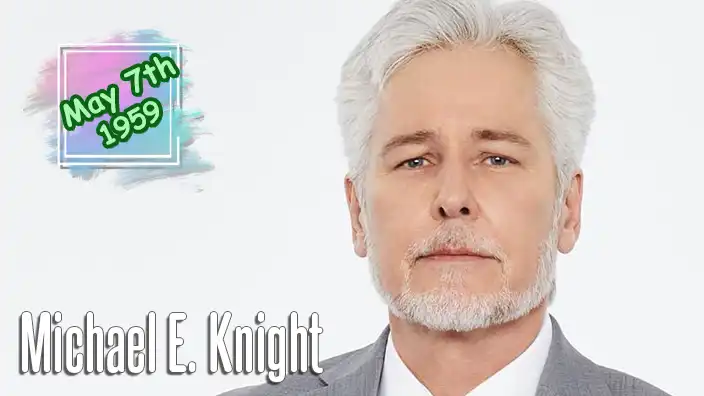
Some actors make a career out of explosions, car chases, or dramatic courtroom speeches. Michael E. Knight made his mark doing something far more dangerous—keeping a straight face in the middle of daytime television chaos. In a world where secrets spill faster than coffee in a soap opera hospital hallway, he stood steady, delivering calm, confident performances while everything around him practically begged for dramatic background music.
 May 7, 1959, in Princeton, New Jersey
Trivia
- Joined All My Children in 1983
- Won Daytime Emmy Awards for his performances
- Known for both leading and supporting roles in daytime TV
- Appeared on shows like Murder, She Wrote and CSI
- Also had roles on The Young and the Restless
- Graduated from Wesleyan University
- Built a career spanning decades in television
- Recognized for his consistency and longevity in soap operas

- Details
- Category: Celebrity Birthdays - May
Some voices don’t just sing—they settle in, like an old chair on a front porch that’s seen a few seasons and isn’t going anywhere. Randy Travis has that kind of voice. Rich, steady, and unmistakable, it doesn’t chase attention—it earns it. And once you hear it, you don’t forget it… not tomorrow, not twenty years from now.
May 4, 1959, in Marshville, North Carolina
Trivia
- Breakthrough album was Storms of Life (1986)
- Known for “Forever and Ever, Amen”
- Helped revive traditional country music in the 1980s
- Won multiple Grammy Awards
- Inducted into the Country Music Hall of Fame in 2016
- Appeared in films and television
- Survived a major stroke in 2013
- Continued to inspire fans through recovery and new music technology

- Details
- Category: Celebrity Birthdays - May
Allen Leech has a gift for playing characters you just want to have a pint with — which makes sense, since he’s best known as Tom Branson on Downton Abbey, the chauffeur-turned-son-in-law who won everyone’s hearts (and probably caused a few happy tears along the way). Allen brings a natural warmth and wit to his roles, whether he’s navigating aristocratic drama in Edwardian England or starring in big-screen thrillers and historical dramas. His birthday should be celebrated with a cozy gathering, a perfectly poured Guinness, and maybe a toast in honor of every underdog who made good.
May 18, 1981, in Killiney, Ireland
Trivia
- Allen initially pursued a degree in philosophy and sociology at Trinity College Dublin before deciding to follow his passion for acting.
- He is fluent in Gaelic and has often expressed his pride in his Irish heritage.

- Details
- Category: Celebrity Birthdays - May
Pack your golf clubs and warm up the one-liners — it’s Bob Hope’s birthday! The legendary comedian spent decades cracking jokes for troops, roasting Hollywood royalty, and proving that laughter really is the best medicine (unless you’re on the receiving end of one of his zingers).
May 29, 1903, in Eltham, London, England.
 July 27, 2003, in Toluca Lake, LA, California
Trivia
- Bob Hope’s birth name was Leslie Townes Hope. He changed it to “Bob” for its simplicity and more American-sounding appeal.
- He hosted the Academy Awards 19 times, more than any other host in history.
- Hope was a keen supporter of numerous charities and raised millions of dollars for causes such as cancer research, veterans’ organizations, and children's hospitals.
- He was a naturalized American citizen, having moved to the United States with his family in 1908.

- Details
- Category: Celebrity Birthdays - May
Jon Pardi is keeping country music loud, proud, and just the right amount of rowdy. Known for hits like Dirt on My Boots and Heartache Medication, he blends honky-tonk twang with a modern edge that makes you want to grab a dance partner and two-step until closing time. Pardi’s music is pure good-time energy — the kind that fills up a dance hall and makes even the shyest wallflowers tap their boots. His birthday should be celebrated with a live band, a full dance floor, and maybe a toast with something strong enough to make you sing along a little off-key.
May 20, 1985, in Dixon, California
Trivia
- Jon Pardi was named after his father, who also goes by Jon.
- He is an accomplished guitarist and often incorporates intricate guitar solos into his live performances.
- Pardi proposed to his longtime girlfriend, Summer Duncan, on stage during a concert at the Ryman Auditorium in Nashville in 2019.
- He won the ACM Award for Album of the Year in 2017 for "California Sunrise."
- Pardi is a skilled carpenter and enjoys woodworking in his free time.

- Details
- Category: Celebrity Birthdays - May
Jermaine Fowler is one of comedy’s fastest-rising stars, bringing sharp wit and big energy to everything he does. From his breakthrough stand-up to starring in shows like Superior Donuts and popping up in Coming 2 America, Jermaine has a knack for mixing clever humor with genuine heart. He’s the kind of performer who can make you laugh out loud one second and nod thoughtfully the next, which makes him one to watch as his career keeps climbing. His birthday should be celebrated with laughter, a packed crowd, and maybe a mic drop or two to keep things official.
May 16, 1988, in Washington, D.C.,
Trivia
- Jermaine Fowler has a twin brother named Jerome, and they often collaborated on early comedy projects.
- He made history as the first African-American to be the announcer for the Primetime Emmy Awards in 2017.
- Fowler’s debut comedy special, "Give 'Em Hell, Kid," premiered on Showtime in 2017, receiving positive reviews for its humor and personal storytelling.
- In addition to his work in front of the camera, Fowler is also an accomplished writer, having penned scripts for various TV projects.

- Details
- Category: Celebrity Birthdays - May
Melanie Lynskey is the queen of quietly stealing the show — and she’s been doing it since her breakout in Heavenly Creatures as a teenager. Over the years, she’s built a career playing complex, relatable, and often delightfully deadpan characters, from sitcoms like Two and a Half Men to scene-stealing roles in indie films and prestige TV. Most recently, she’s been blowing audiences away in Yellowjackets, proving that she can do dark, twisty drama just as well as comedy. Melanie has that rare ability to make you laugh, cry, and squirm — sometimes all in the same scene. Her birthday deserves cake, cozy pajamas, and maybe a suspiciously intense wilderness story or two.
May 16, 1977, in New Plymouth, New Zealand
Trivia
- Melanie Lynskey has maintained a close friendship with her "Heavenly Creatures" co-star Kate Winslet since they filmed together as teenagers.
- She is married to actor Jason Ritter, and they have a daughter together. The couple is known for their low-key, private lifestyle.
- Lynskey is a vocal advocate for mental health awareness and body positivity, using her platform to support and encourage others.

- Details
- Category: Celebrity Birthdays - May
Octavia Spencer is the kind of actress who can steal a scene with just a raised eyebrow — and she’s been doing it brilliantly for years. From her Oscar-winning turn in The Help to cracking us up in comedies and chilling us in thrillers like Ma, Octavia has proved she can do it all. She has that rare ability to make you laugh, cry, and then cheer all in the same five minutes — and you somehow don’t feel emotionally manipulated, just grateful. Off-screen, she’s known for her humor and warmth, making her one of Hollywood’s most beloved talents. If birthdays are for celebrating range, Octavia’s party should have drama, comedy, a twist ending, and maybe a little pie — Minny Jackson style.
May 25, 1970, in Montgomery, Alabama
Trivia
- Octavia Spencer is one of the few actors to have received three Academy Award nominations for Best Supporting Actress.
- She is a self-proclaimed tech enthusiast and enjoys keeping up with the latest gadgets and technology trends.
- Spencer has a close friendship with fellow actress and comedian Melissa McCarthy, and they often support each other's projects.
- She made her film debut in 1996 in the movie "A Time to Kill," directed by Joel Schumacher.
- Spencer is an advocate for body positivity and frequently speaks out about the importance of self-acceptance and confidence.

- Details
- Category: Celebrity Birthdays - May
You didn’t attend a Don Rickles show so much as you survived it—with dignity optional and laughter guaranteed. He had a gift for spotting you in a crowd, sizing you up in half a second, and delivering a line so sharp you’d swear he’d been preparing it your entire life. And yet, by the end of it, you weren’t offended—you were honored. Because if Rickles roasted you, it meant you mattered… or at the very least, you were sitting in the wrong seat at the wrong time.
May 8, 1926, in Queens, New York
April 6, 2017, in Beverly Hills, California
Trivia
- Served in the U.S. Navy during World War II.
- Known as “Mr. Warmth” for his insult comedy style.
- Became a Las Vegas headliner alongside top entertainers.
- Close friend of Frank Sinatra.
- Appeared frequently on The Tonight Show.
- Voiced Mr. Potato Head in Toy Story.
- Starred in films like Kelly’s Heroes and Casino.
- Won Emmy Awards for his television work.

- Details
- Category: Celebrity Birthdays - May
John Bonham didn’t just play the drums—he attacked them like they’d stolen his pint and insulted his mother. With enough power to make your teeth rattle and enough swagger to make other drummers reconsider their career choices, “Bonzo” could turn a simple beat into a full-blown seismic event. If Led Zeppelin was a runaway train, Bonham was both the engine and the guy shoveling coal at double speed—grinning the whole time.
May 31, 1948 in Redditch, UK
September 25, 1980 in Clewer, UK
Trivia
- Nicknames: Bonham was affectionately nicknamed "Bonzo" by his friends and fans, a name that has become synonymous with his larger-than-life persona.
- Influences: Bonham was influenced by jazz drummers like Gene Krupa and Buddy Rich, whose techniques he incorporated into his own unique style.
- Legacy: John Bonham's son, Jason Bonham, has followed in his father's footsteps, becoming a successful drummer in his own right and often performing with Led Zeppelin on special occasions.

- Details
- Category: Celebrity Birthdays - May
Janet Jackson is pop royalty — a groundbreaking performer who turned every stage into a spectacle and every album into an era. With hits like Rhythm Nation, Escapade, and Together Again, she’s given the world music that makes you dance, think, and feel all at once. Her iconic choreography, daring fashion, and powerhouse performances have influenced generations of artists, proving that being a Jackson comes with serious star power. Whether she’s headlining a world tour or quietly reinventing herself, Janet always brings something fresh and fearless. Her birthday should be celebrated with a dance floor, a killer beat, and at least one perfectly synchronized dance break.
May 16, 1966, in Gary, Indiana
Trivia
- Janet Jackson is the first and only artist to produce seven top-five hits from one album, "Rhythm Nation 1814."
- She has sold over 100 million records worldwide, making her one of the best-selling music artists of all time.
- Janet was inducted into the Rock and Roll Hall of Fame in 2019, a recognition of her enduring impact on the music industry.

- Details
- Category: Celebrity Birthdays - May
If you’re in a movie and Lance Henriksen walks into the room, there are two possibilities: either he’s the only one who knows what’s going on… or you’re about five minutes away from serious trouble. Either way, you’re going to want to listen to him.
Born May 5, 1940, in New York City
Trivia
- He struggled with dyslexia and learned to read later in life.
- He played the android Bishop in Aliens.
- He appeared in multiple films in the Alien franchise.
- He starred in the TV series Millennium.
- He was originally considered for the role of the Terminator.
- He has worked as a painter and visual artist.
- He is known for his distinctive voice and intense screen presence.

- Details
- Category: Celebrity Birthdays - May
Peggy Lee wasn’t just a singer — she was a mood. With that silky voice that could melt ice cubes and make a whole room lean in closer, Peggy turned every song into a late-night confession. She gave us classics like Fever and Is That All There Is?, proving that sometimes a whisper is more powerful than a scream. Lee’s career stretched from the swing era to the rock ‘n’ roll years, and she even co-wrote songs for Lady and the Tramp — yes, that’s her serenading those spaghetti-slurping dogs. Cool, elegant, and just a little dangerous, Peggy Lee made it clear that sophistication didn’t have to be boring — it could be playful, smoky, and just the right amount of scandalous.
May 26, 1920, in Jamestown, North Dakota
January 21, 2002, in Los Angeles, California
Trivia
- Name Change: Peggy Lee adopted her stage name while performing on a radio show in Fargo, North Dakota. The name "Peggy Lee" was suggested by the show's host.
- Innovator in Music: Lee was one of the first artists to experiment with multi-track recording, layering her voice to create harmonies.
- Animal Lover: Lee was a devoted advocate for animal rights and often supported charities dedicated to animal welfare.

- Details
- Category: Celebrity Birthdays - May
Lana Condor has that rare ability to make you forget you’re watching a performance and feel like you’ve just stumbled into someone’s very real, very relatable life—complete with awkward moments, overthinking, and the occasional emotional spiral over things like handwritten letters. She brings a kind of charm that doesn’t try too hard, which is probably why it works so well. In a world full of polished, picture-perfect characters, she’s the one who reminds you that a little bit of awkward honesty goes a long way—and might even steal the whole show.
May 11, 1997, in Cần Thơ, Vietnam
Trivia
- Trained in ballet, including at the Joffrey Ballet School
- Film debut in X-Men: Apocalypse as Jubilee
- Starred as Lara Jean in To All the Boys I've Loved Before
- Appeared in the film’s sequels, forming a trilogy
- Starred in TV series Deadly Class
- Has done voice acting and producing work
- Known for her relatable and natural acting style
- Speaks openly about mental health and identity

- Details
- Category: Celebrity Birthdays - May
Summon the crossroads demon and light a few black candles — it’s Mark Sheppard’s birthday! Known to Supernatural fans as the snarky, smooth-talking Crowley, Sheppard made evil look charming and sarcasm sound like poetry.
Whether he’s ruling Hell, scheming through Battlestar Galactica, or popping up in every sci-fi series you’ve ever loved, Sheppard has mastered the art of stealing scenes with one raised eyebrow. Today we celebrate a man who made villainy classy — and probably negotiated this party at a very reasonable price.
May 30, 1964, in London, England
Trivia
- Mark Sheppard is the son of actor W. Morgan Sheppard, with whom he has shared the screen on multiple occasions. They played the same character at different ages in "Doctor Who" and appeared together in "NCIS."
- Before pursuing acting, Sheppard was a successful musician, playing drums for bands such as Light a Big Fire. His musical talents occasionally surface in his acting roles, adding an extra layer to his performances.
- Sheppard's distinctive voice has made him a sought-after voice actor for video games and animated projects. He has lent his voice to popular games like "Destiny" and "The Conduit."
- He is an advocate for various charitable causes, often using his platform to raise awareness and support for organizations focused on mental health, veterans' issues, and animal welfare.

- Details
- Category: Celebrity Birthdays - May
If you’ve ever rolled the windows down, cranked up the radio, and suddenly felt like the highway belonged to you—there’s a decent chance Bob Seger had something to do with it. The man didn’t just write songs; he built soundtracks for late nights, long drives, and that quiet moment when you realize you’re not as young as you used to be… but you’re not done yet either.
May 6, 1945, in Detroit, Michigan
Trivia
- His breakthrough came with the live album Live Bullet (1976).
- “Night Moves” became one of his most iconic songs.
- “Old Time Rock and Roll” gained renewed fame from Risky Business.
- He was inducted into the Rock and Roll Hall of Fame in 2004.
- His backing group is known as the Silver Bullet Band.
- He built his fanbase through years of relentless touring.
- His music is often associated with “heartland rock.”
- Details
- Category: Celebrity Birthdays - May
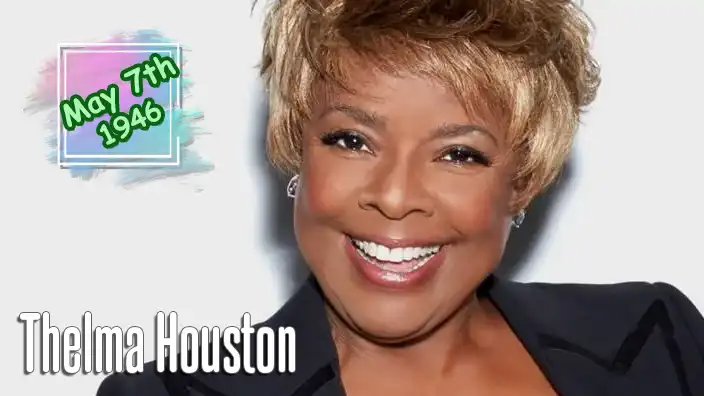
Some songs fade with time. Others hang around like that one guest who said they’d leave an hour ago but is still dancing in the living room. Thelma Houston’s biggest hit didn’t just stick—it moved in, rearranged the furniture, and turned into a full-blown anthem. And honestly, nobody’s asking it to leave.
May 7, 1946, in Leland, Mississippi
Trivia
- Won a Grammy for “Don’t Leave Me This Way” (1976)
- Her version of the song became a disco-era anthem
- Began her career in gospel music
- Released her debut album Sunshower in 1969
- Worked with songwriter Jimmy Webb early in her career
- Known for her powerful and expressive vocal style
- Performed in musical theater and live stage productions

- Details
- Category: Celebrity Birthdays - May
Nikki Reed has been shining on screen since she co-wrote and starred in the coming-of-age drama Thirteen as a teenager, kicking off a career full of bold choices. Many fans know her best as Rosalie Hale from The Twilight Saga, where she brought the icy vampire with a heart of gold to life — and gave the franchise some of its most intense moments. Beyond acting, Nikki is an entrepreneur, environmental advocate, and jewelry designer, proving she’s just as creative off-screen as she is on. Her birthday should be celebrated with a little Hollywood sparkle, a dash of vampire drama, and maybe a toast to living life fearlessly.
May 17, 1988, in Los Angeles, California
Trivia
- Nikki Reed is an avid equestrian and often shares her horseback riding adventures on social media.
- She has a deep interest in photography and has showcased her work in various exhibitions.
- Reed is a certified scuba diver and enjoys exploring underwater worlds during her travels.
- She co-founded the production company "Black Dalmatian Films," focusing on creating meaningful and impactful content.
From Our Marks Catelog
-

Single parenthood is a crash course in multitasking—where making dinner, helping with homework, and dodging Lego...
-

Balloons are the life of any party, with their bright colors and whimsical shapes, but they also...
-
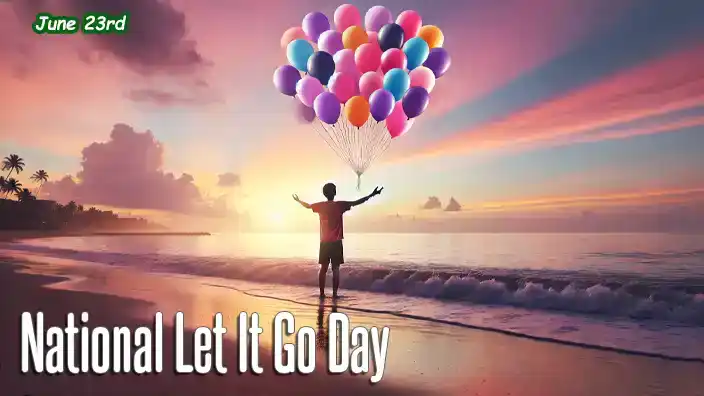
Letting things go is a skill we all think we have—until we’re in the shower five years later, replaying an...
-

Some holidays ask for deep reflection. Others demand fireworks, feasts, or elaborate decorations....
-
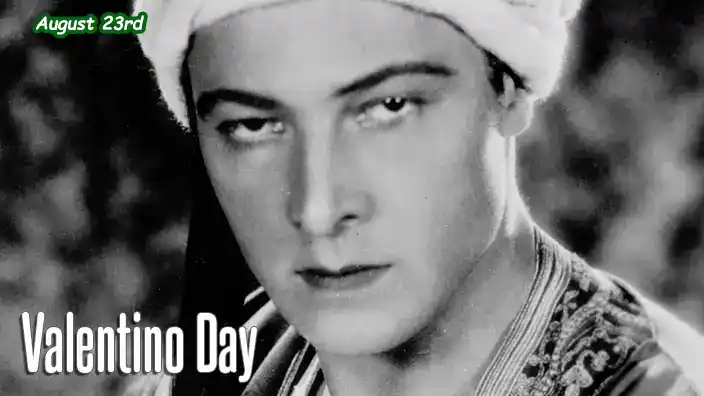
With a gaze that could melt ice and a mustache so perfectly groomed it might have had its own...
-

Imagine having the uncanny ability to make even the driest statistics sound like the punchline to a...


