Celebrity Birthdays - May

May is basically the VIP lounge of months: warm, sunny, and not yet mosquito season. People born in May are annoyingly charming about it, too.
So let’s celebrate the folks who make us believe in backyard barbecues and fresh starts. They were born to bask in the glow of spring — and they want you to know it.

- Details
- Category: Celebrity Birthdays - May
Megan Fox has been turning heads since she burst onto the scene, bringing equal parts glam and grit to the big screen. She became a blockbuster icon with Transformers, proving she could hold her own next to giant robots, explosions, and Shia LaBeouf’s fast-talking antics. Over the years, Megan has mixed action roles with edgy comedies and cult favorites like Jennifer’s Body, which went from misunderstood to full-on fan favorite. With her sharp wit, unapologetic confidence, and style that turns every red carpet into a runway, Megan is as fascinating off-screen as she is on it. Her birthday should be celebrated with fireworks, fast cars, and maybe a wink toward those
 May 16, 1986, in Oak Ridge, Tennessee

Trivia
- Megan Fox has several tattoos, each with personal significance. One of her most famous tattoos is a quote from Shakespeare's "King Lear": "We will all laugh at gilded butterflies."
- She made her film debut in the 2001 movie "Holiday in the Sun," starring opposite the Olsen twins.
- Megan is a dedicated mother to her three sons with actor Brian Austin Green, and she often emphasizes the importance of family in her life.
- She is also an advocate for mental health awareness, openly discussing her struggles with self-esteem and the pressures of Hollywood.
- Details
- Category: Celebrity Birthdays - May
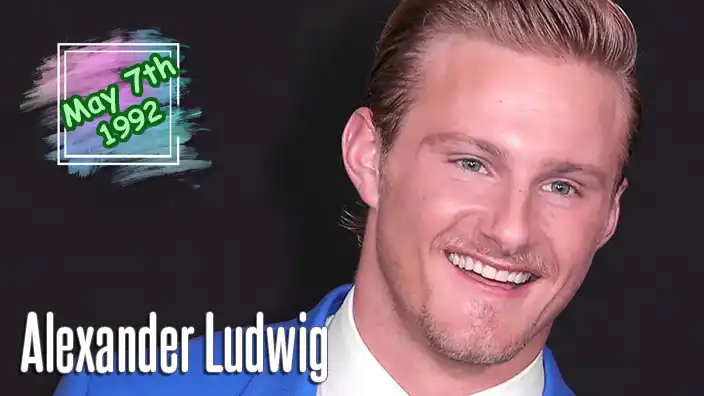
Some actors ease into Hollywood. Alexander Ludwig showed up swinging—literally. Whether he’s charging into battle, surviving dystopian chaos, or just looking like he was born to wear armor in slow motion, Ludwig has built a career out of playing characters who don’t exactly tiptoe through life. Subtle? Not always. Memorable? Every time.
 May 7, 1992, in Vancouver, Canada
Trivia
- Played Cato in The Hunger Games (2012)
- Starred as Bjorn Ironside in Vikings
- Appeared in Lone Survivor (2013)
- Began acting as a child
- Also a country music artist
- Studied at the University of Southern California
- Known for physically demanding roles

- Details
- Category: Celebrity Birthdays - May
If Disney ever needed proof that casting lightning in a bottle is possible, they found it in Naomi Scott. She walked into Agrabah, sang like she owned the place, and somehow made a whole new generation forget that animated royalty had been holding that throne for decades. Not bad for someone who went from teen TV to global stardom without so much as breaking a sweat—or at least without letting us see it.
May 6, 1993, in Hounslow, London
Trivia
- She performed the hit song “Speechless” in Aladdin (2019).
- Her breakout TV role was on Disney Channel’s Life Bites.
- She played the Pink Ranger in Power Rangers (2017).
- She is of British and Indian-Ugandan heritage.
- She married Jordan Spence before achieving global fame.
- She started singing in church before entering entertainment.
- She starred in the horror hit Smile (2022).
- She has pursued both acting and music careers simultaneously.

- Details
- Category: Celebrity Birthdays - May
If growing up on television were a sport, Jamie-Lynn Sigler would’ve been drafted straight into the big leagues and told, “Good luck, kid—your TV dad is a mob boss.” While most teens were worrying about homework and curfews, she was navigating family dinners where one wrong sentence might get you that look from Tony. And somehow, through all the tension, drama, and emotionally charged standoffs, she managed to make Meadow feel like the most normal person in the room—which, considering the company, is about as impressive as defusing a bomb while arguing about college tuition.
May 15, 1981, in Jericho, New York
Trivia
- She played Meadow Soprano for the show’s entire six-season run.
- She trained in musical theater before transitioning to television.
- She released a pop album titled Here to Heaven in 2001.
- She revealed her diagnosis with Multiple Sclerosis in 2016.
- She has appeared in shows like Entourage and Ugly Betty.
- She has co-hosted a podcast revisiting The Sopranos.
- She has performed on stage in addition to film and TV work.

- Details
- Category: Celebrity Birthdays - May
If the 1960s had a soundtrack for wandering barefoot through a field while contemplating life, it probably had Donovan’s name on it somewhere. He wasn’t trying to outshout anyone—he just showed up with a guitar, a calm voice, and lyrics that sounded like they were written halfway between a dream and a cup of tea. While everyone else was busy turning the volume knob to eleven, Donovan quietly proved you could turn it down to six and still steal the whole show.
May 10, 1946, in Glasgow, Scotland
Trivia
- Early in his career, he was compared to Bob Dylan.
- Known for hits like “Sunshine Superman” and “Mellow Yellow.”
- Helped influence the psychedelic music movement of the 1960s.
- Spent time in India with The Beatles studying meditation.
- Taught guitar techniques to members of The Beatles.
- Inducted into the Rock and Roll Hall of Fame in 2012.
- Blended folk, pop, and psychedelic styles in his music.
- Remains an influential figure in music decades later.

- Details
- Category: Celebrity Birthdays - May
Raise a pint and warm up the transporter — it’s Colm Meaney’s birthday! The Irish actor who became a Star Trek fan favorite as Chief O’Brien has spent decades hopping between starships, western railroads (Hell on Wheels), and gritty dramas, proving he can handle warp speed, whiskey, and wickedly good acting without breaking a sweat.
May 30, 1953, in Dublin, Ireland
Trivia
- Colm Meaney is one of the few actors to have appeared in all four "Star Trek" series set in the 24th century: "The Next Generation," "Deep Space Nine," "Voyager," and "Enterprise."
- He is an accomplished stage actor, having performed in numerous theater productions, including a notable performance as Big Daddy in a West End production of "Cat on a Hot Tin Roof."
- Meaney's distinctive voice has made him a sought-after voice actor for documentaries and animated projects.
- He has worked with director and writer Roddy Doyle on multiple occasions, often bringing Doyle's gritty, humorous, and poignant characters to life with remarkable authenticity.

- Details
- Category: Celebrity Birthdays - May
There’s a certain kind of actor who makes you believe they’ve got a backup plan for everything—flat tire, power outage, international espionage… doesn’t matter. Jeffrey Donovan gives off that exact energy. You watch him on screen and start thinking, “This guy could probably escape a locked room using nothing but a shoelace and good decision-making.” No wasted motion, no unnecessary drama—just a steady, calculating presence that says, “Relax, I’ve already thought three steps ahead.” And somehow, he makes that level of competence look effortless, which is either very reassuring… or slightly intimidating, depending on how your day is going.
May 11, 1968, in Amesbury, Massachusetts
Trivia
- Played both Robert F. Kennedy and John F. Kennedy in different films.
- Directed multiple episodes of Burn Notice and its prequel film.
- Starred in Burn Notice for all seven seasons (2007–2013).
- Has a strong theater background, including playing Hamlet.
- Known for intense preparation and studying real-life behavior for roles.
- Played a major role in Fargo Season 2 as Dodd Gerhardt.
- Later joined the iconic series Law & Order as Detective Frank Cosgrove.

- Details
- Category: Celebrity Birthdays - May
Stevie Wonder isn’t just a musician — he’s basically a one-man soundtrack to half the 20th century. With more Grammy Awards than most people have socks, he gave us classics like “Superstition,” “Isn’t She Lovely,” and “Sir Duke,” making it impossible not to dance in the kitchen. Blind since shortly after birth, he turned what could have been a limitation into a superpower, sitting down at a piano and changing music forever. Stevie doesn’t just write songs — he writes moments you never forget.
May 13, 1950, in Saginaw, Michigan
Trivia
- Stevie Wonder was the youngest artist ever to have a No. 1 hit on the Billboard Hot 100 at age 13 with “Fingertips (Part 2).”
- He plays multiple instruments, including piano, drums, harmonica, and bass.
- Wonder has won 25 Grammy Awards, one of the highest totals in music history.
- His album Songs in the Key of Life debuted at No. 1 on the Billboard chart.
- He played a major role in the campaign to make Martin Luther King Jr.’s birthday a U.S. federal holiday.

- Details
- Category: Celebrity Birthdays - May
Some athletes play the game. Willie Mays seemed to rewrite it on the fly. If baseball had a “greatest hits” reel for the entire sport, there’s a good chance he’d show up in half of it—smiling, sprinting, and doing something that makes you wonder if gravity had taken the day off.
May 6, 1931, in Westfield, Alabama
 June 18, 2024, in Palo Alto, California
Trivia
- He began his career in the Negro leagues before MLB.
- He won Rookie of the Year in 1951.
- He missed time due to military service during the Korean War.
- “The Catch” in 1954 is one of baseball’s most iconic plays.
- He hit 660 career home runs.
- He was a 24-time All-Star.

- Details
- Category: Celebrity Birthdays - May
Georgie Farmer is proof that you can be charming, spooky, and hilarious all at once — thanks to his breakout role as Ajax in Netflix’s Wednesday. As the Gorgon with a heart of gold (and occasionally a head of snakes), he made awkward teen crushes look downright petrifying — in the best way. Georgie brings a sweet, goofy energy to the screen that makes you root for him whether he’s dodging Medusa-level drama or just trying to survive another semester at Nevermore Academy. Off-screen, he’s as likable as his on-screen alter ego, sharing behind-the-scenes fun with fans and reminding everyone that being a little weird is exactly what makes you wonderful. If birthdays are for celebrating personality, Georgie’s day should come with confetti — and maybe a “snake-safe” party hat.
May 26, 2002, in Leytonstone, England
Trivia
- Artistic Talents: Besides acting, Farmer is an accomplished painter and often shares his artwork on social media, showcasing his creative talents beyond the screen.
- Musical Inclinations: Farmer plays the guitar and enjoys writing his own music, often using these skills as a form of personal expression.
- Social Media Presence: He actively engages with his fans on social media platforms, where he shares insights into his life, work, and hobbies.

- Details
- Category: Celebrity Birthdays - May
Debra Winger lit up the screen in the 1980s with performances that were equal parts strength and vulnerability, earning her a place among Hollywood’s most respected leading ladies. From Urban Cowboy to Terms of Endearment to An Officer and a Gentleman, she delivered some of the decade’s most unforgettable performances — and picked up a few Oscar nominations along the way. Known for her fierce independence and thoughtful approach to roles, Winger has always brought depth and authenticity to every character she plays. Her birthday deserves a celebration with champagne, heartfelt toasts, and maybe a ride off into the sunset — Richard Gere optional.
May 16, 1955, in Cleveland Heights, Ohio
Trivia
- Debra Winger turned down the lead role in "A League of Their Own" (1992), which ultimately went to Geena Davis.
- She wrote a memoir titled "Undiscovered" (2008), where she shares insights into her life, career, and perspectives on the entertainment industry.
- Winger is married to actor/director Arliss Howard, and they have a son together. She also has a son from her previous marriage to actor Timothy Hutton.
- In addition to her acting career, Winger has been involved in various theater productions, showcasing her range and dedication to the craft.

- Details
- Category: Celebrity Birthdays - May
John Bonham didn’t just play the drums—he attacked them like they’d stolen his pint and insulted his mother. With enough power to make your teeth rattle and enough swagger to make other drummers reconsider their career choices, “Bonzo” could turn a simple beat into a full-blown seismic event. If Led Zeppelin was a runaway train, Bonham was both the engine and the guy shoveling coal at double speed—grinning the whole time.
May 31, 1948 in Redditch, UK
September 25, 1980 in Clewer, UK
Trivia
- Nicknames: Bonham was affectionately nicknamed "Bonzo" by his friends and fans, a name that has become synonymous with his larger-than-life persona.
- Influences: Bonham was influenced by jazz drummers like Gene Krupa and Buddy Rich, whose techniques he incorporated into his own unique style.
- Legacy: John Bonham's son, Jason Bonham, has followed in his father's footsteps, becoming a successful drummer in his own right and often performing with Led Zeppelin on special occasions.

- Details
- Category: Celebrity Birthdays - May
Some actors walk into a scene and immediately demand attention. Ruth Negga does something far more interesting—she earns it. One minute she’s understated, almost blending into the background, and the next she’s delivering a performance that quietly knocks the wind out of you. No fireworks, no theatrics… just precision, presence, and the kind of talent that doesn’t need to raise its voice to be heard.
May 4, 1982, in Addis Ababa, Ethiopia
Trivia
- Raised in Limerick, Ireland
- Trained at Trinity College Dublin
- Nominated for an Academy Award for Loving
- Played Tulip O’Hare in Preacher
- Appeared in the Marvel Cinematic Universe
- Known for both film and stage performances
- Earned a Tony nomination for Macbeth
- Has Ethiopian and Irish heritage
- Known for choosing complex, character-driven roles

- Details
- Category: Celebrity Birthdays - May
Today we celebrate Eric Christian Olsen — the man who made messy surfer hair FBI-adjacent cool. Known for cracking jokes while catching bad guys on NCIS: Los Angeles, Olsen turns another year older and probably still hasn’t had a bad hair day.
May 31, 1977, in Eugene, Oregon
Trivia
- Family Man: Eric Christian Olsen is married to actress Sarah Wright, and together they have two children. Olsen often shares heartfelt and humorous stories about his family life, reflecting his love and dedication.
- Environmental Advocate: Olsen is passionate about environmental conservation. He actively supports initiatives aimed at protecting natural habitats and promoting sustainability.
- Production Work: Beyond acting, Olsen is involved in producing. He co-created and produced the television series "Woke," showcasing his talents behind the camera as well.

- Details
- Category: Celebrity Birthdays - May
Crank up the amp and get ready to sing along — it’s Melissa Etheridge’s birthday! The raspy-voiced rocker who gave us anthems like Come to My Window and I’m the Only One has been pouring heart, soul, and just the right amount of grit into her music for decades. Whether she’s winning Grammys, lighting up the stage with her guitar solos, or turning life’s ups and downs into lyrics we all belt in the car, Etheridge reminds us that rock ’n’ roll is personal — and today, the spotlight’s all hers.
May 29, 1961, in Leavenworth, Kansas
Trivia
- Melissa Etheridge was one of the first artists to embrace digital music distribution, releasing a song directly to her fans via the internet in 1999.
- She performed bald at the 2005 Grammy Awards while undergoing chemotherapy, delivering a powerful rendition of Janis Joplin’s “Piece of My Heart.”
- Etheridge has four children and has been an advocate for non-traditional families, openly discussing her experiences with surrogacy and co-parenting.

- Details
- Category: Celebrity Birthdays - May
Tim Blake Nelson has one of those careers where you don’t always recognize him immediately—but five minutes in, you’re thinking, “Oh yeah, that guy… he’s always good.” He’s like the secret ingredient in a recipe you didn’t know needed fixing. Not flashy, not loud, but somehow everything just works better when he’s around. One minute he’s wandering through a dusty Southern adventure with a song on his lips, the next he’s staring at you through a reflective mask making you slightly uncomfortable—and somehow, he pulls both off without breaking stride. That’s not luck… that’s skill with a capital “how did he do that?”
May 11, 1964, in Tulsa, Oklahoma
Trivia
- Studied at Brown University and Juilliard School
- Breakout role in O Brother, Where Art Thou?
- Played Samuel Sterns in The Incredible Hulk
- Appeared in Minority Report and Lincoln
- Writer and director of O and The Grey Zone
- Known for both comedic and dramatic roles
- Appeared in HBO’s Watchmen series
- Active in theater as well as film and TV

- Details
- Category: Celebrity Birthdays - May
Maggie Q is proof that action stars can be fierce, graceful, and downright unstoppable — sometimes all in the same fight scene. From Nikita to Mission: Impossible III to Divergent, she’s made a career out of kicking down doors (literally) and looking impossibly cool while doing it. Beyond the high-octane roles, Maggie is also an outspoken animal rights activist and philanthropist, showing she’s just as powerful off-screen as on. Her birthday calls for a celebration with style — think rooftop party, sharp tuxedo, and maybe a few slow-motion stunts just to keep things on brand.
May 22, 1979, in Honolulu, Hawaii
Trivia
- Maggie Q's life is filled with fascinating trivia. Did you know her full name is Margaret Denise Quigley? She adopted the stage name Maggie Q when she began her modeling career in Asia. Another interesting fact is that she was a high school athlete and excelled in swimming and track and field, which laid the foundation for her physical fitness.
- Maggie's dedication to martial arts training is evident in her performances. She trained with legendary martial artist Jackie Chan, who became her mentor and helped her refine her skills. Additionally, Maggie is fluent in Cantonese, which she learned during her time in Hong Kong.
- Beyond her acting career, Maggie is a passionate environmentalist. She co-founded the organization "The Honest Company" with Jessica Alba, aiming to provide eco-friendly products to consumers. Her commitment to sustainability and health continues to influence her choices both on and off-screen.

- Details
- Category: Celebrity Birthdays - May
Sean Gunn is one of those actors who seems to pop up everywhere — and somehow steals every scene he’s in. Fans first fell for him as the delightfully oddball Kirk on Gilmore Girls, where he managed to have about 62 different jobs in a single small town. More recently, he’s become a key player in the Marvel Cinematic Universe, both as Kraglin and the on-set performer behind Rocket Raccoon — yes, that means he helped bring everyone’s favorite trash panda to life. Sean’s mix of humor, heart, and just a touch of weirdness makes him one of Hollywood’s most lovable chameleons. His birthday should be celebrated with confetti, cake, and maybe a surprise job change halfway through the party — Kirk-style.
May 22, 1974, in St. Louis, MO
Trivia
- Sean Gunn's life is filled with interesting trivia. Did you know he is the youngest of six siblings, all of whom have pursued creative careers? Another fun fact is that Sean initially pursued a career in theater, studying at The Theatre School at DePaul University in Chicago, where he honed his acting skills before transitioning to television and film.
- Sean is also known for his improvisational skills, which he often showcased on "Gilmore Girls." His ability to think on his feet and bring spontaneous humor to his roles has endeared him to fans and colleagues alike.
- In addition to his acting career, Sean is an advocate for mental health awareness and often speaks about the importance of mental well-being. His openness about his own experiences has helped to destigmatize mental health issues and encourage others to seek support.

- Details
- Category: Celebrity Birthdays - May
Brianne Howey has the kind of screen presence that makes you sit up and pay attention — which is perfect, because as Georgia in Ginny & Georgia, she’s usually up to something deliciously dramatic. Brianne has that rare ability to play a character who is equal parts lovable, infuriating, and unstoppable — all while rocking a killer wardrobe. Before she became Netflix’s favorite small-town schemer, she popped up in everything from The Exorcist to Batwoman, proving she’s got range that stretches from horror to heroics. If birthdays are about celebrating big personalities, Brianne’s deserves a party with a little chaos, a lot of charm, and maybe just a hint of trouble — Georgia Miller style.
May 24, 1989, in La Cañada Flintridge, California
Trivia
- Brianne Howey graduated from New York University's Tisch School of the Arts, where she honed her acting skills and built a strong foundation for her career.
- She is a dog lover and often shares photos of her furry friends on social media, advocating for pet adoption and animal welfare.
- Brianne's role in "Ginny & Georgia" has drawn comparisons to Lorelai Gilmore from "Gilmore Girls," with fans appreciating her portrayal of a modern, complex mother-daughter relationship.
- She is known for her philanthropy, supporting various charitable causes, including mental health awareness and environmental conservation efforts.

- Details
- Category: Celebrity Birthdays - May
Lana Condor has that rare ability to make you forget you’re watching a performance and feel like you’ve just stumbled into someone’s very real, very relatable life—complete with awkward moments, overthinking, and the occasional emotional spiral over things like handwritten letters. She brings a kind of charm that doesn’t try too hard, which is probably why it works so well. In a world full of polished, picture-perfect characters, she’s the one who reminds you that a little bit of awkward honesty goes a long way—and might even steal the whole show.
May 11, 1997, in Cần Thơ, Vietnam
Trivia
- Trained in ballet, including at the Joffrey Ballet School
- Film debut in X-Men: Apocalypse as Jubilee
- Starred as Lara Jean in To All the Boys I've Loved Before
- Appeared in the film’s sequels, forming a trilogy
- Starred in TV series Deadly Class
- Has done voice acting and producing work
- Known for her relatable and natural acting style
- Speaks openly about mental health and identity

- Details
- Category: Celebrity Birthdays - May
Chris Colfer burst onto the scene like someone who skipped the audition rules, rewrote the script, and somehow walked out with the spotlight anyway. Equal parts sharp wit, fearless talent, and quiet troublemaker energy, Colfer has built a career by refusing to stay neatly in one lane. He can sing, act, write bestselling books, and deliver a one-liner that lands with surgical precision—all while making it look effortless. On his birthday, it’s only right to celebrate a performer who thrives on intelligence, individuality, and just enough mischief to keep things interesting.
May 27, 1990, in Clovis, California
Trivia
- Fantasy Enthusiast: Chris Colfer's love for fantasy and adventure stories is a key influence in his writing. His "The Land of Stories" series is a testament to his passion for the genre.
- Award-Winning Talent: At just 20 years old, Colfer became one of the youngest Golden Globe winners in history for his role on "Glee."
- Inspirational Figure: Colfer's portrayal of Kurt Hummel on "Glee" has been credited with helping to increase visibility and acceptance of LGBTQ+ characters on television.
From Our Marks Catelog
-

Brussels sprouts: the tiny green orbs that have been sparking dinner table debates for...
-

Elegance, mystery, and just the right amount of arrogance—some things demand admiration without lifting...
-

National Cake Day is the one day of the year when it's socially acceptable to have your cake and eat...
-

Forget glow-in-the-dark snack cakes and cheese that comes in a spray can—there’s something wildly...
-

If there were an Olympic event for clumsiness, someone would be rolling down the hill, missing their...
-
Gazpacho Soup Day isn’t just a day to honor cold tomato soup; it’s a day to revel in the absurdity of...

