Celebrity Birthdays - May

May is basically the VIP lounge of months: warm, sunny, and not yet mosquito season. People born in May are annoyingly charming about it, too.
So let’s celebrate the folks who make us believe in backyard barbecues and fresh starts. They were born to bask in the glow of spring — and they want you to know it.

- Details
- Category: Celebrity Birthdays - May
Michael Kelly has mastered the art of playing characters who always seem to know a little more than they’re letting on. Best known for his role as Doug Stamper on House of Cards, Kelly brought a quiet intensity to the screen that made you both nervous and impressed every time he showed up. His filmography is stacked with thrillers, political dramas, and action flicks, and he has that rare ability to make even the stillest moment feel electric. Whether he’s the fixer, the insider, or the guy pulling the strings, Michael Kelly makes sure you can’t look away. His birthday deserves a toast in a smoky backroom — preferably with a deal being struck just out of earshot.
 May 22, 1969, in Philadelphia, Pennsylvania

Trivia
- Did you know he studied law at Coastal Carolina University before deciding to pursue acting? This background has given him a unique perspective on the legal and political characters he often portrays.
- Another fun fact is that Michael is an avid supporter of various charitable causes. He frequently participates in events and campaigns to raise awareness and funds for organizations that focus on education, healthcare, and veterans' support.
- Michael's versatility extends to voice acting as well. He has lent his voice to video games and animated projects, showcasing his ability to adapt to different mediums and bring characters to life through his vocal talents.

- Details
- Category: Celebrity Birthdays - May
Some actors chase the spotlight. Alley Mills seems to have politely nodded, poured a cup of coffee, and let the spotlight come to her. She’s the kind of on-screen presence who can calm a chaotic room with a single glance—the television equivalent of “everyone take a breath.” Whether she’s playing a mom, a confidante, or the one person who clearly sees what’s going on before anyone else does, she brings a steady hand to the scene. And let’s face it, in a world full of dramatic plot twists and over-the-top moments, every show could use a little Alley Mills energy to keep things from completely flying off the rails.
 Born May 9, 1951, in Chicago, Illinois
Trivia
- Attended Yale University for drama
- Best known as Norma Arnold on The Wonder Years
- Played Marjorie Quinn on Dr. Quinn, Medicine Woman
- Starred as Pamela Douglas on The Bold and the Beautiful
- Married Orson Bean in 1993
- Comes from a family involved in writing and television
- Known for portraying strong, grounded maternal characters

- Details
- Category: Celebrity Birthdays - May
Jamie Dornan is proof that life can take a few unexpected turns and still land you right where you’re supposed to be—usually looking effortlessly composed while the rest of us are still figuring out what to wear. One minute he’s modeling for major fashion brands, the next he’s starring in intense dramas, and somewhere along the way he becomes one of the most recognizable faces in Hollywood. Not a bad career path for a guy who probably just wanted a steady paycheck at the start.
May 1, 1982, in Holywood, Northern Ireland
Trivia
- He began his career as a successful fashion model.
- He appeared in campaigns for Calvin Klein.
- His breakout acting role was in The Fall.
- He gained global fame as Christian Grey in Fifty Shades of Grey.
- He received critical acclaim for his role in Belfast.
- He is married to Amelia Warner and has children.
- He has balanced both television and film roles throughout his career.

- Details
- Category: Celebrity Birthdays - May
Let’s be honest—sports announcers are supposed to describe the game, not become the calm voice of reason in a world where fans are yelling at televisions like the players can hear them. Greg Gumbel mastered that balance. While the rest of us were shouting, pacing, and questioning the referee’s eyesight, Gumbel was the steady hand on the wheel, delivering the moment with clarity, professionalism, and just enough personality to remind you that yes, this game matters—but maybe don’t throw the remote just yet.
May 3, 1946, in New Orleans, Louisiana
 December 27, 2024, in Davie, Florida
Trivia
- Brother of broadcaster Bryant Gumbel
- First African-American to call play-by-play for a Super Bowl
- Worked on NFL, NBA, MLB, Olympics, and college sports coverage
- Hosted CBS’s March Madness coverage for over two decades
- Three-time Emmy Award winner
- Known for his calm, steady on-air style
- Nicknamed “Gumby” by colleagues
- Worked in broadcasting for more than 50 years
- Appeared occasionally on radio shows like Howard Stern’s

- Details
- Category: Celebrity Birthdays - May
Imagine growing up in a house where “family time” meant hitting your mark, delivering your lines, and hoping you didn’t trip over a camera cable. Ricky Nelson didn’t just live a normal childhood—he performed it for millions of viewers every week. And somewhere between homework and rehearsals, he casually decided to become a chart-topping rock star, as if that were just another after-school activity. Most people struggle to pick one career—Ricky made it look like a hobby.
May 8, 1940, in Teaneck, New Jersey
December 31, 1985, in De Kalb, Texas
Trivia
- Starred on The Adventures of Ozzie and Harriet with his family.
- Became a teen idol in the late 1950s.
- “Poor Little Fool” was the first No. 1 on the Billboard Hot 100.
- Known for hits like “Travelin’ Man” and “Hello Mary Lou.”
- Later performed as Rick Nelson to reflect a mature image.
- Explored country rock before it became mainstream.
- Released “Garden Party” in 1972, reflecting on his career.
- Died in a plane crash on December 31, 1985.

- Details
- Category: Celebrity Birthdays - May
John Bonham didn’t just play the drums—he attacked them like they’d stolen his pint and insulted his mother. With enough power to make your teeth rattle and enough swagger to make other drummers reconsider their career choices, “Bonzo” could turn a simple beat into a full-blown seismic event. If Led Zeppelin was a runaway train, Bonham was both the engine and the guy shoveling coal at double speed—grinning the whole time.
May 31, 1948 in Redditch, UK
September 25, 1980 in Clewer, UK
Trivia
- Nicknames: Bonham was affectionately nicknamed "Bonzo" by his friends and fans, a name that has become synonymous with his larger-than-life persona.
- Influences: Bonham was influenced by jazz drummers like Gene Krupa and Buddy Rich, whose techniques he incorporated into his own unique style.
- Legacy: John Bonham's son, Jason Bonham, has followed in his father's footsteps, becoming a successful drummer in his own right and often performing with Led Zeppelin on special occasions.

- Details
- Category: Celebrity Birthdays - May
Spice up your life — it’s Mel B’s birthday! Known to the world as Scary Spice, Mel B brought the wild energy, bold fashion, and fearless personality that helped turn the Spice Girls into a global phenomenon. From zig-a-zig-ah to judging America’s Got Talent, she’s been making headlines, cracking jokes, and proving that confidence is her superpower. Today, we celebrate a woman who reminds us that friendship never goes out of style — and neither do leopard-print jumpsuits.
May 29, 1975, in Leeds, England
Trivia
- Mel B has appeared on Broadway, starring as Roxie Hart in the musical “Chicago.”
- She is an author, having released her memoir “Brutally Honest” in 2018, which details her personal and professional life.
- Mel B holds the Guinness World Record for the most tickets sold for a concert in a single day, achieved during the Spice Girls’ reunion tour in 2008.

- Details
- Category: Celebrity Birthdays - May
André the Giant was exactly what his name promised — a true giant, not just in size but in personality and legacy. Standing over seven feet tall, he became a wrestling legend, a pop culture icon, and eventually, a beloved movie star thanks to his unforgettable turn as Fezzik in The Princess Bride. Despite his towering frame, André was famously gentle and had a sense of humor as big as he was, charming fans both inside and outside the ring. His birthday should be celebrated with a feast worthy of a fairy tale — and maybe a few rhymes in true Fezzik fashion.
May 19, 1946, in Grenoble, France
Paris, on January 27 or 28, 1993
Trivia
- André the Giant was featured in the Guinness World Records for being the highest-paid wrestler in history, earning $400,000 in one year during the early 1970s.
- He had a profound friendship with actor and director Billy Crystal, who often spoke fondly of André's humor and kindness.
- André's immense size made travel difficult, particularly air travel. He often had to take long bus rides or use specially arranged transportation to accommodate his size.
- He was an avid farm owner and enjoyed spending time on his North Carolina ranch, finding peace and solace away from the spotlight.

- Details
- Category: Celebrity Birthdays - May
Stephen Colbert is the man who made fake news cool before it was… well, actually fake news. From The Colbert Report to The Late Show, he’s been skewering politicians, celebrities, and just about anyone who takes themselves too seriously — all while raising one perfectly arched eyebrow. Known for his razor-sharp wit and ability to stay in character longer than most people can hold a straight face, Colbert has turned satire into an art form. If truth is stranger than fiction, Stephen will still find a way to make it funnier.
May 13, 1964, in Washington, DC
Trivia
- Stephen Colbert originally wanted to be a serious dramatic actor, not a comedian.
- He is a huge fan of The Lord of the Rings and can speak fluent Elvish phrases.
- Colbert voiced the president in the animated film Monsters vs. Aliens.
- He once testified before the U.S. Congress in character from The Colbert Report.
- Colbert succeeded David Letterman as host of The Late Show in 2015.

- Details
- Category: Celebrity Birthdays - May
Sean Gunn is one of those actors who seems to pop up everywhere — and somehow steals every scene he’s in. Fans first fell for him as the delightfully oddball Kirk on Gilmore Girls, where he managed to have about 62 different jobs in a single small town. More recently, he’s become a key player in the Marvel Cinematic Universe, both as Kraglin and the on-set performer behind Rocket Raccoon — yes, that means he helped bring everyone’s favorite trash panda to life. Sean’s mix of humor, heart, and just a touch of weirdness makes him one of Hollywood’s most lovable chameleons. His birthday should be celebrated with confetti, cake, and maybe a surprise job change halfway through the party — Kirk-style.
May 22, 1974, in St. Louis, MO
Trivia
- Sean Gunn's life is filled with interesting trivia. Did you know he is the youngest of six siblings, all of whom have pursued creative careers? Another fun fact is that Sean initially pursued a career in theater, studying at The Theatre School at DePaul University in Chicago, where he honed his acting skills before transitioning to television and film.
- Sean is also known for his improvisational skills, which he often showcased on "Gilmore Girls." His ability to think on his feet and bring spontaneous humor to his roles has endeared him to fans and colleagues alike.
- In addition to his acting career, Sean is an advocate for mental health awareness and often speaks about the importance of mental well-being. His openness about his own experiences has helped to destigmatize mental health issues and encourage others to seek support.

- Details
- Category: Celebrity Birthdays - May
Drew Carey has been keeping audiences laughing for decades, first with The Drew Carey Show, then with the ultimate improv playground, Whose Line Is It Anyway? These days, he’s the cheerful face of The Price Is Right, where he’s turned guessing the cost of a blender into a national pastime. Drew’s everyman charm and sly sense of humor have made him one of TV’s most likable hosts — the kind of guy you’d actually want to hang out with after the taping. His birthday should be celebrated with confetti, a giant wheel spin, and a chorus of people yelling, “Come on down!”
May 23, 1958, in Cleveland, Ohio
Trivia
- Drew Carey served in the United States Marine Corps Reserve for six years, an experience that significantly shaped his disciplined approach to life and work.
- He is an enthusiastic supporter of libraries and literacy programs, often participating in events to promote reading.
- Carey competed on "Dancing with the Stars" in 2014, showcasing his determination to step out of his comfort zone and try new things.
- He once won $500,000 for the Ohio Library Foundation on the game show "Who Wants to Be a Millionaire?"
- Carey has appeared in numerous game shows as a contestant, demonstrating his love for the genre and his competitive spirit.

- Details
- Category: Celebrity Birthdays - May
There are people who spend years knocking on Hollywood’s door… and then there’s Rachel Zegler, who more or less walked up, sang a song, and had the door flung wide open. Not kicked in—no need for that—just opened with a polite “Oh, you’re the one we’ve been looking for.” It’s the kind of debut story that sounds suspiciously like a movie plot, which is fitting, because that’s exactly where it led her.
May 3, 2001, in Hackensack, New Jersey
Trivia
- Was selected from over 30,000 applicants for the role of Maria
- Began performing in school and local theater productions
- Known for her powerful soprano voice
- Played Lucy Gray Baird in a Hunger Games prequel
- Cast as Snow White in Disney’s live-action remake
- Frequently shares musical performances on social media
- Has Colombian and Polish heritage
- Started her film career as a teenager
- One of the youngest actresses to win a Golden Globe in her category

- Details
- Category: Celebrity Birthdays - May
Johnny Gill has one of those voices that can make a whole room stop talking and just feel. Whether as a solo artist or as part of New Edition and LSG, Johnny’s powerhouse vocals turned songs like My, My, My into instant classics. He brought a rich, soulful sound to the group that helped shape the sound of R&B in the late ‘80s and ‘90s, proving that smooth doesn’t have to mean boring — it can mean chills-down-your-spine good. Even today, Johnny is still out there performing, reminding everyone why he’s one of the greats. His birthday deserves a celebration with candlelight, slow jams, and maybe a perfectly timed key change right before the cake is served.
May 22, 1966, in Washington, DC
Trivia
- Johnny Gill's life is full of interesting trivia. Did you know he is the only member of New Edition who was not from Boston? His inclusion brought a new dynamic to the group, enhancing their sound with his unique vocal style. Another fun fact is that Johnny's voice was so powerful that, during his audition for New Edition, he blew out the microphone, impressing the group with his vocal strength.
- Johnny is also known for his collaborations with other artists. He has worked with legends like Whitney Houston, on her hit song "We Didn't Know," and with Shabba Ranks on the reggae-influenced track "Slow and Sexy." Moreover, his role as a judge on the reality TV show "The Next: Fame Is at Your Doorstep" showcased his commitment to nurturing new talent.

- Details
- Category: Celebrity Birthdays - May
Some people inherit a famous last name and spend their careers explaining it. Grace Gummer took a different approach—she showed up, did the job well, and let everyone else connect the dots later. No grand announcements, no dramatic entrances—just solid performances that quietly say, “Yes, I belong here.” It’s the acting equivalent of walking into a room full of experts, rolling up your sleeves, and getting to work while everyone else is still checking name tags.
May 9, 1986, in New York City
Trivia
- Daughter of Meryl Streep and Don Gummer
- Studied theater at Vassar College
- Appeared in The Newsroom as Hallie Shea
- Played FBI agent Dominique DiPierro on Mr. Robot
- Featured in American Horror Story
- Married Mark Ronson in 2021
- Known for subtle, grounded performances

- Details
- Category: Celebrity Birthdays - May
If charm were a renewable resource, George Clooney could power a small country. The man has spent decades making audiences believe that aging is optional, sarcasm is an art form, and that a well-tailored suit might actually solve most of life’s problems. Somewhere between saving lives on television, robbing casinos on the big screen, and casually winning Oscars, Clooney perfected the rare ability to look like he’s in on the joke—and somehow still be the coolest guy in the room.
May 6, 1961, in Lexington, Kentucky
Trivia
- He once tried out for the Cincinnati Reds baseball team but didn’t make it.
- His breakout role as Dr. Doug Ross made him a 1990s TV icon.
- He has won two Academy Awards in different categories.
- Clooney directed and starred in Leatherheads, a film about early football.
- He’s been involved in over $2.6 billion worth of box office films.
- He received the Golden Globe Cecil B. DeMille Award for lifetime achievement.
- He once lived with a pet pig named Max for nearly 18 years (yes, really).

- Details
- Category: Celebrity Birthdays - May
Before electric guitar legends were melting faces and shredding stadium speakers, T-Bone Walker was out there coolly inventing half their tricks with a grin, a sharp suit, and enough talent to make an amplifier blush. He didn’t just play blues—he plugged it in, turned it loose, and gave future rock stars a blueprint they’d be borrowing for decades. Celebrating T-Bone Walker means honoring the man who made guitar history while looking smoother than most people ordering lunch.
May 28, 1910, in Linden, Texas
March 16, 1975, in Los Angeles, California
Trivia
- Pioneer of electric blues guitar
- Famous for “Call It Stormy Monday”
- Influenced B.B. King, Chuck Berry, and Jimi Hendrix
- Known for flashy stage performances
- Inducted into the Rock and Roll Hall of Fame in 1987
- Helped shape modern blues and rock guitar

- Details
- Category: Celebrity Birthdays - May
Some actors stick to one genre and make it their home. Rosario Dawson seems to treat genres like frequent flyer miles—collect them all, use them often, and never stay in one place too long. One minute she’s in a gritty indie film, the next she’s patching up superheroes, and then suddenly she’s wielding a lightsaber like it’s just another day at the office. At this point, if she showed up in a western, a sci-fi comedy, and a historical drama all in the same week, no one would blink—they’d just assume she’s keeping busy.
May 9, 1979, in New York City
Trivia
- Discovered as a teenager, leading to her debut in Kids (1995)
- Starred in Sin City
- Played Claire Temple across Marvel’s Netflix series
- Portrayed Ahsoka Tano in The Mandalorian and Ahsoka
- Known for roles in both film and television across multiple genres
- Active in political and social causes
- Has done extensive voice acting work in animated films and series
- Details
- Category: Celebrity Birthdays - May
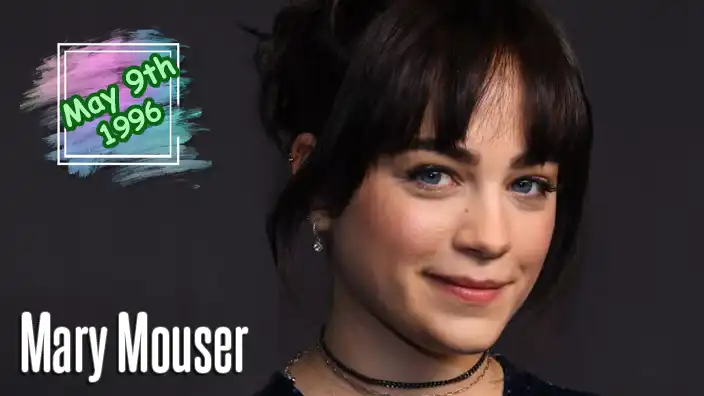
Some actors ease into fame. Mary Mouser? She walked in, tied her belt, and got to work—occasionally ducking flying kicks along the way. Between teenage drama, dojo rivalries, and the kind of emotional rollercoasters that would make most people call it a day, she’s managed to keep her footing and make it all look natural. Not everyone can say they grew up on screen while surviving both high school and a full-blown karate war—but Mary Mouser makes it look like just another item on the to-do list.
May 9, 1996, in Pine Bluff, Arkansas
Trivia
- Best known for playing Samantha LaRusso in Cobra Kai
- Started acting as a child with voice roles in animated series
- Played Lacey Fleming on Body of Proof
- Diagnosed with type 1 diabetes in 2009
- Appeared in guest roles on shows like NCIS, Scrubs, and CSI
- Became engaged to co-star Tanner Buchanan in 2025

- Details
- Category: Celebrity Birthdays - May
There are musicians… and then there are musicians who make other musicians quietly reconsider their life choices. Steve Winwood falls into that second group. The man doesn’t just play instruments—he seems to have a standing agreement with them. Keys, guitar, vocals… they all cooperate like they know who’s in charge. Meanwhile, the rest of us are still trying to master clapping on beat. It’s the kind of talent that doesn’t show off—it just sits there, sounding incredible, like it’s no big deal… which somehow makes it even more impressive.
May 12, 1948, in Birmingham, England
Trivia
- Sang lead on hits like Gimme Some Lovin' as a teenager.
- Co-founded Traffic and helped define its unique sound.
- Was part of the supergroup Blind Faith with Eric Clapton.
- Won multiple Grammy Awards, including for Higher Love.
- Known for playing multiple instruments at a professional level.
- Inducted into the Rock and Roll Hall of Fame with Traffic.

- Details
- Category: Celebrity Birthdays - May
Sugar Ray Leonard had the kind of style that made other fighters look like they were swinging at a very polite ghost. One minute he’s right in front of you, the next he’s somewhere to your left, smiling like he just remembered he left the oven on. And just when an opponent thought they had him figured out—pop-pop—there go two quick punches and a reminder that this wasn’t just a fight, it was a masterclass with gloves on.
May 17, 1956, in Wilmington, North Carolina
Trivia
- He won world titles in five different weight classes.
- His famous rematch with Roberto Durán ended with “No más.”
- Leonard defeated Thomas Hearns in a classic 1981 fight.
- He returned from retirement in 1987 to defeat Marvin Hagler.
- His professional record was 36-3-1 with 25 knockouts.
- Leonard has been inducted into the International Boxing Hall of Fame.

- Details
- Category: Celebrity Birthdays - May
David Krumholtz might be the only guy who can make math look cool — or at least less terrifying. Best known as Charlie Eppes on Numb3rs, he solved crimes with calculus while the rest of us were still trying to remember the quadratic formula. He’s also popped up in everything from The Santa Clause (as the sassiest elf in the North Pole) to Superbad and Oppenheimer, proving he can do comedy, drama, and everything in between. Basically, if you need a genius with great timing and killer hair, David’s your man.
May 15, 1978, in Queens, New York City
Trivia
- Krumholtz married actress Vanessa Britting in 2010, and the couple has two children together.
- He provided the voice for the character Mr. Universe in the critically acclaimed animated film "The Star" (2017).
- Krumholtz appeared in the HBO series "The Deuce" (2017-2019), where he played the role of Harvey Wasserman, a pornographer in the 1970s.
- He has guest-starred on several popular TV shows, including "ER," "Freaks and Geeks," and "The Newsroom."
- Krumholtz has a knack for impersonations and often entertains his co-stars and fans with his spot-on impressions of celebrities and fictional characters.
From Our Marks Catelog
-

Single parenthood is a crash course in multitasking—where making dinner, helping with homework, and dodging Lego...
-

Balloons are the life of any party, with their bright colors and whimsical shapes, but they also...
-

Letting things go is a skill we all think we have—until we’re in the shower five years later, replaying an...
-

Some holidays ask for deep reflection. Others demand fireworks, feasts, or elaborate decorations....
-
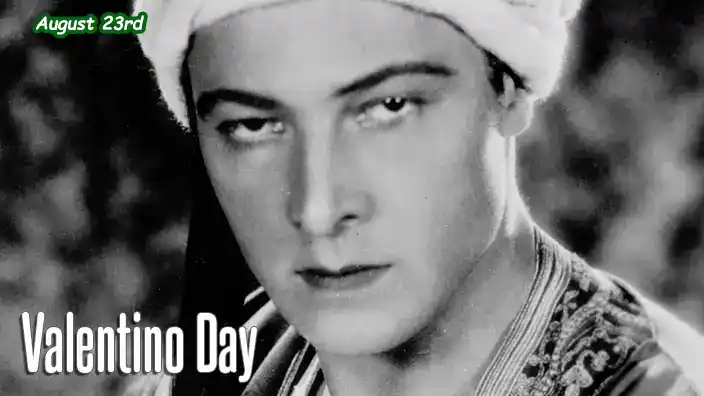
With a gaze that could melt ice and a mustache so perfectly groomed it might have had its own...
-

Imagine having the uncanny ability to make even the driest statistics sound like the punchline to a...

