May 24, 1819, in London, England
 January 22, 1901, on the Isle of Wight, England
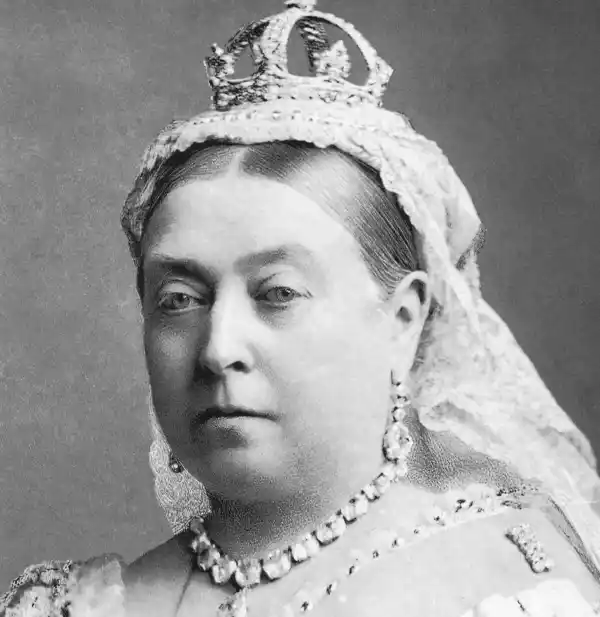
Queen Victoria, born Alexandrina Victoria, reigned over the United Kingdom of Great Britain and Ireland from June 20, 1837, until her death on January 22, 1901. Her reign of 63 years and 216 days, known as the Victorian era, was marked by significant cultural, political, and industrial changes, leaving an indelible mark on history.
Queen Victoria was known for her strong personality and distinctive quirks. She had a profound love for the arts, particularly painting and drawing. Victoria was an accomplished amateur artist, and her sketchbooks filled with landscapes and portraits offer a glimpse into her creative mind. She also had a keen interest in writing and kept detailed diaries throughout her life, documenting everything from political affairs to personal reflections.
Victoria had a deep fascination with the Scottish Highlands. After her beloved husband, Prince Albert, passed away in 1861, she found solace in the rugged beauty of Scotland, spending extensive time at Balmoral Castle. This passion for Scotland influenced her fashion choices, as she popularized tartan patterns and Scottish attire in the royal wardrobe.
Queen Victoria's reign saw the expansion of the British Empire, making it the largest empire in history. Under her rule, the British Empire expanded significantly, encompassing territories across Asia, Africa, and the Pacific. This period of colonial expansion was marked by both advancements and controversies, shaping the modern world in profound ways.
One of Victoria's significant accomplishments was her role in modernizing the British monarchy. She embraced the role of a constitutional monarch, which limited her direct political power but allowed her to influence public opinion and policy indirectly. Her emphasis on moral standards and family values set a tone for the era and helped stabilize the monarchy during turbulent times.
Victoria was also a patron of numerous charitable causes and supported the establishment of various institutions, including hospitals, schools, and museums. Her support for public health initiatives contributed to the improvement of living conditions for many of her subjects.
Despite her many achievements, Queen Victoria's reign was not without its failures. Her handling of the Irish Famine (1845-1852) is often criticized. The British government's response to the famine, which resulted in the deaths of over a million people and the emigration of many more, is viewed as inadequate and insensitive. Victoria's limited understanding and engagement with the crisis have been subjects of historical scrutiny.
Another failure was her initial resistance to women's suffrage. Although she was a powerful female monarch, Victoria held conservative views on gender roles and opposed the idea of women participating in politics. This stance was at odds with the emerging women's rights movement, which sought greater equality and voting rights for women.
Queen Victoria's life and reign were filled with triumphs and challenges that shaped the course of history. Her influence extended beyond her lifetime, leaving a legacy that continues to be studied and admired. As we remember her birth on May 24, 1819, we reflect on a monarch who navigated a rapidly changing world with determination and grace.