Celebrity Birthdays - May

May is basically the VIP lounge of months: warm, sunny, and not yet mosquito season. People born in May are annoyingly charming about it, too.
So let’s celebrate the folks who make us believe in backyard barbecues and fresh starts. They were born to bask in the glow of spring — and they want you to know it.

- Details
- Category: Celebrity Birthdays - May
Sean Gunn is one of those actors who seems to pop up everywhere — and somehow steals every scene he’s in. Fans first fell for him as the delightfully oddball Kirk on Gilmore Girls, where he managed to have about 62 different jobs in a single small town. More recently, he’s become a key player in the Marvel Cinematic Universe, both as Kraglin and the on-set performer behind Rocket Raccoon — yes, that means he helped bring everyone’s favorite trash panda to life. Sean’s mix of humor, heart, and just a touch of weirdness makes him one of Hollywood’s most lovable chameleons. His birthday should be celebrated with confetti, cake, and maybe a surprise job change halfway through the party — Kirk-style.
 May 22, 1974, in St. Louis, MO

Trivia
- Sean Gunn's life is filled with interesting trivia. Did you know he is the youngest of six siblings, all of whom have pursued creative careers? Another fun fact is that Sean initially pursued a career in theater, studying at The Theatre School at DePaul University in Chicago, where he honed his acting skills before transitioning to television and film.
- Sean is also known for his improvisational skills, which he often showcased on "Gilmore Girls." His ability to think on his feet and bring spontaneous humor to his roles has endeared him to fans and colleagues alike.
- In addition to his acting career, Sean is an advocate for mental health awareness and often speaks about the importance of mental well-being. His openness about his own experiences has helped to destigmatize mental health issues and encourage others to seek support.

- Details
- Category: Celebrity Birthdays - May
There are good dancers, great dancers, and then there’s Fred Astaire—who looked like he accidentally wandered into the wrong room and decided to casually outperform everyone in history. No huffing, no puffing, no “watch this trick,” just a smooth glide across the floor like his shoes had a quiet agreement with physics. He didn’t dance to impress you—he danced as if this was simply how walking was supposed to be done, and the rest of us had somehow missed the memo.
May 10, 1899, in Omaha, Nebraska
 June 22, 1987, in Los Angeles, California
Trivia
- Famous for his partnership with Ginger Rogers in 1930s musicals.
- Starred in classics like Top Hat and Swing Time.
- Known for filming dance sequences in long, uninterrupted takes.
- Received an honorary Academy Award in 1950.
- Worked with stars like Judy Garland and Audrey Hepburn.
- Continued performing in film and television later in life.
- Considered one of the greatest dancers in film history.
- His early screen test famously underestimated his abilities.

- Details
- Category: Celebrity Birthdays - May
Sugar Ray Leonard had the kind of style that made other fighters look like they were swinging at a very polite ghost. One minute he’s right in front of you, the next he’s somewhere to your left, smiling like he just remembered he left the oven on. And just when an opponent thought they had him figured out—pop-pop—there go two quick punches and a reminder that this wasn’t just a fight, it was a masterclass with gloves on.
May 17, 1956, in Wilmington, North Carolina
Trivia
- He won world titles in five different weight classes.
- His famous rematch with Roberto Durán ended with “No más.”
- Leonard defeated Thomas Hearns in a classic 1981 fight.
- He returned from retirement in 1987 to defeat Marvin Hagler.
- His professional record was 36-3-1 with 25 knockouts.
- Leonard has been inducted into the International Boxing Hall of Fame.

- Details
- Category: Celebrity Birthdays - May
Maggie Q is proof that action stars can be fierce, graceful, and downright unstoppable — sometimes all in the same fight scene. From Nikita to Mission: Impossible III to Divergent, she’s made a career out of kicking down doors (literally) and looking impossibly cool while doing it. Beyond the high-octane roles, Maggie is also an outspoken animal rights activist and philanthropist, showing she’s just as powerful off-screen as on. Her birthday calls for a celebration with style — think rooftop party, sharp tuxedo, and maybe a few slow-motion stunts just to keep things on brand.
 May 22, 1979, in Honolulu, Hawaii
Trivia
- Maggie Q's life is filled with fascinating trivia. Did you know her full name is Margaret Denise Quigley? She adopted the stage name Maggie Q when she began her modeling career in Asia. Another interesting fact is that she was a high school athlete and excelled in swimming and track and field, which laid the foundation for her physical fitness.
- Maggie's dedication to martial arts training is evident in her performances. She trained with legendary martial artist Jackie Chan, who became her mentor and helped her refine her skills. Additionally, Maggie is fluent in Cantonese, which she learned during her time in Hong Kong.
- Beyond her acting career, Maggie is a passionate environmentalist. She co-founded the organization "The Honest Company" with Jessica Alba, aiming to provide eco-friendly products to consumers. Her commitment to sustainability and health continues to influence her choices both on and off-screen.

- Details
- Category: Celebrity Birthdays - May
Emily VanCamp has built a career that feels a bit like a slow-cooked meal—no rushing, no shortcuts, just steady, reliable excellence that somehow sneaks up on you. One minute she’s the nice girl next door, the next she’s orchestrating elaborate revenge plots or navigating hospital drama like she’s been doing it her whole life. And the wild part? She makes it all look effortless. No fireworks, no over-the-top theatrics—just quiet confidence and the kind of consistency that makes you realize, somewhere along the way, she didn’t just join the cast… she became the reason you kept watching.
May 12, 1986, in Port Perry, Canada
Trivia
- Originally trained as a ballet dancer
- Broke out as Amy Abbott on Everwood
- Starred in Brothers & Sisters alongside Sally Field
- Led the series Revenge as Emily Thorne
- Played Sharon Carter in the Marvel Cinematic Universe
- Appeared in Captain America: The Winter Soldier and Civil War
- Starred in medical drama The Resident
- Married her Revenge co-star Josh Bowman
- Known for her understated and emotionally grounded acting style

- Details
- Category: Celebrity Birthdays - May
Hollywood is full of overnight successes that somehow take ten years to happen—and Halston Sage is a perfect example of doing it the right way. No loud entrance, no table-flipping moments, just a steady climb built on showing up, doing the work, and occasionally stealing a scene while everyone else is busy trying too hard. She’s the kind of actress who makes it look easy, which is usually a sign that it absolutely isn’t. And before you know it, you’re halfway through a movie thinking, “Oh, she’s in this too? Of course she is… she’s in everything.”
May 10, 1993, in Los Angeles, California
Trivia
- Appeared in Grown Ups 2 alongside major comedy stars.
- Played Brooke Shy in Neighbors and its sequel.
- Starred in Paper Towns, based on a novel by John Green.
- Played Alara Kitan on The Orville.
- Appeared in the thriller series Prodigal Son.
- Known for working across multiple genres—comedy, drama, and sci-fi.
- Grew up in Los Angeles, close to the entertainment industry.
- Has built a steady, drama-free Hollywood career.

- Details
- Category: Celebrity Birthdays - May
Adele doesn’t just sing songs—she hands you a memory, reminds you of someone you’d almost forgotten, and then politely wrecks your evening in the best possible way. You don’t listen to Adele casually… you prepare for it.
May 5, 1988, in London, England
Trivia
- Her album 21 is one of the best-selling albums of all time.
- She won an Academy Award for the song Skyfall.
- She is known for naming albums after her age at the time of release.
- She has won multiple Grammy Awards, including Album of the Year.
- She is famous for her candid and humorous personality offstage.

- Details
- Category: Celebrity Birthdays - May
Cue the dramatic music — it’s Kristen Alderson’s birthday! Best known for growing up on daytime TV as Starr Manning on One Life to Live and General Hospital, Alderson has spent years bringing soap opera twists, turns, and cliffhangers to life — and somehow never once got amnesia or an evil twin (that we know of).
May 29, 1991, in Huntingdon Valley, Pennsylvania
Trivia
- Kristen Alderson has a brother, Eddie Alderson, who is also an actor and starred alongside her on "One Life to Live."
- She took a break from acting in 2015 to focus on other pursuits and spend more time with her family but has expressed interest in returning to the screen.
- Alderson is actively involved in charity work, supporting causes such as cancer research and animal welfare.

- Details
- Category: Celebrity Birthdays - May
Megan Fox has been turning heads since she burst onto the scene, bringing equal parts glam and grit to the big screen. She became a blockbuster icon with Transformers, proving she could hold her own next to giant robots, explosions, and Shia LaBeouf’s fast-talking antics. Over the years, Megan has mixed action roles with edgy comedies and cult favorites like Jennifer’s Body, which went from misunderstood to full-on fan favorite. With her sharp wit, unapologetic confidence, and style that turns every red carpet into a runway, Megan is as fascinating off-screen as she is on it. Her birthday should be celebrated with fireworks, fast cars, and maybe a wink toward those
May 16, 1986, in Oak Ridge, Tennessee
Trivia
- Megan Fox has several tattoos, each with personal significance. One of her most famous tattoos is a quote from Shakespeare's "King Lear": "We will all laugh at gilded butterflies."
- She made her film debut in the 2001 movie "Holiday in the Sun," starring opposite the Olsen twins.
- Megan is a dedicated mother to her three sons with actor Brian Austin Green, and she often emphasizes the importance of family in her life.
- She is also an advocate for mental health awareness, openly discussing her struggles with self-esteem and the pressures of Hollywood.

- Details
- Category: Celebrity Birthdays - May
If you’ve ever watched a Marvel movie and thought, “That quiet, antenna-wiggling alien just stole the entire scene without even trying,” then congratulations—you’ve witnessed the understated magic of Pom Klementieff. She doesn’t shout for attention, doesn’t chew the scenery, and yet somehow ends up being one of the most memorable people on screen. It’s the kind of talent that sneaks up on you… a bit like her character, actually.
May 3, 1986, in Quebec City, Canada
Trivia
- Speaks multiple languages due to her international upbringing
- Won a theater award early in her acting career in Paris
- Performs many of her own stunts in action roles
- Gained global fame as Mantis in the Marvel Cinematic Universe
- Worked alongside Tom Cruise in Mission: Impossible
- Known for blending humor with emotionally grounded performances
- Has a background that includes time in Japan and the Ivory Coast
- Her character Mantis became a fan favorite despite limited screen time initially
- Often praised for her expressive, physical acting style

- Details
- Category: Celebrity Birthdays - May
Light up the crime board — it’s Ted Levine’s birthday! Known for bringing grit and gravitas to Captain Stottlemeyer on Monk (and giving us chills as Buffalo Bill in Silence of the Lambs), Levine has mastered the art of playing characters who make you lean in, whether they’re solving cases or terrifying you just a little.
May 29, 1957, in Bellaire, Ohio
Trivia
- Ted Levine has a background in theater and began his career on stage before transitioning to film and television.
- He provided the voice for the character of Sinestro in the animated film "Green Lantern: Emerald Knights" (2011).
- Levine is known for his distinctive voice, which has been featured in various voice-over roles in commercials and animated projects.

- Details
- Category: Celebrity Birthdays - May
Anna Baryshnikov brings a bright, quirky energy to every role she takes on, whether she’s charming audiences in Dickinson as the bubbly Lavinia or stealing scenes in indie comedies. With a gift for turning even the smallest moments into laugh-out-loud ones, she’s carved out a niche as the delightful, slightly unpredictable presence you can’t help but adore. Off-screen, she’s known for her quick wit and thoughtful interviews, proving she’s just as sharp as the characters she plays. Her birthday calls for a celebration full of humor, clever conversation, and maybe a little spontaneous dancing — because why not?
May 22, 1992, in New York City, New York
Trivia
- Anna Baryshnikov's life is filled with interesting trivia. Did you know she initially pursued dance before deciding to focus on acting? Her background in dance has given her a unique physicality and grace that she brings to her roles.
- Another fun fact is that Anna is fluent in Russian, thanks to her father's heritage. This skill has not only enriched her cultural understanding but also added depth to her performances.
- Anna's love for theater extends beyond just watching plays. She has also performed in stage productions, including off-Broadway shows, which have helped her hone her craft and connect with live audiences.

- Details
- Category: Celebrity Birthdays - May
Vivian Green has been blessing playlists with soulful, heartfelt music since the early 2000s, turning love, heartbreak, and self-discovery into songs that stick with you long after they end. With hits like Emotional Rollercoaster, she proved she could capture every high and low of relationships and make you want to sing along — even to the sad parts. Over the years, Vivian has kept evolving, blending R&B with jazz, gospel, and pop, all while staying true to her signature silky sound. Her birthday deserves a laid-back, candlelit vibe — the kind of party where everyone sways along and pretends they can hit those high notes too.
May 22, 1979, in Philadelphia, Pennsylvania
Trivia
- Vivian Green's life is filled with interesting trivia. Did you know she began playing the piano at the age of eight and wrote her first song by the time she was eleven? Her early start in music laid the foundation for her future success.
- Another fun fact is that Vivian is a devoted mother to her son, Jordan, who has special needs. Her experiences as a mother have deeply influenced her music and advocacy work. Vivian often speaks about the importance of inclusion and support for children with special needs, using her platform to raise awareness and promote acceptance.
- Vivian is also known for her love of vintage fashion. She often incorporates retro styles into her wardrobe, adding a unique and personal touch to her public appearances.

- Details
- Category: Celebrity Birthdays - May
If charm were a renewable resource, George Clooney could power a small country. The man has spent decades making audiences believe that aging is optional, sarcasm is an art form, and that a well-tailored suit might actually solve most of life’s problems. Somewhere between saving lives on television, robbing casinos on the big screen, and casually winning Oscars, Clooney perfected the rare ability to look like he’s in on the joke—and somehow still be the coolest guy in the room.
May 6, 1961, in Lexington, Kentucky
Trivia
- He once tried out for the Cincinnati Reds baseball team but didn’t make it.
- His breakout role as Dr. Doug Ross made him a 1990s TV icon.
- He has won two Academy Awards in different categories.
- Clooney directed and starred in Leatherheads, a film about early football.
- He’s been involved in over $2.6 billion worth of box office films.
- He received the Golden Globe Cecil B. DeMille Award for lifetime achievement.
- He once lived with a pet pig named Max for nearly 18 years (yes, really).

- Details
- Category: Celebrity Birthdays - May
Today we celebrate Eric Christian Olsen — the man who made messy surfer hair FBI-adjacent cool. Known for cracking jokes while catching bad guys on NCIS: Los Angeles, Olsen turns another year older and probably still hasn’t had a bad hair day.
May 31, 1977, in Eugene, Oregon
Trivia
- Family Man: Eric Christian Olsen is married to actress Sarah Wright, and together they have two children. Olsen often shares heartfelt and humorous stories about his family life, reflecting his love and dedication.
- Environmental Advocate: Olsen is passionate about environmental conservation. He actively supports initiatives aimed at protecting natural habitats and promoting sustainability.
- Production Work: Beyond acting, Olsen is involved in producing. He co-created and produced the television series "Woke," showcasing his talents behind the camera as well.

- Details
- Category: Celebrity Birthdays - May
Some people practice guitar in their spare time—Joe Bonamassa apparently created spare time just to practice more guitar. By the age most kids are still negotiating bedtime, he was already trading licks with legends and making grown musicians rethink their life choices. Give him six strings and a stage, and he’ll take you on a ride that starts in a smoky blues club and somehow ends with you wondering why your own guitar has been sitting in the corner collecting dust like it gave up before you did.
May 8, 1977, in New Hartford, New York
Trivia
- Began playing guitar at age four.
- Opened for B.B. King at age eleven.
- Started his solo career in 2000 with A New Day Yesterday.
- Known for blending blues with rock influences.
- Member of Black Country Communion.
- Frequently collaborates with Beth Hart.
- Has multiple No. 1 albums on the Billboard Blues chart.
- Founded the Keeping the Blues Alive Foundation.

- Details
- Category: Celebrity Birthdays - May
If there were an award for “Most Likely to Say the Wrong Thing at Exactly the Right Time,” Jason Gray-Stanford would have a shelf full of them. He’s mastered that fine line between confidence and confusion, delivering lines with the kind of earnest energy that makes you laugh before you even realize why. It’s not just comedy—it’s controlled chaos, and he plays it like a seasoned pro who knows exactly when to lean in and when to let the moment do the work.
Born on May 19, 1970, in Vancouver, Canada
Trivia
- Studied theatre at the University of British Columbia
- Voiced Raditz in the English dub of Dragon Ball Z
- Has appeared in numerous popular TV series, including The X-Files and NCIS
- Works as an actor, writer, and director
- Known for his strong comedic timing and character work

- Details
- Category: Celebrity Birthdays - May
Josh O’Connor has a gift for turning complicated characters into must-watch performances. He stole hearts (and broke a few) as the brooding romantic in God’s Own Country and then made headlines as a brilliantly conflicted Prince Charles in The Crown, showing that he can balance vulnerability, charm, and quiet intensity all in one role. Whether he’s starring in period dramas or modern indies, Josh brings a thoughtful, layered presence that makes every scene feel richer. His birthday deserves a toast in a cozy countryside estate — preferably with a crown nearby, just in case someone needs a quick royal impression.
May 20, 1990, in South Hampton, England
Trivia
- Josh O'Connor is an alum of the Bristol Old Vic Theatre School, one of the UK's most prestigious acting schools.
- Before pursuing acting, he considered a career in pottery and has a keen interest in ceramics.
- He is an advocate for mental health awareness and often speaks about the importance of mental well-being in the entertainment industry.
- O'Connor enjoys playing the accordion, an instrument he learned for his role in the film "Hope Gap."

- Details
- Category: Celebrity Birthdays - May
Lana Condor has that rare ability to make you forget you’re watching a performance and feel like you’ve just stumbled into someone’s very real, very relatable life—complete with awkward moments, overthinking, and the occasional emotional spiral over things like handwritten letters. She brings a kind of charm that doesn’t try too hard, which is probably why it works so well. In a world full of polished, picture-perfect characters, she’s the one who reminds you that a little bit of awkward honesty goes a long way—and might even steal the whole show.
May 11, 1997, in Cần Thơ, Vietnam
Trivia
- Trained in ballet, including at the Joffrey Ballet School
- Film debut in X-Men: Apocalypse as Jubilee
- Starred as Lara Jean in To All the Boys I've Loved Before
- Appeared in the film’s sequels, forming a trilogy
- Starred in TV series Deadly Class
- Has done voice acting and producing work
- Known for her relatable and natural acting style
- Speaks openly about mental health and identity

- Details
- Category: Celebrity Birthdays - May
Debby Ryan grew up on Disney Channel, but don’t think she stayed squeaky clean — she’s got comedic timing sharp enough to leave a mark. From The Suite Life on Deck to Jessie, she became everyone’s favorite babysitter, then flipped the script with darker roles like Insatiable. She’s also a musician, proving she can switch from sitcom star to rock singer without missing a beat. Basically, Debby Ryan is the cool babysitter who lets you stay up late, but still makes sure you do your homework.
May 13, 1993, in Huntsville, Alabama
Trivia
- Debby Ryan lived in Germany as a child because her father was in the military.
- She directed an episode of Jessie while still starring in the show.
- Ryan formed a band called The Never Ending, where she was the lead singer.
- Her Disney Channel movie 16 Wishes became one of the network’s most-watched premieres.
- She married musician Josh Dun, the drummer for Twenty One Pilots, in 2019.

- Details
- Category: Celebrity Birthdays - May
Tim Blake Nelson has one of those careers where you don’t always recognize him immediately—but five minutes in, you’re thinking, “Oh yeah, that guy… he’s always good.” He’s like the secret ingredient in a recipe you didn’t know needed fixing. Not flashy, not loud, but somehow everything just works better when he’s around. One minute he’s wandering through a dusty Southern adventure with a song on his lips, the next he’s staring at you through a reflective mask making you slightly uncomfortable—and somehow, he pulls both off without breaking stride. That’s not luck… that’s skill with a capital “how did he do that?”
May 11, 1964, in Tulsa, Oklahoma
Trivia
- Studied at Brown University and Juilliard School
- Breakout role in O Brother, Where Art Thou?
- Played Samuel Sterns in The Incredible Hulk
- Appeared in Minority Report and Lincoln
- Writer and director of O and The Grey Zone
- Known for both comedic and dramatic roles
- Appeared in HBO’s Watchmen series
- Active in theater as well as film and TV
From Our Marks Catelog
-

Single parenthood is a crash course in multitasking—where making dinner, helping with homework, and dodging Lego...
-

Balloons are the life of any party, with their bright colors and whimsical shapes, but they also...
-

Letting things go is a skill we all think we have—until we’re in the shower five years later, replaying an...
-

Some holidays ask for deep reflection. Others demand fireworks, feasts, or elaborate decorations....
-
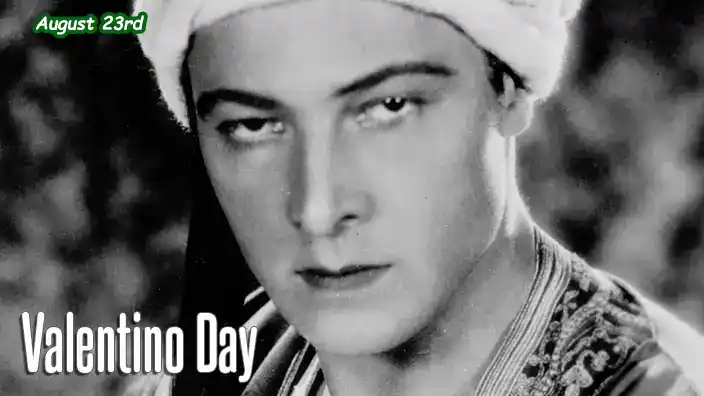
With a gaze that could melt ice and a mustache so perfectly groomed it might have had its own...
-

Imagine having the uncanny ability to make even the driest statistics sound like the punchline to a...

