Celebrity Birthdays - May

May is basically the VIP lounge of months: warm, sunny, and not yet mosquito season. People born in May are annoyingly charming about it, too.
So let’s celebrate the folks who make us believe in backyard barbecues and fresh starts. They were born to bask in the glow of spring — and they want you to know it.

- Details
- Category: Celebrity Birthdays - May
Eleanor Tomlinson has a knack for bringing period dramas to life with warmth and spark, most famously as Demelza in Poldark, where she stole hearts, traded banter with Aidan Turner, and made 18th-century Cornwall look impossibly romantic. She’s since taken on everything from fantasy adventures to modern dramas, proving she’s just as comfortable with a sword as she is with a sharp comeback. With her striking red hair and captivating screen presence, Eleanor lights up every scene she’s in. Her birthday should be celebrated with a windswept coastal walk, a roaring fire, and maybe a toast in a rustic tavern — Demelza style.
 May 19, 1992, in London, England

Trivia
- Eleanor comes from a family with a strong acting background. Her father, Malcolm Tomlinson, is an actor and horse racing commentator, and her brother, Ross Tomlinson, is also an actor.
- She is known for her striking red hair, which she dyed for her role in "Poldark." Naturally a brunette, the change became a signature look for her during the series.
- Tomlinson is an advocate for women's rights and often speaks out on issues of gender equality in the entertainment industry.
- Details
- Category: Celebrity Birthdays - May
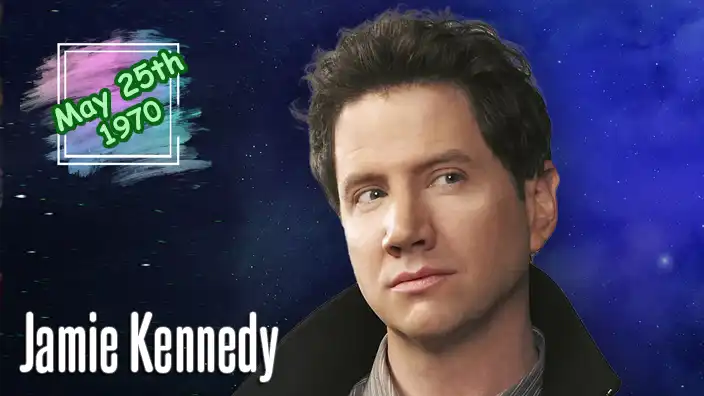
There are comedians who gently stroll into Hollywood, and then there’s Jamie Kennedy — a man who arrived like somebody who drank three energy drinks, memorized every horror movie ever made, and decided embarrassment was merely a suggestion. Whether he’s dodging masked killers in Scream, pulling outrageous pranks on unsuspecting people, or proudly leaning into over-the-top comedy, Kennedy built a career on being loud, fearless, and just unpredictable enough to keep audiences wondering what he’ll do next. Somewhere between stand-up comedy, sketch shows, and cult comedy films, Jamie Kennedy became one of those instantly recognizable faces from late-1990s and early-2000s entertainment. And honestly, once you’ve heard Randy Meeks explain the rules of horror movies, you never quite forget it.
 May 25, 1970, in Upper Darby, Pennsylvania
Trivia
- Jamie Kennedy became famous playing Randy Meeks in the Scream films.
- Kennedy hosted The Jamie Kennedy Experiment from 2002 to 2004.
- He briefly dated actress Jennifer Love Hewitt.
- He appeared as an extra in Dead Poets Society early in his career.
- Malibu’s Most Wanted became a cult comedy favorite.
- Kennedy has worked as an actor, producer, writer, and stand-up comedian.
- He released a rap album titled Blowin’ Up in 2006.
- He continues touring as a stand-up comedian.

- Details
- Category: Celebrity Birthdays - May
Bob Saget was America’s TV dad, the guy who somehow made raising three kids (plus Uncle Jesse and Joey) look easy on Full House. Off-screen — and on stage — he was just as beloved, though his stand-up comedy proved he had a much edgier sense of humor than Danny Tanner ever did. Saget also spent years as the host of America’s Funniest Home Videos, long before we had TikTok, making him the original curator of viral laughs. His passing in 2022 left a hole in comedy and in fans’ hearts, but his work still makes people smile — which might be the best legacy of all. His birthday should be celebrated with laughter, reruns, and maybe a heartfelt “You got it, dude.”
May 17, 1956, in Philadelphia, Pennsylvania
 January 9, 2022, in Grande Lakes, Florida
Trivia
- Bob Saget was a member of the Sigma Chi fraternity during his college years at Temple University.
- He directed the 1998 cult favorite film "Dirty Work," starring Norm Macdonald.
- Saget made a memorable guest appearance on the TV show "Entourage," playing a fictionalized version of himself that leaned into his raunchy comedic side.
- He authored a memoir titled "Dirty Daddy," where he candidly discussed his life, career, and the contrasts within his comedic style.

- Details
- Category: Celebrity Birthdays - May
If Bobby Cannavale walks into a scene, you don’t check your phone. You lean in. He has that rare ability to make you slightly nervous even when he’s smiling — like you’re not entirely sure whether he’s about to deliver a heartfelt confession or flip a table. That’s range. Some actors chew scenery. Cannavale seasons it.
May 3, 1970, in Union City, New Jersey
Trivia
- Won a Primetime Emmy Award for Boardwalk Empire in 2013.
- Received multiple Tony Award nominations for his stage work.
- Appeared in the film Blue Jasmine alongside Cate Blanchett.
- Has Puerto Rican and Italian heritage.
- Began acting professionally after encouragement from a high school drama teacher.
- Frequently collaborates with respected independent filmmakers.

- Details
- Category: Celebrity Birthdays - May
Engelbert Humperdinck sounds less like a pop star and more like a man who owns a castle and insists on proper table manners—but then he opens his mouth to sing, and suddenly the room melts. He’s been charming audiences for decades with a voice smoother than a well-aged Scotch and a name you don’t forget, even if you can’t quite believe it’s real.
May 2, 1936, in Madras (now Chennai), India
Trivia
- His hit “Release Me” famously outsold The Beatles in the UK charts in 1967.
- He is known for romantic ballads and a smooth vocal style.
- He has sold tens of millions of records worldwide.
- He has performed extensively in Las Vegas.
- He represented the UK in the Eurovision Song Contest in 2012.
- His stage name comes from a German composer.

- Details
- Category: Celebrity Birthdays - May
Hank Williams Jr. was practically born with a cowboy hat on and a guitar in his hand — which makes sense when your dad is country music royalty. Rather than just ride on the family name, Hank Jr. cranked up the volume, mixed in some rock ‘n’ roll, and carved out his own boot-stompin’ legacy. Known for hits like Family Tradition and All My Rowdy Friends Are Coming Over Tonight, he brought a little rebellion to Nashville and made Monday Night Football sound like the rowdiest honky-tonk in town. With a voice that sounds like it’s been marinated in whiskey and campfire smoke, Hank Jr. is still out there doing what he does best: making music that makes you want to sing along, kick back, and maybe pour yourself something strong.
May 26, 1949, in Shreveport, Louisiana
Trivia
- A Family Legacy: Hank Williams Jr. is the father of musicians Holly Williams, Hilary Williams, and Hank Williams III, all of whom have pursued careers in music.
- Voice of Monday Night Football: His song "All My Rowdy Friends Are Here on Monday Night" was adapted as the theme for Monday Night Football, making him a familiar voice to sports fans.
- Political Engagement: Williams Jr. has been involved in politics, notably performing at campaign rallies and expressing his views through his music.

- Details
- Category: Celebrity Birthdays - May
Ray Stevenson was one of those actors who made every role bigger just by walking into the frame — a true scene-stealer with a commanding presence. Whether he was swinging a sword as Titus Pullo in Rome, wielding a hammer in Thor, or playing the Punisher with a glare that could stop traffic, Stevenson brought a rare mix of grit and charm to the screen. He had that old-school tough-guy energy, the kind that made you believe he could lead a legion into battle or drink you under the table — possibly both on the same day. His passing in 2023 was a real loss for fans of powerhouse performances, but his work lives on, larger than life, just like he was.
May 25, 1964, in Lisburn, Northern Ireland
May 21, 2023, in Ischia, Italy
Trivia
- Ray Stevenson initially pursued a career in interior design before deciding to become an actor in his late twenties.
- He was a graduate of the Bristol Old Vic Theatre School, one of the most prestigious drama schools in the UK.
- Stevenson voiced the character of Gar Saxon in the animated series "Star Wars: The Clone Wars" and "Star Wars Rebels."
- He was known for his distinctive deep voice, which added gravitas to his performances.
- Stevenson was an advocate for animal rights and often supported related charities and initiatives.

- Details
- Category: Celebrity Birthdays - May
Some television characters fade into the background. Melissa McBride’s Carol Peletier started there, then steadily became the person everyone trusted to save the day, make the hard choices, and occasionally terrify absolutely everyone standing nearby. McBride’s extraordinary ability to turn quiet determination into unforgettable strength helped transform her from supporting player into one of The Walking Dead’s most respected survivors—proving that underestimating the quiet ones is usually a very bad idea.
May 23, 1965, in Lexington, Kentucky
Trivia
- Worked as a casting director before major acting success
- Made television debut on Matlock
- Played Carol Peletier on The Walking Dead from 2010–2022
- Won multiple Saturn Awards for her performance
- Starred in The Mist before The Walking Dead
- Known for maintaining a highly private personal life
- Reprised Carol in The Walking Dead: Daryl Dixon

- Details
- Category: Celebrity Birthdays - May
Hunter Parrish is proof that being the “good kid” can still get you noticed in Hollywood. Best known as Silas Botwin on Weeds, he somehow managed to be the voice of reason in a family that made its living selling, well… let’s just say “organic products.” He’s also tackled Broadway in Spring Awakening and Godspell, proving he can sing, dance, and probably charm the socks off the audience in the cheap seats. Basically, if you need a clean-cut guy with a mischievous grin, Hunter’s your man.
May 13, 1987, in Richmond, Virginia
Trivia
- Hunter Parrish was only 18 when he began playing Silas Botwin on Weeds.
- He made his Broadway debut as Melchior in the 2015 revival of Spring Awakening.
- Parrish appeared in the film It’s Complicated alongside Meryl Streep and Alec Baldwin.
- He has released original music, including several EPs and singles.
- Before his breakout role, he appeared in teen dramas like The O.C. and Summerland.

- Details
- Category: Celebrity Birthdays - May
Long before jump scares and masked maniacs started doing all the heavy lifting, Vincent Price proved that true terror could be delivered with impeccable diction, arched eyebrows, and the sort of smile that suggested he knew exactly where the bodies were buried. He was horror with class, menace with manners, and perhaps the only man who could sound both charming and deeply unsettling while discussing fine art or haunted mansions. With Price, fear wasn’t just frightening—it was stylish.
May 27, 1911, in St. Louis, Missouri
October 25, 1993, in Los Angeles, California
Trivia
- Studied art history at Yale University
- Starred in over 100 films
- Became a horror icon with House of Wax
- Narrated Michael Jackson’s Thriller
- Authored multiple cookbooks
- Helped establish the Vincent Price Art Museum
- Voiced Ratigan in Disney’s The Great Mouse Detective
- Appeared in Tim Burton’s Edward Scissorhands
- Known for his elegant, chilling voice

- Details
- Category: Celebrity Birthdays - May
Some performers pick a lane and stay in it. Amber Tamblyn looked at all the lanes—acting, writing, directing, poetry—and decided to take all of them at once, preferably at full speed. She’s the kind of talent who can break your heart in a dramatic scene, make you laugh in the next, and then casually publish a book of poetry just to keep things interesting.
May 14, 1983, in Santa Monica, California
Trivia
- She starred in General Hospital early in her career.
- She gained wider fame with The Sisterhood of the Traveling Pants.
- She received Emmy and Golden Globe nominations for Joan of Arcadia.
- She appeared in films like The Ring and 127 Hours.
- She is a published poet and author with multiple books.
- She made her directorial debut with Paint It Black (2016).

- Details
- Category: Celebrity Birthdays - May
Debra Winger lit up the screen in the 1980s with performances that were equal parts strength and vulnerability, earning her a place among Hollywood’s most respected leading ladies. From Urban Cowboy to Terms of Endearment to An Officer and a Gentleman, she delivered some of the decade’s most unforgettable performances — and picked up a few Oscar nominations along the way. Known for her fierce independence and thoughtful approach to roles, Winger has always brought depth and authenticity to every character she plays. Her birthday deserves a celebration with champagne, heartfelt toasts, and maybe a ride off into the sunset — Richard Gere optional.
May 16, 1955, in Cleveland Heights, Ohio
Trivia
- Debra Winger turned down the lead role in "A League of Their Own" (1992), which ultimately went to Geena Davis.
- She wrote a memoir titled "Undiscovered" (2008), where she shares insights into her life, career, and perspectives on the entertainment industry.
- Winger is married to actor/director Arliss Howard, and they have a son together. She also has a son from her previous marriage to actor Timothy Hutton.
- In addition to her acting career, Winger has been involved in various theater productions, showcasing her range and dedication to the craft.

- Details
- Category: Celebrity Birthdays - May
Pam Grier is the undisputed queen of ‘70s cool — the original action heroine who could take down a room full of bad guys without spilling her drink or messing up her afro. Long before Marvel decided women could be superheroes, Pam was already saving the day in movies like Coffy and Foxy Brown, delivering roundhouse kicks and one-liners with equal precision. She practically invented the idea that a woman could be both glamorous and absolutely terrifying — and honestly, the world still hasn’t caught up. Even Quentin Tarantino knew what was up when he made her the centerpiece of Jackie Brown, giving us a reminder that Pam Grier could outclass, outshoot, and outsmart everyone in the room — and look flawless doing it. If Hollywood had any sense, they’d make her the president in every action movie. World peace would be achieved in under 90 minutes, with a killer soundtrack to boot.
May 26, 1949, in Winston-Salem, North Carolina
Trivia
- Early Start: Grier began her career working as a receptionist at American International Pictures, where she was discovered by director Jack Hill.
- Martial Arts Enthusiast: To prepare for her action roles, Grier trained in martial arts, which added authenticity to her performances.
- Animal Advocate: Grier is passionate about animal rights and often supports organizations dedicated to animal welfare.

- Details
- Category: Celebrity Birthdays - May
Adele doesn’t just sing songs—she hands you a memory, reminds you of someone you’d almost forgotten, and then politely wrecks your evening in the best possible way. You don’t listen to Adele casually… you prepare for it.
May 5, 1988, in London, England
Trivia
- Her album 21 is one of the best-selling albums of all time.
- She won an Academy Award for the song Skyfall.
- She is known for naming albums after her age at the time of release.
- She has won multiple Grammy Awards, including Album of the Year.
- She is famous for her candid and humorous personality offstage.

- Details
- Category: Celebrity Birthdays - May
Khary Payton has one of the most recognizable voices in animation — and one of the most commanding presences on screen. Fans know him as King Ezekiel from The Walking Dead, the dreadlocked, tiger-owning leader who somehow made a post-apocalyptic world feel a little more regal. But long before he was ruling over the Kingdom, Khary was voicing the ever-energetic Cyborg on Teen Titans and Teen Titans Go!, making “Booyah!” a permanent part of the cartoon lexicon. Whether he’s leading survivors or cracking jokes in the recording booth, Khary brings charisma to every role. His birthday should be celebrated with cake, a royal decree, and maybe a giant CGI tiger just to keep things dramatic.
May 16, 1972, in Augusta, Georgia
Trivia
- Khary Payton began his career in theater and won the 1995 Irene Ryan Award for best actor in the nation.
- He has voiced over 90 characters in his career, demonstrating his incredible range and versatility.
- Payton is an advocate for diversity and representation in the entertainment industry, often speaking out about the importance of inclusive storytelling.
- He has two children and often shares the joys and challenges of fatherhood with his fans.

- Details
- Category: Celebrity Birthdays - May
Some actors arrive in Hollywood looking polished, glamorous, and ready for superstardom. Jake Johnson arrived looking like he had just argued with a parking meter and forgotten where he left his coffee. Somehow, that worked perfectly. With his permanently exhausted charm, sarcastic delivery, and ability to make confusion look heroic, Johnson became the patron saint of people who are trying their best but would also really like to sit down for a minute.
May 28, 1978, in Evanston, Illinois
Trivia
- Before acting full-time, he worked as a waiter.
- He is a devoted fan of Chicago sports teams.
- Johnson made his directorial debut with Self Reliance in 2023.
- He starred in Jurassic World as Lowery Cruthers.
- He has twin daughters with artist Erin Payne.
- His comedy style is known for dry sarcasm and relatable awkwardness.

- Details
- Category: Celebrity Birthdays - May
Somewhere between a brilliant professor, an awkward tech wizard, and a man who looks perpetually concerned about unnecessary social interaction, Richard Ayoade carved out one of comedy’s most distinctive careers. Armed with dry wit sharper than most people’s entire personality and a delivery so perfectly deadpan it could confuse small animals, Ayoade turned intellectual awkwardness into an art form—proving that sometimes the funniest person in the room is also the one least interested in being there.
May 23, 1977, in Hammersmith, England
Trivia
- Studied law at Cambridge University
- Served as president of Cambridge Footlights
- Best known as Maurice Moss on The IT Crowd
- Won a BAFTA for Best Male Comedy Performance
- Directed Submarine and The Double
- Hosted Travel Man
- Author of multiple comedic books
- Known for his distinctive deadpan humor and signature style

- Details
- Category: Celebrity Birthdays - May
Henry Cavill is the rare combination of action hero and unapologetic nerd—equally comfortable saving the world on screen or assembling a high-end gaming PC at home. Somewhere out there, Clark Kent is quietly impressed.
May 5, 1983, on the island of Jersey in the Channel Islands
Trivia
- He is a longtime fan of The Witcher books and games.
- He nearly lost several major roles early in his career.
- He appeared in Mission: Impossible – Fallout.
- He is passionate about video games and PC building.
- He enjoys Warhammer and tabletop gaming.

- Details
- Category: Celebrity Birthdays - May
Jonathan Tucker approaches acting the way most people approach a Navy SEAL mission—meticulous preparation, physical intensity, and absolutely no fear of emotional heavy lifting. He’s the guy who will train like an MMA fighter, read five philosophy books, and still show up on set before anyone else—probably already warmed up and terrifyingly focused. If Hollywood had a “Most Likely to Outwork Everyone” award, Tucker would win it, thank the crew, then go do another set of push-ups just to stay sharp.
May 31, 1982, in Boston, Massachusetts
Trivia
- Early Start: Jonathan Tucker began acting at a young age, participating in a third-grade play that sparked his passion for the craft. He later attended the Boston Ballet, showcasing his diverse talents.
- Humanitarian Efforts: Tucker is actively involved in various charitable causes. He supports organizations focused on education, veterans' affairs, and mental health, reflecting his commitment to giving back to the community.
- Family Life: Tucker is married to Tara Tucker, and they have twin children. He often speaks about the joys and challenges of fatherhood, balancing his career with his family life.

- Details
- Category: Celebrity Birthdays - May
Harry S. Truman had the rare ability to walk into a room full of big egos, complicated problems, and world-altering decisions—and handle it all like a man deciding which fence needed fixing first. No drama, no grand speeches for the sake of it, just a steady look and a mindset that said, “Alright, let’s get on with it.” He didn’t try to sound impressive—he tried to be effective, which, as it turns out, is a much rarer talent.
May 8, 1884, in Lamar, Missouri
December 26, 1972, in Kansas City, Missouri
Trivia
- Became the 33rd President of the United States in 1945.
- Took office after the death of Franklin D. Roosevelt.
- Authorized the use of atomic bombs to end World War II.
- Introduced the Truman Doctrine to contain communism.
- Supported the Marshall Plan to rebuild Europe.
- Ordered the desegregation of the U.S. armed forces.
- Won a surprise victory in the 1948 presidential election.
- Famous for the phrase “The Buck Stops Here.”
- Returned to a modest life in Missouri after his presidency.

- Details
- Category: Celebrity Birthdays - May
Leo Sayer doesn’t just perform a song—he attacks it like it owes him money. The hair’s flying, the feet are moving, and somewhere along the way you realize you’ve gone from politely listening to fully invested in whatever joyful chaos is happening on stage. He’s the kind of performer who makes you think, “I should probably stay seated”… and then two seconds later you’re tapping your foot, clapping along, and wondering how a grown adult has that much energy left in the tank.
May 21, 1948, in Shoreham-by-Sea, England
Trivia
- Won a Grammy Award for “You Make Me Feel Like Dancing.”
- Originally trained as a graphic designer before music fame.
- Co-wrote songs for Roger Daltrey early in his career.
- Known for his energetic, theatrical live performances.
- Became an Australian citizen later in life.
From Our Marks Catelog
-

Single parenthood is a crash course in multitasking—where making dinner, helping with homework, and dodging Lego...
-

Balloons are the life of any party, with their bright colors and whimsical shapes, but they also...
-

Letting things go is a skill we all think we have—until we’re in the shower five years later, replaying an...
-

Some holidays ask for deep reflection. Others demand fireworks, feasts, or elaborate decorations....
-
With a gaze that could melt ice and a mustache so perfectly groomed it might have had its own...
-

Imagine having the uncanny ability to make even the driest statistics sound like the punchline to a...


