April 2, 1975, in Santiago, Chile
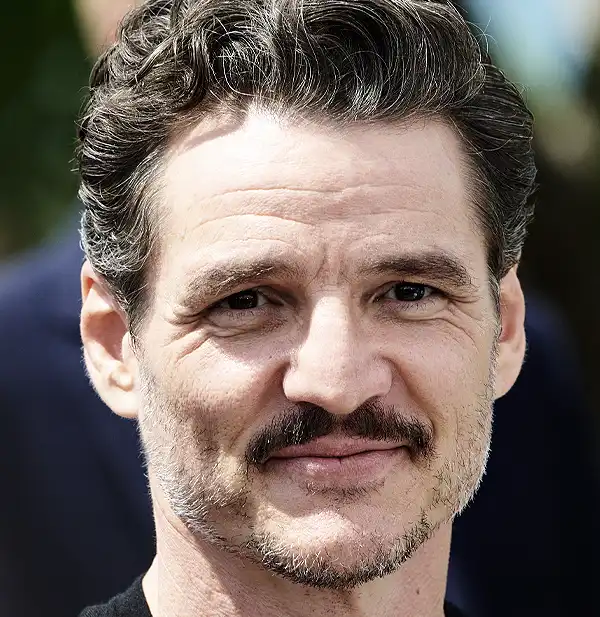
Pedro Pascal is a Chilean-American actor known for bringing an unusual mix of warmth, steel, and humor to roles that could easily turn into clichés in lesser hands. He’s become one of modern pop culture’s most recognizable leading men largely because he plays people who feel human — brave, rattled, stubborn, funny, and often quietly exhausted.
Born José Pedro Balmaceda Pascal in Santiago, Chile, he was raised in a family shaped by political upheaval. His parents left Chile and the family eventually settled in the United States. Over time, he adopted “Pascal,” his mother’s maiden name, as his professional surname — a choice often described as both personal and honoring his mother.
Before “overnight fame” finally found him (after a couple of decades of work), Pascal did what a lot of serious actors do: he trained, auditioned, took smaller parts, and kept going. He studied acting at New York University’s Tisch School of the Arts, earning a BFA, and spent years building credits through television guest roles and theater while trying to break through in a way that would actually last.
That breakthrough came in 2014 when Pascal played Oberyn Martell in season 4 of Game of Thrones. Oberyn showed up like a lightning strike — charismatic, dangerous, principled, and impossible to ignore. In a series famous for its giant ensemble, he stole attention fast, and the role became a true turning point in Pascal’s public profile.
From there, he stepped into another career-defining role: Javier Peña in Narcos (2015–2017). The series gave him long-form dramatic space, and he used it well — balancing intensity with the kind of grounded realism that makes even stylized crime drama feel lived-in. It also broadened his audience in a big way, setting him up for the wave that followed.
Then came the role that made him a global fixture even when you couldn’t always see his face: Din Djarin in The Mandalorian (debuting in 2019). In a franchise as massive as Star Wars, Pascal anchored the show with a restrained, character-first performance — a gunslinger vibe mixed with reluctant tenderness that turned a masked bounty hunter into a surprisingly emotional lead.
In 2023, Pascal took a second crown-jewel role as Joel Miller in HBO’s The Last of Us. Joel is tough, complicated, and frequently at war with his own choices — and Pascal made that conflict the engine of the character. The performance earned major awards attention, including Emmy recognition for Lead Actor.
What’s striking about Pascal’s rise is how earned it feels. He didn’t pop off from one viral moment and disappear; he stacked experience for years, then hit a sequence of roles that matched his strengths perfectly. He’s also built a film résumé alongside TV, appearing in projects that range from big franchise work (Kingsman: The Golden Circle, Wonder Woman 1984) to crowd-pleasers like The Unbearable Weight of Massive Talent — proof he can be intense, funny, and strangely charming in the same scene without breaking tone.
By 2023, his cultural footprint was hard to miss: he hosted Saturday Night Live, and he was named to Time’s list of the 100 most influential people. Those kinds of “you’ve arrived” moments usually happen after an actor has become both popular and broadly trusted — the rare combination of star power and likability that makes audiences show up for the person, not just the project.
If you want the simplest explanation for why Pedro Pascal works so well on screen, it’s this: he plays authority without smugness, vulnerability without self-pity, and toughness without turning cold. That’s a hard trio to pull off. And it’s why he keeps landing roles where the character becomes the emotional center of the story — often a protector figure, sometimes a mess, usually both.