May strolls in with flowers, flip-flops, and a suspiciously smug look—like it knows summer’s coming but isn’t telling. It’s the month where the grill dusts itself off, allergies kick into overdrive, and everyone pretends to care deeply about the Derby hats. Between honoring moms, fallen heroes, and the magical properties of barbecue sauce, May is packed with month-long celebrations that are equal parts heartfelt and picnic-approved. So stretch out that hammock, raise a glass of something cold, and enjoy the warm-up act to summer’s main event.
Moving is the one life event that makes you question every purchase you’ve ever made, including that “totally useful someday” box of mystery cables you’ve been hauling around since 1998. One minute you’re feeling organized with a roll of tape and big plans, and the next you’re standing in the middle of the living room surrounded by half-filled boxes, random screws from furniture you swear was intact yesterday, and a permanent marker that has stopped working out of pure stress. Then comes the grand finale: lifting the one box you labeled “LIGHT” and discovering it contains three cast iron pans, twelve books, and your entire emotional baggage. By the end, you’re not moving across the country — you’re just escaping your own possessions. 😄📦🚚
Celebrated: Annually, throughout May
Discover the chaos and humor of National Moving Month in May, the peak season for home relocation. Dive into useful tips for navigating the madness of moving across cities and states.
Returning Youth Month is basically society’s way of saying, “Okay… deep breath… let’s do this properly.” It’s a reminder that people aren’t finished products—they’re ongoing projects, like half-painted rooms, last year’s New Year’s resolutions, or that one kitchen drawer nobody dares open. This month gives us a chance to lead with a little more patience, a little less suspicion, and a whole lot more belief that the next chapter can look a lot better than the last one. Because sometimes the most powerful thing you can give someone isn’t advice—it’s room to prove they can rise.
Celebrated: Annually, throughout May
National Returning Youth Month celebrates young adults reintegrating into society after incarceration, highlighting the challenges and support they need.
Learning to play the drums is basically deciding you want to sound cool… and then discovering you have the coordination of a startled octopus. Your brain confidently says, “Right hand does this, left hand does that, foot does the other thing,” and your body responds by launching into a rhythm that sounds like someone falling down a staircase with enthusiasm. At first, every beat is either too early, too late, or aggressively personal — like the drums are offended you touched them. But slowly, miraculously, it starts to click… right around the time your family starts Googling “quiet hobbies” and your neighbors consider moving before you do. 😄🥁
Celebrated: Annually, throughout May
Explore the global celebration of International Drum Month, a time when drum enthusiasts unite to honor the profound impact of drums on music and culture worldwide. Join the rhythmic revelry!
Wildfire Awareness Month is nature’s polite way of reminding us that forests, grasslands, and dry brush have one thing in common: they all burn a lot faster than we think they will. Every year, as temperatures climb and vegetation dries out, firefighters, land managers, and emergency planners start hoping the rest of us remember a few simple truths—don’t leave campfires unattended, don’t flick cigarette butts into dry grass, and maybe don’t run power tools next to a pile of crispy pine needles on a windy afternoon. This month is about learning how wildfires start, how they spread, and how ordinary folks can prevent turning a quiet summer day into a headline that begins with the words “officials say the fire started…”
Celebrated: Annually, throughout May
Wildfire Awareness Month highlights fire safety, defensible space, and simple steps communities can take to prevent devastating wildfires.
Miniature Garden Month is basically for people who love gardening… but also love the idea of being in charge of a tiny kingdom where nothing argues back and the weeds can’t put up much of a fight. It’s the one time of year you can build a whole magical landscape in a flowerpot, complete with tiny pathways and little decorations, and feel like a respected landscaper instead of someone sweating in the yard while mosquitoes hold a team meeting on your ankles. Small plants, big dreams, and just enough whimsy to make you wonder if the garden gnomes are paying rent yet.
Celebrated: Annually, throughout May
Welcome to National Miniature Garden Month, where tiny landscapes are meticulously crafted, offering a unique blend of artistry and horticulture.
Correcting your posture is one of those things that sounds easy until you realize you’ve been sitting like a question mark since 1997. The moment you straighten up, you suddenly feel taller, more confident, and slightly offended that your spine has been silently judging you this whole time. Of course, five minutes later you’re back in your usual “shrimp at a laptop” position, wondering why your neck creaks when you turn your head. But hey—every time you sit up straight, an imaginary physical therapist somewhere gives a proud little nod… and your chair loses a tiny bit of its power over your soul.
Celebrated: Annually, throughout May
May is Correct Your Posture Month, a time to celebrate the importance of maintaining good posture for optimal health and vitality. Discover the benefits of proper alignment and how it impacts your daily life.
Skin cancer is one of those things that shows up uninvited, like a telemarketer, except this one doesn’t take hints and can get seriously dangerous if ignored. The good news is you don’t need to live like a vampire to protect yourself—just be smart about the sun: use sunscreen, wear a hat, seek shade, and keep an eye on anything new, changing, or suspicious on your skin. Think of it as basic maintenance, like checking the oil in your car… except the car is you, and you don’t come with a spare.
Celebrated: Annually, throughout May
Skin Cancer Awareness Month highlights the risks of skin cancer due to UV exposure and promotes early detection strategies to prevent its devastating effects. Learn about the types of skin cancer and key prevention methods.
Asparagus is one of the few vegetables that manages to feel both fancy and slightly mischievous at the same time. Chefs present it like a gourmet delicacy, farmers treat it like a prized crop, and dinner guests nod approvingly while pretending they always planned to eat vegetables shaped like medieval weaponry. National Asparagus Month simply gives everyone permission to enjoy the green spears a little more often—just remember that asparagus may be polite at the dinner table, but it has a reputation for causing a certain… aromatic encore later on.
Celebrated: Annually, throughout May
Celebrate National Asparagus Month in May with the history, harvest season, and culinary traditions of one of spring’s most famous vegetables.
Jewish American Heritage Month is the perfect time to celebrate a history packed with brilliance, resilience, and enough cultural influence to fill a library, a comedy club, and at least three family dinners with leftovers. It’s a month to recognize the artists, scientists, entrepreneurs, activists, and everyday legends who helped shape America—often while juggling tradition, ambition, and the occasional “Have you eaten yet?” from someone who may or may not even be in the same state. It’s meaningful, it’s inspiring, and it’s also a gentle reminder that heritage isn’t just something you inherit—it’s something you carry forward with pride, humor, and a whole lot of heart.
Celebrated: Annually, throughout May
Discover the rich tapestry of Jewish American Heritage Month, celebrating the diverse contributions of Jewish Americans to science, arts, and society throughout history.
Visiting the dentist is basically agreeing to pay someone good money to lean over you with sharp tools while you try to communicate using nothing but eyebrow movements and muffled panic sounds. You walk in feeling brave, and two minutes later you’re wearing sunglasses indoors, drooling like a sleepy St. Bernard, and nodding politely while they ask questions you absolutely cannot answer because your mouth is being held open by what feels like a medieval doorstop. And somehow, no matter how well you’ve behaved all year, they still find “a little spot we should keep an eye on,” which is dentist-language for “I’ll see you again soon… whether you like it or not.” 😄🦷
Celebrated: Annually, throughout May
Discover the wonders of National Dental Care Month and how it celebrates oral health heroes, preventive dental care, and the joy of maintaining a gleaming smile.
Fostering is one of the most generous things a person can do, because it’s basically opening your home—and your heart—to someone who needs stability, safety, and a real chance to breathe again. It isn’t always easy, and it definitely isn’t always tidy, but it’s the kind of commitment that can change a life in quiet, powerful ways. A foster home doesn’t have to be perfect—it just has to be consistent, caring, and full of the kind of support that says, “You matter here.” And if love could be measured, fostering would be proof that some people really do step up when it counts most.
Celebrated: Annually, throughout May
A comprehensive guide to National Foster Care Month, its significance, challenges in foster care, and community involvement for supporting foster children in the U.S.

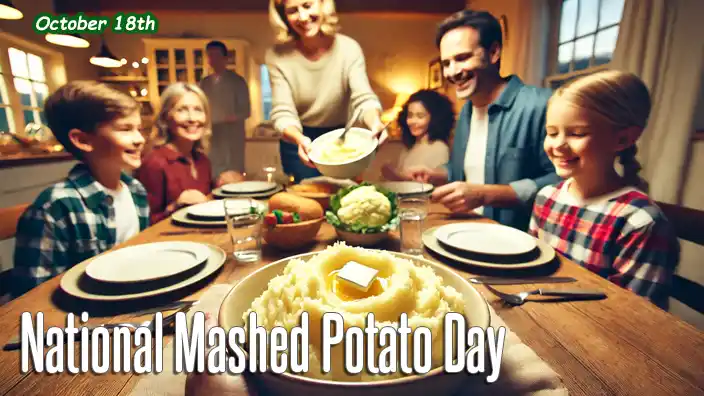
Sitting down at the dinner table, there's always that moment when you spot the mashed potatoes,...
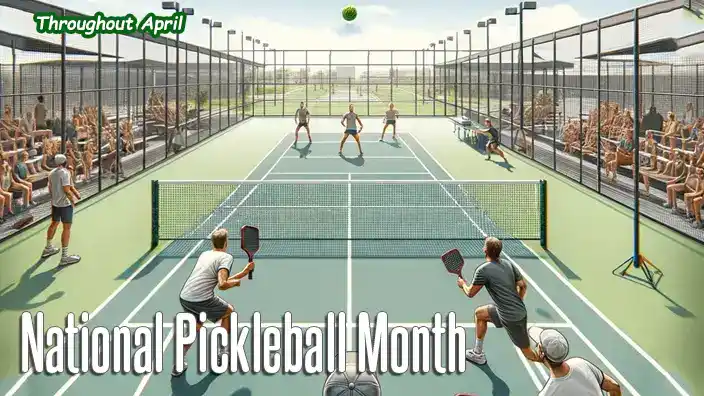
Once upon a time, someone looked at tennis and thought, “This would be perfect if it involved less running,...
If you’re the kind of person who likes a little thrill with your meal, then one bite of that...
If you've ever scratched a dog's ears, rescued a turtle from the middle of the road, or apologized...
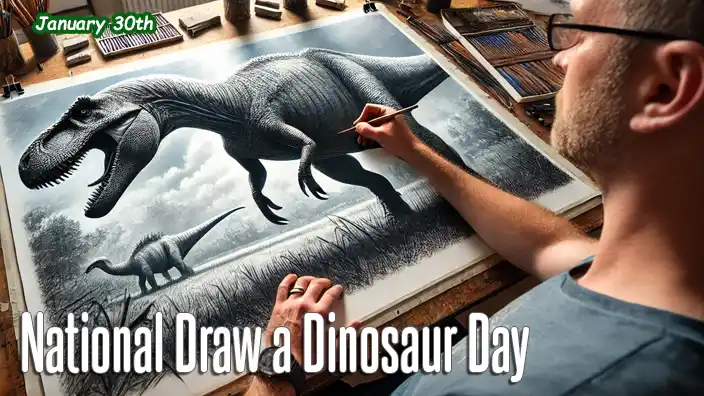
Who knew that creating a prehistoric masterpiece could lead to such existential questions? Like, did...
It's not uncommon to see a normally quiet neighborhood transform overnight into a glittering...
On September 14, 1814, lawyer Francis Scott Key was inspired to write the poem that eventually became the lyrics of the United States national anthem, “The Star-Spangled Banner.” During the War of 1812, British forces had captured Washington, D.C., and burned several major public buildings before turning their attention toward Baltimore. Key became involved after his friend, physician William Beanes, was taken prisoner by the British. He helped negotiate Beanes' release, but because the Americans had learned details of the planned attack, they were required to remain with the British fleet until the assault on Baltimore was completed.
From aboard a vessel in the Patapsco River, Key watched as British ships bombarded Fort McHenry through the night of September 13 and into the morning of September 14. When daylight came, the enormous American flag flying above the fort was still visible, showing that the defenders had held their position and the British attack had failed. Moved by the sight, Key began writing verses that became a four-stanza poem titled “Defence of Fort M'Henry.” It was soon published and sung to the melody of “To Anacreon in Heaven,” a British song composed by John Stafford Smith. Over time, Key's poem became better known by the title of its opening imagery, “The Star-Spangled Banner.”
Key, born August 1, 1779, in Maryland, was a prominent lawyer who later served as U.S. attorney for the District of Columbia. His song became increasingly associated with patriotic and official occasions, and President Woodrow Wilson directed that it be played at appropriate military and naval ceremonies in 1916. Congress formally designated “The Star-Spangled Banner” as the national anthem, with President Herbert Hoover signing the measure into law on March 3, 1931. Key did not live to see what became of his composition; he died on January 11, 1843, decades before his hastily written verses became the official musical symbol of the United States.
On September 14, 1964, Kellogg's introduced the toaster pastry that would become Pop-Tarts, although the company was not the first to announce the idea. Rival Post had already publicized plans for a shelf-stable, fruit-filled pastry called Country Squares but revealed the concept before the product was ready for widespread sale. Kellogg's recognized the opportunity and moved quickly, turning to William “Bill” Post, then working at the Hekman Biscuit Company in Michigan, to help develop a pastry that could survive both the supermarket shelf and a trip through the family toaster. Post and his team experimented with dough, fillings and production methods, with his children reportedly serving as enthusiastic taste testers along the way.
Kellogg's initially considered calling its creation Fruit Scones before settling on the far more memorable Pop-Tarts, a name that played nicely with the popularity of Pop Art during the 1960s. The original unfrosted pastries appeared in four flavors—strawberry, blueberry, brown sugar cinnamon and apple currant—and the early test market was enormously successful. Demand quickly outran supply, forcing Kellogg's to publish advertisements apologizing to customers because it had run out. Frosting arrived a few years later after the company developed a version capable of surviving toaster temperatures without melting into a sugary disaster, followed by sprinkles, additional flavors and Milton the Toaster, an animated mascot who helped promote the increasingly popular breakfast treat.
What began as a hurried response to a competitor became one of Kellogg's most recognizable products. William Post is frequently described as the inventor of Pop-Tarts, although he always emphasized that their creation was a team effort, and Kellogg's has also credited company executive William “Doc” Thompson and the people involved in developing the product. Over the following decades, Pop-Tarts expanded far beyond those original four flavors and became as much a snack as a breakfast food. Billions are now sold annually—a remarkable outcome for something that began with a few people looking at two pieces of dough with filling between them and essentially asking, “Do you reckon we can put this in a toaster?”
On September 14, 1974, Eric Clapton reached No. 1 on the Billboard Hot 100 with “I Shot the Sheriff,” a song written and recorded the previous year by Bob Marley and the Wailers for their album Burnin'. It became the only No. 1 single of Clapton's career in the United States, but the man singing it had been surprisingly uncomfortable about releasing it. Clapton admired Marley's original and understood reggae well enough to worry that his own recording didn't capture what made the music special. He later recalled thinking that his version shouldn't even be included on his album 461 Ocean Boulevard, much less released as a single, because he felt it wasn't fair to Marley and that his interpretation had given the song too much of a white rock feel. His American bandmates were considerably more enthusiastic, and eventually Clapton allowed himself to be persuaded.
His concern became even more understandable when the record took off. Marley's version had already been released, but Clapton's recording suddenly carried the song onto mainstream American radio and all the way to the top of the chart. Clapton subsequently spoke with Marley and was relieved to discover that the songwriter appeared pleased with what he had done. Marley later recalled that Clapton had asked him about the meaning of the song, while Clapton remembered struggling to understand parts of Marley's explanation. Whatever uncertainty remained about the interpretation, there seemed to be no lasting uncertainty about Marley's acceptance of the cover.
The irony was that the recording Clapton worried might unfairly overshadow Bob Marley ultimately helped bring enormous attention to him. Island Records founder Chris Blackwell later described Clapton's cover as a major breakthrough for Marley, because one of rock's biggest stars had effectively pointed his enormous audience toward the Jamaican songwriter whose work he admired. The official Bob Marley history similarly credits Clapton's recording with significantly increasing Marley's international profile. So while September 14, 1974, marks Eric Clapton reaching No. 1, the longer story belongs to both musicians: Clapton received the biggest American single of his career from a Bob Marley song, while millions of listeners who heard Clapton's version were given a reason to discover the man who had written it in the first place.
On September 14, 1982, Princess Grace of Monaco died at the age of 52, one day after suffering serious injuries when the car she was driving left a steep mountain road above Monaco. Her youngest daughter, Princess Stéphanie, was traveling with her and survived. Before becoming European royalty, Princess Grace had been Grace Kelly of Philadelphia, one of Hollywood's most celebrated stars of the 1950s. In a remarkably brief film career, she became known for an elegant screen presence that made her particularly memorable in Alfred Hitchcock's Dial M for Murder, Rear Window and To Catch a Thief. She also starred opposite Gary Cooper in High Noon and won the Academy Award for Best Actress for her performance alongside Bing Crosby in The Country Girl.
Born in Philadelphia on November 12, 1929, Kelly studied acting at the American Academy of Dramatic Arts in New York and supported herself through modeling and television work while pursuing stage roles. After appearing on Broadway and making her way into motion pictures, her rise was extraordinarily rapid. By the middle of the 1950s she was one of Hollywood's leading actresses, working with stars including James Stewart, Cary Grant, Clark Gable, Ava Gardner and Frank Sinatra. Yet at the height of that success, Kelly walked away from Hollywood. After meeting Prince Rainier III of Monaco in 1955, she married him in an elaborate ceremony the following April and became Princess Grace. Her final feature film, the musical High Society, was released in 1956, bringing an acting career of only a few years to a close.
Princess Grace and Prince Rainier had three children—Caroline, Albert and Stéphanie—and she spent the remainder of her life carrying out royal and charitable duties in Monaco. On September 13, 1982, while driving home with Stéphanie, Grace lost control of her Rover on the winding road near Monaco and the vehicle plunged down a steep slope. Early reports attributed the crash to a stroke suffered while she was driving, although the precise circumstances surrounding the accident have remained the subject of discussion. Stéphanie escaped with injuries, but Grace suffered devastating trauma and died the following day. Her death prompted mourning far beyond the tiny principality she had made her home, closing an extraordinary life that had taken her from Philadelphia to Broadway, from Hollywood stardom and an Academy Award to becoming one of the world's most recognizable princesses.
On September 14, 1994, Major League Baseball officially canceled the remainder of its season, including the postseason and World Series, after a players' strike that had begun on August 12 showed no sign of ending. It was an extraordinary moment for America's pastime: for the first time since 1904, there would be no World Series, and for the first time since the championship series began in 1903, its cancellation resulted from a labor dispute. At the center of the conflict were long-running disagreements between team owners and the Major League Baseball Players Association over salaries, revenue sharing, free agency and the owners' desire for a salary cap. Acting commissioner Bud Selig finally called off the remainder of the season with hundreds of regular-season games already lost.
The cancellation was particularly painful because the 1994 season had been producing some remarkable baseball. The Montreal Expos owned the best record in the majors at 74–40 and appeared capable of making the deepest postseason run in franchise history, while the New York Yankees led the American League East at 70–43. Individual achievements disappeared with the schedule as well. San Francisco's Matt Williams had already hit 43 home runs and Seattle's Ken Griffey Jr. had 40, giving both a chance to challenge Roger Maris' then-record of 61 in a season. Perhaps the most tantalizing unfinished story belonged to San Diego Padres great Tony Gwynn, who was batting .394 when play stopped and pursuing something no major leaguer had accomplished since Ted Williams hit .406 in 1941.
The dispute continued through the winter and into the following spring, with replacement players even appearing during 1995 spring training before a federal court injunction helped bring the strike to an end on April 2. Regular major-league players returned and the 1995 season eventually began, but the damage was considerable. Attendance suffered, fans expressed anger at both players and owners, and many people within baseball later described the canceled World Series as a lasting scar on the sport. There was no champion, no postseason heroics and no opportunity to discover whether Montreal could complete its remarkable season, whether Gwynn could reach .400, or whether Williams or Griffey could catch Maris. The 1994 season simply stopped—and baseball was left forever wondering how one of its most promising years might have ended.