Mark The Days - October

October tiptoes in wearing flannel and carrying a pumpkin spice latte like it owns the place. The leaves start bailing on their branches faster than interns on a Friday, and everything—everything—suddenly tastes like cinnamon and regret. It's the month where we celebrate everything from tacos to ghosts, and yes, sometimes both at the same party. Costumes come out, candy disappears mysteriously, and someone always insists on bobbing for apples like it’s not a health code violation. October is where cozy meets crazy—and we’re here for all of it.
- Details
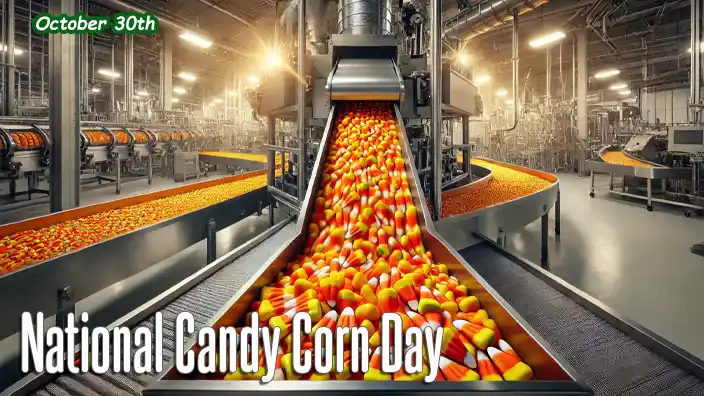
Halloween and candy corn go together like pumpkins and spooky faces, but let’s be honest—candy corn is the holiday's true mystery. Every October, these sugary little triangles appear in bowls, bags, and suspiciously sticky pockets, raising questions like: Is this treat or trick? Does anyone actually like it, or is it simply part of Halloween decor? And, most importantly, why do we only eat it once a year? Candy corn's strange power lies in its color-coded nostalgia and addictive sugar rush. We may pretend to have refined tastes, but every Halloween, there we are, grabbing another handful—because, like a good ghost story, it’s weirdly irresistible.
Celebrated: Annually, on October 30th
Discover the history and nostalgia of candy corn, the iconic Halloween treat celebrated on National Candy Corn Day. Explore its unique colors and seasonal charm.

- Details
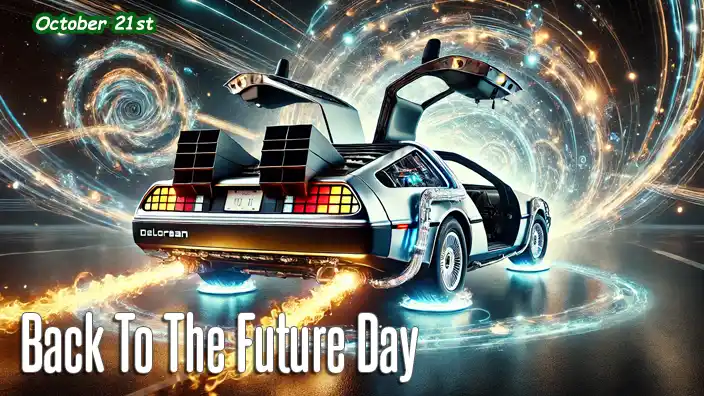
Ever wonder if future-you is out there right now, sending you subtle hints to avoid that questionable decision you’re about to make? Maybe that's why your phone mysteriously falls from your pocket just as you’re about to hit "Send" on that risky text. It’s not clumsiness—it’s time travel in action, a cosmic nudge from the timeline police reminding you that messing with the past (or future) can have, let’s say, unintended consequences. After all, one wrong move, and next thing you know, dinosaurs are baristas, and you're stuck paying for overpriced lattes in the Triassic period!
Celebrated: Annually, on October 21st
Celebrate Back to the Future Day with time travel fun! Explore the iconic DeLorean, time paradoxes, and the 2015 vision from the classic film trilogy.

- Details
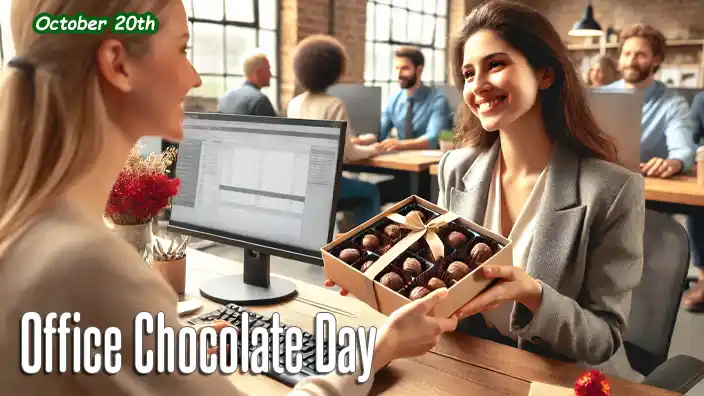
In the office ecosystem, chocolates are like a rare species of joy that suddenly appears, turning even the most stoic colleagues into excited kids at a candy store. One minute, everyone’s heads are buried in their spreadsheets, and the next, people are popping out of cubicles as if they have an internal "chocolate radar." There’s always that one person who takes two “for later,” but let’s be honest—we all know those truffles won’t make it past lunch. And somehow, offering chocolates instantly turns you into the office hero, even if five minutes ago you were just the person who forgot to refill the coffee pot.
Celebrated: Annually, on October 20th
Discover the joy of Office Chocolate Day, where rich chocolates boost morale and productivity, transforming routine workdays into delightful, cocoa-filled experiences.

- Details
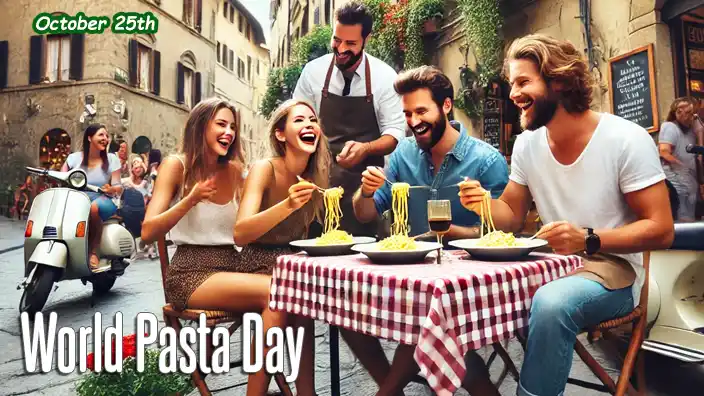
Twirling a fork around a plate of noodles can feel like an Olympic sport—precision, patience, and a dash of finesse required. But just when you think you’ve got the perfect bite, the sauce decides it’s time to redecorate your shirt. Those spirals and tubes might look innocent, but they have a sneaky way of launching tomato sauce at the least opportune moment. And don’t even get started on that one stubborn strand that refuses to cooperate, hanging from your mouth like it’s auditioning for a spaghetti western.
Celebrated: Annually, on October 25th
Celebrate World Pasta Day by exploring the rich history, diverse shapes, and perfect sauce pairings of pasta. Discover fun facts and celebration ideas.


- Details
If you ever wanted to learn the art of making a bed so tight you could bounce a coin off it, or how to wash an entire ship’s deck with what seems like a toothbrush, life in the Navy might just be for you. Picture it: you're on a 97,000-ton floating city, where “rush hour” means getting to the chow line before they run out of coffee, and your “neighborhood” is the open sea, filled with dolphins and the occasional curious whale. Then there's the language—acronyms for everything from sleeping quarters to snack time. Sailors don’t just do things; they execute them with the precision of a marching band on a coffee-fueled mission. And as if riding waves wasn’t thrilling enough, there’s always the thrill of Navy coffee, a brew that might just have the power to wake up the whole ship—plus any nearby fish.
Celebrated: Annually, on October 27th
Celebrate Navy Day by honoring the legacy of America's bold sailors and ships. Discover the history and traditions of the U.S. Navy from 1775 to today.

- Details
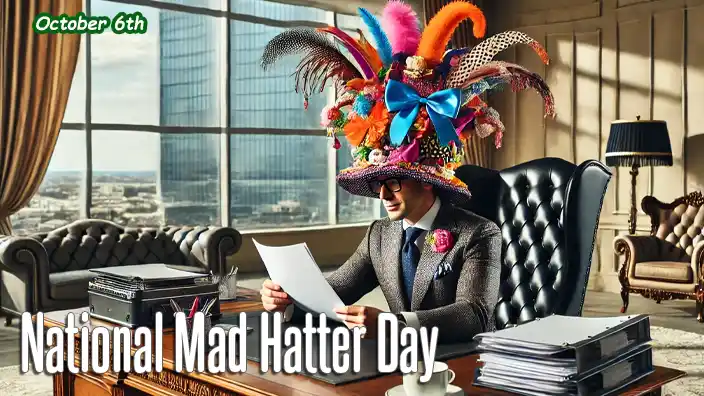
Sometimes, acting crazy—even if just for one day—is like giving your brain a vacation from reality. You wear mismatched socks on purpose, talk to your plants like they’re your new best friends, and maybe even order dessert before dinner. For just a brief moment, you’re free from the weight of "normal" expectations, and instead, you’re the reigning monarch of the Land of Absurdity. The best part? No one can question your sanity because, let’s face it, we all need a little madness to stay sane. Besides, what’s life without a day of total, unapologetic weirdness?
Celebrated: Annually, on October 6th
Celebrate National Mad Hatter Day on October 6th with whimsical hats, tea party shenanigans, and the joy of embracing absurdity, inspired by Lewis Carroll's beloved character.


- Details
Suspenders are like the underappreciated backstage crew of the fashion world—silently making sure everything stays in place while letting the belt hog the spotlight. Yet, despite their quiet reliability, suspenders have a quirky side. One moment you're looking sharp, the next you're engaged in a full-body shimmy as a snapback reminds you just how much elastic can bite. It's as if your trousers are testing your reflexes, and suddenly, you're not just walking down the street; you're participating in an impromptu game of "How Fast Can You Recover Your Dignity?"
Celebrated: Annually, on October 20th
Explore the rich history and timeless charm of suspenders, from their 18th-century origins to their role in modern fashion and pop culture.


- Details
If you’ve ever doodled in the margins of a notebook and wondered what it would be like if your stick figure walked off the page, welcome to the world of animation — where imagination ignores physics, animals talk better than politicians, and no one ever worries about how many laws of motion were just broken in a single scene. Animation is humanity’s way of saying, “Reality’s nice and all, but let’s see what happens if a coyote orders rocket parts from Acme.” It’s art, science, and pure mischief rolled into one — and on International Animation Day, we celebrate every frame of the glorious madness.
Celebrated: Annually, on October 28th
Discover the playful art and science behind every animated frame as we mark International Animation Day, from cave shadows to cutting-edge CGI.


- Details
It starts innocently enough—one day, you’re fanning yourself in the middle of a winter snowstorm, and the next, you're questioning why your mood swings feel like an emotional rollercoaster you didn’t sign up for. Menopause has a way of sneaking up on you with its unpredictable mix of hot flashes, brain fog, and sleep-depriving night sweats. Yet, amidst the chaos, there’s a certain liberation—no more periods, no more cramps, and an excuse to unapologetically crank the A/C. If nothing else, menopause reminds you that every life phase deserves a little humor.
Celebrated: Annually, on October 18th
Explore the journey of menopause, from perimenopause to postmenopause, and embrace the changes with a sense of humor and empowerment. Discover the phases, symptoms, and health tips.


- Details
National days come in all shapes and sizes — some celebrate food, some honor history, and some mark the influence of individuals whose names spark conversation long after the headlines fade. The National Day of Remembrance for Charlie Kirk is one of those moments. Whether viewed as a tribute, a talking point, or simply another mark on the calendar, it’s a reminder that the voices we elevate say as much about our society as they do about the person themselves.
Celebrated: Annually, on October 14th
Explore the National Day of Remembrance for Charlie Kirk, observed annually on 14 October, with origins in a 2025 congressional resolution, and his legacy.


- Details
The United States Navy has spent nearly 250 years proving that "water under the bridge" is sometimes an aircraft carrier. From battling pirates and protecting trade routes to launching aircraft from floating airfields and quietly patrolling the depths in nuclear submarines, the Navy has seen just about everything the world's oceans can throw at it. Navy Birthday is the perfect occasion to salute the sailors who have kept watch over America's interests—rain or shine, calm seas or waves that make coffee question its life choices.
Celebrated: Annually, on October 13th
Discover the history of Navy Birthday, celebrated each October 13 to honor the founding of the United States Navy in 1775. Learn about its traditions, famous leaders, global missions, and how sailors have protected America's interests at sea for nearly 250 years.
- Details
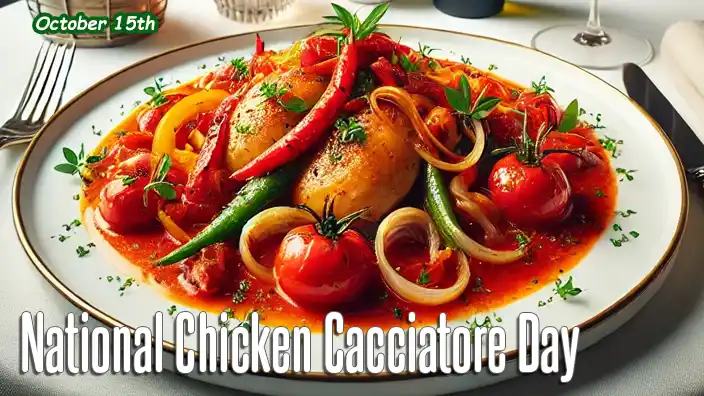
If you've ever wondered what would happen if a chicken went on an Italian vacation, well, here’s your answer. After being chased around the kitchen, it gets pampered in a pot with tomatoes, wine, and a cozy blanket of herbs—talk about a spa day! By the time it’s done simmering, it’s so tender and flavorful, you’d swear it was the kind of dish you’d only eat by candlelight, in the company of an accordion player serenading your dinner.
Celebrated: Annually, on October 15th
Celebrate National Chicken Cacciatore Day with a dish rooted in Italian hunting tradition. Discover the rustic flavors and history behind this hearty meal.

- Details
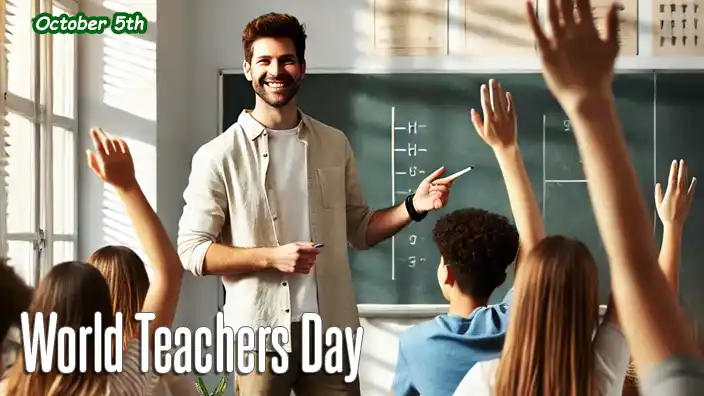
Navigating a classroom full of energetic, inquisitive minds is like being the conductor of an orchestra where every instrument is slightly out of tune, yet somehow, you still manage to produce a symphony. There's always the one kid who thinks "I don't know" is a valid answer to every question, the paper airplane engineer in the back, and of course, the student who needs the bathroom the second a lesson starts. Yet, through it all, lessons get taught, minds get molded, and somehow, everyone (well, mostly) leaves a little smarter by the end of the day.
Celebrated: Annually, on October 5th
Celebrate World Teachers Day by honoring the people who shape our future. Discover the history and importance of this special day dedicated to educators.

- Details
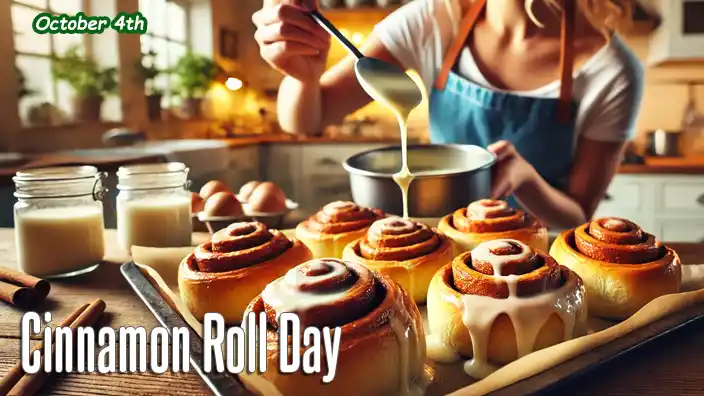
Cinnamon rolls are basically the extroverts of the pastry world—loud, sweet, and impossible to ignore. They don’t just sit quietly on your plate; they practically scream, “Look at me!” with their swirls of cinnamon goodness and generous slathering of frosting. You don’t just eat a cinnamon roll, you experience it. First, there’s the mesmerizing unraveling of the spiral, like you’re unwrapping a sugary present. Then comes the grand finale: the gooey, cinnamony center that makes you question all your life choices—mostly why you didn’t eat one sooner. They’re the ultimate comfort food, and let’s be real, nobody ever regrets saying yes to a cinnamon roll.
Celebrated: Annually, on October 4th
Celebrate the joy of Cinnamon Roll Day with a swirl of sweetness, spice, and everything nice. Discover the rich history and indulge in the perfect pastry.

- Details
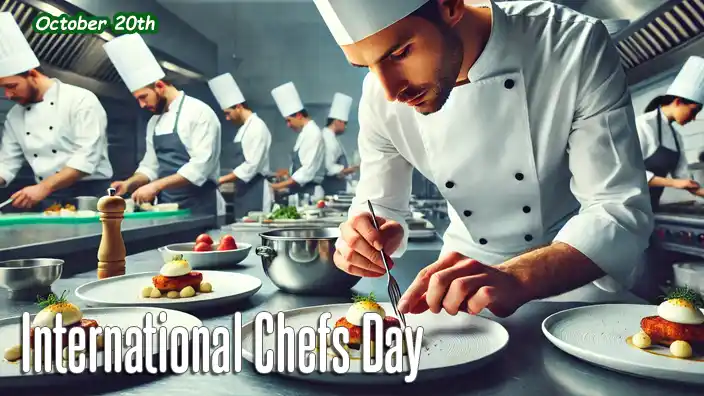
In the heat of the kitchen, there's a fine line between orchestrating a five-star meal and starting a small kitchen fire. Somehow, amidst the clatter of pans, the hiss of steam, and the inevitable missing spatula, chefs manage to create culinary masterpieces with the calm precision of someone defusing a bomb. Their ability to turn chaos into cuisine is nothing short of miraculous, especially when they've just tasted ten sauces in a row and can still tell the difference between rosemary and thyme. And let’s not forget their skill at keeping a straight face when a customer requests their steak cooked "extra medium."
Celebrated: Annually, on October 20th
Celebrate International Chefs Day by honoring the culinary wizards who transform ingredients into art. Discover their journey from cooks to culinary artists.


- Details
There’s something undeniably magical about that moment when you take a bite of a hot, cheesy slice and immediately wash it down with a cold, frothy brew. It's like your taste buds throw a party and forgot to invite your waistline. Sure, it might not be the healthiest combination, but let’s face it—if we were all that concerned about health, we wouldn’t have invented pizza crust that doubles as a cheese-filled pillow. Besides, beer’s basically liquid bread, so really, it’s just a well-balanced meal, right?
Celebrated: Annually, on October 9th
Explore the perfect match of beer and pizza, from their historical roots to pop culture fame. Celebrate with unique pairings and indulge in this iconic duo's social charm.

- Details
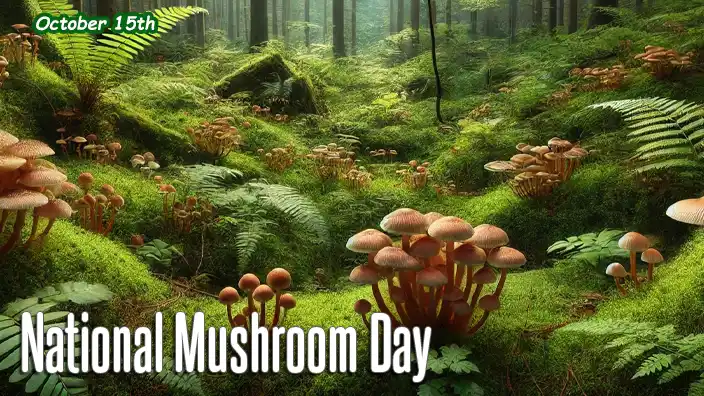
Mushrooms are like nature’s version of a mystery box—you never quite know what you're getting. One minute, you’re foraging for a delicious addition to your pasta, and the next, you’re starring in your own episode of “Survivor: Mushroom Edition,” trying to remember if the one in your basket is a gourmet delicacy or just an elaborate way to take a really long nap. They’re the only food where you need to channel both your inner chef and your inner botanist to avoid accidentally auditioning for the next season of a true crime documentary.
Celebrated: Annually, on October 15th
Explore the fascinating world of mushrooms, from their ancient history to their culinary versatility, and celebrate National Mushroom Day with fun facts and delicious recipes.

- Details
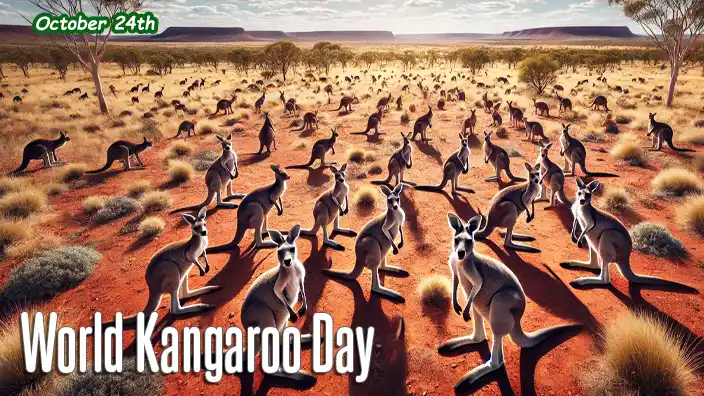
Imagine trying to skip the line at a crowded store by bouncing your way to the front—well, that’s pretty much how one might describe a kangaroo’s life. These critters have mastered the art of hopping through life, quite literally, without a care in the world. While we humans struggle with leg day at the gym, kangaroos leap effortlessly over entire highways, using their tails as built-in kickstands. And don't even think about challenging one to a boxing match. Those arms may look small, but they've got a knockout punch that can humble any overconfident tourist!
Celebrated: Annually, on October 24th
Discover the fascinating world of kangaroos, from their evolutionary journey and unique anatomy to their social life and ecological importance in Australia.
From Our Marks Catelog
-

Brussels sprouts: the tiny green orbs that have been sparking dinner table debates for...
-
Elegance, mystery, and just the right amount of arrogance—some things demand admiration without lifting...
-
National Cake Day is the one day of the year when it's socially acceptable to have your cake and eat...
-

Forget glow-in-the-dark snack cakes and cheese that comes in a spray can—there’s something wildly...
-

If there were an Olympic event for clumsiness, someone would be rolling down the hill, missing their...
-
Gazpacho Soup Day isn’t just a day to honor cold tomato soup; it’s a day to revel in the absurdity of...

