Lights Out, Popcorn Ready, Common Sense Optional
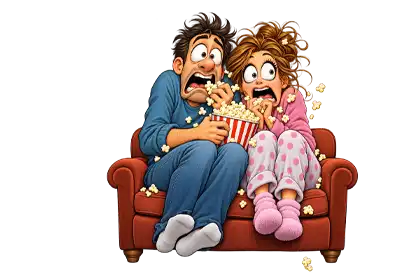
Every October 23, National Horror Movie Day invites movie lovers to dim the lights, lock the doors, grab an enormous bowl of popcorn, and voluntarily spend the evening being frightened out of their wits. It's one of humanity's more peculiar traditions. We spend our everyday lives avoiding danger, yet happily settle into comfortable chairs to watch masked maniacs, bloodthirsty monsters, vengeful ghosts, and assorted creatures with extremely questionable table manners. Then, when someone in the movie hears a suspicious noise coming from the basement, we scream at the television, "DON'T GO DOWN THERE!" Naturally, they go down there. If horror movie characters possessed even a modest amount of common sense, the entire film industry would be in serious financial trouble.
National Horror Movie Day celebrates the extraordinary creativity, history, and enduring popularity of horror cinema, from silent movie monsters and classic Hollywood fright films to supernatural thrillers, psychological horror, slasher movies, zombie apocalypses, and modern horror comedies. Whether your favorite cinematic nightmare involves Dracula emerging from his coffin, a shark circling beneath a perfectly innocent swimmer, or a possessed doll that really should have remained on the toy store shelf, October 23 offers the perfect excuse for a horror movie marathon. And because Halloween is only eight days away, the atmosphere is already ideal for terrifying entertainment. Just remember that the strange scratching noise behind the wall is probably a mouse. A perfectly ordinary mouse. With unusually large claws.
The Origins of National Horror Movie Day – A Birthday Worth Screaming About
National Horror Movie Day was established in 2023 through a collaboration between Black Vortex Cinema and National Day Calendar, although the effort to create the observance began several years earlier. Filmmaker and horror enthusiast Christian Ackerman championed the idea, working with fellow Black Vortex Cinema collaborators Chuck Foster, Felissa Rose, Joshua McKevitt, and Sean Decker. Their ambition was straightforward: give horror movies a celebration of their own, recognizing not only the thrills and chills they provide but also the filmmakers, performers, artists, and audiences who have made horror one of cinema's most enduring genres. After all, Halloween already had costumes, candy, pumpkins, and children demanding chocolate from complete strangers. Surely the movies responsible for so many sleepless nights deserved their own occasion.
But why October 23? The answer is considerably more interesting than someone throwing a dart at a calendar while wearing a hockey mask. October 23 is the birthday of filmmaker Sam Raimi, the director whose inventive, energetic, and frequently outrageous approach to horror helped redefine the genre. Born on October 23, 1959, Raimi became especially celebrated for creating The Evil Dead franchise, which began with the independently produced The Evil Dead in 1981. Black Vortex Cinema selected his birthday to honor his contribution to horror filmmaking, while also placing the observance conveniently close to Halloween. The decision gave National Horror Movie Day both a meaningful cinematic connection and an excellent position on the October calendar.
The choice also reflects the affection horror fans have for filmmakers who take creative risks. Raimi's work combines frightening imagery, outrageous camera movements, physical comedy, and an enthusiastic willingness to make absolutely everything go horribly wrong for his characters. His influence extends beyond horror through films such as the Spider-Man trilogy and Doctor Strange in the Multiverse of Madness, but his horror credentials remain particularly beloved among genre enthusiasts. Celebrating National Horror Movie Day on his birthday seems entirely appropriate. If anyone deserves a cake decorated with severed rubber hands, miniature chainsaws, and a suspiciously animated book, it's Sam Raimi.
Sam Raimi and The Evil Dead – When the Cabin Vacation Goes Spectacularly Wrong
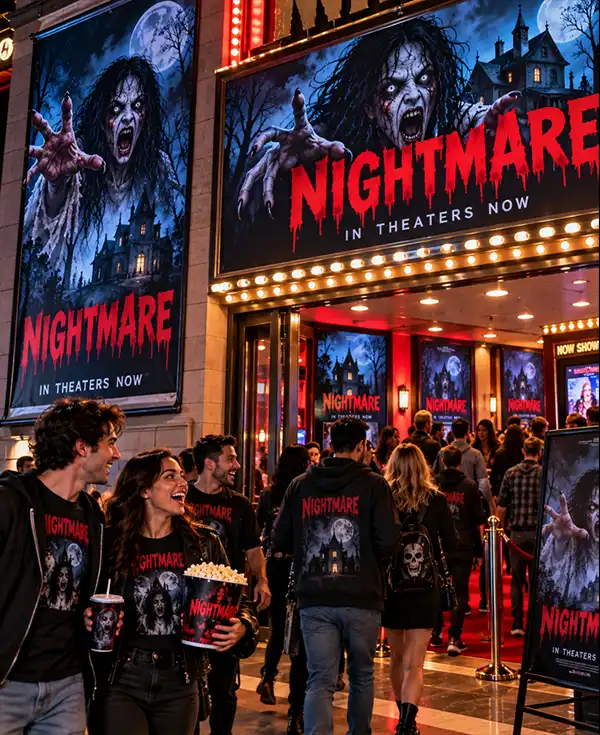
Sam Raimi's The Evil Dead (1981) occupies a special place in horror movie history because it demonstrated what determined independent filmmakers could accomplish with limited resources, ingenuity, and an almost alarming enthusiasm for frightening their audience. The film follows a group of young people visiting an isolated cabin in the woods, where they discover a mysterious recording and an ancient book associated with supernatural evil. As anyone with the slightest familiarity with horror cinema might predict, playing the recording turns out to be a profoundly unfortunate decision. The resulting nightmare involves demonic possession, gruesome special effects, and enough screaming to convince the local wildlife that moving to another forest might be advisable.
Raimi's filmmaking techniques helped make the movie distinctive. His inventive camera movements, unconventional angles, rapid editing, and energetic visual style created the sensation that malevolent forces were charging directly toward the audience. Working with collaborators including actor Bruce Campbell, Raimi turned financial limitations into opportunities for imaginative filmmaking. The original movie became a cult favorite, eventually inspiring Evil Dead II (1987), which blended horror with increasingly outrageous slapstick comedy, and Army of Darkness (1992), which transported Campbell's character Ash Williams into a medieval adventure filled with skeletons, monsters, and spectacularly bad decisions. Ash also became one of horror cinema's most recognizable heroes, although his approach to problem-solving generally involved considerably more chainsaw than most employment manuals recommend.
Raimi later returned to supernatural horror with Drag Me to Hell (2009), a film that combined curses, escalating misfortune, grotesque comedy, and relentless suspense. His influence can be seen in generations of filmmakers who embrace imaginative camera work, practical effects, dark humor, and the understanding that horror need not take itself seriously every second. Indeed, one of Raimi's greatest contributions may be demonstrating that an audience can be genuinely frightened and laughing hysterically within moments of each other. It's a remarkable emotional combination, although anyone attempting to reproduce it during a family dinner should probably reconsider their entertainment choices.
A Brief History of Horror Movies – From Silent Screams to Surround Sound
Horror cinema began developing almost as soon as filmmakers discovered that moving pictures could portray supernatural events. French director Georges Méliès created Le Manoir du Diable in 1896, a short film featuring bats, demons, transformations, and other eerie imagery. Often cited as an early example of horror filmmaking, it demonstrated the possibilities of cinematic illusion at a time when audiences were still becoming accustomed to motion pictures themselves. Méliès used theatrical techniques and camera tricks to create supernatural effects, establishing a tradition that would eventually produce everything from cinematic vampires to computer-generated monsters capable of destroying entire cities before lunchtime.
German Expressionist filmmakers expanded the genre's visual possibilities during the silent era. The Cabinet of Dr. Caligari (1920) employed distorted sets, exaggerated shadows, and unsettling compositions to suggest psychological instability, while F. W. Murnau's Nosferatu (1922) introduced Count Orlok, one of cinema's most disturbing vampires. Unlike later vampires who developed romantic personalities, fashionable wardrobes, and suspiciously excellent complexions, Orlok looked like something discovered beneath an abandoned refrigerator. His elongated fingers, gaunt appearance, and deeply unfortunate dental arrangements made him unforgettable. He also provided convincing evidence that anyone planning a career in vampirism should invest in curtains.
Hollywood's classic monster era flourished during the 1930s, particularly through Universal Pictures. Dracula and Frankenstein appeared in 1931, followed by The Mummy (1932), The Invisible Man (1933), and later The Wolf Man (1941). Performers such as Bela Lugosi, Boris Karloff, Claude Rains, and Lon Chaney Jr. helped establish characters that became fixtures of popular culture. These films combined gothic atmosphere, memorable performances, innovative makeup, and stories about humanity's encounters with the unknown. They also demonstrated that scientists experimenting with electricity, ancient curses, or suspiciously preserved bodies should perhaps consult an ethics committee before proceeding.
The 1950s brought new anxieties to horror movies through atomic-age science fiction, alien invasions, radioactive creatures, and monsters disturbed by humanity's scientific ambitions. Japan's Godzilla (1954) drew upon fears associated with nuclear devastation, while American productions explored everything from giant insects to extraterrestrial organisms with an unhealthy interest in human beings. By the 1960s and 1970s, filmmakers increasingly emphasized psychological tension, social unease, and graphic violence. Alfred Hitchcock's Psycho (1960), George A. Romero's Night of the Living Dead (1968), William Friedkin's The Exorcist (1973), Tobe Hooper's The Texas Chain Saw Massacre (1974), and John Carpenter's Halloween (1978) all contributed to major developments in horror storytelling. Collectively, they also persuaded audiences to reconsider roadside motels, isolated farmhouses, unfamiliar cemeteries, and babysitting jobs that appeared suspiciously well paid.
The Many Faces of Horror – Something Terrible for Everyone
One of the great strengths of horror cinema is its extraordinary variety. The genre isn't limited to masked killers, buckets of theatrical blood, or supernatural entities with an inexplicable fondness for children's bedrooms. Horror movies can explore psychological uncertainty, cultural anxieties, folklore, scientific experimentation, survival, family relationships, and even comedy. Some rely on suspense and suggestion, while others place the monster directly in front of the camera and allow it to introduce itself by eating the supporting cast. This diversity means that horror enthusiasts can enjoy very different kinds of films while remaining united by one fundamental principle: something unpleasant is probably about to happen.
Supernatural horror focuses on ghosts, demons, curses, possessions, and forces that refuse to obey the usual rules of nature. Films such as The Exorcist, Poltergeist (1982), and The Conjuring (2013) explore the frightening possibility that the familiar safety of home can be disrupted by something unseen. These movies are particularly effective because ordinary household noises become potential evidence of paranormal activity. A door creaks, a light flickers, or the family dog begins growling at an empty corner, and suddenly everyone is reconsidering whether the house's unusually low purchase price was such a bargain after all.
Psychological horror works differently, often concentrating on paranoia, isolation, obsession, and uncertainty about what is real. Psycho, Rosemary's Baby (1968), and The Shining (1980) demonstrate how deeply unsettling a film can become without constantly displaying a monster. These stories frequently exploit the fear that people, institutions, or even our own perceptions cannot be trusted. They also reinforce several useful travel recommendations, including avoiding enormous deserted hotels, questioning unusually enthusiastic neighbors, and refusing accommodation where the caretaker's job description includes phrases such as "previous unfortunate incident."
Slasher movies generally involve a killer stalking victims through locations that offer remarkably few functioning telephones, reliable automobiles, or competent police officers. Halloween, Friday the 13th (1980), and A Nightmare on Elm Street (1984) helped establish enduring horror villains and recognizable conventions. The characters frequently separate when they should remain together, investigate suspicious noises when they should run away, and dismiss warnings from the one person who has clearly read the script. Slasher films have consequently become an invaluable educational resource for anyone considering a weekend at an isolated summer camp. The first lesson is simple: stay home.
Creature features and science-fiction horror introduce threats from nature, outer space, scientific experiments, or places humanity was probably better off leaving unexplored. Jaws (1975), Alien (1979), and The Thing (1982) combine suspense with the terror of confronting organisms that possess superior hunting abilities and little interest in polite conversation. The settings vary from ocean beaches and spacecraft to frozen research stations, but the underlying problem remains remarkably consistent: something is hungry, and the humans have neglected to bring an adequate escape plan.
Horror comedy, meanwhile, recognizes that the absurdity of frightening situations can be just as entertaining as the fear itself. Young Frankenstein (1974), An American Werewolf in London (1981), Shaun of the Dead (2004), and What We Do in the Shadows (2014) blend supernatural danger with humor, parody, and eccentric characters. Vampires struggle with social etiquette, zombies interrupt ordinary domestic routines, and monsters discover that immortality does not necessarily improve one's personal relationships. Horror comedy reminds audiences that sometimes the most appropriate response to an approaching apocalypse is to make a joke, preferably while running in the opposite direction.
Why Do People Love Being Scared? The Psychology of Horror Movies
The popularity of horror movies raises an interesting psychological question: why do people willingly seek experiences that produce fear? In everyday life, being pursued by a dangerous stranger or encountering something inexplicable in a dark room would be deeply unpleasant. Yet horror audiences voluntarily expose themselves to fictional versions of these experiences, sometimes returning to their favorite frightening films repeatedly. Researchers have explored several possible explanations, including sensation-seeking, curiosity, emotional regulation, and the excitement of confronting threatening situations within a controlled environment. A horror movie provides the sensation of danger without requiring viewers to actually escape a haunted mansion or negotiate with an irritated werewolf.
The knowledge that the danger is fictional can help transform fear into entertainment. Suspense creates anticipation, frightening moments produce strong emotional reactions, and the eventual resolution may bring relief or satisfaction. Some viewers enjoy the excitement of intense scares, while others prefer atmospheric tension, unsettling mysteries, or the imaginative possibilities of supernatural storytelling. Individual tastes vary considerably, which explains why one person can happily watch an entire zombie apocalypse while another becomes distressed by the possibility of a spider appearing in the opening credits. Neither reaction is wrong, although the spider probably considers both rather insulting.
Horror movies can also provide a surprisingly social experience. Watching a frightening film with friends encourages shared reactions, nervous laughter, arguments about the characters' decisions, and the occasional spectacular airborne popcorn incident. Audiences often enjoy discussing their favorite scenes, debating the meaning of ambiguous endings, and comparing the effectiveness of different filmmaking techniques. Of course, the social benefits may be temporarily undermined when someone decides to sneak up behind another viewer and whisper, "Did you hear that?" Such individuals should be required to supply replacement popcorn and possibly pay for professional carpet cleaning.
The Art of Fear – How Horror Filmmakers Make Us Jump
Creating a successful horror movie involves much more than placing a monster in front of a camera and asking it to behave unpleasantly. Directors, cinematographers, editors, composers, sound designers, makeup artists, and special effects specialists work together to manipulate atmosphere, expectation, and emotional response. Lighting can conceal important details, shadows can suggest unseen threats, and carefully chosen camera angles can make ordinary locations feel hostile. A seemingly empty hallway becomes terrifying when viewers suspect something is waiting just beyond the edge of the frame. Even a harmless bedroom can become deeply unsettling if the camera lingers on the closet door for slightly longer than seems reasonable.
Sound plays an especially important role in horror cinema. Unusual noises, sudden silence, dissonant music, and carefully timed effects can heighten tension long before anything frightening appears. The famous screeching strings associated with the shower sequence in Psycho, composed by Bernard Herrmann, demonstrate how music can intensify a scene's emotional impact. Modern filmmakers continue to use sound to create suspense, often allowing audiences to hear a threat before seeing it. This technique is particularly effective when watching at home, where an unexpected noise from the kitchen can suddenly become considerably more interesting than the movie.
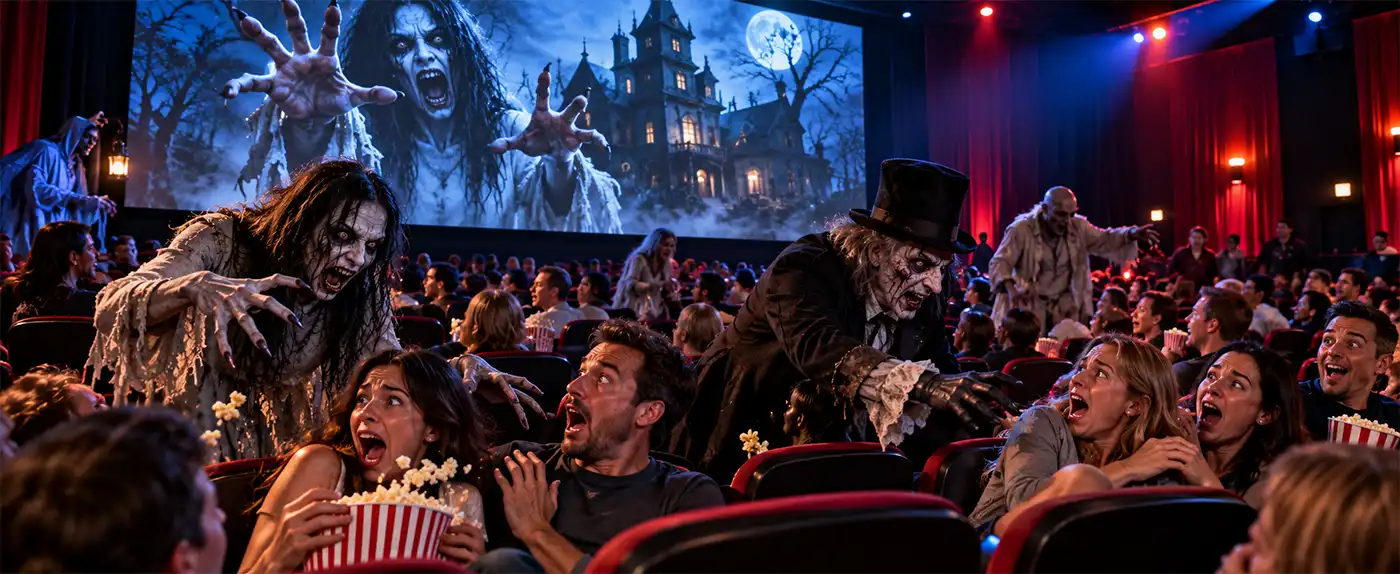
The jump scare remains one of horror cinema's most familiar techniques. A filmmaker establishes a quiet or apparently safe moment before introducing a sudden image or loud sound designed to startle the audience. Used carefully, jump scares can be memorable and effective; used excessively, they can become exhausting. Eventually, viewers begin anticipating the next surprise with the grim determination of someone expecting a relative to jump out from behind the curtains at every family gathering. Effective horror often depends as much on restraint and anticipation as it does on the actual appearance of a frightening creature.
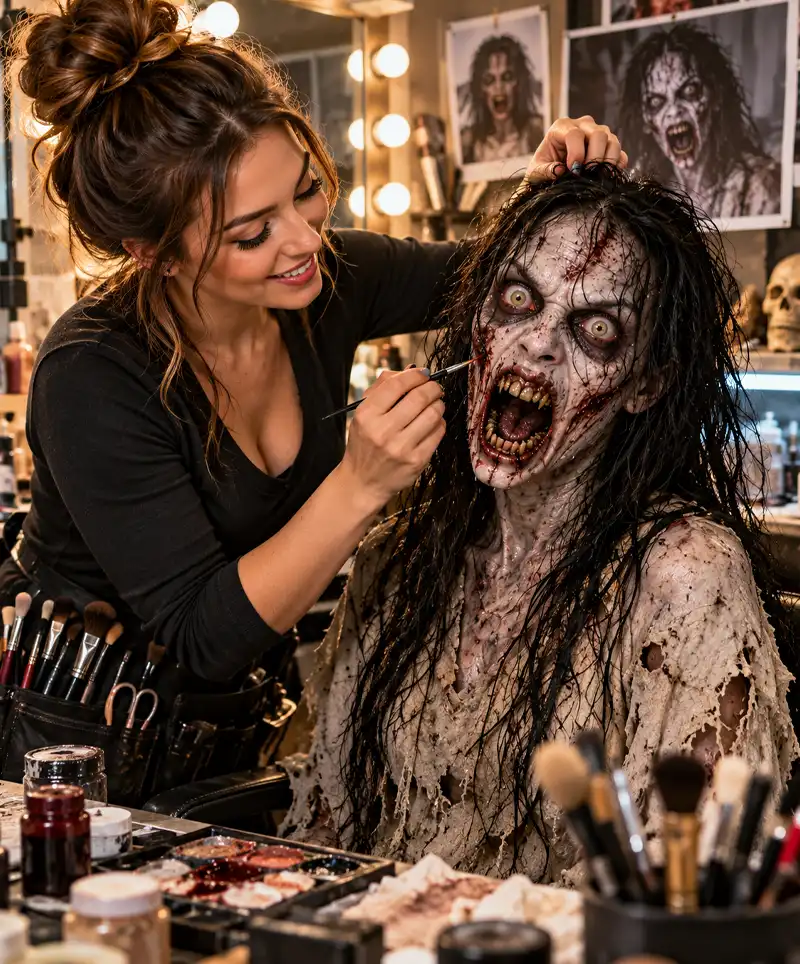
Practical effects have also contributed enormously to the genre's appeal. Makeup, prosthetics, animatronics, puppetry, miniature models, and physical props helped create generations of unforgettable monsters before computer-generated imagery became widespread. Modern digital effects have expanded the possibilities of horror filmmaking, but practical techniques continue to attract admiration because of their physical presence and distinctive visual character. Sometimes a convincing creature built from latex, foam, and mechanical components can be more disturbing than an elaborate digital creation. Particularly when the creature's teeth appear to be moving independently of the rest of its face.
Horror Around the World – Fear Has No Language Barrier
Horror cinema is an international art form, with filmmakers around the world drawing upon local folklore, historical experiences, religious traditions, and cultural anxieties. Japanese horror, often known as J-horror, has produced influential supernatural and psychological films such as Ringu (1998), which transformed an ordinary videotape into an object of considerable concern. South Korean productions including A Tale of Two Sisters (2003) and Train to Busan (2016) have combined horror with family relationships, social commentary, and emotionally powerful storytelling. These films demonstrate that audiences can be frightened by unfamiliar cultural traditions while still recognizing universal experiences such as grief, uncertainty, and the urgent desire not to be eaten by zombies.
European horror has contributed equally distinctive traditions. Italian filmmakers developed influential styles of gothic horror and giallo, frequently combining mystery, striking visual compositions, suspense, and stylized violence. British studios such as Hammer Film Productions revived classic gothic monsters during the 1950s and 1960s, with Christopher Lee and Peter Cushing becoming particularly associated with the company's productions. Spanish, French, Mexican, Indonesian, Indian, and other national cinemas have also produced memorable horror films shaped by their own storytelling traditions. The variety is extraordinary, but the central appeal remains familiar: people enjoy being frightened, provided the danger remains safely on the screen.
International horror also reveals how effectively cinema communicates without relying entirely on dialogue. A slowly opening door, an unnatural movement in the darkness, or the expression on a character's face can convey terror regardless of language. A ghost appearing at the end of a corridor requires no subtitles, and neither does the reaction of someone discovering that the suspicious noise in the attic was definitely not caused by a squirrel. Fear, it seems, is universally understood. So is the instinct to hide behind the nearest available cushion.
The Unwritten Rules of Horror Movies – Ignore Them at Your Peril
Horror movies have developed so many recognizable conventions that experienced viewers often identify approaching disaster long before the characters do. An isolated cabin, a deserted hospital, an ancient book covered in mysterious symbols, or a stranger issuing vague warnings should immediately raise suspicions. Yet fictional characters routinely dismiss these signs, apparently believing that a weekend vacation is worth the possibility of being pursued through the forest by an ancient supernatural entity. In fairness, accommodation prices have become rather expensive, but there are limits to what one should tolerate for a discounted room.
Perhaps the most important horror movie rule is never to investigate a frightening noise alone. If something crashes in the basement, gather everyone together, switch on the lights, and consider leaving the property. Do not pick up a flickering flashlight, descend the stairs, and repeatedly ask, "Is somebody there?" The answer is almost certainly yes, and the somebody in question is unlikely to be delivering complimentary refreshments. Other sensible precautions include refusing to read mysterious Latin passages aloud, avoiding dolls that move without assistance, and never accepting an invitation to spend the night in a house described as "perfectly safe since the incident."
Another important lesson concerns the apparent defeat of a horror movie villain. Just because the monster has fallen, the music has stopped, and the surviving characters are embracing does not necessarily mean the danger has passed. Horror villains possess an extraordinary ability to recover precisely when everyone believes the nightmare is over. Some have survived fires, explosions, falls, and injuries that would ordinarily require a very complicated insurance claim. If the camera begins moving slowly toward a supposedly lifeless body, assume that the situation remains unresolved. And if the screen suddenly goes black, prepare yourself for the sequel.
How to Celebrate National Horror Movie Day – Frighteningly Good Ideas
The easiest way to celebrate National Horror Movie Day on October 23 is to organize a horror movie marathon featuring favorite classics, unfamiliar discoveries, or a selection of films from different eras. Begin with an atmospheric black-and-white monster movie, move into a supernatural thriller or psychological horror film, and finish with a horror comedy if everyone would like to sleep that night. A themed selection can make the evening more entertaining, whether you choose vampires, zombies, haunted houses, alien creatures, or movies featuring characters who make spectacularly poor decisions in remote locations. The possibilities are almost endless, although a twelve-hour marathon may require a considerable supply of coffee and an understanding relationship with the neighbors.
Hosting a horror movie party offers another entertaining possibility. Decorate the viewing area with artificial cobwebs, plastic bats, cardboard tombstones, and suitably spooky lighting. Prepare monster-themed snacks, serve refreshments with ridiculous names, and encourage guests to dress as their favorite horror characters. A friendly competition for the most imaginative costume can add to the festivities, although anyone arriving dressed as an invisible man should be required to demonstrate that they are actually present. You might also organize a horror trivia contest, asking guests to identify famous monsters, memorable movie lines, legendary directors, and the unfortunate locations where cinematic disasters began.
National Horror Movie Day is also an excellent opportunity to appreciate the history and artistry of filmmaking. Explore early silent horror, watch a foreign-language production, learn how practical special effects were created, or discover independent horror movies made outside the major studio system. Independent filmmakers have long played an important role in the genre, frequently experimenting with unconventional stories and production techniques that later influence mainstream cinema. Supporting independent horror can be as simple as watching a short film, attending a local screening, or recommending an unfamiliar production to fellow movie enthusiasts.
For families and viewers who prefer gentler entertainment, there are plenty of spooky films that emphasize humor, fantasy, and atmosphere rather than graphic violence. Animated adventures, family-friendly ghost stories, and lighthearted monster comedies can provide a suitable introduction to the genre. National Horror Movie Day is meant to celebrate enjoyment, creativity, and shared experiences, not to pressure anyone into watching material they find genuinely distressing. There is no shame in preferring a friendly cartoon ghost to a chainsaw-wielding maniac. In fact, from a practical standpoint, it's probably an excellent decision.
Fascinating Horror Movie Facts – Strange Things Lurking Behind the Camera
Horror movie history is packed with extraordinary discoveries, ingenious filmmaking techniques, unexpected disasters, and creative decisions that probably sounded completely ridiculous when somebody first suggested them. Behind every terrifying monster, bloodcurdling scream, and mysterious shadow lurks a collection of filmmakers determined to frighten audiences into spilling perfectly good popcorn. Some of cinema's most memorable horror moments were born from technical difficulties, limited budgets, and remarkably inventive people who refused to let a little thing like common sense interfere with their artistic vision. Here are eight fascinating horror movie facts that prove the stories behind the camera can be almost as entertaining as the nightmares unfolding in front of it.
Horror Movies Were Frightening Audiences Before the Twentieth Century: One of the earliest examples of horror cinema appeared in 1896, when French filmmaker Georges Méliès created Le Manoir du Diable, also known as The House of the Devil or The Haunted Castle. The short silent film featured bats, supernatural transformations, demonic figures, and other strange occurrences, demonstrating the possibilities of early cinematic special effects. Méliès used camera tricks to make characters appear, disappear, and transform, helping establish techniques that would influence generations of fantasy and horror filmmakers. Considering that motion pictures were still a remarkable novelty, audiences were being introduced to cinematic devils before anyone had even invented the television remote. Humanity had barely learned to make pictures move before deciding that the pictures ought to contain something terrifying.
Nosferatu Was Almost Destroyed by a Copyright Dispute: F. W. Murnau's Nosferatu (1922) remains one of the most influential vampire movies ever produced, but it nearly disappeared from cinematic history. The German silent film was an unauthorized adaptation of Bram Stoker's novel Dracula, with character names and certain details altered in an attempt to distinguish the production from its literary inspiration. Stoker's widow, Florence Balcombe, successfully pursued legal action, and a court ordered copies of the film destroyed. Fortunately, prints survived outside the reach of the destruction order, allowing future generations to appreciate Count Orlok's horrifying appearance and profoundly unsettling behavior. With his bald head, enormous ears, elongated fingers, and spectacularly unfortunate teeth, Orlok remains proof that vampires were considerably less interested in romance before Hollywood discovered the commercial possibilities of handsome immortals.
Dracula and Frankenstein Became Hollywood Legends in the Same Year: The year 1931 was a remarkable one for horror cinema, with Universal Pictures releasing both Dracula, starring Bela Lugosi, and Frankenstein, starring Boris Karloff as the creature. These productions helped establish the studio's celebrated monster tradition and introduced screen interpretations that would influence popular culture for generations. Lugosi's hypnotic performance and distinctive delivery became closely associated with Count Dracula, while Karloff's appearance, enhanced by Jack Pierce's famous makeup design, helped define the public image of Frankenstein's creature. The films also contributed to a long-standing misunderstanding: Frankenstein was the scientist, not the monster. Unfortunately, the creature never received a particularly convenient name of his own, which seems rather unfair considering everything else he had to endure. Being assembled from assorted body parts is difficult enough without spending eternity correcting people's introductions.
Psycho Made an Ordinary Shower a Source of Cinematic Terror: Alfred Hitchcock's Psycho (1960) transformed the horror and suspense genres with its unconventional storytelling, shocking developments, and masterful manipulation of audience expectations. Its famous shower sequence became one of cinema's most extensively analyzed scenes, using rapid editing, carefully selected camera angles, and Bernard Herrmann's piercing string music to suggest a brutal attack without explicitly showing the knife penetrating the victim's body. The sequence demonstrated how imagination, sound, and editing could create a powerful emotional response without relying entirely on graphic imagery. It also accomplished something few filmmakers could have anticipated: making an ordinary bathroom feel like a particularly dangerous location. Before Psycho, taking a shower was generally regarded as a sensible hygienic activity. Afterward, an entire generation of moviegoers developed a renewed appreciation for locking the bathroom door.
George A. Romero Helped Reinvent the Modern Zombie: When George A. Romero released Night of the Living Dead in 1968, he helped transform the cinematic undead into one of horror's most enduring threats. Earlier zombie films had frequently drawn upon traditions associated with supernatural control and enslavement, but Romero's movie presented reanimated corpses that attacked and consumed the living. Although the creatures were not called zombies in the film itself, its influence helped establish many conventions associated with modern zombie cinema, including relentless hordes, social collapse, and the increasingly urgent problem of finding somewhere safe to hide. Romero's work also demonstrated that horror could explore social tensions and human behavior alongside its frightening imagery. His characters faced a terrifying supernatural crisis, yet somehow continued finding opportunities to argue with one another. Considering the history of human civilization, that particular detail may have been the most realistic element in the entire movie.
The Mechanical Shark in Jaws Was a Spectacularly Uncooperative Actor: Steven Spielberg's Jaws (1975) became a landmark thriller and a major box-office success, but the production encountered considerable difficulties with its mechanical sharks, collectively nicknamed Bruce. The elaborate mechanical creations frequently malfunctioned during filming in the ocean, where saltwater and unpredictable conditions proved less than ideal for complicated machinery. These problems encouraged Spielberg to suggest the shark's presence through underwater viewpoints, ominous music, and the reactions of frightened characters rather than constantly displaying the creature itself. The result was extraordinarily effective, demonstrating that what audiences imagine can be more frightening than what they actually see. The mechanical shark may have been an unreliable performer, but its refusal to cooperate helped produce one of cinema's greatest lessons in suspense. It also gave beachgoers everywhere a compelling reason to reconsider swimming beyond ankle depth.
Sam Raimi Turned a Modest Budget into a Horror Franchise: Sam Raimi's The Evil Dead (1981) demonstrated how independent filmmakers could use imagination, determination, and unconventional camera techniques to create a memorable horror experience without the financial resources of a major Hollywood production. Working with collaborators including Bruce Campbell, Raimi employed inventive camera movements, practical effects, and an energetic visual style to tell the story of young people encountering demonic forces in an isolated woodland cabin. The film became a cult favorite and inspired sequels, television productions, video games, and additional franchise installments. Its success also helped establish Raimi as an influential filmmaker, making his October 23 birthday an especially appropriate choice for National Horror Movie Day. The movie's enduring lesson is equally important: if you discover an ancient book associated with unspeakable evil, resist the temptation to read it aloud. Some books are best left unfinished, particularly when the illustrations appear to be moving.
The Blair Witch Project Proved That a Tiny Budget Could Produce Enormous Terror: Released in 1999, The Blair Witch Project became one of the most famous examples of low-budget horror filmmaking achieving extraordinary commercial success. Directed by Daniel Myrick and Eduardo Sánchez, the film used a found-footage approach, presenting its fictional story through supposedly recovered recordings made by student filmmakers who disappeared while investigating a local legend. Its naturalistic performances, handheld camerawork, minimal visible supernatural activity, and innovative internet marketing helped create an atmosphere of uncertainty that fascinated audiences. Produced for a comparatively small sum, the film earned more than $240 million worldwide, demonstrating that imaginative storytelling and effective promotion could compete with expensive Hollywood spectacles. It also established an important rule for anyone contemplating a camping trip: if the map disappears, strange symbols appear in the trees, and mysterious noises surround the tent at night, the correct response is not to continue filming. It's to find the nearest paved road and develop a lifelong appreciation for hotels.
The Final Scream – Why Horror Movies Will Never Rest in Peace
National Horror Movie Day celebrates much more than fictional monsters, terrifying noises, and people making inexplicable decisions in poorly lit buildings. It recognizes an art form that has entertained audiences for well over a century, challenged filmmakers to invent new techniques, reflected society's changing fears, and produced some of popular culture's most unforgettable characters. From the shadowy figures of silent cinema to the energetic nightmares of Sam Raimi and the inventive horror filmmakers working today, the genre continues to evolve because audiences remain fascinated by the unknown. And because, apparently, nothing says "relaxing evening" quite like watching someone desperately attempt to escape a murderous creature.
So, on October 23, celebrate National Horror Movie Day by revisiting a favorite classic, discovering an unfamiliar horror film, supporting independent filmmakers, or gathering friends for a wonderfully frightening movie night. Appreciate the writers, directors, actors, composers, makeup artists, and special effects technicians whose imagination makes cinematic terror possible. And perhaps raise a suitably spooky birthday toast to Sam Raimi, whose October 23 birthday helped inspire this celebration of horror cinema.
Then settle into your favorite chair, turn down the lights, and enjoy the show.
And if someone knocks on the door halfway through the movie, don't worry. It's probably just a neighbor. Unless the neighbor has been dead for forty years. In which case, I'd strongly recommend letting the answering machine handle it.