Mark The Days - October

October tiptoes in wearing flannel and carrying a pumpkin spice latte like it owns the place. The leaves start bailing on their branches faster than interns on a Friday, and everything—everything—suddenly tastes like cinnamon and regret. It's the month where we celebrate everything from tacos to ghosts, and yes, sometimes both at the same party. Costumes come out, candy disappears mysteriously, and someone always insists on bobbing for apples like it’s not a health code violation. October is where cozy meets crazy—and we’re here for all of it.

- Details
In the office ecosystem, chocolates are like a rare species of joy that suddenly appears, turning even the most stoic colleagues into excited kids at a candy store. One minute, everyone’s heads are buried in their spreadsheets, and the next, people are popping out of cubicles as if they have an internal "chocolate radar." There’s always that one person who takes two “for later,” but let’s be honest—we all know those truffles won’t make it past lunch. And somehow, offering chocolates instantly turns you into the office hero, even if five minutes ago you were just the person who forgot to refill the coffee pot.
Celebrated: Annually, on October 20th
Discover the joy of Office Chocolate Day, where rich chocolates boost morale and productivity, transforming routine workdays into delightful, cocoa-filled experiences.


- Details
First responders are the brave individuals who stand on the front lines of crisis and emergency, arriving at scenes that demand immediate action, care, and unwavering dedication. Whether they are firefighters, paramedics, police officers, or dispatchers, these professionals often put themselves in harm's way to protect, save, and support those in need. Their work is physically and emotionally demanding, requiring resilience, specialized training, and the ability to make critical decisions under pressure. First responders are a cornerstone of community safety, providing a lifeline when seconds matter, and their commitment is a testament to their courage and compassion.
Celebrated: Annually, on October 28th
Celebrate National First Responders Day, honoring the brave paramedics, firefighters, police officers, and EMTs who face emergencies daily with courage.


- Details
The United States Navy has spent nearly 250 years proving that "water under the bridge" is sometimes an aircraft carrier. From battling pirates and protecting trade routes to launching aircraft from floating airfields and quietly patrolling the depths in nuclear submarines, the Navy has seen just about everything the world's oceans can throw at it. Navy Birthday is the perfect occasion to salute the sailors who have kept watch over America's interests—rain or shine, calm seas or waves that make coffee question its life choices.
Celebrated: Annually, on October 13th
Discover the history of Navy Birthday, celebrated each October 13 to honor the founding of the United States Navy in 1775. Learn about its traditions, famous leaders, global missions, and how sailors have protected America's interests at sea for nearly 250 years.
- Details
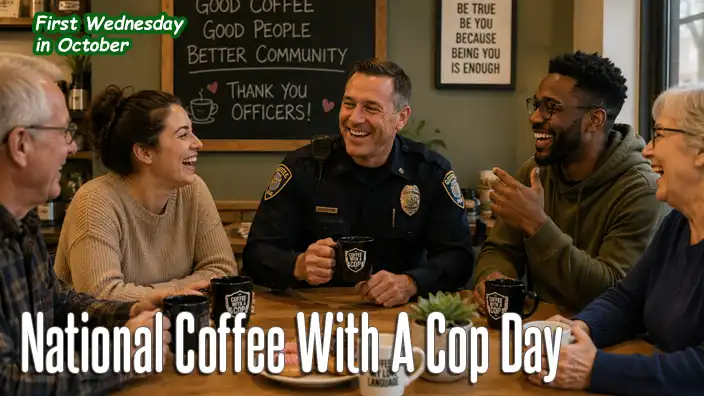
National Coffee with a Cop Day puts police officers and the people they serve on opposite sides of a table for all the right reasons. There are no flashing lights, no awkward questions about your speed and hopefully no handcuffs — just coffee, conversation and a chance to discover that community relations go rather nicely with cream and two sugars. Donuts remain strictly optional, although history suggests they may still find their way to the scene.
Celebrated: Annually, on the First Wednesday in October
Grab a coffee, meet a local cop and enjoy a friendly chat. No sirens, no tickets and no interrogation required. Donuts are entirely optional


- Details
National days come in all shapes and sizes — some celebrate food, some honor history, and some mark the influence of individuals whose names spark conversation long after the headlines fade. The National Day of Remembrance for Charlie Kirk is one of those moments. Whether viewed as a tribute, a talking point, or simply another mark on the calendar, it’s a reminder that the voices we elevate say as much about our society as they do about the person themselves.
Celebrated: Annually, on October 14th
Explore the National Day of Remembrance for Charlie Kirk, observed annually on 14 October, with origins in a 2025 congressional resolution, and his legacy.


- Details
If you’re the kind of person who likes a little thrill with your meal, then one bite of that spicy, smoky, and downright fiery flavor is like taking your taste buds on a vacation to a tropical beach—with a dash of hot sauce, of course. The rich, complex blend of allspice, Scotch bonnets, and secret island magic has the power to make you break a sweat faster than dancing to reggae at a summer festival. And just when you think you've tamed the heat, there's always that one extra bite that reminds you who's really in charge.
Celebrated: Annually, on the Fourth Sunday in October
Discover the vibrant culture and history behind Jamaican Jerk Day, celebrating the fiery, flavourful tradition that has captivated taste buds worldwide.

- Details
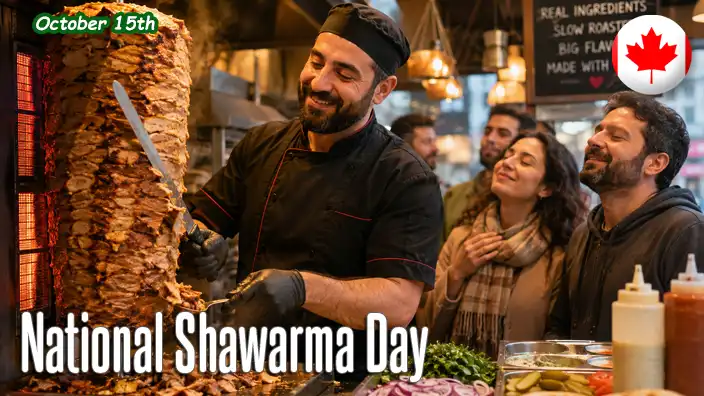
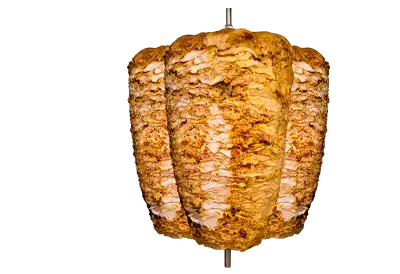
National Shawarma Day celebrates the glorious culinary achievement of putting beautifully seasoned meat on a rotating spit, shaving it into tender pieces and then surrounding it with enough delicious accompaniments to make eating politely an entirely unreasonable expectation.
Celebrated: Annually, on April 27th
Fire up your appetite for National Shawarma Day as we explore rotating spits, seasoned meats, garlic sauce and Canada’s love affair with shawarma

- Details
Some people leave behind memories. Others leave behind footprints. And then there are fossils—nature’s way of saying, “I was here… and I’ve been waiting millions of years for you to notice.” National Fossil Day celebrates those ancient leftovers that somehow survived time, pressure, and a whole lot of geological drama just to end up in a museum display or someone’s very proud collection shelf.
Celebrated: Annually, on Wednesday of the Second Full Week in October
Come with us on National Fossil Day. Learn its history and how fossils reveal Earth’s ancient past.

- Details
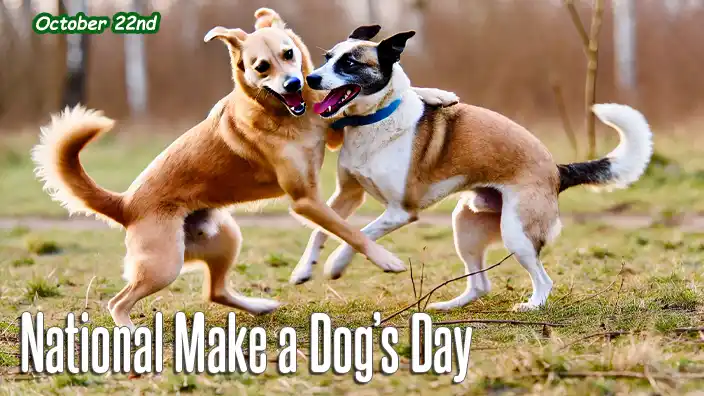
Making a dog's day is as simple as giving them the kind of royal treatment that would make even a King jealous. Start with an enthusiastic greeting like you've just returned from a years-long expedition, even if you've only been gone for five minutes. Then, offer them a gourmet meal—by which I mean, sprinkle a few bits of cheese on their regular kibble (because let’s face it, cheese makes everything fancy). Next, take them for a walk where they get to sniff every blade of grass like they’re conducting a crime scene investigation. Top it off by giving them a belly rub that lasts just shy of eternity, and voila! You’ve just created a day that’ll have your dog thinking, “Humans? Not so bad after all.”
Celebrated: Annually, on October 22nd
Celebrate National Make a Dog’s Day by spoiling your furry friend and supporting shelter dogs. Discover how Subaru's initiative promotes adoption.


- Details
The bathtub—the one place where you're simultaneously a deep thinker and a champion of doing absolutely nothing. It's where grand plans are hatched, only to evaporate with the steam, and where you contemplate life's mysteries, like why the shampoo bottle always falls over. The bathtub is also the only place where it's socially acceptable for a grown adult to share their personal space with a rubber duck. It's the quiet fortress of solitude, except when someone knocks on the door to remind you you're using all the hot water. In short, it's not just a tub; it's a portal to relaxation, with bubbles acting as your very own therapy session.
Celebrated: Annually, on October 7th
Discover the evolution of bathtubs from ancient times to modern luxury, and how they became icons of relaxation and indulgence. Celebrate National Bathtub Day with us!

- Details
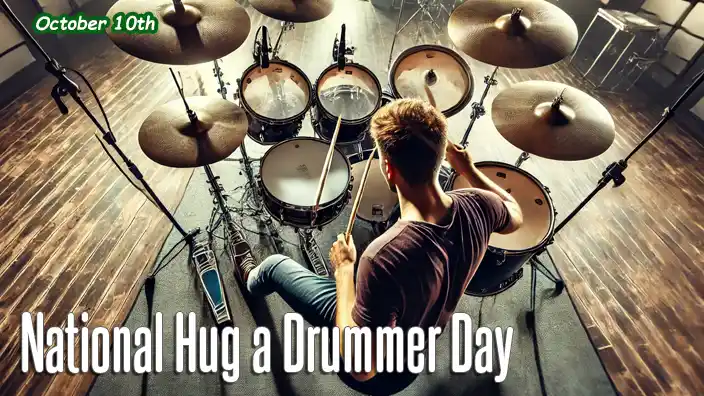
Hugging a drummer is no small feat—it’s like navigating a fortress made of cymbals, snares, and toms. You’ve got to time it just right, preferably between songs, when they aren’t mid-drum roll or they might mistake your embrace for an attempt to steal their sticks. And once you get in there, don’t be surprised if the hug has a rhythmic thud to it—drummers can’t help but keep the beat, even when hugging. Just be ready for the inevitable: you’ll leave with your heart pounding a little faster and maybe a few cymbal crashes ringing in your ears.
Celebrated: Annually, on October 10th
Celebrate National Hug a Drummer Day by appreciating the unsung heroes who keep the beat steady and the music alive. Discover why drummers deserve all the hugs.

- Details
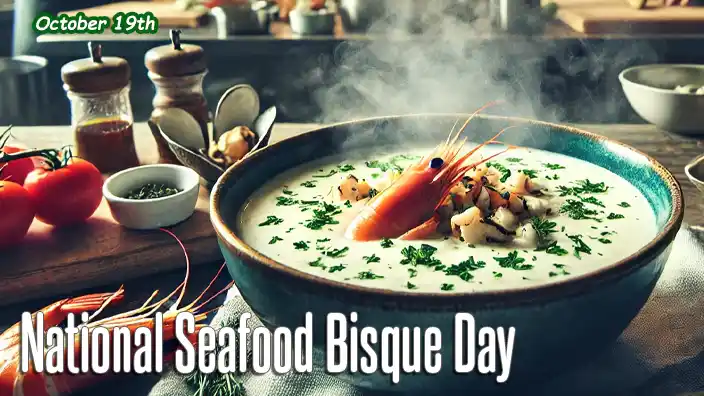
You know you're in for a treat when a dish comes with more butter and cream than your daily allowance and a name that sounds like it belongs at a royal banquet. Somewhere between slurping the silky smooth soup and finding that perfectly tender piece of shrimp, you realize that seafood bisque isn’t just food—it’s an experience. It’s like the ocean decided to hug your taste buds, but in the fanciest, most delicious way possible. Plus, it’s the only soup that can make you feel both ridiculously fancy and ridiculously full at the same time.
Celebrated: Annually, on October 19th
Discover the rich and creamy world of seafood bisque, the aristocratic soup that transforms crustaceans into culinary royalty with its silky, luxurious flavors.

- Details
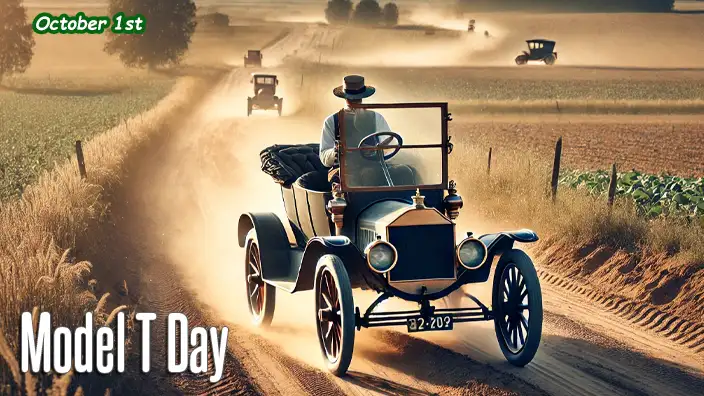
The Model T was the original "all-terrain" vehicle—if by all-terrain you mean dusty dirt roads, rickety bridges, and the occasional cow wandering into your path. With a top speed of 45 miles per hour (downhill, with a strong wind), it wasn’t built for racing but for getting you from point A to point B without the help of a horse. The doors? Optional. The roof? Also optional. But the adventure? Guaranteed. Driving a Model T was less about arriving and more about surviving—yet it’s the car that put America on wheels, one bumpy road at a time!
Celebrated: Annually, on October 1st
Discover the impact of the Model T, the car that revolutionized American travel and gave birth to the road trip. Celebrate Model T Day on October 1st!

- Details
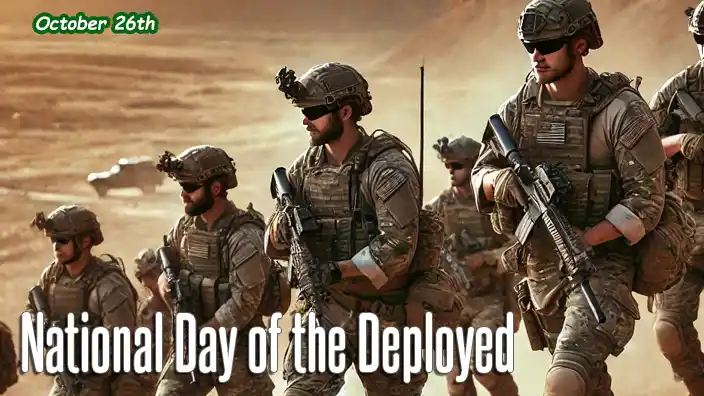
Deployment isn’t just a journey to a foreign land; it’s a journey away from everything you know and everyone you love. It's the ultimate test of resilience, taking you from the warmth of family dinners to the gritty grind of daily survival, where sand and sweat become second nature, and silence can be the loudest sound. Each sunrise marks another day lived on high alert, where your routine is survival and every decision could have consequences. Back home, life keeps moving without you – children grow, loved ones change, and holidays come and go. But for the deployed, time stands still. You’re frozen in a landscape that demands everything, asking you to give your best when you’re at your worst and to hold onto hope when you feel miles away from it. Deployment is a sacrifice, and it’s real in ways that only those who’ve been there can fully understand.
Celebrated: Annually, on October 26th
Celebrate National Day of the Deployed, honoring service members who endure tough conditions and build lifelong bonds while serving far from home.

- Details
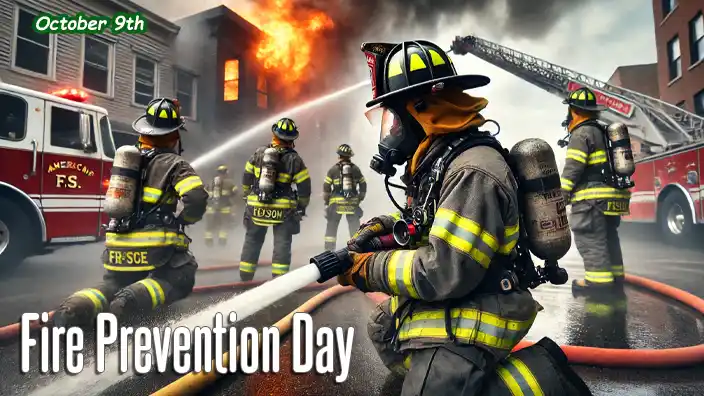
Preventing fires is like playing the ultimate game of hide and seek—except instead of hiding, you're trying to make sure nothing catches on fire in the first place. It's all about finding those sneaky hazards before they start causing trouble. That candle you left burning while you "just ran to the store"? Yeah, it's plotting against you. And don’t even get me started on your old phone charger that’s somehow hotter than the surface of the sun. Basically, fire prevention is 90% common sense and 10% making sure your kitchen doesn’t turn into a DIY bonfire. Stay vigilant, or your next housewarming party might be a little too literal!
Celebrated: Annually, on October 9th
Discover the importance of Fire Prevention Day, its history, and essential tips to prevent home fires with a humorous twist.


- Details
If you ever wanted to learn the art of making a bed so tight you could bounce a coin off it, or how to wash an entire ship’s deck with what seems like a toothbrush, life in the Navy might just be for you. Picture it: you're on a 97,000-ton floating city, where “rush hour” means getting to the chow line before they run out of coffee, and your “neighborhood” is the open sea, filled with dolphins and the occasional curious whale. Then there's the language—acronyms for everything from sleeping quarters to snack time. Sailors don’t just do things; they execute them with the precision of a marching band on a coffee-fueled mission. And as if riding waves wasn’t thrilling enough, there’s always the thrill of Navy coffee, a brew that might just have the power to wake up the whole ship—plus any nearby fish.
Celebrated: Annually, on October 27th
Celebrate Navy Day by honoring the legacy of America's bold sailors and ships. Discover the history and traditions of the U.S. Navy from 1775 to today.

- Details
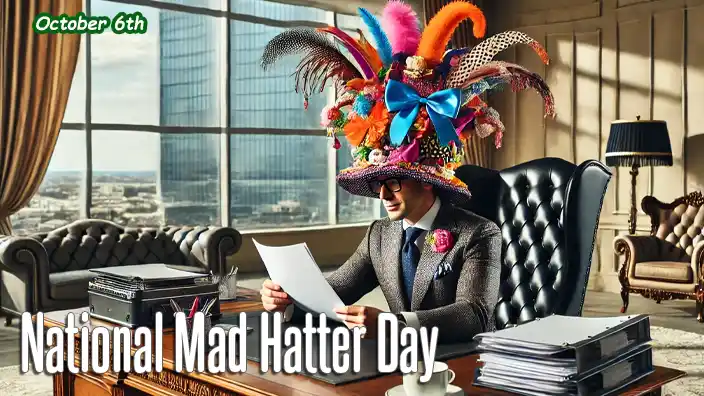
Sometimes, acting crazy—even if just for one day—is like giving your brain a vacation from reality. You wear mismatched socks on purpose, talk to your plants like they’re your new best friends, and maybe even order dessert before dinner. For just a brief moment, you’re free from the weight of "normal" expectations, and instead, you’re the reigning monarch of the Land of Absurdity. The best part? No one can question your sanity because, let’s face it, we all need a little madness to stay sane. Besides, what’s life without a day of total, unapologetic weirdness?
Celebrated: Annually, on October 6th
Celebrate National Mad Hatter Day on October 6th with whimsical hats, tea party shenanigans, and the joy of embracing absurdity, inspired by Lewis Carroll's beloved character.


- Details
Transferring money to your daughter is like funding a startup that has grand plans but no actual revenue model. She’ll tell you it’s for “necessities,” but somehow those necessities always seem to include a new pair of shoes, concert tickets, or a “life-saving” skincare product. You hit send on that bank transfer, knowing full well it’s going to fuel another adventure, and she responds with the classic, “Thanks, you’re the best!”—which, for a brief moment, makes you feel like an investor in the world’s happiest (and most unpredictable) venture.
Celebrated: Annually, on October 6th
Celebrate National Transfer Money to Your Daughter Day on October 6th by sending a financial gift. It's a humorous nod to the parent-daughter money dynamic.

From Our Marks Catelog
-

Brussels sprouts: the tiny green orbs that have been sparking dinner table debates for...
-
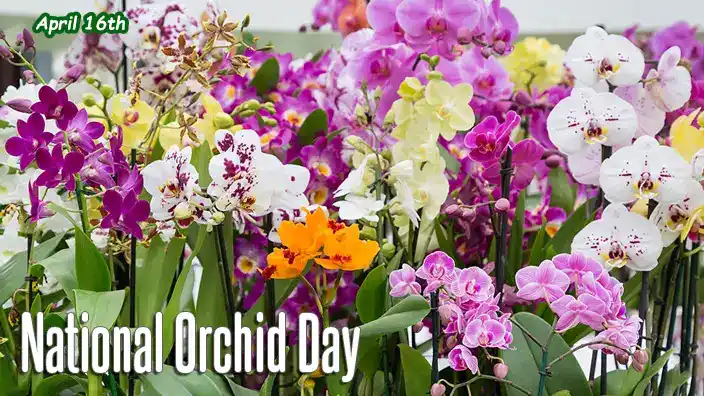
Elegance, mystery, and just the right amount of arrogance—some things demand admiration without lifting...
-
National Cake Day is the one day of the year when it's socially acceptable to have your cake and eat...
-

Forget glow-in-the-dark snack cakes and cheese that comes in a spray can—there’s something wildly...
-

If there were an Olympic event for clumsiness, someone would be rolling down the hill, missing their...
-
Gazpacho Soup Day isn’t just a day to honor cold tomato soup; it’s a day to revel in the absurdity of...

