Boldly Going Because Earth Wasn’t Complicated Enough
There is something about space that captures the imagination like nothing else. One minute you are looking up at the stars, wondering about the mysteries of the universe, and the next you are watching a documentary explaining how astronauts survive in zero gravity while eating food squeezed from a tube. National Space Day celebrates humanity’s fascination with the cosmos, our achievements in space exploration, and the dream that someday somebody will absolutely forget where they parked their spaceship.
Observed on the first Friday in May, National Space Day encourages people of all ages to learn more about astronomy, space science, astronauts, rockets, satellites, and the ongoing exploration of the universe. The day highlights scientific discovery while reminding us that humanity’s curiosity has always pushed us to look beyond the horizon — even when that horizon is roughly 238,900 miles away on the moon.
What Is National Space Day?
National Space Day is celebrated on the first Friday in May and is dedicated to inspiring interest in space exploration, astronomy, science, technology, engineering, and mathematics. The observance encourages people of all ages to learn more about the universe and appreciate the discoveries that have expanded humanity’s understanding of space. Schools, museums, science centers, and astronomy clubs often use the day to host educational events, telescope demonstrations, rocket launches, and hands-on science activities.
The celebration began in 1997 as an educational initiative created by Lockheed Martin to promote science and technology among young students. The event quickly gained popularity, especially as public fascination with astronauts, moon missions, satellites, and Mars exploration continued to grow. Former astronaut and U.S. Senator John Glenn later helped expand the event internationally, turning National Space Day into a broader celebration of scientific discovery and innovation.
National Space Day recognizes not only astronauts and rocket launches, but also the scientists, engineers, mathematicians, technicians, and researchers who make space exploration possible. Every mission to space requires years of planning, testing, calculations, and teamwork. Somewhere behind every dramatic rocket launch is a very tired engineer staring at a monitor while surviving entirely on coffee and nervous optimism.
The day also reminds people that space exploration affects everyday life on Earth more than many realize. Technologies developed for space missions have improved GPS systems, weather forecasting, satellite communications, medical equipment, and even household products. Modern life depends heavily on satellites orbiting high above the planet, quietly doing their jobs while humans below argue about internet speeds.
For children especially, National Space Day can spark curiosity about science and exploration. Many astronauts have said their passion for space began at a young age after watching launches, reading science fiction, or staring at the stars through a telescope. Space has a unique ability to make people dream bigger, ask larger questions, and briefly forget where they left their car keys.
At its heart, National Space Day celebrates humanity’s natural curiosity. From ancient civilizations studying constellations to modern spacecraft exploring Mars and beyond, humans have always looked upward and wondered what else might be waiting in the darkness beyond Earth.
Humanity’s Fascination with Space
Humans have studied the night sky for thousands of years. Ancient civilizations tracked the stars to navigate oceans, predict seasons, and create calendars long before modern telescopes existed. The stars inspired mythology, religion, and science, becoming one of humanity’s oldest shared fascinations.
The invention of the telescope changed everything. Astronomers such as Galileo Galilei and Johannes Kepler expanded our understanding of the solar system and challenged long-held beliefs about Earth’s place in the universe.
By the 20th century, scientific advances made space travel possible. Suddenly, humanity was no longer just observing the stars. We were heading toward them at thousands of miles per hour, strapped to what was essentially a controlled explosion.
The Space Race and the Moon Landing
The modern era of space exploration accelerated during the Cold War as the United States and the Soviet Union competed in the famous Space Race. In 1957, the Soviet Union launched Sputnik 1, the world’s first artificial satellite, sparking intense interest in space technology.
Soon after, Soviet cosmonaut Yuri Gagarin became the first human in space in 1961. The United States responded with major investments in NASA and the Apollo program. President John F. Kennedy challenged America to land a man on the moon before the end of the decade.
That goal became reality on July 20, 1969, when Apollo 11 successfully landed astronauts on the moon. Neil Armstrong famously became the first person to step onto the lunar surface while millions watched around the world.
It remains one of humanity’s greatest technological achievements and proof that people can accomplish extraordinary things when properly motivated — especially by international competition.
Why National Space Day Matters
National Space Day matters because space exploration affects everyday life far more than many people realize. Technologies developed for space missions have improved weather forecasting, communication systems, GPS navigation, medical equipment, water purification, and countless consumer products.
Satellites help monitor climate patterns, track storms, support emergency response systems, and connect global communications networks. Modern society depends heavily on technology orbiting high above Earth.
The celebration also encourages young people to pursue careers in science, engineering, mathematics, and technology. Many astronauts, scientists, and engineers were inspired by childhood experiences looking through telescopes or watching rocket launches.
And honestly, humanity probably needs more scientists. We already have enough people on social media arguing that the Earth is shaped like a pancake.
Space Exploration in the Modern Era
Modern space exploration has entered an exciting new chapter. While the early Space Race focused mainly on reaching the moon before rival nations, today’s missions involve international cooperation, robotic exploration, private companies, and ambitious plans to travel even farther into the solar system. Humanity has moved from simply asking, “Can we get into space?” to asking, “How long can we stay there without accidentally floating into a wall?”
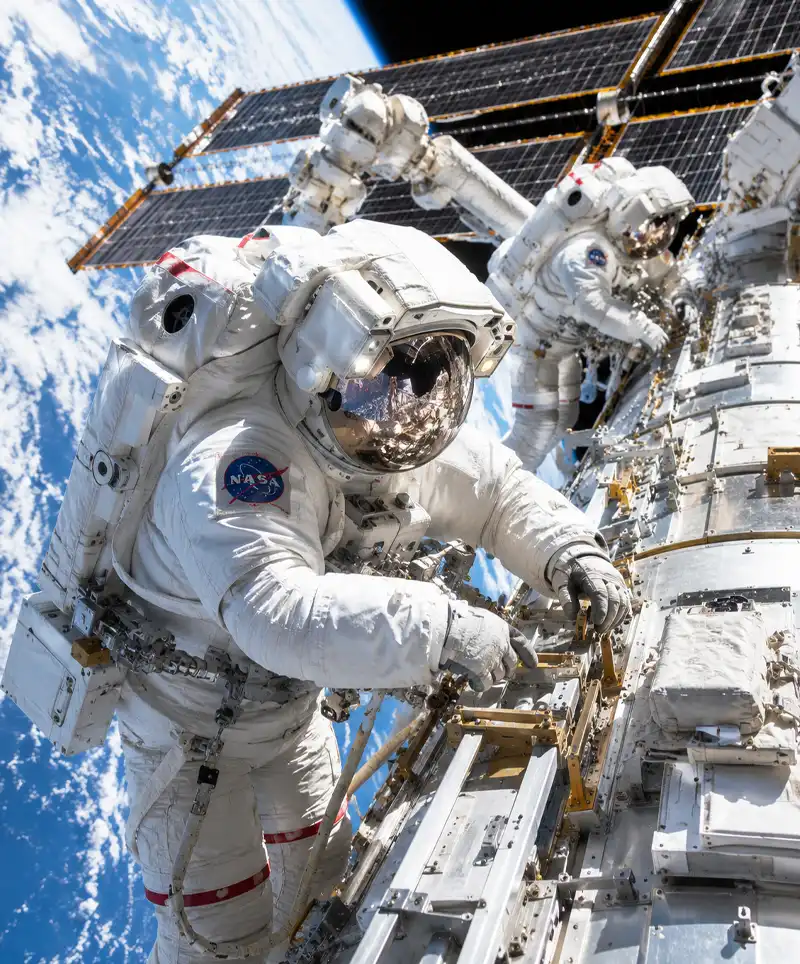
One of the most important achievements of the modern era has been the creation of the International Space Station, often called the ISS. Orbiting Earth at roughly 17,500 miles per hour, the station serves as a laboratory where astronauts from multiple countries live and conduct scientific research. The ISS has hosted astronauts from around the world and has helped scientists study the effects of long-term space travel on the human body, technology, and plant growth.
Robotic exploration has also transformed our understanding of the solar system. NASA’s Mars rovers, including Spirit, Opportunity, Curiosity, and Perseverance, have explored the Martian surface in remarkable detail. These missions have uncovered evidence that Mars once contained flowing water and conditions that may have supported microbial life billions of years ago. Meanwhile, space probes such as Voyager 1 and Voyager 2 continue traveling far beyond the outer planets, sending back information decades after their launches in the 1970s. Frankly, some of those probes have outlasted kitchen appliances, television brands, and probably several politicians.
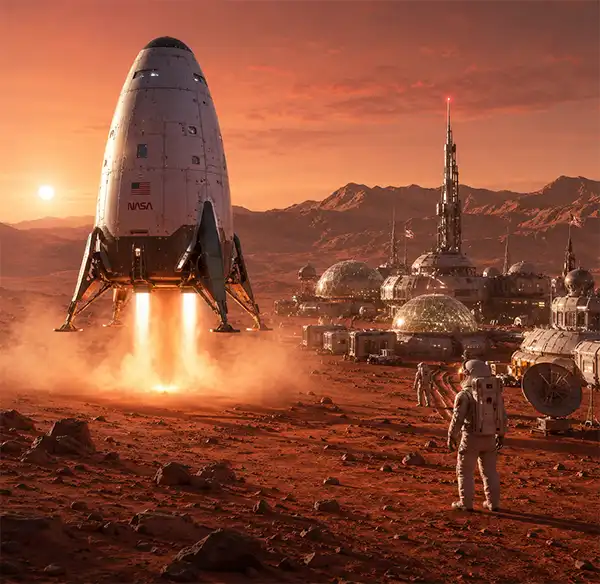
Private companies now play a major role in space exploration as well. SpaceX has pioneered reusable rocket technology, dramatically lowering launch costs and changing how missions are planned. The company’s Falcon rockets regularly deliver satellites, cargo, and astronauts into orbit. Other companies, including Blue Origin and Virgin Galactic, are working toward commercial space travel and tourism.
At the same time, NASA and other international space agencies are planning future lunar missions through programs such as Artemis, which aims to return astronauts to the moon and eventually establish a long-term human presence there. Scientists also continue to study how future crews might travel to Mars, though surviving a months-long journey through deep space remains a major challenge.
Modern telescopes have expanded humanity’s view of the universe even further. The James Webb Space Telescope has captured extraordinary images of distant galaxies, stars, and planets, giving scientists new clues about the origins of the universe. These discoveries continue to remind humanity just how enormous space truly is — which is both inspiring and slightly terrifying if you think about it too long before bed.
How to Celebrate National Space Day
One of the best ways to celebrate National Space Day is by spending time outdoors looking at the night sky. Even without expensive equipment, planets, stars, meteor showers, and constellations can be fascinating to observe.
Many people visit science museums, planetariums, or observatories during the celebration. Watching documentaries about space missions or reading about astronauts and astronomy are also popular activities.
Schools often organize hands-on science experiments, rocket launches, and STEM activities for students. Some families even host movie nights featuring classic space films, though there is always at least one person who insists on explaining why the movie physics are inaccurate.
Fun Facts About Space
Space is filled with incredible mysteries, scientific discoveries, and facts so strange they sound completely made up. Giant storms larger than Earth, planets that rain metal, and astronauts floating around while trying not to lose their sandwiches — the universe is a very unusual place. Here are a few fun facts that prove space is equal parts fascinating, terrifying, and occasionally ridiculous.
- Space is completely silent because sound cannot travel through a vacuum.
- A day on Venus is longer than a year on Venus due to the planet’s extremely slow rotation.
- The footprints left by astronauts on the moon could remain visible for millions of years because there is no weather to erase them.
- The International Space Station travels around Earth at roughly 17,500 miles per hour.
- Astronauts in space can grow slightly taller because the lack of gravity reduces pressure on the spine.
Looking Toward the Future
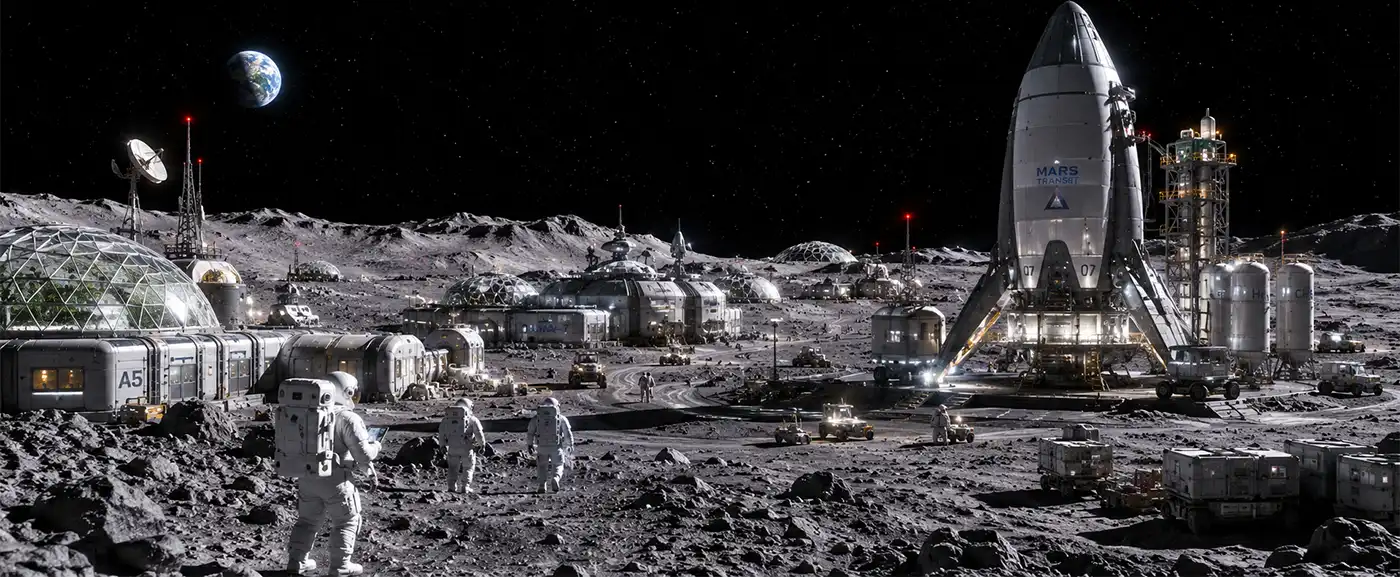
National Space Day reminds us that humanity’s journey into space is only beginning. What once seemed impossible — landing on the moon, living aboard a space station, or sending robotic explorers across Mars — has become part of human history. Scientists and engineers are now working toward even more ambitious goals, including permanent lunar bases, missions to Mars, asteroid mining, and technologies that could eventually support deep-space travel far beyond our solar system.
NASA’s Artemis program aims to return astronauts to the moon and establish a long-term human presence there for the first time since the Apollo era. Unlike the short moon visits of the 1960s and 1970s, future missions may involve research stations, advanced habitats, and new technologies designed to support astronauts for extended periods. These missions are also viewed as stepping stones toward eventual human missions to Mars.
Private space companies continue pushing innovation at a remarkable pace. Reusable rockets, commercial crew missions, and advances in spacecraft design have dramatically changed the cost and accessibility of space travel. What was once limited to government agencies is gradually becoming a growing industry involving satellite networks, scientific research, tourism, and future commercial opportunities in orbit. Humanity may still be years away from family vacations on the moon, though somebody is already trying to figure out how much extra airlines can charge for “premium zero-gravity seating.”
Astronomers also continue searching for answers to some of the universe’s biggest mysteries. Scientists are studying black holes, dark matter, distant galaxies, and exoplanets that may potentially support life. Powerful telescopes now allow researchers to observe regions of space billions of light-years away, offering glimpses into the early formation of the universe itself.
The possibility of discovering life beyond Earth continues to capture the imagination of scientists and the public alike. Whether that means finding microscopic organisms beneath the icy surface of Jupiter’s moon Europa or detecting signs of life on distant planets orbiting other stars, such a discovery would completely reshape humanity’s understanding of its place in the universe.
At the same time, future exploration brings serious challenges. Long-duration space travel presents risks involving radiation exposure, isolation, mental health, and the physical effects of low gravity on the human body. Engineers must also solve major problems involving food production, spacecraft durability, and sustainable life-support systems before humans can safely travel deeper into space.
Still, humanity has always been driven by curiosity and exploration. From ancient sailors crossing unknown oceans to astronauts traveling beyond Earth’s atmosphere, people have continually pushed beyond familiar boundaries in search of knowledge and discovery. National Space Day celebrates that spirit of exploration and reminds us that the next giant leap may already be under construction somewhere inside a laboratory, launch facility, or cluttered garage filled with coffee cups and very expensive math.