One Small Swab Could Lead to Something Enormous
Every October 7, Team Margot Stem Cell and Bone Marrow Awareness Day reminds us that becoming a potential stem cell donor can begin with something remarkably simple: a few moments, a cheek swab and a willingness to help someone you may never meet.
Behind the observance is the story of a little girl named Margot Martini and a family suddenly introduced to the frightening world of blood cancer, stem cell transplantation and donor matching. What began as an urgent search for one child's donor became an international campaign encouraging thousands of other people to think about becoming donors themselves.
The original awareness day has since evolved into Team Margot Donor Registration Day, broadening its message to include stem cell, blood and organ donation. But its origins remain firmly connected to October 7 and the search for more people willing to join stem cell and bone marrow donor registries.
The Story Behind Team Margot
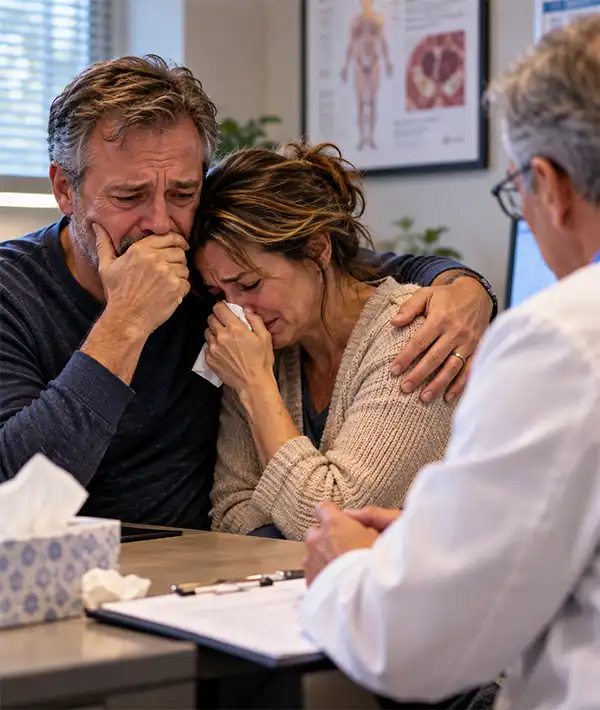
The story of Team Margot began with the devastating diagnosis of a little girl who had barely begun to experience the world around her. On October 7, 2013, Margot Martini was diagnosed with an extremely rare form of blood cancer. She was just 14 months old. Her treatment at Great Ormond Street Hospital in London quickly brought her family into a medical world most parents never expect to encounter, filled with chemotherapy, blood and platelet transfusions, tissue typing and the urgent search for a stem cell donor. Doctors determined that Margot needed a stem cell transplant, but finding a suitable donor was not simply a matter of locating someone with the same blood type. A successful transplant depends heavily upon compatibility between inherited human leukocyte antigen, or HLA, markers, making the search for the right donor considerably more complicated.
 Margot's mixed heritage made that search particularly difficult. Her father, Yaser Martini, is of Syrian and English ancestry, while her mother, Vicki, has New Zealand heritage, giving Margot an unusual combination of inherited HLA characteristics. Because people are more likely to share HLA markers with others from similar ancestral backgrounds, patients with mixed or underrepresented ethnic heritage can face considerably greater difficulty finding an unrelated donor. Margot's family suddenly found themselves confronting not only their daughter's illness but a much larger problem within the worldwide donor system: a registry can contain millions of volunteers and still fail to provide a sufficiently close match for a particular patient.
The Martini family responded by launching an extraordinary public appeal. What initially amounted to friends and relatives trying desperately to find a donor for one child rapidly became Team Margot, with supporters organizing registration events and encouraging people to join stem cell donor registries. The appeal spread through traditional media, social networks, workplaces, schools and communities, eventually reaching far beyond Britain. Thousands of people registered as potential donors as a result of the campaign. Most would never be a match for Margot, of course, but every new person added to a registry became another potential match for somebody else. That realization transformed the campaign. Finding Margot's donor remained the immediate objective, but increasing the donor pool itself became a way of helping families facing the same frightening search in the future.
A suitable donor was eventually found for Margot, and she underwent a stem cell transplant in February 2014. For a time there was hope that the treatment had succeeded, but her leukemia later returned. Margot died on October 27, 2014, aged two. Her family's work could easily have ended there, having already accomplished an enormous amount during an unimaginably difficult year. Instead, the experience gave Team Margot a new purpose. The campaign that had begun as a search for one little girl's donor became a continuing effort to encourage more people—particularly those from mixed and diverse ethnic backgrounds—to register as potential donors and to understand why representation within donor registries matters.
That is what gives Team Margot Donor Registration Day its significance. It is not simply an awareness campaign with an October date attached to it. October 7 was the day Margot was diagnosed, the day her family's world changed, and ultimately the date chosen to encourage other people to make a decision that might change another family's world for the better. Team Margot's message grew beyond stem cell donation to embrace blood, platelet and organ donation as well, reflecting the many forms of donated human tissue and blood products that supported Margot during her treatment. Her story therefore became less about what could no longer be done for Margot and much more about what could still be done for someone else.
How October 7 Became an Awareness Day
October 7 was not selected at random for Team Margot's annual campaign. It was on October 7, 2013, that Margot Martini was diagnosed with blood cancer, beginning the family's search for a stem cell donor and their introduction to the difficulties many patients face when trying to find a compatible match. Exactly one year later, Team Margot announced its intention to make October 7 an annual day devoted to donor registration. The family had been struck by how little the general public understood about stem cell transplantation and donor registries, despite the enormous difference an unrelated donor could make to someone with blood cancer or another serious blood disorder.
The first observance took place on October 7, 2015, under the name International Team Margot Stem Cell and Bone Marrow Awareness Day. Its purpose was not simply to tell Margot's story, but to use that story to encourage more potential donors to join stem cell registers in the United Kingdom and around the world. Team Margot worked with donor organizations and supporters to organize events, spread information and challenge some of the misconceptions surrounding stem cell and bone marrow donation. The campaign was particularly concerned with increasing the number and diversity of registered donors, because Margot's own search had demonstrated how difficult finding a suitable match could become for someone with mixed heritage.
It soon became apparent that awareness alone was only part of the job. Knowing that stem cell donation exists is useful; actually joining a donor register is what creates another potential match. Consequently, the second annual event on October 7, 2016, became the first International Team Margot Stem Cell and Bone Marrow Registration Day. The change in wording was small, but the distinction was important. The campaign was moving from please learn about this toward please consider doing something about it. Team Margot's records describe registration events held in Margot's name and an expanding effort to recruit what the organization called the next generation of potential lifesavers.
The observance continued to evolve as Margot's family reflected upon everything that had been required during her treatment. Stem cells had been an essential part of her story, but they were not the only donated medical resource she needed. Margot also received blood and platelet transfusions, and discussions within the family about organ donation broadened their view of what the annual campaign could accomplish. The observance was therefore renamed and repositioned once more, becoming Team Margot Donor Registration Day. Rather than concentrating exclusively upon stem cell and bone marrow registries, October 7 could encourage people to think more widely about the different ways in which one person can potentially help another through donation.
That evolution also explains why several names for the October 7 observance can still be found online. Team Margot Stem Cell and Bone Marrow Awareness Day was its original name in 2015; Team Margot Stem Cell and Bone Marrow Registration Day followed in 2016; and Team Margot Donor Registration Day became the broader name used subsequently. They are not three separate celebrations competing for the same square on the calendar. They represent the development of the same campaign—from raising awareness, to encouraging registration, to promoting a wider culture of donation. Team Margot continues to identify October 7 as its annual Donor Registration Day.
There is something particularly appropriate about retaining October 7 through all those changes. A date that once marked the beginning of an extraordinarily difficult period for one family was deliberately transformed into an opportunity to help other families. Every October 7, the emphasis moves away from what happened to Margot and toward what somebody else can do because of her story: learn about donation, talk about it, register when eligible and perhaps, somewhere down the road, become the match for a person they have never met. That makes Team Margot Donor Registration Day considerably more than an anniversary. It turns a painful date in one family's history into an annual invitation to give somebody else a better chance.
What Does a Stem Cell Donor Actually Do?
For people unfamiliar with stem cell donation, the words bone marrow donor can conjure up some fairly alarming mental pictures involving hospitals, large needles and a doctor approaching with the sort of equipment you would rather not examine too closely. Fortunately, simply joining a stem cell donor registry is considerably less dramatic. In many programs, registration begins with a cheek swab that collects cells from inside the mouth. Those cells allow a laboratory to determine important human leukocyte antigen (HLA) markers, which are entered into the registry so they can be compared with patients who need a transplant.
Registering does not mean that you immediately become a donor—or even that you will ever be asked to donate. Many people remain on a registry for years without being identified as a match. If your HLA characteristics appear compatible with those of a patient, the registry may contact you for additional testing. Further blood tests and medical screening are normally required to confirm the match and make sure donation would be safe for both donor and recipient. Only after those steps would you potentially be asked to donate. In other words, the cheek swab is essentially putting your name into an extraordinarily specialized medical address book: if somebody needs what you happen to have, the registry knows where to find you.
If you are selected, there are two principal methods of donating blood-forming stem cells. The most common is peripheral blood stem cell donation, or PBSC. Before collection, the donor receives medication for several days that encourages additional blood-forming stem cells to move from the bone marrow into the bloodstream. During donation, blood is removed through a needle in one arm and passed through a machine that separates the needed cells. The remaining blood is then returned to the donor, usually through the other arm. The procedure resembles an extended blood or platelet donation rather than surgery, although donors can experience temporary effects from the medication such as aching bones or muscles, headache and fatigue.
The other method is bone marrow donation. This is a surgical procedure performed under anesthesia in which doctors collect liquid marrow using needles inserted into the back of the pelvic bone. Despite one particularly persistent misconception, bone marrow is not taken from the spinal cord. Donors can experience soreness afterward, rather like having taken a substantial knock to the lower back or hips, and the body naturally replaces the donated marrow. The transplant team determines which collection method is most appropriate based primarily on the medical needs of the patient.
Once collected, the donated stem cells are prepared and transported to the recipient's transplant center. There they can be infused into the patient's bloodstream, rather like a blood transfusion. The cells then travel to the bone marrow, where, if the transplant is successful, they begin producing new blood cells and rebuilding the patient's blood-forming and immune systems. It is an extraordinarily sophisticated medical process, but for the potential donor it may have started months or even years earlier with nothing more complicated than rubbing a swab around the inside of a cheek.
That is one of the most important messages of Team Margot Donor Registration Day. Nobody joining a registry is promised that they will save a life, and registration should always be an informed decision rather than an impulsive one. But without people willing to register, doctors cannot find unrelated donors when patients need them. A few minutes spent providing a cheek swab today could reveal, years from now, that you are the remarkably rare person who happens to be the right match for someone waiting for a transplant.
Why Finding the Right Match Can Be Difficult
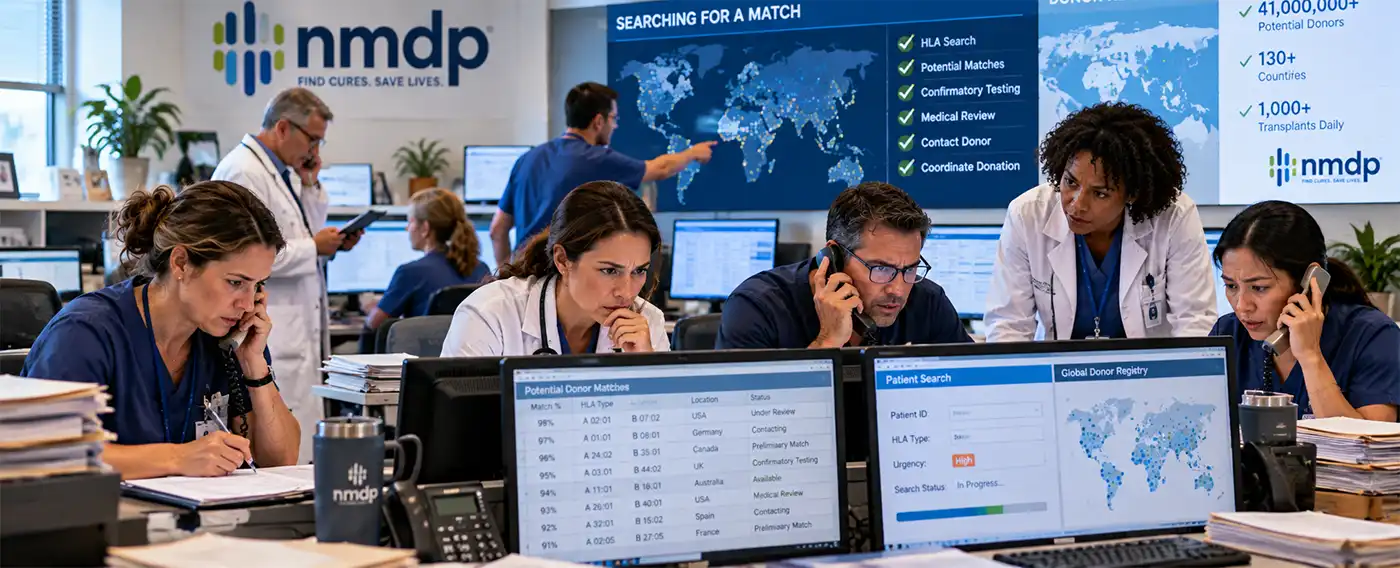
Finding a stem cell donor is not as simple as locating somebody with the same blood type. For most blood stem cell transplants using an unrelated donor, doctors are particularly interested in matching proteins called human leukocyte antigens, or HLA. These proteins are found on the surface of most cells and help the immune system distinguish between the body's own cells and things it regards as foreign. Because a transplant introduces another person's blood-forming stem cells into the recipient, a close HLA match can be extremely important to the success of the procedure and to reducing potentially serious complications.
There are many different HLA markers, and each can occur in numerous variations. People inherit their HLA characteristics from their parents, receiving one group from their mother and another from their father. The enormous number of possible combinations means that two completely unrelated people can have identical or closely compatible HLA types—but finding those two people can be rather like searching an exceptionally large haystack for a needle with very specific genetic characteristics. A brother or sister who shares both biological parents has the greatest likelihood among family members of being a full HLA match, but even siblings are certainly not guaranteed to match. When no suitable relative is available, doctors may turn to registries containing millions of volunteer donors.
This is where ancestry becomes particularly important. Because HLA characteristics are inherited and some combinations occur more frequently within particular populations, patients are generally more likely to find closely matched unrelated donors among people with similar ancestral backgrounds. That does not mean donor and recipient must belong to exactly the same racial or ethnic group, nor does someone's appearance determine whether they will match. Genetics is considerably less interested in the boxes humans put on forms. What it does mean is that a donor registry containing people from many different ancestral backgrounds provides doctors with a much wider range of HLA combinations to search.
The problem becomes particularly significant for people whose communities are underrepresented on donor registries. A patient may have millions of potential donors available for comparison and still discover that very few share the particular combination of HLA markers needed for a suitable match. People with mixed heritage can sometimes face an additional challenge because they may inherit a relatively uncommon combination of HLA characteristics from different ancestral populations. This was one of the issues highlighted by the search for a donor for Margot and became an important part of Team Margot's campaign to encourage a more diverse range of people to register.
Even finding someone who appears to be a match in the database is not necessarily the end of the search. Potential donors may need additional testing to determine the closeness of the match, and doctors also consider factors such as the donor's health and other medical characteristics when selecting the most appropriate person. A volunteer who registered years earlier may also no longer be available or eligible to donate. That is why donor organizations need not only large registries, but registries containing people who remain willing and medically able to proceed if they are eventually contacted.
This also explains why every additional registered donor matters without guaranteeing anything. One person joining a registry does not automatically mean another patient will receive a transplant, and most registered donors will never be called upon to donate. But each new registrant adds another HLA profile to the pool available for searching. For most people, that profile may never produce the required match. For one particular patient, however, it could be precisely the combination doctors have been searching for.
Imagine having several million keys spread across a table and knowing that only a tiny number might open the lock in front of you. Adding one more key does not sound particularly significant—until it happens to be the key that fits. That is essentially the problem donor registries are attempting to solve, one volunteer at a time.
What Can Stem Cell Transplants Treat?
Blood-forming stem cells have an extraordinary job. They live primarily in the bone marrow and continually produce the red blood cells that carry oxygen, the white blood cells that help fight infection and the platelets that allow blood to clot. When disease damages this blood-producing system—or when intensive treatment destroys diseased bone marrow along with healthy cells—a stem cell transplant can provide the patient with healthy blood-forming cells capable of rebuilding it.
Stem cell transplants are used to treat a wide range of serious illnesses, particularly blood cancers such as leukemia, lymphoma and multiple myeloma. They can also be used for certain bone marrow failure disorders, immune system diseases and inherited blood conditions, including sickle cell disease and thalassemia. The precise role of transplantation varies considerably from one condition to another, and it is not necessarily the first or appropriate treatment for every patient with these diseases.
For some cancers, chemotherapy or radiation may first be used to destroy malignant cells and suppress or eliminate the patient's existing bone marrow. Healthy stem cells are then introduced into the bloodstream and, rather remarkably, find their way into the bone marrow, where they can begin establishing a new blood-forming system. When cells come from another person—known as an allogeneic transplant—the donor's new immune cells can sometimes provide an additional benefit by recognizing and attacking remaining cancer cells.
There are also autologous stem cell transplants, in which a patient's own healthy stem cells are collected before intensive treatment and returned afterward. These do not require an unrelated donor, which is why discussions about donor registries primarily concern allogeneic transplantation, where suitable cells must come from another person.
A stem cell transplant is a major medical treatment carrying significant risks, and it certainly isn't a universal cure. But for some people with otherwise life-threatening diseases, transplantation can provide the possibility of long-term remission or cure. And when that treatment requires cells from another person, all the sophisticated medicine involved ultimately depends upon something surprisingly human: somebody, somewhere, first volunteered to become a donor.
Margot's Legacy
Margot Martini lived for only a little more than two years, but the campaign created around her illness continued long after her family's desperate search for a donor had ended. During that search, thousands of people encountered the idea of stem cell donation for the first time. They learned that becoming a potential donor could begin with something as uncomplicated as joining a registry and providing a cheek swab, and that the person capable of helping a seriously ill patient might be an apparently ordinary stranger living hundreds or even thousands of miles away. Margot's story gave those otherwise rather abstract facts a name, a face and a family waiting anxiously for someone whose cells might provide the match they needed.
Her family's experience also demonstrated that recruiting large numbers of donors was only part of the challenge. Diversity within donor registries matters. Margot's mixed heritage made finding a compatible donor more difficult and helped Team Margot draw attention to patients from mixed, minority and underrepresented ancestral backgrounds who may have fewer potential matches available. The campaign therefore encouraged people from communities that historically had lower representation on registries to consider joining. One registration might not have helped Margot personally, but it could remain on a registry and eventually provide the match for somebody else. In that way, every unsuccessful search had the potential to make a future search a little more hopeful.
Team Margot also carried its message into schools and younger communities, approaching donor awareness as something that could be learned long before a person became eligible to donate. The idea was not to recruit children as donors, of course, but to make conversations about blood, stem cell and organ donation less mysterious. Young people who understand why donation matters can discuss it with their families and eventually make informed choices for themselves when they are old enough. It was a long-term approach: instead of waiting for another family to receive a devastating diagnosis before anybody thought about donation, Team Margot wanted the subject to become part of ordinary conversation.
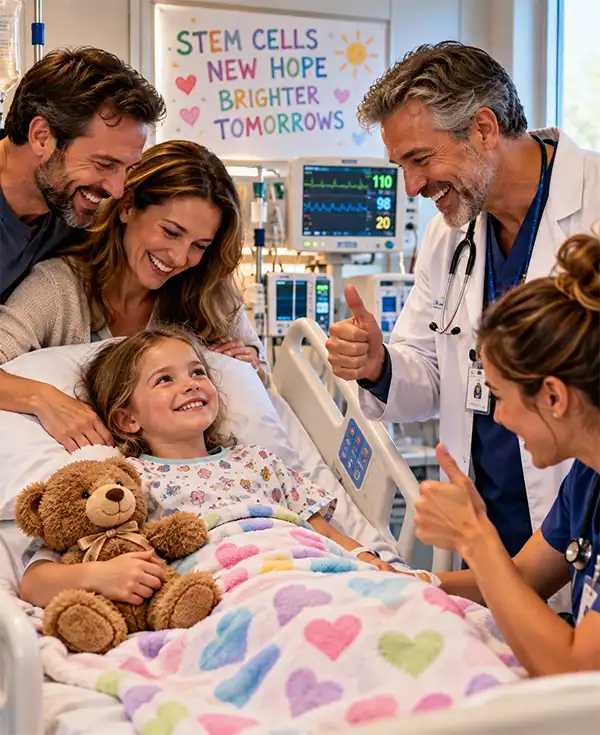
The campaign eventually expanded beyond the stem cell registry that had been so central to Margot's treatment. She had also depended upon blood and platelet donors, and her family's experience encouraged a wider discussion about organ donation. That broader outlook transformed October 7 into Team Margot Donor Registration Day. The change did not diminish the original stem cell campaign; it extended its underlying principle. Whether somebody gives blood regularly, joins a stem cell registry, registers as an organ donor or simply talks with their family about donation, each action helps create a system in which donated blood, cells, tissues and organs are available when another person desperately needs them.
The organization behind that work has changed with time. The registered Team Margot Foundation formally closed in December 2024 and was removed from the Charity Commission register in May 2025, while Team Margot continued as an unincorporated association. That distinction is important in an updated account of the campaign: the closure of the registered charity did not erase the educational work already accomplished or the message associated with Margot's name. More than a decade after her diagnosis, Team Margot continued encouraging donor registration and continued marking October 7 as a day for people to consider what they might be able to give.
Perhaps the most meaningful part of Margot's legacy cannot be counted simply by registrations, campaigns or awareness events. It lies with the people who joined a registry because they heard her story and remained there afterward. Somewhere among them may have been donors who later received the extraordinary message that they were a possible match for somebody they had never met. Other registrants may never receive that message at all, but their willingness to answer it remains valuable. Margot's campaign helped turn the tragedy experienced by one family into possibilities for many others.
That is why October 7 remains connected to her name. Margot could not know the movement that would grow around her, nor the conversations that would continue years after her death. Yet because of her story, people learned about stem cell donation, families discussed becoming donors and potential lifesavers added themselves to registries around the world. Margot's legacy is ultimately not about the donor her family once needed to find. It is about helping make sure that when another family begins the same search, there are more people waiting to be found.
How to Observe Team Margot Stem Cell and Bone Marrow Awareness Day
The most meaningful way to observe Team Margot Stem Cell and Bone Marrow Awareness Day is to find out whether you are eligible to join a stem cell donor registry. Requirements vary according to country and registry, including rules concerning age and health, so it is important to check with an established donor organization rather than relying upon information that may be several years old. In the United States, potential donors can investigate joining the NMDP Registry, formerly widely known as Be The Match. In the United Kingdom, Anthony Nolan operates a stem cell donor register. Other countries have their own registries, many of which cooperate internationally when doctors search for suitable donors.
Joining a registry is worth approaching as a genuine commitment rather than simply something interesting to do for October 7. Providing a cheek swab is the easy part. The important question is whether you would be prepared to continue with the process if, perhaps years later, you receiv?ed the unexpected news that you might be somebody's match. Additional testing would follow, and you would receive medical information before any donation took place, but registering means making yourself available for that possibility. For a patient and family waiting for a transplant, discovering that a potential donor has been found can be an enormously important moment. Register because you understand what you are volunteering to do and are willing to answer that call should it ever come.
October 7 is also an opportunity to talk about stem cell donation. Many people have never considered joining a registry simply because nobody has ever asked them. Others still associate bone marrow donation with frightening or outdated ideas about the procedure. Sharing accurate information about cheek-swab registration, HLA matching and the different methods of collecting stem cells can replace some of those misconceptions with facts. Team Margot's story is particularly useful because it explains why the diversity of a donor registry matters and why people from mixed and underrepresented ancestral backgrounds are especially valuable additions to the worldwide pool of potential donors.
Schools, universities, workplaces and community organizations can participate by hosting educational events or donor registration drives in cooperation with recognized donor organizations. A registration drive does more than collect swabs; it gives potential donors an opportunity to ask questions and understand the commitment they are considering. Even where an organized drive is impractical, displaying information, sharing Team Margot's story or directing people toward an official registry can introduce the idea to somebody who might otherwise never have encountered it.
The modern Team Margot Donor Registration Day also reaches beyond stem cells. Margot received blood and platelets during her treatment, and the campaign eventually expanded to encourage people to consider blood, platelet and organ donation as well. Someone who cannot join a stem cell registry may therefore discover another way to help. Eligibility rules differ considerably between forms of donation, and being unable to participate in one does not necessarily prevent participation in another. October 7 can be an excellent reason to look at the options rather than assuming there is nothing you can contribute.
And then there is perhaps the easiest form of participation: start a conversation. Tell somebody why October 7 matters. Explain what a stem cell registry actually does. Share Margot's story or point someone toward reliable information about becoming a donor. Not everyone who hears the message will register, and not everyone who registers will ever be called to donate. That is perfectly normal. The objective is to create the largest and most diverse pool of informed, willing potential donors possible.
Team Margot began because one family needed to find one compatible person. Observing the day therefore does not require grand gestures, fundraising spectaculars or attempting to personally recruit half the neighborhood before dinner. It can begin with something considerably smaller: learn, decide, register if you are eligible and willing, and tell somebody else why you did it. Somewhere down the line, that very ordinary decision could become extraordinarily important to a family you have never met.
Bone Marrow Donation FAQ
Stem cell and bone marrow donation can sound considerably more intimidating than it actually is, partly because many people encounter the subject only when somebody they know becomes seriously ill. Registration, matching and donation are separate stages, and becoming a potential donor does not mean you will necessarily ever be asked to donate. Here are answers to some of the most common questions about joining a registry and becoming a stem cell or bone marrow donor.
Is bone marrow taken from the spine?
No. This is one of the most persistent misconceptions about bone marrow donation. Bone marrow is collected from the pelvic bone, not the spine or spinal cord. During a marrow donation, the donor is given anesthesia and doctors use needles to withdraw liquid marrow from the back of the pelvic bones. The procedure does not involve removing or interfering with the spinal cord.
How do I join a bone marrow or stem cell donor registry?
The process depends upon the registry and country, but registration commonly begins by completing a health questionnaire and providing a cheek swab. Cells collected from inside the cheek allow the registry to identify your human leukocyte antigen, or HLA, characteristics. That information is then available when transplant specialists search the registry for patients needing compatible donors.
Does joining a registry mean I will definitely have to donate?
No. Most people who join a stem cell donor registry will never be asked to donate. You are contacted only if your HLA characteristics indicate that you could be a suitable match for a patient. Even then, additional testing is required before doctors determine whether you are the appropriate donor.
Do the donor and recipient need to have the same blood type?
Not necessarily. Blood type is not the principal factor used to identify a stem cell donor. Doctors are primarily concerned with matching HLA markers, inherited proteins that play an important role in the immune system. A person can therefore potentially be a suitable stem cell donor for someone with a different blood type.
Why does ethnic and ancestral diversity matter on donor registries?
HLA characteristics are inherited, so patients are generally more likely to find closely matched unrelated donors among people with similar ancestral backgrounds. When particular populations are underrepresented on donor registries, patients from those backgrounds may have fewer potential matches available. Recruiting donors from many different ancestries increases the variety of HLA combinations doctors can search.
What happens if I am identified as a possible match?
Being identified as a potential match normally leads to further contact from the registry, additional health questions and more detailed testing. A blood sample may be required to confirm your HLA characteristics and determine how closely you match the patient. Medical professionals will also evaluate whether donation would be safe for you before any final decision is made.
Are all stem cell donations surgical procedures?
No. Many donations are performed using peripheral blood stem cell collection, or PBSC. Medication is given beforehand to increase the number of blood-forming stem cells circulating in the bloodstream, after which blood passes through a machine that collects the needed cells and returns the remaining blood to the donor. Traditional bone marrow donation is different and involves collecting marrow from the pelvic bone while the donor is under anesthesia.
Does donating bone marrow permanently reduce my bone marrow?
No. The body naturally replaces the donated marrow. Donors can experience temporary soreness, fatigue and other short-term effects following the procedure, but the removed marrow is replenished. As with any medical procedure, donation has potential risks and side effects, which should be discussed fully with the donor organization and medical team beforehand.
What diseases can donated stem cells help treat?
Blood-forming stem cell transplantation can be used in treating numerous serious conditions, including certain leukemias, lymphomas, multiple myeloma, sickle cell disease, bone marrow failure disorders and some inherited or immune-system diseases. Whether transplantation is appropriate depends upon the particular disease and individual patient.
Can I choose the person who receives my stem cells?
People joining a public donor registry generally register to help any compatible patient who may need them. If you are identified as a match, the registry and transplant teams coordinate the donation according to their policies. Rules concerning communication or eventual contact between donor and recipient vary between countries and organizations.
Where can I register as a potential donor?
In the United States, potential donors can investigate the NMDP Registry. In the United Kingdom, Anthony Nolan operates a stem cell donor register. Other countries have their own donor organizations and registries, so prospective donors should use an established organization in their country and check its current eligibility requirements before registering.
From One Little Girl to Thousands of Potential Donors
Team Margot began with a frighteningly simple problem: a little girl needed a stem cell donor. Her family entered a world of tissue typing, donor registries and genetic matching that they had never expected to know anything about, only to discover that somewhere among millions of people there might be one stranger whose cells were compatible enough to give Margot the transplant she needed. Their search became public, then national and eventually international, introducing thousands of people to stem cell donation along the way.
Margot's story also revealed something easily hidden behind impressive statistics. A donor registry can contain millions of names and still not contain the right person for the patient who needs help today. Every individual brings a different inherited combination of HLA markers, and the diversity of the registry matters just as much as its overall size. That is why Team Margot placed such emphasis on encouraging people from mixed and underrepresented ancestral backgrounds to register. The objective was never simply to accumulate the largest possible number. It was to build a donor pool in which more patients had a realistic chance of finding someone who matched them.
There is a wonderful contradiction at the heart of the entire process. Modern stem cell transplantation involves sophisticated laboratories, genetic matching, specialist physicians and medical technology capable of rebuilding a person's blood-forming system. Yet none of it can provide an unrelated donor who does not exist on the registry. Before all that remarkable medicine can begin, an ordinary person has to make an extraordinarily simple decision: Yes, you can include me in the search.
Most people who make that decision will never donate. Their cheek swab will be analyzed, their HLA information will enter the registry and years may pass without anything further happening. Then, occasionally, somebody receives a telephone call or email explaining that they may be a match for a patient. Somewhere else, perhaps in another city or even another country, a family who has been waiting for precisely that news suddenly has something they desperately needed—a possibility.
That is the lasting importance of Team Margot Donor Registration Day. It cannot promise that every patient will find a donor, nor can it promise that everyone who registers will someday save a life. What it can do is improve the chances by encouraging more informed and willing people to make themselves available. One registration becomes another searchable HLA profile; thousands of registrations become thousands of additional possibilities.
Margot did not live to see what grew from the campaign bearing her name. But the search undertaken on her behalf inspired people to register, encouraged conversations about donation and helped draw attention to the particular difficulties faced by patients struggling to find suitable matches. What began as an attempt to save one little girl became an effort to give countless other patients a better chance.
And perhaps that is the most fitting way to remember Margot every October 7. You do not need to know whose life you might change before deciding that it is worth trying. Somewhere, another family may already be searching through a registry and hoping that the person they need has chosen to be there.
Their search could eventually lead to someone who joined because of Margot.