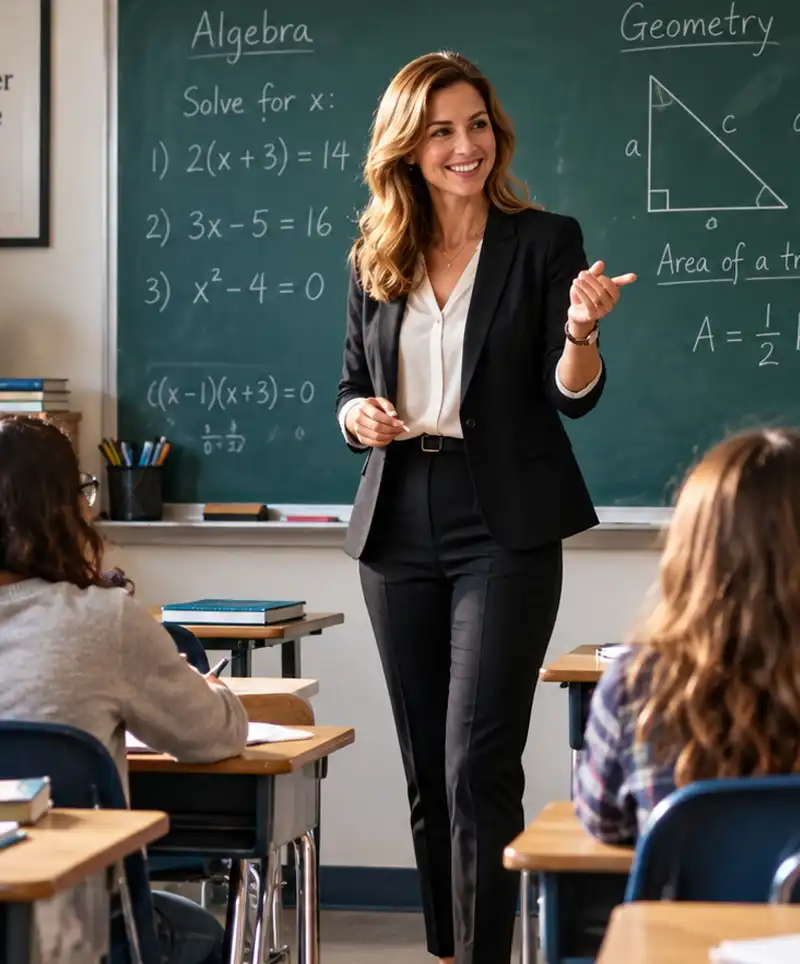
Celebrating the Heroes in Every Classroom
World Teachers' Day celebrates the people who can explain fractions, settle an argument, locate a missing pencil, operate malfunctioning classroom technology and identify the person talking at the back of the room without even turning around. Teachers may not wear capes, but give one a dry-erase marker, a lesson plan and enough coffee and remarkable things can happen.
Observed every year on October 5, World Teachers' Day recognizes teachers and the enormous contribution they make to education, communities and society. It is also an opportunity to consider the challenges facing the teaching profession and the importance of ensuring that educators have the training, resources, working conditions and respect necessary to do their jobs properly.
After all, almost everyone can remember a teacher who made a difference. Perhaps it was the teacher who discovered something you were good at before you did, the one who refused to let you give up, or simply the patient soul who explained long division for the fourth time without climbing out the classroom window.
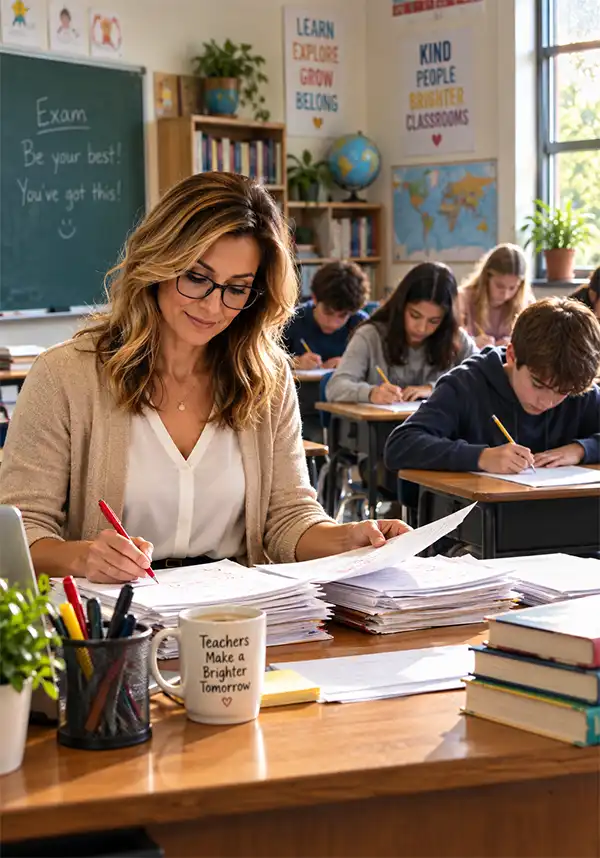
The History of World Teachers' Day
World Teachers' Day has been celebrated internationally on October 5 since 1994, when UNESCO established the annual observance to recognize the contribution teachers make to education and society. The date wasn't selected because October happened to look rather empty on the calendar. October 5 commemorates an important development in the international recognition of teaching as a profession: the adoption of the UNESCO/ILO Recommendation concerning the Status of Teachers on October 5, 1966.
The 1966 Recommendation was developed jointly by UNESCO and the International Labour Organization (ILO) at a time when countries around the world were rapidly expanding their education systems. Growing populations, increasing school enrollment and wider recognition of education as essential to social and economic development created an enormous demand for qualified teachers. Getting more children into classrooms was only part of the challenge. Nations also needed enough properly trained educators to teach them, along with professional standards that could help governments determine how teachers should be recruited, prepared, employed and supported.
The resulting Recommendation was remarkably broad. It addressed the rights and responsibilities of teachers, their initial education and professional preparation, recruitment, employment, career advancement, job security and working conditions. It also considered salaries, teaching hours, class sizes, professional development and the importance of allowing teachers to participate in decisions affecting education. Rather than treating teachers simply as employees carrying out instructions, the document recognized teaching as a profession requiring specialized knowledge, preparation, judgment and continuing development.
That distinction was important. Quality education depends on considerably more than constructing a school, purchasing textbooks and putting desks in orderly rows. Someone must transform all of those resources into learning. Teachers need knowledge of the subjects they teach, but they also need to understand how students learn, how to communicate complicated ideas, how to assess progress and how to adapt their methods when the first explanation produces thirty expressions suggesting that absolutely nobody understood a word of it.
The Recommendation also recognized that the status of teachers and the quality of education are closely connected. Recruiting talented people into teaching becomes difficult when the profession offers inadequate preparation, poor working conditions, little professional support or insufficient security. Keeping experienced teachers in classrooms presents the same challenge. The principles adopted in 1966 therefore linked the treatment and professional development of teachers with a much larger objective: ensuring that students receive the best education possible.
Nearly three decades later, UNESCO established World Teachers' Day in 1994, choosing October 5 to commemorate the anniversary of the 1966 Recommendation. The new international observance provided an annual opportunity not only to thank teachers but also to examine the condition of the teaching profession worldwide. From the beginning, the day was intended to combine appreciation with serious discussion about teacher recruitment, preparation, professional development, working conditions and the resources educators need to provide quality education.
The international framework was expanded further in 1997, when UNESCO adopted the Recommendation concerning the Status of Higher-Education Teaching Personnel. That document addressed educators and researchers working in universities and other higher-education institutions, considering matters including academic freedom, professional responsibilities, employment conditions and institutional autonomy. Together, the 1966 and 1997 recommendations provide important international reference points for discussions about the professional status of educators at different levels of education.
Over the years, World Teachers' Day has also become an occasion for examining changing challenges within education. Teacher shortages, access to professional training, educational technology, classroom resources, equality of educational opportunity and the recruitment and retention of qualified educators have all become part of the conversation. The circumstances differ enormously from one country to another, but the underlying principle remains much the same as it was in 1966: a strong education system requires well-prepared, properly supported and respected teachers.
That is why World Teachers' Day is more than a ceremonial pat on the back for the person who taught you where to put an apostrophe. October 5 represents decades of international efforts to recognize teaching as skilled professional work and to improve the conditions under which educators perform it. The flowers, cards and appreciative messages are certainly welcome, but behind the celebration is a serious idea: societies that value education must also value the people responsible for providing it.
And after all that history, perhaps we can finally agree on one thing teachers have been telling us for generations: there really was a reason we needed to pay attention.
What Does a Teacher Actually Do?
Ask someone what a teacher does and the obvious answer is teach. Technically correct, but rather like saying a firefighter deals with warm situations. Teaching is the most visible part of the profession, but behind every hour spent in front of students is an enormous amount of planning, preparation, assessment, organization and administration. A teacher doesn't simply walk into a classroom, open a textbook to the next page and hope education occurs before lunchtime.
Long before a lesson begins, teachers must decide what students need to learn and how best to teach it. They develop lesson plans, select appropriate materials, prepare assignments and activities, consider curriculum requirements and determine how they will assess whether students actually understood the subject. A lesson that occupies 45 minutes in a classroom may have required considerably longer to prepare. Good teachers also know that the beautifully constructed lesson plan represents what they intend to happen. Students, technology and occasionally the laws of probability may have alternative arrangements.
Teachers must also adapt their instruction because students don't all learn at the same speed or in the same way. One student may understand a new mathematical concept immediately, while another needs additional examples and a third suddenly understands when the same idea is explained visually. Some students need greater challenges, while others require additional support. Effective teaching therefore involves constantly watching, listening and adjusting. When thirty students look back with thirty variations of complete bewilderment, an experienced teacher doesn't simply repeat the same explanation more loudly. Well, usually not.
Then comes assessment and grading, the portion of teaching that tends to follow educators home. Teachers design tests, quizzes, projects and assignments, then evaluate the results to determine what students have learned and where additional instruction may be needed. Marking a paper isn't merely about placing a number at the top. Useful assessment involves identifying mistakes, providing feedback and helping students understand how to improve. Multiply that process by perhaps dozens or even hundreds of students and suddenly that innocent-looking stack of papers on the teacher's desk begins to resemble a geological formation.
Classroom management is another enormous part of the job. Teachers create routines, establish expectations, encourage participation and try to maintain an environment in which everyone has an opportunity to learn. This requires balancing authority with understanding and knowing when a student needs correction, encouragement or simply a moment to settle down. It also requires the remarkable ability to continue explaining the causes of the American Revolution while simultaneously noticing that somebody three rows back is attempting to balance a pencil on their upper lip.
Teachers also keep records, attend meetings, complete reports and communicate with parents and guardians about student progress. They work with other teachers, counselors, administrators, specialists and support staff. Depending on the school and their role, they may help develop curriculum, supervise extracurricular activities, organize field trips, coach teams, advise clubs or participate in professional training. Somewhere among all this, somebody will inevitably send an email asking whether they have a moment for “one quick thing.”
The job also contains a human element that cannot easily be written into a lesson plan. Teachers spend enough time with students to notice changes in behavior, confidence and performance. They may recognize when a student who normally participates has suddenly become withdrawn or when someone struggling academically simply needs encouragement rather than another red mark. Teachers aren't substitutes for trained counselors, social workers or medical professionals, but they are often among the adults who see children regularly enough to recognize when something has changed and additional support may be needed.
Perhaps one of the most important responsibilities of a teacher is encouraging students to become independent learners. Memorizing facts has its place, but education also involves learning how to ask useful questions, evaluate information, solve problems, communicate ideas and recognize when an answer doesn't make sense. A good teacher isn't simply filling students with information; they are helping them develop the ability to continue learning without a teacher standing beside them.
And then there are the responsibilities nobody mentioned during teacher training. Teachers locate lost sweaters, confiscate objects that should never have entered a classroom, repair displays with tape, troubleshoot computers, distribute forgotten forms, settle disagreements over seating arrangements and answer questions beginning with the deeply concerning words, “What would happen if...?” They become remarkably familiar with photocopiers, projectors and printers—three machines apparently designed to detect when a teacher is in a hurry and immediately stop functioning.
Behind all of this is the fundamental purpose of teaching: helping another person understand something they didn't understand before. Sometimes that means learning to read a first sentence. Sometimes it means understanding algebra, analyzing Shakespeare, conducting a scientific experiment or mastering a new language. The subject and students may change, but the achievement is remarkably similar. A teacher takes knowledge, experience and patience and uses them to help someone else move forward.
So, what does a teacher actually do? They plan, teach, explain, demonstrate, assess, encourage, organize, adapt, communicate, supervise, motivate and occasionally perform minor miracles with a dry-erase marker. And when the final bell rings, they don't simply switch off the classroom lights and forget about everything until tomorrow.
There are lessons to prepare. And, somewhere, there is always another pile of papers waiting to be graded.
Teachers Are Masters of Multitasking
Few workplaces demonstrate multitasking quite like a busy classroom.
Imagine explaining photosynthesis while noticing somebody passing a note in the third row, answering a question from the front, remembering that the principal wants a form returned before noon and realizing that a suspicious silence has suddenly descended upon the back of the classroom.
Experienced teachers develop an almost supernatural awareness of their surroundings. They can continue writing on a board while saying, “Put that down, please,” without apparently having seen anybody pick anything up.
They also become experts at questions.
“Will this be on the test?” “Do we have to write this down?” “Can I go to the bathroom?” “Why do we need to know this?”
And, occasionally, the genuinely magnificent question that makes the teacher stop and think, You know what? I have absolutely no idea. Good teaching isn't about knowing every answer. It is also about encouraging curiosity and showing students how to find reliable answers for themselves.
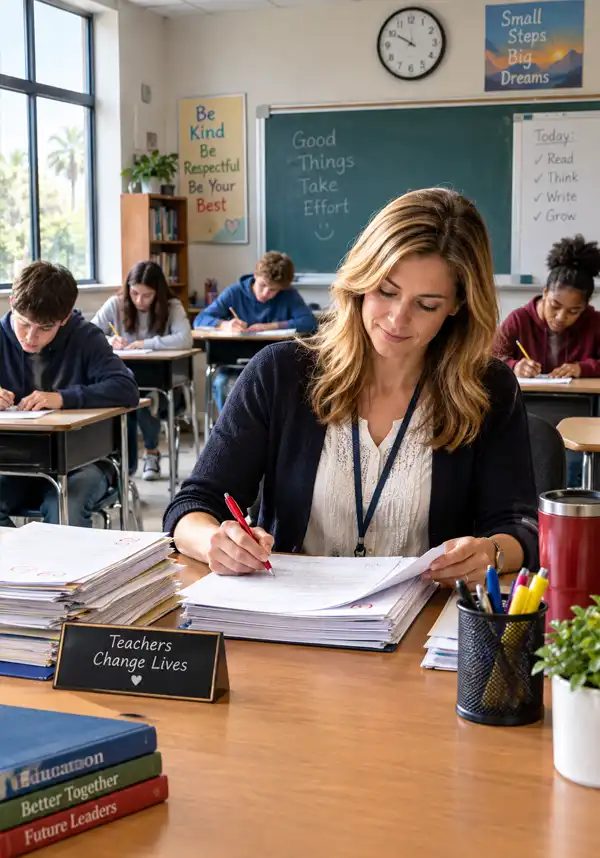
Teaching Requires Extraordinary Patience
There are marathons, endurance races and other celebrated tests of human stamina. Then there is explaining an assignment, asking whether everyone understands, receiving thirty reassuring nods and hearing, approximately eleven seconds later, “What are we supposed to do?” Teaching requires patience on a scale that is difficult to appreciate unless you have spent significant time responsible for a classroom full of students.
Patience in teaching isn't simply the ability to remain calm when somebody asks the same question for the fifth time. Students learn at different speeds, arrive with different levels of knowledge and respond to different methods of instruction. One student may understand a concept immediately, another may need several examples, and a third may struggle until the teacher discovers an entirely different way of explaining it. A good teacher has to recognize those differences without making the student who needs more time feel as though they are somehow less capable.
That means teachers frequently have to explain the same idea in several different ways. Mathematics might require physical objects or a diagram. A complicated piece of writing may suddenly make sense when connected to something familiar. A scientific principle might become clearer through an experiment than through a paragraph in a textbook. Finding the explanation that finally produces the wonderful expression of Oh! Now I get it! requires persistence from the student and considerable patience from the person doing the teaching.
Teachers must also remember that mistakes are part of learning. Adults sometimes forget how frustrating it can be to encounter a subject for the first time. What seems obvious after years of experience may be completely mysterious to a student. Reading, spelling, fractions, grammar and scientific concepts didn't arrive in anybody's brain fully assembled. Somebody explained them, somebody practiced them and, somewhere along the way, somebody got them spectacularly wrong before eventually getting them right.
A patient teacher creates room for those mistakes without allowing them to become permanent. Rather than simply announcing that an answer is wrong, an effective teacher can help a student understand why it is wrong and how to approach the problem differently. That distinction matters. Constant failure can make students reluctant to participate, while constructive guidance can turn the same mistake into part of the learning process. Sometimes the most important sentence a teacher can say isn't “That's correct,” but “Let's try that another way.”
Of course, academic confusion is only one test of classroom patience. Teachers work with children and young adults who are still learning how to manage emotions, relationships, responsibilities and behavior. Students become distracted. They talk when they should listen, forget homework, lose supplies, argue with friends and occasionally make decisions that leave every adult in the room wondering precisely what sequence of thoughts led to that particular outcome.
Then there are the questions.
“Can I sharpen my pencil?”
“Can I go to the bathroom?”
“Is this graded?”
“Will this be on the test?”
“Can I hand it in tomorrow?”
“What page are we on?”
The last question will, of course, be asked while the page number is written prominently on the board.
Patience doesn't mean allowing a classroom to descend into cheerful anarchy. Teachers also have to establish boundaries, enforce rules and maintain an environment where students can learn. The skill lies in knowing when firmness is necessary and when understanding will achieve more. A student deliberately disrupting a lesson presents a different problem from one who is distracted because something difficult is happening at home. Recognizing the difference requires experience, observation and judgment.
The challenge becomes greater because teachers rarely deal with one student at a time. A classroom might contain twenty, thirty or more individuals, each bringing a different personality, ability, mood and collection of concerns through the door. One student may need extra academic help while another is bored because the work is too easy. Someone is worried about a test. Someone else forgot breakfast. Two students aren't speaking to each other after yesterday's disagreement, and a third has apparently decided that today is the ideal day to discover how many times a pen can be clicked before an adult loses all hope.
And yet the lesson must continue.
Teachers also require patience with themselves. Not every lesson works. An activity that seemed brilliant during preparation may fall completely flat in the classroom. Technology fails, schedules change, students misunderstand instructions and carefully planned discussions occasionally produce nothing but silence. Experienced teachers learn to adjust, improvise and try again rather than treating every imperfect lesson as a disaster.
There is also a longer form of patience involved in education. Teachers don't always see immediate results from their work. A struggling reader may improve gradually over months. A shy student may take an entire school year before confidently raising a hand. Advice offered to a teenager might appear to have disappeared completely, only to be remembered years later. Education is filled with progress that occurs quietly, incrementally and sometimes long after the teacher responsible for starting it is there to witness the result.
That may be one reason former students can surprise teachers when they return years later and say, “You probably don't remember this, but you helped me.” The teacher may barely remember the conversation. The student may have carried it for decades. Teaching often involves planting seeds without knowing which ones will grow.
Patience, therefore, isn't merely a pleasant personality trait for teachers. It is an essential professional skill. It allows educators to keep explaining when understanding doesn't come immediately, to correct without humiliating, to encourage without lowering expectations and to recognize that learning is rarely a perfectly straight path.
So, yes, teachers are patient. Extraordinarily patient. But if a teacher has already said “Please stop tapping that pencil” seven times, it would probably be wise not to investigate whether an eighth reminder is available.
Teachers Shape More Than Academic Knowledge
Schools obviously exist to provide education, but the influence of a good teacher reaches beyond mathematics, science, history, languages and literature.
Teachers help students learn how to ask questions, examine evidence, communicate ideas and disagree without declaring international hostilities. They encourage persistence when something is difficult and demonstrate that making a mistake isn't necessarily failure—it can simply be part of learning.
Those lessons frequently survive much longer than the details studied for an examination.
Many adults cannot remember every historical date they memorized at school. Some have peacefully returned algebra to wherever algebra came from. But they often remember the teacher who encouraged them to write, draw, build, perform, investigate or simply believe that they were capable of doing something worthwhile.
A sentence spoken by a teacher can remain with somebody for decades. Sometimes it's profound. Sometimes it's, “I've told you twice already—stop licking the glue.”
Education takes many forms.
The Classroom Has Changed
Teaching has never been static. Chalkboards became whiteboards. Overhead projectors gave way to digital projectors and interactive displays. Encyclopedias increasingly gave way to online resources, while computers, tablets and educational software became ordinary classroom tools in many parts of the world.
Technology has created extraordinary opportunities for education. A classroom can explore museums thousands of miles away, watch scientific experiments, communicate internationally and access information that previous generations could only have found in specialized libraries.
Technology has also created the memorable educational experience known as the projector refusing to cooperate while thirty students watch.
Nothing tests professional composure quite like announcing an exciting multimedia presentation and being greeted by a blue screen containing the words “NO SIGNAL.”
Teachers adapt because adaptation has always been part of teaching. Methods change. Technology changes. Students change. The fundamental job remains remarkably familiar: help another human being understand something today that they didn't understand yesterday.
Teachers Around the World
World Teachers' Day is a global observance, and that international perspective matters.
Teachers work under enormously different circumstances. Some teach in modern classrooms equipped with extensive technology and specialist resources. Others work in communities where books, electricity, internet access or even suitable school buildings may be limited.
UNESCO and its partner organizations use World Teachers' Day to draw attention not only to teacher appreciation but also to issues such as teacher shortages, professional training, recruitment, retention and working conditions.
Access to qualified teachers is fundamental to quality education. Building schools matters, providing educational materials matters and developing curricula matters—but ultimately somebody has to stand in front of the students and teach. Or sit among them. Or work beside them.
Preferably after coffee.
Why Teachers Deserve More Than a Gold Star
Many teachers routinely contribute more than the hours visible during the school day.
Lessons must be prepared. Assignments must be graded. Parents and guardians need communication. Activities need organizing. Classrooms need supplies. Training needs completing. Tomorrow's lesson somehow continues approaching regardless of whether today's lesson went according to plan.
Teachers in many places also spend some of their own money on classroom supplies or materials for students. That shouldn't be romanticized as something educators ought to have to do, but it illustrates the personal commitment many bring to their classrooms.
And although appreciation is welcome, professional respect involves more than saying “thank you” once a year. Supporting teachers means recognizing teaching as skilled professional work and considering the resources, preparation and conditions educators require to do that work effectively.
A gold star is lovely.
Adequate supplies are also rather nice.
The Teachers We Remember
Ask adults about school and something interesting happens.
The textbooks disappear from memory. The homework becomes hazy. Entire mathematical procedures apparently evacuate the brain without leaving a forwarding address.
But the teachers remain.
People remember the teacher who made history sound like a story rather than a collection of dates. They remember the science teacher who made them want to discover how things worked. They remember the English teacher who handed back an essay covered in red ink but wrote one encouraging sentence at the bottom.
They remember teachers who were funny, demanding, eccentric, compassionate or occasionally terrifying.
Most importantly, they remember the teachers who cared whether they learned.
That may be the greatest measure of a teacher's influence. Education isn't merely the transfer of information. At its best, it gives people the confidence and tools to continue learning long after they have left the classroom.
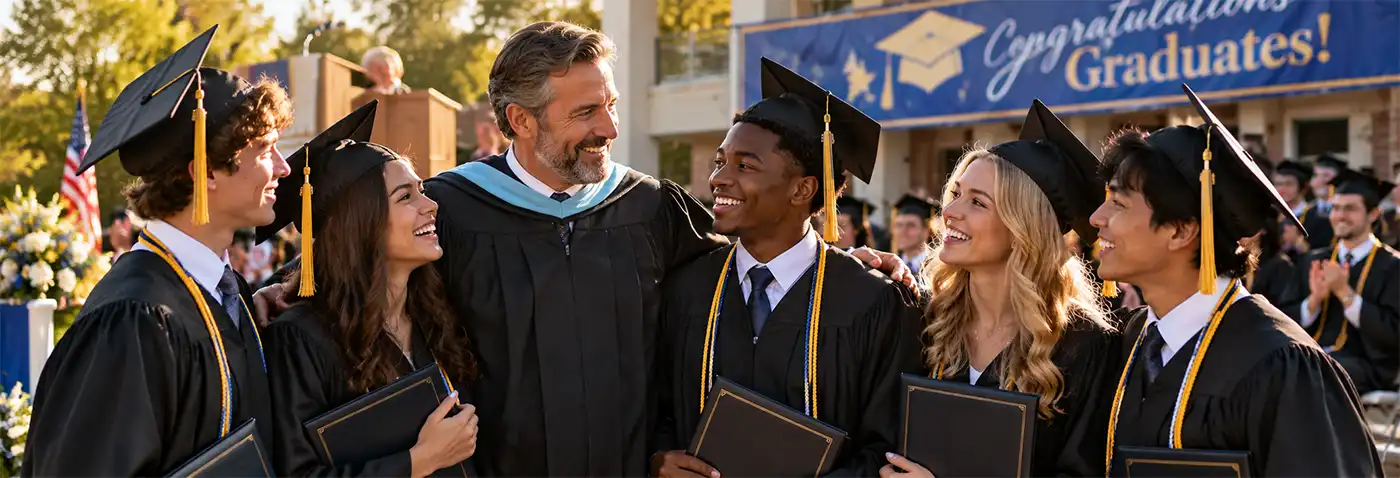
How to Celebrate World Teachers' Day
Ask someone to remember their school days and something rather peculiar happens. The textbooks have largely disappeared from memory. Homework assignments that once seemed capable of determining the entire course of civilization have vanished completely. Mathematical formulas carefully memorized for examinations may now be hiding somewhere in the brain alongside locker combinations and the location of several missing socks. But ask about a favorite teacher, and suddenly a name, a face, a classroom and even the sound of a voice can come rushing back.
The teachers we remember are rarely remembered simply because they taught us facts. We remember them because they somehow made those facts matter. A gifted history teacher could turn people who had been dead for centuries into recognizable human beings making decisions, taking risks and occasionally making an astonishing mess of things. A science teacher could transform an ordinary classroom experiment into the beginning of a lifelong fascination. An English teacher could introduce a student to a book and quietly open a door that remained open for the rest of that student's life.
Sometimes the teacher we remember was the one who recognized an ability before we recognized it ourselves. Perhaps a student wrote an unexpectedly good story, solved a difficult problem, drew something remarkable, repaired a piece of equipment or demonstrated a natural ability to lead others. A teacher noticed and said, “You're good at this.” It might have been an ordinary observation to the teacher, spoken during an otherwise unremarkable school day, but to the student it could become the first suggestion that a particular future was possible.
Encouragement from a teacher can carry extraordinary weight because young people are still discovering who they are and what they can do. A student who believes they are hopeless at mathematics may need someone patient enough to prove otherwise. A shy child may need a teacher who creates an opportunity to speak without making the experience terrifying. Another student may need someone who refuses to accept the words “I can't do it” as the end of the discussion. The best teachers understand that encouragement doesn't mean pretending everything is excellent. Sometimes genuine encouragement sounds remarkably like, “You can do better than this, and we both know it.”
We also remember the demanding teachers. At the time, they may not have been our favorites. They expected homework to be completed, spelling to be correct, deadlines to mean something and excuses to possess at least a passing acquaintance with reality. Years later, however, students often recognize that the teacher who insisted upon another draft, another attempt or a little more effort wasn't being difficult for the entertainment value. They had seen potential and weren't prepared to let laziness, frustration or teenage indifference waste it.
Then there were the teachers who made classrooms enjoyable simply because of who they were. They had stories, peculiar expressions, running jokes and unmistakable personalities. Some could silence an entire room with a raised eyebrow. Others could make students laugh without losing control of the lesson. Many developed phrases that generations of students could probably repeat decades later. Every school seems to have had at least one teacher whose arrival in the corridor could cause an astonishing improvement in student behavior before the teacher had actually entered the room.
Teachers also become part of memories that have very little to do with formal lessons. They were there for school plays, sporting events, science fairs, concerts, field trips and graduation ceremonies. They supervised lunchrooms, hallways and playgrounds. They helped when projects collapsed the night before they were due and occasionally pretended not to notice that a student was desperately finishing homework for the next class. They witnessed friendships begin, confidence grow and children gradually become young adults.
For some students, a teacher may also have provided something even more important: a dependable adult who noticed them. Teachers are often among the first people outside a family to recognize when a child is struggling, becoming withdrawn or simply needs somebody to listen. They cannot solve every problem, nor should they be expected to, but a thoughtful question or a few minutes of attention can matter enormously to a young person who feels overlooked.
One of the remarkable things about teaching is that educators often never discover the full effect they had on their students. A teacher may spend decades sending classes out through the school doors without knowing where most of those lives eventually lead. The child who struggled with reading may become a journalist. The student endlessly dismantling classroom equipment may become an engineer. The teenager filling notebook margins with drawings may become a designer. Somewhere along the way, each may still remember the teacher who encouraged that interest instead of dismissing it.
That is why hearing from a former student can mean so much to a teacher. Years or even decades later, someone may return with the words, “You probably don't remember me...” The teacher may indeed need a moment. Thousands of students can pass through a classroom during a career. But what follows may be an explanation that something the teacher said, taught or encouraged had a lasting effect. For an educator who spent years wondering whether anybody was actually listening, this is rather conclusive evidence that at least one person was.
Of course, our memories of teachers aren't always solemn and inspirational. We remember the accidental comedy too: the teacher who leaned against a freshly cleaned whiteboard, the experiment that produced considerably more smoke than the lesson plan anticipated, or the moment classroom technology chose precisely the wrong time to stage a complete rebellion. Teachers are human beings working in rooms full of other human beings. Given enough school days, something ridiculous is statistically inevitable.
Ultimately, the teachers we remember are the ones who left something behind. It might be knowledge, curiosity, confidence, discipline, a love of reading or the courage to attempt something difficult. Their influence may not appear on a report card and cannot always be measured by an examination, but it can remain long after the classroom itself has become a distant memory.
We may forget the homework. We may forget the equations. We may even forget why we once desperately needed permission to leave the room every forty-five minutes.
But very often, we remember the teacher.
Teacher FAQ
Teachers do far more than stand at the front of a classroom and ask everyone to turn to page 47. World Teachers' Day is an opportunity to recognize their contribution while also answering some common questions about teachers, teaching and this international celebration.
When is World Teachers' Day?
World Teachers' Day is observed every year on October 5. The international celebration recognizes teachers and highlights the importance of the teaching profession and quality education around the world.
Why is World Teachers' Day celebrated on October 5?
October 5 marks the anniversary of the adoption of the 1966 UNESCO/ILO Recommendation concerning the Status of Teachers. The recommendation established international standards concerning teachers' rights, responsibilities, preparation, employment and working conditions.
When was the first World Teachers' Day?
The first World Teachers' Day was celebrated in 1994, when UNESCO established the annual international observance.
Who organizes World Teachers' Day?
World Teachers' Day is led by UNESCO in partnership with organizations including the International Labour Organization, UNICEF and Education International.
What is the purpose of World Teachers' Day?
The day recognizes the contribution teachers make to education and society while drawing attention to issues affecting the profession, including teacher recruitment, training, working conditions, professional development and shortages of qualified educators.
Is World Teachers' Day the same as Teacher Appreciation Day?
Not exactly. World Teachers' Day is an international observance held on October 5. Individual countries also have their own national teacher appreciation days and weeks, which may be celebrated on completely different dates.
How can students celebrate World Teachers' Day?
Students can thank their teachers with a handwritten note, card or simple expression of appreciation. Elaborate presents aren't necessary. A sincere message explaining how a teacher has helped you can mean considerably more—and doesn't require finding room for yet another coffee mug.
Why are teachers so important?
Teachers help students develop knowledge, practical skills, curiosity, confidence and critical-thinking abilities. Their influence frequently extends beyond academic subjects, helping young people learn persistence, communication, responsibility and how to participate successfully in their communities.
What makes a great teacher?
Great teachers combine subject knowledge with communication, adaptability, patience and an ability to inspire students to learn. They also possess the mysterious ability to know exactly who is talking when their back is turned—a professional skill science has yet to explain adequately.
Here's to the Teachers
World Teachers' Day is ultimately about saying thank you to the people who spend their working lives helping others learn. Every October 5, the world has an opportunity to recognize teachers not simply for the subjects they teach, but for the patience, preparation, encouragement and persistence that make education possible. Behind every classroom lesson is a professional who has planned it, adapted it, delivered it, assessed it and quite possibly explained it again because somebody wasn't listening the first time.
Teachers help children learn to read their first sentences and eventually tackle books containing ideas far larger than themselves. They introduce numbers that begin with simple counting and somehow, several years later, contain letters. They bring history back to life, explain the natural world, encourage creativity and teach students how to question information rather than simply accept everything placed in front of them. Education gradually provides young people with the knowledge and confidence to find their own place in the world, and teachers accompany them through an important part of that journey.
Their influence is often impossible to measure. A test can record what a student knows on a particular morning, but there is no standardized examination for curiosity, confidence, persistence or the moment a young person discovers something they genuinely love doing. Teachers may never know which classroom conversation inspired a career, which encouraging remark restored someone's confidence or which lesson remained in a student's memory for the next forty years.
That is part of what makes teaching such an unusual profession. Its results continue walking out of the classroom every afternoon. Former students become scientists, mechanics, nurses, writers, farmers, engineers, artists, business owners, parents and teachers themselves. They carry pieces of what they learned with them, often without remembering precisely when or where they learned it. Somewhere behind almost every accomplished adult is a collection of educators who contributed something along the way.
World Teachers' Day also reminds us that appreciation must extend beyond warm words. Teachers need appropriate training, professional respect, adequate resources and working conditions that allow them to teach effectively. The principles behind the 1966 UNESCO/ILO Recommendation concerning the Status of Teachers remain relevant because quality education depends upon qualified, supported and motivated educators. Saying teachers are important is easy. Making sure they have what they need to do their jobs is the more meaningful expression of that belief.

So, on World Teachers' Day, remember the teacher who made you curious. Remember the one who demanded another attempt because they knew you could do better. Remember the one who made you laugh, the one who made you think and perhaps even the terrifying one whose footsteps in the hallway could restore perfect silence to an entire classroom.
If you can, tell one of them what they meant to you. Teachers spend years wondering how much of what they say actually survives beyond the next examination. Finding out that something lasted can be a wonderful gift.
Here's to the teachers—the educators, mentors, motivators, organizers, encouragers and champions of the second explanation. Here's to the people who answer questions, inspire curiosity and somehow continue believing in the value of education even after hearing, “Is this going to be on the test?” for approximately the ten-thousandth time.
Give them the recognition they deserve. Give them the support they need. And, for goodness' sake, let them finish one cup of coffee while it's still hot.