A Delicious Excuse to Get a Little Shellfish
National Seafood Bisque Day, celebrated every October 19, is devoted to a soup that somehow manages to turn creatures with claws, shells, and an unfortunate tendency to pinch people into one of the most luxurious dishes on the dinner table. Rich, creamy, aromatic, and wonderfully satisfying, seafood bisque has earned a reputation for culinary elegance. Fortunately, you don't need a French accent, an expensive restaurant reservation, or a chef's hat taller than your kitchen cabinets to enjoy it. All you need is an appreciation for good seafood, a spoon, and perhaps a piece of crusty bread to make sure none of that delicious soup escapes.
What Exactly Is Seafood Bisque?
Seafood bisque is a traditional French-style soup celebrated for its smooth, velvety consistency and concentrated shellfish flavor. Classic versions are prepared using crustaceans such as lobster, shrimp, crab, crayfish, or langoustines. Unlike an ordinary seafood soup, which might contain a mixture of fish, vegetables, and broth, bisque builds much of its character from a carefully prepared shellfish stock. The shells are particularly valuable because they contain aromatic compounds that help create the soup's distinctive savory depth. Add vegetables, herbs, a little wine, and a finishing touch of cream, and those humble ingredients become something worthy of a special occasion.
The defining characteristic of a traditional seafood bisque is its refined texture. The flavorful liquid is puréed or carefully strained to remove coarse particles, producing a soup that feels wonderfully smooth on the tongue. Cream adds richness, while butter, aromatic vegetables, and seasonings provide additional layers of flavor. Some recipes use rice or a light roux for thickening, and others incorporate tomato paste to enhance the color and taste. Small pieces of tender seafood may be added just before serving, allowing diners to enjoy the contrast between the silky soup and the sweet, delicate shellfish meat. It is a remarkable transformation, especially considering that some of the ingredients responsible for its wonderful flavor would ordinarily be headed straight for the garbage.

The Fascinating French History of Bisque
The history of bisque is more complicated than its elegant modern appearance might suggest. Although seafood bisque is firmly associated with French cuisine, early dishes bearing the name were not necessarily seafood soups at all. Seventeenth-century French culinary references describe elaborate preparations involving poultry, game birds, mushrooms, and other ingredients. Over time, crayfish became increasingly important, and the term gradually developed its modern association with rich, highly seasoned crustacean soups. The familiar lobster, shrimp, and crab bisques enjoyed today emerged from this long culinary evolution rather than from a single recorded invention.
Even the origin of the word bisque remains uncertain. One explanation connects it to the Bay of Biscay, the stretch of Atlantic Ocean between France and Spain. Another associates it with the French expression bis cuites, meaning twice cooked, possibly referring to cooking methods that involve preparing shellfish before simmering them again to extract flavor. Culinary historians have not established a universally accepted explanation, although the geographical connection is noted in French reference works. Whatever its linguistic origins, the dish eventually became an established feature of classical French cooking, where careful preparation, concentrated flavors, and elegant presentation were highly prized. Somewhere along the way, a practical method of extracting flavor from shellfish acquired a reputation for sophistication. The lobster, presumably, was unavailable for comment.
Why Lobster, Shrimp, and Crab Make Such Wonderful Bisques
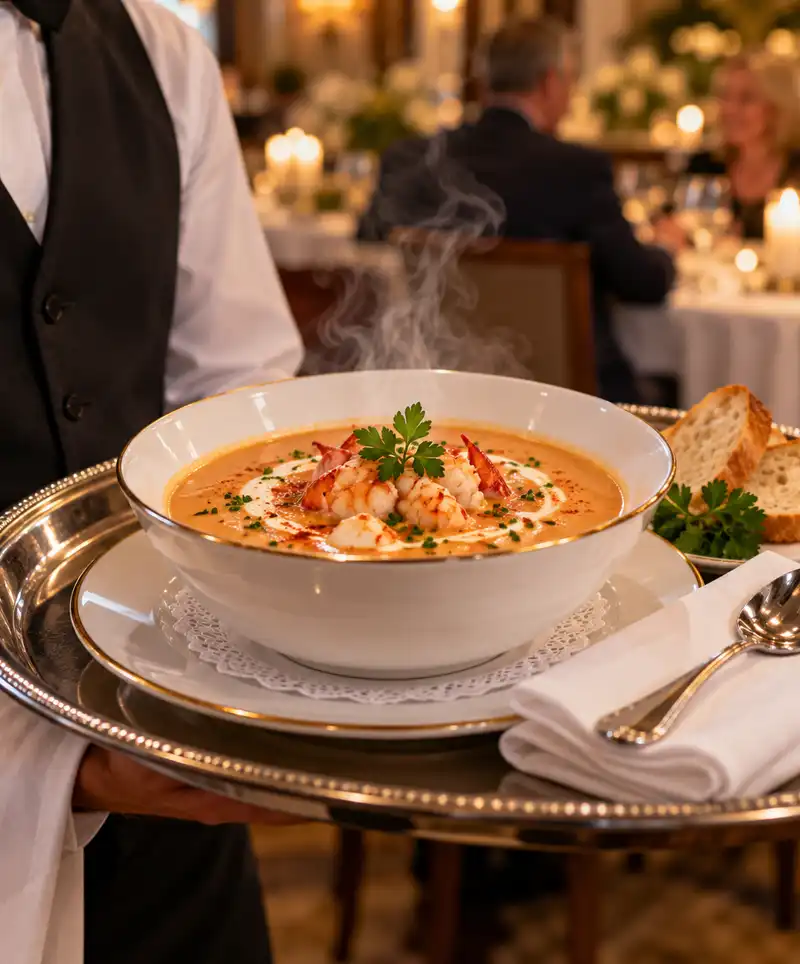
Lobster bisque is perhaps the most recognizable member of the seafood bisque family. Lobster meat has a naturally sweet, delicate flavor, while its shells contribute the concentrated seafood character that makes a properly prepared stock so satisfying. The finished soup often has a beautiful orange or reddish color, especially when tomato paste and other aromatic ingredients are included. Restaurants frequently serve lobster bisque as an elegant appetizer, sometimes garnished with pieces of lobster meat, chopped chives, or a small swirl of cream. It is the sort of dish that arrives in a modest bowl with a rather immodest price, but when prepared well, every spoonful explains why people keep ordering it.
Shrimp bisque offers a similarly delicious experience and can be a more economical choice for home cooks. Shrimp shells make an excellent stock, while the meat cooks quickly and contributes a pleasantly sweet flavor. Crab bisque brings its own distinctive character, particularly when made with fresh crabmeat and a carefully seasoned broth. Crayfish bisque is another traditional variation, and crawfish-based soups have a particularly strong connection to Louisiana's culinary traditions. Mixed seafood bisque combines different shellfish for additional complexity, although the cook must balance the ingredients so that one flavor does not overwhelm the others. The objective is to create a harmonious seafood soup, not to stage a competition between every creature that has ever lived underwater.
Bisque vs. Chowder vs. Bouillabaisse: The Great Seafood Soup Debate
Seafood lovers have several outstanding soup traditions to choose from, but bisque, chowder, and bouillabaisse are not interchangeable dishes. Each has its own ingredients, cooking methods, regional history, and distinctive texture. Understanding the differences makes ordering from a restaurant menu considerably easier, especially when the descriptions sound as though they were written by someone determined to charge extra for every French word.
Bisque: The Smooth and Sophisticated Contender
Seafood bisque emphasizes a finely textured, concentrated shellfish base, usually enriched with cream. Its flavor is built through careful preparation of the stock, aromatic vegetables, and seasonings, with seafood meat sometimes added as a garnish. The result is smooth, rich, and intensely savory. Bisque is particularly well suited to being served as an appetizer, although a generous bowl accompanied by bread can certainly become a satisfying meal. Think of it as the soup that arrives at dinner wearing a tailored jacket, even if everyone else is in jeans.
Chowder: The Hearty Coastal Favorite
Chowder generally takes a more rustic approach. Instead of striving for a completely smooth texture, it celebrates substantial ingredients such as potatoes, onions, clams, fish, corn, and other vegetables. New England clam chowder is famous for its creamy base, while Manhattan clam chowder is traditionally made with tomatoes rather than cream. Seafood chowders often contain generous pieces of fish or shellfish and are designed to be filling, comforting meals. Where bisque glides elegantly across the palate, chowder makes itself comfortable, pulls up a chair, and asks whether there is any more bread.
Bouillabaisse: The Mediterranean Seafood Celebration
Bouillabaisse comes from Marseille on France's Mediterranean coast and has a very different culinary identity. Traditionally associated with local fishermen and their catch, this Provençal dish features several varieties of fish cooked with ingredients that may include tomatoes, garlic, olive oil, saffron, and aromatic herbs. Unlike a creamy bisque, bouillabaisse is generally served with a flavorful broth and distinct pieces of fish, sometimes accompanied by shellfish. Bread and rouille, a garlicky condiment often flavored with saffron or chili, are customary accompaniments. It is a wonderfully aromatic dish that captures the character of Mediterranean cooking without relying on cream to make its point.
So which seafood soup deserves the crown? That depends entirely on the occasion and your appetite. Bisque delivers elegance and concentrated flavor, chowder provides substantial comfort, and bouillabaisse celebrates the diversity of Mediterranean seafood. Fortunately, there is no international regulation requiring anyone to choose just one. You can enjoy all three, preferably on different days unless you have an unusually ambitious soup schedule.

How to Make Seafood Bisque at Home
Preparing homemade seafood bisque requires patience, but the process is less intimidating than its restaurant reputation suggests. The most important step is developing a flavorful stock. Start with shells from shrimp, lobster, crab, or another suitable crustacean, and gently sauté them in a little butter or oil. Add aromatic vegetables such as onion, celery, carrots, and garlic, allowing them to soften and release their flavors. Tomato paste can contribute color and savory depth, while a splash of white wine or brandy may add complexity. The mixture is then simmered with water or stock and herbs, allowing the shellfish shells to impart their characteristic flavor. The liquid is strained carefully, leaving behind a fragrant base for the finished soup.
The next stage involves achieving the consistency that distinguishes bisque from an ordinary seafood broth. Traditional preparations sometimes use cooked rice as a thickener, blending it into the soup to produce a particularly smooth finish. Modern recipes may instead use a small amount of flour, a roux, or reduced cream. Once the soup reaches the desired consistency, it can be blended and passed through a fine-mesh strainer for an especially refined texture. Cream is then added according to the recipe, and the seasoning is adjusted with salt, pepper, and perhaps a little lemon juice to balance the richness. If you are using an immersion blender, keep the hot liquid well below the top of the pot. The goal is a magnificent seafood bisque, not a kitchen ceiling decorated in lobster-colored polka dots.
Finally, add cooked lobster, crab, or shrimp meat and warm it gently without allowing it to become tough. Shrimp, in particular, needs very little cooking time, and prolonged boiling can turn delicate seafood into something better suited to repairing shoes. Serve the bisque hot in warmed bowls, finished with chopped parsley, chives, or a small swirl of cream. A crusty baguette makes an excellent accompaniment, particularly for retrieving the last delicious traces from the bowl. Home cooks should also remember that shellfish allergies can be serious, and anyone preparing bisque for guests should confirm that shellfish is suitable for everyone at the table.
Common Mistakes That Can Ruin a Good Seafood Bisque
Even an excellent seafood bisque recipe can disappoint when a few important details are overlooked. One common mistake is failing to develop enough flavor in the shellfish stock. Simply dropping seafood into cream may produce a pleasant soup, but it will not necessarily deliver the deep, layered flavor associated with traditional bisque. Another problem is using too much cream, which can overwhelm the delicate sweetness of lobster, crab, or shrimp. Cream should complement the seafood rather than disguise it. Excessive thickening can also leave the finished soup heavy or pasty instead of smooth and luxurious.
Straining is equally important. A classic bisque should not contain gritty shell fragments or unpleasantly coarse particles, so a fine-mesh strainer is a worthwhile kitchen companion. Seafood meat should be cooked gently and added at the appropriate stage to prevent it from becoming rubbery. Finally, seasoning deserves attention: a little acidity from lemon juice or wine can brighten the flavors, while fresh herbs can provide a welcome contrast to the richness. The best bisque is not necessarily the one containing the most butter, cream, or expensive lobster. It is the one in which all the ingredients work together, rather like a well-organized kitchen staff that has somehow managed to get through dinner service without shouting.
How to Celebrate National Seafood Bisque Day on October 19
National Seafood Bisque Day provides an excellent opportunity to explore a classic French seafood soup, whether you prefer cooking at home or leaving the work to a professional chef. One enjoyable approach is to prepare homemade shrimp bisque using shells saved from a previous seafood dinner. This makes good use of ingredients that might otherwise be discarded and offers an opportunity to practice the techniques of stock-making, blending, and careful seasoning. Invite friends or family to share the finished dish, serve it with freshly baked bread, and enjoy the satisfaction of creating something that looks as though it belongs on an expensive restaurant menu. Just remember to remove your apron before accepting compliments, unless you are deliberately cultivating the appearance of a television chef.
Another way to celebrate is to visit a seafood restaurant or French bistro and order lobster, crab, or shrimp bisque. Ask about the ingredients and preparation methods, particularly if you are interested in discovering how professional chefs develop their signature flavors. For a more adventurous celebration, organize a seafood soup tasting featuring bisque, chowder, and bouillabaisse, allowing everyone to compare their textures and seasonings. Seafood bisque also pairs nicely with crusty bread, a simple green salad, and beverages that provide a refreshing contrast to its richness. A crisp white wine may be appealing to some diners, while sparkling water with lemon makes an equally pleasant accompaniment. The important thing is to enjoy the occasion, appreciate the cooking, and avoid starting a family argument over whether lobster bisque is superior to shrimp bisque. Some disagreements are simply too delicious to resolve.
Fascinating Seafood Bisque Facts
Seafood bisque has a history almost as rich as its flavor, and there are several interesting details hiding beneath that creamy surface. Consider these little morsels of culinary knowledge as appetizers for the brain, with considerably fewer calories than the soup itself.
- Bisque wasn't always seafood soup. Early French preparations bearing the name included poultry, game birds, and other ingredients before crustacean versions became dominant.
- The shells help create the flavor. Lobster, shrimp, crab, and crayfish shells can be used to produce a deeply flavored stock, even though they are removed before serving in many modern recipes.
- Rice is a traditional thickener. Before modern shortcuts became common, cooked rice was often used to give bisque its smooth, luxurious consistency.
- The name has a mysterious past. The word bisque has been linked to the Bay of Biscay and to the expression bis cuites, but its precise origin remains uncertain.
- Bisque doesn't have to contain lobster. Shrimp, crab, crayfish, and other crustaceans can all produce delicious variations of this classic French soup.
- Not every modern bisque contains seafood. Restaurants and home cooks also use the name for smooth tomato, mushroom, squash, and other vegetable-based soups, although traditional French bisque is associated with crustaceans.
- The orange color has several contributors. Shellfish pigments and ingredients such as tomato paste can help produce the warm orange or reddish appearance commonly associated with seafood bisque.
- The holiday's founder remains unidentified. National Seafood Bisque Day is observed on October 19, but there is no well-established record identifying who originally created the food observance.
A Bowl Worth Celebrating
National Seafood Bisque Day may not come with parades, fireworks, or an official delegation of lobsters marching down Main Street, but it celebrates something genuinely worth appreciating. Seafood bisque represents generations of culinary experimentation, the practical use of flavorful ingredients, and the ability of skilled cooks to transform shellfish into a memorable dish. Its French heritage, elegant texture, and endless variations have helped it remain a favorite in restaurants and home kitchens alike.
Whether your preference is a luxurious lobster bisque, a comforting shrimp bisque, or a rich crab bisque, October 19 is an excellent excuse to enjoy this classic seafood soup. Make a batch from scratch, order a bowl from your favorite restaurant, or introduce someone to the pleasures of a properly prepared bisque. And when you reach the bottom of the bowl, take a moment to appreciate the remarkable journey from ocean to dinner table. After all, it takes considerable culinary talent to turn an animal wearing its own armor into something so wonderfully smooth.