Celebrity Birthdays - May

May is basically the VIP lounge of months: warm, sunny, and not yet mosquito season. People born in May are annoyingly charming about it, too.
So let’s celebrate the folks who make us believe in backyard barbecues and fresh starts. They were born to bask in the glow of spring — and they want you to know it.

- Details
- Category: Celebrity Birthdays - May
Raise a pint and warm up the transporter — it’s Colm Meaney’s birthday! The Irish actor who became a Star Trek fan favorite as Chief O’Brien has spent decades hopping between starships, western railroads (Hell on Wheels), and gritty dramas, proving he can handle warp speed, whiskey, and wickedly good acting without breaking a sweat.
 May 30, 1953, in Dublin, Ireland

Trivia
- Colm Meaney is one of the few actors to have appeared in all four "Star Trek" series set in the 24th century: "The Next Generation," "Deep Space Nine," "Voyager," and "Enterprise."
- He is an accomplished stage actor, having performed in numerous theater productions, including a notable performance as Big Daddy in a West End production of "Cat on a Hot Tin Roof."
- Meaney's distinctive voice has made him a sought-after voice actor for documentaries and animated projects.
- He has worked with director and writer Roddy Doyle on multiple occasions, often bringing Doyle's gritty, humorous, and poignant characters to life with remarkable authenticity.

- Details
- Category: Celebrity Birthdays - May
Some people chase success, and some people seem to build it from scratch with sheer determination and a well-timed eye roll. Victoria Rowell fits comfortably in that second group. She didn’t just climb the ladder—she brought her own tools, fixed a few broken steps along the way, and made sure others could follow behind. With a career that moves from ballet studios to daytime drama royalty and into the director’s chair, she’s proof that talent helps—but grit, timing, and a refusal to sit quietly in the corner will take you a whole lot further.
 May 10, 1959, in Portland, Maine
Trivia
- Played Drucilla Winters on The Young and the Restless for over a decade.
- Starred simultaneously on The Young and the Restless and Diagnosis: Murder.
- Nominated for multiple Daytime Emmy Awards.
- Won numerous NAACP Image Awards for her performances.
- Appeared in films like Dumb and Dumber and The Distinguished Gentleman.
- Started her career as a trained ballet dancer.

- Details
- Category: Celebrity Birthdays - May
Georgie Farmer is proof that you can be charming, spooky, and hilarious all at once — thanks to his breakout role as Ajax in Netflix’s Wednesday. As the Gorgon with a heart of gold (and occasionally a head of snakes), he made awkward teen crushes look downright petrifying — in the best way. Georgie brings a sweet, goofy energy to the screen that makes you root for him whether he’s dodging Medusa-level drama or just trying to survive another semester at Nevermore Academy. Off-screen, he’s as likable as his on-screen alter ego, sharing behind-the-scenes fun with fans and reminding everyone that being a little weird is exactly what makes you wonderful. If birthdays are for celebrating personality, Georgie’s day should come with confetti — and maybe a “snake-safe” party hat.
May 26, 2002, in Leytonstone, England
Trivia
- Artistic Talents: Besides acting, Farmer is an accomplished painter and often shares his artwork on social media, showcasing his creative talents beyond the screen.
- Musical Inclinations: Farmer plays the guitar and enjoys writing his own music, often using these skills as a form of personal expression.
- Social Media Presence: He actively engages with his fans on social media platforms, where he shares insights into his life, work, and hobbies.

- Details
- Category: Celebrity Birthdays - May
Warm up those vocal cords — it’s Idina Menzel’s birthday! The powerhouse voice behind Wicked’s Elphaba and Frozen’s Elsa has been defying gravity and belting anthems that get stuck in our heads for decades, proving that when Idina sings, the whole world listens (and probably sings along).
May 30, 1971, in New York, New York
Trivia
- Idina Menzel's real name is Idina Kim Mentzel. She dropped the "t" in her last name early in her career to make it easier to pronounce.
- She is the first person to have both a Billboard Top 10 hit and a Tony Award for acting. "Let It Go" reached the top 10 on the Billboard Hot 100 chart.
- Menzel has a son named Walker Nathaniel Diggs, from her marriage to actor Taye Diggs. The two met while co-starring in "Rent" and were married for ten years before amicably divorcing in 2014.
- In addition to her acting and singing career, Menzel is also a successful recording artist. She has released several solo albums, including "Still I Can't Be Still" (1998), "Here" (2004), and "Holiday Wishes" (2014).

- Details
- Category: Celebrity Birthdays - May
Brec Bassinger is living proof that superheroes don’t always wear capes — sometimes they rock cosmic staffs and teenage sass. Best known for leading the charge in DC’s Stargirl, Brec brought Courtney Whitmore to life with just the right mix of optimism, humor, and “don’t-mess-with-me” attitude. She’s also popped up in plenty of other shows, but it’s her turn as the star-spangled hero that made her a favorite for fans of teen heroes and nostalgic comic book lovers alike. Off-screen, Brec is as bubbly and approachable as her character, sharing glimpses of her life with fans and proving that you can be both a superhero and someone you’d want to hang out with at a diner. If birthdays are about shining bright, Brec’s is practically a firework display.
May 25, 1999, in Saginaw, Texas
Trivia
- Brec Bassinger's middle name is Marie.
- She initially moved to Los Angeles with her mother to pursue her acting career, while her father and brothers stayed in Texas.
- Bassinger is a big fan of Harry Potter and often references the series in her social media posts.
- She has two older brothers, Beric and Brice, and is very close to her family.

- Details
- Category: Celebrity Birthdays - May
Tune up the guitar and dust off the blue suede shoes — it’s Riley Keough’s birthday! The actress, model, and granddaughter of Elvis Presley has built a career that proves talent runs in the family, starring in everything from indie dramas to the high-octane chaos of Mad Max: Fury Road. Whether she’s playing a rock star in Daisy Jones & The Six or stealing scenes on the big screen, Keough keeps finding ways to surprise audiences — and today she’s got one more reason to shine brighter than a Vegas marquee.
May 29, 1989, in Los Angeles, California.
Trivia
- Riley Keough is an accomplished model and has worked with high-profile brands such as Dior and Dolce & Gabbana.
- She is married to stuntman Ben Smith-Petersen, whom she met while filming “Mad Max: Fury Road.”
- Keough has a tattoo in memory of her brother Benjamin Keough, who tragically passed away in 2020.

- Details
- Category: Celebrity Birthdays - May
Michael Kelly has mastered the art of playing characters who always seem to know a little more than they’re letting on. Best known for his role as Doug Stamper on House of Cards, Kelly brought a quiet intensity to the screen that made you both nervous and impressed every time he showed up. His filmography is stacked with thrillers, political dramas, and action flicks, and he has that rare ability to make even the stillest moment feel electric. Whether he’s the fixer, the insider, or the guy pulling the strings, Michael Kelly makes sure you can’t look away. His birthday deserves a toast in a smoky backroom — preferably with a deal being struck just out of earshot.
May 22, 1969, in Philadelphia, Pennsylvania
Trivia
- Did you know he studied law at Coastal Carolina University before deciding to pursue acting? This background has given him a unique perspective on the legal and political characters he often portrays.
- Another fun fact is that Michael is an avid supporter of various charitable causes. He frequently participates in events and campaigns to raise awareness and funds for organizations that focus on education, healthcare, and veterans' support.
- Michael's versatility extends to voice acting as well. He has lent his voice to video games and animated projects, showcasing his ability to adapt to different mediums and bring characters to life through his vocal talents.

- Details
- Category: Celebrity Birthdays - May
Cher is living proof that you can reinvent yourself as many times as you want — and look fabulous every single time. From her early days with Sonny to conquering the charts solo, winning an Oscar for Moonstruck, and becoming the ultimate Twitter queen, Cher has spent decades refusing to fade quietly into the background. Her hits like Believe turned Auto-Tune into an art form, and her concerts are legendary, complete with dazzling costumes and enough attitude to power Vegas for a year. Her birthday should be celebrated with sequins, spotlight beams, and maybe a key change that shakes the chandelier — because if anyone can turn a party into a full-on spectacle, it’s Cher.
May 20, 1946, in El Centro, California
Trivia
- Cher holds the distinction of having won a Grammy, an Emmy, an Academy Award, and three Golden Globe Awards.
- She became the first artist to have a number-one single on a Billboard chart in six consecutive decades.
- Cher's role in "Moonstruck" not only earned her an Oscar but also solidified her reputation as a serious actress capable of taking on diverse and complex roles.
- She made her Broadway debut in the 1982 play "Come Back to the 5 & Dime, Jimmy Dean, Jimmy Dean," which was later adapted into a film.

- Details
- Category: Celebrity Birthdays - May
Some actors deliver lines. Lisa Edelstein delivers verdicts. She’s got that courtroom-without-a-gavel energy—calm, precise, and just a little bit dangerous if you come unprepared. You half expect paperwork to magically appear when she walks into a scene, already signed and approved, because she clearly read it before anyone else. And if there’s chaos brewing? Don’t worry—she’ll handle it… right after giving you a look that says you should’ve handled it yourself.
May 21, 1966, in Boston, Massachusetts
Trivia
- Best known for playing Dr. Lisa Cuddy on House.
- Studied at NYU’s Tisch School of the Arts.
- Began her career in New York’s theater and club scene.
- Starred in Girlfriends' Guide to Divorce as Abby McCarthy.
- Has worked as a writer and director in addition to acting.

- Details
- Category: Celebrity Birthdays - May
Rosemary Clooney didn’t just sing songs—she delivered them with the kind of effortless charm that made audiences feel like they’d been invited into something special. Long before celebrity culture became a full-time profession, Clooney built her career the old-fashioned way: extraordinary talent, genuine warmth, and a voice so memorable it could make even the iciest critic reconsider their life choices. Whether topping charts, starring in holiday classics, or navigating the unpredictable storm of fame, she managed it all with grace, style, and the reassuring confidence of someone who truly belonged center stage.
May 23, 1928, in Maysville, Kentucky
 Jun 29, 2002, in Beverly Hills, California
Trivia
- Rose to fame with “Come On-a My House” in 1951
- Starred in White Christmas (1954)
- Known for hits like “Mambo Italiano” and “Hey There”
- Aunt of actor George Clooney
- Overcame major personal and mental health struggles
- Enjoyed a successful late-career musical resurgence
- Passed away in 2002 at age 74

- Details
- Category: Celebrity Birthdays - May
Rachel Platten gave the world an instant anthem with Fight Song, turning car rides, gym sessions, and late-night pep talks into full-on motivational montages. Her music is all about empowerment, resilience, and finding your voice — sometimes literally at the top of your lungs. Beyond her chart-topping hit, Rachel continues to write songs that feel like they’re cheering you on from the sidelines, which is exactly what the world needs more of. Her birthday should be celebrated with sparklers, singalongs, and maybe a key change or two — because if anyone deserves a big, anthemic moment, it’s her.
May 20, 1981, in
Trivia
- Rachel Platten began her music career by performing in college and local clubs in New York City.
- She holds a degree in international relations from Trinity College in Connecticut.
- Platten's song "Fight Song" was used extensively in the 2016 presidential campaign of Hillary Clinton.
- She is a dedicated animal lover and has a rescue dog named Dino.
- Platten participated in the 2017 special "Hand in Hand: A Benefit for Hurricane Relief," performing to raise funds for those affected by natural disasters.

- Details
- Category: Celebrity Birthdays - May
Debra Winger lit up the screen in the 1980s with performances that were equal parts strength and vulnerability, earning her a place among Hollywood’s most respected leading ladies. From Urban Cowboy to Terms of Endearment to An Officer and a Gentleman, she delivered some of the decade’s most unforgettable performances — and picked up a few Oscar nominations along the way. Known for her fierce independence and thoughtful approach to roles, Winger has always brought depth and authenticity to every character she plays. Her birthday deserves a celebration with champagne, heartfelt toasts, and maybe a ride off into the sunset — Richard Gere optional.
May 16, 1955, in Cleveland Heights, Ohio
Trivia
- Debra Winger turned down the lead role in "A League of Their Own" (1992), which ultimately went to Geena Davis.
- She wrote a memoir titled "Undiscovered" (2008), where she shares insights into her life, career, and perspectives on the entertainment industry.
- Winger is married to actor/director Arliss Howard, and they have a son together. She also has a son from her previous marriage to actor Timothy Hutton.
- In addition to her acting career, Winger has been involved in various theater productions, showcasing her range and dedication to the craft.
- Details
- Category: Celebrity Birthdays - May
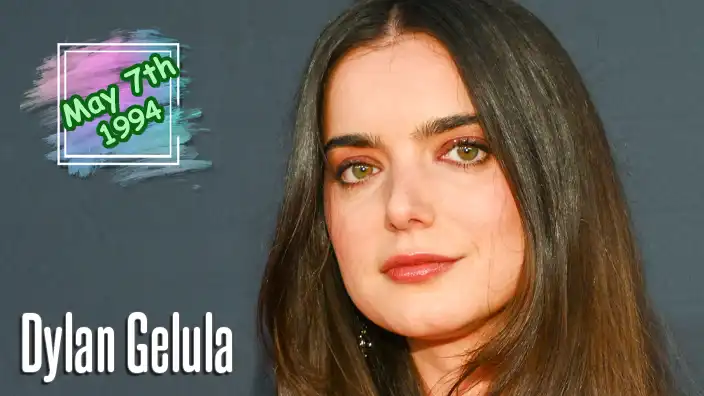
Every generation gets a handful of actors who feel less like performers and more like people you’d run into at a coffee shop—effortlessly cool, slightly mysterious, and somehow already three steps ahead of whatever conversation you’re having. Dylan Gelula fits that mold perfectly. She doesn’t shout for attention; she just shows up, delivers the moment, and leaves you wondering why everyone else is trying so hard.
May 7, 1994, in Philadelphia, Pennsylvania
Trivia
- Known for her role as Ford in Sweet/Vicious
- Appeared in Unbreakable Kimmy Schmidt as Jodi
- Starred in the indie film Flower (2017)
- Appeared in Dream Scenario (2023)
- Known for her understated and natural acting style
- Frequently works in indie and character-driven projects
- Has a reputation for choosing unconventional roles
- Maintains a relatively low public profile

- Details
- Category: Celebrity Birthdays - May
If country music had a front porch, Kix Brooks would be the guy leaning back in a chair, telling a story that somehow turns into a hit song before you realize what just happened. He’s got that easygoing charm that makes it sound like he’s just chatting—but next thing you know, there’s a fiddle kicking in, your foot’s tapping, and you’re halfway through a chorus you didn’t see coming. Some artists chase the spotlight; Brooks just flips it on, grabs a guitar, and makes it feel like you were invited all along.
May 12, 1955, in Shreveport, Louisiana
Trivia
- Debut album Brand New Man released in 1991
- Known for hits like “Boot Scootin’ Boogie” and “Neon Moon”
- Co-wrote many of the duo’s songs
- Launched a solo career after 2010
- Host of American Country Countdown

- Details
- Category: Celebrity Birthdays - May
Stevie Wonder isn’t just a musician — he’s basically a one-man soundtrack to half the 20th century. With more Grammy Awards than most people have socks, he gave us classics like “Superstition,” “Isn’t She Lovely,” and “Sir Duke,” making it impossible not to dance in the kitchen. Blind since shortly after birth, he turned what could have been a limitation into a superpower, sitting down at a piano and changing music forever. Stevie doesn’t just write songs — he writes moments you never forget.
May 13, 1950, in Saginaw, Michigan
Trivia
- Stevie Wonder was the youngest artist ever to have a No. 1 hit on the Billboard Hot 100 at age 13 with “Fingertips (Part 2).”
- He plays multiple instruments, including piano, drums, harmonica, and bass.
- Wonder has won 25 Grammy Awards, one of the highest totals in music history.
- His album Songs in the Key of Life debuted at No. 1 on the Billboard chart.
- He played a major role in the campaign to make Martin Luther King Jr.’s birthday a U.S. federal holiday.

- Details
- Category: Celebrity Birthdays - May
Some actors arrive in Hollywood looking polished, glamorous, and ready for superstardom. Jake Johnson arrived looking like he had just argued with a parking meter and forgotten where he left his coffee. Somehow, that worked perfectly. With his permanently exhausted charm, sarcastic delivery, and ability to make confusion look heroic, Johnson became the patron saint of people who are trying their best but would also really like to sit down for a minute.
May 28, 1978, in Evanston, Illinois
Trivia
- Before acting full-time, he worked as a waiter.
- He is a devoted fan of Chicago sports teams.
- Johnson made his directorial debut with Self Reliance in 2023.
- He starred in Jurassic World as Lowery Cruthers.
- He has twin daughters with artist Erin Payne.
- His comedy style is known for dry sarcasm and relatable awkwardness.

- Details
- Category: Celebrity Birthdays - May
Russell Hornsby has built a career playing characters with quiet strength and commanding presence, the kind of roles that stick with you long after the credits roll. From his breakout as Hank Griffin in Grimm to his powerful performances in Fences and The Hate U Give, Hornsby brings depth and gravitas to everything he does. More recently, he’s turned heads as boxing promoter Don King in Mike and as the lead in BMF, proving he can carry both historical figures and high-stakes dramas with equal weight. His birthday deserves a standing ovation, a thoughtful toast, and maybe a story or two about the many worlds he’s brought to life on screen.
May 15, 1974, in Oakland, California
Trivia
- Hornsby is an accomplished stage actor and has performed in numerous theater productions, including August Wilson's "Fences" and "Jitney."
- He is a devoted family man and often shares insights about balancing his professional career with his personal life.
- Hornsby has a background in sports and was an avid football player during his youth, which has influenced some of his roles, particularly those involving physicality and athleticism.
- He is known for his distinctive voice and has lent his vocal talents to several audiobooks and animated projects.

- Details
- Category: Celebrity Birthdays - May
Before social media told us what to think and reality TV showed us far too much, Melissa Gilbert was out there proving that a well-timed tear, a determined stare, and a stubborn streak could carry an entire episode. She didn’t just play Laura Ingalls—she made you feel like you’d just tracked mud across the cabin floor and were about to learn a life lesson whether you liked it or not. And somehow, between chores, schoolbooks, and frontier drama, she made growing up look both tougher… and a whole lot more meaningful.
May 8, 1964, in Los Angeles, California
Trivia
- Best known for playing Laura Ingalls on Little House on the Prairie.
- Began acting in commercials as a child.
- Worked closely with Michael Landon, who mentored her career.
- Starred in numerous television movies in the 1980s and 1990s.
- Served as president of the Screen Actors Guild from 2001 to 2005.
- Was married to actor Bruce Boxleitner.
- Has authored memoirs about her life and career.
- Competed on Dancing with the Stars in 2012.
- Later embraced a quieter lifestyle focused on writing and advocacy.

- Details
- Category: Celebrity Birthdays - May
Lizzy Greene managed to do something most of us never quite pulled off—figure things out while growing up in front of a camera and somehow make it look easy. While the rest of us were awkwardly navigating school, she was delivering lines, hitting marks, and building a career. Not bad for someone who started out playing a kid dealing with siblings and ended up handling much heavier material on prime-time television.
May 1, 2003, in Dallas, Texas
Trivia
- She gained fame on Nicky, Ricky, Dicky & Dawn.
- She played Dawn Harper, the only girl among four siblings.
- She later starred in A Million Little Things.
- She successfully transitioned from comedy to drama roles.
- She began acting at a young age.
- She has expressed interest in working behind the camera.
- She has built her career steadily without major controversy.

- Details
- Category: Celebrity Birthdays - May
Mike Myers is the comedy shapeshifter who gave us some of the most quotable characters of the last three decades — and probably made you yell “Yeah, baby!” at least once in your life. From Wayne’s World to Austin Powers to the eternally lovable Shrek, Myers has a gift for creating characters that feel both absurd and somehow totally real. He’s the guy who can make you laugh until you cry — and then turn around and make you tear up with a surprisingly heartfelt moment (usually right before another fart joke). His sense of humor is silly, clever, and just a little bit chaotic — exactly what the world needs. If birthdays are about celebrating fun, Mike’s party would be part rock concert, part spy movie, and part swamp — but all hilarious.
May 25, 1963, in Scarborough, Ontario, Canada
Trivia
- Mike Myers was awarded a star on the Hollywood Walk of Fame in 2002.
- He is a member of the Order of Canada, one of the country's highest civilian honors.
- Myers reprised his role as Dr. Evil from the "Austin Powers" series for a Super Bowl commercial in 2022.
- He has a cameo as the British general Ed Fenech in Quentin Tarantino's "Inglourious Basterds."
- Myers is known for being a perfectionist, often taking years to develop and refine his characters and scripts.

- Details
- Category: Celebrity Birthdays - May
Some musicians need elaborate stage setups, backup dancers, and a small army of production staff. Billy Joel can sit down at a piano, crack a smile, and suddenly you’re part of a singalong whether you planned it or not. He’s the kind of performer who makes it look easy—like writing timeless hits and filling arenas is just something you do between lunch and dinner. And let’s be honest, if there’s a piano in the room and Billy Joel’s nearby, everyone’s secretly hoping he’ll wander over, sit down, and turn the night into a concert.
Born May 9, 1949, in New York City
Trivia
- Known as “The Piano Man” after his hit song from Piano Man
- Released the classic album The Stranger
- Won multiple Grammy Awards throughout his career
- Inducted into the Rock and Roll Hall of Fame in 1999
- Known for hits like “Uptown Girl” and “We Didn’t Start the Fire”
- Held a long-running residency at Madison Square Garden
- Stopped releasing pop albums after 1993 but continues to perform live
From Our Marks Catelog
-
Fraudsters are like modern-day tricksters, but instead of selling snake oil, they’ve upgraded to...
-

The Mummer's Parade in Philadelphia is like New Year's Day decided to throw on its most flamboyant...
-

When life hands you one of those bright yellow orbs that practically scream "pucker up," you know...
-

If you’re going to pretend to be a princess, you might as well go all in. That means sweeping into...
-

National Adoption Awareness Month is a beacon of hope and transformation, illuminating the...
-

Certified nurses are like superheroes, only with stethoscopes instead of capes and an uncanny...

