Celebrity Birthdays - June

Ah, June — school’s out, pools are open, and June birthday people are here to remind you that the fun starts now.
These stars are summer’s opening act, kicking off long days, warm nights, and questionable tan lines. Grab a lemonade and join us in celebrating the folks who make June the month of all things bright and loud.
- Details
- Category: Celebrity Birthdays - June
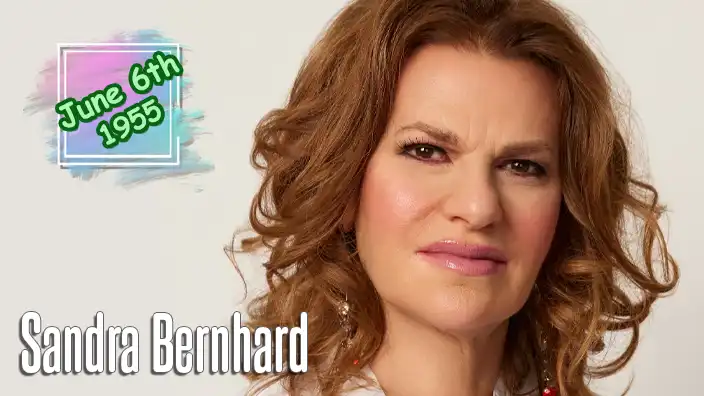
Sandra Bernhard never seemed particularly interested in staying in one lane. Stand-up comedian? Sure. Actress? Absolutely. Singer? Why not? Over the years, she has built a career out of surprising audiences, challenging expectations, and proving that entertainment is a lot more interesting when nobody follows the usual script. On Sandra Bernhard's birthday, we celebrate a performer whose career has included comedy clubs, television sets, movie screens, concert stages, and probably a few places where nobody quite knew what was going to happen next. Fortunately for her fans, that's usually where the fun begins.
 June 6, 1955, in Flint, Michigan

Trivia
- Raised in Scottsdale, Arizona.
- Worked as a manicurist before becoming famous.
- Appeared on The Richard Pryor Show early in her career.Starred as Masha in The King of Comedy.
- Played Nancy Bartlett Thomas on Roseanne.
- Is also a singer, author, and radio host.
- Named one of Comedy Central's 100 Greatest Stand-Ups.
- Hosts the SiriusXM program Sandyland.
- Has maintained an entertainment career spanning nearly five decades.
- Details
- Category: Celebrity Birthdays - June
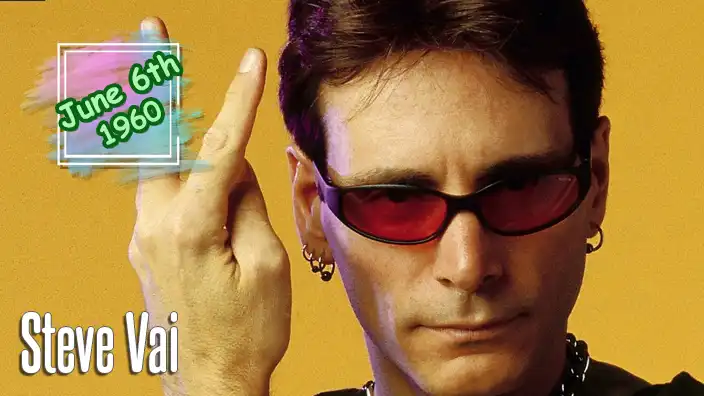
Most people spend years trying to master one musical instrument. Steve Vai apparently looked at a guitar and decided it needed additional settings. For decades, fans have watched him perform solos that cause aspiring guitarists to put down their instruments, stare into the distance, and reconsider their life choices. Fortunately, Vai combines astonishing technical skill with creativity and humor, making his performances as entertaining as they are intimidating. On Steve Vai's birthday, we celebrate a musician who has spent a lifetime proving that six strings can do far more than most of us ever imagined.
 June 6, 1960, in Carle Place, New York
Trivia
- Took guitar lessons from Joe Satriani.
- Began working for Frank Zappa at age 18.
- Won three Grammy Awards.
- Played with Frank Zappa, David Lee Roth, Whitesnake, and Alcatrazz.
- Helped popularize the seven-string guitar.
- Played Jack Butler in the movie Crossroads.
- Has sold more than 15 million records worldwide.
- Received an honorary doctorate from Berklee College of Music.
- Details
- Category: Celebrity Birthdays - June
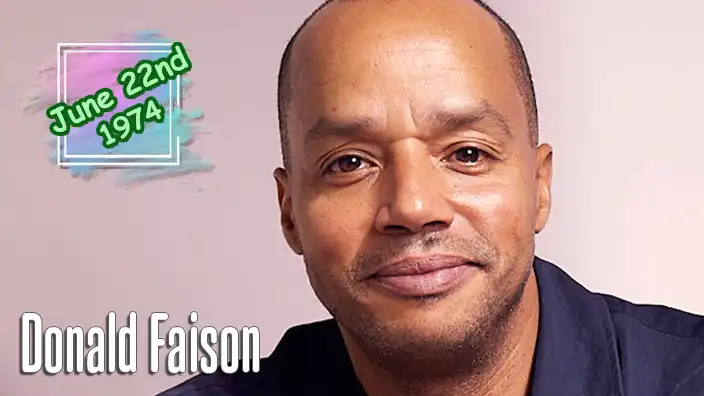
Hospitals are usually associated with serious business, but Donald Faison spent years convincing audiences that they could also be home to dance routines, elaborate practical jokes, and some of television's funniest friendships. Best known as Dr. Chris Turk on Scrubs, Faison combined comedy, charm, and impeccable timing to become one of the most memorable faces of early-2000s television. Born on June 22, 1974, he built a career proving that laughter can sometimes be the best medicine.
June 22, 1974. in Harlem, New York
Trivia
- Attended the Professional Children's School in Manhattan.
- Played Murray Duvall in Clueless (1995).
- Reprised Murray in the Clueless television series.
- Starred as Dr. Christopher Turk on Scrubs.
- Appeared in all nine seasons of Scrubs.
- Co-starred with Zach Braff throughout the series.
- Appeared in the football drama Remember the Titans.
- Starred in the sitcom The Exes.
- Has worked extensively as a voice actor.
- Co-hosts the Fake Doctors, Real Friends podcast.
- Known for both comedy and dramatic performances.
- Details
- Category: Celebrity Birthdays - June
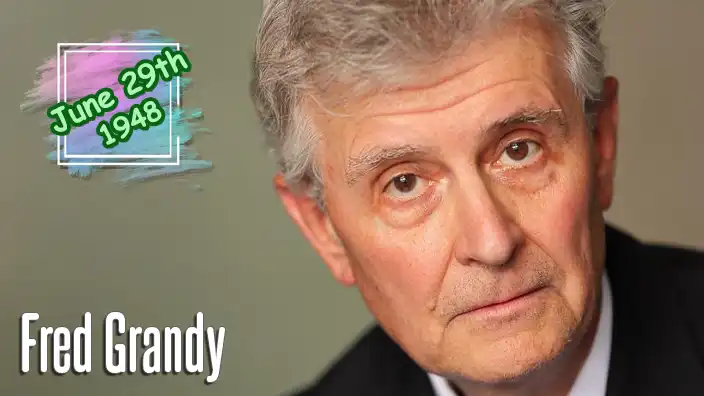
Fred Grandy may be best remembered as Gopher from The Love Boat, but his career took a route most actors never attempt without a very confused travel agent: Hollywood sitcom fame, Congress, nonprofit leadership, radio commentary, and back to performance. Most people leave a cruise with sunburn and a souvenir cup; Grandy left with a public profile sturdy enough to carry him all the way to Washington.
June 29, 1948, in Sioux City, Iowa
Trivia
- He played Burl “Gopher” Smith on The Love Boat.
- The Love Boat aired as a regular series from 1977 to 1986.
- Grandy later served four terms in the U.S. House of Representatives.
- He represented Iowa in Congress from 1987 to 1995.
- Before acting fame, he worked as an aide to Congressman Wiley Mayne.
- He later served as president and CEO of Goodwill Industries International.
- He appeared on The Mindy Project in a recurring role.
- His son Charlie Grandy became a television writer and producer.
- Grandy has reunited with The Love Boat cast for fan events and cruises.

- Details
- Category: Celebrity Birthdays - June
If country music were a house, Ronnie Dunn would be the voice booming from the front porch saying, “Y’all come on in.” He can sing about heartbreak so convincingly you’ll start apologizing to people you dated in 1998. And somewhere on his Tennessee ranch, while the rest of the industry debates trends, Ronnie’s probably saddling a horse, picking up a guitar, and reminding everyone how it’s supposed to be done.
June 1, 1953, in Coleman, Texas
Trivia
- Brooks & Dunn became the best-selling duo in country music history.
- He co-wrote many of the duo’s biggest hits, including “Brand New Man.”
- He is an accomplished photographer with a strong interest in wildlife and landscapes.
- Brooks & Dunn reunited in 2015 for a Las Vegas residency with Reba McEntire.
- Dunn has supported numerous charities focused on veterans and first responders.

- Details
- Category: Celebrity Birthdays - June
Gene Wilder had a way of looking completely innocent while chaos unfolded around him, as if he’d just wandered into the wrong movie and decided to stay. Whether he was inventing a new kind of candy, resurrecting a monster, or riding a train with Richard Pryor, he always seemed one step away from either a brilliant idea or a full nervous breakdown—sometimes both at once. If you told Gene Wilder’s characters to relax, they’d probably nod politely, smile, and then accidentally set something on fire five seconds later. And somehow, we’d love them even more for it.
June 11, 1933, in Milwaukee, Wisconsin
 August 29, 2016, in Stamford, Connecticut
Trivia
- His birth name was Jerome Silberman.
- He earned an Oscar nomination for The Producers.
- He co-wrote Young Frankenstein with Mel Brooks.
- He played Willy Wonka in the 1971 film.
- He starred in several hit comedies with Richard Pryor.
- He also worked as a writer and director.
- He was married to comedian Gilda Radner.
- He became an advocate for cancer awareness after her death.

- Details
- Category: Celebrity Birthdays - June
Jason Isaacs has one of those faces that instantly makes you suspicious, even if he’s just asking where the restroom is. After years of playing villains, aristocrats, and morally questionable authority figures, you half expect him to pull out a wand, a sword, or a secret evil plan at any moment. Yet by all accounts, he’s a friendly football fan who probably spends more time cheering Liverpool than plotting world domination. Still, if Jason Isaacs ever offers you a mysterious invitation or a shiny magical artifact, it might be wise to read the fine print first.
June 6, 1963, in Liverpool, England
Trivia
- He’s a polyglot and can speak several languages, including French and Spanish.
- Jason once wanted to be a lawyer before he caught the acting bug.
- He’s a huge fan of "The Simpsons" and has even guest-starred on the show.
- Despite his tough-guy roles, Jason is a self-proclaimed softie who loves romantic comedies.
- He’s been married to his wife, Emma Hewitt, since 2001, and they have two daughters together.

- Details
- Category: Celebrity Birthdays - June
Bruce Dern built a career playing the kind of characters you wouldn’t trust to borrow your lawn mower—let alone your car, your wallet, or your last slice of pie. He’s the guy who could smile politely while clearly plotting something complicated. And yet, in real life, he’s a disciplined runner and proud father, which just goes to show: sometimes the nicest folks on the track are the scariest people on screen.
June 4, 1936, in Chicago, Illinois
Trivia
- Bruce Dern trained at the Actors Studio under Lee Strasberg.
- He shocked audiences by killing John Wayne’s character in The Cowboys (1972).
- He received Oscar nominations for Coming Home (1978) and Nebraska (2013).
- His daughter is Oscar-winning actress Laura Dern.
- He has been a dedicated long-distance runner for much of his life.
- Details
- Category: Celebrity Birthdays - June
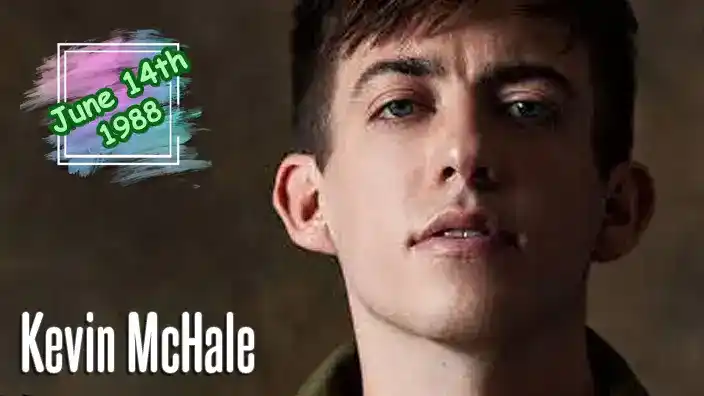
Kevin McHale has one of those careers that sounds like it was planned by a very energetic career counselor with too much coffee. First, he’s in a boy band. Then he’s starring on a hit musical TV show. Next thing you know, he’s dancing in sequins on national television and hosting a podcast about it all. At this point, if someone announced he was training to be an astronaut who sings show tunes in zero gravity, most fans would just shrug and say, “Yeah, that tracks.”
June 14, 1988, in Plano, Texas
Trivia
- He was a member of the boy band NLT before acting.
- He played Artie Abrams on Glee from 2009 to 2015.
- He co-hosts the Showmance podcast with Jenna Ushkowitz.
- He competed on Dancing with the Stars.
- He is a trained dancer as well as a singer and actor.
- He is an outspoken animal lover.
- He grew up in Plano, Texas.
- He remains close friends with several Glee cast members.

- Details
- Category: Celebrity Birthdays - June
Dana Carvey has spent his life proving that a pair of glasses, a funny voice, and a strange wig can change the world. While most people try to avoid awkward silences, Dana built an entire career on them—usually followed by a bizarre impression or a high-pitched giggle. Somewhere out there, there’s probably a drum set, a golf club, and a Church Lady wig all in the same closet, just waiting for their next big moment. And honestly, that sounds like a perfectly reasonable way to live.
June 2, 1955, in Missoula, Montana
Trivia
- Dana Carvey won a Primetime Emmy Award in 1993 for his work on Saturday Night Live.
- His George H. W. Bush impression was so popular that even the president himself praised it.
- He plays multiple musical instruments, including drums and guitar.
- The Dana Carvey Show featured future comedy heavyweights like Stephen Colbert and Steve Carell.
- He voiced the character Pops in The Secret Life of Pets films.

- Details
- Category: Celebrity Birthdays - June
Amber Marshall is one of the few actors who can leave a film set, drive home, and realize she’s basically walked into the same role—only now the horses don’t know their marks and nobody yells “cut.” While other stars worry about red carpets and paparazzi, Amber’s biggest concern might be a chicken escaping the coop or a horse deciding the fence looks negotiable. In her world, the drama is real, the mud is authentic, and the animals definitely don’t care about TV ratings.
June 2, 1988, in London, Canada
Trivia
- Amber Marshall has played Amy Fleming on Heartland since the show premiered in 2007.
- She performs many of her own horseback riding scenes on the series.
- Amber lives on a real ranch in Alberta with her husband and numerous animals.
- She appeared in Resident Evil: Apocalypse before landing her Heartland role.
- She enjoys singing and playing guitar in her spare time.
- Details
- Category: Celebrity Birthdays - June
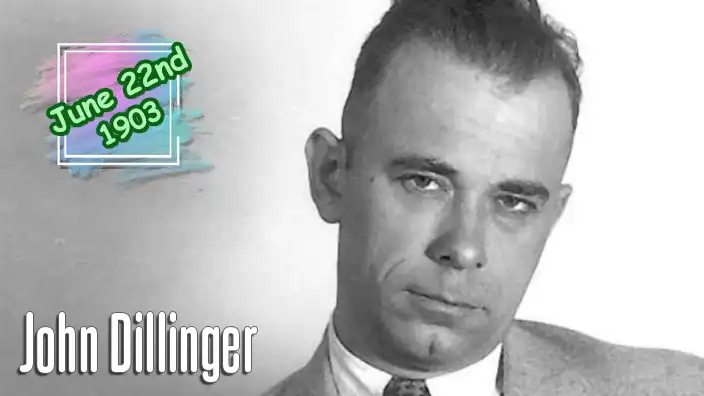
Some people spend their lives trying to avoid attention. John Dillinger seemed to treat that idea as a personal challenge. During the Great Depression, he robbed banks, escaped from jail, outran police, and generated enough newspaper headlines to make modern public relations experts jealous. Born on June 22, 1903, Dillinger became one of America's most famous outlaws, proving that while crime may not pay in the long run, it certainly generated plenty of newspaper sales.
June 22, 1903, in Indianapolis, Indiana
July 22, 1934, Chicago, Illinois
Trivia
- Served nearly nine years in prison for robbery.
- Formed his famous gang after being released in 1933.
- Robbed numerous banks throughout the Midwest.
- Escaped from Crown Point Jail in 1934.
- Allegedly used a wooden gun during his famous escape.
- Became one of America's most wanted criminals.
- Helped raise the profile of federal law enforcement.
- Was killed outside Chicago's Biograph Theater in 1934.
- Died at just 31 years old.
- Inspired numerous books, films, and documentaries.
- Remains one of the most famous gangsters of the Great Depression.

- Details
- Category: Celebrity Birthdays - June
If you ever walked into a Wayans family reunion, you’d probably hear enough jokes in ten minutes to fill an entire season of television. Keenen would be in the corner, calmly watching the chaos he helped create, like a proud general surveying his comedy troops. Someone would trip over a chair, someone else would turn it into a sketch idea, and before dessert was served, three movie deals and a sitcom pilot would be in the works. In the Wayans world, even the potato salad probably has better timing than most stand-up comics.
June 8, 1958, in New York City
Trivia
- Keenen is the second oldest of ten Wayans siblings.
- He created In Living Color in 1990, which ran for five seasons.
- The show launched the careers of Jim Carrey, Jamie Foxx, and Jennifer Lopez.
- He directed the first Scary Movie, which grossed over $275 million worldwide.
- Keenen originally studied engineering at Tuskegee University before switching to comedy.
- He co-wrote the cult classic parody film I’m Gonna Git You Sucka.
- The Wayans family has produced dozens of films, TV shows, and comedy specials across multiple decades.

- Details
- Category: Celebrity Birthdays - June
Ryan McCartan has the kind of career that makes you wonder if he secretly spins a giant “talent wheel” every morning. Acting? Sure. Singing? Of course. Broadway? Why not. One day he’s on a Disney set, the next he’s belting out show tunes in front of a packed theater, and somewhere in between he’s probably doing push-ups and scouting the nearest taco truck. If multitasking were an Olympic sport, Ryan would already have a gold medal—and he’d be celebrating it with extra salsa.
June 14, 1993, in Excelsior, Minnesota
Trivia
- Born in Excelsior, Minnesota.
- Starred as Diggie on Liv and Maddie.
- Played Fiyero on Broadway in Wicked.
- Appeared in The Rocky Horror Picture Show TV remake.
- Formerly part of the duo The Girl and the Dreamcatcher.
- Enjoys fitness and outdoor activities.
- Big fan of tacos.

- Details
- Category: Celebrity Birthdays - June
Emily Ratajkowski has the kind of life where one day she’s on a magazine cover, the next she’s launching a fashion line, and the day after that she’s writing essays about culture and identity. Meanwhile, the rest of us feel accomplished if we manage to fold laundry and remember where we left our coffee. She seems to glide through photo shoots, business meetings, and book tours with the confidence of someone who knows exactly what she’s doing—while the rest of us are still trying to remember our email passwords. If multitasking were an Olympic sport, Emily would probably win gold, then design the uniforms, write a thoughtful essay about the experience, and still make it to the after-party on time.
June 7, 1991, in, London, England
Trivia
- She signed with a modeling agency at just 14 years old.
- Her parents are both artists—her father a painter, her mother a writer and professor.
- Her first major film role was in Gone Girl (2014).
- She launched her own fashion brand, Inamorata, in 2017.
- She released a book of essays titled My Body in 2021.
- She is known for her love of vintage clothing and art museums.
- She appeared on the cover of Sports Illustrated Swimsuit Issue in 2014.
- She has a pet dog that frequently appears on her social media.
- Details
- Category: Celebrity Birthdays - June
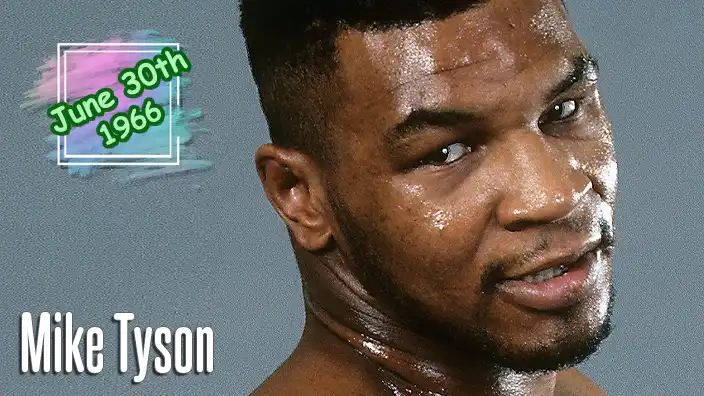
Most people hope to leave a lasting impression when they walk into a room. Mike Tyson usually accomplished that before the opening bell even rang. Opponents often looked as though they'd accidentally shown up for the wrong appointment, while fans knew they were about to witness one of the most explosive fighters boxing had ever produced. Whether you admired his power, his determination, or simply wondered how anyone could punch that hard, Tyson made sure nobody forgot his name.
June 30, 1966, in Brooklyn, New York
Trivia
- Won his first 19 professional fights by knockout.
- Became the youngest heavyweight champion at 20 years old.
- Unified the WBC, WBA, and IBF heavyweight titles.
- Defeated Michael Spinks in just 91 seconds.
- Nicknamed "Iron Mike."
- Was inducted into the International Boxing Hall of Fame in 2011.
- Has appeared in numerous films, television shows, and documentaries.
- Hosts the popular podcast Hotboxin' with Mike Tyson.

- Details
- Category: Celebrity Birthdays - June
Chris Evans spent nearly a decade playing the most upright, noble, and selfless superhero in cinema—and then immediately followed it up by playing a spoiled, sweater-wearing villain in Knives Out. That’s range. He went from carrying a vibranium shield to lounging around in chunky knitwear while insulting his relatives, and somehow he looked equally convincing in both. If Hollywood ever makes a movie about a polite New England guy who rescues a dog, grills burgers, and occasionally saves the world, they won’t even need a script. They’ll just hand Chris a camera and say, “Be yourself.”
June 13, 1981, in Boston, Massachusetts
Trivia
- Chris Evans was raised in Sudbury, Massachusetts.
- His mother was a youth theater director.
- He studied acting at the Lee Strasberg Theatre and Film Institute.
- He first played a superhero as the Human Torch in Fantastic Four.
- He portrayed Captain America from 2011 to 2019.
- He directed and starred in the romantic drama Before We Go.
- His rescue dog, Dodger, is a social media favorite.
- He co-founded the civic engagement site A Starting Point.

- Details
- Category: Celebrity Birthdays - June
She danced with cartoon cats, judged talent like a sparkly oracle, and somehow made “Straight Up” both a banger and a life philosophy. Today, we celebrate the birthday of Paula Abdul — the pop icon who proved you can go from Lakers cheerleader to Grammy-winning sensation faster than Simon Cowell can roll his eyes. She’s choreographed legends, survived the ‘90s fashion wars, and still manages to hit high notes and high kicks like it's no big deal.
June 19, 1962, in San Fernando, California
Trivia
- Paula rose to fame in the 1980s as a choreographer for the Laker Girls and later for high-profile music videos.
- She launched a successful music career with hits like "Straight Up" and "Opposites Attract," winning a Grammy for Best Music Video for the latter.
- Paula is an avid animal lover and has worked with various animal rescue organizations.
- She has spoken publicly about her struggles with chronic pain and spinal injuries, advocating for awareness and support.
- Details
- Category: Celebrity Birthdays - June
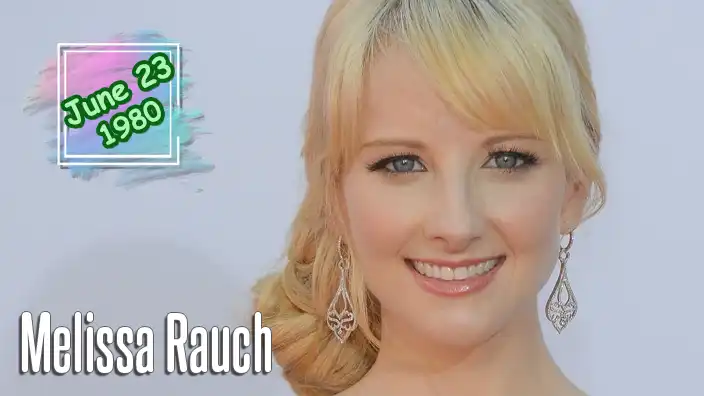
Some actors spend years trying to create a memorable television character. Melissa Rauch managed to create one whose voice could be recognized from three rooms away, through a closed door, and possibly from low Earth orbit. Yet behind the tiny microbiologist with the surprisingly terrifying temper on The Big Bang Theory is a talented actress, comedian, writer, producer, and performer whose career has been built on much more than a famous sitcom voice. Her journey from New Jersey comedy clubs to prime-time television success proves that sometimes the loudest impact comes from the smallest package.
June 23, 1980, in Marlboro Township, New Jersey
Trivia
- Graduated from Marymount Manhattan College.
- Started her career in stand-up comedy.
- Co-created The Miss Education of Jenna Bush.
- Joined The Big Bang Theory in 2009.
- Played Bernadette Rostenkowski-Wolowitz.
- Appeared in more than 200 episodes of the sitcom.
- Received a Critics' Choice Television Award nomination.
- Co-wrote and starred in The Bronze.
- Voiced Harley Quinn in an animated Batman film.
- Starred as Judge Abby Stone in Night Court.
- Served as an executive producer on Night Court.

- Details
- Category: Celebrity Birthdays - June
Kathy Baker has the rare ability to play characters who seem completely normal—and somehow make them the most interesting person in the room. She’s the kind of actress who could play someone watering houseplants for two hours, and you’d still be glued to the screen, wondering about her backstory. Meanwhile, the rest of us can’t even keep a cactus alive without it filing a formal complaint. If Kathy ever starred in a movie about folding laundry, it would probably win awards and make you cry by the final spin cycle.
June 8, 1950, in Midland, Texas
Trivia
- She has a degree in French from the University of California, Berkeley.
- Kathy once worked as a waitress at the famous Magic Castle in Hollywood.
- She has a penchant for playing complex, multi-dimensional characters.
- Kathy has been married twice and has two children.
- She is an avid reader and has a particular fondness for the works of Jane Austen.
- In addition to her acting career, Kathy is also a talented painter.
- She has a star on the Hollywood Walk of Fame, which she received in 1997.
- Details
- Category: Celebrity Birthdays - June
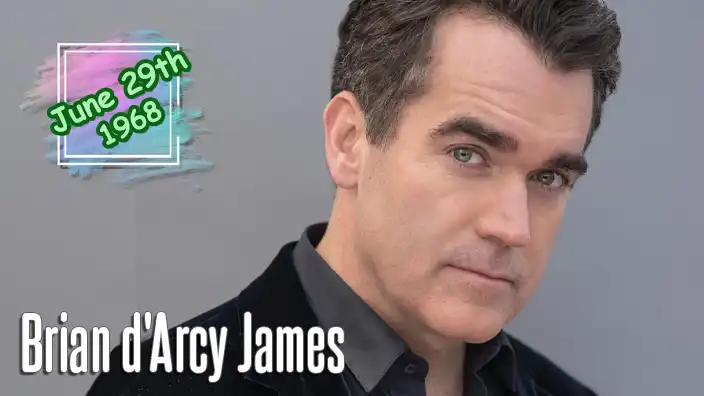
Some performers are content to master one stage. Brian d'Arcy James apparently looked at Broadway, Hollywood, television, and the recording studio and decided, "I'll have one of each." Whether he's wearing green makeup as Shrek or delivering a dramatic performance in an Oscar-winning film, he has a remarkable habit of making every role seem completely natural.
June 29, 1968, in Saginaw, Michigan
Trivia
- Graduated from Northwestern University.
- Has received five Tony Award nominations.
- Starred as Shrek in Shrek the Musical.
- Originated the role of King George III in the Off-Broadway production of Hamilton.
- Returned to play King George III on Broadway in 2017.
- Played Matt Carroll in the Oscar-winning film Spotlight.
- Appeared as Officer Krupke in Steven Spielberg's West Side Story.
- Played Andy Baker in Netflix's 13 Reasons Why.
- Has appeared in more than a dozen Broadway productions.
- Won an Obie Award for The Good Thief.
From Our Marks Catelog
-

Pizza is the ultimate customizable dish. It caters to all, from the staunch meat-lover who wants...
-

Your toes don't ask for much. They spend their days squeezed into shoes, dodging coffee tables,...
-

You’re trying to relax after a long day, but your dog has decided that now is the perfect time to...
-
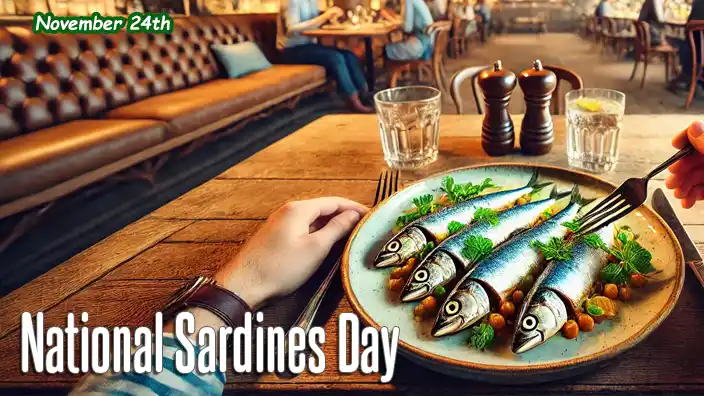
Tiny, shiny, and unapologetically bold, these little fish have a knack for stealing the show at...
-
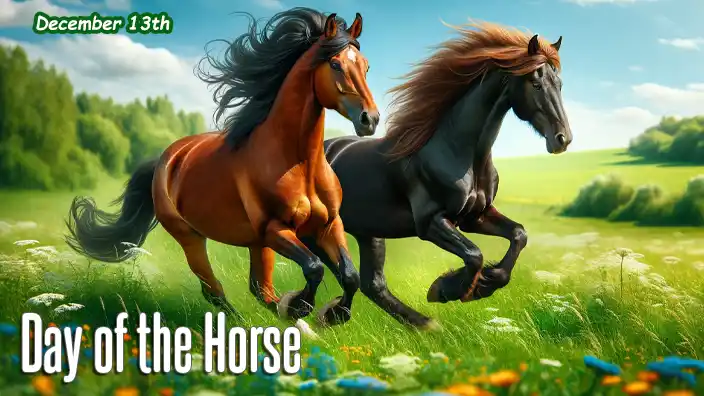
Horses are the comedians of the animal world, even if they don’t realize it. From sneaky maneuvers...
-
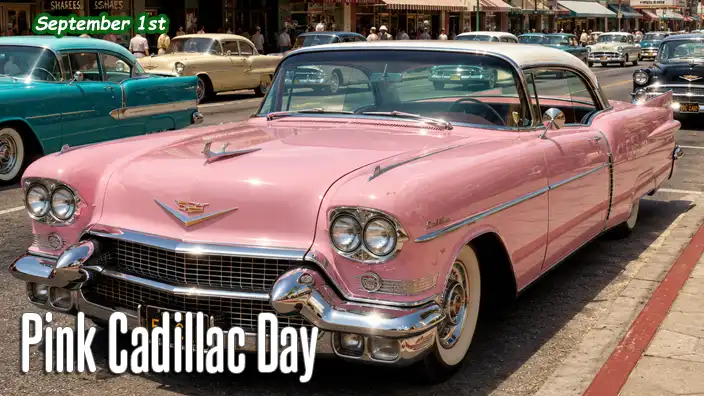
Some cars are built to get you from point A to point B. The Pink Cadillac was built to make sure...


