Celebrity Birthdays - June

Ah, June — school’s out, pools are open, and June birthday people are here to remind you that the fun starts now.
These stars are summer’s opening act, kicking off long days, warm nights, and questionable tan lines. Grab a lemonade and join us in celebrating the folks who make June the month of all things bright and loud.

- Details
- Category: Celebrity Birthdays - June
Mary-Kate Olsen went from being the tiniest member of the Tanner family to running a luxury fashion label and jumping horses over obstacles that cost more than most cars. She’s the rare former child star who traded punchlines for couture and paparazzi for stables. Somewhere out there, there’s probably a very confused horse who has no idea it’s being ridden by someone who once ruled the ’90s video-store shelf. And honestly, that horse is probably living the most peaceful, drama-free life in the entire Olsen universe.
 June 13, 1986, in Sherman Oaks, California

Trivia
- The twins became co-presidents of Dualstar at age 18.
- Mary-Kate continued acting into the mid-2000s after Ashley retired.
- She starred in the indie film The Wackness in 2008.
- She is an accomplished equestrian who has competed in show-jumping events.
- The Row has won multiple CFDA awards.
- She prefers a very private life and rarely gives interviews.
- Elizabeth and James are named after the twins’ siblings.

- Details
- Category: Celebrity Birthdays - June
If elegance were an Olympic sport, Elizabeth Hurley would have a trophy room the size of Buckingham Palace. This is a woman who can wear a dress held together with safety pins and turn it into one of the most famous fashion moments in history. Most of us can’t even keep a button attached through an entire dinner. She can walk a red carpet like royalty, then head home to tend a vegetable garden in muddy boots without missing a beat. It’s the kind of lifestyle that makes the rest of us feel slightly underdressed while pulling weeds—and maybe a little overdressed while eating microwave leftovers.
June 10, 1965, in Basingstoke, England
Trivia
- Elizabeth Hurley was expelled from boarding school for poor grades and rebellious behavior.
- She’s a godmother to David and Victoria Beckham’s sons, Brooklyn and Romeo.
- Hurley once worked as a waitress before hitting it big in Hollywood.
- She’s a supporter of the Elton John AIDS Foundation.
- Elizabeth has a soft spot for Spanx and has admitted to wearing them under her glamorous gowns.
- She’s appeared in over 30 films and TV shows.

- Details
- Category: Celebrity Birthdays - June
Chelsey Crisp has the rare talent of walking into a scene, saying one perfectly timed line, and making it feel like she’s been the star of the show all along. She’s the kind of neighbor who shows up with a plate of cookies, stays for five minutes, and somehow leaves with all the best punchlines. With her cheerful energy and spot-on comic timing, Chelsey proves that sometimes the funniest person in the room isn’t the one shouting the loudest—it’s the one smiling sweetly while stealing the scene right out from under everyone else.
June 5, 1983, in Phoenix, Arizona
Trivia
- Chelsey is a skilled improviser and has performed with the renowned improv group, The Groundlings.
- She has a black belt in Taekwondo. Talk about kicking butt both on and off-screen!
- Chelsey is an animal lover and has a rescue dog named "Milo."
- She once worked as a princess at children's birthday parties. Imagine having Honey Ellis at your birthday bash!
- Chelsey is married to screenwriter Rhett Reese, known for his work on "Deadpool" and "Zombieland."

- Details
- Category: Celebrity Birthdays - June
Gene Wilder had a way of looking completely innocent while chaos unfolded around him, as if he’d just wandered into the wrong movie and decided to stay. Whether he was inventing a new kind of candy, resurrecting a monster, or riding a train with Richard Pryor, he always seemed one step away from either a brilliant idea or a full nervous breakdown—sometimes both at once. If you told Gene Wilder’s characters to relax, they’d probably nod politely, smile, and then accidentally set something on fire five seconds later. And somehow, we’d love them even more for it.
 June 11, 1933, in Milwaukee, Wisconsin
 August 29, 2016, in Stamford, Connecticut
Trivia
- His birth name was Jerome Silberman.
- He earned an Oscar nomination for The Producers.
- He co-wrote Young Frankenstein with Mel Brooks.
- He played Willy Wonka in the 1971 film.
- He starred in several hit comedies with Richard Pryor.
- He also worked as a writer and director.
- He was married to comedian Gilda Radner.
- He became an advocate for cancer awareness after her death.
- Details
- Category: Celebrity Birthdays - June
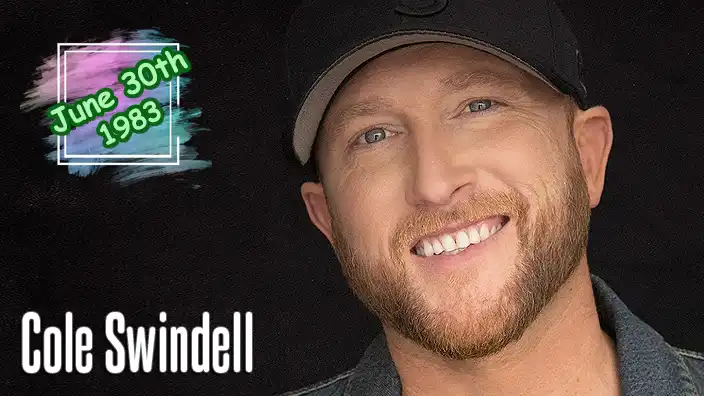
Some people spend years trying to write one hit song. Cole Swindell looked at that challenge and apparently thought, "Why stop at one?" Before long he was filling country radio with songs that had people singing along in their trucks, at backyard barbecues, and occasionally a little too loudly in supermarket parking lots. If there's a soundtrack for good times, heartbreak, and late-night drives with the windows down, chances are Cole has written part of it.
June 30, 1983, in Glennville, Georgia
Trivia
- He wrote hit songs before becoming a recording artist.
- "Chillin' It" launched his solo career.
- "You Should Be Here" was written in memory of his father.
- He has earned numerous Platinum-certified singles.
- "She Had Me at Heads Carolina" became one of his signature hits.
- He has won Academy of Country Music Awards as both an artist and songwriter.
- He married Courtney Little in 2024.
- The couple welcomed their first child in 2025.

- Details
- Category: Celebrity Birthdays - June
Bill Hader has one of those faces that looks perfectly normal—right up until he starts talking, and suddenly he’s three different celebrities, a 1920s radio announcer, and a guy who runs a haunted roller disco. His brain seems to operate like a streaming service with no off switch, constantly flipping between impressions, characters, and obscure movie references. Somewhere inside his head, there’s probably a tiny theater playing classic films 24 hours a day, with Bill running back and forth between the seats, doing voices for every single character. And honestly, we’re all better off because of it.
June 7, 1978, in Tulsa, Oklahoma
Trivia
- He joined Saturday Night Live in 2005 and stayed for eight seasons.
- His character Stefon was known for making him laugh on live TV.
- He has done impressions of Al Pacino, Vincent Price, and many others.
- He co-created and starred in the Emmy-winning HBO series Barry.
- He has won multiple Emmy Awards for his work on Barry.
- He is a huge fan of classic cinema and film history.
- He has voiced characters in Inside Out, Cloudy with a Chance of Meatballs, and other animated films.

- Details
- Category: Celebrity Birthdays - June
If you’ve ever swayed dramatically to a Cure song while staring thoughtfully out a rainy window, you can probably thank Simon Gallup’s bass line for that mood. While the rest of the band created the atmosphere, his bass made sure you felt it in your spine. Meanwhile, when he’s not fueling gothic soundtracks to teenage introspection worldwide, he’s likely restoring a motorcycle or tending a garden. Rock legend by night. Practical craftsman by day. That’s range.
June 1st, 1960, in Duxhurst, England
Trivia
- Simon Gallup joined The Cure in 1979.
- He briefly left the band in 1982 after internal tensions but returned in 1984.
- His bass playing is central to classics like “A Forest” and “In Between Days.”
- He is known for his preference for Fender bass guitars.
- Outside of music, he enjoys vintage motorcycles and gardening.

- Details
- Category: Celebrity Birthdays - June
DJ Qualls has made an entire career out of being the guy who looks like he accidentally wandered onto the set and then somehow became everyone’s favorite character. Whether he’s dodging zombies, hunting ghosts, or just trying to survive a college road trip, he always gives off the energy of someone who packed snacks, forgot the map, and still ended up saving the day. He’s proof that you don’t need superhero muscles or a square jaw to be memorable—sometimes all you need is a good sense of humor, a little awkward charm, and the ability to look surprised in every situation.
June 10, 1978, in Nashville, Tennessee
Trivia
- Survived Hodgkin’s lymphoma as a teenager.
- Broke out in the comedy Road Trip (2000).
- Played Garth in Supernatural.
- Portrayed Citizen Z in the zombie series Z Nation.

- Details
- Category: Celebrity Birthdays - June
Daryl Sabara spent his childhood saving the world with high-tech gadgets, jetpacks, and spy parents, which is a pretty tough act to follow in real life. After all, once you’ve battled villains before your voice finished changing, regular adulthood can feel suspiciously low on laser watches and secret headquarters. Still, Daryl managed the transition just fine—trading in spy missions for voice acting, dance moves, and family life—though somewhere deep down, you just know he still checks every briefcase for hidden buttons, just in case.
June 14, 1992, in Torrance, California
Trivia
- Best known as Juni Cortez in Spy Kids.
- Has an identical twin brother, Evan.
- Voiced characters in The Polar Express.
- Appeared as a dancer before acting.
- Married singer Meghan Trainor in 2018.
- Big fan of comic books and superheroes.

- Details
- Category: Celebrity Birthdays - June
Before she was rocking red carpets and stealing scenes on British television, Millie Gibson was just a kid trying to survive puberty — like the rest of us, but with better lighting. Today, we celebrate the birthday of a young actress who went from "Coronation Street" to conquering the entertainment world faster than you can say “Kelly Neelan deserved better!” So buckle up, buttercup — Millie’s life is equal parts talent, tenacity, and top-tier fashion sense.
June 19, 2004, in Manchester, England
Trivia
- Gibson rose to fame playing Kelly Neelan on the long-running British soap Coronation Street.
- Her performance on Coronation Street earned her the Best Young Performer award at the 2022 British Soap Awards.
- In 2023, she was cast as Ruby Sunday, the companion to the Doctor in the iconic series Doctor Who.
- Before landing major TV roles, she appeared in children’s programs like Jamie Johnson.
- Details
- Category: Celebrity Birthdays - June
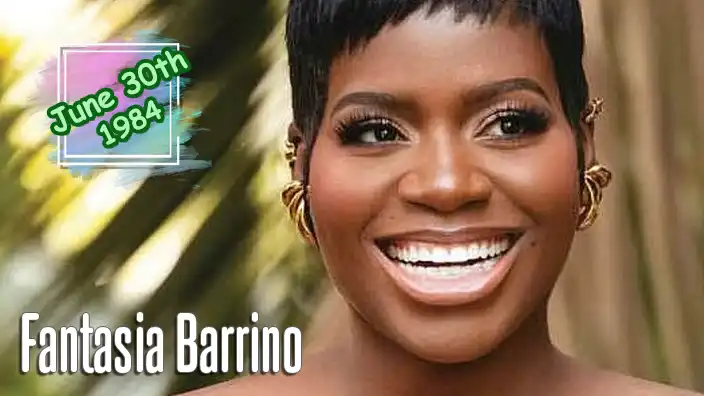
Some singers warm up before a performance. Fantasia warms up by reminding everyone else that microphones can, in fact, surrender. With a voice powerful enough to shake the rafters and enough emotion to make audiences laugh, cry, and cheer in the same song, she has spent more than two decades proving that raw talent never goes out of style.
June 30, 1984, in High Point, North Carolina
Trivia
- Her debut single "I Believe" debuted at No. 1 on the Billboard Hot 100.
- Won a Grammy Award for "Bittersweet."
- Her autobiography became a New York Times bestseller.
- Played Celie on Broadway before reprising the role in the 2023 film.
- Earned BAFTA and Golden Globe nominations for The Color Purple.
- Won an NAACP Image Award for her performance in the film.
- Inducted into the North Carolina Music Hall of Fame.
- Has released multiple Platinum and Gold-certified albums.
- Is known for blending R&B, soul, gospel, and pop influences.

- Details
- Category: Celebrity Birthdays - June
Most people throw on a costume for Halloween and call it a day. Heidi Klum apparently holds production meetings, hires prosthetics teams, and emerges unrecognizable as farm equipment or mythical creatures. Meanwhile, the rest of us are still looking for the face paint. If dedication were a runway, she’d still be walking it—probably dressed as something no one saw coming.
June 1st, 1973, in Bergisch Gladbach, Germany
Trivia
- Heidi Klum won a national modeling contest at age 18.
- She appeared on the cover of the 1998 Sports Illustrated Swimsuit Issue.
- She was a longtime Victoria’s Secret Angel.
- She hosted and executive produced Project Runway.
- Her Halloween costumes are considered among the most elaborate in Hollywood.
- She has launched multiple fashion, fragrance, and beauty product lines.

- Details
- Category: Celebrity Birthdays - June
Ashley Olsen went from delivering toddler one-liners on national television to designing clothing so elegant it probably has its own passport. While most former child stars try to stay famous, Ashley did the opposite—she quietly slipped out the back door of Hollywood and showed up years later running a luxury fashion empire. Somewhere out there, there’s a very expensive, perfectly tailored coat that owes its existence to a kid who once said, “You got it, dude,” while holding a juice box. And honestly, that might be one of the greatest career plot twists in entertainment history.
June 13, 1986, in Sherman Oaks, California
Trivia
- Ashley and Mary-Kate were just nine months old when they were cast on Full House.
- Her full name is Ashley Fuller Olsen.
- The twins became co-presidents of Dualstar at age 18.
- Ashley retired from acting in the early 2010s to focus on fashion.
- The Row started with the simple goal of creating the perfect white T-shirt.
- She and her sister have won multiple CFDA fashion awards.
- Ashley prefers to stay out of the spotlight and rarely gives interviews.

- Details
- Category: Celebrity Birthdays - June
Logan Browning’s career is a bit like one of those glow-up stories you see online—except instead of new hairstyles and better lighting, it’s roles that get smarter, deeper, and more interesting over time. She went from the glittery, plastic-fantastic world of Bratz to hosting a sharp-tongued radio show in Dear White People, which is quite the leap. It’s like starting your career in a bubblegum commercial and ending up in a college debate club where everyone quotes philosophy. But somehow, she made the transition look completely natural—no awkward phase required.
June 9, 1989, in Atlanta, Georgia
Trivia
- Starred as Sasha in Bratz: The Movie (2007).
- Played Jelena in VH1’s Hit the Floor.
- Gained critical acclaim as Samantha in Dear White People.
- Began her career with roles on teen TV shows.
- Has also released music as a singer.
- Details
- Category: Celebrity Birthdays - June
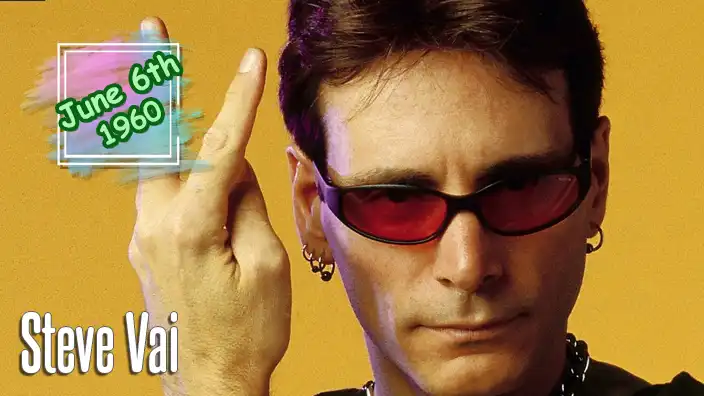
Most people spend years trying to master one musical instrument. Steve Vai apparently looked at a guitar and decided it needed additional settings. For decades, fans have watched him perform solos that cause aspiring guitarists to put down their instruments, stare into the distance, and reconsider their life choices. Fortunately, Vai combines astonishing technical skill with creativity and humor, making his performances as entertaining as they are intimidating. On Steve Vai's birthday, we celebrate a musician who has spent a lifetime proving that six strings can do far more than most of us ever imagined.
June 6, 1960, in Carle Place, New York
Trivia
- Took guitar lessons from Joe Satriani.
- Began working for Frank Zappa at age 18.
- Won three Grammy Awards.
- Played with Frank Zappa, David Lee Roth, Whitesnake, and Alcatrazz.
- Helped popularize the seven-string guitar.
- Played Jack Butler in the movie Crossroads.
- Has sold more than 15 million records worldwide.
- Received an honorary doctorate from Berklee College of Music.

- Details
- Category: Celebrity Birthdays - June
If Hollywood handed out awards for “Most Likely to Be the Only Sane Person in the Room,” Frankie Faison would need a bigger trophy case. Whether he’s keeping a cool head around Hannibal Lecter, trying to manage chaos in The Wire, or offering fatherly advice in The Equalizer, he always seems like the one guy who brought common sense to the set. You just know if things went sideways in real life, Frankie would calmly step forward, fold his arms, and say, “Alright, let’s all take a breath and stop doing whatever foolishness this is.” And honestly, the world could use a little more of that energy.
June 10, 1949, in Newport News, Virginia
Trivia
- Frankie Faison received a Tony Award nomination for Fences on Broadway.
- He has appeared in three films featuring Hannibal Lecter: The Silence of the Lambs, Hannibal, and Red Dragon.
- He is one of the few actors to appear in both the Hannibal Lecter film series and the TV series The Wire, two of the most respected crime franchises ever made.
- Faison has performed extensively in theater, film, and television, making him a true triple-threat actor.
- He studied at NYU’s Tisch School of the Arts, one of the most prestigious acting programs in the country.

- Details
- Category: Celebrity Birthdays - June
Kenny G has a musical style so smooth it could calm down a room full of angry cats. His saxophone sound is the audio equivalent of a warm cup of tea, a soft couch, and a gentle breeze all rolled into one. If life ever gets too stressful, you just know Kenny could step into the room, play a few notes, and suddenly everyone would stop arguing, sit down, and start discussing their feelings in a very calm, reasonable tone. Frankly, the world might be a quieter place if we kept a Kenny G track on standby for emergencies.
June 5, 1956, in Seattle, Washington
Trivia
- He performed with Barry White’s Love Unlimited Orchestra as a teenager.
- His album Breathless is the best-selling instrumental album in U.S. history.
- He has sold more than 75 million records worldwide.
- He won a Grammy for “Forever in Love.”
- He holds a Guinness World Record for holding a saxophone note for over 45 minutes.
- He is an avid golfer and a licensed pilot.
- He has appeared as himself in films and television shows.
- Details
- Category: Celebrity Birthdays - June
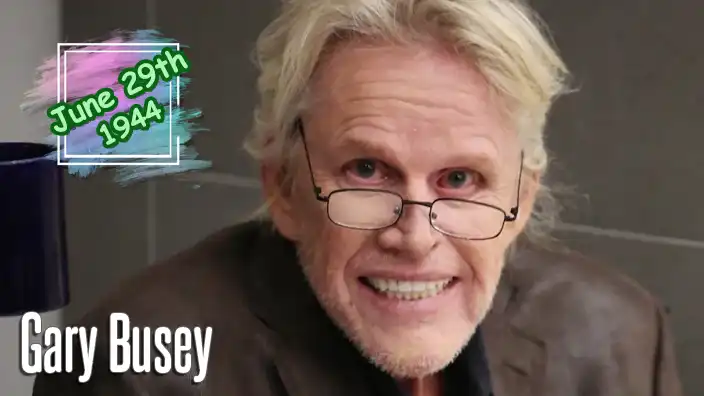
If Hollywood ever needed someone to play a fearless lawman, an unpredictable villain, a rock-and-roll legend, or a fellow who looked like he'd just wrestled a tornado and won on points, Gary Busey was usually on the shortlist. His performances have always come with one guarantee: you'll remember them long after the credits roll.
June 29, 1944, in Goose Creek, Texas
Trivia
- Played Buddy Holly in The Buddy Holly Story (1978).
- Received an Academy Award nomination for Best Actor.
- Performed his own singing and guitar work in The Buddy Holly Story.
- Played Mr. Joshua in Lethal Weapon.
- Starred as FBI Agent Angelo Pappas in Point Break.
- Appeared in Under Siege, The Firm, and Predator 2.
- Began his entertainment career as a drummer.
- Was seriously injured in a motorcycle accident in 1988.

- Details
- Category: Celebrity Birthdays - June
Tate Taylor is the kind of filmmaker who might spend the morning directing a tense thriller scene and the afternoon rummaging through an antique shop looking for a 1930s coffee grinder. He’s got one foot in Hollywood and the other in a dusty old Southern attic full of history. And honestly, that probably explains a lot—when you grow up surrounded by stories, sometimes the only logical thing to do is grab a camera and start telling a few of your own.
June 3, 1969, in Jackson, Mississippi
Trivia
- Tate Taylor grew up in Jackson, Mississippi, the setting for The Help.
- He was childhood friends with The Help author Kathryn Stockett.
- Octavia Spencer, who won an Oscar for The Help, is a longtime friend of Taylor’s.
- He directed the James Brown biopic Get on Up in 2014.
- Taylor has acted in films and shows, including Breaking Bad.

- Details
- Category: Celebrity Birthdays - June
Brian Cox has perfected the art of looking at someone and making them rethink their life choices—without raising his voice. If Logan Roy taught us anything, it’s that you don’t need to shout when your presence does the shouting for you. Somewhere right now, a fictional executive just got fired… and Brian Cox isn’t even in the room.
June 1, 1946, in Dundee, Scotland
Trivia
- Brian Cox won a Golden Globe for his role in Succession.
- He received a Laurence Olivier Award for Rat in the Skull.
- He has been an outspoken supporter of Scottish independence.
- He has served as a visiting professor, mentoring young actors.
- He began his career with the Dundee Repertory Theatre.
- Details
- Category: Celebrity Birthdays - June
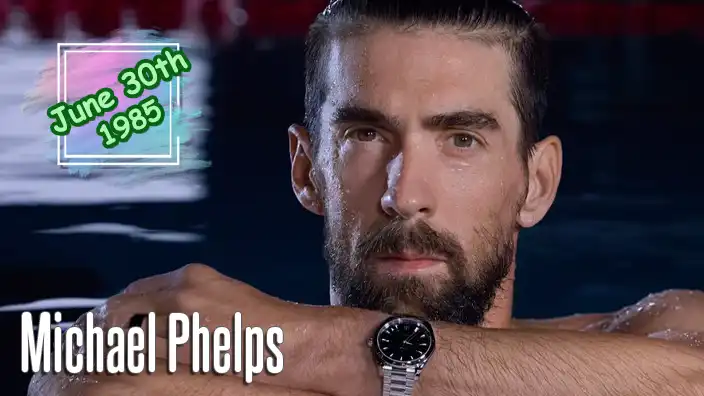
Most people celebrate a trip to the swimming pool by floating on an inflatable flamingo and wondering where the sunscreen went. Michael Phelps took a slightly different approach—he collected Olympic gold medals like they were souvenir postcards. By the time he climbed out of the water, record books needed extra pages just to keep up.
June 30, 1985, in Baltimore, Maryland
Trivia
- Won a record 28 Olympic medals.
- Captured an unprecedented 23 Olympic gold medals.
- Won eight gold medals at the 2008 Beijing Olympics.
- Competed in five Olympic Games.
- Set 39 world records during his career.
- Qualified for his first Olympics at just 15 years old.
- Trained throughout his career under coach Bob Bowman.
- Founded the Michael Phelps Foundation to promote water safety.
- Has been an advocate for mental health awareness since retiring.
- Was awarded the Presidential Medal of Freedom in 2024.
From Our Marks Catelog
-

Single parenthood is a crash course in multitasking—where making dinner, helping with homework, and dodging Lego...
-

Balloons are the life of any party, with their bright colors and whimsical shapes, but they also...
-
Letting things go is a skill we all think we have—until we’re in the shower five years later, replaying an...
-

Some holidays ask for deep reflection. Others demand fireworks, feasts, or elaborate decorations....
-
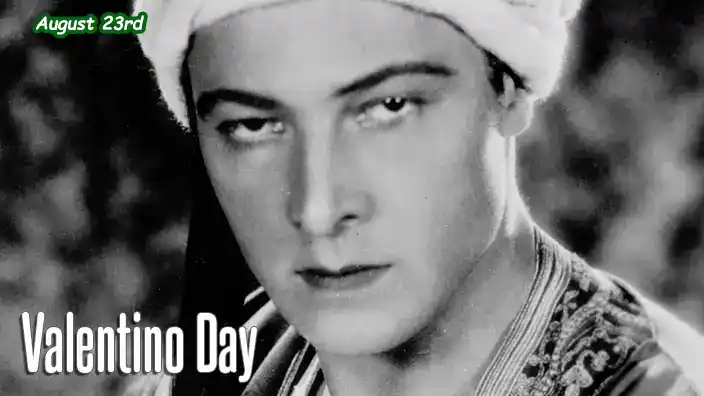
With a gaze that could melt ice and a mustache so perfectly groomed it might have had its own...
-

Imagine having the uncanny ability to make even the driest statistics sound like the punchline to a...

